
Rose Rush (Lygodesmia aphylla)
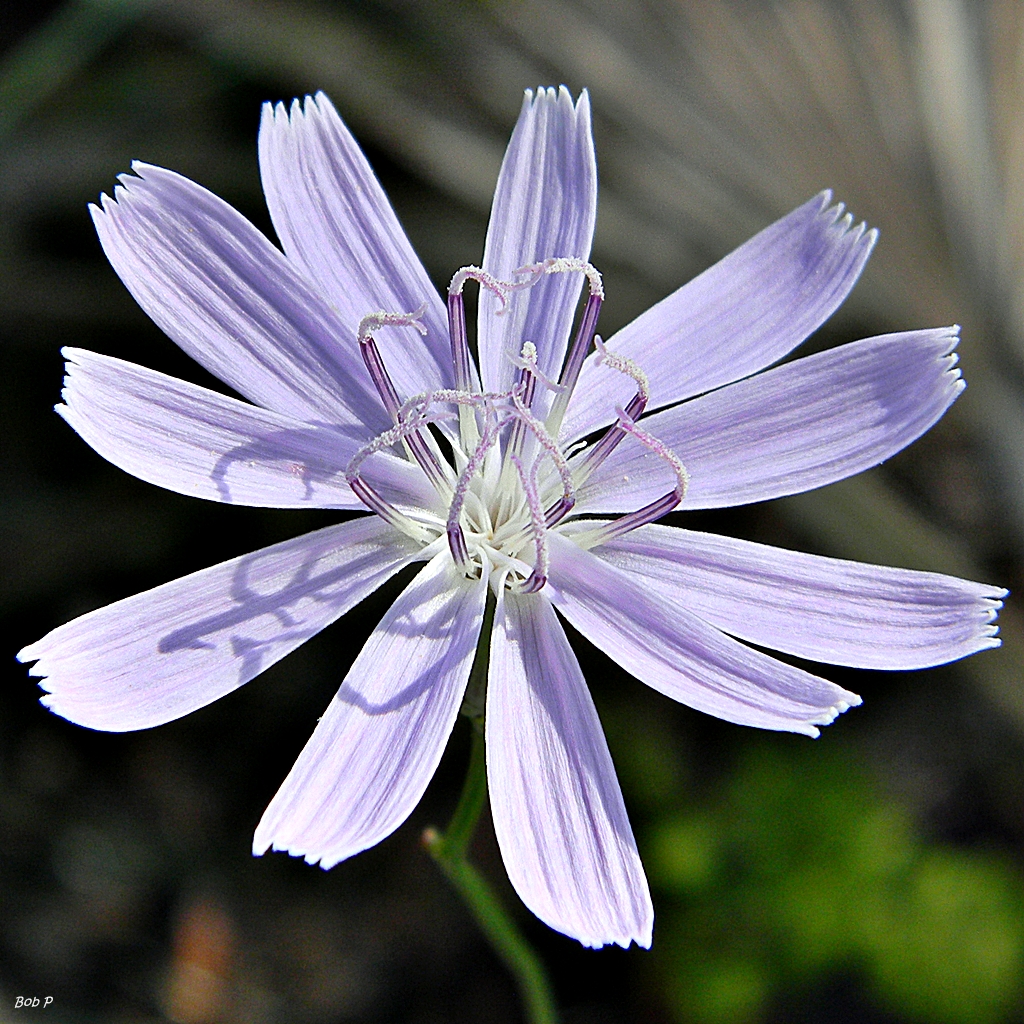
Lygodesmia aphylla, known as Rose Rush, roserush or rushweed, is a wiry perennial wildflower of the sandy uplands of Florida and southern Georgia. For most of the year it is easy to walk past: a few thin, green, almost leafless stems that look more like a clump of rushes than a member of the daisy family. Then, from late winter through summer, each stem tip opens a single flower head 1 to 2 inches across, made of long lavender, pink or whitish rays with finely toothed tips, and the plant suddenly becomes one of the most eye-catching wildflowers in the scrub.
Rose rush belongs to the aster family (Asteraceae), in the same tribe as chicory and dandelions. Like them, its flower heads contain only strap-shaped (ligulate) florets and no central disk, and its stems carry a milky sap. The species name aphylla means “without leaves”. The grass-like basal leaves are often withered or gone by flowering time, leaving bare, rush-like green stems that do the plant’s photosynthesis.
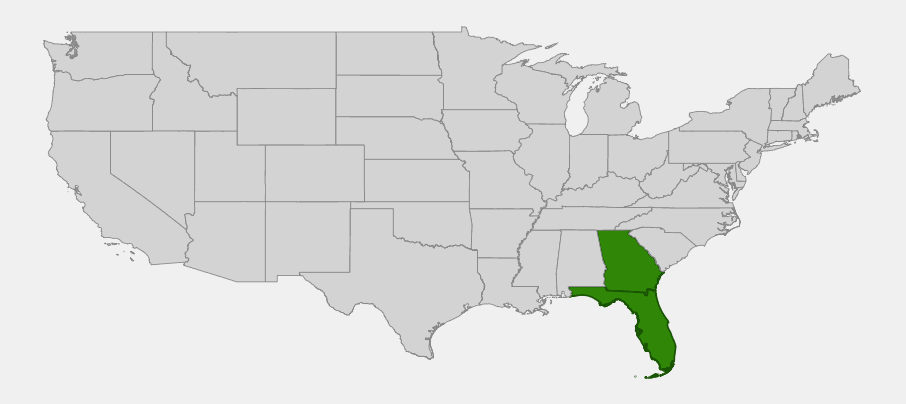
Rose rush is nearly endemic to Florida. It grows in sandhills, scrub, dry pine flatwoods and sandy pine barrens through most of the peninsula and the eastern Panhandle, and it reaches only a few counties of south Georgia. This guide covers how to recognize it, where it grows, how to grow it from seed in a sandy native garden, and why it matters to the pollinators of Florida’s fire-maintained pinelands.
Identification
Rose rush is identified by its combination of slender, nearly leafless green stems and solitary, chicory-like flower heads in lavender or pink. Outside the bloom season it is hard to find, so learn to recognize the stems in sandy, open pinelands where it has flowered before.
Stems & Growth Habit
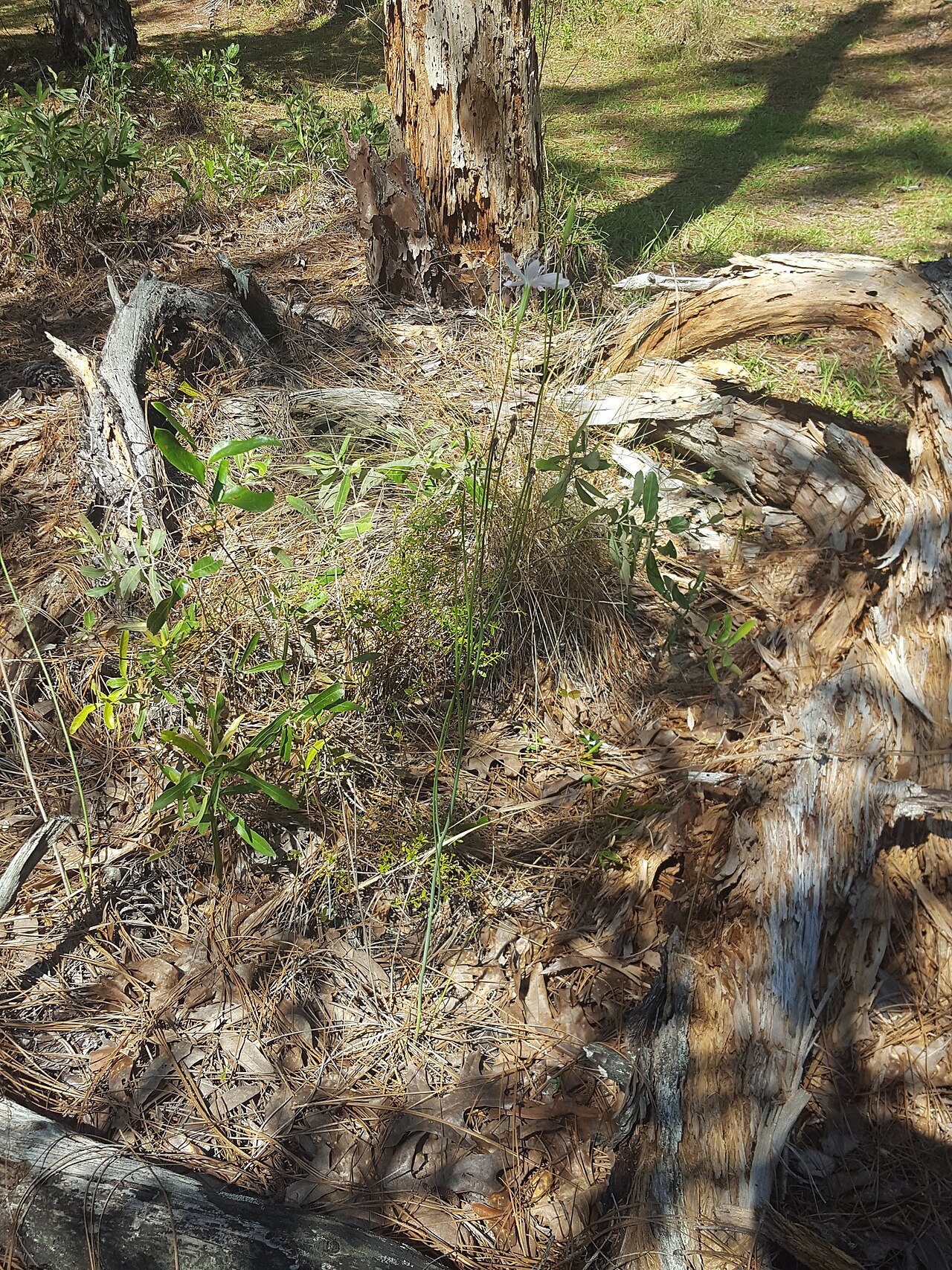
Plants grow from a deep, woody taproot and send up one to several slender, erect, smooth green stems, usually 1 to 2 feet tall and sometimes nearly 3 feet. The stems are wiry and rush-like, sparingly branched in their upper part, and each branch ends in a single flower head on a long stalk. Breaking a stem releases milky latex, a trait shared with chicory, wild lettuce and the other members of the chicory tribe.
Leaves
The leaves are mostly basal, long, narrow and grass-like, and they often wither by the time the plant flowers. Leaves on the stem, when present, are reduced to small scales. This near absence of leaves is the source of both the scientific name aphylla (“leafless”) and the common name rush.
Flower Heads
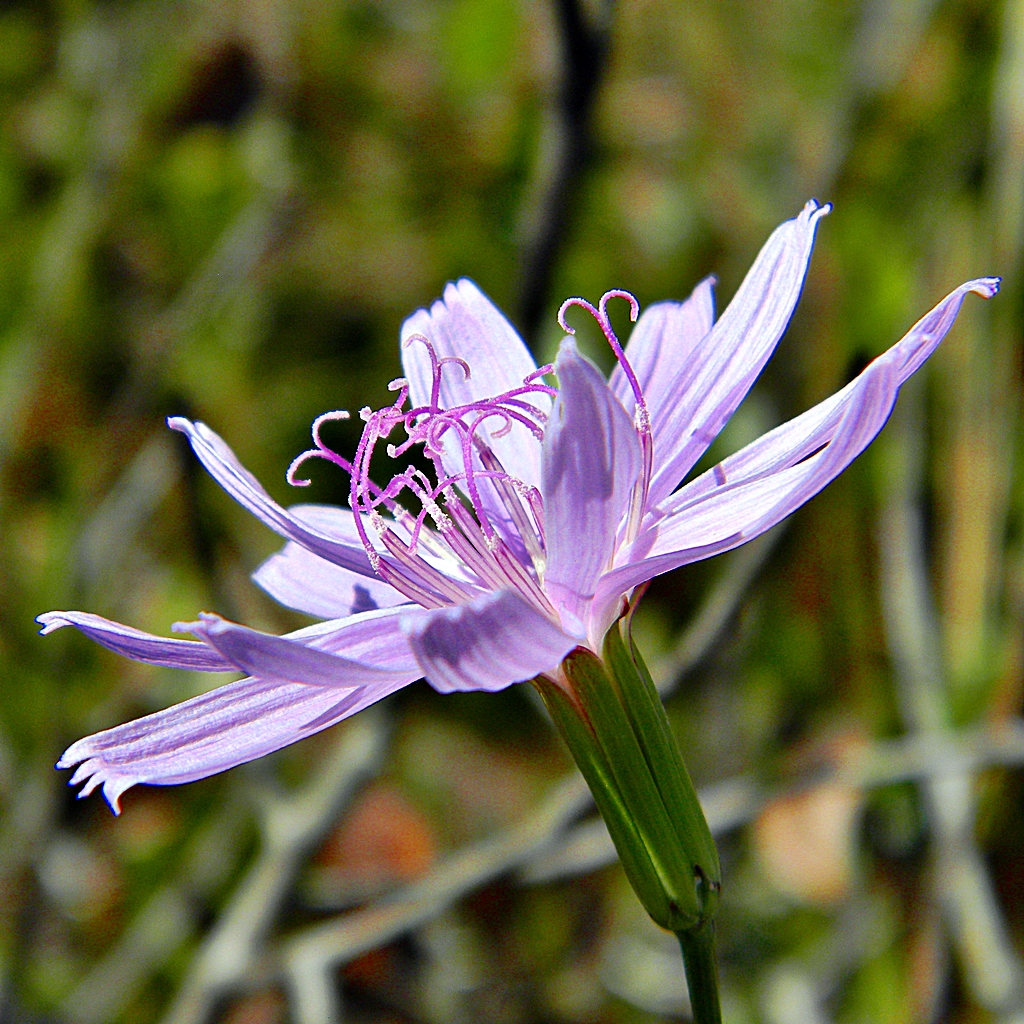
Each flower head is 1 to 2 inches across and made entirely of strap-shaped ray florets; there is no central disk. The rays are lavender to rose-pink, sometimes pale pink or nearly white, and each ends in a row of small teeth. From the center rise the dark anther tubes and the long, slender style branches that curl back like tendrils, giving the flower a delicate, spidery look. Beneath the head is a narrow, cylindrical involucre of green bracts.
The heads open in the morning sun and usually close or fade by afternoon, so the best time to see them is from mid-morning to midday.
Fruit & Seeds
After flowering, each floret produces a narrow, dry, one-seeded fruit (a cypsela, often called an achene) topped by a tuft of silky white bristles, the pappus. The seeds drift away on the wind like small dandelion seeds. Plants grown in isolation often set little viable seed, so a group of plants is needed for good seed set.
Look-alikes
Its relative Texas skeleton plant (Lygodesmia texana) has a similar look but grows far to the west, on the plains of Texas and neighboring states. In Florida, the introduced chicory (Cichorium intybus) has blue heads on a much leafier, branching plant of roadsides and disturbed ground. Rose rush is the only Lygodesmia in the Southeast.
Quick Facts
| Scientific Name | Lygodesmia aphylla (Nutt.) DC. |
| Family | Asteraceae (aster family; chicory tribe) |
| Plant Type | Herbaceous perennial wildflower from a taproot |
| Mature Height | 1–2 ft, occasionally to about 3 ft |
| Mature Spread | 6–12 in |
| Growth Rate | Slow to moderate |
| Sun Exposure | Full sun |
| Water Needs | Low; very drought tolerant once established |
| Soil Type | Deep, dry, well-drained sand |
| Soil pH | Acidic (about 4.5–6.5) |
| Bloom Time | Late winter through summer; into fall in South Florida |
| Flower Color | Lavender to rose-pink, sometimes whitish |
| Fall Color | None |
| Fruit | Small dry cypselae (achenes) with a white pappus |
| Deer Resistant | Unknown; its leafless stems offer little browse |
| USDA Hardiness Zones | 8–10 |
Native Range
Rose rush is a plant of the southeastern Coastal Plain with a very small range outside Florida. USDA PLANTS lists it as native to Florida and Georgia. The Florida Wildflower Foundation and the Atlas of Florida Plants describe it as near-endemic to Florida, found in most peninsular counties south to Collier and Miami-Dade and in the eastern Panhandle west to about Jackson, Calhoun and Gulf counties. In Georgia it is known from only a few counties in the southern part of the state, close to the Florida line.
Within that range it is a characteristic plant of deep, dry, nutrient-poor sands: longleaf pine and turkey oak sandhills, rosemary and oak scrub, dry pine flatwoods, sandy pine barrens and open mixed woodlands on sand. It is usually found in open, sunny gaps among wiregrass and other low groundcover, and it does best where periodic fire keeps shrubs and trees from shading the ground.
NatureServe ranks rose rush as globally apparently secure (G4). Its habitats, though, are among the most heavily converted in Florida, and the scrub and sandhill sites that remain depend on prescribed fire to stay open. Rose rush is rarely sold, so any garden plants should come from seed collected responsibly, with permission, or from native plant growers; never dig plants from the wild, since the deep taproot rarely survives transplanting.
📋 Regional plant lists featuring Rose Rush: North & South Florida · Alabama, Georgia & Mississippi
Growing & Care Guide
Rose rush is not a common nursery plant, but it is a rewarding wildflower for gardeners in Florida and south Georgia who have, or are restoring, a dry, sandy, sunny site. Its needs are simple: deep sand, full sun, no fertilizer and very little water once it is established. It is not a good choice for rich, irrigated garden beds.
Light
Give it full sun. In shade it becomes weak and flowers poorly, and in the wild it fades out of sandhills and scrub when shrubs and trees close in.
Soil & Water
Plant in deep, loose, well-drained sand, the kind found in sandhill and scrub. It does not need amendments or fertilizer, and rich soil only encourages competition from weeds. Water new plants until they root in, then let rainfall take over. Established plants are very drought tolerant, and soggy soil or regular irrigation can rot the taproot.
Planting Tips
Plant in groups of at least several plants rather than as a single specimen. The thin stems almost disappear when the plant is not in bloom, and a cluster makes a far better show. Groups also improve seed set, since solitary plants often produce little viable seed. Mark the spot so the plants are not weeded out or trampled while dormant or leafless. Rose rush mixes well with wiregrass and other low sandhill wildflowers that won’t shade it.
Pruning & Maintenance
Little care is needed. Leave the stems standing after flowering so the seeds can ripen and blow away. In a naturalistic planting, occasional burning or cutting back of surrounding grasses in winter mimics the fire that keeps its habitat open. Avoid mulching heavily around the crowns: a thick mulch layer holds moisture and smothers the bare sand it prefers.
Propagation
Grow it from fresh seed. Collect the fluffy seed heads as they ripen, then sow the seeds on the surface of a sandy mix or directly onto bare sand outdoors and press them in lightly. Seedlings develop a taproot quickly, so move container plants to their permanent spot while young. Mature plants have deep roots and do not divide or transplant well.
Landscape Uses
- Sandhill and scrub restoration: a characteristic wildflower of open, fire-maintained sand
- Wildflower and butterfly gardens: long-season lavender flowers for small bees and butterflies
- Dry, sunny native plantings: thrives in deep sand with no irrigation once established
- Wiregrass meadows: a wiry, see-through accent among bunchgrasses
- Naturalistic groupings: best planted in clusters for show and seed set
Wildlife & Ecological Value
Rose rush is a small but long-flowering part of the wildflower community of Florida’s sandhills and scrub, where bloom can be sparse in dry seasons.
For Pollinators
Like other members of the aster family, rose rush attracts a variety of pollinators. Small native bees, including sweat bees, visit the open flower heads for pollen and nectar, and butterflies and flies also stop at them. Because the heads open in the morning and are produced over many months, they offer a steady, if modest, food source.
For Birds
Seed-eating birds may pick at the seeds, but rose rush is not an important bird food. Its main value to birds is indirect, as part of the diverse open groundcover that supports insects and the ground-nesting birds of longleaf pine and scrub habitats.
For Mammals
With its tough, nearly leafless stems and milky sap, rose rush offers little forage. It shares its habitat with gopher tortoises, Florida mice and other sandhill animals, which depend on the same open, sunny, fire-maintained ground.
Ecosystem Role
Rose rush is one of the many perennial herbs that make up the species-rich groundcover of longleaf pine sandhills and Florida scrub. Its deep taproot lets it survive drought and resprout after fire, and it flowers most freely in the open conditions that follow burns. Its presence is one sign of a healthy, well-managed sandhill or scrub.
Cultural & Historical Uses
The genus name Lygodesmia comes from the Greek lygos, a pliant twig or withy, and desme, a bundle, describing the bundles of slender, flexible stems. The species name aphylla means “leafless”. Thomas Nuttall described the species in the early 1800s under the name Prenanthes aphylla, and Augustin Pyramus de Candolle later moved it to Lygodesmia.
The other members of the genus are plants of the western Great Plains and deserts, such as rush skeletonplant and Texas skeleton plant. Rose rush is the only species found in the Southeast, an outlier separated from its relatives by hundreds of miles.
For Florida naturalists, rose rush is a signature wildflower of spring walks in places like Jonathan Dickinson State Park, where its lavender heads appear among the scrub after the cool season. The Florida Wildflower Foundation featured it in its “Flower Friday” series as a near-endemic worth seeking out.
Frequently Asked Questions
Why is it called rose rush?
Its slender, green, nearly leafless stems look like a rush, and its flowers are rose-pink to lavender. It is not a true rush (Juncus) but a member of the aster family.
Is rose rush native to Florida?
Yes. It is native to Florida and a few counties in southern Georgia, and it is considered nearly endemic to Florida. It grows in sandhills, scrub, dry flatwoods and pine barrens across most of the state.
When does rose rush bloom?
It blooms mainly from late winter or spring through summer, and in South Florida it may continue into fall. Each flower head opens in the morning and usually closes by afternoon.
Can I buy rose rush plants?
It is rarely available commercially. Look for seed or plants from native plant nurseries and plant sales in Florida. Do not dig plants from the wild; the deep taproot makes transplanting unsuccessful.
Why do my rose rush plants not set seed?
Solitary plants often produce little viable seed. Plant several together so they can cross-pollinate, and keep them in full sun on dry sand.

Looking for a nursery that carries Rose Rush?
Browse our native plant nursery directory: Florida & Georgia
