
Ashy Sunflower (Helianthus mollis)
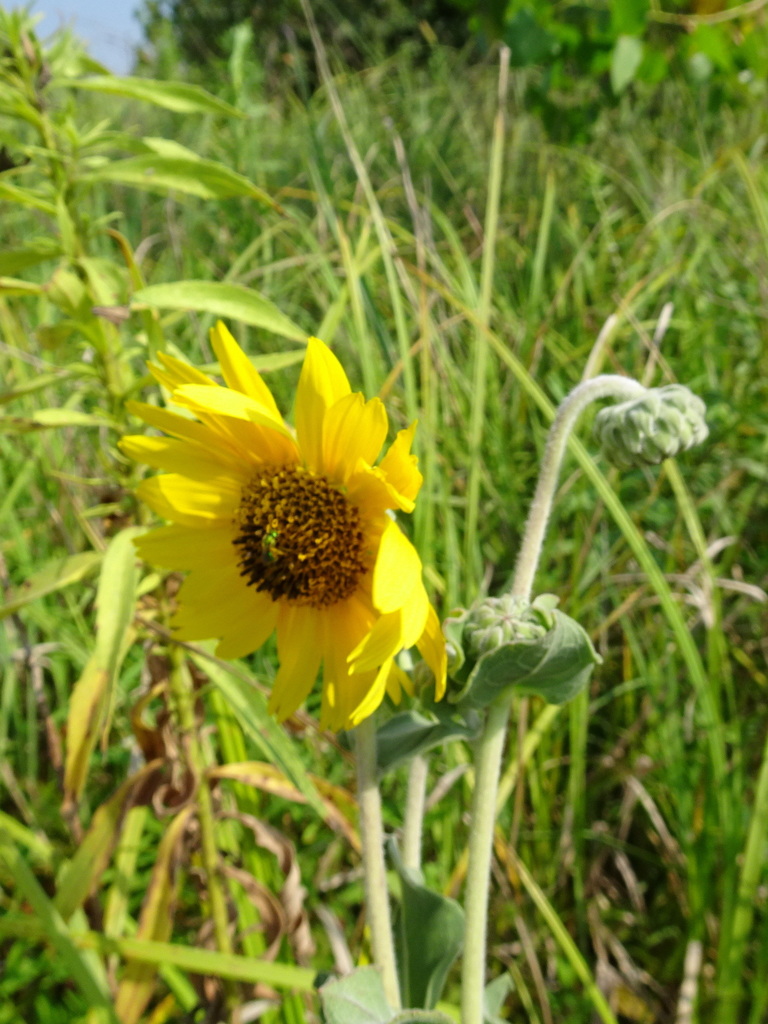
Helianthus mollis, known as Ashy Sunflower or downy sunflower, is a perennial sunflower of dry prairies, glades and open woods in the central and southeastern United States. It grows 2 to 4 feet tall (sometimes taller) and is easy to recognize by its broad, stalkless, opposite leaves, which are so densely covered in soft hairs that the whole plant looks gray-green or “ashy.” From midsummer into early fall it carries bright yellow flower heads about 3 inches across.
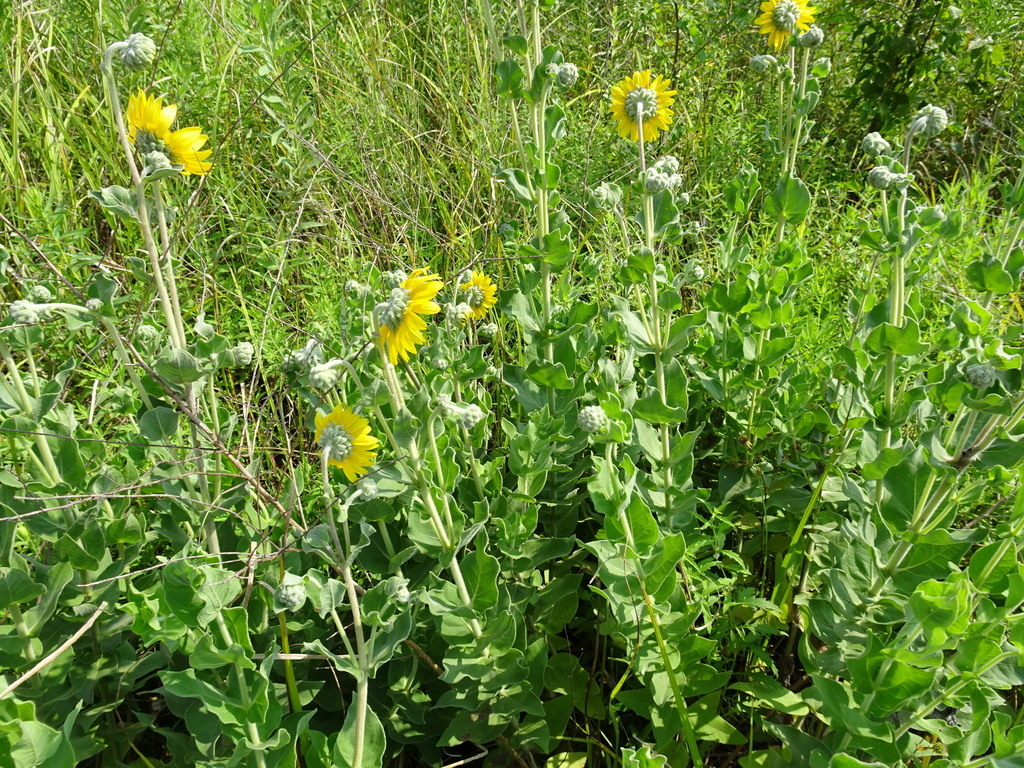
The species name mollis means “soft,” a reference to its velvety foliage. Ashy sunflower spreads by rhizomes to form colonies, which makes it a good choice for prairie plantings, meadows and large sunny borders, where its silvery leaves contrast with green grasses and other wildflowers.
It is a valuable plant for native bees and butterflies, and its seeds feed songbirds in fall. It tolerates heat, drought and poor, sandy or rocky soils. In parts of its range it is uncommon; Michigan lists it as threatened, and gardeners should buy seed or plants from native plant nurseries rather than digging from the wild.
Identification
Look for upright, gray-green stems with pairs of broad, stalkless, very hairy leaves, topped in summer by a few large yellow sunflower heads, usually growing in a patch.
Growth Habit
Ashy sunflower is a rhizomatous perennial that produces clumps or loose colonies of erect stems, usually 2 to 4 feet tall and occasionally up to about 6 feet. The stems are densely hairy and branch only near the top, where the flower heads are borne.
Leaves
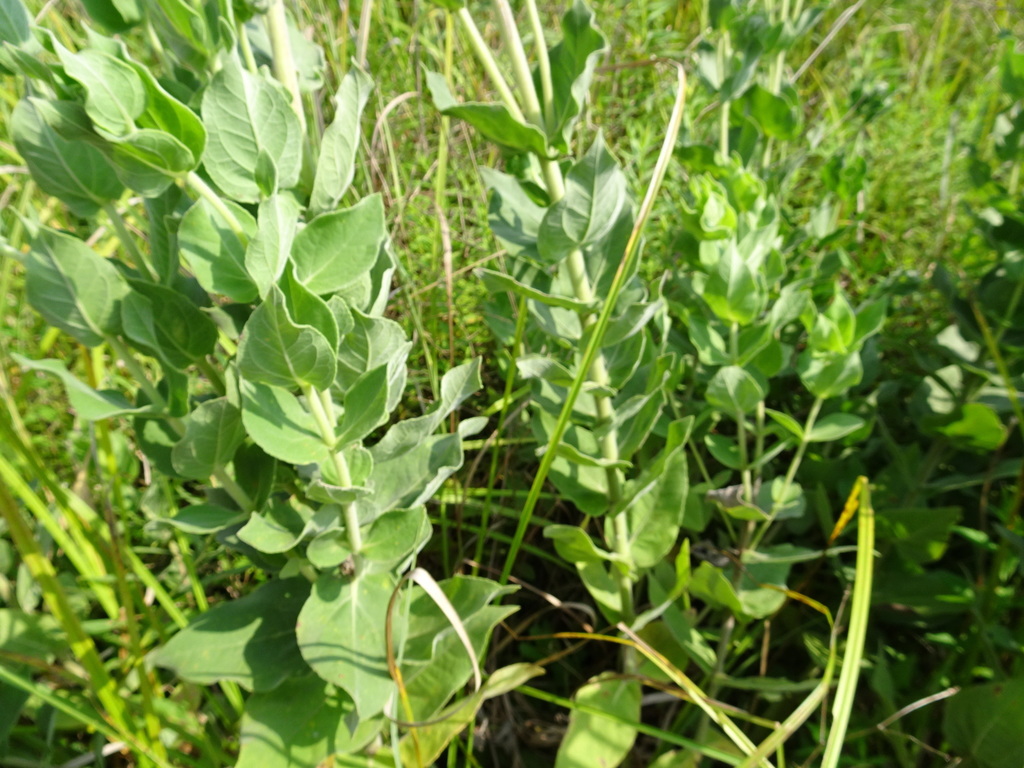
The leaves are mostly opposite (sometimes alternate near the top), ovate to broadly lance-shaped, about 2 to 5 inches long, and stalkless, with a rounded or heart-shaped base that often clasps the stem. Both surfaces are covered with soft, dense, whitish hairs, giving them a gray-green, felt-like look and feel. The edges are smooth or have small teeth. The leaves are held stiffly, often angled upward along the stem.
Flowers
The flower heads are about 2 1/2 to 4 inches across, with 15 to 25 bright yellow ray flowers around a yellow central disk about an inch wide. The bracts beneath the head are narrow, pointed and hairy, with tips that curve outward. Each stem carries one to a few heads. Bloom usually runs from July to September, with some flowers starting in June.
Fruit
The fruits are small, dark, wedge-shaped cypselae (achenes) with two small scales at the top, ripening in late summer and fall.
Look-alikes
Stiff sunflower (Helianthus pauciflorus) has rough, narrower leaves and a reddish-purple disk. Pale-leaved sunflower has stalked leaves that are pale but not woolly beneath, and grows in shadier spots. Jerusalem artichoke is taller, with stalked, rough leaves and edible tubers. The combination of soft, gray hairs and stalkless, clasping leaves is distinctive for ashy sunflower.
Quick Facts
| Scientific Name | Helianthus mollis |
| Family | Asteraceae (aster family) |
| Plant Type | Rhizomatous herbaceous perennial |
| Mature Height | 2–4 ft (occasionally to 6 ft) |
| Mature Spread | 2–3 ft; spreads by rhizomes |
| Growth Rate | Moderate to fast |
| Sun Exposure | Full sun to light shade |
| Water Needs | Low to medium; drought tolerant |
| Soil Type | Dry to medium sandy, rocky, loamy or clay soils |
| Soil pH | Acidic to slightly alkaline (about 5.5–7.5) |
| Bloom Time | July–September |
| Flower Color | Yellow |
| Fall Color | Foliage browns; seed heads for birds |
| Fruit | Small dark cypselae (achenes) |
| Deer Resistant | Moderately; hairy leaves are less favored |
| USDA Hardiness Zones | 4–9 |
Native Range
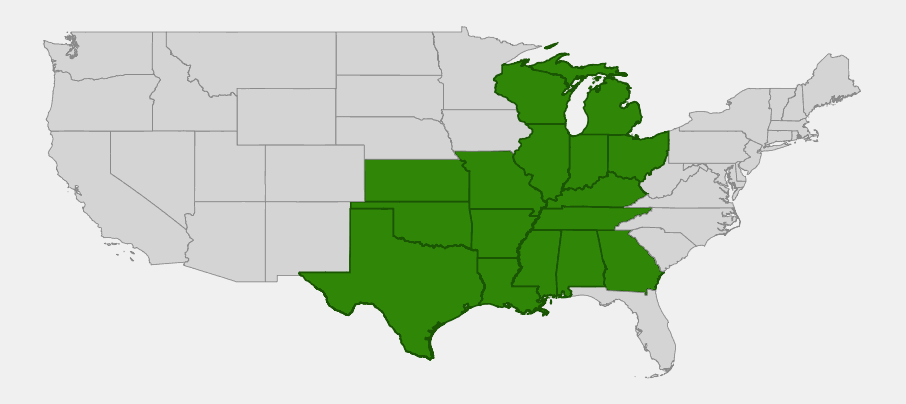
Ashy sunflower is native to the central and southeastern United States, from Michigan, Wisconsin and Ohio south through Illinois, Indiana, Missouri, Kentucky and Tennessee to Georgia, Alabama, Mississippi and Louisiana, and west to Kansas, Oklahoma and eastern Texas. Its stronghold is the prairie and glade country of the Ozarks and the lower Midwest.
USDA PLANTS also records it from New England, New York, New Jersey and several Atlantic states, but Go Botany describes it as having spread into New England from its native range, and NatureServe treats it as introduced in most northeastern and Atlantic states, so the map here shows only its native core. It is introduced in Ontario. At the northern and eastern edges of its native range it is rare; Michigan lists it as threatened, and NatureServe ranks it as critically imperiled in Ohio.
It grows in dry to mesic prairies, sand prairies, savannas and open oak woodlands, limestone and sandstone glades, old fields, and roadsides, mainly on well-drained sandy, rocky or clay soils in full sun. In Texas it is a plant of the eastern part of the state.
📋 Regional plant lists featuring Ashy Sunflower: Ohio & Indiana · Michigan, Wisconsin & Eastern Minnesota · Kentucky & Tennessee · Nebraska, Kansas & Eastern Colorado · Illinois, Iowa & Missouri · Alabama, Georgia & Mississippi · Arkansas, Louisiana, Eastern Oklahoma & Eastern Texas
Growing & Care Guide
Ashy sunflower is an easy, tough prairie perennial. Give it sun and room to spread, and it will thrive with little attention, even in poor, dry soil.
Light
Full sun gives the sturdiest stems and the most flowers. It tolerates light shade, such as the edge of an open woodland, but stems may lean and bloom less.
Soil & Water
It grows best in well-drained sandy, rocky or loamy soil and also handles clay that does not stay wet. Water during the first season; once established it is very drought tolerant and seldom needs watering. Rich, moist soil makes it grow tall and spread faster.
Planting Tips
Plant in spring or fall, spacing plants about 2 feet apart. Because it spreads by rhizomes, give it a meadow, prairie planting or large border where it can form a patch, or contain it with a mowed edge or companions that hold their ground, such as bluestems and coneflowers. Its gray foliage pairs well with purple and blue flowers.
Pruning & Maintenance
Leave the seed heads standing for birds into winter, then cut the old stems down in late winter or early spring. Divide or trim back the edges of large patches every few years if they spread too far. It needs no fertilizer.
Propagation
Sow seed outdoors in fall, or give it 30 to 60 days of cold, moist stratification before spring sowing. Clumps are easy to divide in early spring. Buy seed and plants from native plant nurseries, preferably from a local source.
Landscape Uses
- Prairie and meadow plantings: a colonizing sunflower for dry, sunny sites
- Pollinator gardens: summer nectar and pollen for native bees and butterflies
- Silver foliage contrast: gray, felted leaves among green grasses and flowers
- Dry, poor soils: thrives on sandy or rocky ground with little water
- Bird gardens: seed heads for finches and other songbirds in fall
Wildlife & Ecological Value
Like other native sunflowers, ashy sunflower supports a wide range of insects and birds, from specialist bees to seed-eating songbirds.
For Pollinators
The Xerces Society notes it as having special value to native bees. Its flowers are visited by many bees, including sunflower specialists, as well as butterflies, beetles and flies. Native sunflowers also host the caterpillars of several butterflies and moths, such as the silvery checkerspot.
For Birds
Goldfinches and other finches, sparrows and chickadees eat the seeds in late summer and fall. Insects on the plants feed songbirds raising young.
For Mammals
Rabbits and deer may graze young shoots, though the hairy leaves are less favored than those of many plants. Small mammals eat fallen seeds.
Ecosystem Role
Ashy sunflower is part of the diverse forb community of prairies, glades and savannas. Its rhizomes help hold soil, and its late-summer bloom fills the gap between early and fall-flowering prairie plants.
Cultural & Historical Uses
The genus name Helianthus comes from the Greek helios, sun, and anthos, flower. The species name mollis is Latin for “soft,” describing the velvety hairs that cover the leaves and stems.
Ashy sunflower was described by the French naturalist Jean-Baptiste Lamarck in 1789. It is one of roughly 50 species of Helianthus, nearly all native to North America, a genus that also includes the annual sunflower grown for seeds and oil.
The plant has spread beyond its native range along roads and in disturbed ground in the Northeast and Ontario. Within its native range, it is an indicator of good-quality dry prairie and glade habitat, and in Michigan, at its northern limit, it is a protected threatened species.
Frequently Asked Questions
Why is it called ashy sunflower?
Its leaves and stems are covered in soft, dense hairs that make the plant look gray, as if dusted with ash.
Does ashy sunflower spread?
Yes. It spreads by rhizomes and forms colonies, so give it room or plant it in a meadow or prairie setting.
Is ashy sunflower drought tolerant?
Yes. Once established it grows well in dry, sandy or rocky soils with little or no watering.
When does ashy sunflower bloom?
Mainly from July to September, with yellow flower heads about 3 inches across.
Is ashy sunflower native to New England?
No. USDA PLANTS records it there, but Go Botany and NatureServe treat it as introduced in New England and much of the Northeast. Its native range is the central and southeastern United States.

Looking for a nursery that carries Ashy Sunflower?
Browse our native plant nursery directory: Alabama & Arkansas · Georgia · Illinois, Indiana & Kansas · Kentucky, Louisiana, Michigan, Mississippi & Missouri · Ohio & Oklahoma · Tennessee & Texas · Wisconsin
