Seersucker Sedge (Carex plantaginea)
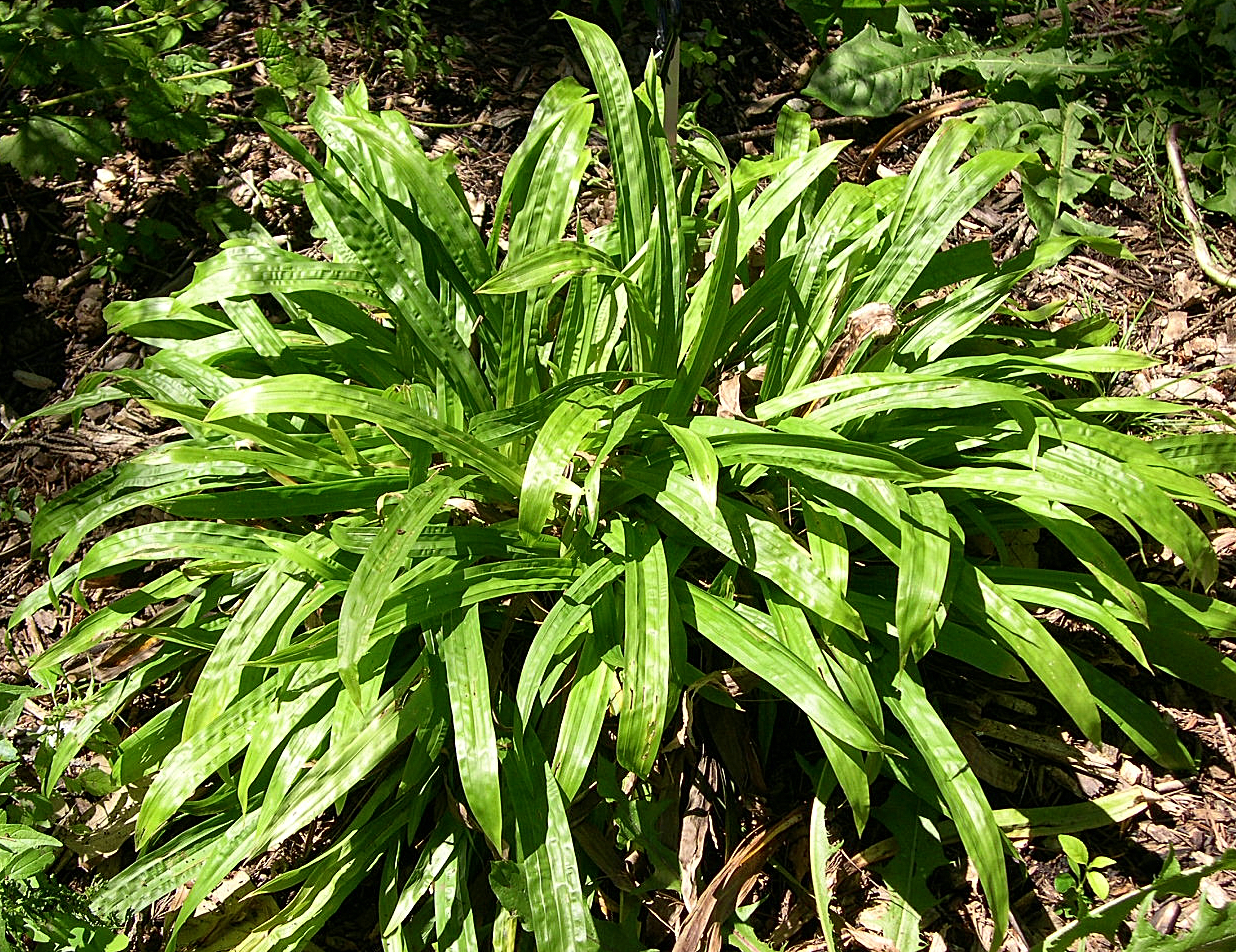
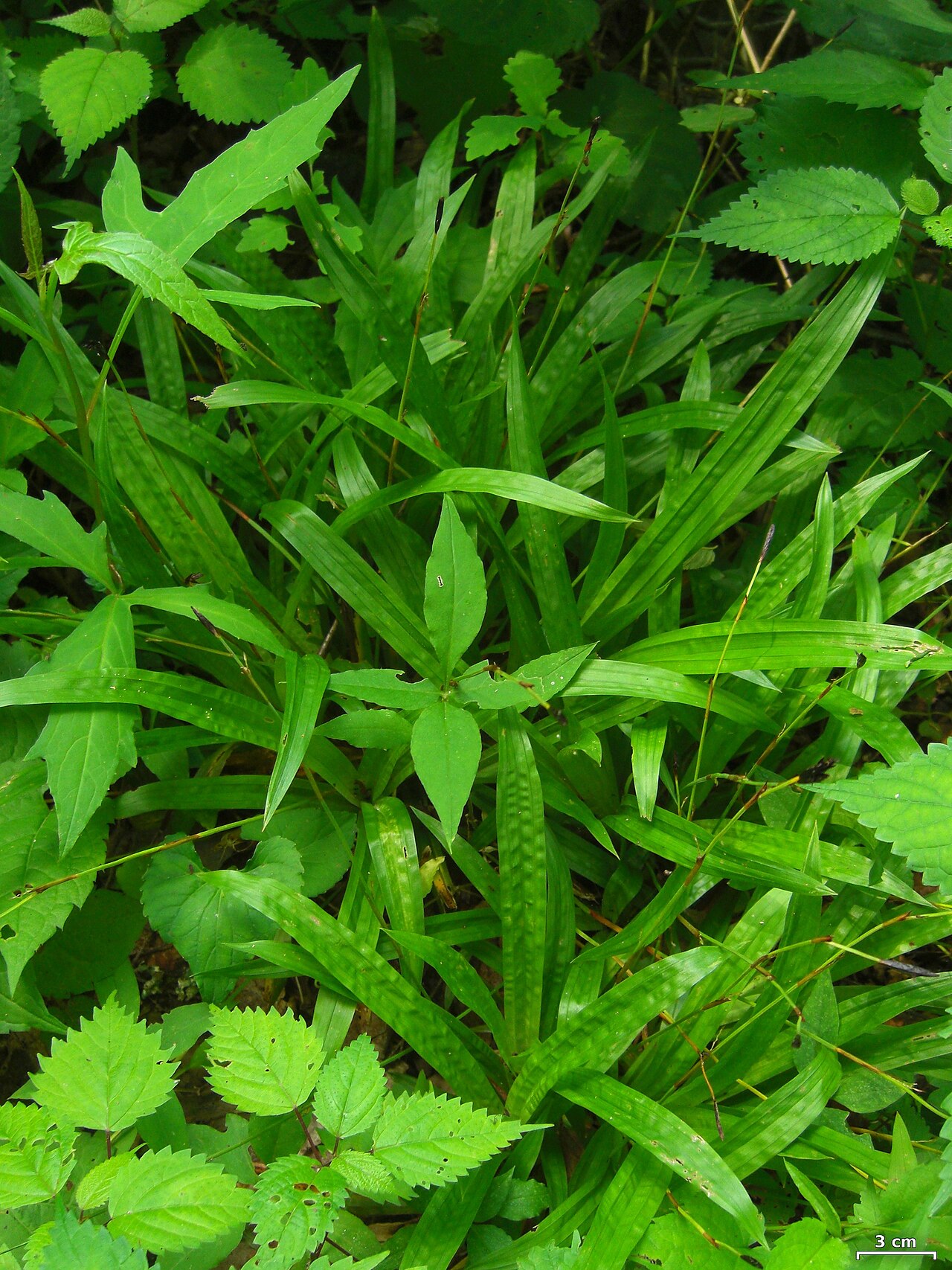
Carex plantaginea, best known as Seersucker Sedge or Plantainleaf Sedge, is one of the most ornamental of the eastern woodland sedges and a favorite of shade gardeners who have discovered that sedges can be just as handsome as hostas. Its common name comes directly from its leaves: broad, strap-like blades with a distinctly puckered, crinkled surface texture that recalls seersucker fabric — an unusual and immediately recognizable trait among North American sedges, nearly all of which have flat or folded, grass-like leaves.
Unlike the fine-textured turf sedges used for lawn substitutes, Seersucker Sedge is a bold-textured clumping species, with leaves up to an inch wide forming a low, radiating rosette 8 to 12 inches tall. In early spring, often before most other woodland perennials have emerged, it sends up reddish-purple flowering stems topped with soft, straw-colored pollen tassels — a striking and somewhat unexpected display for a plant most gardeners think of purely as foliage.
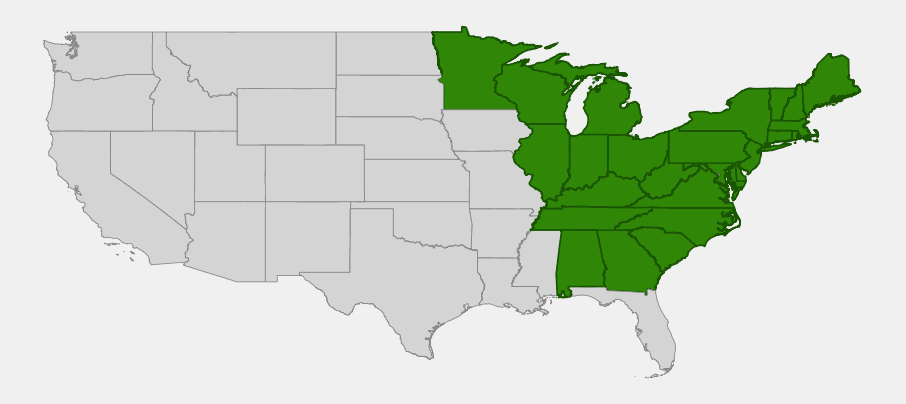
Seersucker Sedge is native to rich deciduous forests across the northeastern quarter of the United States and adjacent Canada, from New England and the Great Lakes south through the Appalachians to the mountains of northern Georgia and Alabama. It is a plant of undisturbed, calcium-rich or circumneutral soils rather than a generalist, which makes a healthy wild population a good sign of high-quality forest.
Identification
Seersucker Sedge forms a low, slow-spreading clump 8 to 12 inches tall and about as wide, with wide, strap-shaped, evergreen to semi-evergreen leaves arranged in a loose rosette. The clump does not run aggressively; instead it gradually thickens into an increasingly dense mound over years.
Leaves
The leaves are the plant’s signature feature: ½ to 1 inch wide — unusually broad for a Carex — dark green, and distinctly puckered or quilted along their length, a texture visible even from several feet away and unmistakable up close. Leaf undersides are often paler, with a whitish bloom, and the leaf margins can be faintly wavy. This leaf shape and surface texture, more reminiscent of a small hosta or plantain (hence “plantaginea”) than a typical grass-like sedge, is the most reliable field character for identification.
Flowers & Fruit
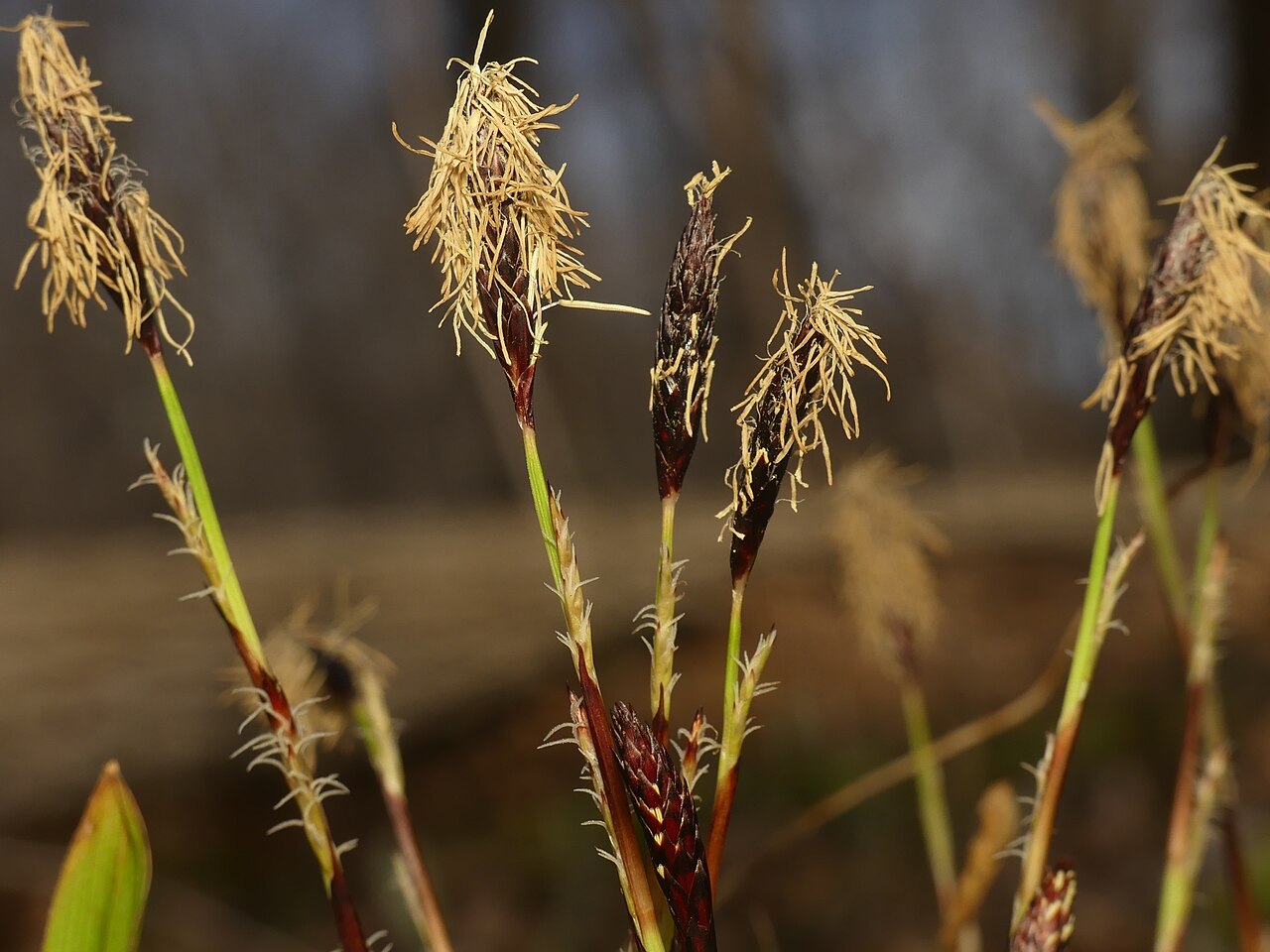
Flowering occurs very early in spring, from March into May depending on latitude, often appearing before the current season’s leaves have fully expanded. Flowering stems are deep maroon to purplish-red at the base, topped by a cluster of slender spikes: an upper staminate spike bearing soft, pale yellow-tan pollen tassels, and lower pistillate spikes that develop into loosely arranged, greenish perigynia as the season progresses. The contrast of wine-red stems against pale flower tassels is distinctive and makes this one of the more visually interesting sedges in bloom.
Quick Facts
| Scientific Name | Carex plantaginea |
| Family | Cyperaceae (Sedge) |
| Plant Type | Evergreen to semi-evergreen clumping perennial sedge |
| Mature Height | 8–12 in (flowering stems slightly taller) |
| Mature Spread | 10–14 in, slowly thickening clump |
| Growth Rate | Slow |
| Sun Exposure | Part Shade to Full Shade |
| Water Needs | Average, consistent moisture preferred |
| Soil Type | Rich, humusy loam; calcium-rich or neutral preferred |
| Soil pH | 6.0–7.5 (neutral to slightly alkaline) |
| Bloom Time | March – May |
| Flower Color | Tan pollen tassels on maroon-red stems |
| Fall Color | Evergreen; foliage persists dark green |
| Fruit | Small greenish perigynia (not ornamental) |
| Deer Resistant | Yes, generally avoided |
| USDA Hardiness Zones | 3–8 |
Native Range
Seersucker Sedge is native to the northeastern quarter of North America, from New Brunswick and Quebec west across the Great Lakes region to Minnesota and Wisconsin, south through New England and the Mid-Atlantic, and down the Appalachian chain to the mountains of North Carolina, Tennessee, and the northern edges of Georgia and Alabama, where it becomes uncommon at the southern limit of its range.
Within this range, Seersucker Sedge is closely tied to rich, mesic deciduous forests, particularly cove forests and other sites underlain by calcium-rich or circumneutral bedrock such as limestone or mafic rock. It is often found alongside spring ephemerals and other calciphile (lime-loving) understory plants, and it is a good indicator of fertile, relatively undisturbed forest soil rather than the acidic, sandy conditions many other eastern woodland sedges tolerate.
The species is scarce at the margins of its range, including parts of Minnesota and the southern Appalachians, where local populations should be respected as indicators of high-quality habitat rather than treated as a convenient source for wild collection; nursery-propagated plants are both more reliable in the garden and better for wild populations.
📋 Regional plant lists featuring Seersucker Sedge: New Hampshire, Maine & Vermont · Connecticut, Massachusetts & Rhode Island · New York, Pennsylvania & Northern New Jersey · Delaware, Southern New Jersey & Long Island · Maryland, Virginia & West Virginia · North Carolina & South Carolina · Georgia, Alabama & Mississippi · Kentucky & Tennessee · Ohio & Indiana · Illinois, Iowa & Missouri · Michigan, Wisconsin & Eastern Minnesota
Growing & Care Guide
Seersucker Sedge rewards gardeners who can offer it the rich, evenly moist, shaded conditions of its native cove forest habitat. It is slower to establish than many native sedges, but the payoff is a long-lived, beautifully textured clump that needs very little upkeep once settled in.
Light
This sedge grows best in part shade to full shade. It tolerates dappled high shade beneath deciduous trees particularly well, which mirrors the open-canopy conditions of the cove and slope forests where it grows wild. In deeper, denser shade it still performs acceptably, though growth and flowering are more modest.
Soil & Water
Seersucker Sedge prefers rich, humus-laden soil with consistent moisture, ideally on the neutral to slightly alkaline side — a reflection of its affinity for calcium-rich or mafic bedrock in the wild. It does not tolerate prolonged drought well and performs best with steady moisture rather than the extremes of waterlogging or dry spells. Amending planting sites with compost or leaf mold, and mulching with shredded leaves, helps replicate the fertile forest floor it needs.
Planting Tips
Plant container stock in spring or early fall, spacing clumps 12 to 15 inches apart if grouping for a groundcover effect, or wider if using as individual accents among other shade perennials. Because it spreads slowly, buying a reasonable number of plants (or dividing generously down the road) gives a fuller look faster than waiting for a few plants to bulk up alone.
Pruning & Maintenance
Minimal maintenance is needed. Remove any winter-damaged leaves in early spring before new growth and flower stems emerge. Clumps rarely need dividing for plant health, but can be divided in spring if more plants are wanted; expect divisions to take a season or two to look fully established given the species’ naturally slow growth rate.
Landscape Uses
Seersucker Sedge’s bold, puckered leaves make it a standout texture plant in shaded gardens:
- Woodland garden accent paired with spring ephemerals like trillium and bloodroot
- Textural foil for ferns and fine-leaved shade perennials
- Shaded rock garden or slope planting on calcareous or neutral soils
- Deer-resistant groundcover in woodland beds troubled by browsing
- Container or shaded entryway planting where its unusual leaf texture can be appreciated up close
- Native alternative to hosta in shade combinations, without the slug damage
Wildlife & Ecological Value
Seersucker Sedge contributes to the forest-floor ecosystem in ways typical of woodland Carex species, even though it is grown primarily for its ornamental foliage.
For Birds
Ground-foraging songbirds take the small seed of Seersucker Sedge and related woodland sedges opportunistically, and the dense basal foliage offers low cover for birds moving through the forest understory.
For Mammals
Small mammals use sedge clumps for cover on the forest floor, and some rodents feed on the seed. As with many native Carex species, the foliage also serves as a larval host for certain satyr butterflies, linking this plant into the broader food web that supports insectivorous birds.
For Pollinators
Like other sedges, Seersucker Sedge is wind-pollinated and offers essentially no nectar reward. Its early bloom time, however, means the pollen itself is available very early in spring, when few other floral resources of any kind are present in the forest understory.
Ecosystem Role
As a long-lived component of rich, calcium-influenced forest understories, Seersucker Sedge helps stabilize soil on slopes, contributes to leaf litter decomposition, and serves as an indicator species for high-quality, nutrient-rich forest habitat. Because it does not tolerate significant disturbance, its presence (or absence) is a useful signal of overall forest health.
Cultural & Historical Uses
Seersucker Sedge does not have a well-documented history of utilitarian use by Indigenous peoples or early settlers, unlike larger wetland sedges that were historically harvested for basketry and weaving material. Its relatively small size, modest fiber yield, and restriction to upland forest habitat likely made it a less practical resource than the larger marsh and streamside sedges that were more commonly gathered.
Its primary significance has always been ecological and, more recently, horticultural. Botanists and naturalists have long used the presence of Seersucker Sedge as a field indicator of rich, calcium-influenced cove forest soils — the same conditions favored by prized spring wildflowers such as trillium, Dutchman’s breeches, and wild ginger. In recent decades it has become a sought-after plant among native plant gardeners and nurseries specifically for its unusual puckered foliage, filling a niche among shade perennials that few other native plants occupy.
Frequently Asked Questions
Why is it called Seersucker Sedge?
The name refers to the distinctly puckered, crinkled texture of its broad leaves, which resembles the texture of seersucker fabric. This is an unusual trait among North American sedges, most of which have smooth, flat, grass-like leaves.
Does Seersucker Sedge spread aggressively?
No. It is a slow, clump-forming sedge that gradually thickens in place rather than spreading by long rhizomes. It will not take over a bed the way some running groundcovers do.
What soil does Seersucker Sedge need?
It performs best in rich, consistently moist soil with a neutral to slightly alkaline pH, reflecting its native habitat on calcium-rich or mafic bedrock. In very acidic soils it may be less vigorous than other native sedges.
Can Seersucker Sedge handle dry shade?
Not as well as some other woodland sedges. It prefers consistent moisture and will show stress — browning leaf tips, reduced growth — in prolonged dry shade. Pair it with supplemental watering if your shade garden runs dry in summer.
Is Seersucker Sedge the same as “wood sedge”?
“Wood sedge” is a generic common name applied to several different woodland Carex species. Seersucker Sedge (also called Plantainleaf Sedge) is distinguished from other wood sedges by its unusually wide, puckered leaves and maroon-red flowering stems.

Looking for a nursery that carries Seersucker Sedge?
Browse our native plant nursery directory: NE, NV, NH, NJ, NM, NY, NC, ND, OH, OK · KY, LA, ME, MD, MA, MI, MN, MS, MO, MT · PA, RI, SC, SD, TN, TX, UT, VT, VA · ID, IL, IN, IA, KS · CO, CT, DE, FL, GA, HI · AL, AK, AZ, AR · WV, WI, WY