
Shrubby Tiquilia (Tiquilia canescens)
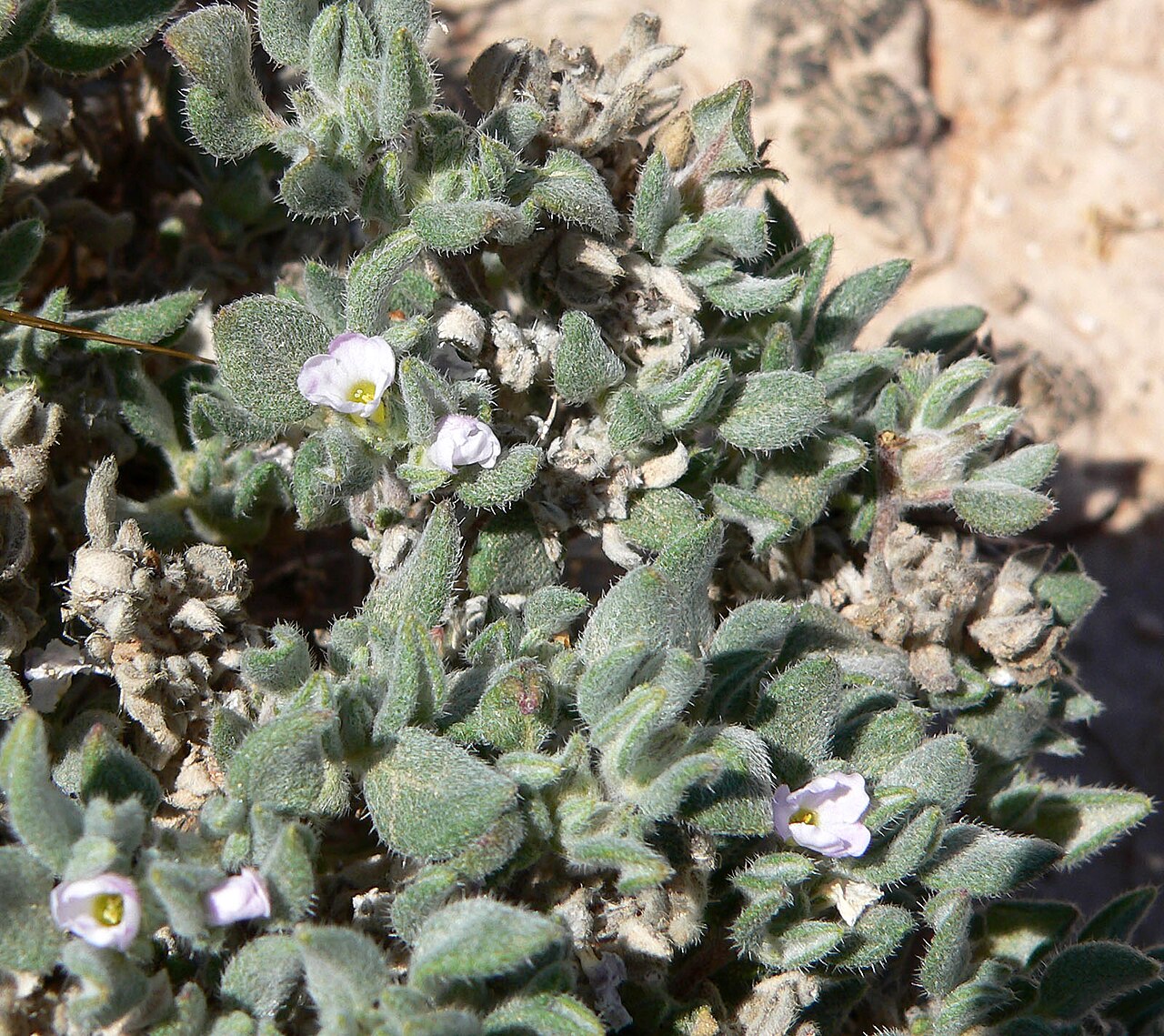
Tiquilia canescens, known as Shrubby Tiquilia (USDA: woody crinklemat; also shrubby crinklemat or oreja de perro), is a low, gray subshrub of the deserts of the American Southwest and northern Mexico. It forms tight mounds or mats of small, densely hairy leaves, and from spring into summer it is dotted with small, funnel-shaped flowers in white, pink or pale lavender.
It belongs to the borage family (Boraginaceae) in the broad sense; some botanists place Tiquilia in the separate family Ehretiaceae. It was formerly known as Coldenia canescens. The dense covering of stiff white hairs gives the whole plant a silvery-gray color, reflecting sunlight and helping it conserve water in some of the hottest, driest landscapes in North America.
Shrubby tiquilia grows on rocky slopes, limestone ledges, gravelly flats and washes in the Mojave, Sonoran and Chihuahuan deserts. It is a charming, very drought-tolerant plant for desert rock gardens and xeriscapes, though it is rarely sold.
Identification
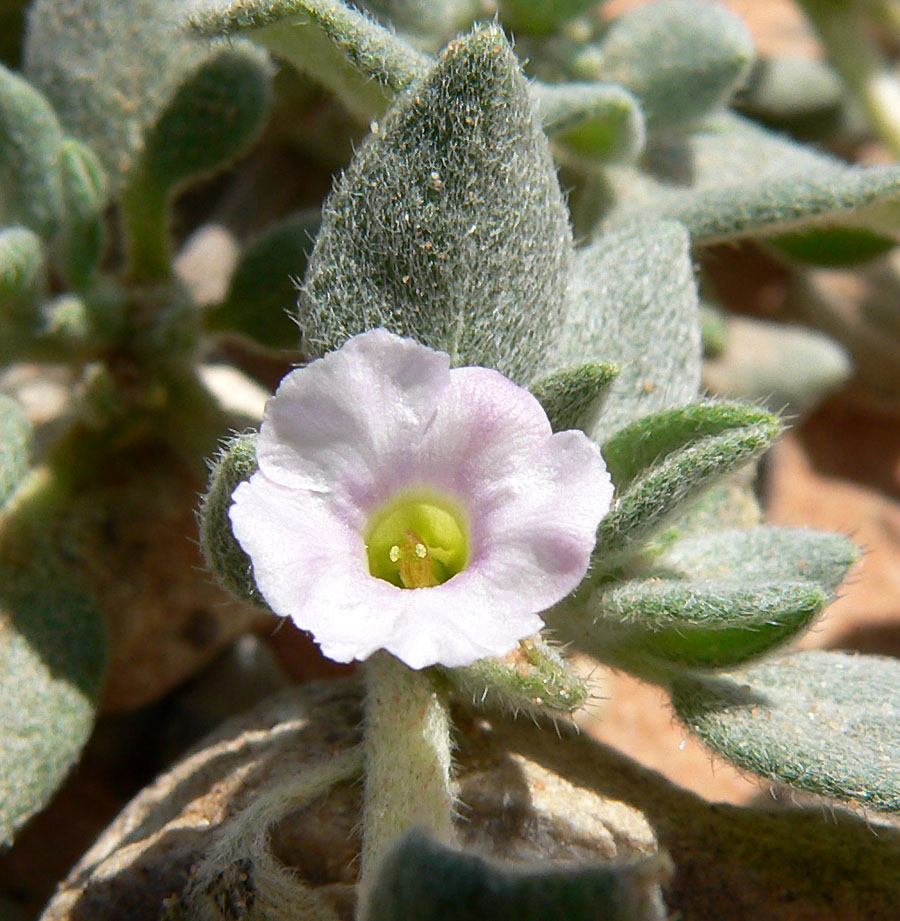
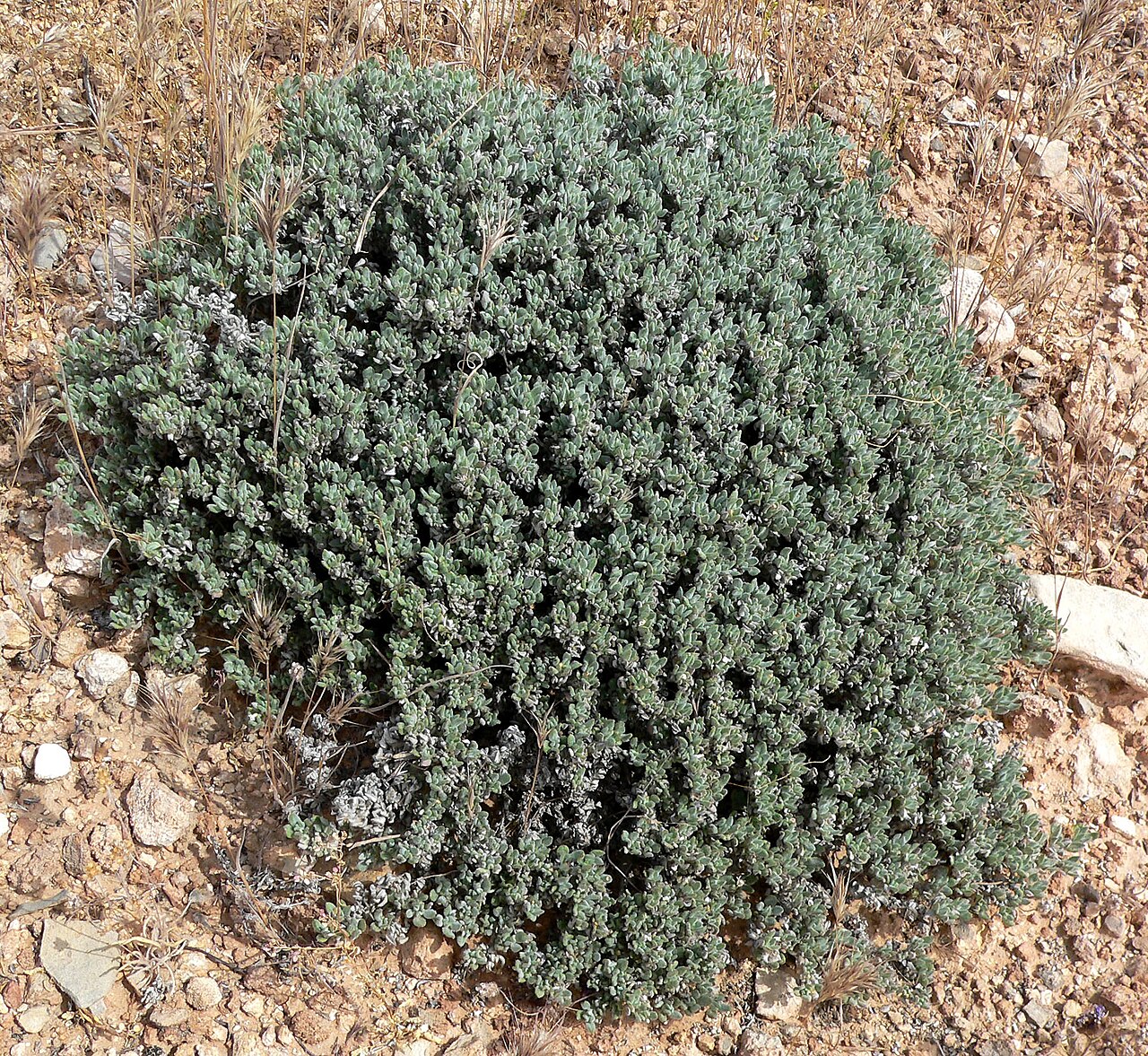
Look for a low, rounded, gray mound with a woody base, small oval leaves densely covered with stiff white hairs, and small pink to lavender or white funnel-shaped flowers tucked among the leaves.
Growth Habit
A low, woody-based perennial subshrub that forms rounded mounds or mats, usually 4 to 12 inches tall and up to about 2 feet across. The many short, branching stems are covered with hairs, and older stems are woody and grayish-brown.
Leaves
The leaves are alternate, small (about 1/4 to 5/8 inch long), oval to broadly lance-shaped, and crowded along the stems. Both surfaces are covered with stiff, white, flat-lying and spreading hairs, many of them with swollen bases, which make the leaves look gray and feel rough. The edges may be slightly wavy, but the leaves are not deeply pleated.
Flowers
The flowers grow singly or in small groups in the leaf axils near the branch tips. Each is funnel-shaped to bell-shaped, about 1/4 to 1/2 inch across, with five rounded lobes in white, pink or lavender and a yellowish throat. Main bloom is from about March to May, with scattered flowers after summer rains.
Fruit
The fruit splits into four small, smooth nutlets, each with a single seed, hidden inside the hairy calyx.
Look-alikes
Fan-leaved tiquilia (T. plicata) grows in sandy places and has distinctly pleated, fan-like leaves. Other crinklemats, such as T. latior and T. nuttallii, have pleated leaves or are annual. Two varieties of shrubby tiquilia are recognized, var. canescens and var. pulchella, which differ in leaf size and hairiness.
Quick Facts
| Scientific Name | Tiquilia canescens (syn. Coldenia canescens) |
| Family | Boraginaceae (borage family); sometimes Ehretiaceae |
| Plant Type | Low, mounding subshrub |
| Mature Height | 4–12 in |
| Mature Spread | 1–2 ft |
| Growth Rate | Slow |
| Sun Exposure | Full sun |
| Water Needs | Very low; extremely drought tolerant |
| Soil Type | Rocky, gravelly or sandy soils; often limestone |
| Soil pH | Neutral to alkaline (about 7.0–8.5) |
| Bloom Time | March–May; scattered blooms after summer rain |
| Flower Color | White, pink or pale lavender |
| Fall Color | None; gray-green most of the year |
| Fruit | Four small nutlets |
| Deer Resistant | Yes; rarely browsed |
| USDA Hardiness Zones | 7–10 |
Native Range
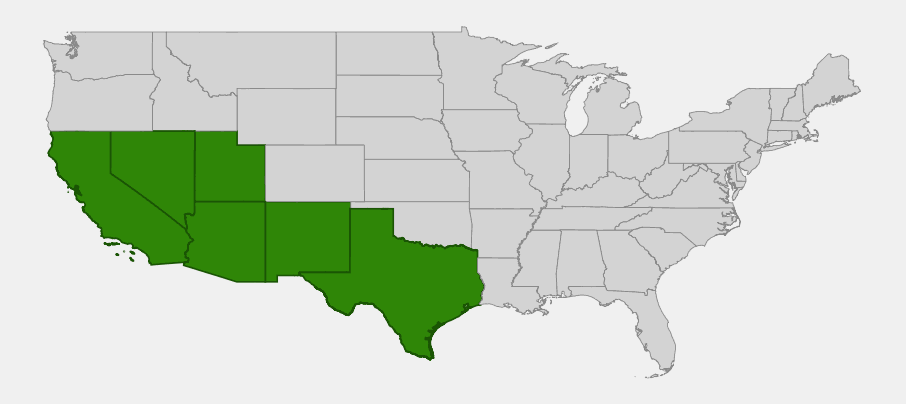
USDA PLANTS lists shrubby tiquilia as native to Arizona, California, Nevada, New Mexico, Texas and Utah, and it extends south into northern Mexico. It is found across the three major warm deserts of the United States: the Mojave, Sonoran and Chihuahuan.
In California it grows in the eastern Mojave and Colorado deserts. In Nevada it is common around Las Vegas, including Red Rock Canyon, and in Utah it reaches only the far southwestern corner. It grows across much of southern and western Arizona and southern New Mexico. In Texas it is common in the Trans-Pecos and reaches east onto the western Edwards Plateau; it is not found in East Texas.
Typical habitats are dry, rocky slopes, limestone ledges and outcrops, gravelly bajadas, desert washes and roadcuts, usually in creosote bush scrub, blackbrush scrub and desert grassland, from low desert elevations to about 5,000 feet.
📋 Regional plant lists featuring Shrubby Tiquilia: Utah & Western Colorado · Arizona & New Mexico · South & West Texas · California & Nevada
Growing & Care Guide
Shrubby tiquilia is a plant for desert gardeners who want a small, silvery accent among rocks. It needs heat, sun and fast drainage, and very little water.
Light
Full sun. In shade it becomes loose and leggy and flowers less.
Soil & Water
Plant in rocky, gravelly or sandy soil with excellent drainage; limestone gravel is ideal. Water a few times during the first warm season to get it established, then only during very long droughts. Overwatering and heavy soil are the most common causes of failure.
Planting Tips
Plant in fall or early spring in a rock garden, on a gravel mulch, along the edge of a path, or between boulders. Use it as a small accent with cacti, agaves and other low desert shrubs.
Pruning & Maintenance
No pruning is needed. Keep the area around the crown free of leaf litter and organic mulch, which hold moisture. Use gravel mulch instead.
Propagation
By seed, sown in warm weather, or by cuttings of young shoots rooted in a gritty, very well-drained mix. Seeds and plants are rarely available commercially; collect only small amounts of seed, with permission.
Landscape Uses
- Desert rock gardens: a small silvery mound among stones
- Xeriscapes: thrives with almost no water
- Gravel gardens and path edges: low, tidy, and heat tolerant
- Pollinator gardens: spring flowers for small native bees
- Restoration: for rocky desert slopes and roadcuts
Wildlife & Ecological Value
Shrubby tiquilia is a small but common part of desert plant communities across the Southwest.
For Pollinators
The small flowers attract native bees, including small solitary bees, as well as flies and butterflies.
For Birds
Its low mounds give shelter to ground-dwelling insects eaten by desert birds, and small birds may eat the nutlets.
For Mammals
It is rarely browsed. Rodents may gather the small nutlets.
Ecosystem Role
Its dense mounds trap windblown soil and organic matter and give shade to tiny seedlings and soil organisms on otherwise bare, rocky ground.
Cultural & Historical Uses
The genus name Tiquilia is thought to come from a South American vernacular name; the genus grows in deserts of both North and South America. The species name canescens means “grayish,” for its hairy leaves.
In parts of Texas and Mexico it is called oreja de perro, “dog’s ear,” for the shape and soft look of its leaves.
The dense hairs of desert plants like shrubby tiquilia reflect sunlight, slow air movement over the leaf surface and reduce water loss, a strategy shared by many silvery-leaved desert plants.
Frequently Asked Questions
Is shrubby tiquilia the same as woody crinklemat?
Yes. USDA PLANTS calls Tiquilia canescens woody crinklemat. Shrubby tiquilia is another common name for the same plant.
How much water does it need?
Very little. Once established in a well-drained, sunny spot in the desert Southwest, it usually survives on rainfall alone.
Where does shrubby tiquilia grow?
On rocky slopes, limestone ledges and gravelly flats in the Mojave, Sonoran and Chihuahuan deserts, from southeastern California and southern Nevada to West Texas and northern Mexico.
How is it different from fan-leaved tiquilia?
Fan-leaved tiquilia has pleated, fan-shaped leaves and grows in sand. Shrubby tiquilia has flat, oval, very hairy leaves and grows mostly on rocky ground.
Can I grow shrubby tiquilia outside the desert?
Only in hot, dry climates with very well-drained soil. It does poorly in humid regions or wet winters.

Looking for a nursery that carries Shrubby Tiquilia?
Browse our native plant nursery directory: Arizona · California · Nevada & New Mexico · Texas & Utah

