
Silverpuffs (Microseris lindleyi)
Microseris lindleyi, known as Silverpuffs or Lindley’s silverpuffs, is a native annual wildflower of the western United States and southern British Columbia, in the sunflower family (Asteraceae). In spring it raises small, pale yellow, dandelion-like flower heads on slender stalks above a tuft of narrow, grass-like leaves. Many botanists, including the Flora of North America and California’s Jepson eFlora, place it in its own genus as Uropappus lindleyi.
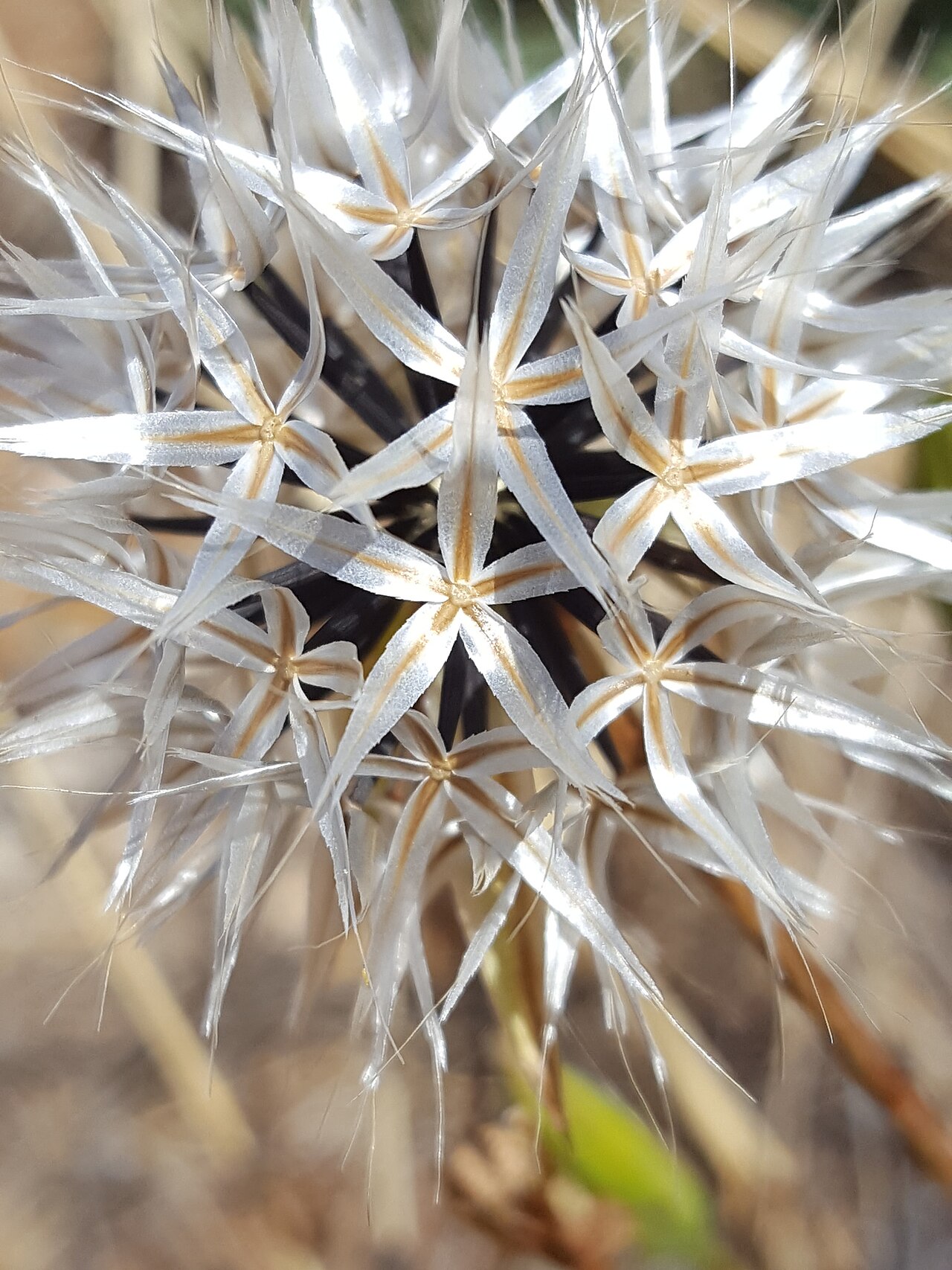
Its flowers are modest, but its seed heads are remarkable. Each seed is topped with five shining, silvery, papery scales ending in fine bristles, and together they form a sparkling, star-studded sphere an inch or more across that catches the low sun on spring hillsides. Those globes are what most people notice, and what gives the plant its name.
Silverpuffs grows in an unusually wide range of open habitats, from California grasslands and chaparral to sagebrush, pinyon-juniper woodland and desert scrub across the Great Basin and Southwest. This guide covers how to identify it, where it grows, how to grow it from seed, and its role in western ecosystems.
Identification
Silverpuffs belongs to a group of native “dandelions” that can be hard to tell apart in flower. Its seed head, with broad, silvery pappus scales rather than soft fluffy bristles, is the easiest way to recognize it.
Growth Form
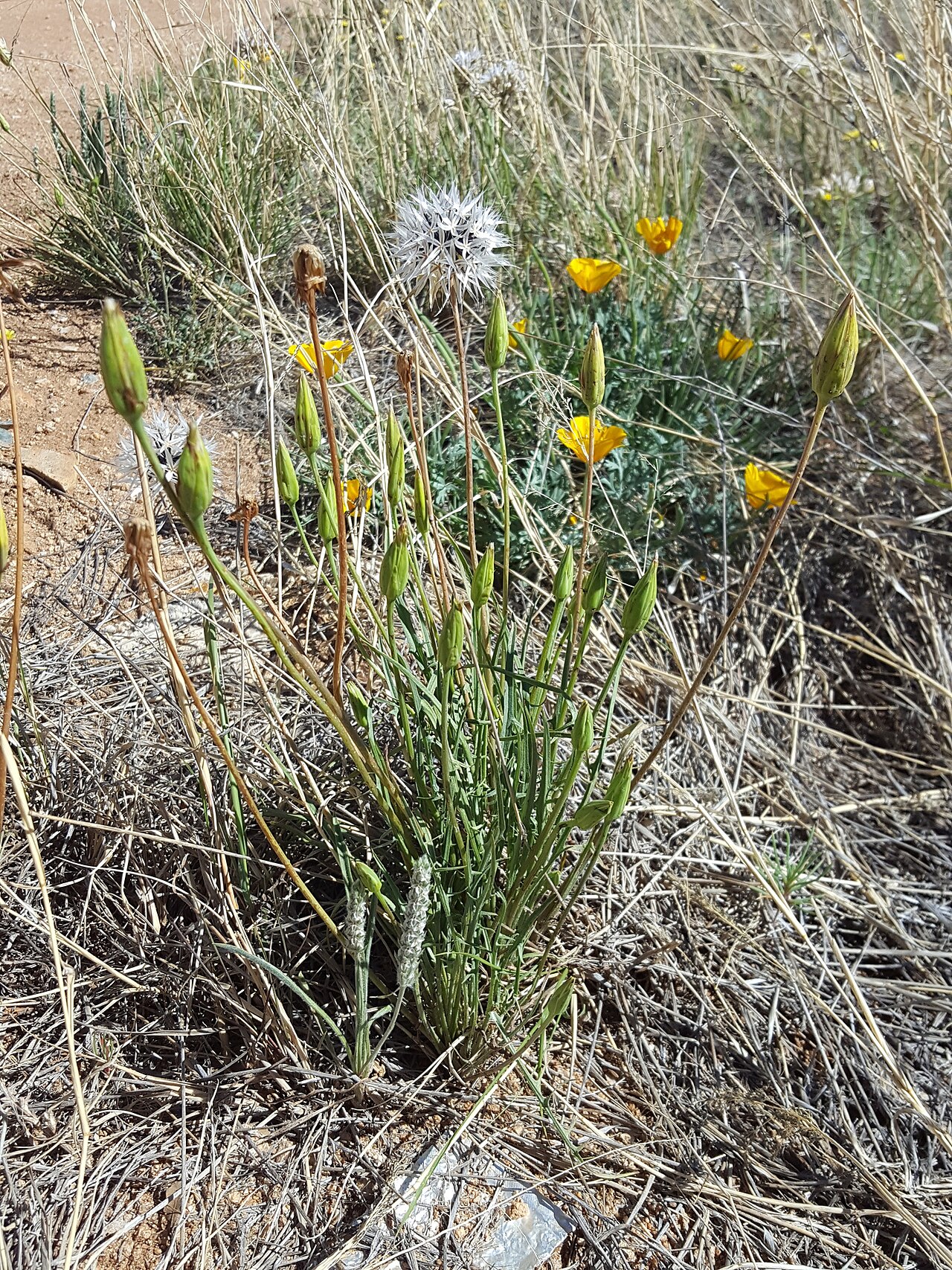
An annual herb with milky sap, usually 4 to 24 inches tall (sometimes taller), with leaves mostly in a basal tuft and one to several leafless flower stalks.
Leaves
The leaves are long and narrow, 2 to 10 inches long, grass-like and either entire or with a few narrow, pointed side lobes. They are mostly hairless and can be green to gray-green.
Flower Heads
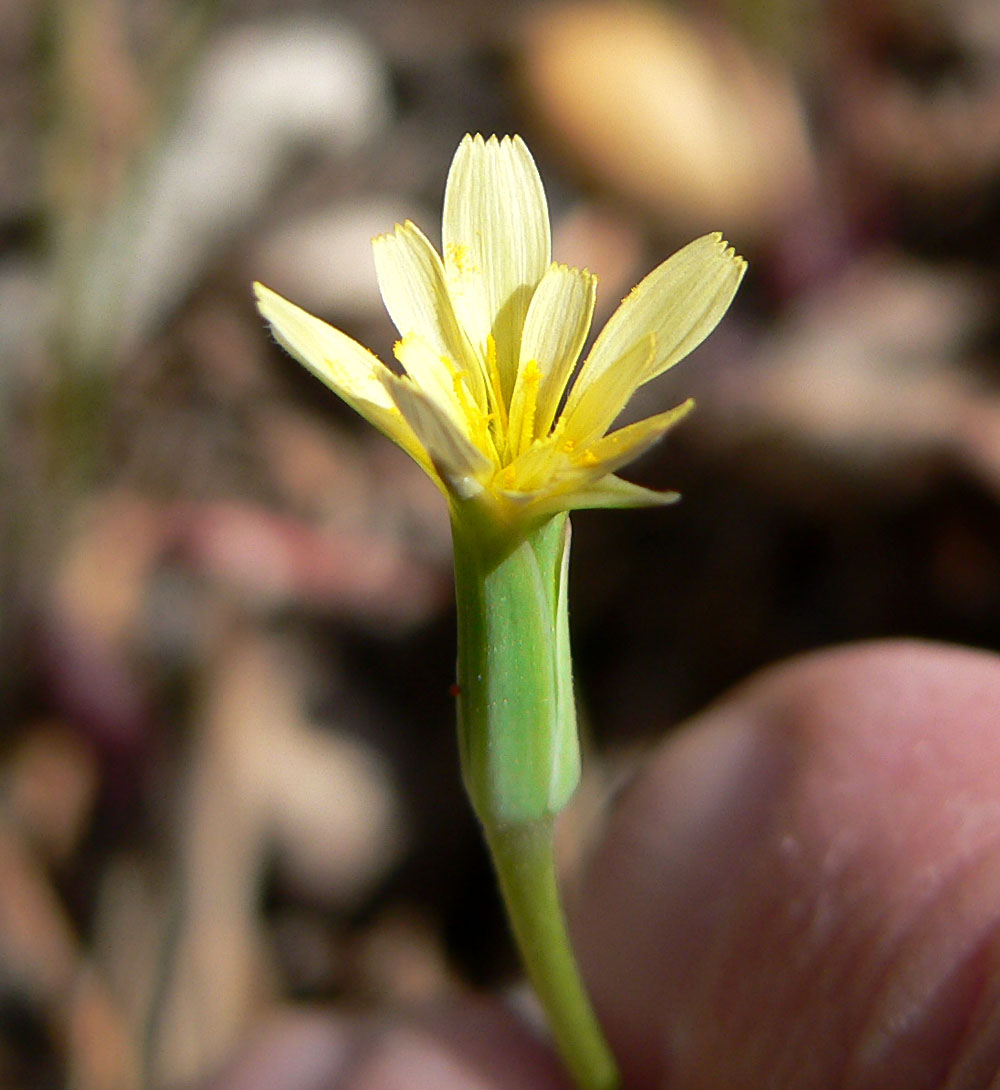
The buds nod on their stalks and straighten as the flowers open. Each head is made up only of strap-shaped ray florets, pale yellow and sometimes drying whitish or pinkish, and is about ½ to 1 inch across. The flowers open in the morning and close by afternoon. Bloom time is mainly March to May, later at higher elevations and farther north.
Fruit & Seeds
The fruits are slender, dark achenes that taper toward the top. Each carries a pappus of five silvery, translucent scales, each notched at the tip with a long bristle rising from the notch. When ripe the heads open into a round, shining ball before the seeds blow away.
Similar Species
Other Microseris species and the related agoseris (mountain dandelions) have similar yellow flowers, but most have pappus of soft bristles or narrower scales. Introduced salsify (Tragopogon) also makes large round seed heads, but they are fluffy and feathery, its leaves clasp the stem, and its plants are much larger. Common dandelion has broader, toothed leaves and a fluffy seed head.
Quick Facts
| Scientific Name | Microseris lindleyi (syn. Uropappus lindleyi) |
| Family | Asteraceae (sunflower family) |
| Plant Type | Annual herb (wildflower) |
| Mature Height | 4–24 in |
| Mature Spread | 3–8 in |
| Growth Rate | Fast; completes its life cycle in spring |
| Sun Exposure | Full sun |
| Water Needs | Low; winter-spring moisture only |
| Soil Type | Well-drained sandy, gravelly, rocky or clay soils |
| Soil pH | About 6.0–8.5 |
| Bloom Time | March–May (to June northward and at higher elevations) |
| Flower Color | Pale yellow |
| Fall Color | None; dies back by early summer |
| Fruit | Achenes with five silvery, bristle-tipped pappus scales |
| Deer Resistant | No; may be grazed |
| USDA Hardiness Zones | Annual; grows in zones 5–10 |
Native Range
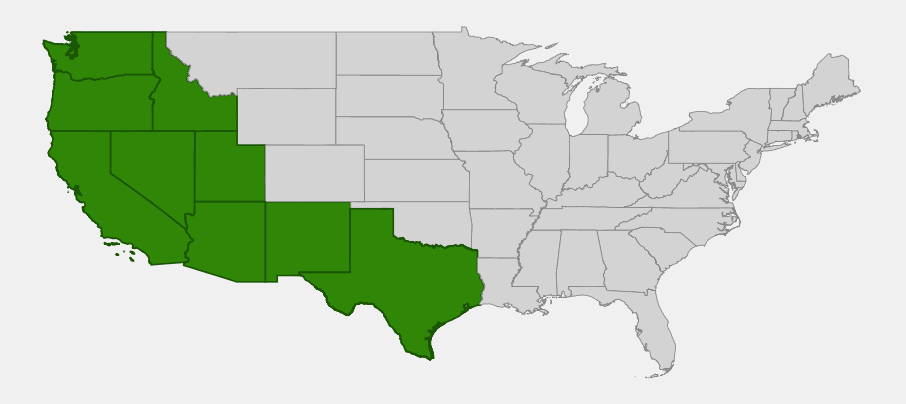
Silverpuffs is one of the most widespread native annual wildflowers of the western United States. USDA PLANTS records it in Washington, Oregon, Idaho, California, Nevada, Utah, Arizona, New Mexico and Texas, and in British Columbia in Canada. It also extends into northern Baja California, Mexico. It is especially common in California, where it grows from the coast to the deserts, and across the Great Basin and the Southwest.
In the Pacific Northwest it occurs in western Oregon and in the dry interior of Oregon and Washington, reaching southern British Columbia. In Texas it is found in the western part of the state. Across this range it grows in grasslands, chaparral and coastal sage scrub, oak and pine woodland openings, sagebrush steppe, pinyon-juniper woodland and desert scrub.
It favors open, sunny ground with thin or sandy, gravelly and rocky soils, often on slopes and in places with little competition. It ranges from near sea level to roughly 6,500 feet.
📋 Regional plant lists featuring Silverpuffs: Arizona & New Mexico · California & Nevada · Idaho, Eastern Oregon & Eastern Washington · Utah & Western Colorado · Western Oregon & Western Washington · South & West Texas
Growing & Care Guide
Silverpuffs is rarely sold as a plant, but it is easy to grow from seed in a sunny wildflower patch, desert garden or meadow, where it will come back each spring if it is allowed to set seed.
Light
Grow it in full sun. It does not compete well in shade or under dense growth.
Soil & Water
Sow it in well-drained, lean soil: sandy, gravelly or rocky ground is ideal, though it also grows on clay slopes. It needs moisture from fall through spring and nothing in summer, when it has already set seed and died back. Avoid irrigation and fertilizer, which favor weeds.
Planting Tips
Scatter seed in fall on bare, open ground and rake it in lightly, ideally before winter rains. It mixes well with other low annual wildflowers such as goldfields and miniature lupine, and with sparse native bunchgrasses. Keep thick, weedy annual grasses under control, since they easily crowd it out.
Pruning & Maintenance
None is needed. Leave the plants until the seed heads have shattered and the seed has dispersed, then rake off the dry stems if you like. Collect a few seed heads to resow in new spots.
Propagation
Grow it from seed, sown outdoors in fall. Collect seed when the heads open into their silvery spheres, and store it dry until autumn. It reseeds on its own in open ground.
Landscape Uses
- Wildflower meadows and annual plantings: spring flowers and showy silver seed heads
- Desert and dry gardens: an easy annual for lean, rocky soils
- Children’s and nature-study gardens: the sparkling seed heads are a delight to find
- Habitat restoration: within its range, in seed mixes for open, dry sites
- Dried arrangements: seed heads can be picked just before they open fully
Wildlife & Ecological Value
Silverpuffs is a small annual, but it is part of the springtime wildflower community that feeds many insects and seed-eaters across the West.
For Pollinators
Small native bees, including sweat bees and other solitary bees, and flower flies visit the flowers for pollen and nectar in the morning hours, when the heads are open.
For Birds
Sparrows, finches, quail and other ground-feeding birds eat seeds of native annuals like silverpuffs in late spring and early summer.
For Mammals
Rodents such as kangaroo rats and pocket mice gather the seeds of desert and grassland annuals, and grazing animals may eat the plants in spring.
Ecosystem Role
As a widespread annual of open ground, silverpuffs contributes to the seed bank that supports wildlife through the dry season. Its wind-dispersed seeds let it quickly colonize bare ground, and it is often part of healthy native annual communities between shrubs and bunchgrasses.
Cultural & Historical Uses
The species honors the English botanist John Lindley. The genus name Microseris means “small chicory,” and Uropappus, the genus many botanists now use for this plant, means “tailed pappus,” a reference to the bristle “tail” on each silvery pappus scale.
Whether to treat it as Microseris lindleyi or Uropappus lindleyi has gone back and forth. USDA PLANTS uses Microseris, while the Flora of North America and California’s Jepson eFlora use Uropappus. Older literature also calls it Microseris linearifolia.
For many hikers in the West, silverpuffs seed heads are a familiar sign of spring turning to summer, shining in the low light on hillsides after most of the flowers have faded.
Frequently Asked Questions
Why is it called silverpuffs?
For its seed heads. Each seed is crowned with five silvery, papery scales, and together they form a shining, star-studded ball that looks like a silver puff.
Is silverpuffs a dandelion?
No, though it is related. It belongs to the same chicory tribe of the sunflower family and has similar yellow flowers and milky sap, but it is a native annual and its seed head is made of silvery scales, not fluffy bristles.
Is it Microseris lindleyi or Uropappus lindleyi?
Both names are in use. USDA PLANTS uses Microseris lindleyi, while the Flora of North America and the Jepson eFlora use Uropappus lindleyi. They refer to the same plant.
Where does silverpuffs grow?
Across much of the western United States, from Washington and Idaho south to California, Arizona, New Mexico and western Texas, plus southern British Columbia and northern Baja California, in open, sunny grasslands, chaparral, sagebrush, woodland openings and desert scrub.
How do I grow silverpuffs?
Scatter seed in fall on bare, sunny, well-drained soil and let winter rain do the rest. It flowers in spring, sets seed and dies back by summer, then returns from seed the next year.

Looking for a nursery that carries Silverpuffs?
Browse our native plant nursery directory: Arizona · California · Idaho · Nevada & New Mexico · Oregon · Texas & Utah · Washington