
St. Andrew’s Cross (Hypericum hypericoides)
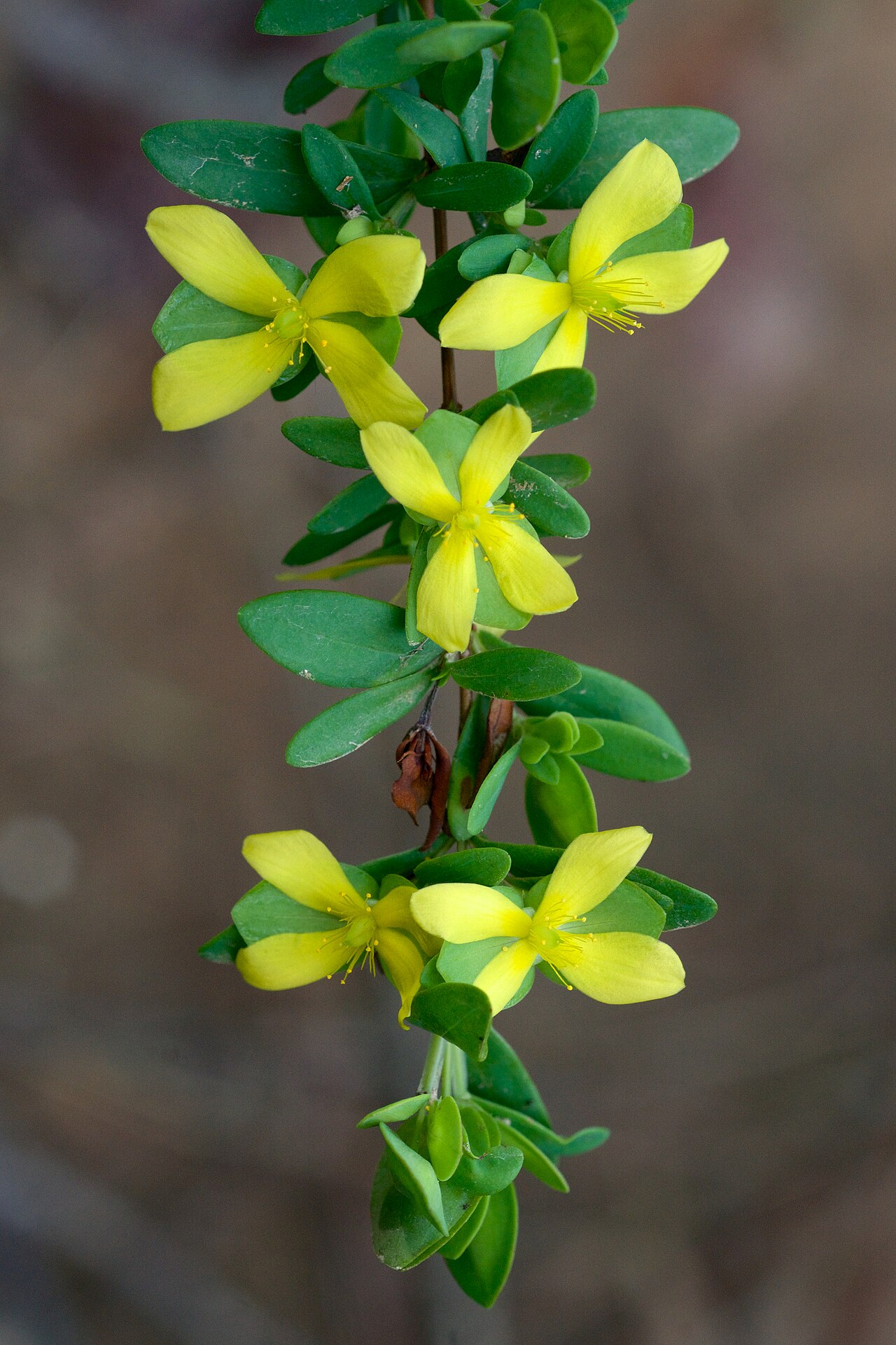
Hypericum hypericoides, known as St. Andrew’s Cross, is a small, wiry, semi-evergreen shrub of open woods, pinelands and sandy clearings across the eastern and southern United States. It is usually only 1 to 3 feet tall, with reddish, peeling stems and small, narrow, opposite leaves, and it carries pale yellow flowers whose four narrow petals form a slanted X, like the saltire cross on which, according to tradition, the apostle Andrew was martyred. It is a member of the St. John’s-wort genus, placed in the Clusiaceae by USDA PLANTS and the Atlas of Florida Plants and in Hypericaceae by many current botanists.
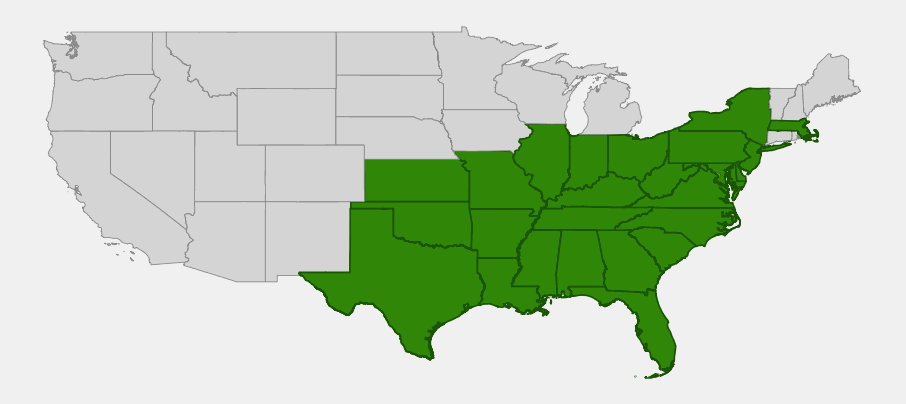
The Atlas of Florida Plants writes the name as St. Andrew’s-cross, and USDA PLANTS as St. Andrew’s cross. It is one of the most widespread and familiar of the native St. John’s-worts. It grows from Massachusetts and New York south to Florida and west to Kansas, Oklahoma and Texas, and beyond the United States into Mexico, Central America and the Caribbean, including Puerto Rico. In Florida it occurs throughout the state, from the Panhandle to the edge of the Everglades.
Although it is small and easy to overlook, St. Andrew’s cross is an attractive, tough little native for dry to moist, sunny or lightly shaded gardens. It is occasionally sold by native nurseries in the Southeast. This guide covers how to recognize it, where it grows, and how to use it in a native landscape.
Identification
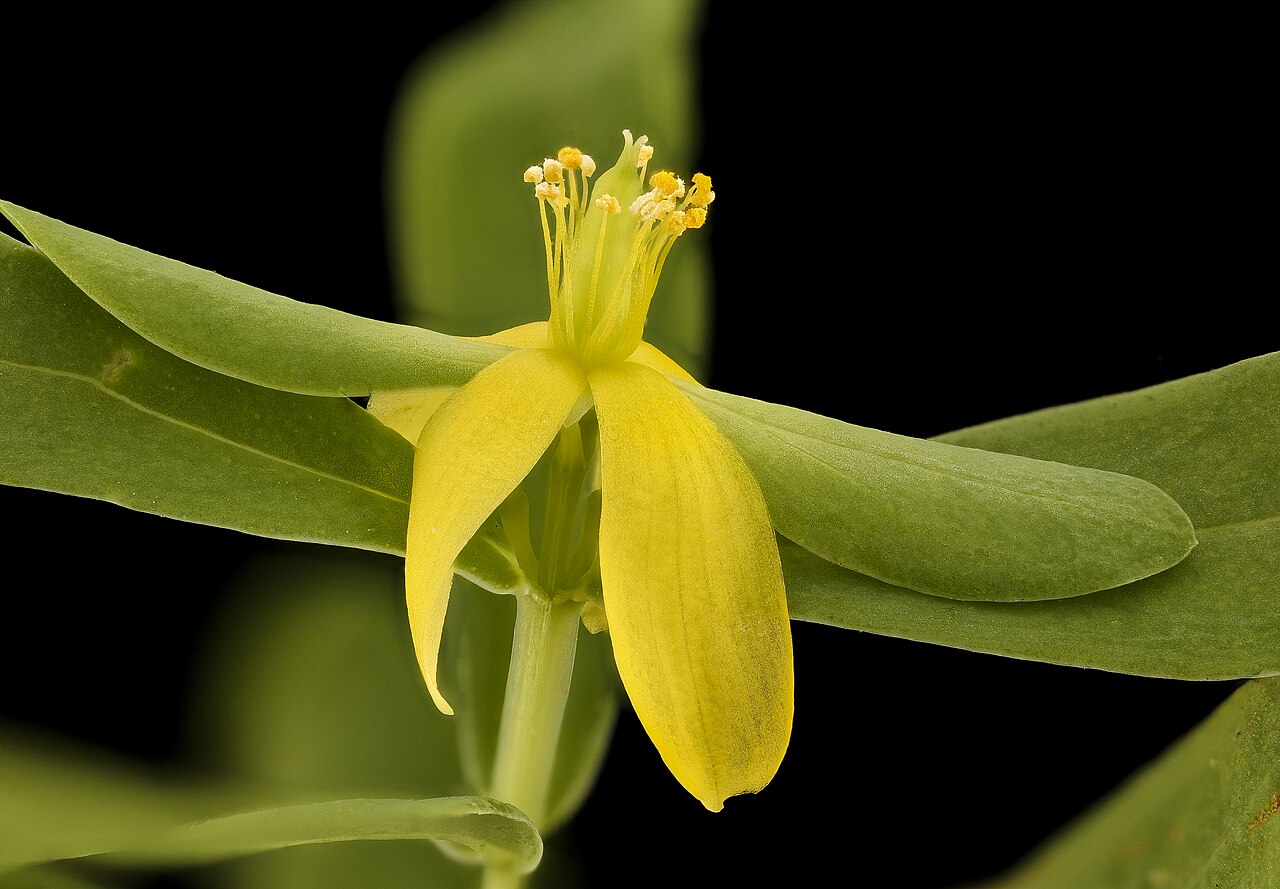
St. Andrew’s cross is easy to identify in flower thanks to its four-petaled, X-shaped blooms. Most other St. John’s-worts have five petals. Out of bloom, look for its low, wiry habit, reddish peeling bark, and small, narrow opposite leaves.
Growth Habit & Bark
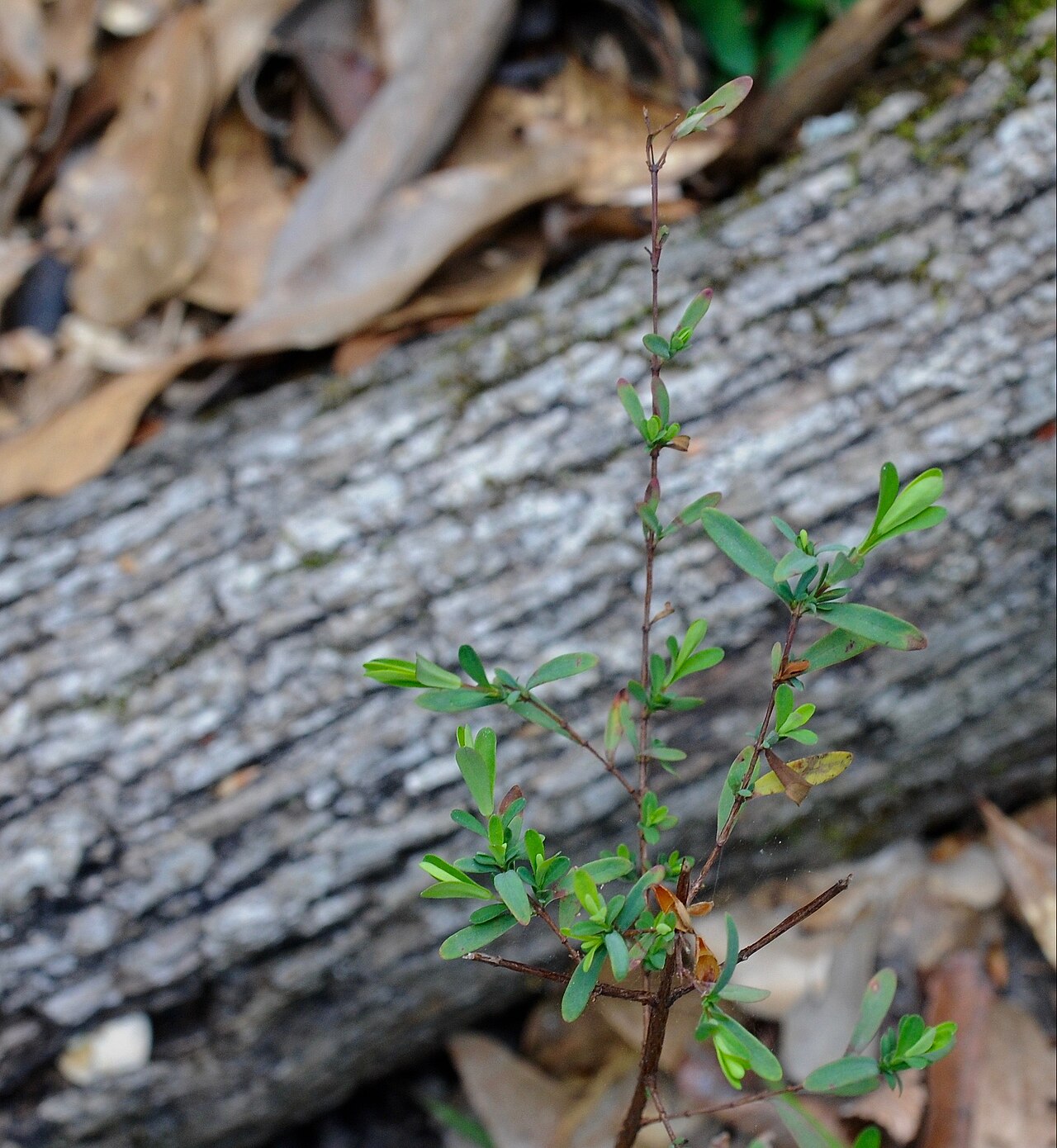
St. Andrew’s cross is a low shrub or subshrub, usually 1 to 3 feet tall, with many slender, upright to spreading branches from a woody base. Some forms are nearly prostrate and creep along the ground; these are sometimes treated as subsp. multicaule or as a separate species, H. stragulum. The bark on older stems is reddish brown and peels in thin strips, which the Lady Bird Johnson Wildflower Center notes as a distinctive feature.
Leaves
The leaves are opposite, stalkless, narrowly oblong to oblanceolate, and usually ½ to 1 inch long, with smooth margins. Plants of the low, spreading form (subsp. multicaule) often have broader, elliptic leaves, as in the Arkansas plant pictured above. They are bright to bluish green and dotted with tiny translucent glands that you can see when a leaf is held up to the light, a trait shared by most St. John’s-worts. In mild climates many leaves persist through winter.
Flowers
The flowers are about ½ to ¾ inch across and pale to bright yellow. Each has four narrow petals arranged in two unequal pairs that form a slanted X. Behind them are four sepals: two large, broad outer sepals and two tiny inner ones. In the center is a brush of many yellow stamens. Flowers are borne singly or in small groups near the branch tips. The main bloom is in summer and fall, roughly July to October, but in Florida flowers can appear in almost any month.
Fruit
The fruit is a small, egg-shaped capsule, enclosed by the two large persistent sepals, that splits to release tiny seeds. The dry capsules and sepals often remain on the plant into winter.
Similar Species
Several other four-petaled St. John’s-worts grow in the Southeast. St. Peter’s-wort (H. crux-andreae, syn. H. stans) is taller and more upright, with broader, clasping leaves and larger flowers. Fourpetal St. John’s-Wort (H. tetrapetalum) of Florida and Georgia has rounded, clasping leaves. Five-petaled species, such as Shrubby St. John’s-Wort, are easily separated by petal count.
Quick Facts
| Scientific Name | Hypericum hypericoides (syn. Ascyrum hypericoides); accepted by USDA PLANTS and the Atlas of Florida Plants |
| Family | Clusiaceae per USDA PLANTS and the Atlas of Florida Plants (Hypericaceae in many recent treatments) |
| Plant Type | Low semi-evergreen shrub or subshrub |
| Mature Height | 1–3 ft (some forms nearly prostrate) |
| Mature Spread | 1–3 ft |
| Growth Rate | Moderate |
| Sun Exposure | Full sun to part shade |
| Water Needs | Low to moderate; drought tolerant once established |
| Soil Type | Sandy, loamy or rocky soils; well-drained to seasonally moist |
| Soil pH | About 4.5–7.0 (acidic to neutral) |
| Bloom Time | Mainly July–October; nearly year-round in Florida |
| Flower Color | Pale to bright yellow |
| Fall Color | Leaves sometimes tinged reddish in cold weather |
| Fruit | Small capsule enclosed by two large sepals |
| Deer Resistant | Generally yes |
| USDA Hardiness Zones | 6–10 |
Native Range
St. Andrew’s cross has a broad range in eastern North America and the American tropics. USDA PLANTS and the Lady Bird Johnson Wildflower Center record it from 25 states, from Massachusetts, New York, Pennsylvania and Ohio south to Florida, and west to Illinois, Missouri, Kansas, Oklahoma and Texas. USDA also lists it as native to Puerto Rico. Beyond the United States it extends through Mexico and Central America and into the Caribbean.
It is most abundant on the Atlantic and Gulf Coastal Plain and in the Piedmont and Ozarks, where it is a common plant of dry, open woods. It becomes scarce and scattered toward the northern edge of its range in New York, Massachusetts and the Ohio Valley. In Florida, the Atlas of Florida Plants lists it as native and records come from essentially the whole state, from the western Panhandle through the peninsula to Miami-Dade County.
St. Andrew’s cross grows in a wide range of habitats, from dry sandhills, oak woods and rocky slopes to pine flatwoods, the edges of bayheads and moist sandy clearings. It is especially common in fire-maintained pinelands, where it resprouts after burns, and in open woods, roadsides and old fields with thin soil.
📋 Regional plant lists featuring St. Andrew’s Cross: North & South Florida · Alabama, Georgia & Mississippi · North & South Carolina · Maryland, Virginia & West Virginia · Kentucky & Tennessee · Arkansas, Louisiana, Eastern Oklahoma & Eastern Texas · Illinois, Iowa & Missouri · Ohio & Indiana · Nebraska, Kansas & Eastern Colorado · New York, Pennsylvania & Northern New Jersey · Delaware, Southern New Jersey & Long Island · Connecticut, Massachusetts & Rhode Island
Growing & Care Guide
St. Andrew’s cross is an easy, low-maintenance native shrub that thrives in poor, sandy or rocky soil where many plants struggle. It stays small, blooms for a long season, and fits naturally into pineland, woodland-edge and rock gardens. Look for it at native plant sales and native nurseries in the Southeast.
Light
Full sun to part shade suits it. Plants in sun are denser and bloom more heavily; in shade they become sparse and open. Dappled light under pines is ideal.
Soil & Water
It grows in a wide range of soils, from dry, deep sand to rocky loam and moist sandy flatwoods soils, as long as drainage is reasonable. Acidic to neutral soils are best. Water new plants until established; after that it is drought tolerant and rarely needs irrigation. Avoid rich, fertilized soil and heavy clay that stays waterlogged.
Planting Tips
Plant from containers in fall or spring, 18 to 24 inches apart. It works well in front of larger shrubs, along paths, among grasses and wildflowers in a pineland-style garden, or tucked among rocks. Low, spreading forms make an informal groundcover on sandy banks.
Pruning & Maintenance
Very little is needed. If plants get leggy, cut them back by about half in late winter, before new growth; they resprout readily from the base, as they do after fire in the wild. Avoid heavy mulch around the crown. Plants can be short-lived in rich or wet garden soil, so allow some seedlings to grow as replacements.
Propagation
Grow from seed sown on the surface in fall or spring; the tiny seeds need light to germinate. Softwood cuttings taken in late spring or early summer root fairly easily. Plants sometimes self-sow in open, sandy spots.
Landscape Uses
- Pineland and sandhill gardens: a natural low shrub among grasses and wildflowers in sandy soil
- Rock gardens and dry banks: tolerates thin, poor, dry soils
- Woodland edges: adds fine texture and late-season yellow flowers in light shade
- Pollinator gardens: pollen-rich flowers for native bees over a long season
- Restoration plantings: common in fire-maintained pinelands and open woods throughout its range
Wildlife & Ecological Value
St. Andrew’s cross is small, but its long bloom season and abundance in many habitats make it a useful plant for insects, and its low, twiggy growth provides cover near the ground.
For Pollinators
Like other St. John’s-worts, the flowers produce no nectar but offer abundant pollen. They are visited mainly by bees, including bumble bees, sweat bees and other small native bees that collect pollen, and the USGS bee monitoring lab has photographed the species in its work on native bees. Hover flies also feed on the pollen.
For Birds
The tiny seeds are of minor value to birds. Ground-dwelling birds such as northern bobwhite, towhees and sparrows use the low, twiggy shrubs for cover.
For Mammals
Deer usually avoid it, though it may be browsed occasionally. Many Hypericum species contain compounds that can cause sun sensitivity in grazing livestock, so it is not a forage plant.
Ecosystem Role
In longleaf pine and other fire-maintained communities, St. Andrew’s cross resprouts quickly from its woody base after burns, helping to cover and stabilize the ground. Its persistence in disturbed sites such as roadsides and old fields also makes it a common early woody plant in succession.
Cultural & Historical Uses
The common name refers to the X-shaped arrangement of the petals, which recalls the saltire, the diagonal cross associated with St. Andrew, the patron saint of Scotland. The species was long known as Ascyrum hypericoides, and older field guides still use the genus Ascyrum for St. Andrew’s cross and its four-petaled relatives. Most botanists now include them in Hypericum, which explains the repetitive scientific name: hypericoides means “like Hypericum.”
Ethnobotanical records show that several Native American nations of the Southeast used St. Andrew’s cross in traditional medicine, for example as a tea or poultice. These uses are part of cultural history and are not recommendations; many Hypericum species contain active compounds and can interact with medications.
Today St. Andrew’s cross is valued mostly by native plant gardeners and naturalists as a dependable, small native shrub and as a common, cheerful sight along woodland trails across the South.
Frequently Asked Questions
Why is it called St. Andrew’s cross?
The four narrow yellow petals form a slanted X, resembling the diagonal cross (saltire) on which, according to tradition, St. Andrew was crucified. The same symbol appears on the flag of Scotland.
Is St. Andrew’s cross a shrub or a wildflower?
It is a small woody shrub or subshrub, usually 1 to 3 feet tall, with a woody base and peeling reddish bark. Because it is small and flowers like a wildflower, it is often treated as one in field guides.
Is St. Andrew’s cross toxic?
It is not considered a food or forage plant. Many Hypericum species contain compounds that can cause sun sensitivity in livestock, and the plant should not be eaten or used medicinally without professional advice.
Does St. Andrew’s cross need watering?
Only while it is getting established. After that it is drought tolerant in sandy or rocky soils and does better with too little water than too much.
How do I tell St. Andrew’s cross from other St. John’s-worts?
Count the petals: St. Andrew’s cross has four narrow petals in an X, while most St. John’s-worts have five. Among the four-petaled species, St. Andrew’s cross has small, narrow leaves that do not clasp the stem.

Looking for a nursery that carries St. Andrew’s Cross?
Browse our native plant nursery directory: Alabama & Arkansas · Delaware, Florida & Georgia · Illinois, Indiana & Kansas · Kentucky, Louisiana, Maryland, Massachusetts, Mississippi & Missouri · New Jersey, New York, North Carolina, Ohio & Oklahoma · Pennsylvania, South Carolina, Tennessee, Texas & Virginia · West Virginia