
Supplejack (Berchemia scandens)
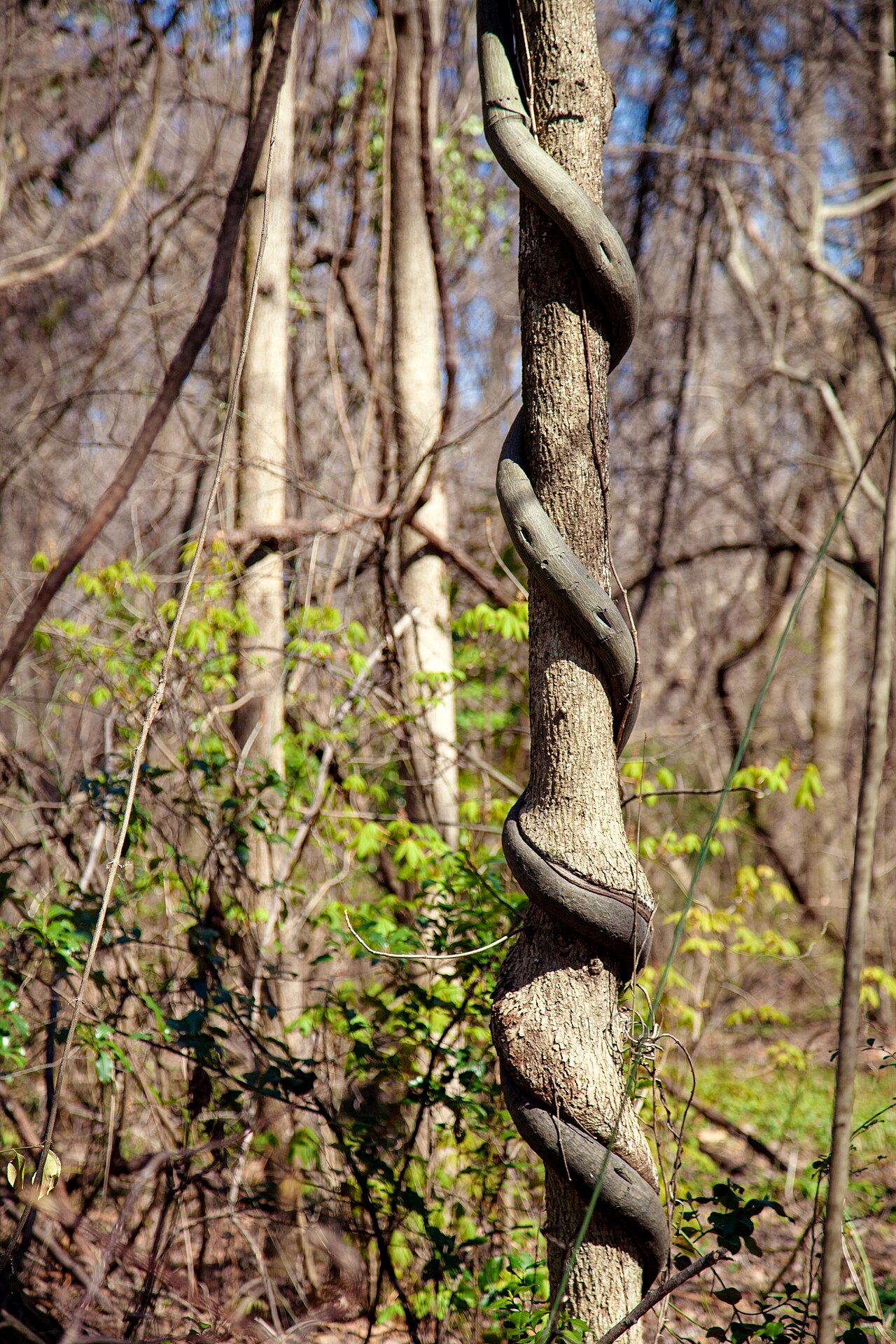
Berchemia scandens, known as Supplejack (USDA: Alabama supplejack; also rattan vine), is a high-climbing, deciduous woody vine of the buckthorn family (Rhamnaceae) native to the southeastern and south-central United States. It twines up trees and shrubs to 50 feet or more in bottomland forests, swamps, stream banks and rocky woods, from Virginia, Kentucky and southern Illinois south to Florida and west to Oklahoma and Texas.
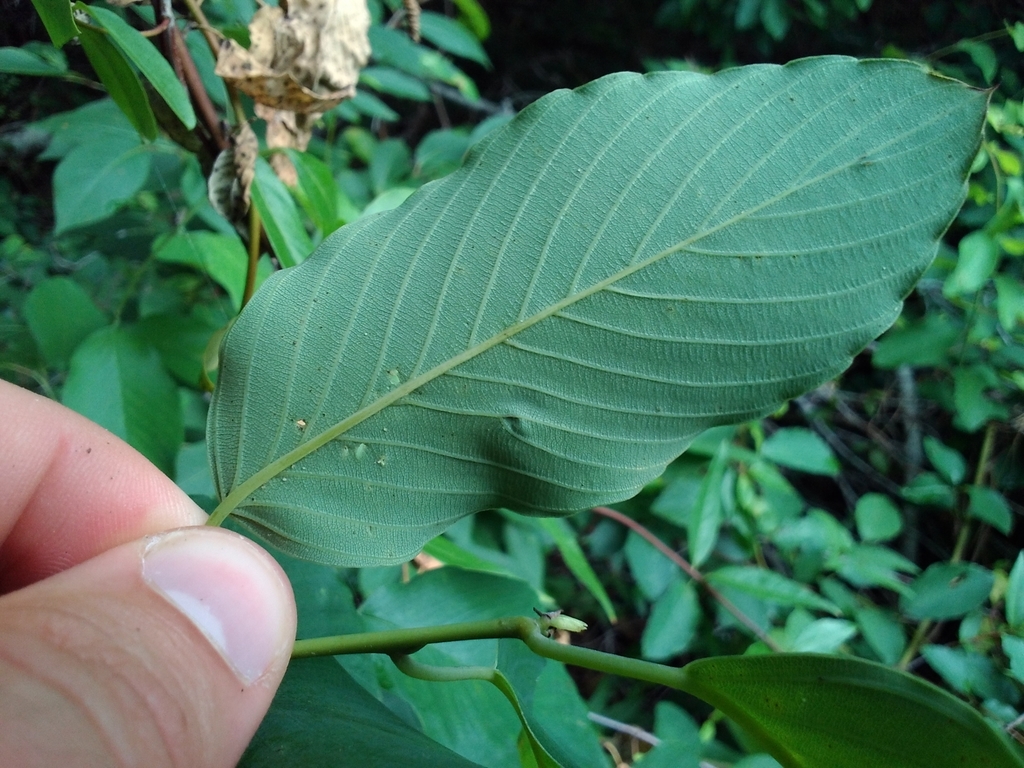
Supplejack is named for its smooth, very tough and flexible stems, which can be bent almost double without breaking. The stems are green when young and become gray-green to brown with age. Its neat, glossy leaves have many straight, parallel side veins, a feature that makes the vine easy to identify. In spring it bears small, greenish-white flowers, followed by oval fruits that ripen to blue-black and are eaten by many birds and mammals.
It is an excellent wildlife plant for large, naturalized landscapes, but gardeners should know its habits. Supplejack twines tightly and can girdle, deform or bend small trees, and old vines can weigh down branches. It is best allowed to climb a large, sturdy tree, a strong fence or an arbor, and kept off young trees and shrubs.
Identification
Supplejack is one of the easiest native vines to recognize by its leaves alone: look for alternate, glossy, oval leaves with 9 to 12 pairs of straight, closely spaced side veins running parallel to each other toward the leaf edge.
Stems
The stems are smooth, round and very tough, green on young shoots and becoming gray-green, olive or brown with fine streaks on old vines. They climb by twining, without tendrils or rootlets, often making tight spirals around tree trunks. Old vines can be several inches thick and hang in loops from the canopy.
Leaves
The leaves are alternate, oval to elliptic, 1 1/2 to 3 inches long, with smooth or slightly wavy edges and a short pointed tip. They are shiny dark green above and paler beneath, with prominent, straight, parallel side veins. In fall they turn yellow before dropping.
Flowers
From April to June, small clusters of tiny, greenish-white to yellowish flowers appear at the ends of branches and in the leaf axils. Each flower is only about 1/8 inch across, with five petals. They are easy to overlook but are visited by many small insects.
Fruit
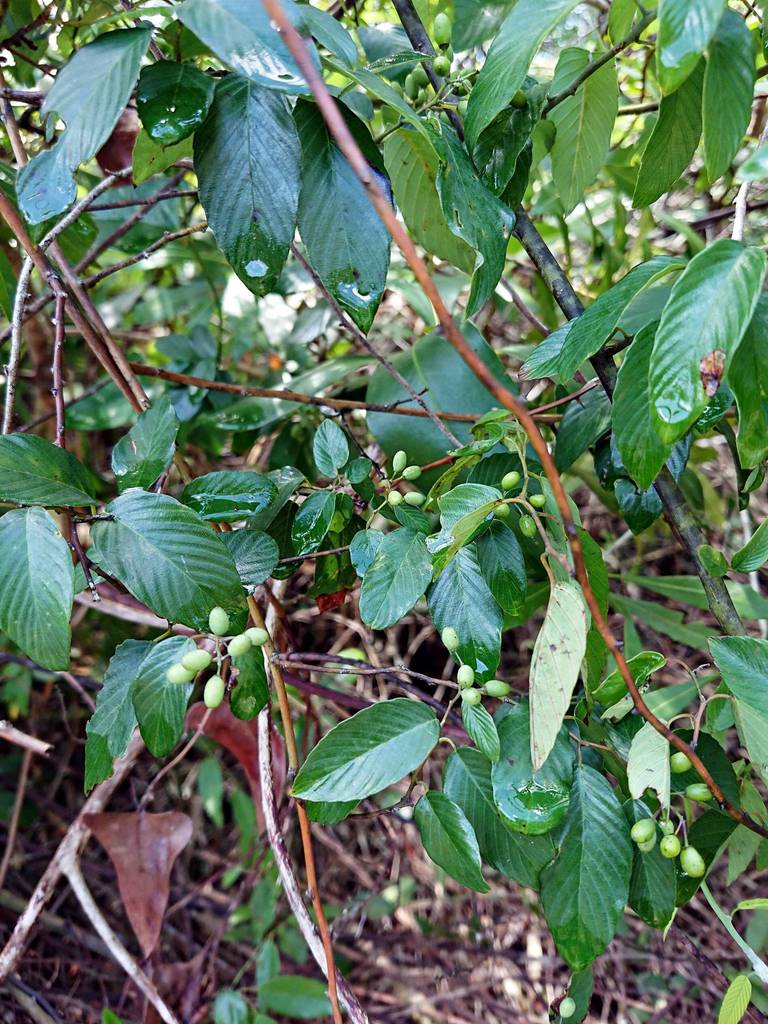
The fruit is an oval drupe about 1/4 to 1/3 inch long with a single stone. It turns from green to red and finally blue-black when ripe, from late summer into fall, often persisting into winter.
Look-alikes
Wild grapes have tendrils and broad, lobed or toothed leaves. Greenbriers, such as Saw Greenbrier, have prickly green stems, tendrils and leaves with curved veins that run from base to tip. Dogwoods have similar curving leaf veins but are shrubs or trees, not vines, and have opposite leaves. Supplejack’s twining, thornless stems and straight parallel veins set it apart.
Quick Facts
| Scientific Name | Berchemia scandens |
| Family | Rhamnaceae (buckthorn family) |
| Plant Type | Deciduous woody twining vine |
| Mature Height | Climbs 15–50 ft or more |
| Mature Spread | Variable; spreads through tree canopies |
| Growth Rate | Moderate to fast |
| Sun Exposure | Partial shade to full sun |
| Water Needs | Moderate; tolerates both wet and dry soils |
| Soil Type | Moist to wet loam or clay; also rocky limestone soils |
| Soil pH | About 5.0–8.0 |
| Bloom Time | April–June |
| Flower Color | Greenish white to yellowish |
| Fall Color | Yellow |
| Fruit | Blue-black oval drupe, late summer–fall |
| Deer Resistant | No; deer browse the leaves and shoots |
| USDA Hardiness Zones | 6–10 |
Native Range
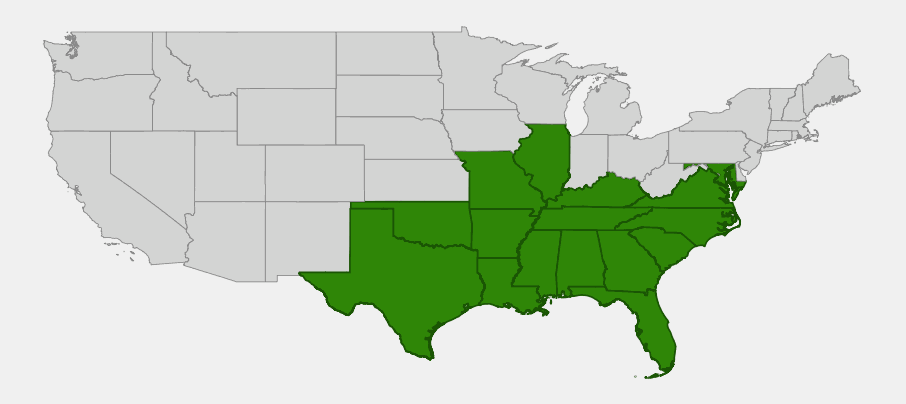
Supplejack is native to the southeastern and south-central United States. USDA PLANTS records it from 16 states: Alabama, Arkansas, Florida, Georgia, Illinois, Kentucky, Louisiana, Maryland, Missouri, Mississippi, North Carolina, Oklahoma, South Carolina, Tennessee, Texas and Virginia. It does not grow in Canada.
It is most common on the Coastal Plain from Virginia to Florida and west to Texas, and in the lower Mississippi Valley. Inland it reaches the Ozarks of Missouri and Arkansas, eastern Oklahoma, western Kentucky and Tennessee, and the southern tip of Illinois, where it is rare; NatureServe ranks it critically imperiled in Illinois and imperiled in Kentucky. In Texas it grows across the eastern half of the state and west into Central Texas and the Edwards Plateau, where it is common along creeks and on wooded limestone slopes around Austin and San Antonio. In Florida it reaches south into the Everglades region.
Typical habitats include bottomland hardwood forests, swamp margins, stream and river banks, maritime forests, hammocks, fencerows and moist to dry rocky woods, including limestone canyons and bluffs.
📋 Regional plant lists featuring Supplejack: Kentucky & Tennessee · Maryland, Virginia & West Virginia · Illinois, Iowa & Missouri · Alabama, Georgia & Mississippi · North & South Florida · North & South Carolina · Arkansas, Louisiana, Eastern Oklahoma & Eastern Texas · South & West Texas
Growing & Care Guide
Supplejack is easy to grow and very adaptable, but it is a vigorous, long-lived woody vine. Give it a strong, permanent support and space to climb, and plan to manage it so that it does not engulf or girdle small trees.
Light
It grows in partial shade to full sun. Young plants tolerate quite deep shade in the forest understory, but vines flower and fruit best when their tops reach sunlight.
Soil & Water
It tolerates a wide range of soils, from wet, periodically flooded bottomland clay to dry, rocky limestone. Moist, fertile soil gives the fastest growth. Once established, it is drought-tolerant.
Planting Tips
Plant at the base of a large, mature tree, a sturdy fence, pergola or arbor. Do not plant it next to young trees or ornamental shrubs, which it may twist and deform. It works well along woodland edges and in wildlife hedgerows, combined with other native vines such as crossvine and Virginia creeper.
Pruning & Maintenance
Prune in late winter to control size and keep the vine on its support. Check young trees nearby every year and unwind or cut supplejack stems that are twining around their trunks before they bite into the bark. Old, heavy vines can be cut at the base if they become a problem.
Propagation
Grow it from fresh seed cleaned from ripe fruit and sown in fall, or stratified for about three months before spring sowing. It can also be propagated by layering a low stem into the soil. Seedlings are often spread by birds.
Landscape Uses
- Wildlife gardens: fall and winter fruit for birds and mammals
- Large arbors and fences: a long-lived, thornless native climber
- Woodland edge plantings: in bottomland and rocky woods
- Riparian restoration: tolerates flooding along streams
- Traditional crafts: tough, flexible stems for baskets and furniture
Wildlife & Ecological Value
Supplejack is an important food plant for wildlife in southern forests, especially in fall and winter, when its fruits remain on the vines.
For Pollinators
The small flowers attract bees, flies, wasps and other small insects for nectar and pollen. Because it blooms in spring, it adds to the nectar supply in bottomland forests before many summer flowers open.
For Birds
The fruits are eaten by many birds, including wild turkey, northern bobwhite, northern mockingbird, American robin, cedar waxwing, thrushes and woodpeckers. Dense tangles of old vines provide nesting cover and roost sites.
For Mammals
Raccoons, gray squirrels, opossums and foxes eat the fruit, and white-tailed deer browse the leaves and young shoots.
Ecosystem Role
As a canopy vine, supplejack provides food and structure in bottomland and upland forests, and its seeds are spread widely by birds. Like other large native vines, it is part of the natural forest community, although heavy growth can weigh down and damage individual trees.
Cultural & Historical Uses
The genus Berchemia is named for Berthout van Berchem, an eighteenth-century Dutch botanist. The species name scandens means “climbing.” The common names supplejack and rattan vine refer to the tough, pliable stems, which have been used much like true rattan to make baskets, wicker chairs and other furniture.
Supplejack vines that twine tightly around saplings leave deep spiral grooves in the wood. These naturally twisted saplings were traditionally cut and polished to make striking walking sticks and canes, which are still sold as “supplejack” or corkscrew canes in the South.
Supplejack is a familiar plant to hunters and hikers in southern swamps and bottomlands, where its looping stems hang from the canopy. The fruits are not considered edible for people, and the plant is grown today mainly as a native wildlife vine.
Frequently Asked Questions
Can supplejack harm trees?
It can. Supplejack twines tightly and may girdle, bend or deform small trees and shrubs, and heavy old vines can weigh down branches. Keep it off young trees and give it a sturdy support.
Is supplejack poisonous?
It is not known to be highly toxic, but the fruits are not considered edible for people. Birds and mammals eat them freely.
How do I identify supplejack?
Look for a smooth, thornless twining vine with glossy, oval leaves that have many straight, parallel side veins.
Why is it called supplejack?
The name refers to its very tough, flexible stems, which bend without breaking and have been used to make baskets, furniture and canes.
Does supplejack grow in dry soil?
Yes. Although it is common in moist bottomlands, it also grows on dry, rocky slopes, including limestone hills in Texas and the Ozarks.

Looking for a nursery that carries Supplejack?
Browse our native plant nursery directory: Alabama & Arkansas · Florida & Georgia · Illinois · Kentucky, Louisiana, Maryland, Mississippi & Missouri · North Carolina & Oklahoma · South Carolina, Tennessee, Texas & Virginia