Tahoka Daisy (Machaeranthera tanacetifolia)
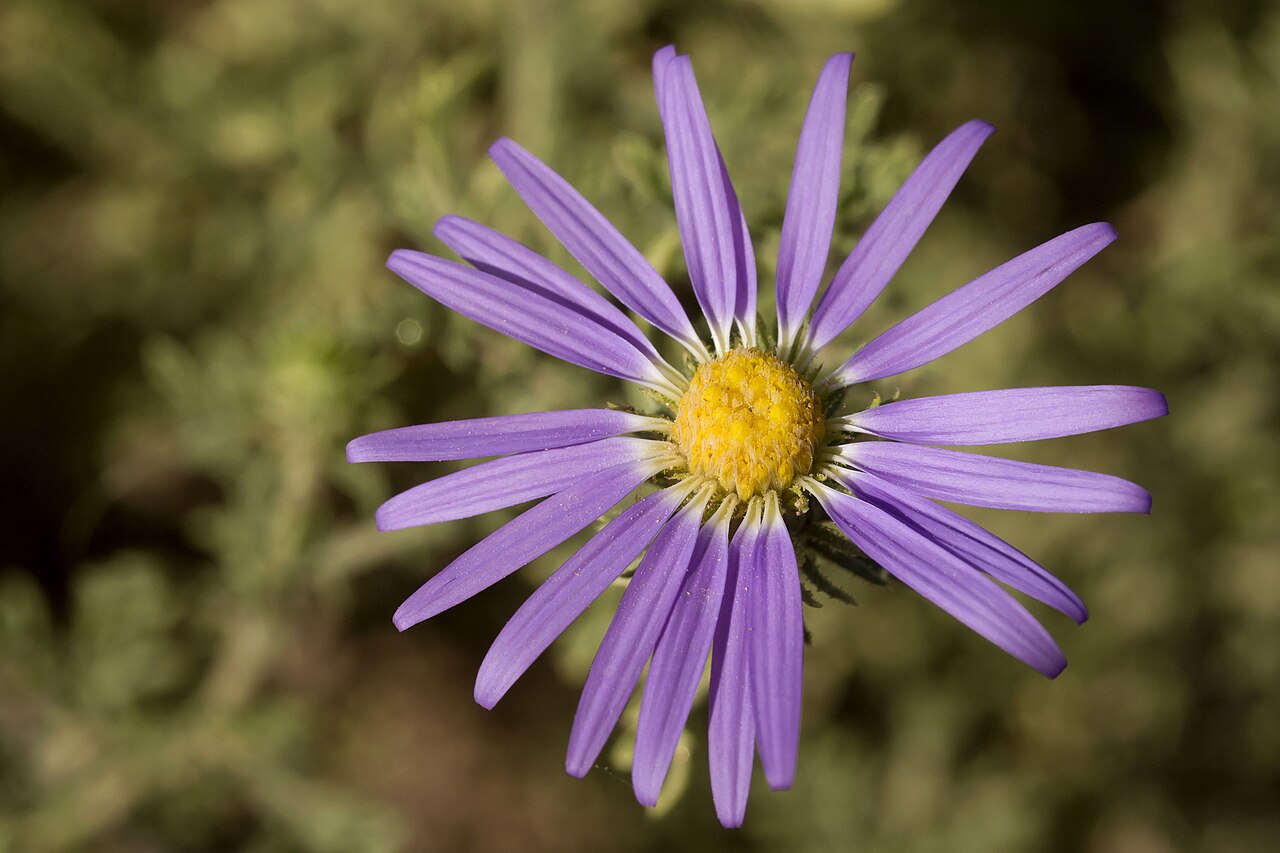
Tahoka Daisy (<em>Machaeranthera tanacetifolia</em>), also called prairie aster or tansyleaf tansyaster, pairs clear purple rays with a yellow central disk. Its finely divided foliage gives the plant a lighter texture than many broad-leaved daisies. On open sandy ground it can form a low spreading patch or a more upright branching plant, responding strongly to rainfall and available space.
Despite the familiar word aster, this is an annual rather than a long-lived clumping perennial. A good display one year may be followed by fewer plants the next if seed fails to reach suitable bare ground. That life cycle makes it useful as a flexible seasonal component among native grasses and slower-growing perennials, but not as a permanent replacement for structural plants.
In Utah and western Colorado, prairie aster belongs in the native wildflower palette where local conditions match its sunny, well-drained habitat. It offers a long potential flowering season without requiring a lush irrigated bed. Its small size and detailed leaves reward close viewing, while the purple flowers remain noticeable against gravel, dry grass and pale soil.
Identification
Form and branching
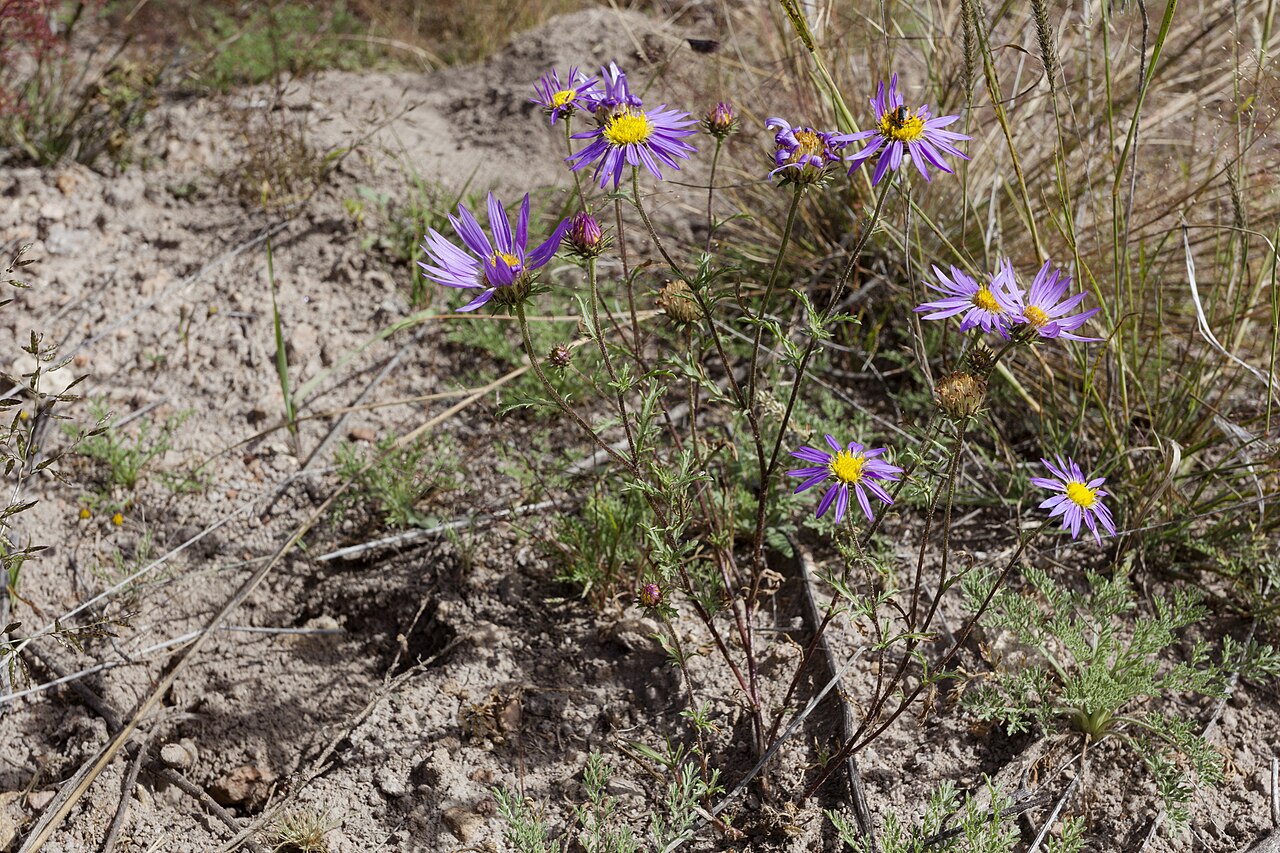
Plants may stand upright or spread broadly, with many flower-bearing branches. Utah State’s native plant tool lists a maximum around two feet, while the Wildflower Center allows individuals approaching three feet. The common 12–18-inch garden description is therefore typical of some conditions, not an absolute limit. Growth is usually much smaller where moisture or space is restricted.
Divided foliage
The leaves are deeply cut into narrow segments, producing the tansylike appearance reflected in the name. Inspect the actual leaf blade rather than assuming every fine-leaved purple flower is this species. Leaf form, branching and the bracts below the head together are more informative than flower color by itself.
Flower heads
Purple to violet ray florets surround yellow disk florets. Each head is a collection of many flowers rather than one flower with a simple center. Multiple branches can carry buds, open heads and developing fruits at the same time. The New Mexico photographs show both the close detail and the less formal appearance of a wild plant.
Fruits
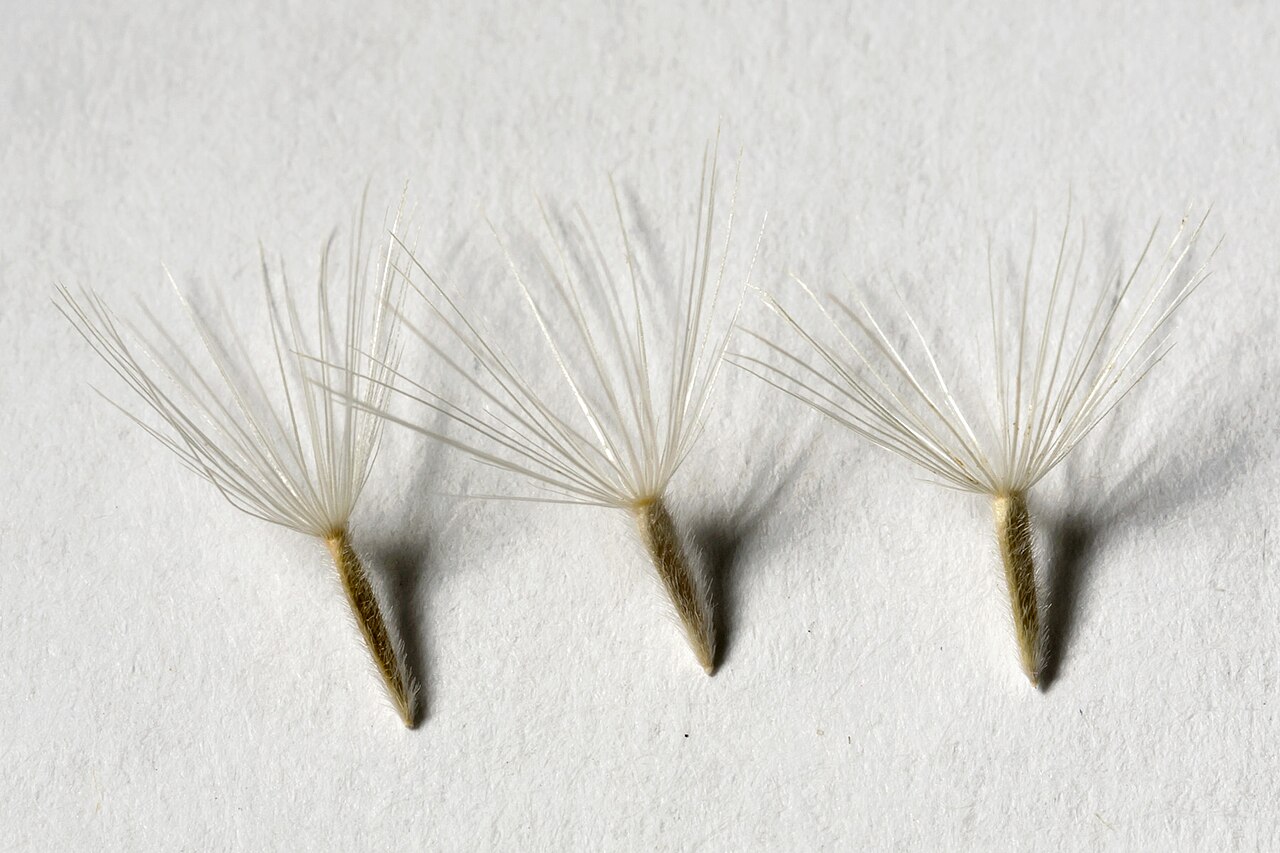
Mature dry fruits carry a tuft of fine hairs, or pappus, that aids dispersal. The seed photograph below shows that structure clearly. These tiny fruits can be lost during heavy-handed cleanup, so allow some heads to mature if you want the annual to renew itself. A persistent seed supply still needs an appropriate germination surface.
Names and lookalikes
Older names include <em>Aster tanacetifolius</em>. The accepted name here remains <em>Machaeranthera tanacetifolia</em>; not every plant formerly placed in Machaeranthera has the same modern genus. Do not substitute hoary tansyaster, often treated as <em>Dieteria canescens</em>, simply because a supplier uses “prairie aster” for both.
Quick Facts
| Scientific Name | Machaeranthera tanacetifolia (Kunth) Nees |
| Family | Asteraceae (daisy family) |
| Plant Type | Annual wildflower |
| Mature Height | Usually 1–2 feet; sometimes approaching 3 feet |
| Mature Spread | Upright to broadly spreading; allow room between neighbors |
| Growth Rate | Rapid annual growth |
| Sun Exposure | Full sun; tolerates some light shade |
| Water Needs | Low to moderate; periodic water can extend flowering |
| Soil Type | Well-drained sandy, rocky or loamy soil |
| Soil pH | Tolerates alkaline soils |
| Bloom Time | May–October across its range; local timing varies |
| Flower Color | Purple or violet rays, yellow disks |
| Fall Color | Annual foliage dries after reproduction |
| Fruit | Small dry fruits with a tufted pappus |
| Deer Resistant | Low resistance; browsing is possible |
| USDA Hardiness Zones | Annual; use local season and seed provenance |
Native Range
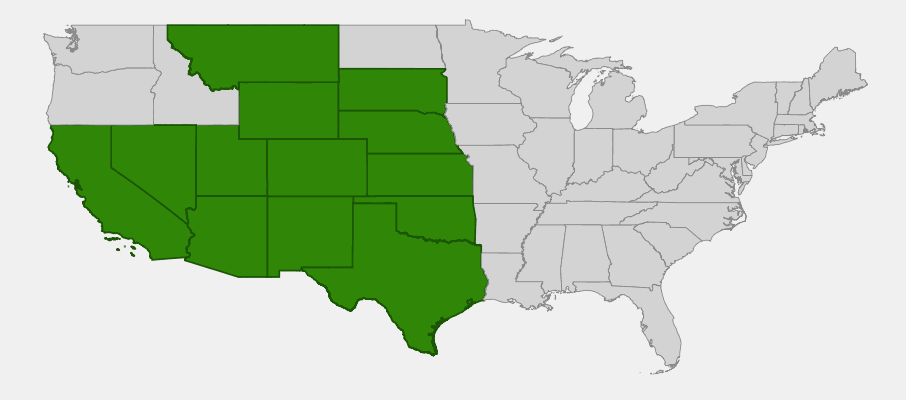
Kew lists a native distribution from Alberta through the western and central United States into Mexico. The U.S. states mapped here are Arizona, California, Colorado, Kansas, Montana, Nebraska, Nevada, New Mexico, Oklahoma, South Dakota, Texas, Utah and Wyoming. New York is listed as introduced and is not colored as native.
The species is associated with open ground, sandy soils, grasslands and disturbed sites. National Park Service records from Glen Canyon include sandy and silty soils, while Utah’s native plant tool records it across numerous southern and central counties and a broad elevation band. Those records support regional presence, not uniform occurrence in every landscape.
Choose seed suited to the local growing season. A low desert source and a cooler upland source may flower at different times even when both share the same name. For restoration, retain provenance information and consult local floristic records rather than using the broad map as the only selection criterion.
📋 Regional plant list: Utah & Western Colorado
Growing & Care Guide
A place for an annual
Give Tahoka daisy a location where seasonal change is acceptable. It can fill openings between established plants, but it will not maintain the same outline year after year. Place permanent grasses or shrubs first, then use this annual in the spaces between them. That approach lets a variable wildflower population enrich a planting without carrying the entire design.
Light and drainage
Full sun is the simplest choice for compact growth and abundant flowering. Some light shade is tolerated, but avoid a dense overhead canopy. Drainage matters more than making the soil rich. A site where water stands after irrigation is a poor match even if the surface looks dry later. Observe the planting through a wet period before deciding it is suitable.
Sowing
Seed can be sown directly into a prepared seedbed or raised in containers. Follow the seed source’s instructions for local timing and depth, since seed lots and climates differ. A fine, firm surface helps small fruits make contact with soil. Do not bury them beneath a thick layer of bark mulch and expect the same result as open mineral ground.
Seedling moisture
Maintain enough moisture for germination and early root growth. The drought tolerance of a flowering plant does not mean a newly germinated seedling can be allowed to dry completely. Use gentle watering that does not wash the small seed away. Once plants are growing steadily, adjust irrigation to weather and soil rather than maintaining a permanently wet surface.
Spacing
The Wildflower Center suggests relatively close spacing for transplants, but spreading plants can occupy more room on a favorable site. Start with enough separation to see individual crowns and thin if growth becomes crowded. In a mixed planting, prevent neighboring tall plants from shading the young annuals before they have branched and flowered.
Water during bloom
Occasional irrigation can prolong flowering during a dry spell. Water at the soil rather than repeatedly wetting the entire canopy, and let the soil drain. The objective is to support the plant through a difficult interval, not to turn a dryland annual into a continuously watered bedding plant. If it becomes excessively lush, reconsider both water and fertility.
Soil amendments
Alkaline and calcareous conditions are tolerated. There is no need to acidify a suitable western soil just because many ornamental garden plants prefer a different pH. Avoid heavy compost applications unless a specific site problem justifies them. A lean, well-drained setting can keep this plant in proportion with other dryland natives.
Flowering and seed renewal
Deadheading may keep an individual looking tidy, but removing every spent head prevents seed production. Leave a portion of the plant to mature fruits if natural renewal is wanted. Where volunteers become too numerous, thin them early rather than eliminating all seed sources. Record where successful seedlings appear; they reveal useful information about the seedbed.
Seasonal cleanup
After the annual has finished, remove or shorten dry stems as needed for access while retaining some seed-bearing material in habitat areas. Avoid disturbing adjacent perennial roots. If no seedlings appear the next season, consider seed availability, weather and surface competition before assuming the site has permanently failed. Annual abundance naturally varies.
Problem solving
A sparse display may reflect drought, shade, competition or poor seed contact rather than a nutrient shortage. Check these basic conditions before fertilizing. Browsing can occur, so protect a small trial planting if deer or rabbits repeatedly remove new growth. Use a regional identification resource if volunteer plants differ markedly in foliage from the original seed lot.
Landscape Uses
- Tahoka daisy is well suited to a shortgrass-style planting, a rocky slope or an informal gravel garden within its native region. Its divided leaves contribute texture even before bloom. Keep it out of heavily walked joints unless the planting is intended only for the untrafficked spaces between stones; a small wildflower is not a durable lawn substitute.
- As a seasonal filler, it can soften the open ground around young long-lived plants without demanding a permanent position. Monitor it so it does not crowd very small perennial seedlings. The balance should favor a diverse planting rather than a single annual dominating every opening.
- For educational use, compare an open head with the tufted mature fruits. That simple sequence demonstrates both the composite flower structure and dispersal mechanism. A hand lens helps reveal the disk florets without picking flowers or disturbing the plant.
Wildlife & Ecological Value
Floral resources
The Wildflower Center identifies the species as a nectar source, and Utah’s native plant tool includes it for pollinator habitat. A succession of heads can extend the period when a patch is useful. Keep flowering plants free of routine insecticide applications, especially while visitors are actively feeding.
A seasonal addition
An annual’s contribution depends on germination and rainfall, so combine it with established perennials that provide resources when the annual is sparse. This reduces the chance that one dry season leaves a habitat planting with a large flowering gap.
Managing without overcleaning
Retaining some seed heads supports renewal and preserves the plant’s complete seasonal cycle. Where a neat path edge is needed, trim selectively instead of removing the entire patch. The garden can remain legible while still allowing the annual to reproduce.
Cultural & Historical Uses
The name Tahoka daisy is linked to Tahoka in the Texas High Plains, where seed was collected for commercial cultivation. Prairie aster and tansyleaf tansyaster emphasize different aspects of the same species: its habitat association and its divided foliage.
Botanical names in the aster family have changed repeatedly as relationships have been studied. The older name <em>Aster tanacetifolius</em> is a synonym, but the common word aster does not mean this plant belongs to every modern aster genus. Recording the full scientific name prevents mistakes when ordering seed.
Its usefulness in dryland gardening comes from working with its annual strategy. Rather than forcing it into the role of a permanent clump, gardeners can allow modest year-to-year movement and use reliable perennial companions to hold the structure of the planting.
Frequently Asked Questions
Is prairie aster a perennial?
This species is an annual in the Kew and Wildflower Center treatments. It may return through seed, which can create the impression of a persistent perennial patch.
Will it bloom all summer?
The species has a long potential season, but local weather, germination timing and water availability control an individual planting. Periodic water may extend bloom during dry conditions.
Does it need rich soil?
No. Well-drained sandy or rocky ground is suitable, and alkaline soil is tolerated. Excess fertility is not a substitute for sun and drainage.
Can it be used outside its native range?
It may be grown as an ornamental annual elsewhere, but that does not establish local nativity. The map excludes introduced New York records.
How can I encourage it to return?
Allow some fruits to mature and retain suitable open seedbed conditions. Avoid removing every spent head or covering the entire surface with deep mulch.
Sources & Further Reading
- Kew: name and native range
- Lady Bird Johnson Wildflower Center: MATA2
- USU EcoRestore: prairie aster
- University of Texas Plant Resources Center: Tahoka daisy
- NPS Glen Canyon vascular plant inventory
Find Native Plants
Ask growers about nursery propagation and regional provenance. Browse our UT native plant nurseries, CO native plant nurseries directory for suppliers. Explore the native nursery finder.