
Woollypod Milkweed (Asclepias eriocarpa)
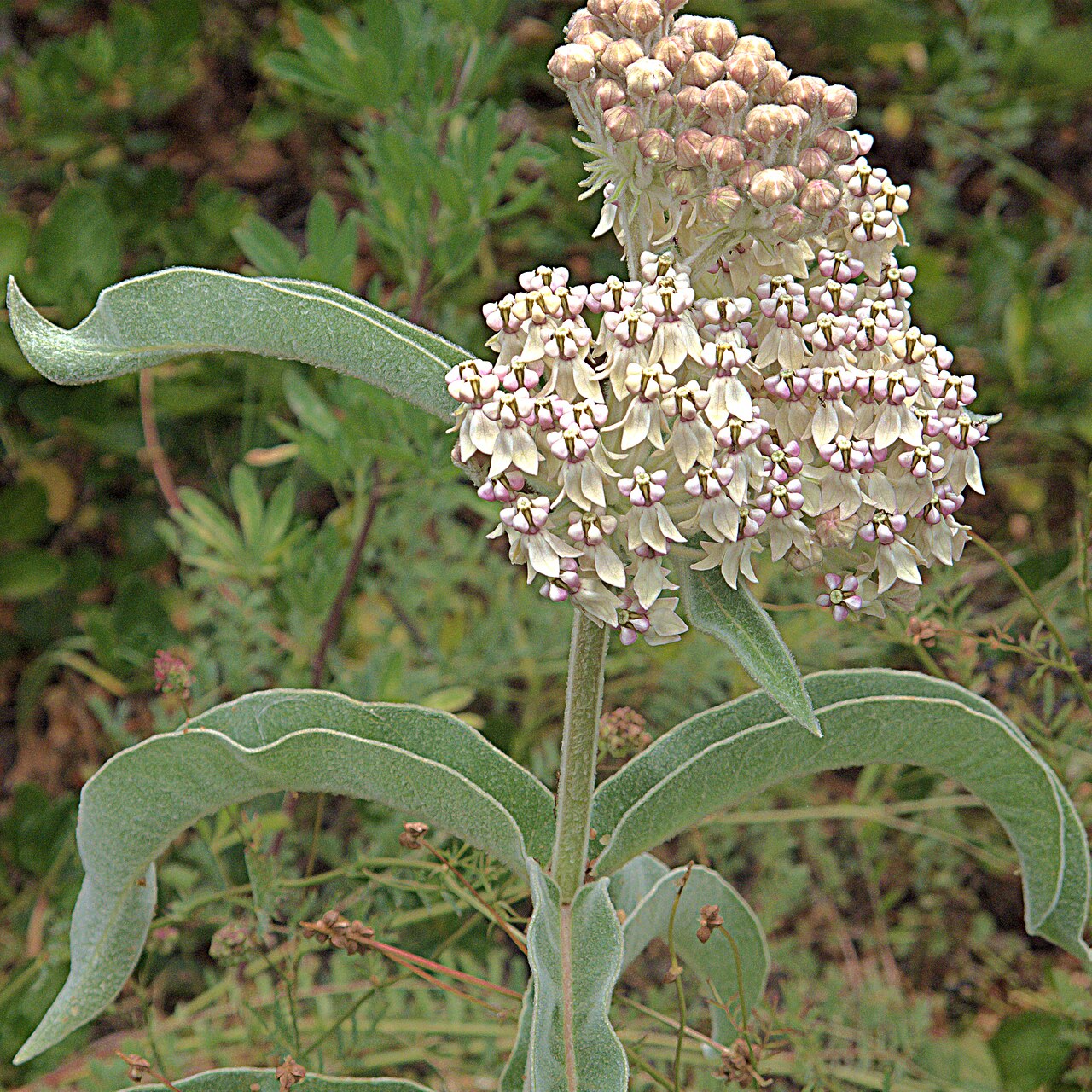
Asclepias eriocarpa, known as Woollypod Milkweed (also woolly milkweed or Indian milkweed), is a California native milkweed covered in soft, white, felt-like hairs. Its thick, gray-green leaves and stout stems look almost silvery, and from late spring through summer it carries rounded clusters of cream-white flowers tinged with pink. The seed pods are thickly woolly, which gives the plant its name: eriocarpa means “woolly fruit.”
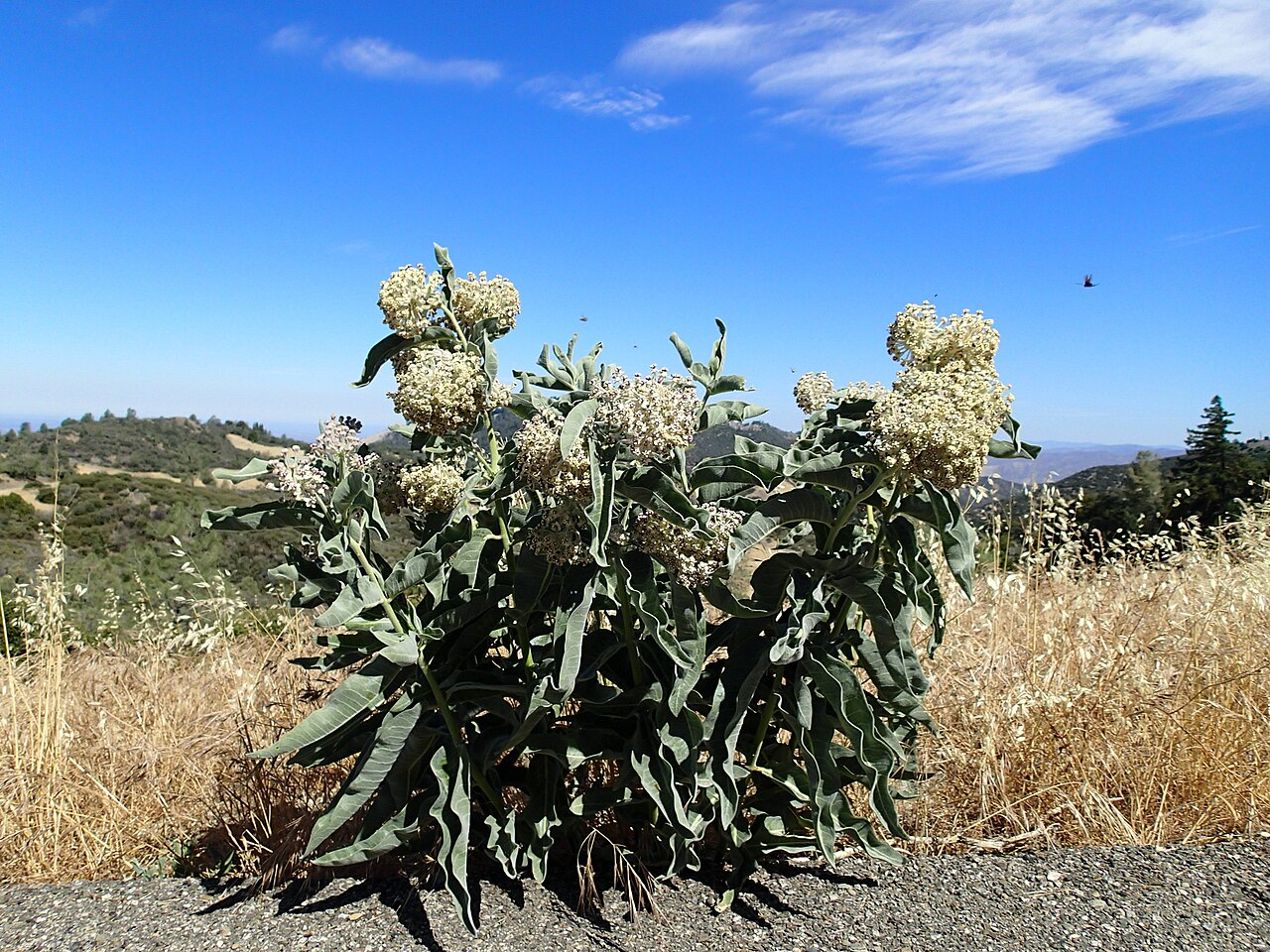
It is a herbaceous perennial, usually 1 to 3 feet tall, that grows from a deep root and dies back to the ground in winter. It is one of the most widespread milkweeds in California, growing on dry, open slopes, grasslands, chaparral and oak woodland from the foothills to the mountains. It is an important host plant for monarch butterflies in the West and a rich nectar source for many native bees and other insects.
Safety note: like all milkweeds, woollypod milkweed contains cardiac glycosides (cardenolides) in its milky sap and leaves, and it is considered one of the more toxic milkweeds. It is poisonous to people, pets and livestock if eaten. Wear gloves when handling it, keep the sap away from your eyes, and wash your hands afterward.
Identification
Look for an upright, unbranched, silvery-woolly milkweed with broad, wavy-edged leaves in pairs or whorls of three or four, round clusters of cream flowers with pinkish hoods in summer, and fat, densely woolly seed pods in late summer and fall.
Stems & Habit
Woollypod milkweed sends up several stout, upright stems from a deep root, usually 1 to 3 feet (30 to 90 cm) tall. The stems are densely covered with white, woolly hairs and contain a milky sap. Plants emerge in spring and die back in fall.
Leaves
The leaves are 3 to 7 inches (8 to 18 cm) long, oblong to lance-shaped, thick, and often folded or wavy along the edges. They grow in opposite pairs or in whorls of three or four and are covered with soft, white to gray hairs, giving them a felted, silvery-green look. They have short stalks or none.
Flowers
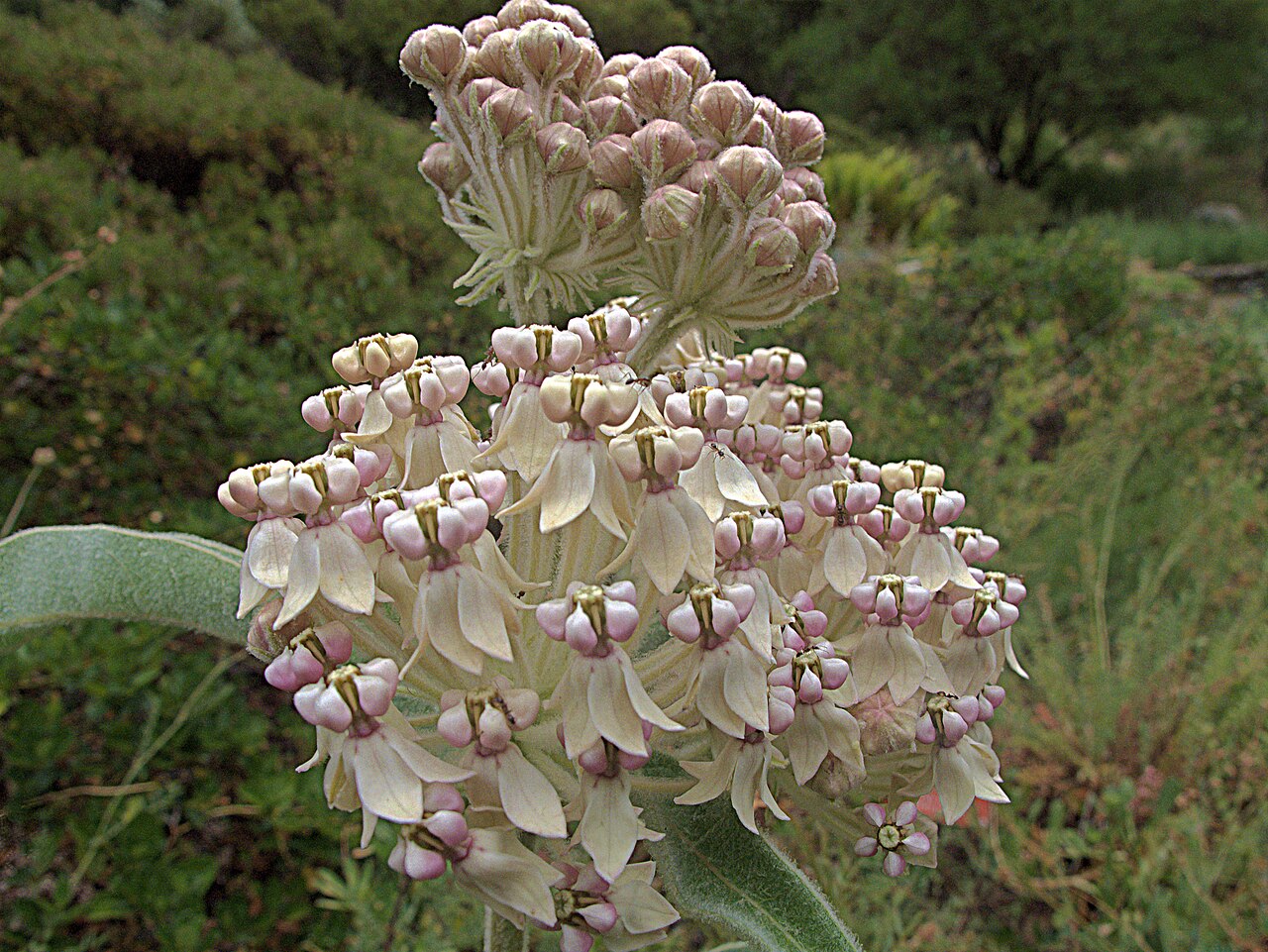
The flowers grow in rounded, ball-like umbels from the upper leaf axils. Each flower is about 1/2 inch across, with five cream to greenish-white petals that bend back and a central crown of five cupped hoods, often tinged pink to purple. The flowers have a waxy texture and a sweet scent. Bloom is mainly June to August, sometimes from May into September.
Fruit & Seeds
The seed pods (follicles) are 2 to 4 inches long, fat and spindle-shaped, and covered with dense, woolly white hairs. In fall they split open along one side to release flat brown seeds, each with a tuft of silky white floss that carries it on the wind.
Look-alikes
Showy Milkweed (A. speciosa) is also hairy but has pink, star-like flowers with long, pointed hoods and lives in moister sites. California Milkweed (A. californica) is woolly too, but it has dark maroon flowers and is lower and more sprawling. Woollypod milkweed can be told by its cream flowers with pinkish hoods, broad wavy leaves in whorls, and woolly pods. Narrowleaf Milkweed (A. fascicularis) has narrow, hairless leaves.
Quick Facts
| Scientific Name | Asclepias eriocarpa |
| Family | Apocynaceae (dogbane family; milkweeds formerly Asclepiadaceae) |
| Plant Type | Herbaceous perennial; dies back in winter |
| Mature Height | 1–3 ft |
| Mature Spread | 1–2 ft |
| Growth Rate | Moderate |
| Sun Exposure | Full sun |
| Water Needs | Low; drought tolerant once established |
| Soil Type | Well-drained clay, loam, sandy or rocky soils |
| Soil pH | About 6.0–8.0 |
| Bloom Time | June–August (May–September) |
| Flower Color | Cream to white, tinged pink or purple |
| Fall Color | Stems yellow and dry back |
| Fruit | Woolly seed pod with silky-tufted seeds |
| Deer Resistant | Yes; toxic and rarely browsed |
| USDA Hardiness Zones | 7–10 |
Native Range
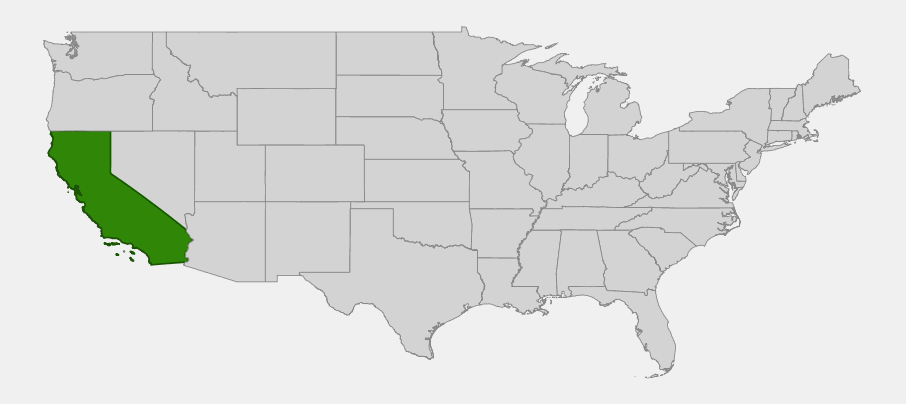
Woollypod milkweed is native to California and northern Baja California, Mexico. USDA PLANTS lists it as native only in California within the United States.
Within California it is widespread: it grows through the Coast Ranges, the Sierra Nevada and Cascade foothills, the edges of the Central Valley, the Transverse and Peninsular Ranges of southern California, and south into Baja California. It is absent from the deserts and most of the immediate north coast.
It grows in dry, sunny, open places: grassland, chaparral openings, oak woodland, foothill pine woodland, rocky hillsides, flats and disturbed roadsides, often on clay or rocky soils. It is drought-adapted, growing in summer heat when many other plants are dormant.
📋 Regional plant lists featuring Woollypod Milkweed: California & Nevada
Growing & Care Guide
Woollypod milkweed is a tough, drought-tolerant perennial for sunny, dry California gardens and a valuable plant for monarchs and native bees. It establishes a deep root and is long-lived once settled.
Light
Full sun. It becomes weak and flowers poorly in shade.
Soil & Water
It tolerates clay, loam, sandy and rocky soils as long as they drain. Water young plants occasionally through their first summer; once established, it needs little or no summer water in most of California. Overwatering and rich soil can cause rot.
Planting Tips
Plant container-grown plants in fall or early spring, or sow seed. Because it dies back to the ground in winter, mark its location so you do not dig into it. Plant in groups of several for the best effect and to support monarch caterpillars. Choose a spot away from where pets or livestock graze.
Pruning & Maintenance
Cut dead stems back to the ground in late fall or winter after the pods have opened. Aphids (often the orange oleander aphid) sometimes cover the stems; they rarely harm the plant and can be hosed off. Avoid pesticides, which also kill monarch caterpillars. Wear gloves to avoid the toxic sap.
Propagation
Grow from seed sown in late winter or spring; a few weeks of cold, moist stratification improves germination. It can be grown in deep containers, but the long taproot resents transplanting once large. Buy local, nursery-propagated plants or seed rather than digging plants from the wild.
Landscape Uses
- Monarch and pollinator gardens: a western host plant for monarch caterpillars
- Dry gardens: silvery foliage and summer flowers with little water
- Grassland and oak woodland restoration: native perennial for open, dry slopes
- Habitat gardens: attracts a wide range of bees, wasps and butterflies
- Wildflower meadows: summer bloom after spring annuals fade
Wildlife & Ecological Value
Woollypod milkweed is a key summer resource in dry California landscapes, feeding a remarkable diversity of insects when little else is in bloom.
For Pollinators
The Xerces Society lists it as having special value to native bees, bumblebees and honeybees. The flowers are visited by many bees, wasps, butterflies, beetles and flies. It is a larval host for monarch butterflies (Danaus plexippus), and its strong cardenolides are taken up by the caterpillars and help protect them from predators. It also hosts specialist milkweed insects such as milkweed bugs and milkweed beetles.
For Birds
Birds rarely eat the toxic leaves or seeds, but some use the silky seed floss in nests, and insect-eating birds hunt the many insects drawn to the flowers.
For Mammals
Mammals generally avoid it because of its toxicity. It is a known cause of livestock poisoning, especially in sheep, when animals eat it in hay or in overgrazed pastures.
Ecosystem Role
As a summer-blooming, deep-rooted perennial, it supports pollinators through the dry season and plays an important role in western monarch breeding habitat, which conservation programs are working to restore.
Cultural & Historical Uses
The genus name Asclepias honors Asclepius, the Greek god of medicine. The species name eriocarpa comes from Greek words meaning “woolly fruit.”
California Native peoples used milkweeds, including this species, for fiber: the stem fibers were twisted into strong cordage for nets and string. Milkweed latex was also used as a chewing gum by some groups. These are historical uses; the plant is poisonous and should not be eaten.
During World War II, schoolchildren across the United States collected milkweed pods so that the buoyant floss could replace kapok in life jackets. Today milkweeds are planted to help the declining western monarch population. On this site, related species include Showy Milkweed, Narrowleaf Milkweed and California Milkweed.
Frequently Asked Questions
Is woollypod milkweed poisonous?
Yes. All parts contain cardiac glycosides, and it is considered one of the more toxic milkweeds. It is poisonous to people, pets and livestock if eaten. Wear gloves when handling it and keep the sap out of your eyes.
Is woollypod milkweed good for monarchs?
Yes. It is a native host plant for monarch caterpillars in California, and the adults and many other insects feed on its nectar.
Does woollypod milkweed need water in summer?
Once established, it needs little or no summer water in most of California. Water young plants occasionally during their first summer.
Why does it disappear in winter?
It is a herbaceous perennial that dies back to its deep root each fall and re-sprouts in spring. Mark its spot so you do not disturb it.
How do I tell it from California milkweed?
Woollypod milkweed is taller and upright, with cream flowers tinged pink. California milkweed is lower and sprawling, with dark maroon-purple flowers.

Looking for a nursery that carries Woollypod Milkweed?
Browse our native plant nursery directory: California