
Gooseberryleaf Globemallow (Sphaeralcea grossulariifolia)
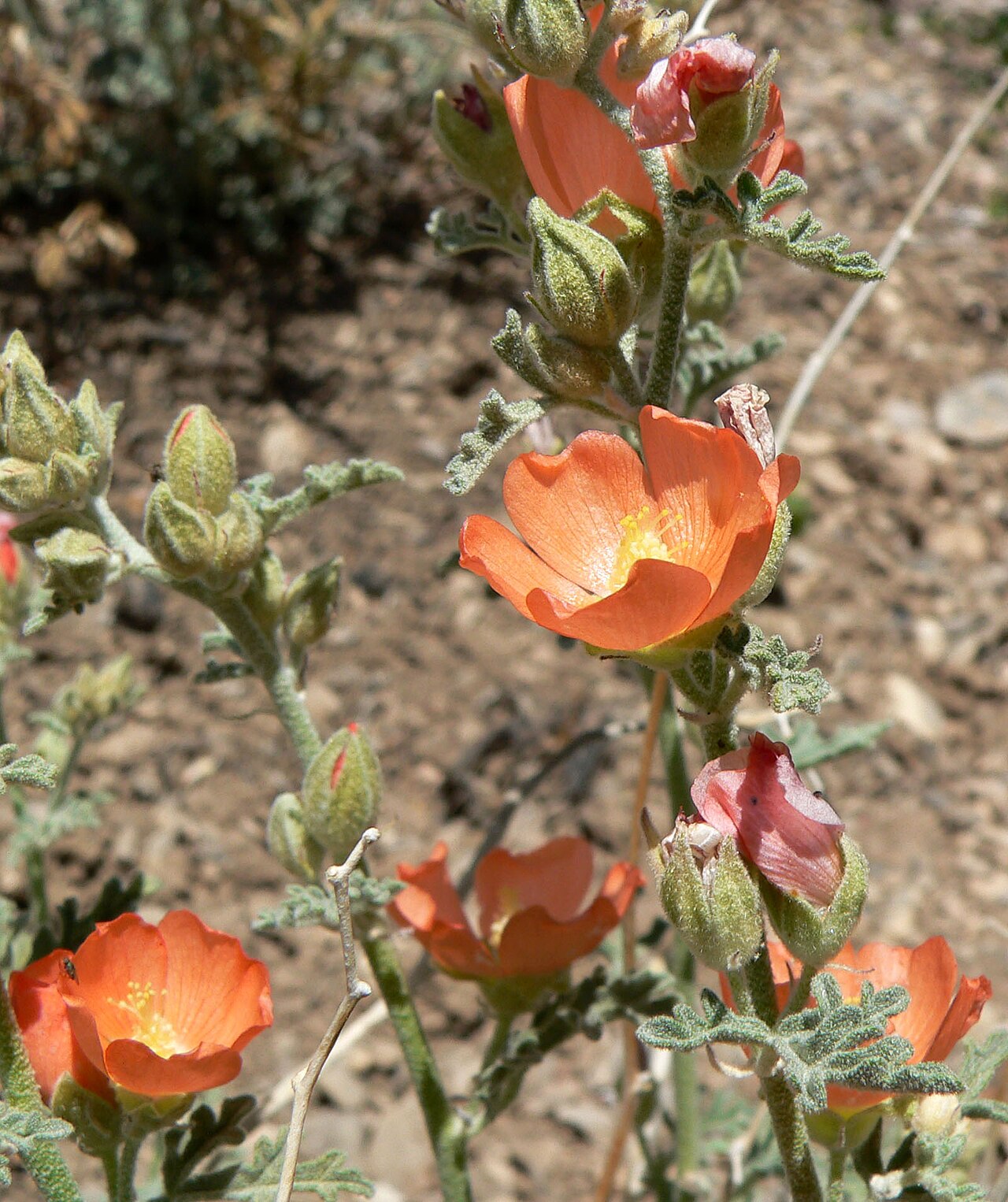
Gooseberryleaf Globemallow (<em>Sphaeralcea grossulariifolia</em>) carries warm orange cups above gray-green, deeply lobed leaves. It is a perennial of the dry Intermountain West, often noticed on open slopes and disturbed ground where less drought-adapted garden flowers would struggle. The foliage is as distinctive as the flowers: its broad outline and cut lobes suggest a gooseberry leaf, but the surface is covered with fine hairs.
This is not the same plant as desert globemallow, <em>Sphaeralcea ambigua</em>, nor is every orange mallow automatically this species. Globemallows can hybridize, and local identification sometimes requires fruit characters as well as leaves. The photographs here document plants identified as gooseberryleaf globemallow in Nevada, including material historically called subspecies <em>pedata</em>, which current Kew treatment includes within the species.
For a dry western garden it offers a useful combination of seasonal color, bee resources and tolerance of lean soils. It is often short-lived, however, so a thriving patch may depend on new seedlings rather than one permanent plant. Plan for renewal, leave some fruits to mature, and choose locally appropriate seed rather than assuming any globemallow sold in a nursery is an ecological equivalent.
Identification
Stems and root system
Hairy stems arise from a woody base, often with several ascending shoots. Plants commonly reach one to three feet in cultivation, with a broader range reported in botanical accounts. Much of the plant’s persistence comes from its substantial belowground system. A dry upper stem does not necessarily mean the perennial base has died, especially during a seasonal pause in growth.
Leaves
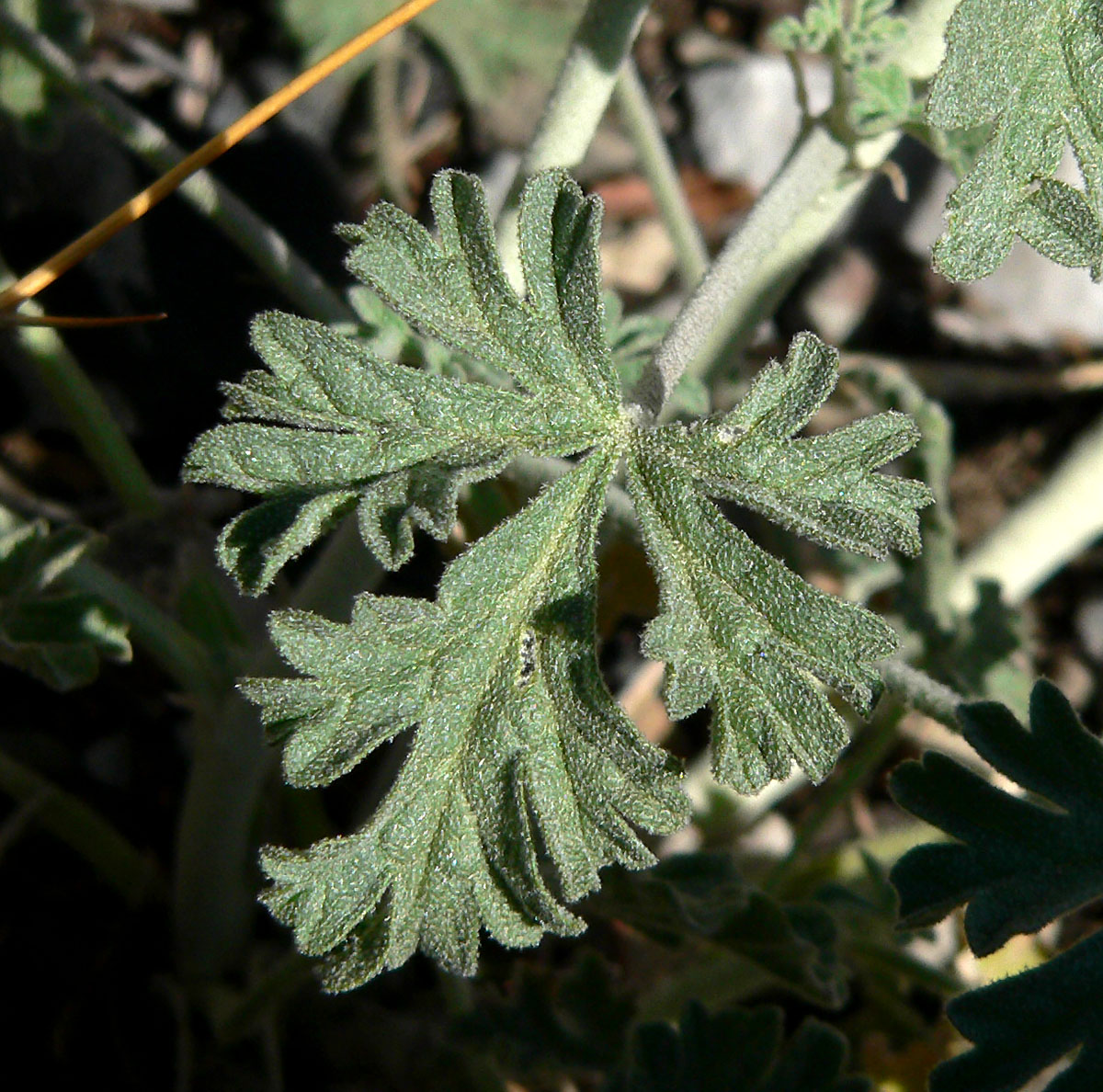
Leaves are palmately divided into three to five lobes, with additional cuts or teeth that can make them look quite intricate. Fine star-shaped hairs create a grayish appearance. Examine multiple leaves, because lower and upper foliage may differ. Avoid rubbing the hairy foliage near your face or eyes; observation does not require handling it.
Flowers
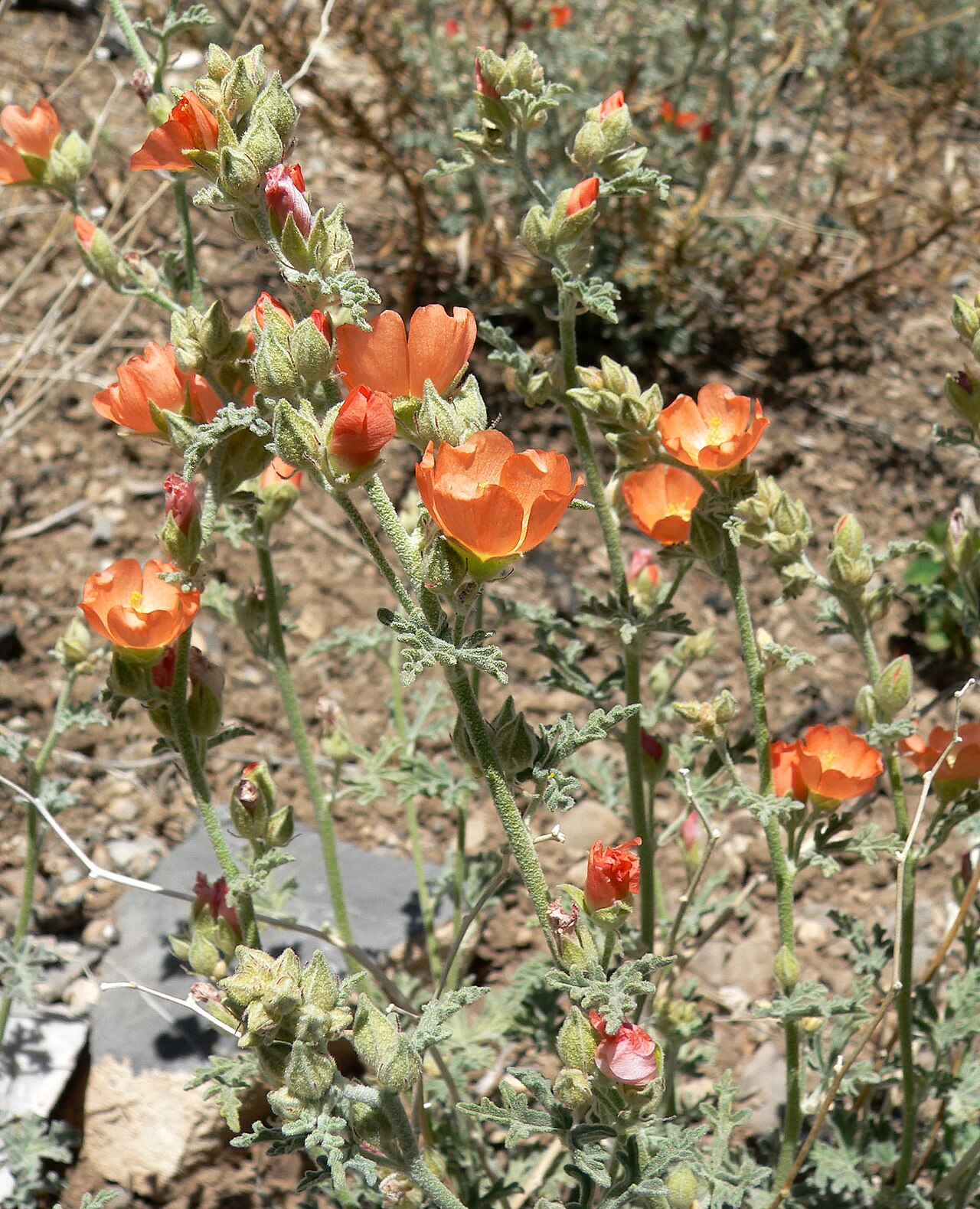
The flowers are typically orange to reddish orange, with five petals forming a shallow cup around the central reproductive structures. Buds, open flowers and developing fruits may occur along the same shoot. A strong spring display is common in parts of the range, and later growth can follow favorable moisture. Continuous summer bloom is not guaranteed on every dry site.
Fruits
Like other mallows, the fruit is divided into several segments arranged in a ring. Mature fruit characters help separate similar species and hybrids, so a flowering photograph alone may not settle a difficult identification. Let a few fruits develop when documenting a plant for a local botanist or seed supplier.
Related globemallows
Munro’s, scarlet and small-leaf globemallows occur in overlapping western landscapes, and intermediate plants can result from hybridization. The spelling <em>grossulariaefolia</em> occurs in older material; <em>grossulariifolia</em> is used here. Current Flora of North America and Kew treatments do not retain the older pedata subdivision as a separate accepted species.
Quick Facts
| Scientific Name | Sphaeralcea grossulariifolia (Hook. & Arn.) Rydb. |
| Family | Malvaceae (mallow family) |
| Plant Type | Short-lived perennial forb |
| Mature Height | Commonly 1–3 feet; variable |
| Mature Spread | A small to broad clump depending on conditions |
| Growth Rate | Moderate; responds to favorable moisture |
| Sun Exposure | Full sun |
| Water Needs | Low after establishment |
| Soil Type | Well-drained clay, loam, sand or gravel |
| Soil pH | Tolerates alkaline and moderately saline conditions |
| Bloom Time | Often May–July in Utah; longer or repeated elsewhere |
| Flower Color | Orange to reddish orange |
| Fall Color | Gray-green foliage may renew after rain |
| Fruit | Segmented mallow fruit with hard-coated seeds |
| Deer Resistant | No guarantee; wildlife may browse it |
| USDA Hardiness Zones | Cold-hardy western provenance; match local climate and drainage |
Native Range
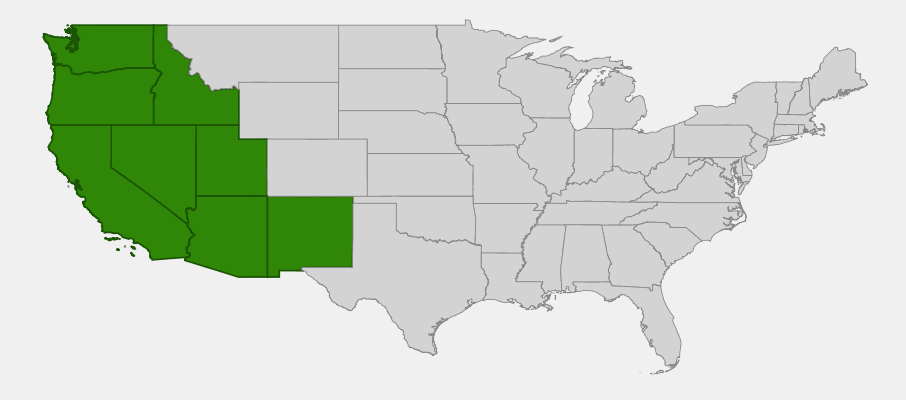
Kew lists native populations in Arizona, Idaho, Nevada, New Mexico, Oregon, Utah and Washington. The Forest Service’s Western Forbs treatment also reports California, so the map includes those eight states and identifies that broader regional source. Colorado is not included: appearing on a combined Utah and western Colorado list does not establish Colorado nativity.
The plant occurs in dry open habitats such as plains, slopes, washes and portions of sagebrush or pinyon-juniper country. It is frequently associated with open or disturbed ground. The Forest Service review describes a broad elevation band around 2,600–7,500 feet and emphasizes arid to semiarid conditions rather than permanently moist ground.
Within the Intermountain region, use locality and habitat information when selecting seed. A state-level map cannot represent every soil or plant community. For a restoration site, document the source population and avoid substituting another globemallow simply because its flowers have the same orange color.
📋 Regional plant list: Utah & Western Colorado
Growing & Care Guide
Drainage before decoration
Choose a sunny position where water can leave the root zone. A decorative gravel layer cannot compensate for compacted soil that holds water beneath it. Test the actual planting location after rain or irrigation. On a slope, consider where runoff enters the bed as well as where it exits, so a dryland plant is not accidentally placed in a collection point.
Planting plugs
Use nursery-grown plants with a sound root system and a clearly identified species. Plant at the existing crown depth, water to settle soil, and keep the surrounding area free of aggressive weeds. Avoid burying the woody base under a deep mulch layer. Mark small plants so they are not mistaken for volunteer weeds before the characteristic foliage develops.
Establishment water
Even a drought-adapted perennial needs enough moisture to establish roots beyond its container. Check the root zone regularly during the first growing period, then reduce supplemental water as the plant settles into the site. The correct interval depends on soil and weather. Repeated shallow wetting can encourage weeds without providing a useful reserve below the surface.
Mature watering
Once established in an appropriate site, gooseberryleaf globemallow generally needs little additional water. Rainfall can trigger renewed growth or flowering, but forcing constant lush growth is not necessary. If the plant is surrounded by thirsty ornamentals, reconsider the grouping rather than watering the entire bed heavily for the sake of its neighbors.
Soil chemistry
The USDA and Forest Service accounts support tolerance of alkaline conditions and some salinity. That is more relevant than assuming every native forb needs a neutral potting mix. Do not add acidifying material without a specific reason. If soil conditions are extreme, test them and choose plants matched to the results rather than relying on a broad tolerance label.
Seed dormancy
The hard seed coat can prevent prompt germination. Scarification may be used in propagation, but treatment strength and duration should follow the seed supplier’s tested protocol. An overly aggressive treatment can damage viable seed. Keep untreated seed from the same lot as a comparison when experimenting on a small scale, and label all treatments clearly.
Sowing depth
The NRCS guide describes shallow sowing into a weed-free bed. For a home planting, follow the packet’s specific instructions and avoid burying seed beneath a thick mulch. Seed-to-soil contact matters. A firm surface and gentle watering help keep the small seed in place while preventing crusting or washout.
Renewal
Some plants persist only a few years, so allow a portion of the patch to produce seed. A garden with occasional young recruits is more resilient than one dependent on a single aging clump. Thin recruits selectively where they interfere with paths or other plants, but do not remove every seedling during routine cleanup.
Pruning
Remove dead or damaged stems when needed, taking care not to cut new growth at the base. Avoid treating the plant as a formal hedge. If a shoot has finished flowering, decide whether seed is wanted before cutting it. Gloves and gentle handling are sensible around the hairy foliage, especially when working close to the face.
Diagnosing failure
A declining plant may be old, overwatered, shaded or crowded rather than nutrient deficient. Check those conditions first. Browsing is also possible; globemallows are used by several herbivores. If the plant’s leaves differ from the expected form, retain photographs and fruiting material for identification instead of assuming it is simply an unusual cultivar.
Landscape Uses
- Use it in a sunny dryland border, a gravel garden or a mixed western habitat planting. The orange flowers contrast strongly with purple penstemons and asters, while gray foliage links visually with sagebrush. Select companions for shared water needs, not only for a pleasing color combination.
- On restoration sites, gooseberryleaf globemallow is valued as a native forb in arid and semiarid mixtures. Home gardeners should not copy agricultural seeding rates without considering the much smaller area and desired density. Begin with a manageable trial and observe how the plants behave through wet and dry seasons.
- Because it can be short-lived, it works best as part of a changing herbaceous layer around longer-lived structural plants. A few open spaces for seedling recruitment can be useful. A fully sealed, heavily mulched surface may look tidy but make natural renewal difficult.
Wildlife & Ecological Value
Native bees
USDA accounts describe globemallows as resources for a range of native bees, including specialists associated with the mallow family. Keep flowers accessible and avoid insecticide use during bloom. A patch with successive flowers can offer more opportunity than a single isolated stem.
Browsing animals
Globemallows are eaten by some larger herbivores, and leaves, fruits or seeds may be used by smaller animals. This is not a dependable deer-proof barrier. Where establishment is repeatedly interrupted by browsing, protect young plants temporarily rather than assuming drought tolerance also implies browse resistance.
Diversity in dry country
Adding a forb layer among grasses and shrubs increases the variety of structure and seasonal resources in a dryland planting. It does not replace the need for other flowering periods, nesting conditions and undisturbed soil. Maintain a mixed community rather than allowing one successful species to occupy every opening.
Cultural & Historical Uses
The common name draws attention to the resemblance between its lobed foliage and gooseberry leaves. It is not a gooseberry shrub and does not produce gooseberry fruit. The comparison is botanical description, not an indication of edible use.
Older floras distinguished a pedata form or subspecies. More recent broad treatments include it within gooseberryleaf globemallow, explaining why a correctly labeled historical photograph may carry an extra name. This article follows the modern broad species concept while acknowledging that globemallow identification remains difficult where hybrids occur.
Its modern restoration value is grounded in research on western native forbs and seed production. For gardeners, the most useful lesson is practical: drought adaptation, seed dormancy and short life span are parts of one strategy. Successful cultivation works with all three rather than focusing only on the flower color.
Frequently Asked Questions
Is this desert globemallow?
No. Desert globemallow is Sphaeralcea ambigua. Several orange-flowered globemallows overlap in cultivation, so check the full scientific name.
Is it native to Colorado?
The sources used here do not establish Colorado nativity. The linked regional page combines Utah and western Colorado, but that does not mean every listed species is native to both.
Why did seed germinate unevenly?
Hard-coated seeds can remain dormant. Use a documented scarification protocol for the seed lot and avoid assuming that all ungerminated seed is dead.
Will one plant live indefinitely?
Not necessarily. It is often short-lived, and successful patches may depend on new seedlings. Leave some fruits to mature if renewal is wanted.
Does it need summer irrigation?
Little may be needed after establishment on a suitable site. Young plants still need establishment moisture, and occasional rain can stimulate additional growth.
📋 Also listed: Intermountain West
Sources & Further Reading
- Kew: accepted name and synonyms
- USDA NRCS: plant guide
- US Forest Service: species ecology
- Western Forbs: updated regional treatment
- Intermountain Herbaria Portal: identification
Find Native Plants
Ask growers about nursery propagation and regional provenance. Browse our UT native plant nurseries, ID native plant nurseries, NV native plant nurseries directory for suppliers. Explore the native nursery finder.