
Common Blue Violet (Viola sororia)
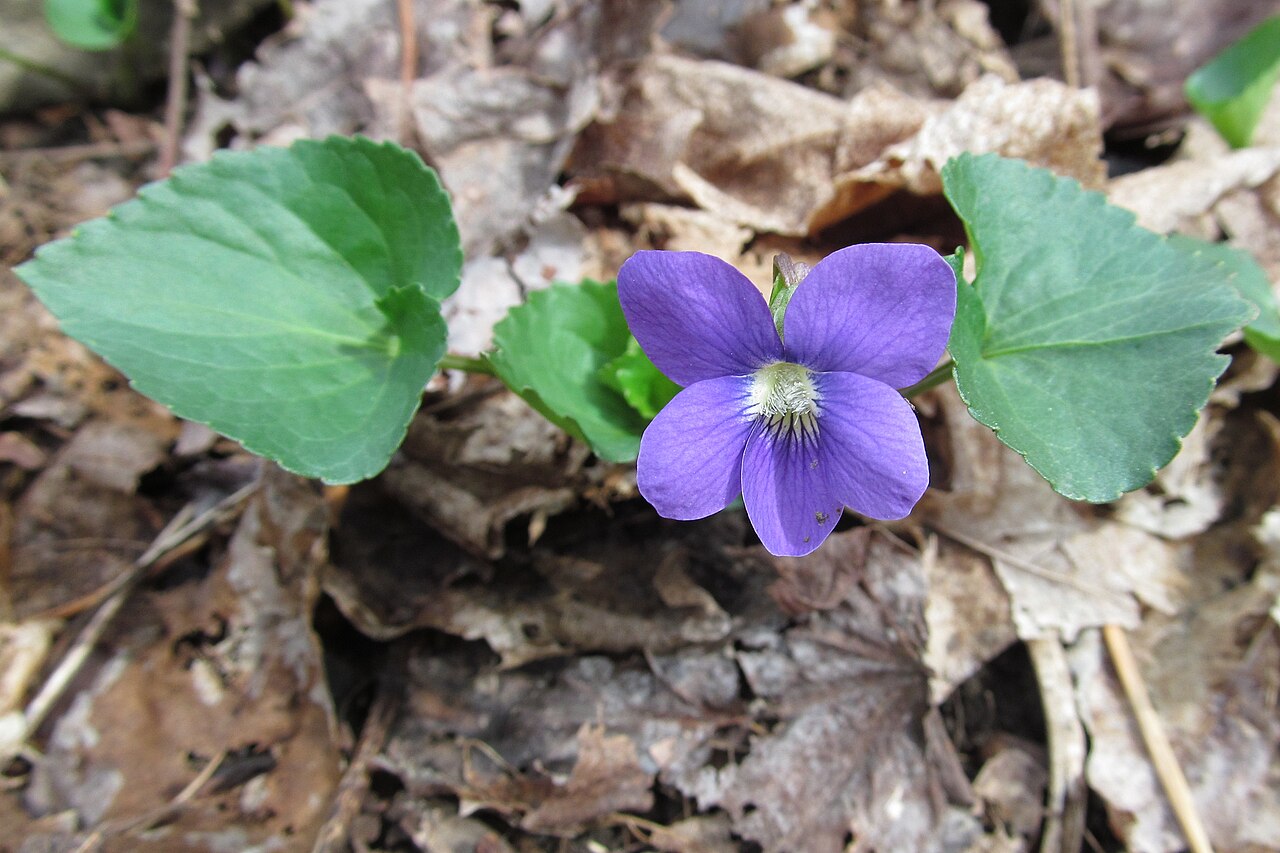
Viola sororia, commonly called the Common Blue Violet (also known as the Woolly Blue Violet, Dooryard Violet, or Confederate Violet in its white-and-purple form), is one of the most familiar wildflowers of eastern and central North America. It is a low, clump-forming perennial in the violet family (Violaceae) that carpets woodland floors, meadow edges, and — much to the annoyance of lawn purists — suburban yards every spring. Four U.S. states have honored a violet of this type as their official state flower: Illinois, New Jersey, Rhode Island, and Wisconsin, a testament to how deeply this unassuming little plant is woven into the regional identity of the eastern United States.
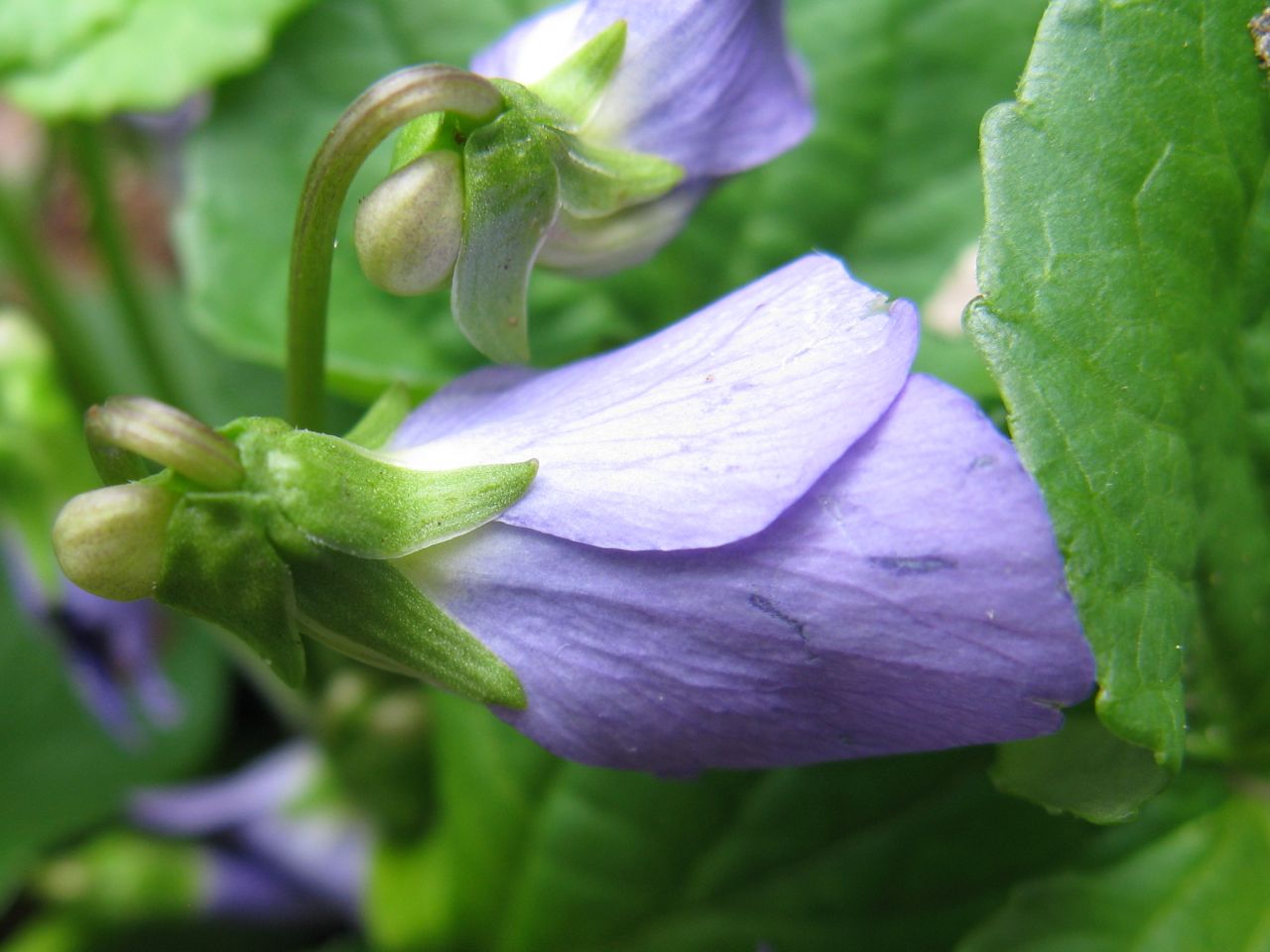
Common Blue Violet grows from short, thick rhizomes into a basal rosette of heart-shaped leaves, rarely topping 6 to 8 inches in height. In mid to late spring it sends up leafless flower stalks bearing five-petaled blossoms in shades of deep violet-blue, sometimes bicolor or pure white. What many gardeners never notice is that the showy spring flowers are only part of the story — later in the season the plant produces a second, hidden crop of self-pollinating (cleistogamous) flowers that never open, tucked low against the ground, which do the real work of producing seed for the year.
Because it spreads readily by both rhizomes and seed, Common Blue Violet is sometimes dismissed as a “weed” in turf lawns. But in a native plant garden, woodland border, or naturalized shade area, it is a tough, low-maintenance groundcover with real ecological value — it is a larval host plant for several species of fritillary butterflies and one of the earliest nectar sources available to spring pollinators.
Identification
Common Blue Violet is a stemless, rhizomatous perennial forb that forms low tufts or spreading colonies 3 to 8 inches tall. Unlike many of its violet relatives, it has no true aboveground stem — both the leaves and flower stalks arise directly from the rhizome at or near ground level.
Leaves
The leaves are broadly heart-shaped (cordate) to nearly round, 1 to 4 inches across, with a deep basal notch, a rounded or blunt tip, and scalloped (crenate) margins. They emerge tightly rolled (convolute) and unfurl on long petioles directly from the rhizome. Foliage is typically a rich, slightly glossy green and may be smooth or very finely hairy depending on the individual plant — one reason the species was once split into separate “smooth” and “woolly” violets before taxonomists lumped them together.
Flowers
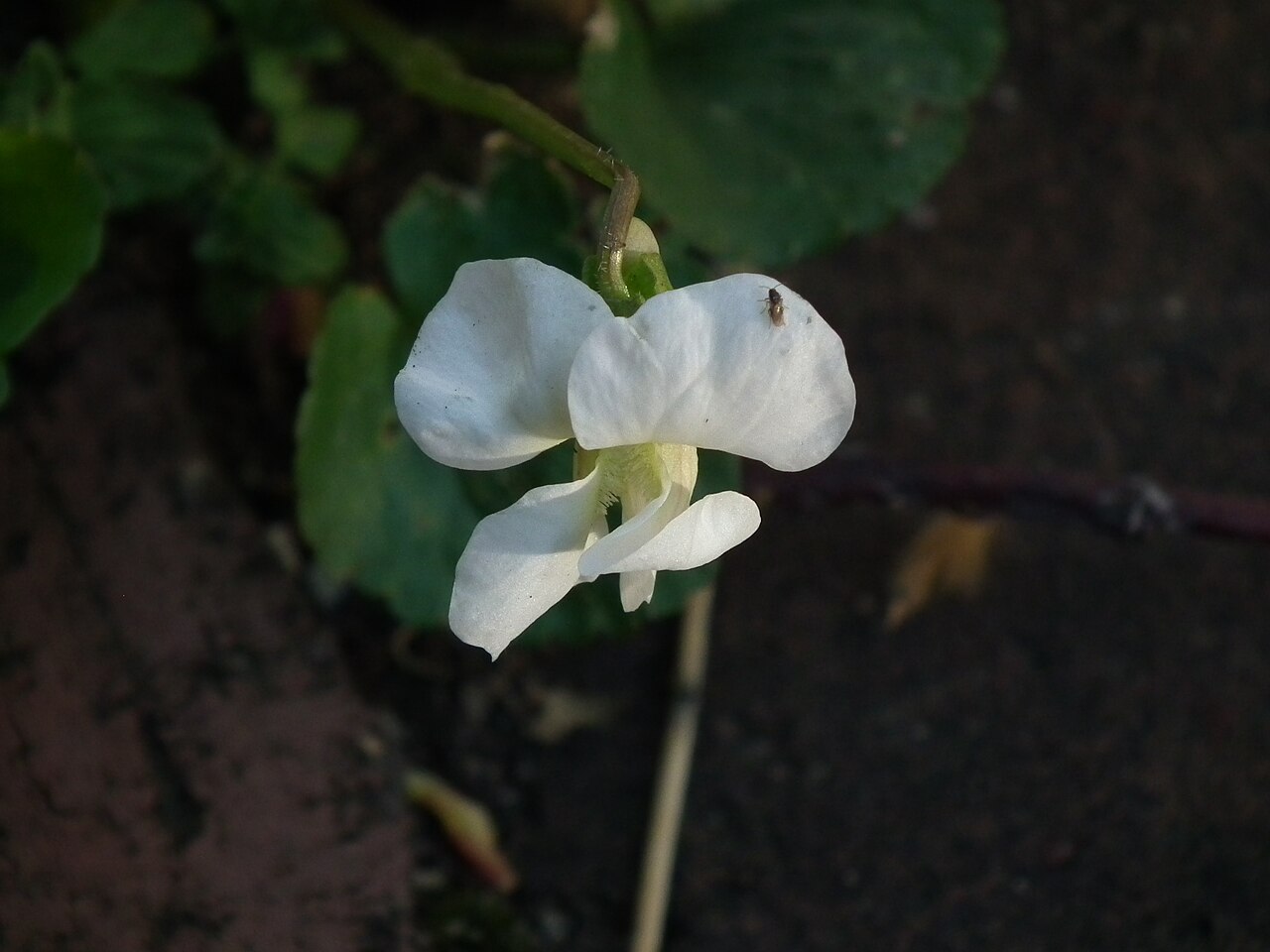
The familiar spring flowers are about ¾ to 1 inch across, with five petals: two upper petals, two lateral petals bearded with fine white hairs near the throat, and a lower petal extended into a short nectar spur. Color ranges from deep violet-blue to pale lavender, and pure white or white-with-purple-throat forms (sometimes sold as the “Confederate Violet”) are common, especially in disturbed or urban ground. The flower’s calyx — the small green sheath at the base of the petals — comes to a distinctly pointed tip, a useful identification feature that separates this species from some similar violets. After the showy chasmogamous flowers fade, low, closed cleistogamous flowers form later in the growing season and account for most seed production.
Fruit
The fruit is a small, three-valved capsule that splits open explosively when ripe, flinging seeds a short distance from the parent plant. Ants are also important secondary seed dispersers, carrying seeds back to their nests for the fatty seed appendage (elaiosome) and discarding the seed itself nearby — a classic case of myrmecochory.
Quick Facts
| Scientific Name | Viola sororia |
| Family | Violaceae (Violet) |
| Plant Type | Herbaceous Perennial, Groundcover |
| Mature Height | 3–8 in (8–20 cm) |
| Spread | Forms spreading colonies by rhizome and seed |
| Growth Rate | Moderate to fast once established |
| Sun Exposure | Full Sun to Full Shade |
| Water Needs | Average to Moist |
| Soil Type | Adaptable; loam, clay, or disturbed soils |
| Soil pH | 5.5–7.5 (acidic to neutral) |
| Bloom Time | March – June |
| Flower Color | Violet-blue, bicolor, or white |
| Fruit | Small three-valved seed capsule |
| Wildlife Value | Fritillary butterfly larval host; early pollinator nectar |
| Deer Resistant | Moderately (seldom seriously damaged) |
| USDA Hardiness Zones | 3–9 |
Native Range
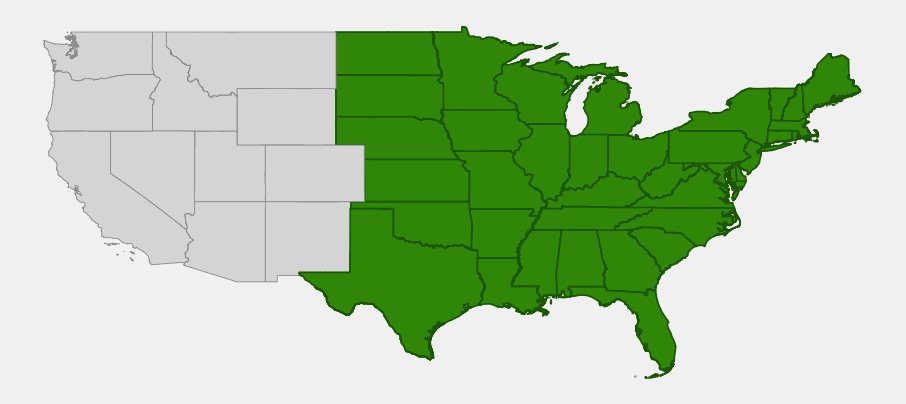
Common Blue Violet is native across a broad swath of the eastern and central United States and adjacent Canada, from New England and the Canadian Maritimes west to the Dakotas and eastern Colorado, and south to the Gulf Coast and northern Florida. It is absent as a native plant from the Rocky Mountains, the Intermountain West, and the Pacific states — gardeners there should treat it as an introduced plant rather than a regional native.
Within its native range, Common Blue Violet grows in an exceptionally wide range of habitats: deciduous and mixed woodlands, moist meadows, streambanks, old fields, and — because it tolerates mowing and foot traffic — lawns and roadsides. It is most abundant in rich, humus-laden woodland soil but adapts readily to average garden conditions, which is part of why it has become such a familiar dooryard plant.
📋 Regional plant lists featuring Common Blue Violet: New Hampshire, Maine & Vermont · Connecticut, Massachusetts & Rhode Island · New York, Pennsylvania & Northern New Jersey · Delaware, Southern New Jersey & Long Island · Maryland, Virginia & West Virginia · North Carolina & South Carolina · Georgia, Alabama & Mississippi · Arkansas, Louisiana & Eastern Texas/Oklahoma · Kentucky & Tennessee · Ohio & Indiana · Illinois, Iowa & Missouri · Michigan, Wisconsin & Eastern Minnesota · North Dakota, South Dakota & Western Minnesota · Nebraska, Kansas & Eastern Colorado
Growing & Care Guide
Common Blue Violet is about as forgiving as native perennials get — it is one of the few woodland natives that thrives equally well in deep shade and full sun, provided it has reasonable moisture.
Light
Plants grown in full sun stay compact and bloom most heavily, while those in shade grow a bit taller and lankier, reaching for light, with somewhat reduced flowering. Dappled shade under deciduous trees — mimicking its native woodland habitat — produces the fullest, healthiest foliage.
Soil & Water
This species is not fussy. It grows well in average garden soil, heavy clay, and disturbed ground alike, and prefers consistent moisture but tolerates brief dry spells once established. Soggy, poorly drained spots are fine; this is one of the few violets that handles occasional standing water without complaint.
Planting Tips
Set out container plants or bare-root divisions in spring or fall, spacing them 8 to 12 inches apart if you want a quick-filling groundcover — the plant will close any gaps on its own within a season or two. Because it self-seeds freely and spreads by rhizome, give it room to roam, or plan to edit volunteers out of nearby garden beds each spring.
Maintenance
Established plantings need almost no care. Old foliage can be left in place over winter for wildlife cover, or tidied up in early spring. If a planting becomes too dense, clumps divide easily in spring or fall. In lawns, Common Blue Violet tolerates regular mowing, which is exactly why it persists as a volunteer in so many yards — a trait to welcome rather than fight in a native-friendly landscape.
Landscape Uses
- Woodland groundcover under native trees and shrubs
- Shade garden filler between taller perennials
- Naturalized lawn alternative in low-traffic areas
- Rain garden or moist meadow edges
- Pollinator and butterfly gardens, especially fritillary host plantings
- Erosion control on gentle shaded slopes
Wildlife & Ecological Value
Common Blue Violet punches well above its weight ecologically for such a small plant.
For Butterflies and Moths
Violets in this group are the required larval host plants for several fritillary butterflies, including the Great Spangled Fritillary, Variegated Fritillary, and other Speyeria and Euptoieta species, whose caterpillars feed exclusively on violet foliage. Female fritillaries lay eggs near violet patches in late summer, and the newly hatched caterpillars overwinter without feeding, resuming growth on fresh violet leaves the following spring.
For Pollinators
The early spring flowers provide nectar and pollen for queen bumblebees, mining bees, and other native bees emerging from winter dormancy, at a time when few other flowers are available. Because violets bloom so early and so reliably, they fill an important gap in the pollinator nectar calendar.
For Other Wildlife
Wild turkeys, mourning doves, and small mammals including mice and voles eat violet seeds, while white-tailed deer and rabbits will browse the foliage, though it is rarely a preferred food. The dense, low foliage also provides ground-level cover for small wildlife in woodland and garden settings alike.
Cultural & Historical Uses
Common Blue Violet has a long history as both a dooryard flower and a minor food plant. The young leaves and flowers are edible and were historically used fresh in salads or cooked as potherbs, and the flowers were sometimes candied for decoration; the leaves are notably high in vitamin C. As with any wild plant gathered for food, correct identification is essential, and only modest quantities should be eaten.
The flower’s long cultural association with love and remembrance made it a popular dooryard and cemetery planting in the 19th and early 20th centuries, and its easy spread by rhizome meant that old farmstead violet patches often persist for generations after a homestead itself has vanished. Its adoption as the state flower of Illinois, New Jersey, Rhode Island, and Wisconsin reflects just how common and well-loved this little violet became across the eastern half of the country.
Companion woodland natives that share similar shaded habitat and bloom in the same early-spring window include Mayapple, Solomon’s Seal, and White Trillium, all of which make excellent planting partners for a native spring woodland garden.
Frequently Asked Questions
Is Common Blue Violet invasive?
Within its native range it is not invasive, though it does spread assertively by rhizome and self-seeding, which is why it shows up as an unplanned volunteer in lawns and garden beds. Outside its native range — in parts of the Pacific Northwest and West, for example — it should be considered a non-native garden escapee rather than planted intentionally.
Can you eat Common Blue Violet?
Yes. The leaves and flowers are edible and have a long history of use in salads and as a cooked green, and the flowers are sometimes candied. Always be certain of identification before eating any wild plant, and introduce new wild foods in small amounts.
Why do violets have two kinds of flowers?
The showy spring flowers attract pollinators and allow for cross-pollination, but they are not very reliable seed producers. Later in the season, the plant produces small, closed cleistogamous flowers near the ground that self-pollinate without ever opening, and these actually account for most of the seed a violet plant produces in a given year.
Will Common Blue Violet take over my garden?
It spreads readily where conditions suit it, especially in moist, partly shaded soil, so it is best suited to naturalized areas, woodland gardens, or as an intentional lawn alternative rather than tidy formal beds. Volunteers are easy to pull or transplant if they appear somewhere unwanted.
Is Common Blue Violet good for pollinators?
Yes — it is an important early-season nectar source for native bees and the required host plant for several fritillary butterfly species, making it one of the more ecologically valuable small perennials for a native garden.
