
California Oatgrass (Danthonia californica)
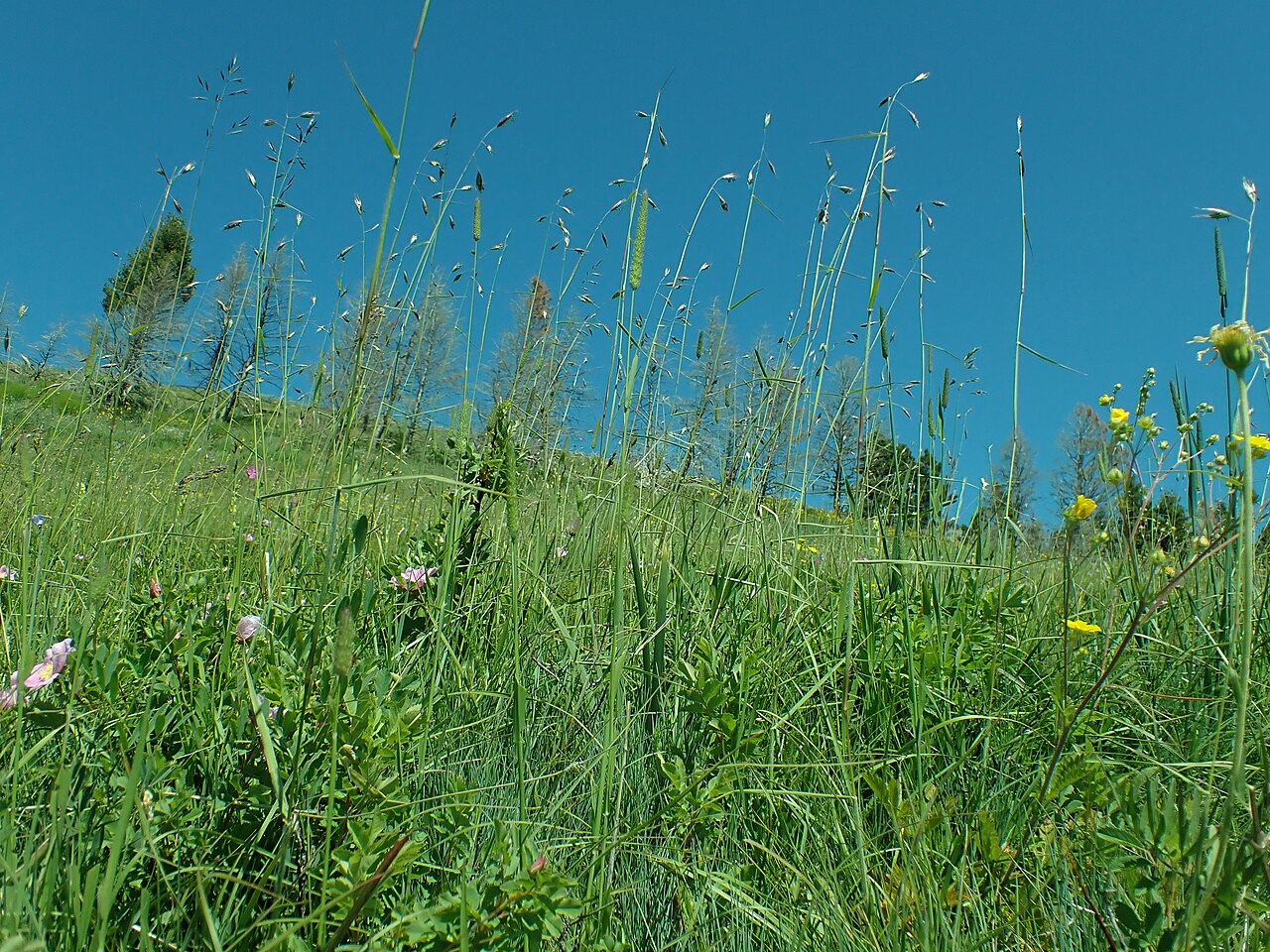
Danthonia californica, commonly called California Oatgrass, is a cool-season, clump-forming perennial bunchgrass with a surprisingly large native range across western North America, from the coastal prairies of California north to British Columbia and east across the Great Basin and Rocky Mountains into Montana, Wyoming, and the Southwest highlands. Despite the name, it is far from exclusively Californian — it is one of the defining bunchgrasses of the Pacific Northwest’s vanishing coastal prairies as well as a familiar grass of dry mountain meadows in the interior West.
The plant grows in dense, erect tufts up to about 3 feet tall, with narrow, flat leaves that are often hairy at the base and a loose, open seed head carrying a handful of large, bristly spikelets. Distinctive dark purplish-brown floret hairs give flowering stems a slightly shaggy, two-toned look up close, and the hairy collar where leaf blade meets sheath (the ligule area) is a reliable field mark for the species.
California oatgrass is valued in restoration and native landscaping for its toughness, its role as a larval host and seed source for grassland wildlife, and its historic dominance of coastal prairie and dry meadow plant communities that have been drastically reduced by development, fire suppression, and competition from introduced grasses. Reestablishing it is a priority in many Pacific coast prairie restoration projects.
Identification
California oatgrass is an erect, clumping (caespitose) perennial bunchgrass, typically 1 to 3 feet tall, forming discrete tufts rather than spreading by rhizomes into a continuous sod.
Stems & Leaves
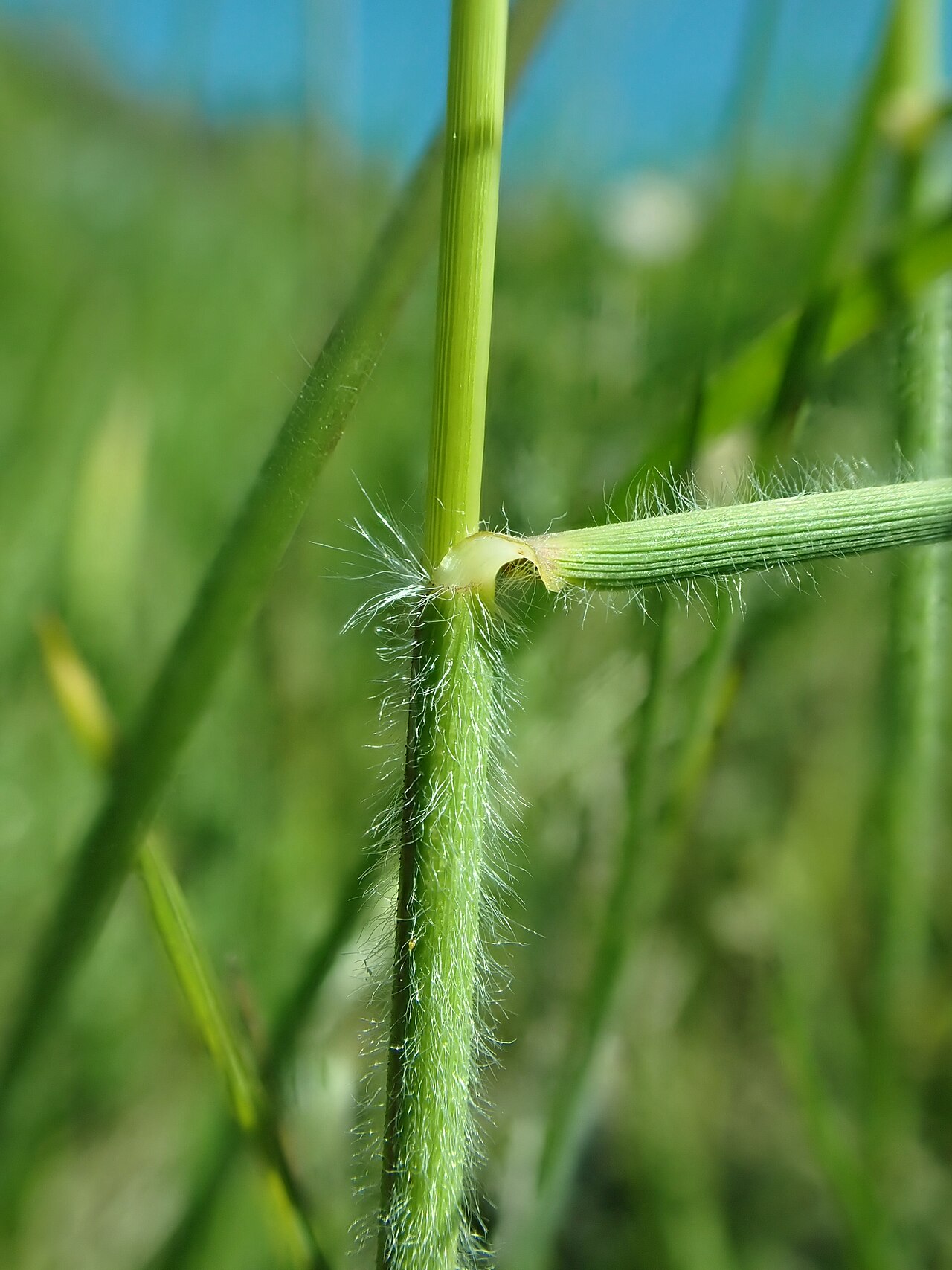
Stems are slender and mostly unbranched, rising from a basal clump of narrow, flat to slightly rolled leaves usually 4 to 12 inches long. The leaf blades may be smooth or noticeably hairy, and the junction between the leaf blade and sheath often bears a conspicuous fringe of fine white hairs — a useful identification feature when the grass is not in flower.
Flowers & Seed Head
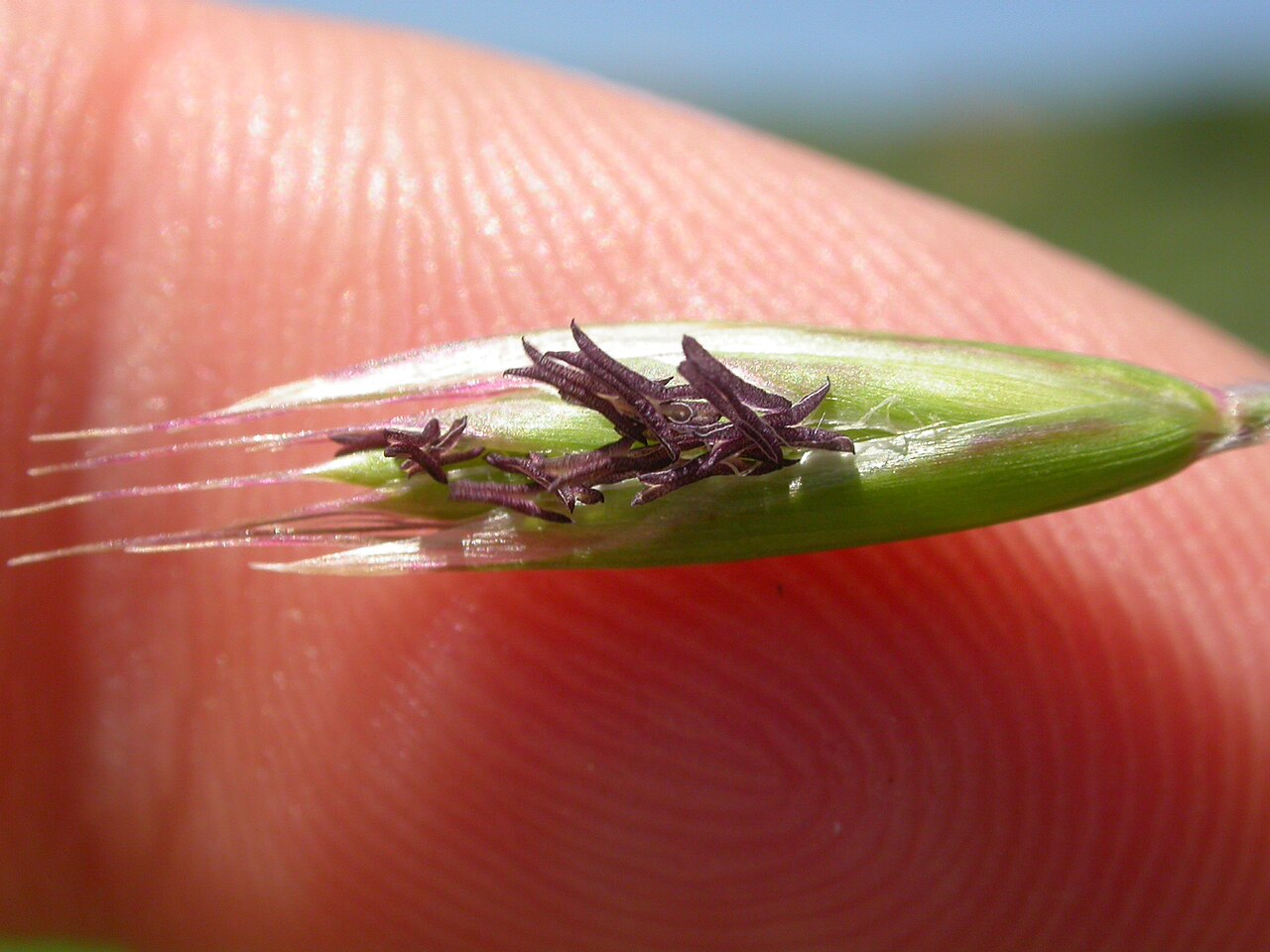
The inflorescence is a loose, open panicle or raceme bearing just a few to a dozen large spikelets, each containing up to eight florets. The florets are enclosed in long, papery glumes and tipped with dark, twisted awns; fresh florets often show a tuft of blackish-purple hairs at the base that gives flowering heads a subtly two-toned, shaggy appearance. Flowering occurs in late spring to early summer, varying with elevation and latitude across its broad range.
Fruit & Cleistogamy
Like other Danthonia species, California oatgrass produces two kinds of flowers: the showy, open florets at the top of the stem that are wind-pollinated, and hidden, self-pollinating cleistogamous florets lower on the stem or near the base of the plant that never open and guarantee seed production even without successful cross-pollination. This dual strategy helps the species persist reliably from year to year.
Quick Facts
| Scientific Name | Danthonia californica |
| Family | Poaceae (Grass) |
| Plant Type | Cool-Season Perennial Bunchgrass |
| Mature Height | 1–3 ft (in flower) |
| Mature Spread | 1–1.5 ft clump diameter |
| Growth Rate | Slow to moderate |
| Sun Exposure | Full Sun to Part Shade |
| Water Needs | Low to Moderate |
| Soil Type | Well-drained loam, clay-loam or rocky soils |
| Soil pH | 6.0–7.5 (slightly acidic to neutral) |
| Bloom Time | May – July |
| Flower Color | Green, aging straw-brown with dark purplish florets |
| Fall Color | Tan/straw as foliage cures |
| Fruit | Awned grass caryopsis (grain) |
| Deer Resistant | Moderate (grazed but tolerates it) |
| USDA Hardiness Zones | 4–9 |
Native Range
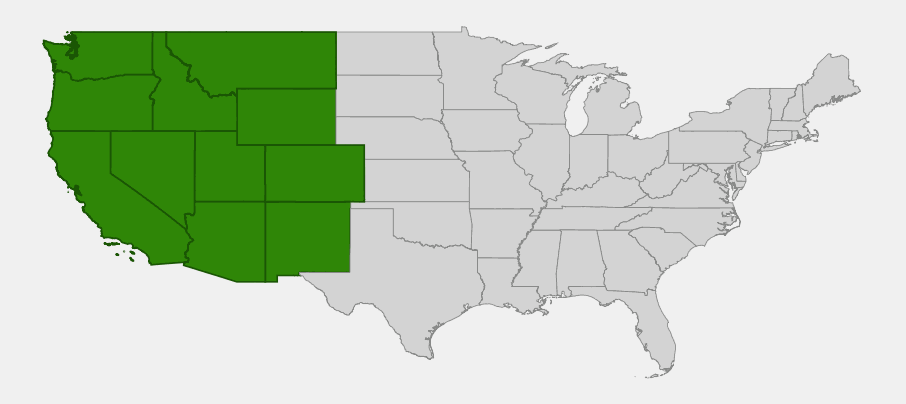
California oatgrass has one of the broadest native ranges of any western bunchgrass, extending along the Pacific Coast from California through Oregon and Washington, and inland across the Great Basin and Rocky Mountain states, including Nevada, Idaho, Utah, Montana, Wyoming, and Colorado, with disjunct populations reaching Arizona and New Mexico in higher-elevation habitats. A separate, widely disjunct population also occurs in Chile, a classic amphitropical disjunction shared by a handful of western American grassland species.
Across this range, California oatgrass grows in moist-to-seasonally-dry meadows, open woodlands, and, most notably, the coastal prairies of California, Oregon, and Washington, where it was historically one of the dominant native bunchgrasses before conversion to agriculture and pasture. In the interior West, it instead occupies dry mountain meadows and open forest openings, often at elevations from around 500 to over 9,000 feet, tolerating both the mild, wet winters of the coast and the cold, snowy winters of the Rockies.
Because it tolerates both grazing and occasional fire, California oatgrass persisted in many working landscapes even as surrounding plant communities changed, but it has still declined significantly in the Pacific Northwest’s coastal prairies, where it is now a priority species for habitat restoration, including as a larval host plant for at-risk butterflies in remnant prairie remnants.
📋 Regional plant lists featuring California Oatgrass: Western Oregon & Western Washington · Idaho, Eastern Oregon & Eastern Washington · Utah & Western Colorado · Arizona & New Mexico · Montana & Wyoming
Growing & Care Guide
California oatgrass is an adaptable, low-maintenance bunchgrass once established, equally at home in a coastal meadow restoration or a dry mountain-garden planting in the interior West.
Light
It grows best in full sun to light, open shade. In hotter interior sites it appreciates a bit of afternoon shade or the dappled light of an open woodland edge, which more closely mimics the forest-opening habitats it occupies in parts of its range.
Soil & Water
California oatgrass tolerates a wide range of well-drained soils, from clay-loam coastal prairie soils to the rocky, mineral soils of interior mountain meadows. It prefers moderate moisture during the spring growing season but, once established, tolerates the dry summer conditions typical of both the Mediterranean-climate coast and the semi-arid interior West. It does not tolerate prolonged standing water.
Planting Tips
Establish from plugs or seed in fall or early spring. Fall planting allows roots to develop over winter before summer drought arrives, which is especially important on coastal prairie sites with dry summers. Space plugs 12 to 18 inches apart for a naturalistic meadow look, or sow seed at the rate recommended by a native seed supplier when restoring a larger area. Seedlings establish slowly and may take two to three growing seasons to reach full size and flower reliably.
Pruning & Maintenance
Little maintenance is required. Cutting or mowing clumps back in late winter, before new growth emerges, tidies the planting and removes the previous year’s cured foliage; established plantings also respond well to occasional prescribed fire or light grazing, both of which mimic the historical disturbance regimes that favored this species over many competing introduced grasses.
Landscape Uses
California oatgrass fits naturally into a range of native plantings:
- Coastal and interior meadow restoration as a foundation bunchgrass
- Dry, unirrigated native lawns or meadow lawns once established
- Butterfly and pollinator habitat gardens, especially on the Pacific coast
- Erosion control on slopes and open banks
- Mixed wildflower meadow plantings as a textural, seed-head accent
Wildlife & Ecological Value
California oatgrass plays an outsized ecological role for a modest-looking bunchgrass, anchoring grassland plant communities across a very wide range of elevations and climates.
For Pollinators & Butterflies
In Pacific coastal prairies, California oatgrass serves as a larval host plant for several grass-feeding skipper butterflies associated with these increasingly rare grassland habitats, making its restoration a conservation priority in parts of its coastal range. Its flowers, while wind-pollinated rather than insect-pollinated, still provide structural habitat that supports a broader insect community.
For Birds
Seed-eating grassland birds forage on the grain produced by California oatgrass, and the dense basal tufts provide nesting cover and concealment for ground-nesting species in open meadow and prairie habitats.
For Mammals
The foliage is palatable to deer, elk, and livestock, and the species has a long history as a component of native rangeland forage across the interior West. Small mammals use the dense tussocks for cover and nesting material.
Ecosystem Role
As a foundational bunchgrass across both coastal prairie and interior montane meadow communities, California oatgrass contributes to soil stability, nutrient cycling, and structural diversity that supports a wide range of associated wildflowers and wildlife. Its tolerance of fire and grazing has allowed it to persist as a connective thread between historical and restored grassland habitats across its unusually broad native range.
Cultural & Historical Uses
California oatgrass was historically an important component of the grasslands and prairies that Indigenous peoples of the Pacific Coast, including various California and Pacific Northwest tribes, maintained and shaped through periodic burning to encourage the growth of food and basketry plants. While the grass itself was not typically a primary food source, its presence in regularly burned prairie and oak savanna landscapes reflects the broader Indigenous land management practices that sustained these now-rare grassland ecosystems for thousands of years.
In the era of American settlement, California oatgrass was recognized and used as a native forage grass on western rangelands, valued for its ability to persist under grazing pressure better than many other native bunchgrasses. Its historical dominance in Pacific coastal prairies has made it a flagship species for modern prairie restoration efforts along the West Coast, where ecologists work to reestablish the grass alongside the wildflowers and butterflies that depend on these vanishing habitats.
Today, California oatgrass is primarily grown and promoted for ecological restoration, erosion control, and native landscaping rather than any commercial or medicinal use, and no credible record of medicinal or culinary use has been documented for the species.
Frequently Asked Questions
Is California oatgrass only native to California?
No — despite the name, its native range extends from California north to British Columbia and east across the Great Basin and Rocky Mountains into Nevada, Idaho, Utah, Montana, Wyoming, Colorado, Arizona, and New Mexico, plus a disjunct population in Chile. It happens to have been first described from California specimens.
How is California oatgrass different from common lawn grasses?
It is a clump-forming bunchgrass rather than a spreading, sod-forming grass, so it does not knit together into a solid turf the way Kentucky bluegrass or fescue lawns do. It is better suited to meadow plantings, restoration areas, or unirrigated native “lawns” than to a traditional mowed lawn.
Will California oatgrass tolerate drought?
Yes, reasonably well once established, particularly in its interior mountain-meadow populations, which experience dry summers as a matter of course. Coastal-origin seed sources may be somewhat less drought-tolerant than interior ones, so matching seed source to your local climate improves results.
Can I mow California oatgrass like a lawn?
It tolerates occasional mowing or cutting back, especially in late winter before new growth starts, but it does not thrive under frequent close mowing the way turf grasses do. It is best used in meadow or naturalized plantings mowed once or twice a year rather than a weekly-mowed lawn.
Why is California oatgrass important for restoration?
It was historically one of the dominant bunchgrasses of Pacific coastal prairies, habitats that have shrunk dramatically due to development and competition from introduced annual grasses. Because it also hosts butterfly larvae and supports diverse grassland wildlife, reestablishing it is a priority in many coastal prairie restoration projects.

Looking for a nursery that carries California Oatgrass?
Browse our native plant nursery directory: California · Oregon · Washington · Nevada · Idaho · Utah · Arizona & New Mexico · Colorado · Wyoming · Montana