
Rosy Pussytoes (Antennaria rosea)
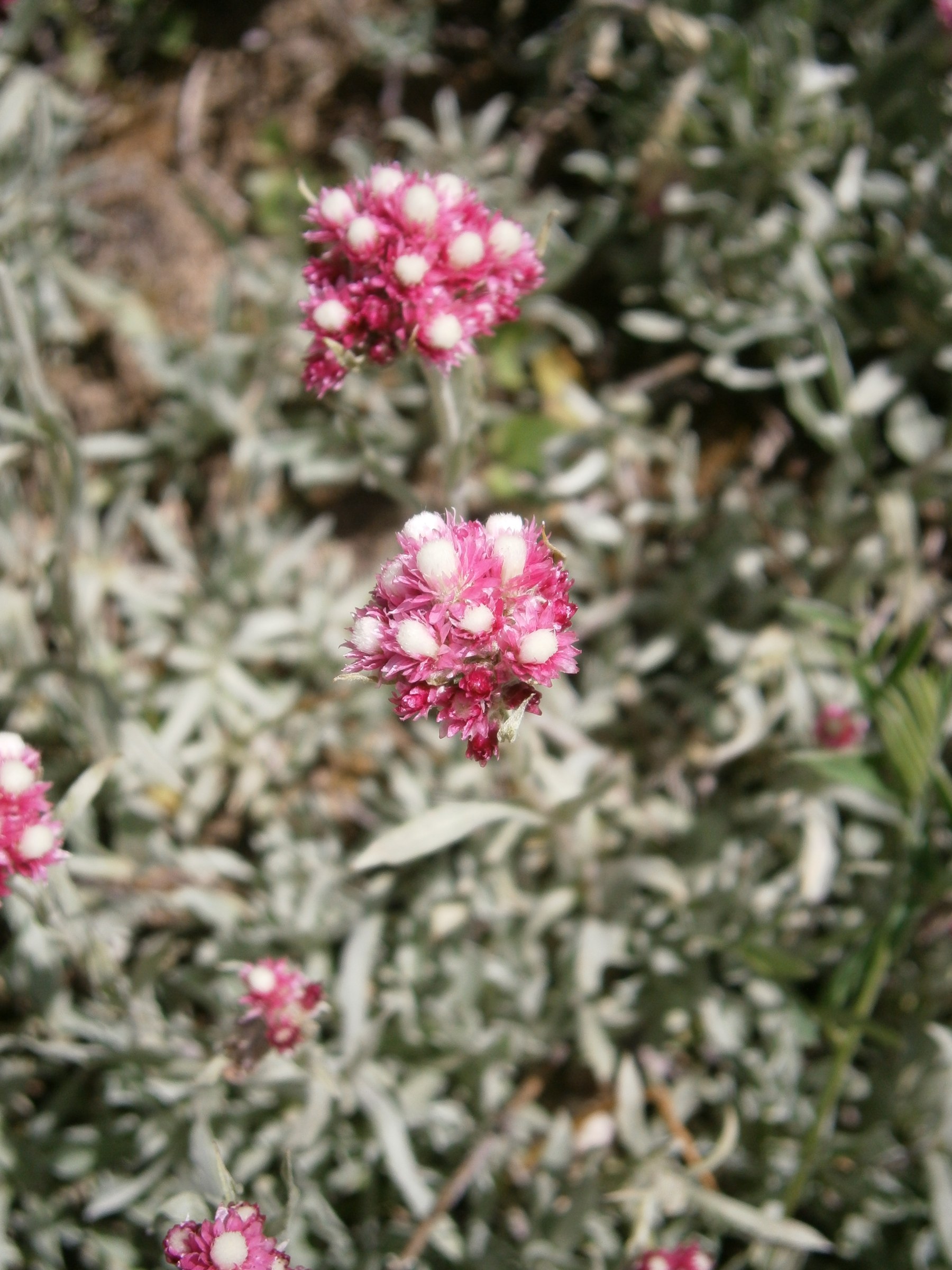
Antennaria rosea, commonly known as Rosy Pussytoes, is a low, mat-forming perennial wildflower of the Aster family (Asteraceae) found across the mountains, high plains, and far north of western and northern North America. It earns its common name honestly: the clustered flowerheads, wrapped in dry, papery, rose-to-magenta bracts, look remarkably like a cluster of tiny cat’s paws held up on a wiry stem. Children usually spot the resemblance before adults do, and that charm has made pussytoes a favorite teaching plant for introducing kids to native wildflowers.
Rosy pussytoes spreads by creeping stolons, knitting together a dense, evergreen groundcover of small, spoon-shaped leaves covered in fine white hairs that give the whole plant a soft gray-green, felted look. Each spring, flowering stems rise a few inches above the foliage mat, topped with tight clusters of inconspicuous yellow disc flowers surrounded by showy rose-colored bracts. Because the species reproduces largely by apomixis — producing viable seed without pollination — a single colony can blanket a slope over time, all genetically identical “clones” connected underground.
It is the most widespread member of its genus in North America, equally at home on wind-scoured alpine ridgelines, dry montane meadows, sagebrush flats, and rocky roadcuts from Alaska south through the Rockies and Sierra Nevada, with a scatter of surprising disjunct outposts far from the mountains. For gardeners in its native range, rosy pussytoes is an easy, drought-tough groundcover for rock gardens and sunny slopes that also happens to be the required host plant for the American Lady butterfly.
Identification
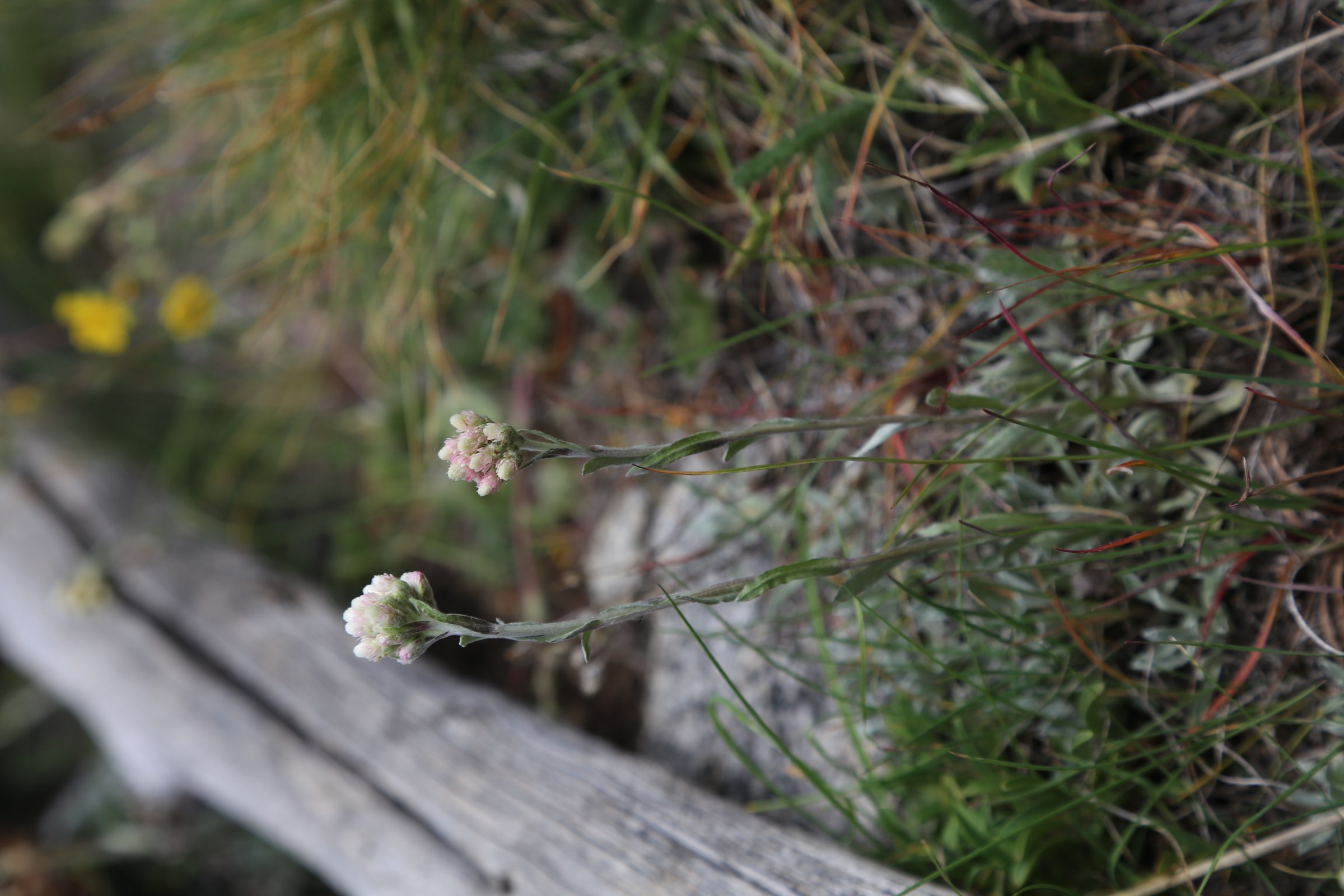
Rosy pussytoes is a small, mat-forming herbaceous perennial, usually only 2 to 4 inches tall in leaf, with flowering stems reaching 4 to 12 inches. Plants spread laterally by thin, leafy stolons that root at the nodes, so a single plant gradually becomes a broad, interconnected colony rather than a single clump.
Leaves
Basal leaves are spoon-shaped (spatulate) to narrowly oblanceolate, ½ to 1½ inches long, and densely covered on both surfaces with fine, white, woolly hairs (tomentum) that give the foliage a silvery, felt-like texture. Leaves on the flowering stems are smaller, narrower, and more sparsely spaced, reducing in size as they climb the stalk. The dense pubescence is a drought adaptation, reflecting sunlight and reducing water loss on exposed, high-elevation sites.
Flowers
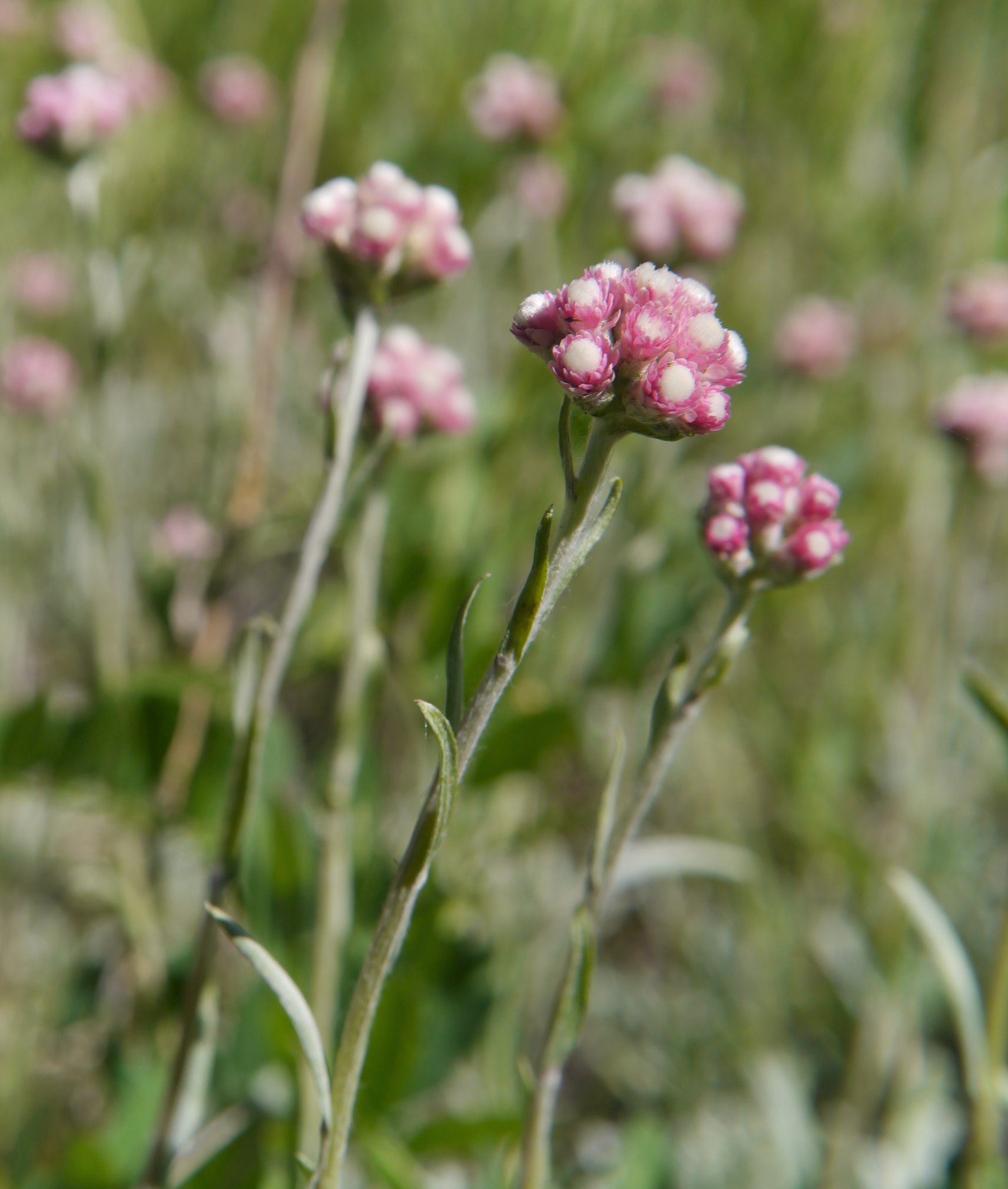
Flowering stalks are themselves woolly-hairy and bear a tight, rounded to slightly elongated cluster (glomerule) of several flowerheads at the tip. Each small head is composed of inconspicuous, tubular yellowish disc florets almost completely hidden by dry, papery, imbricated bracts (phyllaries) in shades of rose, magenta, or occasionally white. These bracts are the showy part of the “flower” and the source of both common names, rosy pussytoes and rosy everlasting — they keep their color and shape even as the flowerhead dries, a classic trait of the everlasting tribe within the Aster family. Like most Antennaria, the species is functionally dioecious: separate plants tend to be male or female, though most reproduction happens asexually through apomictic seed, and male plants are noticeably less common in most colonies.
Fruit & Seed
After flowering, each tiny floret matures into a single-seeded achene tipped with a tuft of fine, silky pappus bristles, allowing wind to carry the seed away from the parent colony. Because the species sets seed apomictically, isolated patches can establish and persist from a single founding genotype.
Quick Facts
| Scientific Name | Antennaria rosea Greene |
| Family | Asteraceae (Aster/Sunflower) |
| Plant Type | Herbaceous Perennial / Mat-Forming Groundcover |
| Mature Height | 2–4 in foliage; flower stalks to 4–12 in |
| Mature Spread | Indefinite; spreads by stolons into broad mats |
| Growth Rate | Moderate |
| Sun Exposure | Full Sun |
| Water Needs | Low to Moderate |
| Soil Type | Well-drained; gravelly, sandy or rocky |
| Soil pH | 6.0–7.5 (neutral to slightly acidic) |
| Bloom Time | May – August, depending on elevation |
| Flower Color | Rose-pink to magenta bracts; cream-yellow disc florets |
| Fall Color | Evergreen gray-green; no notable fall change |
| Fruit | Tiny wind-dispersed achenes with silky pappus |
| Deer Resistant | Yes (fuzzy, low-palatability foliage) |
| USDA Hardiness Zones | 3–7 |
Native Range
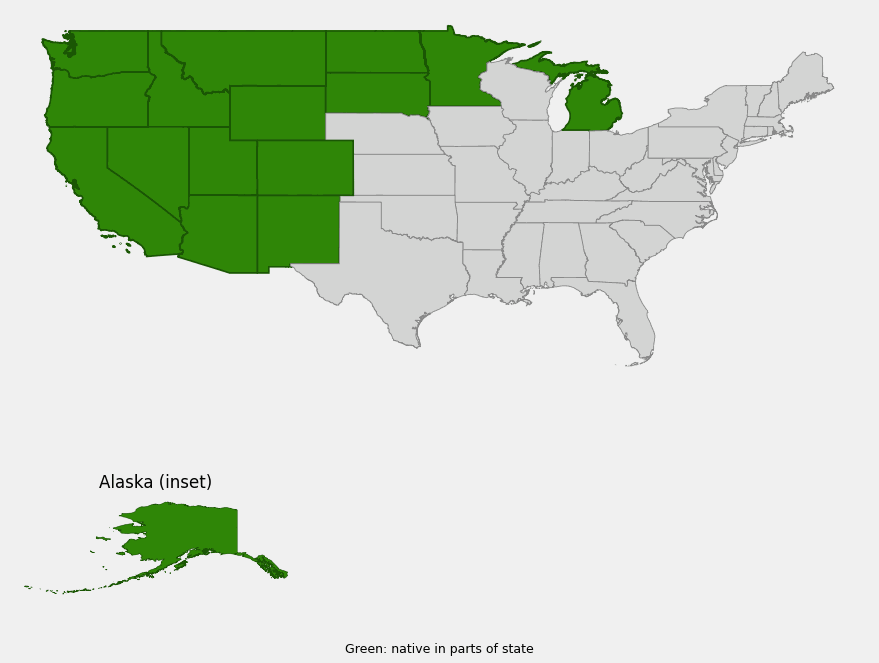
Rosy pussytoes is the most widespread Antennaria in North America, ranging from Alaska and the Yukon south through the Rocky Mountains, Great Basin, and Sierra Nevada to Arizona and New Mexico, and east across the northern Great Plains to the Dakotas and Minnesota. It is common throughout the mountainous West at a huge range of elevations, from foothill sagebrush country to above treeline in alpine tundra, and reaches a handful of disjunct outposts far from its core range, including cold, rocky summits in Michigan where isolated alpine-affinity populations persist.
Across this range the species occupies dry, open, sun-exposed sites: alpine and subalpine meadows, rocky ridgelines and talus, open pine and fir forest, sagebrush steppe, and dry grassland. It tolerates thin, rocky soils that exclude many other plants and is often one of the first species to recolonize disturbed slopes, old burns, and eroded trailsides in the mountains, where its mat-forming stolons help stabilize loose soil.
Rosy pussytoes is not considered rare or declining anywhere in its range, but because it favors open, disturbance-tolerant habitat, dense colonies are easiest to find on rocky outcrops, gravelly meadows, and sun-baked slopes rather than in closed forest. Gardeners outside its native range should choose a regionally appropriate groundcover instead; this species is included here only for its native western and northern range.
📋 Regional plant lists featuring Rosy Pussytoes: Alaska · Arizona & New Mexico · Utah & Western Colorado · Montana & Wyoming · Idaho, Eastern Oregon & Eastern Washington · Western Oregon & Western Washington · North Dakota, South Dakota & Western Minnesota · Michigan, Wisconsin & Eastern Minnesota
Growing & Care Guide
Rosy pussytoes is one of the easiest native groundcovers for dry, sunny sites. Once established on well-drained soil, it needs very little attention and will slowly knit itself into a durable, low-maintenance mat.
Light
Give rosy pussytoes full sun. It is a plant of open, exposed habitats in nature and will grow thin and sparse, flower poorly, and eventually decline if shaded by taller neighbors. In the garden it pairs well with other sun-loving rock garden and xeriscape plants that won’t crowd it out.
Soil & Water
This species demands sharp drainage. In heavy clay or consistently damp soil, the fuzzy foliage is prone to rot, especially over winter. Gravelly, sandy, or rocky soils that mimic its native talus and meadow habitat suit it best. Once established, rosy pussytoes is quite drought tolerant and needs only occasional deep watering during the hottest, driest stretches of summer; established alpine-origin plants are adapted to short growing seasons with naturally dry summer soils.
Planting Tips
Plant divisions or container stock in spring or fall, spacing plants 8 to 12 inches apart if you want full coverage within a couple of seasons — the stolons will fill the gaps on their own. A gravel or crushed-rock mulch both suppresses competing weeds while plants establish and mimics the mineral soils the species favors in the wild.
Pruning & Maintenance
Essentially no pruning is required. Spent flower stalks can be left in place for winter interest and for birds that may glean the tiny seeds, or trimmed back after bloom if a tidier look is wanted. Established mats rarely need dividing, but overly vigorous patches can be thinned by lifting and replanting rooted stolon sections elsewhere.
Landscape Uses
Rosy pussytoes is a versatile, low-care groundcover for several garden situations:
- Rock gardens, where its silvery mat cascades attractively over stones
- Xeriscaping and other low-water landscape designs
- Erosion control on dry, rocky slopes and cutbanks
- Butterfly gardens, as a larval host for the American Lady
- Gravel paths and crevice gardens, tucked between stepping stones
- Alpine and trough gardens for collectors of high-elevation plants
Wildlife & Ecological Value
Despite its small size, rosy pussytoes punches above its weight ecologically, offering both larval host plant services and early-season ground cover in harsh, open habitats.
For Pollinators
Rosy pussytoes is the required larval host plant for the American Lady butterfly (Vanessa virginiensis). Gardeners who plant it should expect to see the butterfly’s spiny black caterpillars feeding in groups on the foliage in summer; the plants recover within a couple of weeks and the caterpillars soon pupate, making this a reliable, low-drama way to support a full butterfly life cycle. The small disc flowers, while inconspicuous, also provide nectar for small native bees and other pollinating insects in places where little else is blooming on exposed, rocky sites.
For Birds
The tiny windborne seeds are gleaned by sparrows and other small seed-eating songbirds, particularly in open alpine and subalpine meadows where food can be scarce. The dense, woolly foliage mats also offer limited ground-level cover for insects and the small birds that hunt them.
For Mammals
The bitter, hairy leaves make rosy pussytoes generally unpalatable to deer and other browsers, which is part of why it persists so readily on heavily grazed rangeland and high-traffic mountain meadows where more palatable plants are cropped down.
Ecosystem Role
As an early colonizer of disturbed, rocky, or eroded ground, rosy pussytoes helps stabilize thin mountain soils and provides a foothold of organic matter and shade at the soil surface that can ease the way for other, less hardy plants to establish. Its tolerance of poor soil and wind exposure makes it a quiet but important stabilizer on slopes, old burns, and trailsides throughout its range.
Cultural & Historical Uses
Various Indigenous peoples across the plant’s wide range used pussytoes species, including rosy pussytoes, in folk medicine, though specific, well-documented ethnobotanical uses for this particular species are less thoroughly recorded than for some of its showier relatives. Soft, woolly Antennaria foliage in general has historically been noted by botanists and naturalists for its felt-like texture, and the plant’s resemblance to small animal paws has long made it a favorite subject for children’s nature walks and wildflower identification.
Rosy pussytoes belongs to the “everlasting” group within the Aster family — plants whose papery bracts hold their color and shape long after the flowerhead has dried, a quality that made many everlastings popular in dried flower arrangements historically. While rosy pussytoes itself is less commonly gathered for this purpose than some larger everlasting species, its durable, colorful bracts share the same quality.
Today the species’ main cultural value is horticultural and educational: it is widely recommended by native plant societies and extension services as an easy, attractive, low-water groundcover, and its role as American Lady butterfly host plant makes it a frequent feature of pollinator-garden and native-plant teaching programs across the West.
Frequently Asked Questions
Why is it called “pussytoes”?
The tight clusters of small flowerheads, wrapped in soft, rounded, often pink-tinged bracts, resemble the toes of a cat’s paw — a resemblance that is especially obvious to children seeing the plant for the first time.
Will rosy pussytoes take over my garden?
It spreads steadily by stolons to form a dense mat, but it stays low (just a few inches tall) and is easy to contain by pulling or trimming stray runners. It is not considered weedy or aggressive within its native range.
Do I need both a male and female plant for it to spread?
No. Rosy pussytoes reproduces mainly by apomixis, setting viable seed without pollination, so a single plant or clone can spread and seed itself without a mate. It also spreads vegetatively by stolons regardless of flowering.
Is rosy pussytoes deer resistant?
Yes. The dense, hairy, somewhat bitter foliage is generally avoided by deer and other browsers, which is one reason it persists so well on heavily grazed mountain rangeland.
What butterfly relies on this plant?
Rosy pussytoes is a larval host plant for the American Lady butterfly (Vanessa virginiensis). Gardeners planting it for pollinator habitat should expect — and welcome — the caterpillars that show up on the foliage each summer.

Looking for a nursery that carries Rosy Pussytoes?
Browse our native plant nursery directory: Alaska & Arizona · California · Colorado · Idaho · Maine, Michigan, Minnesota & Montana · Nevada, New Mexico & North Dakota · Oregon · South Dakota & Utah · Washington · Wyoming