
Lake Sedge (Carex lacustris)
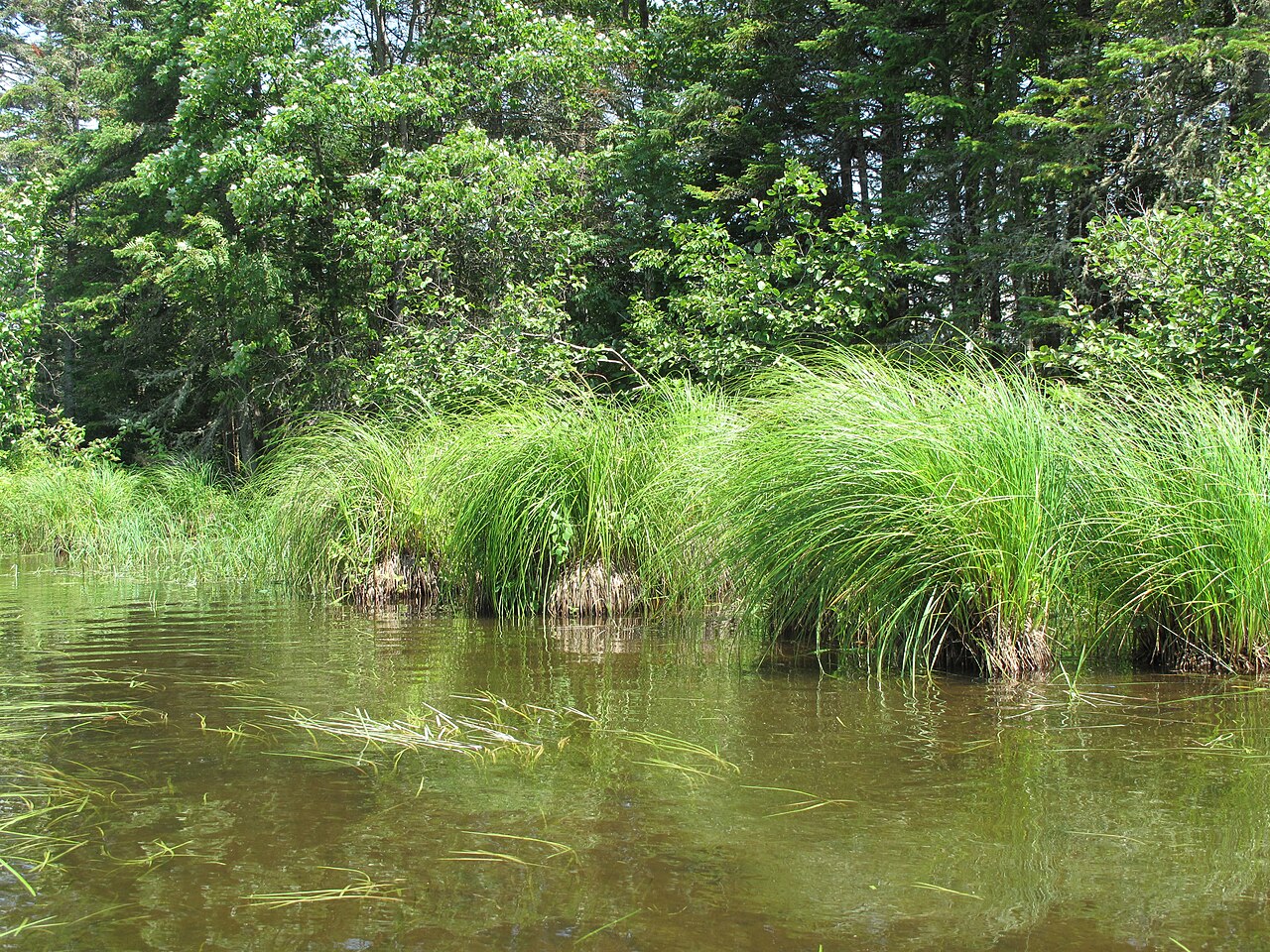
Carex lacustris, known as lake sedge (and in official USDA nomenclature as “hairy sedge,” for the fine down on the underside of its leaves), is a large, rhizomatous wetland sedge of the northern and upper midwestern United States and across Canada. A member of the Cyperaceae, or sedge family, it is one of the defining plants of the marsh and lakeshore zone known to wetland ecologists as a “sedge meadow” — the dense, grassy band of vegetation that stands between open water and the surrounding forest.
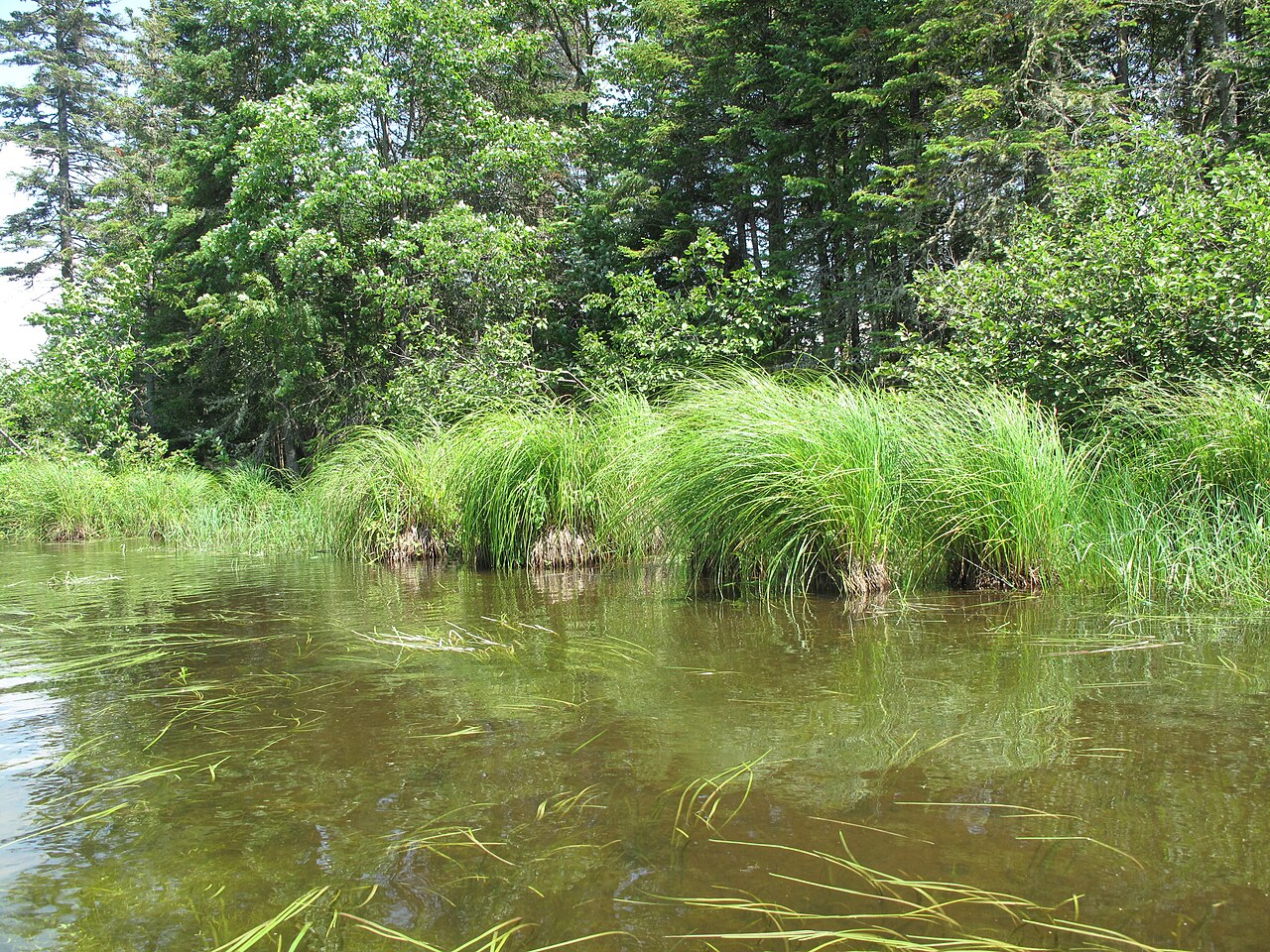
Unlike the tidy, clump-forming sedges favored in garden beds, lake sedge spreads by long, vigorous rhizomes, forming extensive colonies and the raised, hummock-like tussocks so recognizable along northern lakeshores, where its broad arching leaves rise from standing water in dense stands. Mature plants typically reach 2 to 4 feet tall, with leaves nearly an inch wide — unusually broad for a native sedge — and a soft, almost felted texture on the leaf undersides.
Because of its spreading habit and tolerance for standing water, lake sedge is not a plant for the tidy perennial border; it is a workhorse for shoreline stabilization, wetland restoration, and the kind of large, naturalistic rain garden or pond edge where a colonizing, erosion-controlling groundcover is exactly what’s needed.
Identification
Lake sedge is a coarse, robust, rhizomatous perennial, often forming extensive colonies or raised tussocks rather than single tidy clumps. Like all sedges, its stems are triangular in cross-section.
Leaves
The leaves are notably broad for a sedge, 6 to 15 mm wide, flat, and bright to yellow-green, with a soft, finely hairy or papillose underside that gives the species its USDA common name “hairy sedge.” Leaves arch outward from the base and often exceed the height of the flowering stems, contributing to the plant’s lush, fountain-like appearance along shorelines.
Flowers
Flowering occurs in late spring to early summer. Each flowering stem bears two to four slender, drooping male spikes at the top and two to five thicker, cylindrical female spikes below, the lowest often on a long, nodding stalk. The spikes are green, maturing to a light brown, and though not showy in a floral sense, the dense clusters of narrow spikes give mature plants an attractive, textured profile against open water.
Fruit & Seeds
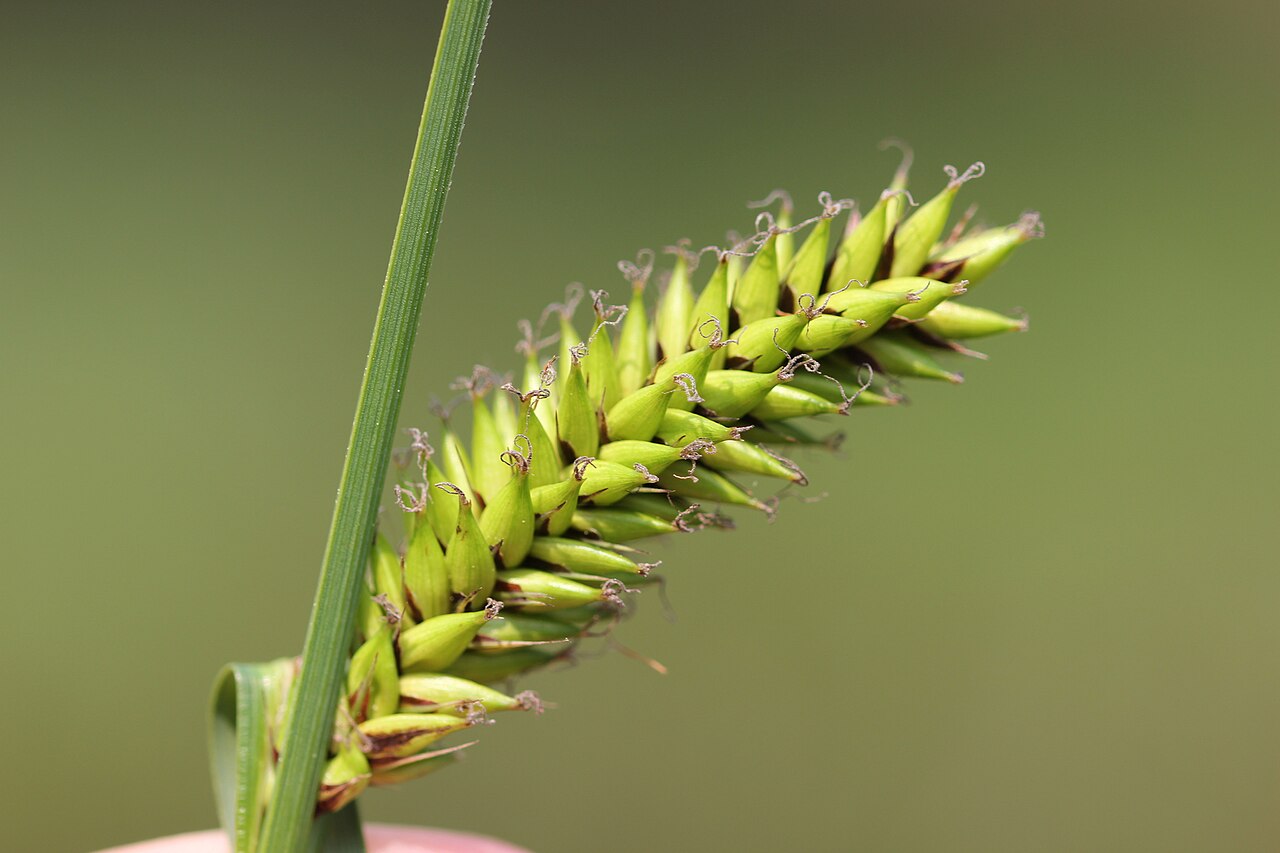
The fruits are perigynia — inflated, beaked sacs enclosing the seed — packed densely along the female spikes. In lake sedge the perigynia are ascending, somewhat shiny, and tipped with a short, sharply two-toothed beak, visible in close detail as rows of tightly overlapping green scales along the spike. The spikes ripen and shed through mid to late summer, dispersing seed by water as much as by wind, an adaptation well suited to its shoreline habitat.
Quick Facts
| Scientific Name | Carex lacustris |
| Family | Cyperaceae (Sedge) |
| Plant Type | Perennial Sedge (Graminoid), rhizomatous |
| Mature Height | 2–4 ft (60–120 cm) |
| Mature Spread | Spreading colony; individual stems 1–2 ft apart |
| Growth Rate | Fast; colonizes readily by rhizome |
| Sun Exposure | Full Sun to Part Shade |
| Water Needs | High; tolerates standing water and seasonal flooding |
| Soil Type | Wet muck, peat, or saturated loam |
| Soil pH | 5.0–7.0 (acidic to neutral) |
| Bloom Time | May – June |
| Flower Color | Green, ripening light brown |
| Fall Color | Foliage yellows and collapses after hard frost |
| Fruit | Beaked perigynia in dense cylindrical spikes |
| Deer Resistant | Yes, generally unpalatable |
| USDA Hardiness Zones | 3–7 |
Native Range
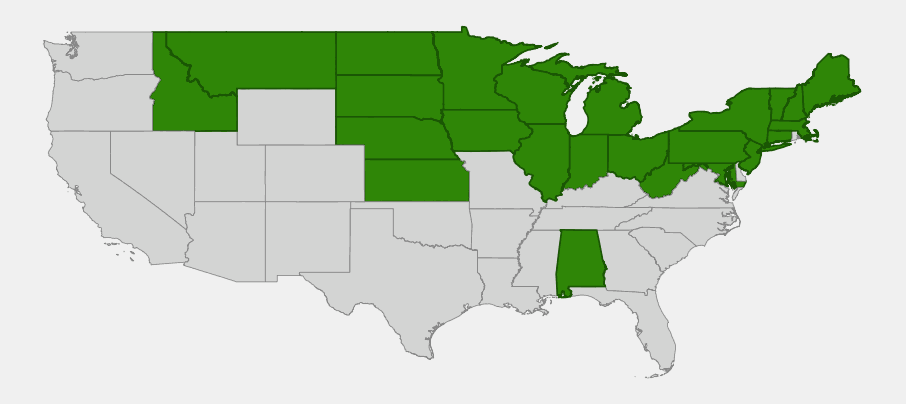
Lake sedge is native across the northern tier of the United States and much of Canada, with its core U.S. range running through the Great Lakes states, the upper Midwest, and New England, and a band extending west onto the northern Great Plains and disjunct populations reaching the northern Rocky Mountains. It is common in Minnesota, Wisconsin, Michigan, and across New York and New England, becoming scarcer and more local at the western and southern edges of its range, including a well-documented disjunct population in Alabama far south of its main distribution.
Across this range, lake sedge is a defining species of marshes, fens, and the shallow-water sedge meadows that ring lakes and slow streams, typically growing in standing water up to several inches deep or in saturated soil at the water’s edge. It forms dense, often pure stands that botanists call “Carex lacustris marsh,” one of the most widespread wetland plant community types in the glaciated northern United States.
Outside its documented native range the species has not been reported as introduced or naturalized; where it occurs, it is understood to be part of the original wetland flora rather than a recent arrival.
📋 Regional plant lists featuring Lake Sedge: Georgia, Alabama & Mississippi · North Dakota, South Dakota & Western Minnesota · Illinois, Iowa & Missouri · Idaho, Eastern Oregon & Eastern Washington · Ohio & Indiana · Maryland, Virginia & West Virginia · Michigan, Wisconsin & Eastern Minnesota · Montana & Wyoming · New Hampshire, Maine & Vermont · Nebraska, Kansas & Eastern Colorado · Connecticut, Massachusetts & Rhode Island · New York, Pennsylvania & Northern New Jersey
Growing & Care Guide
Lake sedge is built for wet feet and open sky — it is not a plant for an ordinary flower bed, but for the pond edge, rain garden bottom, or boggy low spot where a tough, spreading sedge is exactly the solution.
Light
Full sun to part shade both work well, though plants grown in more sun produce denser, more upright growth. In its natural lakeshore habitat it often grows in full, unobstructed sun along open water.
Soil & Water
This is a true wetland plant: it wants saturated soil or shallow standing water through most of the growing season and will not thrive in an ordinary, well-drained garden bed. Pond margins, the wet bottom of a rain garden, bioretention basins, and constructed wetlands are all appropriate sites. It tolerates both the acidic peat of a northern fen and richer mineral soils.
Planting Tips
Plant in spring once the risk of hard frost has passed, setting divisions directly into saturated soil or very shallow water at the shoreline. Because it spreads by rhizome, give it plenty of room, or use it intentionally as an erosion-control groundcover along a bank where spreading is the goal rather than a drawback.
Pruning & Maintenance
Essentially none is required once established. Old foliage can be left standing through winter for wildlife cover and cut back in early spring if a tidier look is wanted. Because it spreads vigorously, gardeners with limited space should plan a physical barrier or be prepared to periodically thin the colony.
Propagation
Division of rhizome sections in spring is fast and reliable, since each piece with roots and a growing point will establish readily in wet soil. Seed requires cold-moist stratification and is slower, more often used in large-scale wetland restoration seeding than in home gardens.
Landscape Uses
- Pond and lake shoreline stabilization where erosion control is needed
- Wetland and marsh restoration plantings
- Rain garden basins that hold standing water after storms
- Bioswales and constructed stormwater wetlands
- Naturalized pond edges in larger landscapes
- Wildlife habitat plantings for marsh birds and amphibians
Wildlife & Ecological Value
As one of the dominant plants of northern marsh and lakeshore communities, lake sedge anchors entire wetland food webs and provides structural habitat used by a wide range of species.
For Pollinators
Wind-pollinated and nectar-free, lake sedge nonetheless hosts the larvae of several satyr and skipper butterflies that specialize on sedge foliage, and its dense stands shelter countless beneficial insects that in turn feed marsh birds and amphibians.
For Birds
Marsh-nesting birds, including various rails, sparrows, and blackbirds, use lake sedge tussocks and stands for nesting cover and foraging, while waterfowl feed on the seed and the invertebrates sheltering within the dense colonies.
For Mammals
Muskrats forage on the rhizomes and foliage and often incorporate sedge material into their lodges, while the raised tussocks provide basking and resting sites for small mammals navigating marshy ground. Deer generally leave the tough foliage alone.
Ecosystem Role
Lake sedge is a foundational species of the sedge-meadow wetland community, filtering runoff, stabilizing shorelines against wave and ice action, and creating the structurally complex habitat — alternating open water, tussock, and dense stand — that supports amphibians, wetland insects, and the full chain of predators above them.
Cultural & Historical Uses
Across the northern forests and wetlands of its range, large wetland sedges including lake sedge were historically among the plants gathered by Indigenous peoples for coarse matting, bedding, and thatching material, their long, tough leaves suited to weaving even if finer rushes were often preferred for closer, decorative work. The extensive, nearly pure stands lake sedge forms along lakeshores would have made it a readily available, abundant resource wherever it grew.
In more recent history, lake sedge and its associated marsh communities have drawn attention primarily from wetland ecologists and land managers, who recognize the “Carex lacustris marsh” as an important, widespread wetland community type across the glaciated northern United States and Canada — valuable for its role in water filtration, flood attenuation, and wildlife habitat rather than for any direct human product.
Today the species is used almost exclusively in ecological restoration and naturalistic landscape design, where its vigorous, spreading habit — once simply a fact of its biology — is now valued as a practical tool for rebuilding degraded shorelines and wetlands.
Frequently Asked Questions
Will lake sedge take over my garden?
In a wet site, yes — it spreads steadily by rhizome and is best used where that spreading habit is wanted, such as a shoreline or large rain garden, rather than in a small, mixed perennial bed.
Does lake sedge need to grow in standing water?
It tolerates standing water well but also grows in simply saturated, consistently wet soil. It is not suited to an average garden bed that dries out between waterings.
Why is it called “hairy sedge” by USDA but “lake sedge” elsewhere?
Both names refer to the same plant. “Hairy sedge” describes the finely downy underside of the leaves, the character used in USDA’s official common name, while “lake sedge” — the more widely used name among gardeners and ecologists — describes its classic habitat along lake and pond shorelines.
Can lake sedge grow in a container water garden?
Yes, in a large container with saturated soil or a few inches of standing water, though its spreading rhizomes will eventually fill the pot and require division to keep it in bounds.
Is the Alabama population the same species as the northern lake sedge?
Yes — the Alabama occurrence is a well-documented disjunct population of the same species, far south of the main range, persisting in a cool, spring-fed wetland habitat that mimics conditions found much farther north.

Looking for a nursery that carries Lake Sedge?
Browse our native plant nursery directory: AL · ID, IL, IN, IA, KS · ME, MD, MA, MI, MN, MT · NE, NH, NJ, NY, ND, OH · PA, SD, VT · WV, WI