
Northern Gentian (Gentianella amarella)
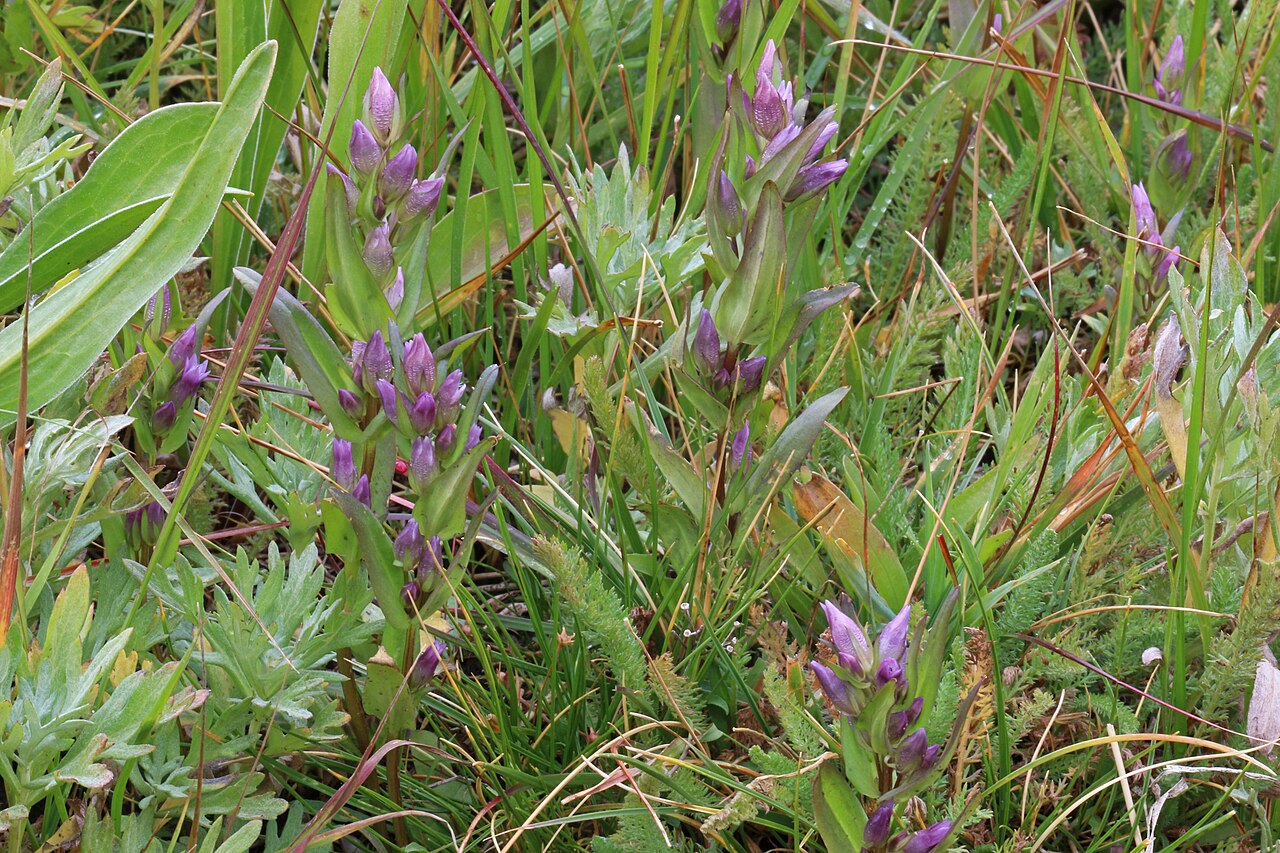
Gentianella amarella, commonly called the Northern Gentian (also known as autumn dwarf gentian or autumn gentian), is a small, late-blooming wildflower of cool, wet mountain meadows and streambanks across the western United States. It belongs to the gentian family, Gentianaceae, a group famous for intensely bitter roots and richly colored, tubular flowers. Where it grows, the Northern Gentian is easy to miss until late summer, when dense spikes of small purple, fringe-throated blooms appear above grasses that have already begun to fade for the season.
This is a short-lived plant — a biennial or sometimes winter annual — that spends its first season as a low rosette of leaves before sending up a single, leafy flowering stem the next year. It rarely exceeds knee height, and most plants are shorter still, growing in tight colonies wherever the ground stays consistently damp: wet meadows, fens, streambanks, and the margins of mountain lakes. The species has a circumboreal distribution, reaching across the cold regions of the Northern Hemisphere, and in North America it is most at home in the Rocky Mountains, the Great Basin ranges, and the mountains of the Pacific states.
Northern Gentian is not a plant most gardeners will seek out for a border display — its flowers are small and its habit modest — but for anyone restoring a wet mountain meadow, a fen, or a streamside planting at elevation, it is a genuine, unassuming native that extends the bloom season into early autumn and supports late-season pollinators when few other wildflowers are still flowering.
Identification
Northern Gentian is an erect, slender herb, usually 4 to 16 inches (10–40 cm) tall, though well-grown plants in favorable sites can reach taller still. The single main stem is often branched above the middle, with each branch ending in one to several flowers, giving the plant a candelabra-like look by late summer.
Leaves
Leaves are simple, opposite, and stalkless, clasping the stem at their base. Basal and lower leaves are spoon-shaped to oblong and often wither by flowering time; stem leaves are narrower, lance-shaped to elliptic, 0.4 to 2.4 inches (1–6 cm) long, with smooth (untoothed) margins and a single prominent midvein. The foliage is a plain, slightly bluish green and hairless throughout.
Flowers
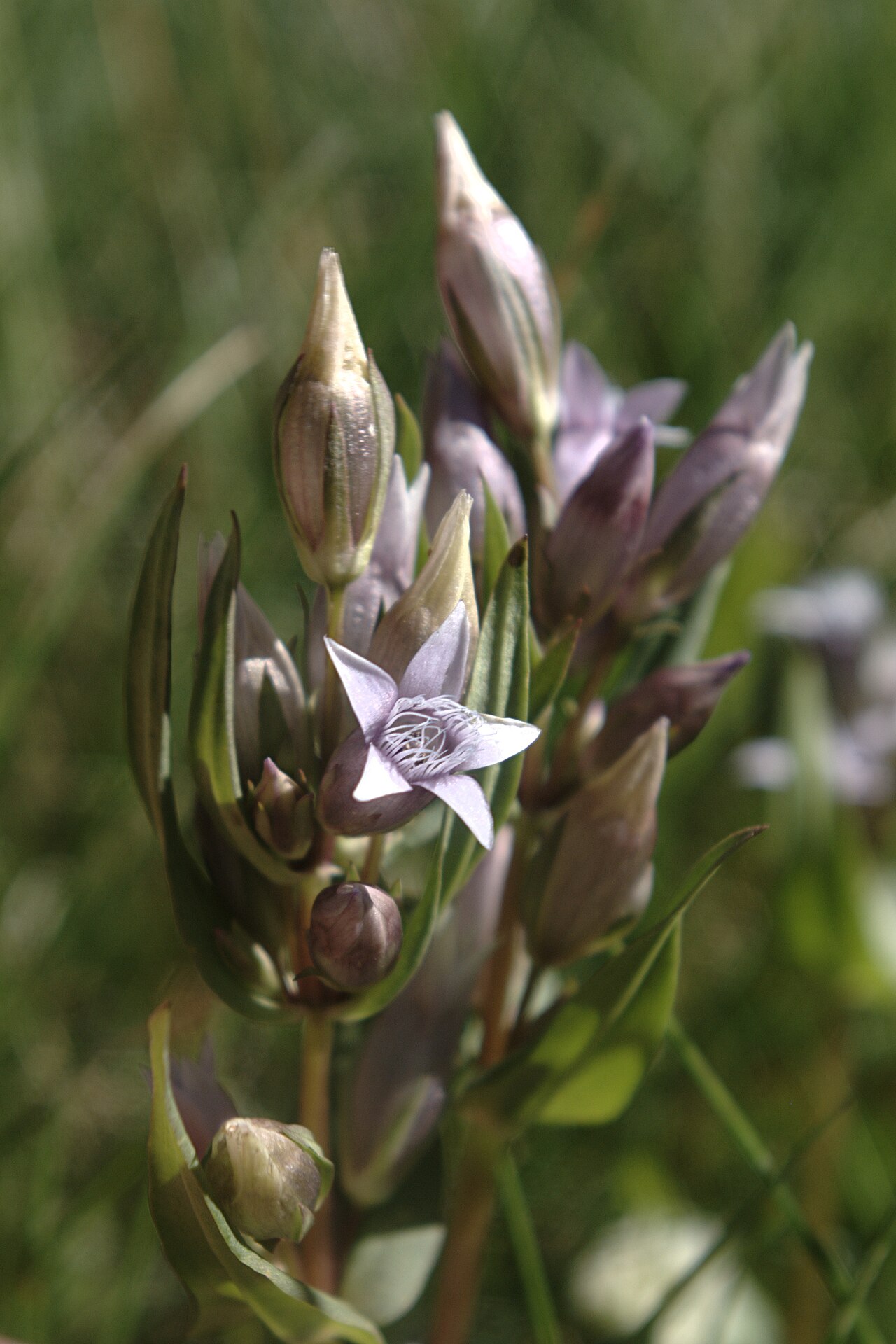
Flowers are borne in open, branched clusters at the stem tips and upper leaf axils, each on its own short stalk. The corolla is tubular to funnel-shaped, 0.4 to 0.6 inch (10–15 mm) long, with four or five lobes in shades of violet-blue to lavender-purple, occasionally fading to whitish. A key identification feature is the fringe of fine hairs inside the corolla throat, at the base of the lobes — this “bearded” throat separates Northern Gentian from several similar gentians that lack it. The calyx is deeply lobed and leaf-like, usually with lobes of noticeably unequal length. Flowering runs from mid-summer into autumn, later than most other mountain wildflowers, which is the source of the “autumn gentian” name.
Fruit & Seeds
After flowering, each bloom is replaced by a narrow, two-valved capsule that splits open at maturity to release numerous tiny seeds, each under a millimeter long. There is no showy fruit display; the dried capsules and spent flower stalks simply persist into winter.
Quick Facts
| Scientific Name | Gentianella amarella |
| Family | Gentianaceae (Gentian) |
| Plant Type | Biennial (occasionally winter annual) forb |
| Mature Height | 4–16 in (10–40 cm) |
| Mature Spread | 4–8 in, single stem per rosette |
| Growth Rate | Moderate (biennial life cycle) |
| Sun Exposure | Full Sun to Part Shade |
| Water Needs | High; consistently moist to wet soil |
| Soil Type | Gravelly to loamy, high-pH (calcareous) mineral soil |
| Soil pH | 6.5–8.0 (neutral to alkaline) |
| Bloom Time | Late July – October |
| Flower Color | Violet-blue to lavender-purple, rarely whitish |
| Fall Color | None (foliage dies back after flowering) |
| Fruit | Small dry two-valved capsule; not ornamental |
| Deer Resistant | Yes (bitter foliage is rarely browsed) |
| USDA Hardiness Zones | 3–7 |
Native Range
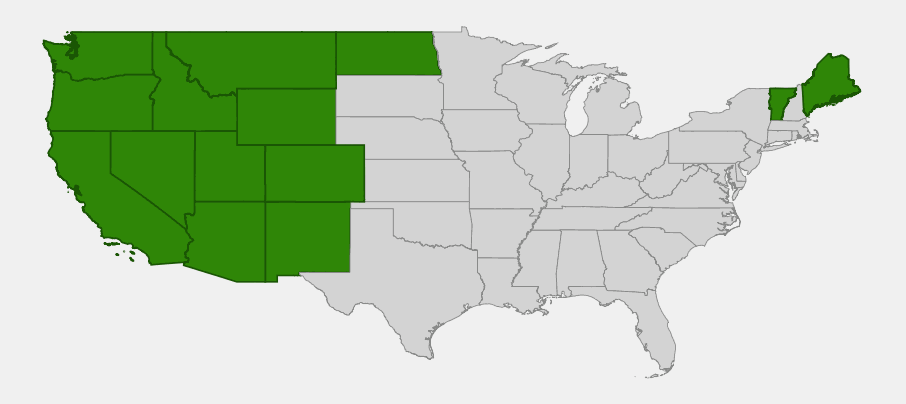
Northern Gentian has one of the broadest distributions of any North American gentian, occurring in cool, wet habitats across much of the western United States, with small, disjunct outposts in the Northeast. In the West it ranges from Washington and Oregon east through Idaho, Montana, and Wyoming, and south through the Great Basin and Rocky Mountain states — Nevada, Utah, Colorado, Arizona, and New Mexico — reaching into California’s higher ranges as well. A separate, much smaller population occurs in northern Maine and Vermont, confined to a handful of sites with high-pH bedrock along rivers and brooks; in Vermont the species is now considered historical and may no longer persist there, while in Maine it survives as an extremely rare plant tracked by the state’s natural heritage program.
Across its western range, Northern Gentian is a plant of montane to subalpine elevations, typically found from about 5,000 to 11,000 feet, though it can occur lower along cold streams and spring-fed meadows. It is an obligate wetland species over most of its range, meaning it is essentially never found on dry ground — look for it in wet meadows, fens, seeps, streambanks, and the gravelly margins of subalpine lakes, usually over calcareous (lime-rich) substrates.
Common associates include sedges and rushes, willows, shrubby cinquefoil, and a range of other wetland and subalpine wildflowers that share its preference for cold, mineral-rich, consistently saturated soils. Because its habitat is naturally limited and easily disturbed by trampling, grazing, or altered hydrology, Northern Gentian populations can be locally vulnerable even where the species as a whole is not rare.
📋 Regional plant lists featuring Northern Gentian: Montana & Wyoming · Utah & Western Colorado · Arizona & New Mexico · Idaho, Eastern Oregon & Eastern Washington · Western Oregon & Western Washington · North Dakota, South Dakota & Western Minnesota · New Hampshire, Maine & Vermont
Growing & Care Guide
Northern Gentian is not a plant for the average perennial border — it is a short-lived wetland specialist best suited to ecological restoration, bog gardens, or naturalistic plantings around a spring-fed pond at higher elevation. Gardeners who can offer cold winters and reliably wet, mineral-rich soil will have the best success.
Light
Plants grow best in full sun to light part shade. In the wild, the densest colonies are usually found in open wet meadows rather than under tree cover; too much shade tends to produce leggy, sparsely flowered plants.
Soil & Water
Consistent moisture is the single most important factor — this is an obligate wetland plant through most of its range and will not persist in soil that dries out during the growing season. It favors gravelly or loamy mineral soils that are neutral to alkaline, reflecting its preference for high-pH bedrock and groundwater. Heavily organic, acidic peat is a poor match; a mineral-rich fen or seep is a much closer approximation of its native habitat.
Planting Tips
Because it is biennial, Northern Gentian needs an open, lightly disturbed spot for seedlings to establish each year — dense turf or heavy mulch will crowd it out. Sow seed in fall so it can experience winter cold before germinating in spring, and expect a basal rosette the first year with flowers only in the second. Once established in suitable wet ground, it will often self-sow and maintain a population without replanting.
Pruning & Maintenance
No pruning is needed. Leaving spent flowering stems standing through winter allows the capsules to finish releasing seed and provides a bit of structure in the dormant wetland garden; cut back old growth in early spring before new rosettes emerge.
Propagation
Propagation is by seed only. Fresh seed sown in autumn and left exposed to winter cold (cold-moist stratification) germinates most reliably the following spring. Because the plant is biennial, a self-sustaining patch needs overlapping age classes, so avoid harvesting all the seed from a small population in any one year.
Landscape Uses
Northern Gentian fits a narrow but valuable niche in native landscaping:
- Wetland and fen restoration at montane and subalpine elevations
- Streambank and seep plantings over calcareous soils
- Bog gardens in cold-winter climates with mineral-rich water
- Late-season color for pollinator plantings that bloom after most summer wildflowers have finished
- Conservation plantings where local wet meadow habitat has been degraded
Wildlife & Ecological Value
Though modest in size, Northern Gentian plays a useful ecological role in the short, demanding growing season of subalpine wetlands.
For Pollinators
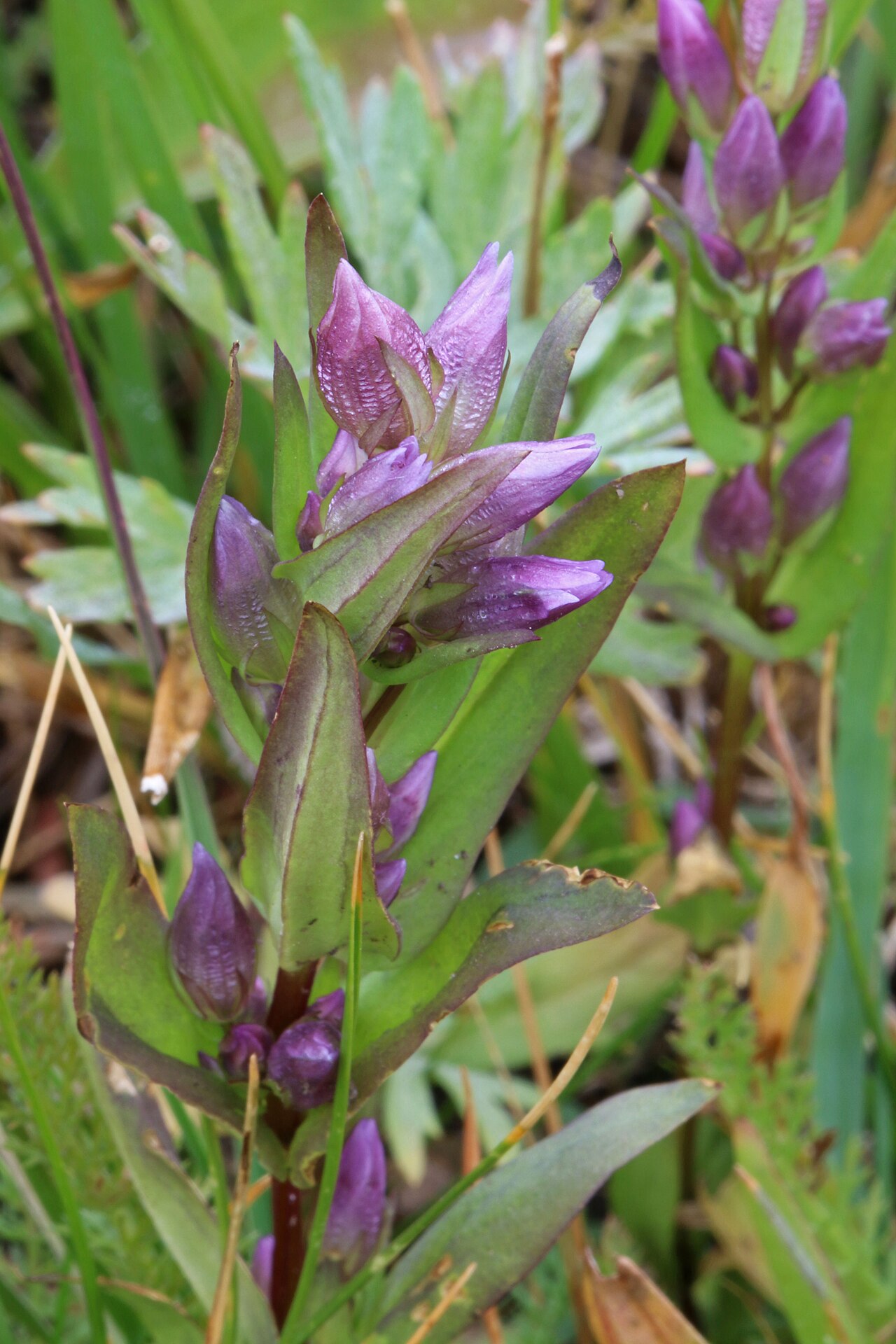
The late-summer and autumn flowering period makes Northern Gentian an important nectar source for bumblebees and other native bees at a time when most subalpine wildflowers have already gone to seed. The fringed throat of the corolla directs visiting insects down into the flower, brushing past the pollen-bearing anthers in the process.
For Birds & Mammals
Specific wildlife use of Northern Gentian is not well documented, and the plant’s intensely bitter foliage — a trait shared across the gentian family — likely discourages browsing by deer, elk, and livestock. Small mammals and birds that forage in wet meadow habitat benefit indirectly from the insect activity the flowers attract.
Ecosystem Role
As an indicator species, Northern Gentian signals intact, mineral-rich wetland hydrology; its presence is often used by botanists and land managers as a sign of healthy fen or wet meadow conditions. Because the species depends on open, undisturbed ground for seedling establishment each year, it also reflects a wetland’s ability to self-renew through natural disturbance such as seasonal flooding, rather than being overtaken by dense sedge or grass turf.
Cultural & Historical Uses
Northern Gentian belongs to a plant family long associated with bitter medicinal tonics, and like many of its relatives it carries a history of traditional use as a digestive bitter in parts of its Eurasian range, where related gentians were steeped to make tonics believed to stimulate appetite and aid digestion. Some Indigenous peoples in North America are recorded as having made limited use of related native gentians in traditional remedies, though detailed, species-specific ethnobotanical records for Gentianella amarella itself are sparse compared with its more famous European relatives.
In Europe, the related autumn gentian has a long folk history as a bittering agent, sometimes used in homemade tonics and, historically, in brewing and flavoring alongside other bitter herbs. These uses are historical rather than contemporary, and the plant has no established role in modern herbal medicine or food use in North America.
Today, Northern Gentian’s significance is primarily botanical and ecological rather than cultural — a quiet indicator of healthy, cold mountain wetlands, noted mainly by botanists, wildflower enthusiasts, and the land managers responsible for conserving the fens and wet meadows where it grows.
Frequently Asked Questions
Is Northern Gentian the same as autumn dwarf gentian?
Yes. “Autumn dwarf gentian” is the common name used by the USDA PLANTS database for Gentianella amarella; “Northern Gentian” and “autumn gentian” are also widely used for the same species.
Will Northern Gentian grow in an ordinary garden bed?
Generally no. It is an obligate wetland plant over most of its range and needs consistently moist to wet, mineral-rich soil. It is best reserved for bog gardens, fen restorations, or naturally wet sites rather than typical dry garden beds.
Is Northern Gentian native to the eastern United States?
Only in a very limited sense. It reaches a small, disjunct population in northern Maine, where it is extremely rare, and historically in Vermont, where it may no longer persist. It is not native anywhere else in the East.
Can you eat or use Northern Gentian medicinally?
It has a history of traditional, historical use as a bitter tonic herb in parts of its range, but it has no established modern medicinal or culinary use in North America and should not be treated as a home remedy.
Why does Northern Gentian bloom so late in the season?
As a biennial, it spends its first year building a basal rosette and only flowers in its second year, typically from late summer into fall. This late bloom time lets it take advantage of the long subalpine growing season and fills a niche for late pollinators after most other wildflowers have finished.

Looking for a nursery that carries Northern Gentian?
Browse our native plant nursery directory: Arizona · California · Colorado · Idaho · Maine & Montana · North Dakota, New Mexico & Nevada · Oregon · Utah & Vermont · Washington · Wyoming