
Blowout Grass (Redfieldia flexuosa)
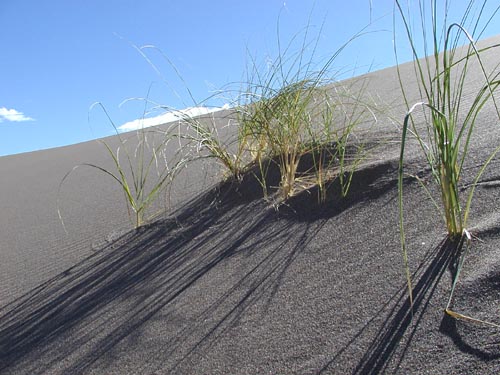
Redfieldia flexuosa, commonly called blowout grass, is a wiry, blue-green perennial grass found nowhere else on Earth except the sandhills and dune fields of the western and central United States. It is the sole species in its genus, and its entire biology is built around one talent: colonizing loose, shifting, wind-blasted sand that almost nothing else can hold onto. Where a “blowout” has opened a raw crater in a stabilized dune, blowout grass is usually the first plant to move in, sending out long underground rhizomes that chase the retreating sand and knit the dune back together from below.
This member of the grass family (Poaceae) is not a showy garden plant in the conventional sense — it has no bright flowers and a loose, open habit — but it is an indispensable survivor on the Great Plains and in the Great Basin’s sand country. Its wiry stems rise 1.5 to 3 feet from rhizomes that can run many feet through loose sand, and its narrow, inrolled leaves are built to shed water and resist the abrasion of blowing grit. Few native grasses can match its tolerance for pure, droughty, constantly moving sand.
For gardeners and land managers working with sandy soils, blowout grass is a specialist tool rather than an all-purpose groundcover. It belongs on open, sun-baked sand — stabilized dunes, sandy road cuts, blowouts, and sandhill prairie restorations — where its deep, spreading rhizome system does the one job few other plants can do: hold a dune together while it is still moving.
Identification
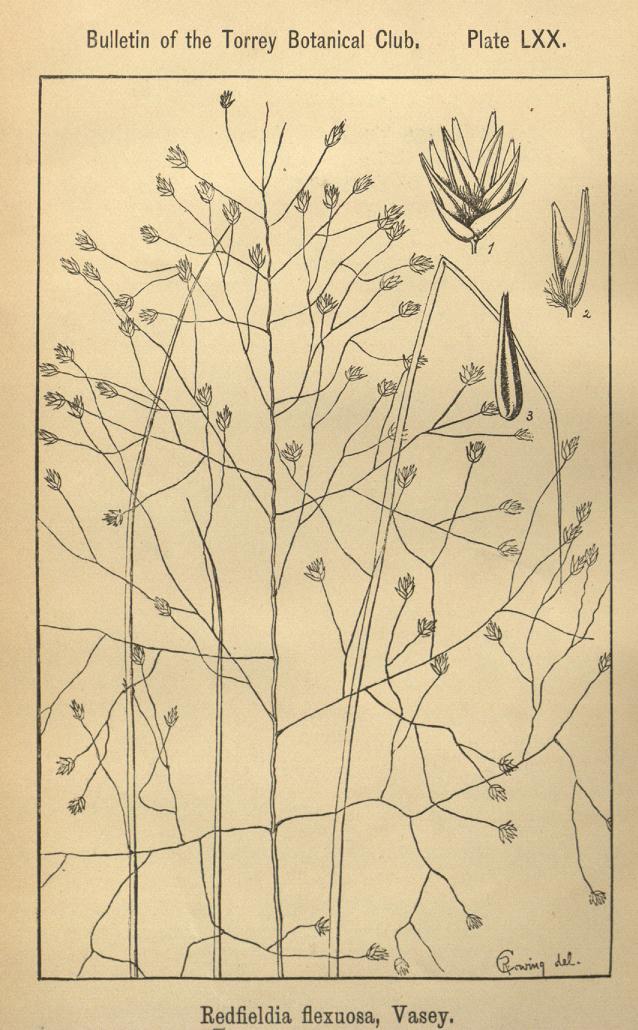
Blowout grass is a coarse, open, rhizomatous perennial with the loose, straggling look of a plant built for sand rather than for show. Culms (flowering stems) stand 0.5 to 1 m (about 1.5–3 feet) tall, rising singly or in small, well-spaced tufts rather than dense bunches, because the plant spreads mainly by long rhizomes rather than by tillering into a tight clump.
Stems & Rhizomes
The defining feature of blowout grass is underground, not above it: stout, elongated rhizomes that can extend for several feet through loose sand, rooting and sending up new shoots as they go. This rhizome network is what allows a single plant to track a moving dune face, keeping pace with sand that buries old growth while new shoots emerge ahead of the burial line. Culms are smooth, slender, and often somewhat wiry or wavy (the species name flexuosa means “full of bends”).
Leaves
Leaves are narrow, blue-green, and tend to roll or fold inward along their length, an adaptation that reduces water loss in constantly drying, wind-exposed sand. They are tough and somewhat stiff to the touch, growing mostly from the lower part of the stem, with the whole plant having a sparse, airy, almost skeletal look even at its fullest.
Flowers & Seed Head
The inflorescence is an open, spreading panicle, with narrow spikelets held on thin, widely separated branches rather than crowded into a dense head. Each spikelet carries two to six small florets; the glumes (the outer bracts of the spikelet) are narrow, pointed, and persist on the plant after the seed has fallen. Flowering occurs in summer, and the open panicle gives the whole plant a hazy, see-through silhouette against the sand — useful for spotting it from a distance on a bare dune face.
Quick Facts
| Scientific Name | Redfieldia flexuosa |
| Family | Poaceae (Grass) |
| Plant Type | Perennial, rhizomatous grass |
| Mature Height | 1.5–3 ft (0.5–1 m) |
| Mature Spread | Indefinite via spreading rhizomes |
| Growth Rate | Moderate to fast in loose sand |
| Sun Exposure | Full sun |
| Water Needs | Low; thrives on dry sand |
| Soil Type | Loose, excessively drained sand or sandy soil |
| Soil pH | Neutral to slightly alkaline |
| Bloom Time | Mid to late summer |
| Flower Color | Straw to pale green (inconspicuous) |
| Fall Color | Tan, persisting through winter |
| Fruit | Small grain (caryopsis), not ornamental |
| Deer Resistant | Yes; coarse foliage is rarely browsed |
| USDA Hardiness Zones | 4–8 |
Native Range
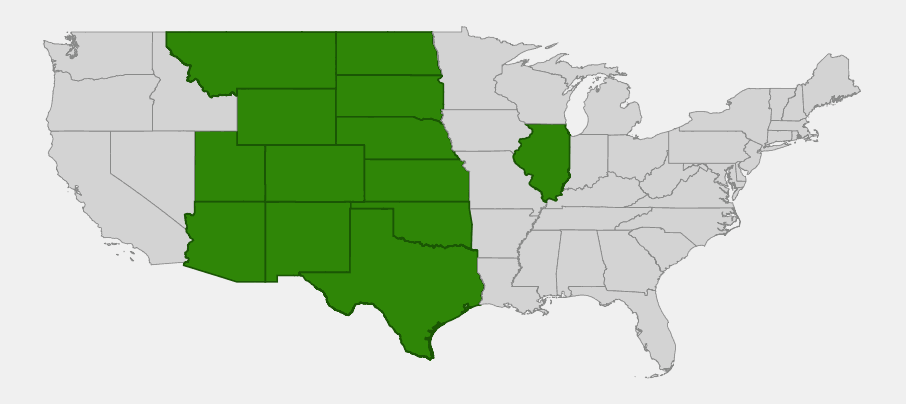
Blowout grass is native to the sandhill country of the western and central Great Plains and parts of the Intermountain West, with its stronghold in the Nebraska Sandhills and extending through the Dakotas, Montana and Wyoming, south through Colorado, Utah, Kansas and Oklahoma, and into New Mexico, Arizona, Texas and a disjunct outlying population in Illinois. Within that broad range it is a specialist, restricted almost entirely to loose, actively moving or recently stabilized sand rather than occurring generally across any of these states.
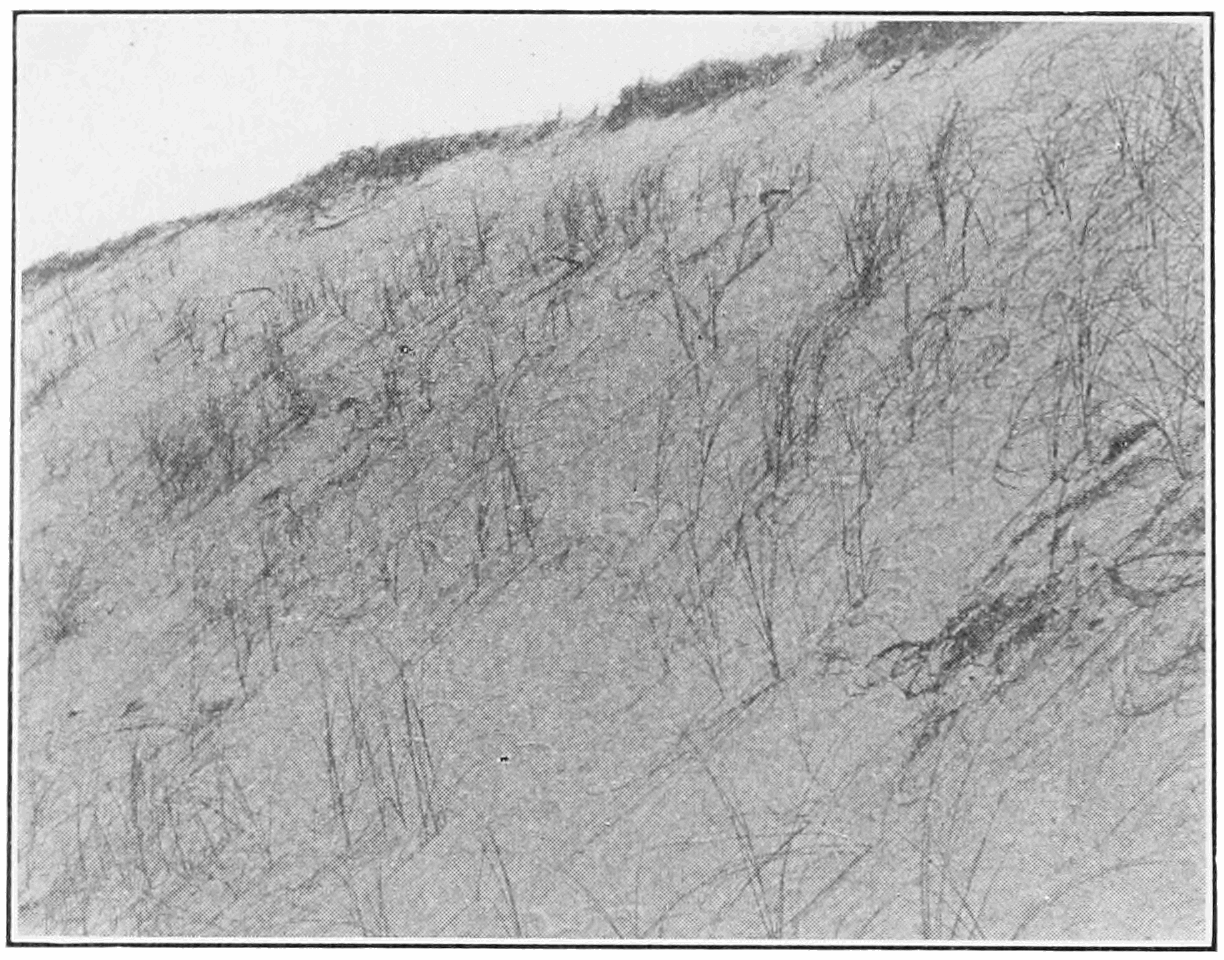
Its signature habitat is the “blowout” — a bowl- or trough-shaped depression scoured into a stabilized dune by wind, exposing bare sand again. Blowout grass is typically one of the first vascular plants to establish in these raw depressions, its rhizomes anchoring the shifting slopes and slowly rebuilding a stable dune form around itself. It also grows on open sandhill prairie, sandy river terraces, and the margins of sand sagebrush communities, always on excessively drained, coarse-textured soils with little organic matter.
Because it depends on genuinely loose or disturbed sand, blowout grass tends to become scarcer as a landscape is stabilized by fire suppression, grazing management, or invasive grass cover that locks the dunes in place. Conversely, moderate disturbance — wind, grazing, or managed blowouts — keeps habitat open for it. It is not weedy or aggressive outside of sand habitats; it simply does not persist on finer or more fertile soils.
📋 Regional plant lists featuring Blowout Grass: Arizona & New Mexico · Nebraska, Kansas & Eastern Colorado · Utah & Western Colorado · Montana & Wyoming · North Dakota, South Dakota & Western Minnesota · Illinois, Iowa & Missouri · Arkansas, Louisiana, Eastern Oklahoma & Eastern Texas
Growing & Care Guide
Blowout grass is not a plant for ordinary garden beds — it is a specialist for pure sand, and asking it to grow in loam or clay is asking it to fail. Used correctly, on sandy or dune-prone ground, it is nearly maintenance-free once established.
Light
Give it full sun. Blowout grass evolved on bare, exposed dune faces with no overhead cover, and it has no shade tolerance to speak of. Shaded sand sites will favor other species over it.
Soil & Water
This grass needs loose, coarse, excessively drained sand — the drier and sandier, the better. It has no tolerance for heavy, poorly drained, or organically rich soils, where it is quickly outcompeted. Once its rhizomes are established, it needs essentially no supplemental water and is one of the most drought-tolerant native grasses available for pure sand sites.
Planting Tips
Blowout grass is best established from rhizome divisions or container plants set into loose sand in spring, spaced several feet apart to allow the rhizomes room to spread and knit the area together. It is not widely sold in the nursery trade and is mainly used in targeted sand-dune and blowout restoration projects rather than ordinary home landscaping; check with native plant nurseries serving sandhill regions for availability.
Pruning & Maintenance
No pruning is needed. The plant naturally dies back to tan, upright stems after frost and can be left standing through winter, where it continues to trap blowing sand. Avoid any soil amendment, mulch, or irrigation regime intended to “improve” the sand — all of these work against the plant’s natural advantage.
Propagation
Propagation is almost always by rhizome division rather than seed, since the plant’s spreading habit makes it easy to lift and transplant rooted rhizome sections into new areas of loose sand.
Landscape Uses
Blowout grass earns its place in very specific situations:
- Active dune and blowout stabilization on sandhill prairie and dune restoration projects
- Sandy road cuts and fill slopes where conventional turf and erosion grasses fail
- Sand sagebrush and sandhill prairie restorations as an early-colonizing component
- Xeric, sand-garden plantings in regions with naturally sandy soil
Wildlife & Ecological Value
Blowout grass’s main ecological contribution is structural rather than showy: it is one of the few plants able to hold a moving dune in place long enough for a more diverse sandhill community to follow.
For Pollinators
As a wind-pollinated grass, blowout grass offers little direct nectar or pollen value to bees and butterflies, but the cover it provides supports the small insects and arthropods that sandhill-specialist pollinators and their predators depend on.
For Birds
Ground-nesting grassland birds of sandhill prairie, including nightjars and certain sparrows, use the open, sparsely vegetated blowout habitat that this grass helps stabilize, and its seed is taken opportunistically by small seed-eating birds.
For Mammals
Small mammals of sandhill country use the cover at the base of blowout grass clumps, and the stabilized sand it builds supports the broader plant community that larger grazers, including pronghorn and mule deer, depend on across sandhill rangeland.
Ecosystem Role
Blowout grass is a textbook pioneer species: it is specifically adapted to colonize bare, actively eroding sand that almost nothing else can hold, and its spreading rhizome network is often the first step in converting a raw blowout back into stabilized sandhill prairie. Without plants like this one, many Great Plains sand dune systems would stay bare and mobile far longer, with greater soil loss and less habitat for the specialized plants and animals of sandhill ecosystems.
Cultural & Historical Uses
Blowout grass has little recorded history as a food, fiber, or medicinal plant among Indigenous peoples of the Great Plains, likely because its coarse, wiry growth and restriction to the harshest sand habitats gave it little practical use compared with the plains’ more abundant forage grasses.
Its historical significance is instead ecological and agronomic. Range scientists and soil conservationists in the early twentieth century studied blowout grass closely as rangeland degradation and overgrazing exposed more bare sand across the Great Plains, and it became a recognized indicator species for active sand-dune erosion. Historic surveys of the Nebraska Sandhills and similar sand regions repeatedly singled it out as the grass most responsible for arresting blowouts before they could spread.
Today, blowout grass remains primarily a tool of range and dune management rather than ornamental horticulture, used by land managers and restoration ecologists to rebuild the structure of damaged sandhill landscapes.
Frequently Asked Questions
What is a “blowout” and why is this grass named for it?
A blowout is a bowl- or trough-shaped depression scoured out of a stabilized sand dune by wind, exposing loose sand again. Blowout grass is named for its habit of colonizing these bare depressions first, using long rhizomes to anchor the shifting sand and begin rebuilding the dune.
Will blowout grass grow in regular garden soil?
No. It is adapted specifically to loose, excessively drained sand and performs poorly in loam, clay, or any soil that holds moisture or organic matter. It is a specialist for sand habitats, not a general-purpose landscape grass.
Does blowout grass spread aggressively?
It spreads by rhizomes within sandy habitat, which is exactly what makes it valuable for dune stabilization, but it does not persist or spread on finer soils, so it poses no weed risk outside of sand environments.
Is blowout grass good for erosion control?
Yes — on sandy sites it is one of the most effective native grasses available, specifically evolved to anchor loose, wind-blown sand. It is not suited to erosion control on clay or silty soils, where other native grasses perform better.
Can I buy blowout grass at a regular nursery?
It is uncommon in the general nursery trade. It is mainly available through native plant nurseries and restoration suppliers serving sandhill regions of the Great Plains and Intermountain West; check regional native plant nursery directories for sources.

Looking for a nursery that carries Blowout Grass?
Browse our native plant nursery directory: North Dakota, Nebraska, New Mexico & Oklahoma · Illinois & Kansas · South Dakota, Texas & Utah · Arizona · Wyoming · Montana · Colorado