Claret Cup Cactus (Echinocereus triglochidiatus)
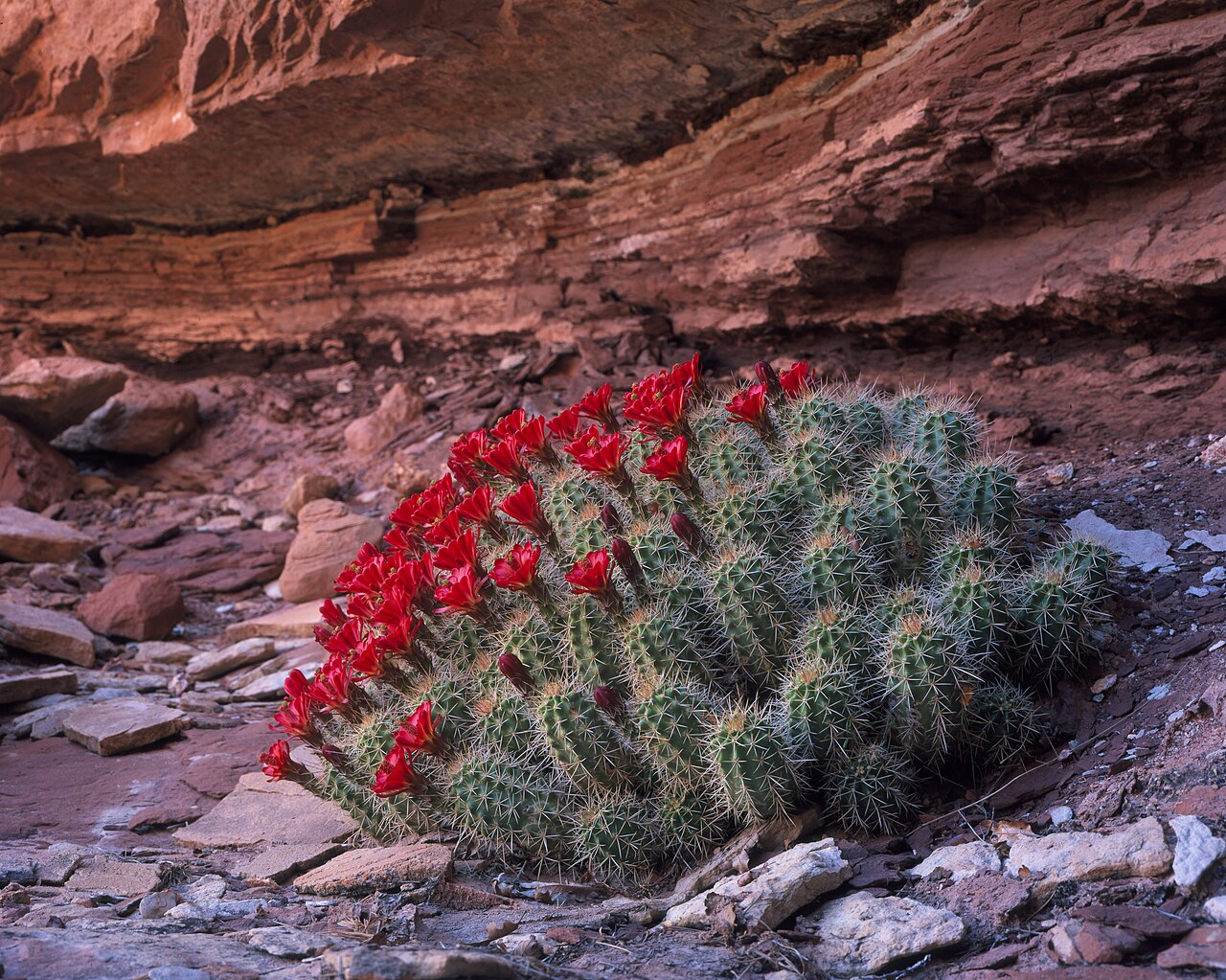
Echinocereus triglochidiatus, known as Claret Cup Cactus, Kingcup Cactus, or Mojave Mound Cactus, is one of the showiest small cacti of the American Southwest. Rather than growing as a single columnar stem, it forms dense, rounded mounds of dozens to hundreds of cylindrical stems that can eventually span several feet across. For a few weeks each spring, those mounds erupt in brilliant scarlet-orange, cup-shaped flowers so vivid they are visible from a considerable distance across open rock and desert scrub — a display that gives the plant both its common name and its reputation as one of the best hummingbird-pollinated cacti in North America.
Claret Cup Cactus is extremely variable across its wide range, which spans elevations from low desert to piñon-juniper woodland and ponderosa pine forest. Plants from colder, higher-elevation populations (often treated as subsp. mojavensis) are markedly more cold-hardy than lowland desert forms, and spine density and color vary considerably from one population to the next. Echinocereus triglochidiatus is the official state cactus of Colorado.
In the garden, Claret Cup Cactus rewards a lean, rocky, well-drained site with years of increasing bloom as the mound slowly expands. It is a long-lived, low-maintenance choice for xeriscapes and rock gardens throughout its native range in the Southwest, asking for almost nothing beyond sun and good drainage.
Identification
Claret Cup Cactus is best recognized by its mounding growth form and its intensely red spring flowers, though the spines and stem shape vary considerably between populations.
Stems
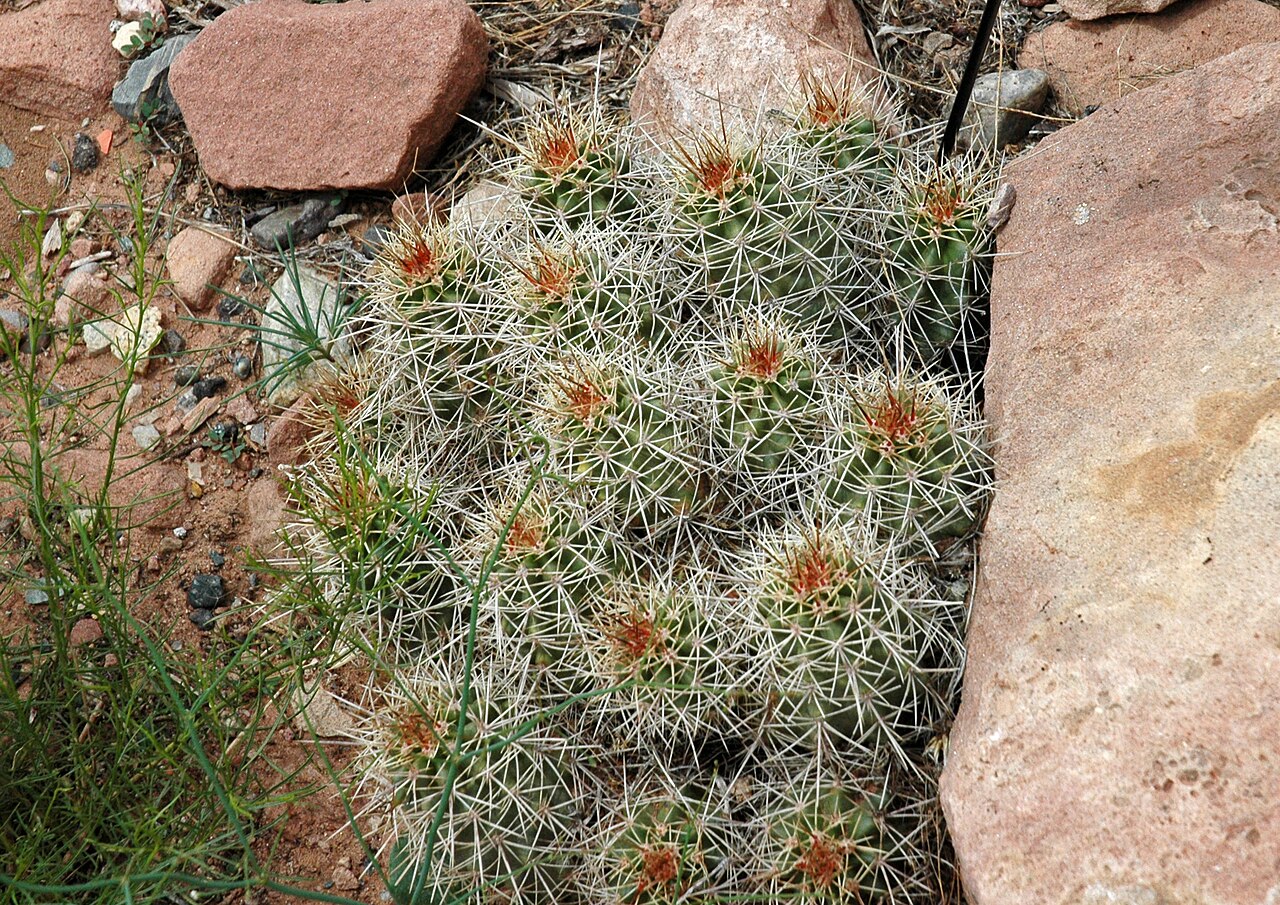
Plants form clustered mounds of cylindrical, ribbed stems, each 5 to 16 inches long and 2 to 6 inches in diameter, with 5 to 12 ribs per stem. A single mound typically holds anywhere from a dozen to several hundred stems and can reach over 3 feet across with age. Stem color ranges from gray-green to bluish green. Spine coverage varies widely by population — some plants are densely covered in interlacing white, yellow, or gray spines, while others are nearly spineless, with only short spines at the stem tips.
Flowers
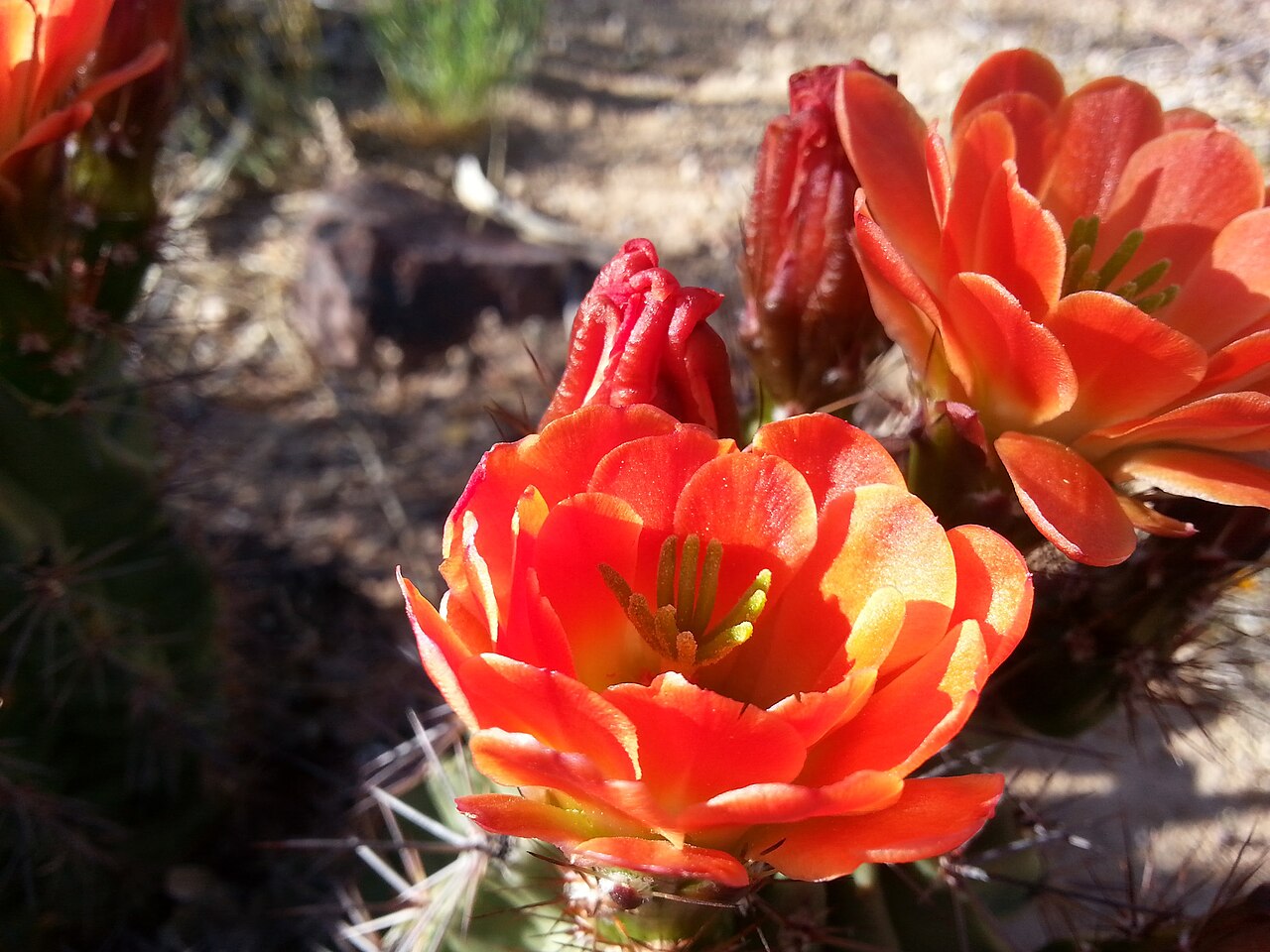
The flowers are the plant’s signature feature: funnel-shaped blooms 2 to 3.5 inches across in brilliant scarlet, orange-red, or occasionally coral, with a waxy sheen to the petals. Unlike most cactus flowers, which open fully only in bright sun, Claret Cup flowers stay open through overcast days and even at night, an adaptation tied to their hummingbird pollinators. Blooming is concentrated into a short, spectacular window in mid-spring, when a well-grown mound can carry dozens of flowers at once along the tops of its stems.
Fruit & Spines
After flowering, plants produce small, spiny, red-to-orange fruits about an inch long that ripen in early summer and lose most of their spines as they mature, becoming edible and mildly sweet. Spine clusters sit in areoles spaced along each rib; the number of central spines (typically one to four per areole) and their color are among the traits botanists use to separate the many named varieties of this highly variable species.
Quick Facts
| Scientific Name | Echinocereus triglochidiatus |
| Family | Cactaceae (Cactus) |
| Plant Type | Perennial mounding cactus |
| Mature Height | 6–16 in |
| Mature Spread | 1–3+ ft (mound width) |
| Growth Rate | Slow |
| Sun Exposure | Full Sun |
| Water Needs | Very Low |
| Soil Type | Rocky, gravelly, or sandy; sharply drained |
| Soil pH | 6.5–8.0 (neutral to alkaline) |
| Bloom Time | April – May |
| Flower Color | Scarlet red to orange-red |
| Fall Color | None (evergreen stems) |
| Fruit | Small red-orange spiny fruit, edible when ripe |
| Deer Resistant | Yes |
| USDA Hardiness Zones | 5–9 (high-elevation forms are the hardiest) |
Native Range
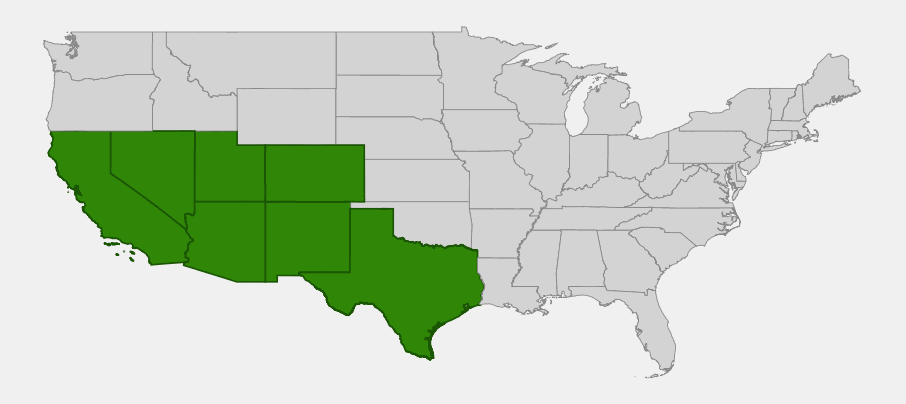
Claret Cup Cactus ranges across the southwestern United States and into northern Mexico, with native populations recorded in Arizona, California, Colorado, Nevada, New Mexico, Texas, and Utah. It occupies an unusually broad elevational span for a cactus, from roughly 2,000 feet in low Mojave and Chihuahuan desert basins up to 9,000 feet or more in Rocky Mountain foothill woodlands, which explains why the species shows such strong regional variation in cold hardiness and form.
Habitat varies accordingly: in the low desert, plants grow on rocky slopes, in desert scrub, and tucked beneath larger shrubs for partial shade; at mid to high elevations, they are common on canyon walls, in piñon-juniper and ponderosa pine woodland, and among sandstone and limestone outcrops, often growing directly from rock crevices with very little visible soil. Colorado’s high-elevation populations, which gave the species its status as the state cactus, are among the most cold-hardy cacti in cultivation.
Claret Cup Cactus is widely sold through the cactus and succulent trade and cultivated well outside its native range in rock gardens and xeriscapes. If you are gardening outside the states listed here, it can still make an excellent low-water landscape plant, but it should be understood as an introduced ornamental rather than a regional native.
📋 Regional plant lists featuring Claret Cup Cactus: South and West Texas · Arizona & New Mexico · California & Nevada · Utah & Western Colorado
Growing & Care Guide
Claret Cup Cactus is a long-lived, low-maintenance plant once it is sited correctly — the single most important factor is sharp drainage.
Light
Plant in full sun for the densest growth and heaviest bloom. In the hottest low-desert gardens, light afternoon shade or the dappled shade of a nearby shrub mimics the plant’s natural habit of growing in the shelter of larger vegetation and can help prevent sunscald on young plants.
Soil & Water
Drainage is everything with this species: plant in rocky, gravelly, or coarse sandy soil, ideally amended with mineral grit if your native soil holds much clay or organic matter. Claret Cup Cactus needs very little supplemental water once established and is highly susceptible to stem rot if kept wet, especially in winter. In its native range it relies almost entirely on natural rainfall; a deep soak once or twice during the hottest, driest stretch of summer is usually the most a mature planting needs.
Planting Tips
Plant in spring after the last frost, setting the cactus at the same depth it grew in its container or slightly raised on a mound to shed water away from the base. Mulch with gravel rather than organic mulch, which holds moisture against the stems. Because mature mounds can take a decade or more to reach full size, give new plants room to spread — 2 to 3 feet — rather than crowding them close to other plants.
Pruning & Maintenance
Claret Cup Cactus needs essentially no pruning; remove only damaged or rotting stems, cutting back to healthy tissue with a clean, sterilized blade. Established mounds are extremely drought-tolerant and winter-hardy within their native elevation range, and high-elevation (often sold as subsp. mojavensis) selections tolerate significantly colder winters than low-desert forms, so choose stock sourced from a climate similar to your garden’s.
Landscape Uses
- Rock gardens and crevice gardens, planted directly among stones
- Xeriscaping — needs essentially no irrigation once established
- Hummingbird gardens — spring bloom is a strong early nectar source
- Container and trough culture in colder climates
- Slope and bank plantings where drainage is naturally sharp
Wildlife & Ecological Value
Claret Cup Cactus is one of the most important early-season nectar sources for hummingbirds across its range, and its bright flowers and fruit support a range of other wildlife as well.
For Pollinators
The flowers are strongly adapted to hummingbird pollination: their tubular shape, lack of strong scent, bright red color, and tendency to stay open day and night are all classic hummingbird-flower traits. Black-chinned, broad-tailed, and other migratory hummingbirds time their spring movement through the Southwest to coincide with peak Claret Cup bloom. Native bees also visit for pollen.
For Birds & Mammals
The ripe, spineless fruit is eaten by a variety of desert birds, rodents, and larger mammals, which disperse the seeds. Dense, spiny mounds also offer secure nesting and shelter sites for small desert wildlife, protected from predators by the surrounding spines.
Ecosystem Role
As a long-lived, slow-growing perennial, Claret Cup Cactus contributes structural diversity to rocky desert and woodland plant communities and helps stabilize thin, rocky soils on slopes and outcrops where few other plants can establish. Its reliance on specific rock-crevice and slope microhabitats makes it a useful indicator of undisturbed desert and canyon terrain.
Cultural & Historical Uses
The ripe, mildly sweet fruit of Claret Cup Cactus was historically gathered and eaten by Indigenous peoples throughout its range, including groups in the Four Corners region and the Southwest more broadly, who would carefully remove the spines before eating the fruit fresh. The common name “claret cup” dates to English-speaking settlers and botanists in the 1800s, who likened the deep red, cup-shaped flowers to glasses of claret wine.
Botanically, the species has a long and complicated taxonomic history, with numerous named varieties and subspecies proposed over the past century and a half as botanists worked to make sense of its wide variation in spine density, stem size, and cold tolerance across such a broad geographic and elevational range. It remains a frequently collected and cultivated species among cactus enthusiasts worldwide, prized for its reliable, vivid spring bloom.
In 2008, Colorado designated Echinocereus triglochidiatus as its official state cactus, recognizing the species’ presence in the rocky canyon country of the state’s western slope.
Frequently Asked Questions
Can I eat Claret Cup Cactus fruit?
The ripe fruit is edible and historically was eaten by Indigenous peoples after the spines were removed, with a mild, sweet flavor similar to other hedgehog cactus fruit. As with any wild food, positively identify the plant and remove all spines and glochids before handling or eating it.
How cold-hardy is Claret Cup Cactus?
It depends heavily on the source population. High-elevation forms from Colorado, Utah, and the Colorado Plateau (often sold as subsp. mojavensis) tolerate winter lows well below 0°F and are among the hardiest cacti in cultivation, while low-desert forms are less cold-tolerant. Choose nursery stock propagated from a climate similar to your own.
Why hasn’t my Claret Cup Cactus bloomed?
Young plants and small divisions often take several years to reach blooming size. Insufficient sun, poor drainage, or overly rich soil can also delay or prevent flowering. Full sun and lean, sharply drained soil are the main conditions needed for reliable spring bloom.
Does Claret Cup Cactus need to be watered in winter?
No — in its native range it receives little to no water during winter dormancy, and watering during cold weather significantly increases the risk of stem rot. Hold off on supplemental water from late fall until the plant resumes active growth in spring.
Is Claret Cup Cactus the same as hedgehog cactus?
“Hedgehog cactus” is a common name used loosely for several species in the genus Echinocereus, including this one. Claret Cup Cactus (Echinocereus triglochidiatus) is one specific hedgehog cactus species, distinguished from relatives like Engelmann’s hedgehog (Echinocereus engelmannii) by its mounding habit and intensely scarlet flowers.

Looking for a nursery that carries Claret Cup Cactus?
Browse our native plant nursery directory: California · Nevada & New Mexico · Texas & Utah · Arizona · Colorado