Gray Horsebrush (Tetradymia canescens)
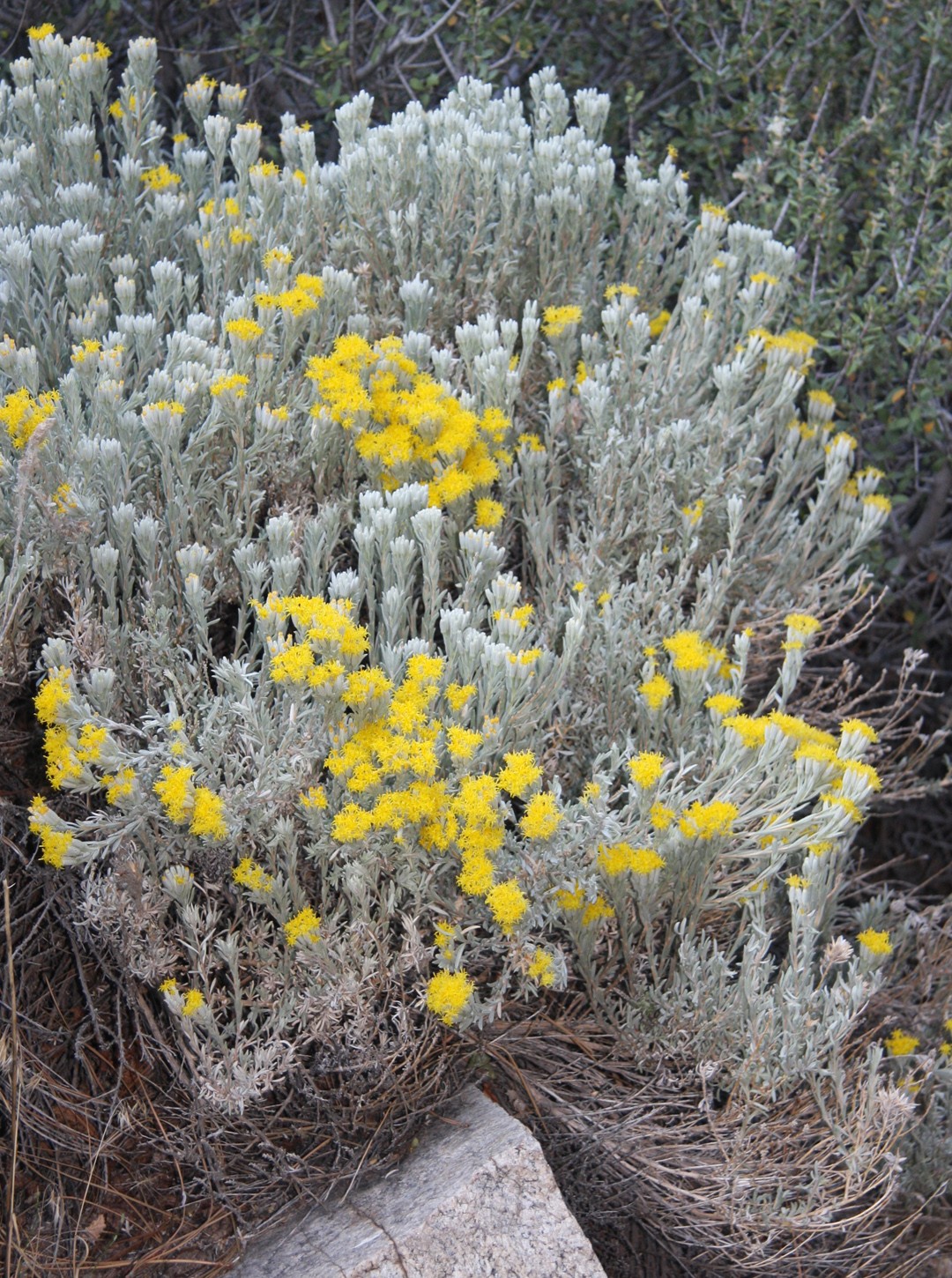
Tetradymia canescens, commonly known as Gray Horsebrush or Spineless Horsebrush, is a low, rounded, woolly-gray shrub found across much of the dry interior West, from the sagebrush steppe of the Great Basin to the pinyon-juniper woodlands and montane slopes of the Rocky Mountains and Southwest. A member of the Asteraceae (sunflower family) and part of a small genus of western shrubs known collectively as horsebrushes, gray horsebrush is distinguished from its spiny relatives by its lack of spines, giving rise to the alternate name “spineless horsebrush.”
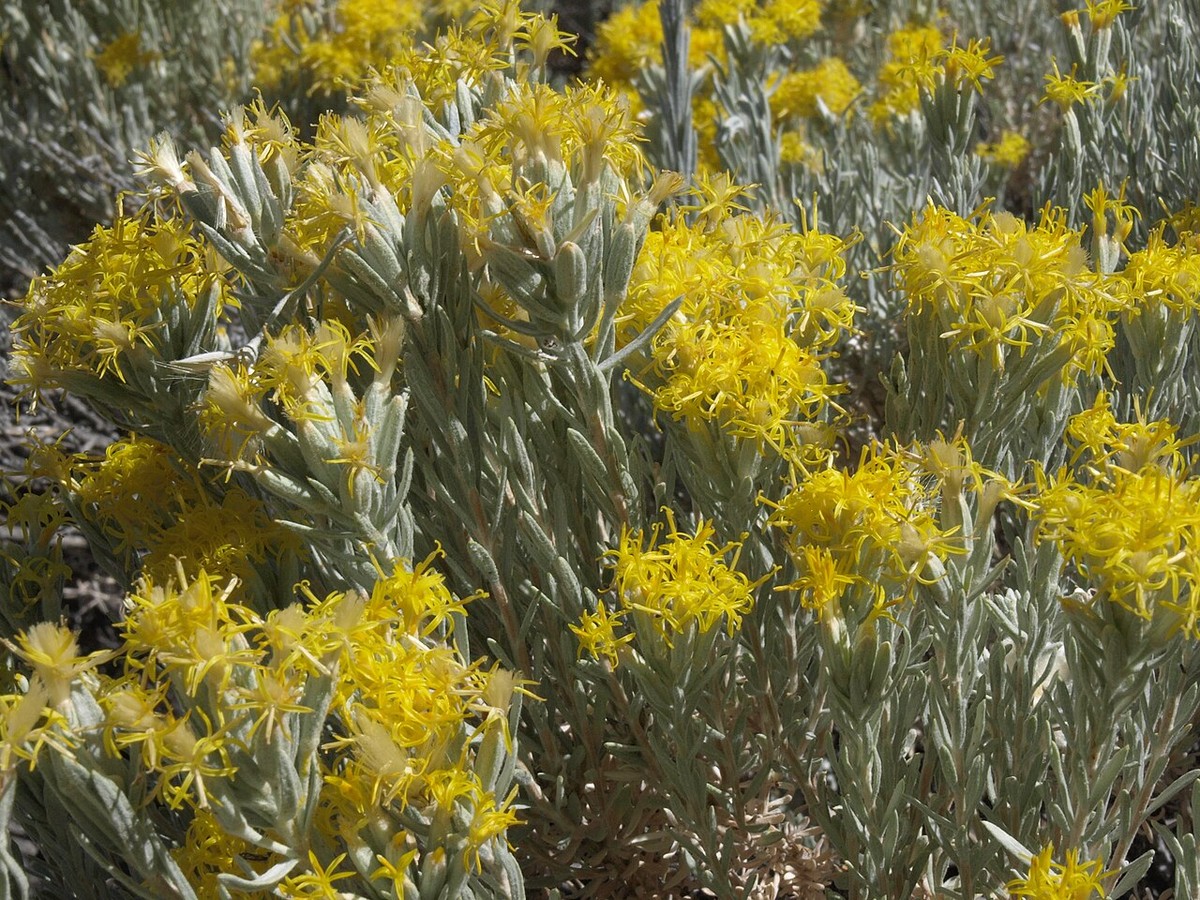
The shrub’s defining feature is its dense covering of fine white or gray woolly hairs on young stems and leaves, which give the whole plant a soft, silvery, felted appearance that stands out against the darker green of sagebrush and other shrub-steppe associates. In early to mid summer, gray horsebrush produces abundant small clusters of bright yellow, tubular disc flowers at the branch tips, creating a striking contrast against the gray-white foliage and making the plant conspicuous across open rangeland and rocky slopes.
For gardeners in the dry interior West, gray horsebrush is a tough, adaptable, drought-tolerant native shrub suited to rock gardens, high-desert xeriscapes, and naturalistic plantings where its silvery texture and summer flowers add interest. One important caution: its foliage is toxic to sheep under certain conditions, so care should be taken where livestock may graze.
Identification
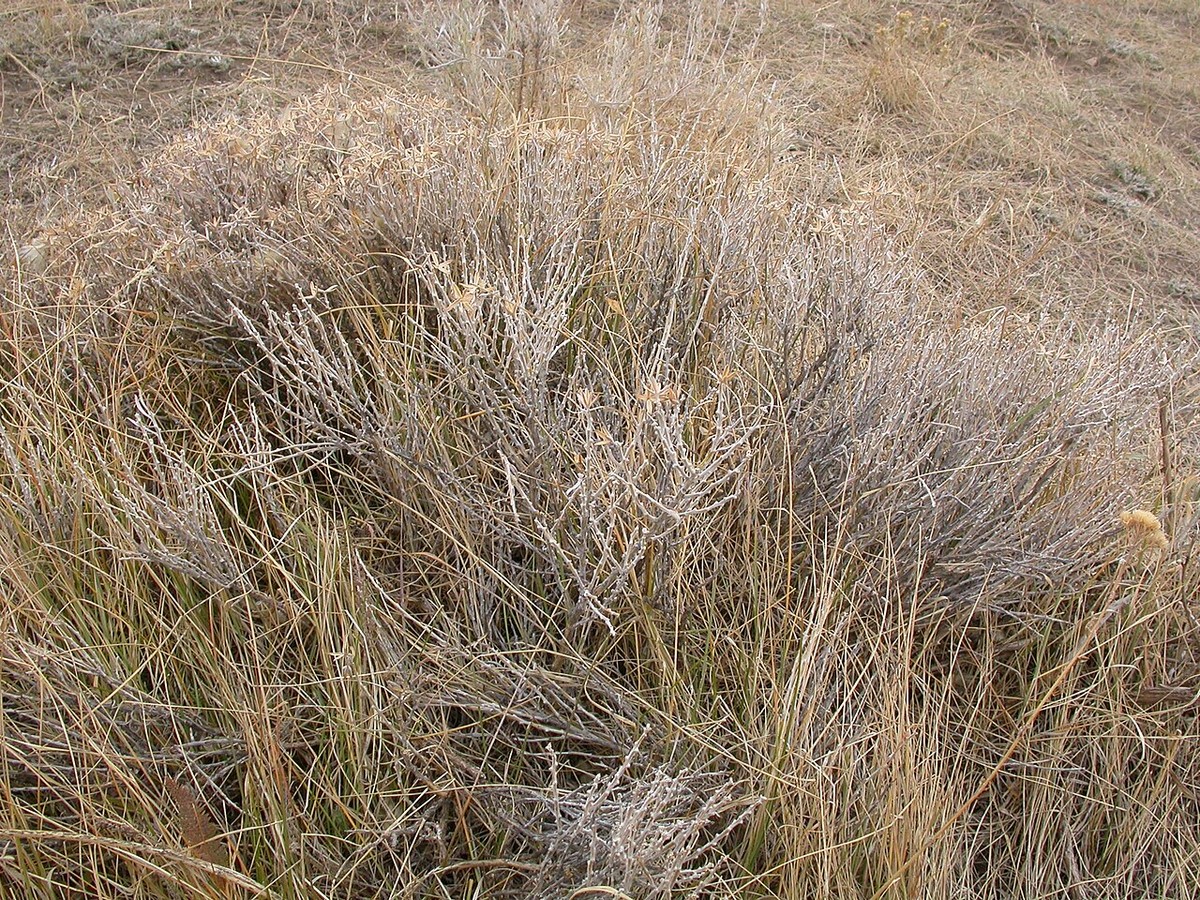
Gray horsebrush is a low, rounded, much-branched shrub, typically 1 to 3 feet tall and similarly wide, with an intricate structure of slender stems lacking the sharp spines found in related Tetradymia species. The overall form is compact and rounded, with a distinctly gray-white, woolly cast from a distance.
Stems & Leaves
Young stems are covered in dense, felt-like white or gray wool, becoming less hairy and more gray-brown with age, and often developing somewhat zigzagging growth at the swollen nodes where older leaves have dropped. The leaves are small, narrow, and linear to spoon-shaped, typically under 1 inch long, also covered in soft gray hairs, giving both stems and foliage a soft, silvery-woolly texture.
Flowers & Fruit
Gray horsebrush blooms in early to mid summer, producing small, dense clusters of bright yellow, tubular disc flowers at the branch tips. The flower heads lack the showy ray petals of many sunflower-family relatives, instead relying on numerous small tubular flowers packed closely together for their visual impact. After flowering, the plant produces small, dry, single-seeded fruits (achenes) topped with a tuft of bristly hairs (pappus) that aid in wind dispersal, typical of the sunflower family.
Quick Facts
| Scientific Name | Tetradymia canescens |
| Family | Asteraceae (Sunflower) |
| Plant Type | Deciduous to semi-evergreen low shrub |
| Mature Height | 1–3 ft |
| Mature Spread | 1–3 ft, rounded form |
| Growth Rate | Slow to moderate |
| Sun Exposure | Full Sun |
| Water Needs | Low; drought tolerant once established |
| Soil Type | Dry, rocky, sandy or gravelly soils |
| Soil pH | Neutral to alkaline |
| Bloom Time | June – August |
| Flower Color | Bright yellow |
| Fall Color | None (gray-green/woolly year-round) |
| Fruit | Small bristly-tufted achenes, late summer |
| Deer Resistant | Yes (generally avoided by deer; toxic to sheep) |
| USDA Hardiness Zones | 4–8 |
Native Range
Gray horsebrush has one of the broadest ranges of any horsebrush species, native across much of the dry interior West. Its range extends from Washington, Oregon, and California east through Nevada, Idaho, Utah, and Montana, and south through Wyoming, Colorado, Arizona, and New Mexico, making it a familiar shrub across the Great Basin, Colorado Plateau, and much of the Rocky Mountain West.
Across this broad range, gray horsebrush typically grows on dry, open slopes, flats, and ridges in sagebrush steppe, pinyon-juniper woodland, and montane shrubland, generally between about 3,000 and 10,000 feet in elevation. It tolerates a wide range of soil types, from sandy and gravelly ground to rocky, alkaline substrates, and it often grows alongside big sagebrush, rabbitbrush, and bunchgrasses.
Because of its tolerance for disturbed and overgrazed ground, gray horsebrush sometimes increases in abundance on rangeland where competing vegetation has been reduced, though it remains a natural and widespread component of healthy shrub-steppe and woodland understory across its range.
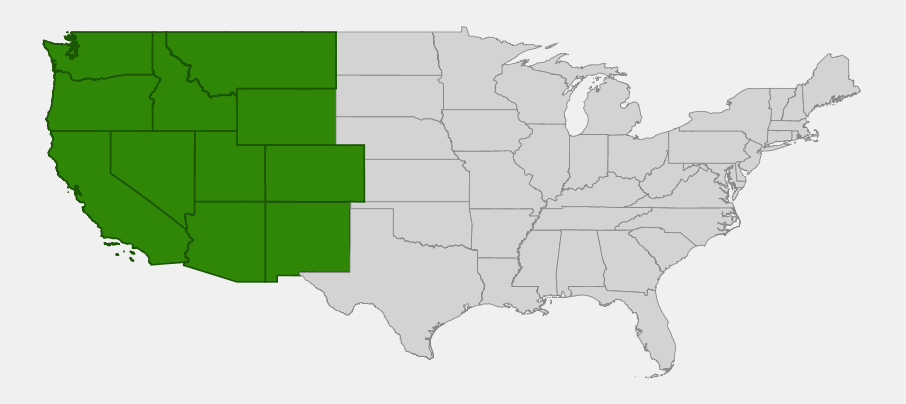
📋 Regional plant lists featuring Gray Horsebrush: California & Nevada · Idaho, Eastern Oregon & Eastern Washington · Utah & Western Colorado · Montana & Wyoming · Arizona & New Mexico
Growing & Care Guide
Gray horsebrush is a resilient, low-maintenance native shrub well suited to dry gardens throughout its wide native range. It asks for sun and good drainage and otherwise needs very little attention.
Light
Plant gray horsebrush in full sun. It grows naturally on open, exposed slopes and flats, and full sun brings out the best silvery foliage color and the most abundant summer bloom.
Soil & Water
Gray horsebrush adapts to a wide range of dry soils, from sandy and gravelly ground to rocky or alkaline substrates, as long as drainage is good. Established plants are drought tolerant and need little to no supplemental water; occasional deep watering during extended summer drought can help in cultivated settings, but regular irrigation is unnecessary and can promote disease in humid conditions.
Planting Tips
Set out container-grown plants in fall or early spring to allow root establishment before summer heat. Choose a sunny, well-drained site such as a rock garden, slope, or gravel bed. Space plants 2 to 3 feet apart to allow for their mature rounded spread. Because the foliage is toxic to sheep, avoid planting gray horsebrush where sheep have access, particularly in early spring when the new, more palatable growth is most hazardous.
Pruning & Maintenance
Little pruning is required. Remove dead or winter-damaged stems in early spring if desired, but otherwise allow the plant to keep its naturally rounded, woolly form. Gray horsebrush has few pest or disease problems in appropriate dry soils and needs no fertilizer.
Landscape Uses
- Rock gardens and gravel gardens, where the silvery foliage provides season-long textural contrast
- High-desert and intermountain xeriscaping for low water use
- Naturalistic and restoration plantings on dry slopes and disturbed rangeland
- Pollinator gardens, for its summer bloom of yellow flowers
- Mixed shrub-steppe borders alongside sagebrush and rabbitbrush
Wildlife & Ecological Value
Gray horsebrush contributes structure, summer bloom, and some forage value to the shrub-steppe and woodland communities where it grows, though it is used more cautiously by grazing animals than many associated shrubs.
For Pollinators
The abundant yellow summer flowers attract a range of native bees, flies, and butterflies at a time when many shrub-steppe wildflowers have finished blooming, making gray horsebrush a useful mid-to-late-summer nectar source in an otherwise quieter season for pollinators.
For Birds
The dense, rounded branching structure offers cover and perching sites for small birds in open shrub-steppe habitat, and the seeds are eaten by some seed-eating songbirds after the flowers go to seed in late summer.
For Mammals
Gray horsebrush is generally avoided by deer and most browsing wildlife, and notably, its foliage contains compounds that are toxic to domestic sheep, particularly when sheep consume both gray horsebrush and black sagebrush in combination — a well-documented cause of “big head” disease (photosensitization) in range sheep. Because of this, gray horsebrush is managed carefully on sheep range, even though it poses little hazard to cattle or wild browsers.
Ecosystem Role
As a widespread, drought-tolerant shrub across the Great Basin and Rocky Mountain region, gray horsebrush adds structural and bloom diversity to shrub-steppe and pinyon-juniper plant communities, and its tolerance of disturbed ground allows it to persist and provide at least partial shrub cover on sites where more sensitive species have declined.
Cultural & Historical Uses
Gray horsebrush has been documented in some ethnobotanical records as a minor source of traditional medicine among Indigenous peoples of the Great Basin and Southwest, including use of plant parts in treatments for various ailments, though detailed, reliably documented traditional uses are less extensive than those recorded for more prominent regional shrubs such as sagebrush.
Its most significant documented historical role is as a rangeland hazard rather than a resource: the toxicity of its foliage to sheep, especially in combination with black sagebrush consumption, has been studied by range scientists since at least the mid-20th century, and awareness of “big head” disease remains part of standard range management guidance for sheep producers across the interior West.
Beyond its forage caution, gray horsebrush has no major documented history of use for food, fiber, or construction, and its primary modern significance is ecological and as a low-water native landscaping plant.
Frequently Asked Questions
Is gray horsebrush toxic?
Its foliage is toxic to domestic sheep, particularly when grazed along with black sagebrush, and can cause a photosensitization condition known as “big head” disease. It is not considered a significant hazard to cattle, horses, or most wildlife, and poses no particular risk to home gardeners handling the plant.
What’s the difference between gray horsebrush and spiny horsebrush?
Gray horsebrush (sometimes called spineless horsebrush) lacks the sharp spines found on related species such as spiny horsebrush (Tetradymia spinosa). Gray horsebrush also tends to have a more uniformly woolly, silvery appearance.
Does gray horsebrush attract pollinators?
Yes. Its bright yellow summer flower clusters are attractive to native bees, flies, and butterflies, providing a useful nectar source during the mid-to-late summer period when many other shrub-steppe wildflowers have already finished blooming.
How drought tolerant is gray horsebrush?
Very. Once established in well-drained soil, it needs little to no supplemental irrigation and is well adapted to the dry summers typical of its native sagebrush-steppe and woodland habitats.
Can gray horsebrush be grown in a home garden?
Yes, in sunny, well-drained sites within its climate range. It works well in rock gardens and xeriscapes, though gardeners with grazing livestock, especially sheep, should be aware of its toxicity and avoid planting it where animals can browse it.

Looking for a nursery that carries Gray Horsebrush?
Browse our native plant nursery directory: California · Oregon · Washington · Nevada & New Mexico · Idaho · Utah · Wyoming · Montana · Colorado · Arizona