Yellow Wild Indigo (Baptisia sphaerocarpa)
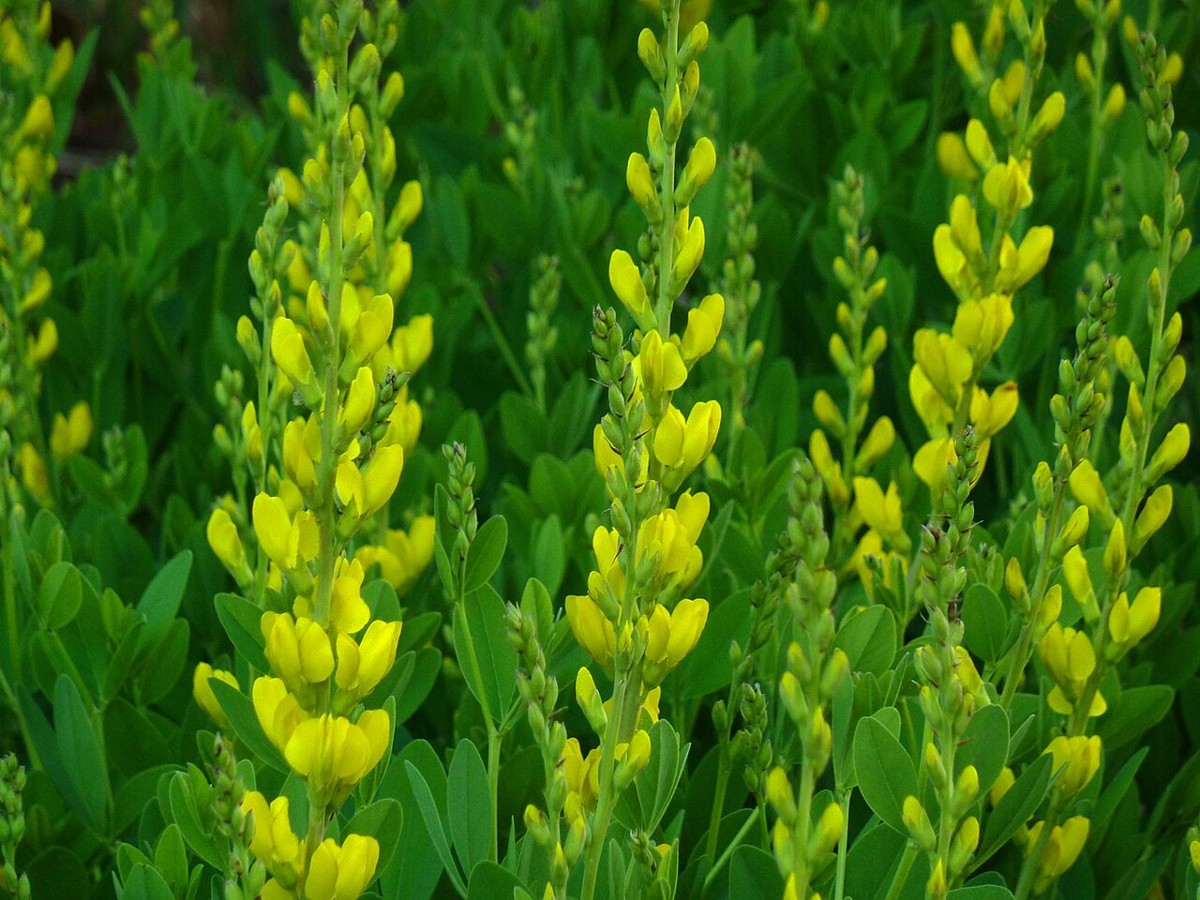
Baptisia sphaerocarpa, commonly known as Yellow Wild Indigo or Round-fruit False Indigo, is a bold, long-lived perennial legume of the south-central prairies. A member of the Fabaceae (pea/bean family), it sends up multiple upright stems topped with showy spikes of bright yellow, pea-shaped flowers each spring, followed by distinctive rounded, inflated seed pods that persist and rattle in the wind through fall and winter. Like its purple- and blue-flowered relatives, it forms a dense, shrub-like clump that functions almost like a small flowering shrub in the perennial border.
Growing 2 to 3 feet tall and often equally wide, Yellow Wild Indigo has smooth, blue-green, three-parted leaves on sturdy stems that emerge from a deep, woody taproot. This taproot makes the plant exceptionally drought tolerant once established but also means it resents transplanting — it is best planted once and left alone to settle in for the long haul, often living for decades in the same spot. The clear yellow, upright flower spikes bloom for several weeks in mid-spring, among the showiest native legume displays of the southern prairie.
As a nitrogen-fixing legume, Yellow Wild Indigo improves the soil around it while asking very little in return, making it a valuable, low-maintenance anchor plant for prairie gardens, pollinator meadows, and dry, sunny borders across its native range in the south-central United States.
Identification
Yellow Wild Indigo forms an upright, rounded clump 2 to 3 feet tall and 2 to 3 feet wide, with multiple stout stems rising from a single woody crown and deep taproot.
Stems
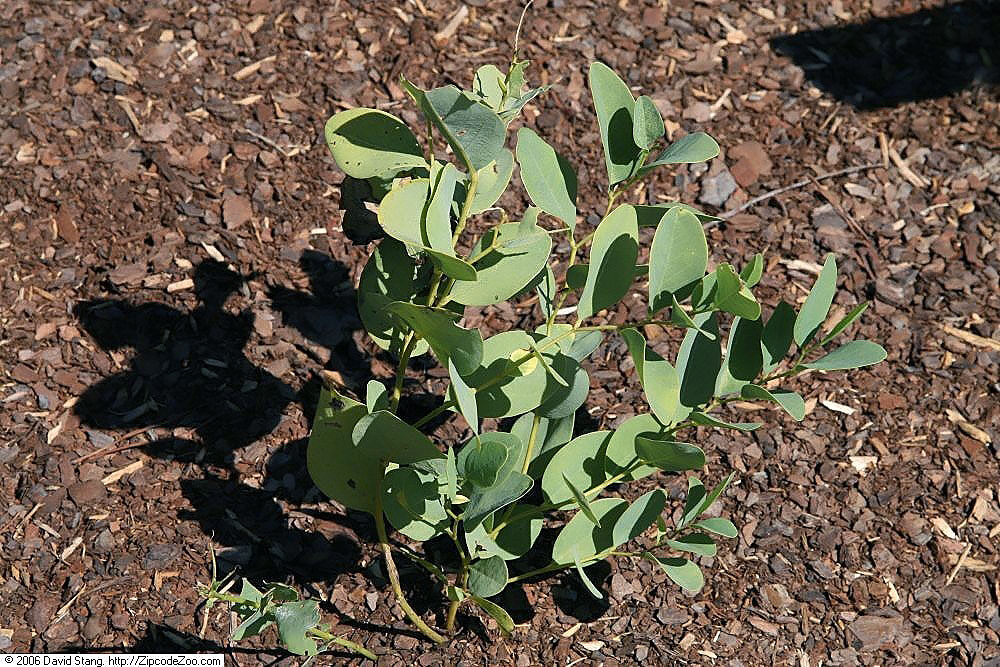
Stems are smooth, blue-green, and stout, branching upward from the base to form a dense, rounded, almost shrubby silhouette by midsummer.
Leaves
Leaves are trifoliate (divided into three leaflets), smooth-edged, blue-green, and 1 to 2 inches long per leaflet, giving the whole plant a cool, glaucous cast that contrasts nicely with the bright flowers.
Flowers
Flowers are bright yellow, pea-shaped, and borne in dense, upright spikes (racemes) 8 to 16 inches tall at the stem tips, blooming for 3 to 4 weeks in April and May depending on latitude.
Fruit & Seeds
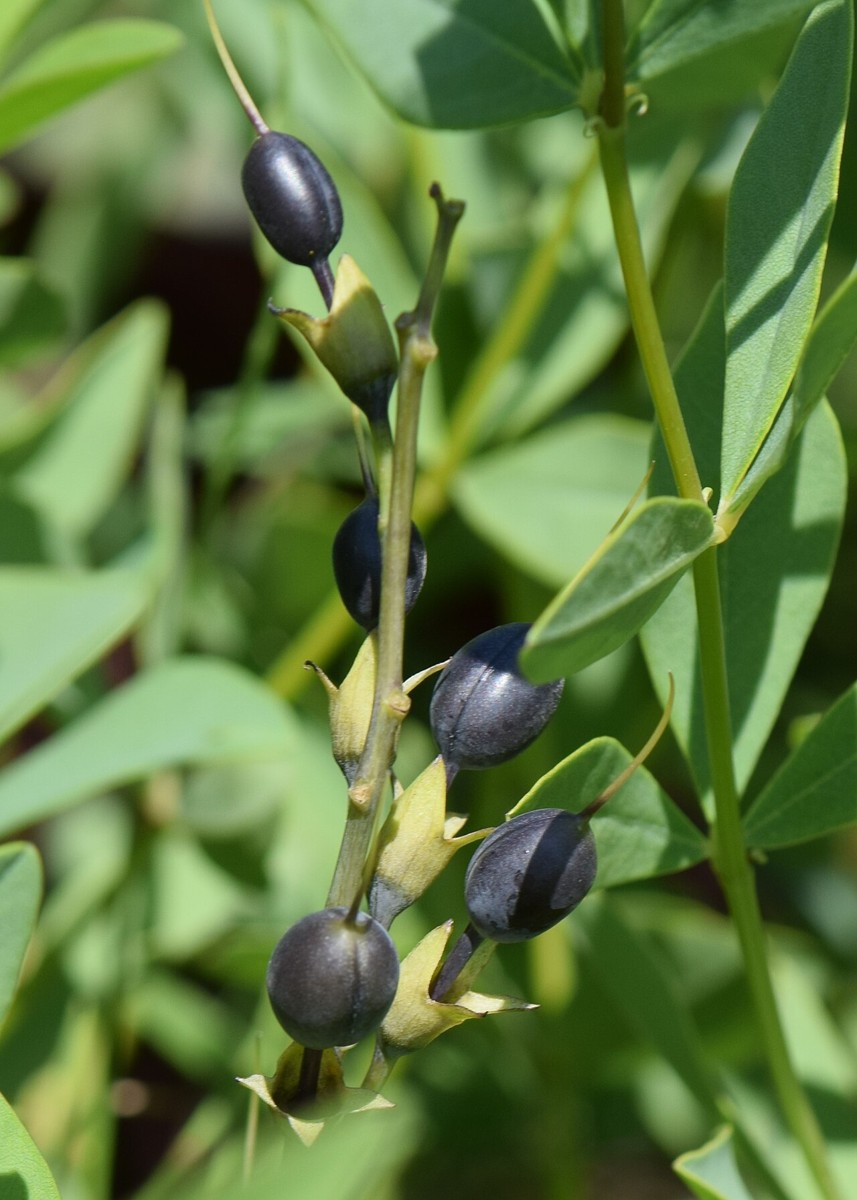
After bloom, the plant produces its namesake feature: inflated, rounded (nearly spherical) seed pods that start green, mature to dark gray-black, and persist on the dried stems well into winter, rattling audibly in the wind as the loose seeds shake inside — a useful and attractive identification feature long after flowering ends.
Quick Facts
| Scientific Name | Baptisia sphaerocarpa |
| Family | Fabaceae (Pea/Bean) |
| Plant Type | Herbaceous Perennial (shrub-like habit) |
| Mature Height | 2–3 ft |
| Mature Spread | 2–3 ft |
| Growth Rate | Slow to establish, then long-lived |
| Sun Exposure | Full Sun to Light Shade |
| Water Needs | Low once established |
| Soil Type | Prairie clay, loam, or sand; well-drained |
| Soil pH | 6.0–7.5 |
| Bloom Time | April – May |
| Flower Color | Bright yellow |
| Fall Color | Foliage blackens after frost; blue-green through fall |
| Fruit | Rounded, inflated black seed pods |
| Deer Resistant | Yes |
| USDA Hardiness Zones | 6–9 |
Native Range
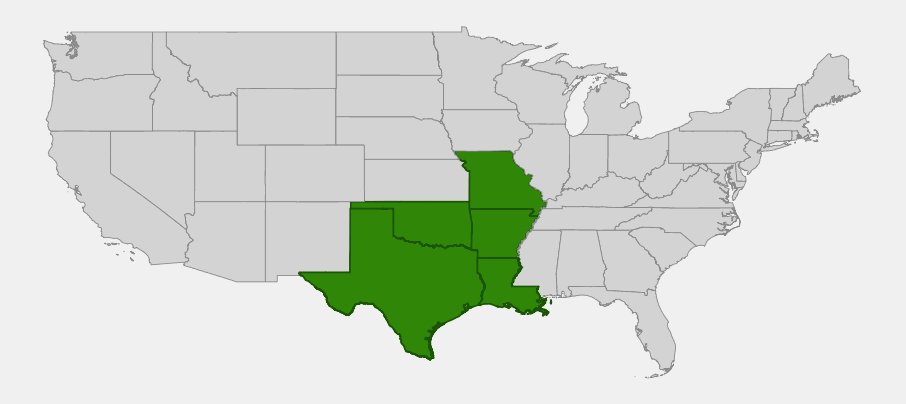
Yellow Wild Indigo is native to the south-central United States, with confirmed county-level populations in Missouri, Arkansas, Oklahoma, Louisiana, and Texas. It is most abundant across the prairies and open woodlands of central and eastern Oklahoma and central Texas, extending east into Arkansas and Louisiana and north into southern and central Missouri.
Within this range, Yellow Wild Indigo typically grows on open prairie, glades, and the edges of post oak or blackjack oak savannas, favoring sites with full sun and well-drained soil. It is often found on rocky or sandy prairie remnants where fire or periodic disturbance has kept woody competition in check.
County-level botanical data did not confirm a native presence farther east or north than the states listed here, so this guide’s regional lists reflect only the confirmed native range of the south-central plains and prairies.
📋 Regional plant lists featuring Yellow Wild Indigo: Illinois, Iowa & Missouri · Arkansas, Louisiana, Eastern Oklahoma & Eastern Texas · South and West Texas
Growing & Care Guide
Yellow Wild Indigo is an investment plant: slow to settle in during its first couple of years, then remarkably tough and long-lived, often outlasting the gardener who planted it.
Light
Full sun produces the sturdiest stems and heaviest bloom. In partial shade, plants tend to flop and flower less; stake lightly if needed in less-than-full-sun sites.
Soil & Water
Well-drained soil is essential — the deep taproot rots in consistently wet or heavy clay that doesn’t drain. Once established, usually within two to three years, Yellow Wild Indigo is highly drought tolerant and rarely needs supplemental watering. As a legume, it fixes its own nitrogen and needs no fertilizer.
Planting Tips
Choose the planting site carefully: the long taproot makes this species very difficult to transplant successfully once established. Set out young container plants in spring or fall, and be patient — top growth may look modest for the first year or two while the root system develops underground.
Pruning & Maintenance
Little pruning is needed. Many gardeners leave the blackened stems and rattling seed pods standing through winter for visual interest and wildlife value, cutting the clump back to the ground in late winter before new growth emerges.
Landscape Uses
- Prairie and meadow restorations
- Dry perennial borders as a substitute for small flowering shrubs
- Pollinator gardens
- Xeriscaping and low-water landscapes
- Winter interest plantings for the persistent seed pods
Wildlife & Ecological Value
Yellow Wild Indigo is a significant early-season nectar and host plant on the south-central prairie, supporting a range of specialist and generalist wildlife.
For Pollinators
Large bumblebees are the primary pollinators, strong enough to trip open the pea-shaped flowers for nectar and pollen; the spikes also attract other native bees. The foliage serves as a larval host plant for several skipper and sulphur butterflies, including the wild indigo duskywing.
For Birds
Seed-eating birds occasionally feed on seeds that escape the hard pods, though the plant’s greater bird value is the structural cover and insect prey its dense foliage supports through the growing season.
For Mammals
Yellow Wild Indigo is generally unpalatable to deer and rabbits, likely due to mildly toxic alkaloid compounds in the foliage, making it a reliably browse-resistant choice in areas with heavy deer pressure.
Ecosystem Role
As a nitrogen-fixing legume, Yellow Wild Indigo enriches prairie soils for neighboring plants. Its deep taproot also helps stabilize soil and access groundwater during drought, contributing to the drought resilience of the prairie plant community as a whole.
Cultural & Historical Uses
Like other Baptisia species, Yellow Wild Indigo contains compounds historically explored as a substitute for true indigo dye (Indigofera species) by early American settlers, though it produces a weaker, less reliable blue dye and was never a major commercial dye source compared to other Baptisia species used more widely for this purpose.
The foliage and seeds contain alkaloids that are toxic if ingested in quantity by livestock and humans alike; historically, this toxicity was recognized by rural communities, who avoided grazing animals on dense stands of the plant.
Today, Yellow Wild Indigo’s main cultural value is horticultural — it has become a popular native perennial in prairie-style and pollinator gardens, prized for its reliable spring color, low maintenance, and the architectural winter interest of its dried seed pods.
Frequently Asked Questions
Is Yellow Wild Indigo poisonous?
Yes, the foliage and seeds contain alkaloids that are toxic if ingested by people or livestock. It should not be eaten; its value is ornamental and ecological rather than edible.
Why hasn’t my Yellow Wild Indigo bloomed yet?
This is normal for young plants. The deep taproot takes two to three years to establish fully, and the plant typically puts its energy into root development before producing a strong flower display.
Can I move an established Yellow Wild Indigo?
It’s not recommended. The deep taproot is easily damaged during transplanting, and established plants often fail to recover. Choose the planting site carefully from the start.
Why does my Yellow Wild Indigo rattle in winter?
That’s the mature seed pods — rounded, inflated, and hard, with loose seeds inside that shake audibly in the wind. Many gardeners leave the dried stems standing through winter for this effect and for wildlife cover.
Is Yellow Wild Indigo deer resistant?
Yes. The alkaloid compounds that make it mildly toxic also make it unappealing to deer and rabbits, so it is a reliable choice in areas with heavy browsing pressure.

Looking for a nursery that carries Yellow Wild Indigo?
Browse our native plant nursery directory: Missouri & Louisiana · Arkansas · Oklahoma · Texas