Common Spikerush (Eleocharis palustris)
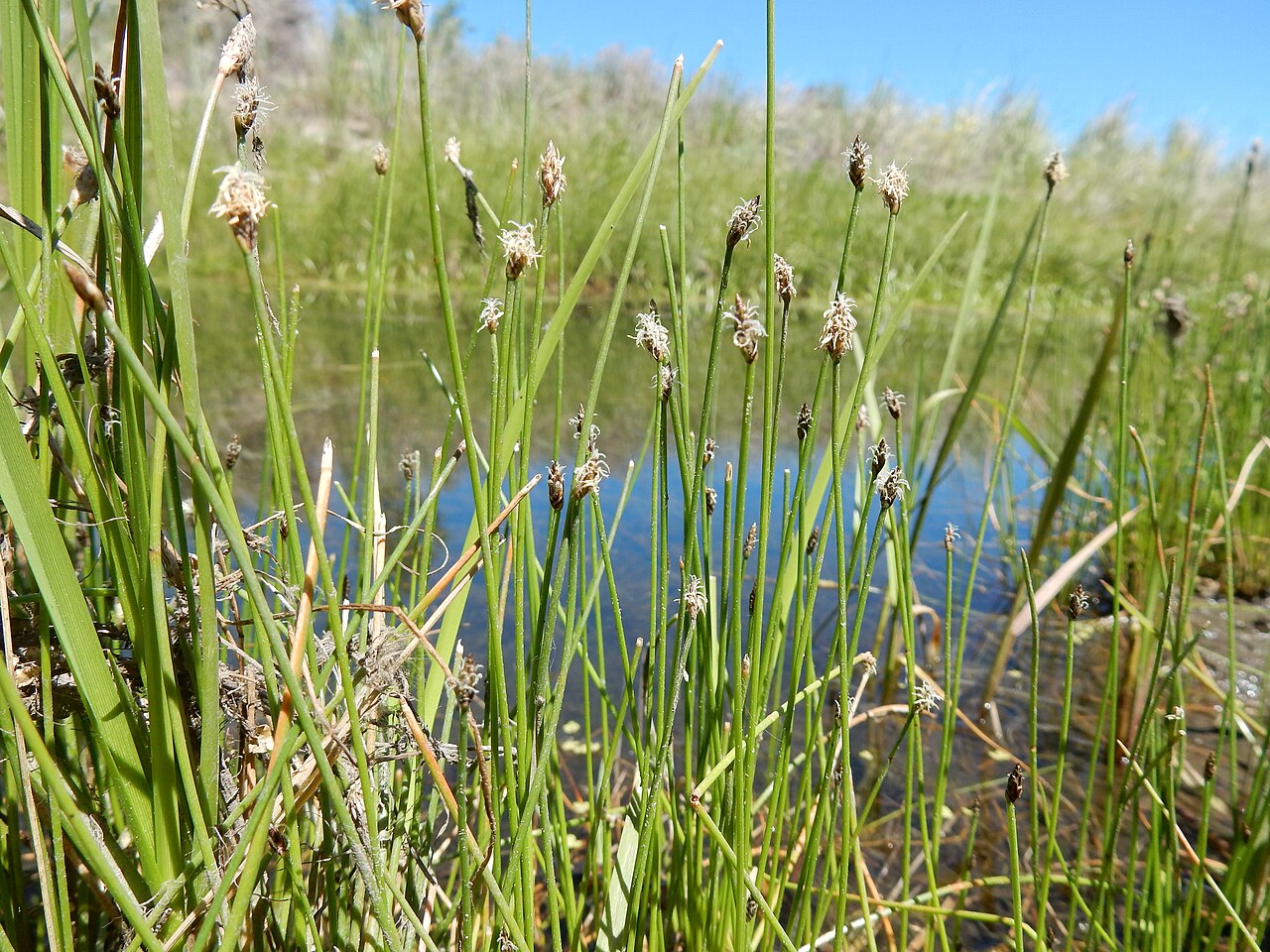
Eleocharis palustris, known as common spikerush, creeping spikerush, or marsh spikerush, is a mat-forming perennial sedge in the Cyperaceae family and one of the most widely distributed wetland plants in North America. Unlike grasses or true rushes, spikerushes have no true leaves — what you see is a dense stand of smooth, round-to-slightly-flattened, leafless green stems, each topped with a single small, cylindrical spikelet. This simple, almost architectural form makes common spikerush instantly recognizable once you know what to look for along a pond edge or slow stream.
Common spikerush spreads by creeping rhizomes just below the soil surface, forming dense colonies that knit together the shallow, saturated soils of marshes, pond margins, and stream edges. Because it tolerates both standing water and periodic drying, and because it spreads so readily from rhizomes, it is one of the most useful and reliable native plants available for stabilizing wet, disturbed, or eroding shorelines.
For gardeners and restoration practitioners working on ponds, rain gardens, bioswales, or any site with saturated soil for part of the year, common spikerush is close to a universal tool: it is native almost everywhere in the continental United States, undemanding once established, and genuinely effective at holding wet soil in place while providing cover and food for wetland wildlife.
Identification
Common spikerush is a low, mat-forming perennial that spreads horizontally through shallow rhizomes, sending up dense clusters of upright stems rather than forming a single clump.
Stems
The stems are the plant’s most obvious feature: smooth, cylindrical to slightly compressed, bright to dark green, and leafless except for a basal sheath, typically standing 8 to 32 inches (20–80 cm) tall depending on growing conditions. Because the species is so variable across its enormous range, stem thickness and height differ considerably from one population to the next — plants in shallow, nutrient-poor soil tend to be shorter and finer than those in rich, consistently flooded sites.
Spikelets
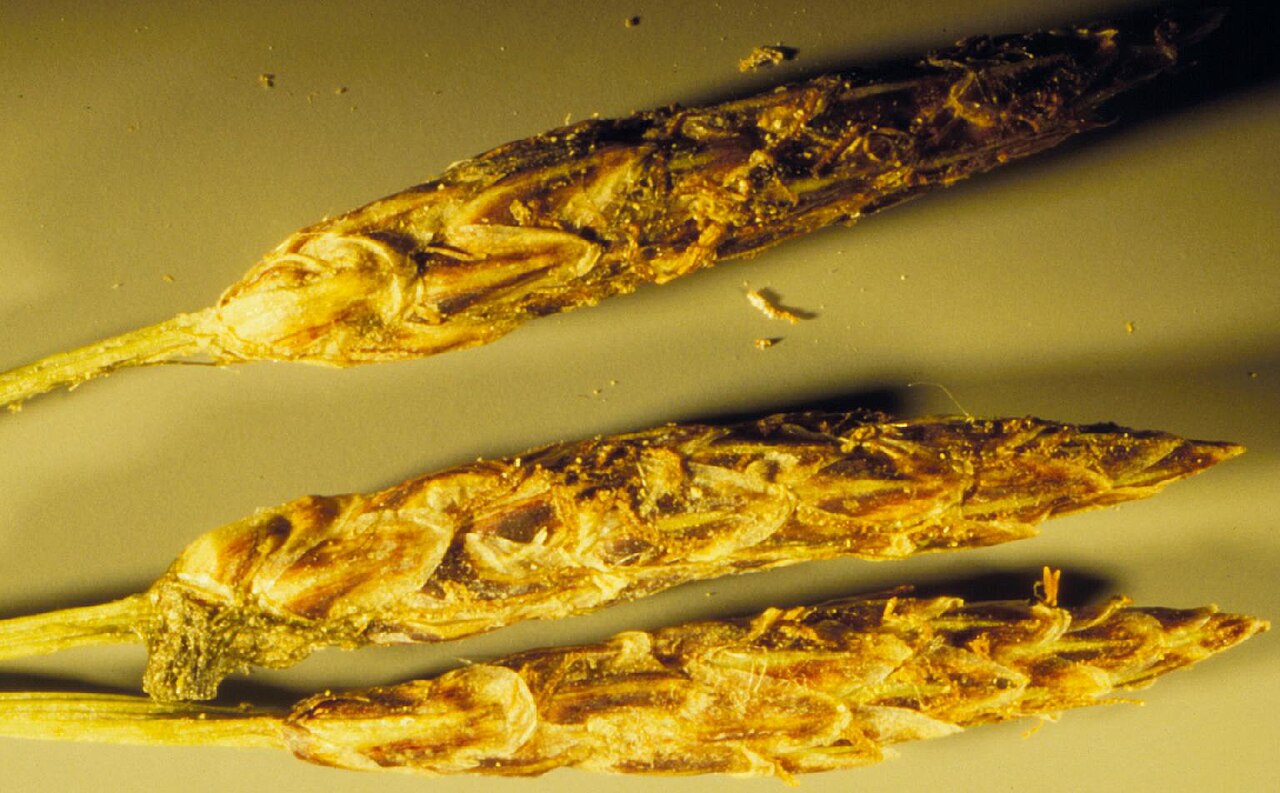
Each stem terminates in a single, erect, cylindrical to narrowly ovoid spikelet, usually ¼ to ¾ inch (6–20 mm) long, made up of many overlapping, spirally arranged scales. There is no showy flower in the usual sense — the tiny, wind-pollinated flowers are tucked within the scales of the spikelet, which gives the plant texture rather than color. Flowering occurs from late spring into summer depending on latitude and elevation.
Fruit & Seeds
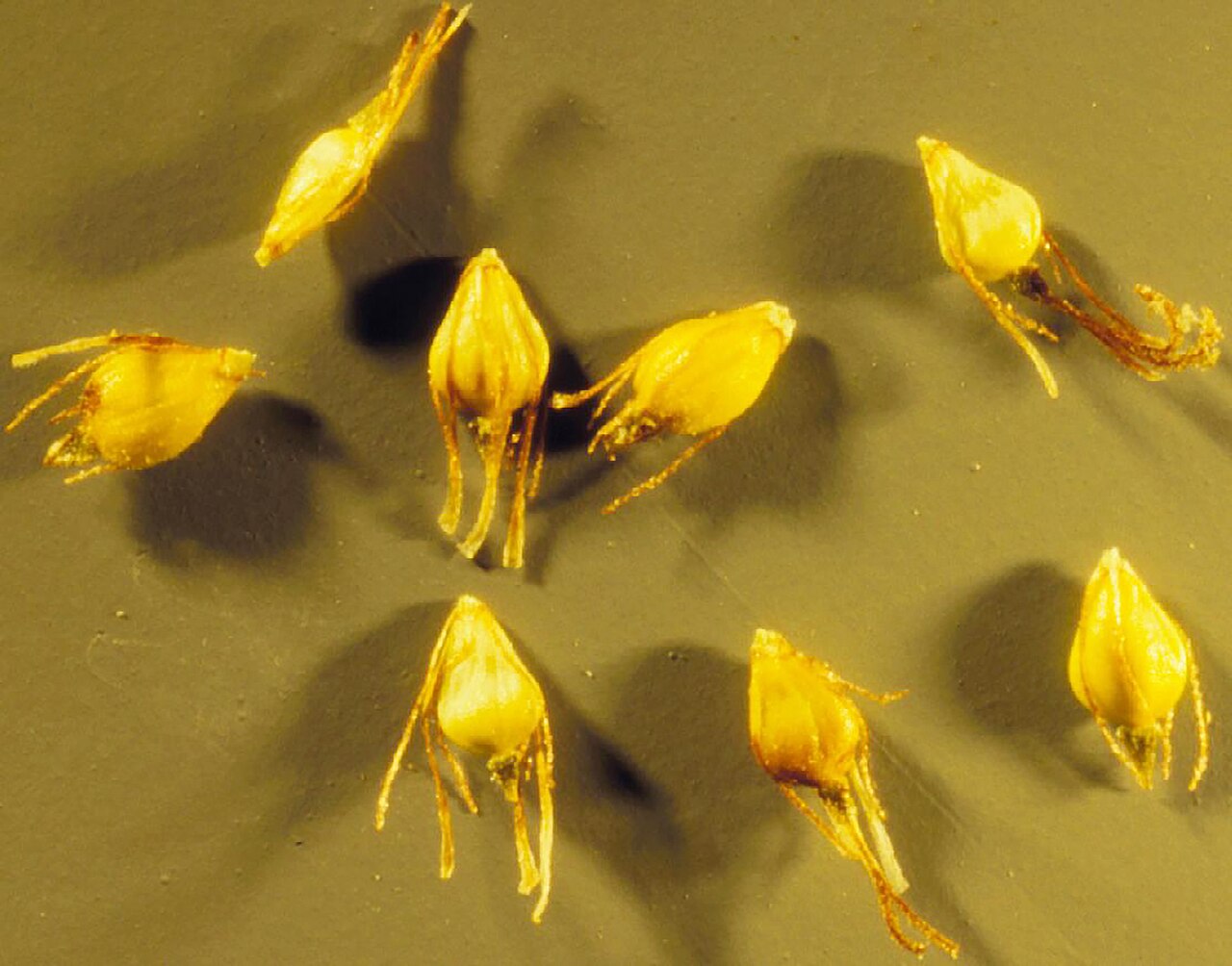
The fruit is a small, lens-shaped to three-angled achene (seed-like fruit) 1 to 2 mm long, each topped with a persistent, pyramidal style base and tipped with several slender bristles. These achenes, visible on close inspection of a mature spikelet, are a key identification feature separating Eleocharis palustris from other spikerush species, which can otherwise look very similar in the field.
Quick Facts
| Scientific Name | Eleocharis palustris |
| Family | Cyperaceae (Sedge) |
| Plant Type | Perennial Sedge (rhizomatous, mat-forming) |
| Mature Height | 8–32 in (20–80 cm) |
| Mature Spread | Indefinite; spreads by rhizome into dense colonies |
| Growth Rate | Fast (aggressive rhizome spread in favorable sites) |
| Sun Exposure | Full Sun to Part Sun |
| Water Needs | High; tolerates standing water to seasonally saturated soil |
| Soil Type | Mucky, silty, or sandy saturated soils; tolerates standing water |
| Soil pH | Wide tolerance, neutral to mildly alkaline preferred |
| Bloom Time | Late spring – summer (inconspicuous) |
| Flower Color | Brownish scales; no petals |
| Fruit | Small lens-shaped achene with bristles |
| Deer Resistant | Yes |
| USDA Hardiness Zones | 3–10 |
Native Range
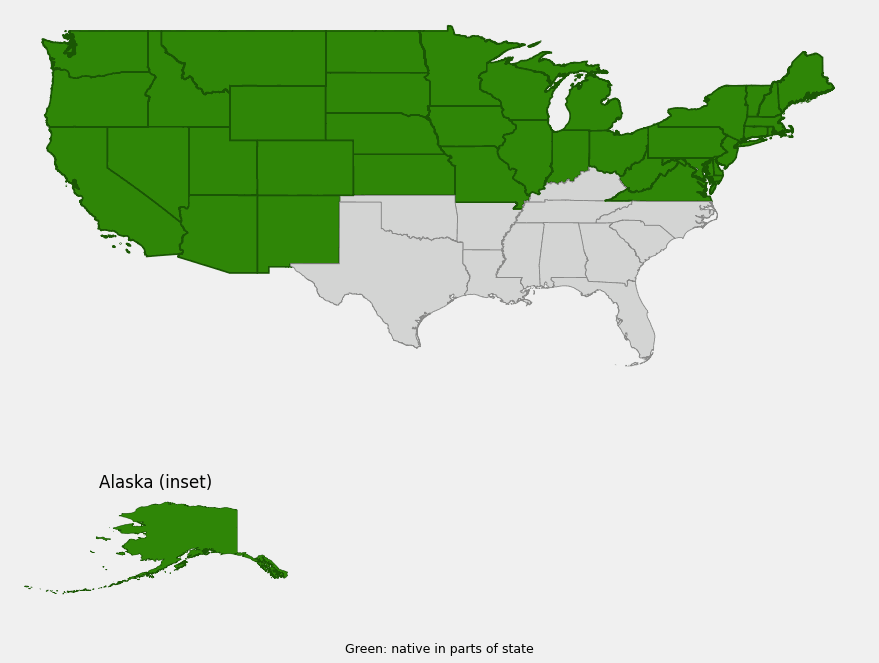
Common spikerush has one of the broadest native ranges of any North American wetland plant, occurring in suitable wet habitat across the western, central, and northern United States, most Canadian provinces, and Alaska. It can be found in appropriate wetlands from the Pacific Coast to New England and the Mid-Atlantic, and north through the boreal regions of Canada and Alaska. Older references and some national maps treat Eleocharis palustris broadly, lumping in the very similar E. macrostachya and E. erythropoda; under the narrower modern concept, true common spikerush is a plant of the northern and western states, and spikerushes reported from Texas and the Southeast generally belong to those related species. It also occurs natively across much of Europe, North Africa, and temperate Asia, making it one of relatively few wetland plants with a nearly circumboreal distribution.
Within this huge range, common spikerush is consistently a plant of shallow water and saturated soils rather than deep marsh or open water: pond and lake margins, slow streams and irrigation ditches, wet meadows, seasonal wetlands, and the shallow, muddy edges of reservoirs. It tolerates a wide range of water chemistry, from freshwater to mildly brackish conditions near coastal estuaries, and it is equally at home at sea level and at moderate elevation in mountain wetlands throughout the West.
Because of its tolerance for disturbance, fluctuating water levels, and a wide range of soils, common spikerush is frequently one of the first native plants to recolonize disturbed, dredged, or newly restored wetland edges — exactly the situation pictured in the photographs on this page, taken along a reclaimed urban creek in Montana.
📋 Regional plant lists featuring common spikerush: California & Nevada · Arizona & New Mexico · Utah & Western Colorado · Montana & Wyoming · Idaho, Eastern Oregon & Eastern Washington · Western Oregon & Western Washington · North Dakota, South Dakota & Western Minnesota · Michigan, Wisconsin & Eastern Minnesota · Illinois, Iowa & Missouri · Nebraska, Kansas & Eastern Colorado · Ohio & Indiana · Maryland, Virginia & West Virginia · Delaware, Southern New Jersey & Long Island · New York, Pennsylvania & Northern New Jersey · Connecticut, Massachusetts & Rhode Island · New Hampshire, Maine & Vermont · Alaska
Growing & Care Guide
Common spikerush is one of the easiest native wetland plants to establish, provided the site actually stays wet. It is a poor choice for a typical dry garden bed but an excellent, nearly foolproof choice for any consistently moist to wet spot.
Light
Full sun to light part shade. It flowers and spreads most vigorously in full sun; in shadier wetland margins it persists but may be less dense.
Soil & Water
Common spikerush wants consistently saturated to shallowly flooded soil — up to a few inches of standing water is well tolerated, and so is soil that is merely saturated rather than flooded. It adapts to muck, silt, clay, and sandy wetland soils alike. Established colonies can tolerate brief dry spells, but the species performs best, and spreads fastest, where water is reliably present for most of the growing season.
Planting Tips
Plant from container stock or rhizome divisions directly into saturated soil or shallow water at the margin of a pond, rain garden, or bioswale. Space divisions 12 to 18 inches apart if you want a quick, even colony — the rhizomes will fill in gaps over one to two growing seasons. It is also commonly used in erosion-control plantings along the cut edges of newly graded or dredged wetland banks.
Pruning & Maintenance
Essentially maintenance-free once established. Old stems can be cut back in late winter if a tidier appearance is wanted, though leaving them in place through winter provides cover and the standing stems break down naturally. Because it spreads aggressively by rhizome in ideal conditions, give it a defined wet zone or edging if you want to prevent it from moving into drier, adjacent beds.
Propagation
Most easily propagated by dividing rhizome clumps in spring or fall and replanting divisions directly into saturated soil. It can also be grown from seed sown onto exposed, consistently moist mud, though division is faster and more reliable for garden and restoration use.
Landscape Uses
- Pond and water garden margins — tolerates standing water directly at the shoreline
- Rain gardens and bioswales that see periodic flooding
- Streambank and shoreline erosion control, where its rhizome mat holds saturated soil in place
- Wetland mitigation and restoration projects, as an early, reliable colonizer
- Wildlife and waterfowl habitat plantings
Wildlife & Ecological Value
Common spikerush is a true workhorse of wetland habitat, providing food, cover, and soil stability across an enormous geographic range.
For Birds
Waterfowl, including ducks and geese, eat the seeds and rhizomes of common spikerush, and the dense stem growth provides nesting cover and protection for marsh-nesting birds. Shorebirds and wading birds forage among the stems at the water’s edge, where the plant’s structure traps small invertebrates and organic debris.
Mammals & Other Wildlife
Muskrats and other semi-aquatic mammals eat the rhizomes and use dense stands as cover and building material for lodges and runways. Amphibians and aquatic invertebrates shelter among the submerged and emergent stems, which also provide a surface for egg-laying.
Ecosystem Role
As a rhizomatous, mat-forming colonizer, common spikerush plays an outsized role in stabilizing wetland soils, reducing shoreline erosion, and filtering sediment and nutrients from water moving through its root zone. Its ability to establish quickly on bare, disturbed, saturated ground makes it one of the most valuable native species for jump-starting the recovery of degraded wetland edges, where it often arrives first and creates the physical structure that other wetland plants can then establish into.
Cultural & Historical Uses
As one of the most widespread wetland plants across the Northern Hemisphere, common spikerush has a long history of incidental use by peoples living near the wetlands it occupies, though it was rarely a primary resource compared to larger wetland species such as cattail or bulrush. Its fibrous stems and rhizomes were sometimes gathered along with other marsh plants for use in basketry, matting, and cordage by Indigenous peoples across its North American range, taking advantage of the same dense, fibrous growth that makes the plant so effective at soil stabilization today.
Because the species is so variable and so widely distributed, it has accumulated numerous regional and historical names and has been described under dozens of synonyms in the botanical literature, reflecting more than two centuries of taxonomic study as botanists worked to understand its relationship to the many similar spikerush species found around the world.
In recent decades, common spikerush’s main significance has shifted toward restoration ecology and water quality work. It is a standard species in wetland mitigation banks, bioswale plantings, and shoreline stabilization projects nationwide, valued specifically for the reliability and speed with which it establishes on bare, saturated soil.
Frequently Asked Questions
Is common spikerush the same as a grass or a true rush?
No. Despite the common name “spikerush,” it belongs to the sedge family (Cyperaceae), not the rush family (Juncaceae) or the grass family (Poaceae). Like other sedges, its stems are typically triangular or round in cross-section rather than hollow and jointed like a true grass stem.
Will common spikerush take over my pond or garden?
It spreads aggressively by rhizome in consistently wet soil, so it is best planted with a defined wet zone, barrier, or edging if you want to contain it. In drier adjacent soil it spreads much more slowly, since its rhizomes need saturated conditions to expand quickly.
Does common spikerush need standing water to survive?
It tolerates standing water but doesn’t strictly require it — saturated soil without standing water works well too. It is far more tolerant of water-level fluctuation than many other wetland plants, which is part of why its range is so large.
Does common spikerush grow in the Southeast?
Under the narrow modern definition of Eleocharis palustris, it is a plant of the northern and western United States, Canada, and Alaska. Spikerushes reported under this name from Texas, the Gulf states, and the Southeast generally belong to closely related species such as E. macrostachya, which look nearly identical and fill the same ecological role.
Is common spikerush good for erosion control?
Yes — its creeping rhizome system is one of its most valuable traits, knitting together saturated soil at pond edges, streambanks, and wetland margins, which is why it is a standard choice in wetland restoration and shoreline stabilization projects.

Looking for a nursery that carries Common Spikerush?
Browse our native plant nursery directory: Alaska & Arizona · California · Colorado, Connecticut & Delaware · Idaho, Illinois, Indiana, Iowa & Kansas · Maine, Maryland, Massachusetts, Michigan, Minnesota, Missouri & Montana · Nebraska, Nevada, New Hampshire, New Jersey, New Mexico, New York, North Dakota & Ohio · Oregon · Pennsylvania, Rhode Island, South Dakota, Utah, Vermont & Virginia · Washington · West Virginia, Wisconsin & Wyoming