Tumblegrass (Schedonnardus paniculatus)
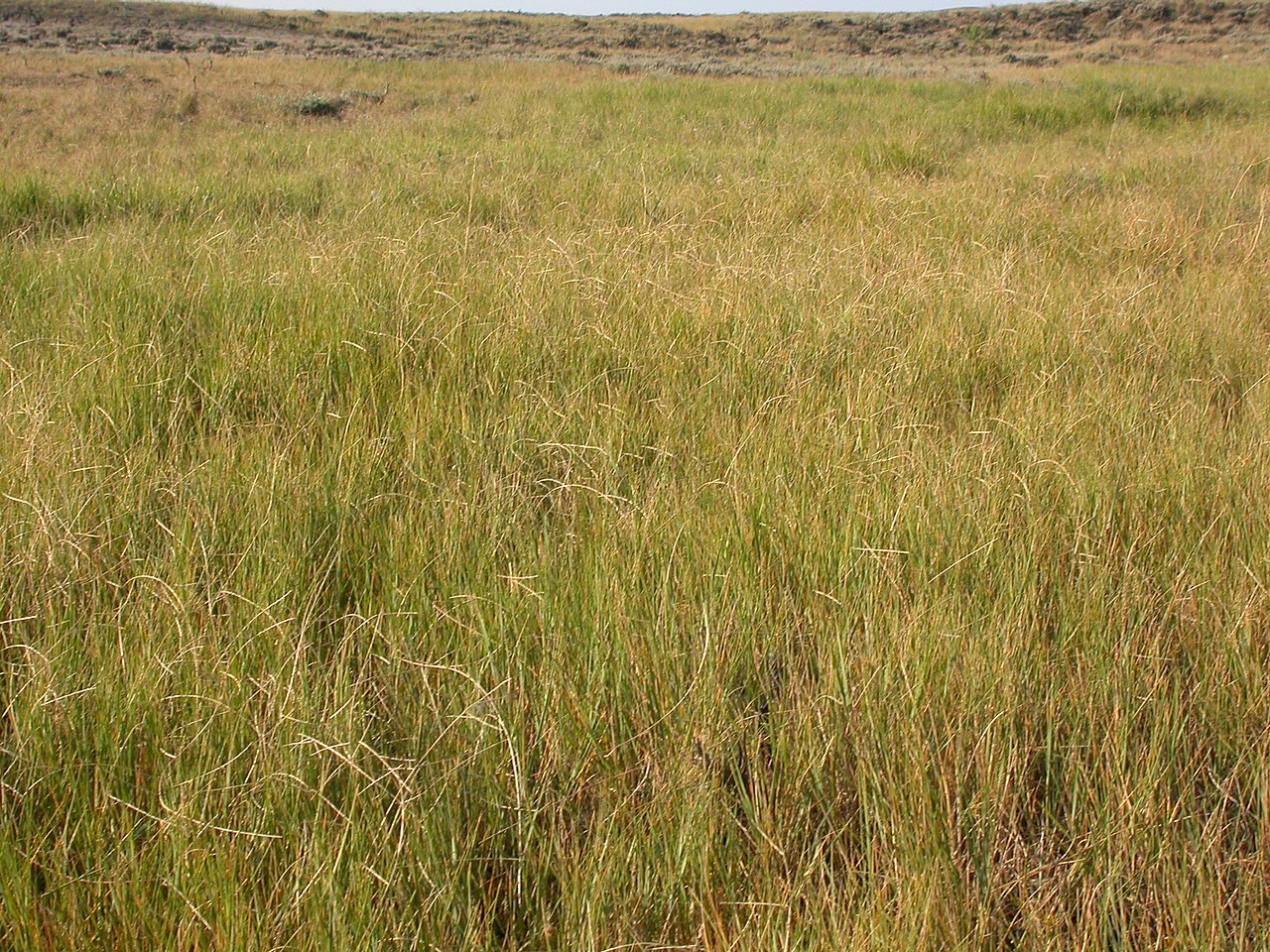
Schedonnardus paniculatus, commonly called Tumblegrass, is a small, wiry perennial grass of the Great Plains and Southwest, named for its unusual habit of breaking free at maturity and tumbling across open ground to scatter its seed, much like tumbleweed. A member of the Poaceae (grass family), it is one of the few North American grasses that disperses this way, and its odd, zigzagging seed stalks make it easy to recognize once you know what to look for.
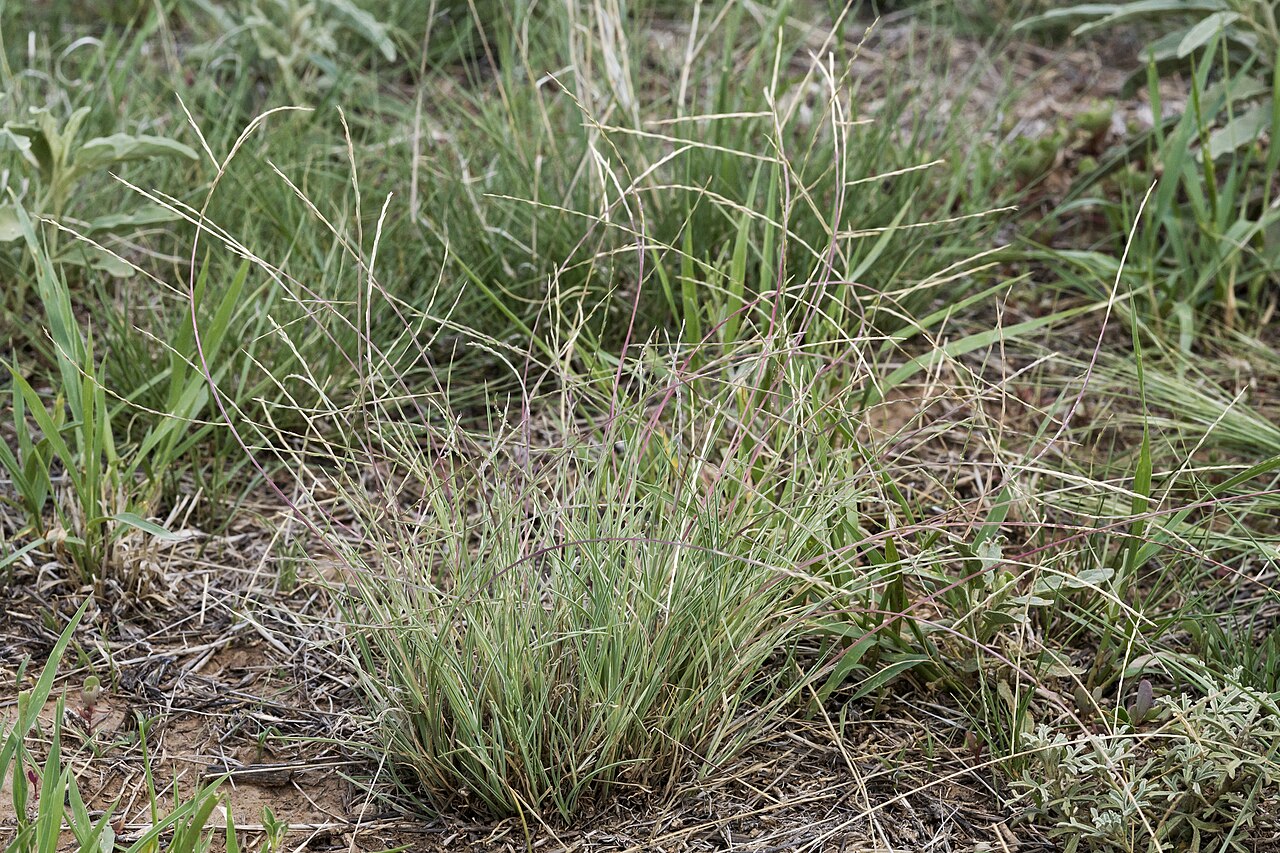
Tumblegrass grows as a low, sprawling bunchgrass 6 to 20 inches tall, with narrow basal leaves and distinctive, one-sided flowering stalks that curve and zigzag as they mature. It thrives on disturbed, compacted, and overgrazed ground where many other prairie grasses struggle, making it a resilient pioneer species of shortgrass prairie, roadsides, and dry rangeland across the central and southwestern United States.
While it lacks the ornamental showiness of many native grasses, Tumblegrass is valued in restoration seed mixes for its toughness and its role in stabilizing bare, disturbed soils where more competitive grasses have yet to establish.
Identification
Tumblegrass is most easily identified by its sparse, low-growing habit and its curiously asymmetric, zigzag-branched seed stalks, which bear spikelets arranged along one side of each curving branch.
Stems & Growth Habit
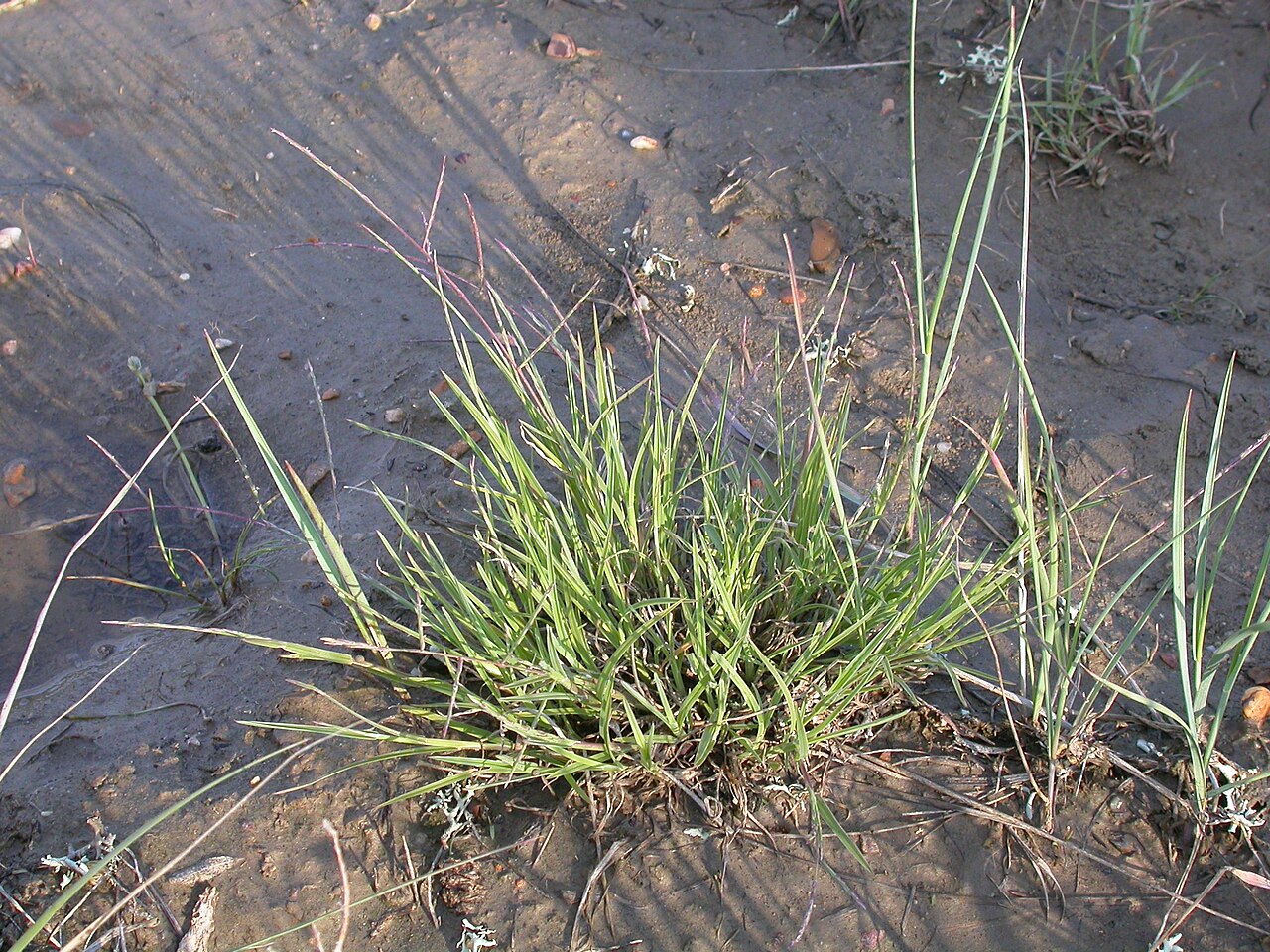
Plants form small, loose, open bunches 6 to 20 inches (15–50 cm) tall, often appearing sparse or scattered rather than densely tufted. Flowering stems rise well above the basal leaves and branch into several slender, widely spaced, curving panicle branches that zigzag along their length — a distinctive silhouette that stands out even from a distance.
Leaves
Leaves are narrow, short, and mostly basal, 1 to 4 inches (2.5–10 cm) long and less than ⅛ inch (3 mm) wide, often curling or twisting at the tip. The foliage is inconspicuous compared to the flowering stalks and tends to lie close to the ground.
Flowers & Fruit
The flowering panicle consists of several widely spaced, curved branches arranged somewhat one-sided along a central axis, each bearing small spikelets pressed close to the branch. Bloom occurs in summer, typically June through September depending on rainfall. At maturity, the entire branched panicle breaks away from the plant at the base and tumbles across open ground in the wind, scattering seed as it goes — the behavior that gives the species its common name.
Quick Facts
| Scientific Name | Schedonnardus paniculatus |
| Family | Poaceae (Grass) |
| Plant Type | Perennial Bunchgrass |
| Mature Height | 6–20 in (15–50 cm) |
| Mature Spread | 6–12 in, sparse open bunch |
| Growth Rate | Slow to moderate |
| Sun Exposure | Full Sun |
| Water Needs | Low |
| Soil Type | Dry, compacted, sandy, loamy or clay; well-drained |
| Soil pH | 6.5–8.0 (neutral to alkaline) |
| Bloom Time | June – September |
| Flower Color | Greenish to straw-tan |
| Fall Color | Tan / straw (dormant) |
| Fruit | Small dry grain (caryopsis), not showy |
| Deer Resistant | Yes |
| USDA Hardiness Zones | 4–9 |
Native Range
Tumblegrass is native across the Great Plains and much of the Southwest, found from Montana and Wyoming south through the Dakotas, Nebraska, Kansas, Colorado, Oklahoma, and Texas, and west into New Mexico, Arizona, and Utah, with scattered native populations in Iowa and Missouri.
It grows in shortgrass and mixed-grass prairie, overgrazed rangeland, dry roadsides, disturbed soils, and openings in desert grassland, often on compacted or heavily trampled ground such as old prairie dog towns, livestock trails, and bare patches where more competitive grasses have thinned out. It tolerates poor, dry, and disturbed soils better than most native prairie grasses, which is part of why it persists where others decline.
Tumblegrass is generally considered an early colonizer of disturbed prairie ground rather than a dominant climax species; it often becomes less common as a site recovers and taller, more competitive grasses like blue grama or buffalograss fill in.
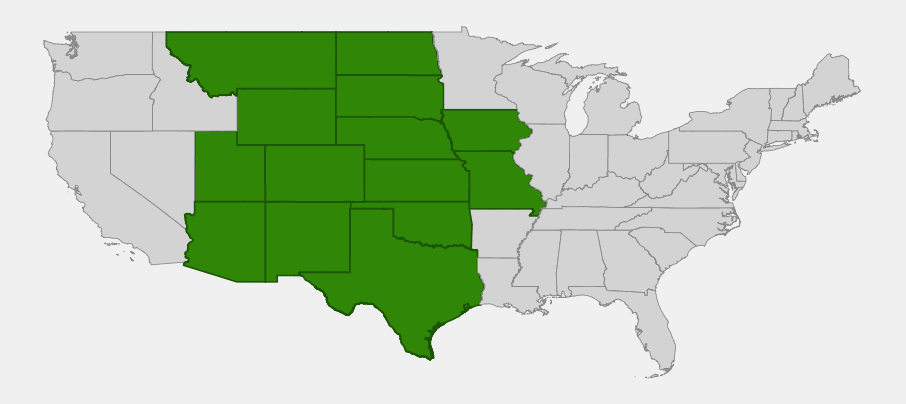
📋 Regional plant lists featuring Tumblegrass: Montana & Wyoming · North Dakota, South Dakota & Western Minnesota · Utah & Western Colorado · Arizona & New Mexico · Arkansas, Louisiana & Eastern Texas · South & West Texas · Nebraska, Kansas & Eastern Colorado · Illinois, Iowa & Missouri
Growing & Care Guide
Tumblegrass is not a showy garden grass, but it is extremely tough and useful where the goal is erosion control or restoration on poor, disturbed, or compacted ground rather than ornamental appeal.
Light
Plant in full sun. Tumblegrass is adapted to open, exposed prairie and rangeland and will not persist in shaded sites.
Soil & Water
It tolerates a wide range of soils, including compacted, poor, and disturbed ground where many other grasses fail to establish, and is notably tolerant of dry, alkaline conditions. Once established, it needs no supplemental irrigation across most of its native range. It does not compete well in rich, loose, well-watered soil, where more vigorous grasses quickly outcompete it.
Planting Tips
Tumblegrass is best used in native seed mixes for prairie restoration, disturbed-land reclamation, or erosion control on compacted sites, rather than as a container-grown landscape specimen, since nursery stock is uncommon. Direct seeding in fall or early spring on disturbed, bare ground mimics its natural colonizing role.
Pruning & Maintenance
Tumblegrass requires no pruning or special maintenance. In a restoration or rangeland setting, it needs no management beyond protection from excessive continuous overgrazing, which can thin stands over time despite the species’ general grazing tolerance.
Landscape Uses
Tumblegrass fits a narrow but useful set of practical roles:
- Prairie restoration seed mixes for disturbed or degraded rangeland
- Erosion control on compacted, bare, or heavily trafficked soil
- Reclamation plantings on old roadbeds, trails, and disturbed ground
- Wildlife and rangeland forage mixes in shortgrass prairie regions
Fire Ecology
As a component of shortgrass and mixed-grass prairie, Tumblegrass is adapted to periodic fire typical of Great Plains grasslands and resprouts readily from its root crown after burning. Fire can temporarily favor Tumblegrass by removing competing vegetation and exposing bare soil, conditions that suit its role as an early colonizer.
Wildlife & Ecological Value
Though modest in stature and appearance, Tumblegrass plays a quiet but useful role on the shortgrass prairie, particularly on disturbed ground where few other plants can establish.
For Mammals
Tumblegrass is grazed by pronghorn, deer, and cattle, especially in early summer when the foliage is tender, and its tolerance for heavy grazing pressure makes it one of the more resilient native grasses on working rangeland. Small rodents, including prairie dogs, often graze young shoots around their colonies, where the grass commonly thrives on the disturbed soil.
For Birds
Ground-foraging grassland birds, including various sparrows, pick at the small seeds scattered by the tumbling seed heads, and the sparse, low cover provides minor nesting habitat for ground-nesting prairie birds in mixed-grass settings.
Ecosystem Role
Tumblegrass functions as an early colonizer of bare, compacted, and disturbed prairie soils, helping stabilize ground and hold ecological space until longer-lived, more competitive native grasses re-establish. Its unusual tumbling seed dispersal also helps the species recolonize disturbed patches across the prairie landscape far from the parent plant.
Cultural & Historical Uses
Tumblegrass has no significant documented history of use as food or medicine by Indigenous peoples of the Great Plains, unlike many of the more prominent prairie grasses and forbs. Its historical significance is primarily ecological and agricultural.
Historically, ranchers and range scientists have viewed Tumblegrass as both a useful forage grass in dry years and an indicator of overgrazed or disturbed rangeland, since its abundance tends to increase on heavily used ground where more desirable forage grasses have thinned.
Today, Tumblegrass is primarily of interest to restoration ecologists and native seed producers, who include it in seed mixes aimed at stabilizing disturbed prairie soils, rather than to home gardeners.
Frequently Asked Questions
Why is it called Tumblegrass?
At maturity, the entire branched seed head breaks free from the plant and tumbles across open ground in the wind, scattering seed as it goes — one of the few North American grasses that disperses seed this way.
Is Tumblegrass good for lawns or ornamental planting?
Not really. It has a sparse, open growth habit and lacks the dense, tidy form of lawn or ornamental grasses. It is used mainly in prairie restoration and erosion-control seed mixes rather than as a landscape specimen.
Does Tumblegrass need a lot of water?
No. It is adapted to dry, often compacted or disturbed prairie and rangeland soils and needs little to no supplemental water once established.
Is Tumblegrass a sign of overgrazed land?
It can be. Tumblegrass tolerates grazing and disturbance better than many native prairie grasses, so it often becomes more abundant on heavily grazed or compacted range, though it is a native species rather than an invasive one.
Where does Tumblegrass grow best?
It thrives on open, sunny, disturbed ground such as old livestock trails, roadside shoulders, and prairie dog towns, where competition from taller grasses is reduced.

Looking for a nursery that carries Tumblegrass?
Browse our native plant nursery directory: Montana & Missouri · Wyoming · North Dakota, Nebraska, New Mexico & Oklahoma · South Dakota, Texas & Utah · Kansas & Iowa · Colorado · Arizona