White Vervain (Verbena urticifolia)
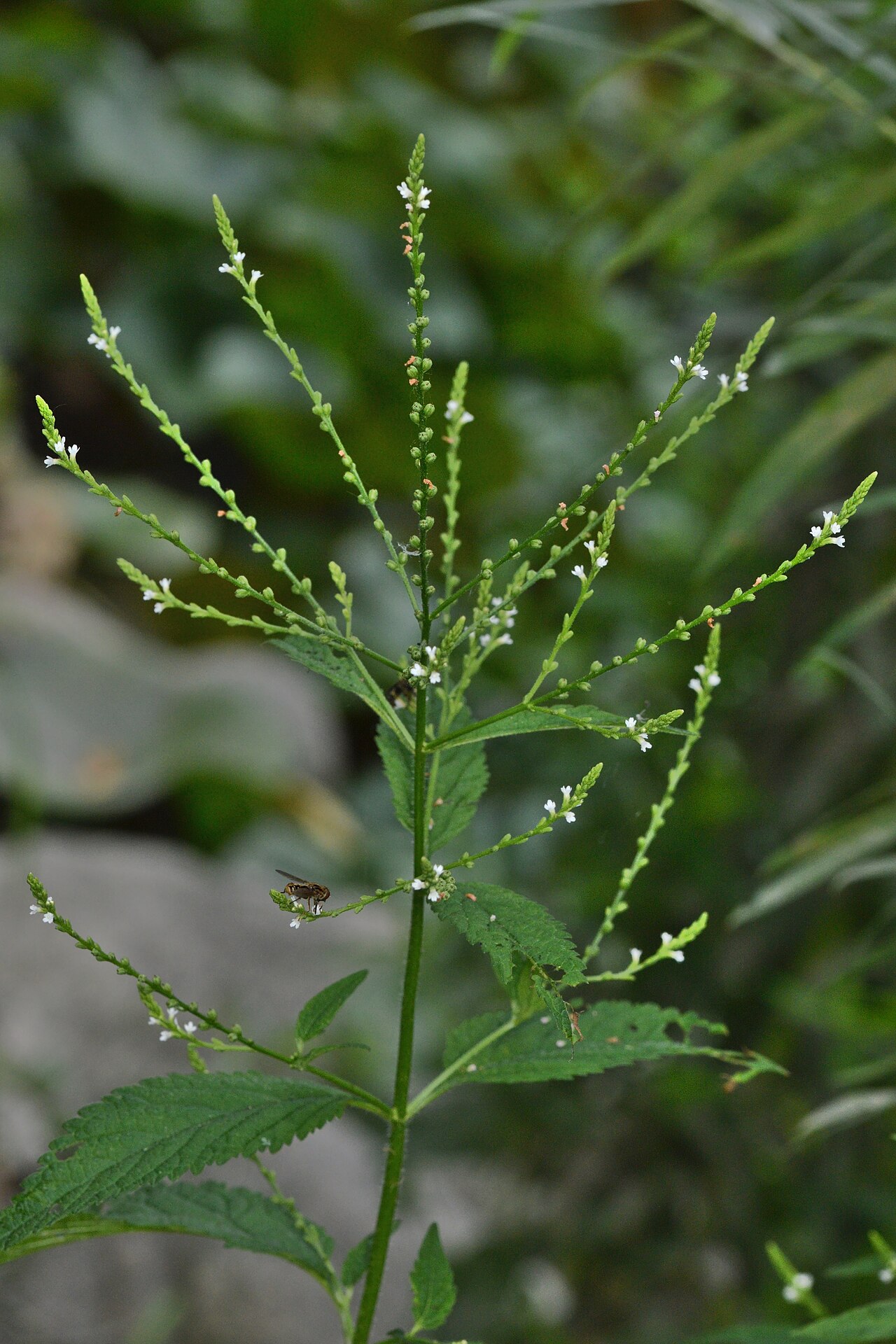
Verbena urticifolia, commonly called White Vervain or Nettleleaf Vervain, is an upright native perennial wildflower found across most of the eastern and central United States. The species name urticifolia means “nettle-leaved,” a nod to its coarsely toothed, nettle-shaped leaves, though the plant has no sting at all. It belongs to the Verbenaceae (vervain family), the same family as the more familiar Blue Vervain (Verbena hastata) and Hoary Vervain (Verbena stricta).
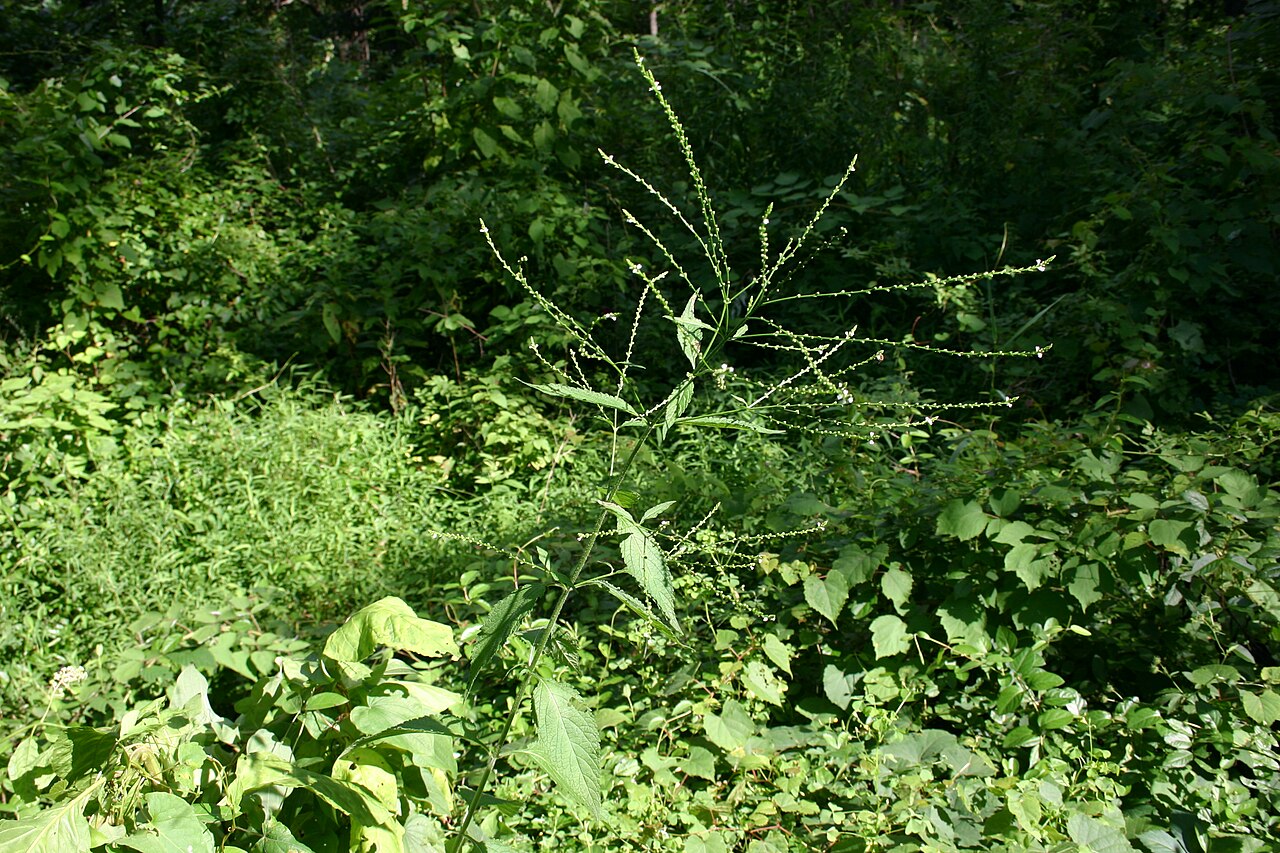
White vervain is not a showy plant in the way many garden wildflowers are. Its tiny white flowers open just a handful at a time along wiry, candelabra-like branching spikes, giving the plant a loose, airy look rather than a solid show of color. What it lacks in flash it makes up for in reliability: it thrives in the kind of moist, partly disturbed ground that trips up fussier natives — woodland edges, floodplain terraces, fencerows, and the damp corners of a yard where little else wants to grow.
Gardeners sometimes search for the popular “verbena bonariensis” look, but that tall purple-flowered vervain is Verbena bonariensis, a South American species that is not native to the United States and can escape cultivation in warm climates. White vervain is a genuinely native, regionally appropriate alternative for the same family and similar airy branching habit, even though its flowers are white rather than purple and the overall effect is quieter. For gardeners who want a true native vervain, White Vervain, Blue Vervain, and Hoary Vervain all offer that wiry, pollinator-friendly structure without the naturalization risk.
Identification
White vervain is an erect, often much-branched herbaceous perennial, typically 2 to 5 feet tall, occasionally reaching 6 feet in rich, moist soil. The stems are square in cross-section, as in other members of the mint-like vervain family, and are usually rough with short, stiff hairs, especially toward the base.
Stems & Leaves
The leaves are opposite, ovate to elliptic, 2 to 5 inches long, and narrow to a short stalk at the base. Their margins are coarsely and irregularly toothed, and the surface is rough-textured with sparse hairs on both sides, giving the whole leaf a resemblance to stinging nettle — hence the common and scientific names — even though White Vervain has no stinging hairs and is harmless to handle. Lower leaves are often larger and more deeply cut than the leaves higher on the stem, which become smaller and narrower near the flower spikes.
Flowers & Fruit
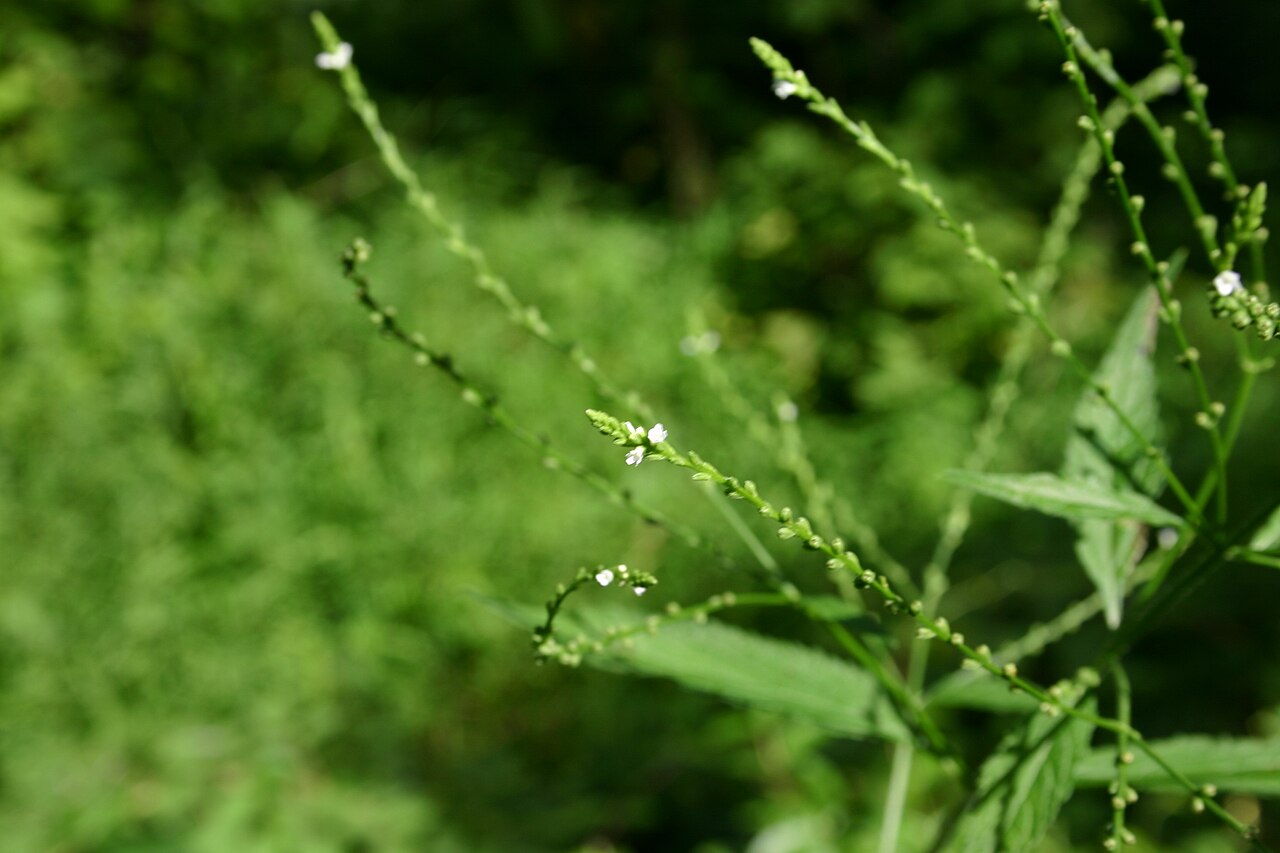
From mid-summer into early fall, slender, wiry flower spikes branch out from the upper stem in an open, candelabra-like arrangement. Each spike bears small, tubular, five-lobed white flowers only about 1/8 inch across, and only a few open at once, scattered along the length of the spike rather than massed together. After bloom, each flower is replaced by a small dry fruit that splits into four tiny nutlets, which ripen from late summer through fall and are an important late-season food source for sparrows, juncos, and other seed-eating songbirds.
Quick Facts
| Scientific Name | Verbena urticifolia |
| Family | Verbenaceae (Vervain) |
| Plant Type | Herbaceous Perennial Wildflower |
| Mature Height | 2–5 ft (occasionally to 6 ft) |
| Mature Spread | 1–2 ft |
| Growth Rate | Moderate to fast; self-seeds readily |
| Sun Exposure | Full Sun to Part Shade |
| Water Needs | Average to moist |
| Soil Type | Moist, fertile loam; tolerates disturbed and average garden soil |
| Soil pH | 6.0–7.5 (neutral tolerant) |
| Bloom Time | July – October |
| Flower Color | White |
| Fall Color | None notable (foliage browns and dies back) |
| Fruit | Tiny brown nutlets, late summer–fall |
| Deer Resistant | Yes (rough, bitter foliage) |
| USDA Hardiness Zones | 4–9 |
Native Range
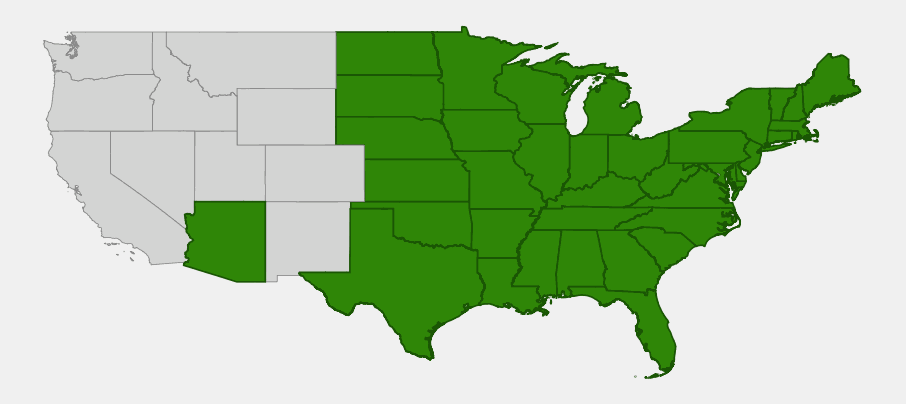
White vervain is one of the most widely distributed vervains in North America, native across nearly the entire eastern half of the United States from Maine and the Great Lakes south to Florida and west to the Great Plains, plus a disjunct native population in the canyons of southeastern Arizona. It also occurs natively in southern Ontario and Quebec. It is absent as a native plant from the Rocky Mountain states, the Pacific Northwest, and California.
Across this huge range, White Vervain turns up in a consistent set of habitats: moist open woods and woodland edges, floodplain terraces and streambanks, thickets, fencerows, pastures, and the disturbed, part-sun ground around barns, trails, and old fields. It tolerates periodic flooding and compacted soil better than most wildflowers, which is part of why it persists in places where development or agriculture has already disturbed the original plant community.
Because it favors disturbed, nutrient-rich ground, White Vervain is sometimes dismissed as a “weed,” and it can indeed show up uninvited in garden beds and waste areas. It is a true native, however, not an introduced plant, and it plays a genuine ecological role as an early colonizer of disturbed soil and a late-season seed source for birds.
📋 Regional plant lists featuring White Vervain: New Hampshire, Maine & Vermont · Connecticut, Massachusetts & Rhode Island · New York, Pennsylvania & Northern New Jersey · Delaware, Southern New Jersey & Long Island · Maryland, Virginia & West Virginia · North Carolina & South Carolina · Georgia, Alabama & Mississippi · Arkansas, Louisiana, Eastern Oklahoma & Eastern Texas · Kentucky & Tennessee · Ohio & Indiana · Illinois, Iowa & Missouri · Michigan, Wisconsin & Eastern Minnesota · North Dakota, South Dakota & Western Minnesota · Nebraska, Kansas & Eastern Colorado · Arizona & New Mexico
Growing & Care Guide
White vervain is about as low-fuss as a native wildflower gets. It thrives where soil has been disturbed and asks for nothing more than moisture and a bit of sun, which is exactly why it has such a huge native range.
Light
Give White Vervain full sun to part shade. It flowers most heavily with at least a half day of direct sun, but it tolerates the dappled light of a woodland edge well, which is where it is most often found in the wild.
Soil & Water
Average to moist, fertile soil suits it best, including the kind of compacted or periodically flooded ground many other wildflowers reject. It is not a plant for dry, sandy, or rocky sites — it wants consistent moisture, especially while getting established, though mature plants handle brief dry spells without much trouble.
Planting Tips
Start from seed sown in fall or stratified seed sown in spring, or from nursery plugs set out after the last frost. White Vervain self-seeds freely once established, so a few plants quickly become a patch; site it in an informal area — a wildlife border, rain garden edge, or naturalized corner — rather than a tidy formal bed, and be ready to pull volunteer seedlings where you don’t want them.
Pruning & Maintenance
Little maintenance is needed. Cut plants back by half in early summer if a bushier, shorter form is wanted, or leave the spent flower spikes standing through winter to feed seed-eating birds. Deadheading before seed drop will curb self-sowing in smaller gardens.
Propagation
White Vervain is easiest to grow from seed, which needs a period of cold, moist stratification to germinate reliably; fall sowing outdoors accomplishes this naturally. Established clumps can also be divided in early spring.
Landscape Uses
White Vervain fits best in naturalistic, wildlife-focused plantings rather than showy flower borders:
- Rain gardens and moist soil plantings that handle periodic flooding
- Woodland edges and the transition zone between lawn and trees
- Wildlife and bird gardens, where the late-season seed is valuable
- Naturalized meadows and restoration plantings on disturbed ground
- Pollinator gardens, mixed with showier native flowers for structure
- Native alternative to the non-native ornamental Verbena bonariensis
Wildlife & Ecological Value
Though its flowers are small, White Vervain supports a steady stream of insect and bird visitors across its long bloom season.
For Pollinators
The small tubular flowers are visited mainly by short-tongued native bees, small flies, and skippers, which can reach the shallow nectar even though the blooms are tiny. Because only a few flowers open at a time over many weeks, a patch of White Vervain offers a slow, steady nectar supply from midsummer well into fall, when many other nectar sources have finished.
For Birds
The tiny nutlets that follow the flowers are eaten by sparrows, juncos, and other seed-eating songbirds through fall and winter, especially where seed heads are left standing rather than cut back.
For Mammals
White Vervain’s rough, bitter-tasting foliage makes it unappealing to deer and rabbits, which browse around it even in gardens with heavy deer pressure — one reason it persists in pastures and disturbed ground that gets grazed.
Ecosystem Role
As an early colonizer of disturbed soil, White Vervain helps stabilize bare ground and build organic matter in floodplains, fencerows, and old fields, paving the way for longer-lived perennials and shrubs to follow. Its late-summer bloom and fall seed production also fill a gap in the wildlife calendar between the main summer wildflower flush and the first hard frosts.
Cultural & Historical Uses
Several Indigenous nations, including the Cherokee and Iroquois, historically used White Vervain and related native vervains in traditional medicine, employing root and leaf preparations for a range of ailments. These uses are recorded in ethnobotanical literature as part of a long tradition of plant knowledge; they are historical practices, not modern medical advice, and White Vervain is not used as food or a household remedy today.
European settlers were already familiar with vervains from Old World folklore, where various Verbena species carried associations with protection and ritual use going back to Roman times, and that general reputation for the genus carried over informally to the American vervains encountered in the colonies.
In the modern landscape, White Vervain’s main value is ecological rather than ornamental or culinary: its long bloom period, light pollinator traffic, and fall seed crop make it a useful, low-maintenance addition to naturalistic and restoration plantings rather than a centerpiece flower.
Frequently Asked Questions
Is White Vervain the same as Verbena bonariensis?
No. Verbena bonariensis (sometimes called tall verbena or purpletop vervain) is a South American species widely sold for its purple flowers; it is not native to the United States and can self-seed aggressively in warm climates. White Vervain (Verbena urticifolia) is a true North American native with white, much less showy flowers and a similar airy branching habit.
Is White Vervain invasive or weedy?
It is native, not invasive, but it is an enthusiastic self-seeder in disturbed, moist soil and can show up uninvited in garden beds. Deadhead before seed drop if you want to keep it contained, or let it naturalize in an informal area.
Does White Vervain need full sun?
No. It flowers best with at least a half day of sun but tolerates the part shade of a woodland edge, which is one of its most common wild habitats.
What wildlife does White Vervain support?
Small native bees, flies, and skippers visit the flowers for nectar, and sparrows, juncos, and other songbirds eat the small nutlets through fall and winter. The bitter foliage is generally avoided by deer and rabbits.
How tall does White Vervain get?
Most plants reach 2 to 5 feet, occasionally to 6 feet in rich, consistently moist soil. The slender, branching flower spikes make the plant look taller and airier than its actual height suggests.

Looking for a nursery that carries White Vervain?
Browse our native plant nursery directory: Alabama, Arkansas & Arizona · Connecticut, Delaware, Florida & Georgia · Illinois, Indiana, Iowa & Kansas · Kentucky, Louisiana, Maine, Maryland, Massachusetts, Michigan, Minnesota, Mississippi & Missouri · Nebraska, New Hampshire, New Jersey, New York, North Carolina, North Dakota, Ohio & Oklahoma · Pennsylvania, Rhode Island, South Carolina, South Dakota, Tennessee, Texas, Vermont & Virginia · West Virginia & Wisconsin
Related native vervains: Blue Vervain · Hoary Vervain. See also: Wildflower Meadow Planting in Michigan and the benefits of planting native woodland wildflowers like bloodroot.