
Bigleaf Snowbell (Styrax grandifolius)
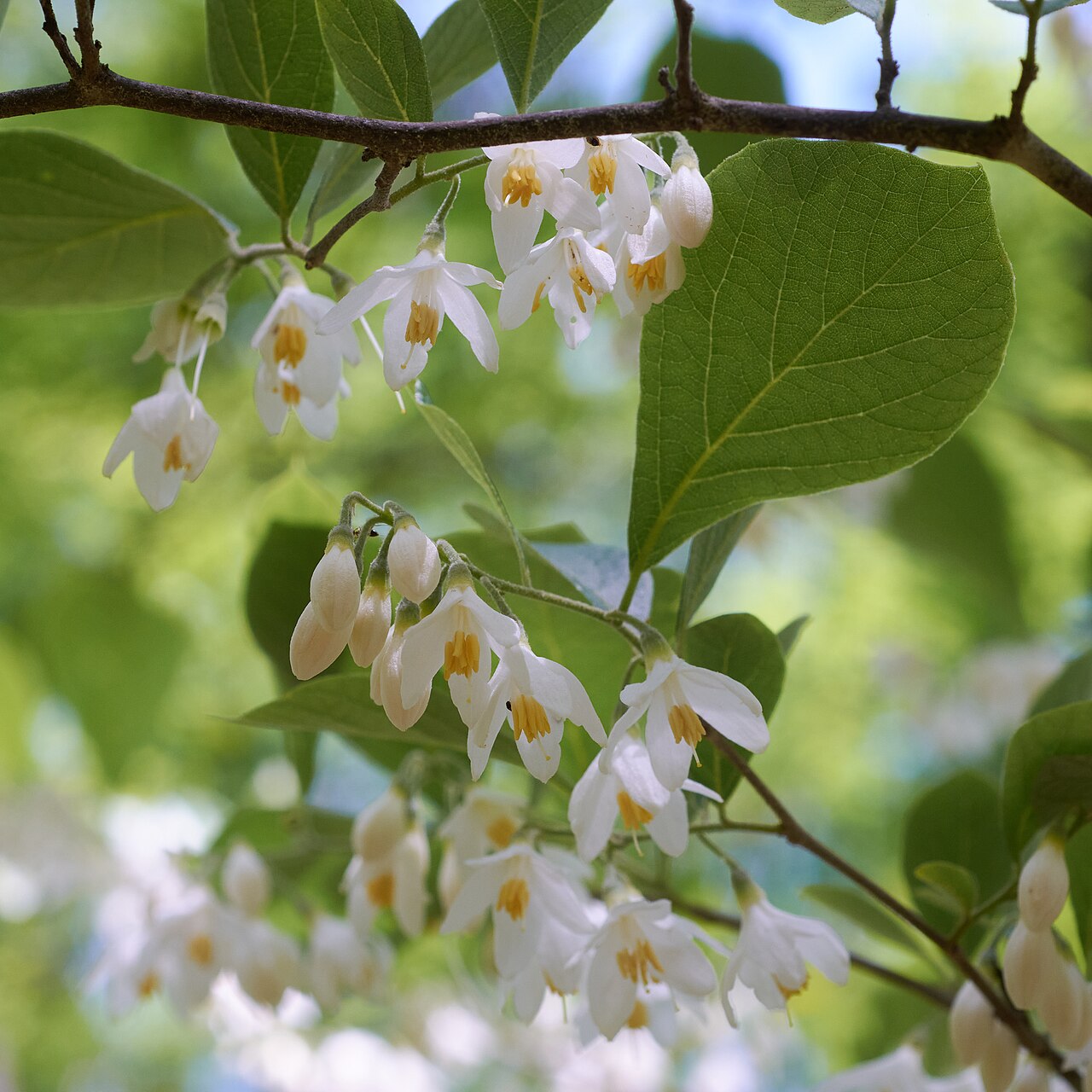
Styrax grandifolius, commonly called Bigleaf Snowbell or bigleaf storax, is a small understory tree or large shrub native to upland forests across much of the southeastern United States. It takes its name from its leaves, which are noticeably larger than those of its close relative, American Snowbell (Styrax americanus), and from the drooping clusters of white, bell-shaped flowers that cover the plant in late spring.
In the wild, Bigleaf Snowbell grows as an understory tree in mesic to dry upland hardwood forests, often on rocky slopes and well-drained hillsides within the piedmont and foothill country of the Southeast. It tolerates a wide range of soil textures, from rocky clay to sandy or gravelly ground, but it strongly prefers filtered shade and has little tolerance for either standing water or hot, direct, all-day sun.
For gardeners building a layered, native woodland garden, Bigleaf Snowbell is an excellent small flowering tree for a partly shaded understory spot: it offers a strong spring flower display, attracts a wide range of pollinators including swallowtail butterflies, and provides the kind of mid-canopy structure that is often missing from residential shade gardens.
Identification
Bigleaf Snowbell is a deciduous shrub or small tree, typically reaching 10 to 20 feet tall, occasionally to the species’ reported maximum of about 20 feet (6 meters) under good conditions. It often grows multi-stemmed in the wild, with dark, streaky bark, and takes a loose, somewhat open form suited to an understory position beneath taller canopy trees.
Leaves
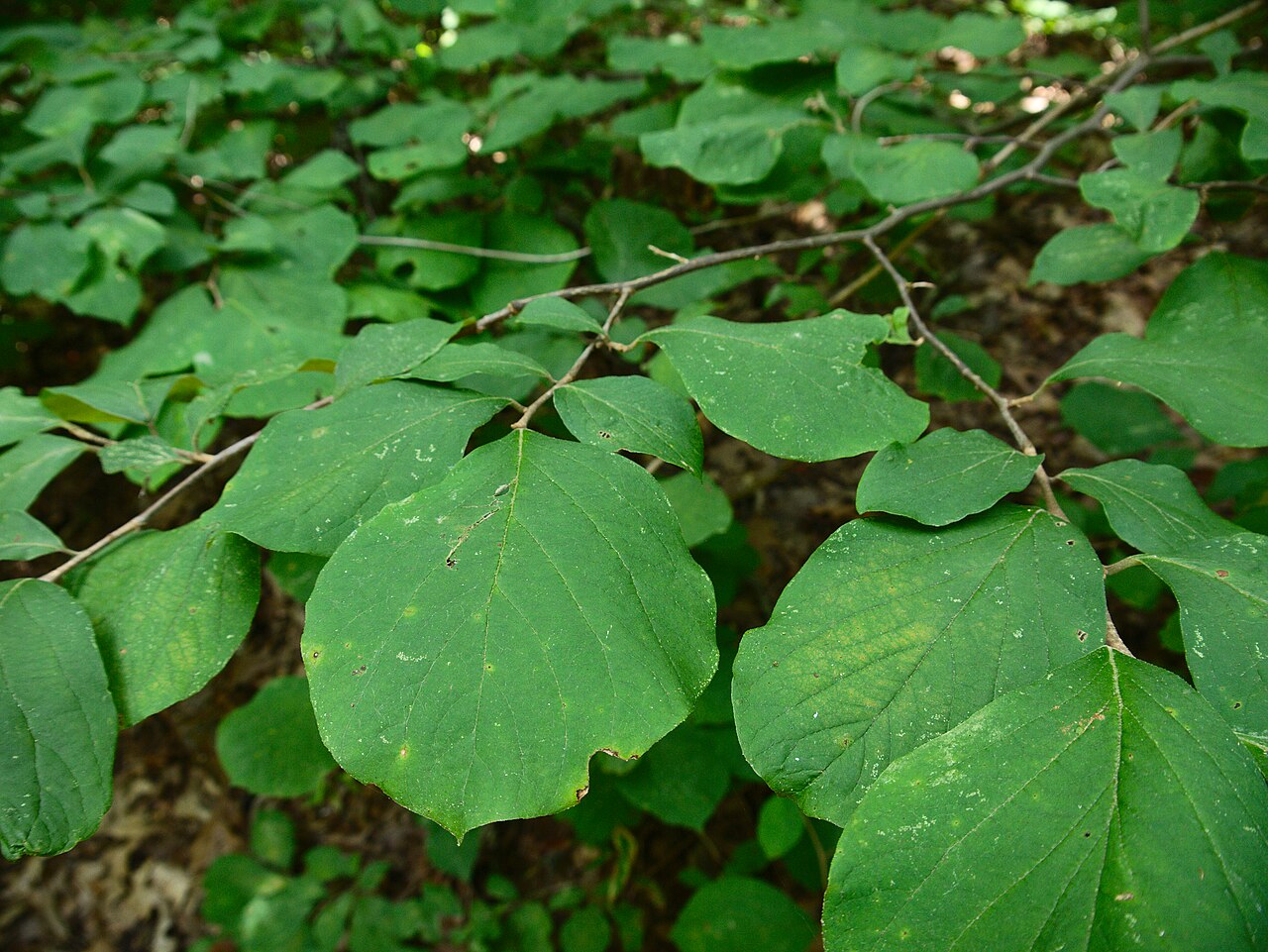
The leaves are alternate, simple, and broadly obovate to nearly round, with broadly tapered to rounded bases and short petioles about 2 to 10 millimeters long. They can reach up to about 5.5 inches long and 4 inches wide, distinctly larger than those of American Snowbell, which is the most reliable way to separate the two look-alike species in the field. The upper leaf surface is dark green, while the underside is densely covered in fine pubescence that gives it a whitish-gray cast, a useful identification trait when the two surfaces are compared side by side.
Flowers
Flowers appear in early summer in drooping racemes that can hold as many as 20 individual blossoms, a notably larger cluster than other native Styrax species produce. Each flower has 5 fused sepals and 5 white petals fused at the base and free above, forming the characteristic bell or star shape, with 10 stamens tipped in yellow to orangish anthers surrounding a partly inferior ovary. The overall effect, especially on a well-grown specimen, is of the branches draped in small white bells.
Quick Facts
| Scientific Name | Styrax grandifolius |
| Family | Styracaceae (Snowbell/Storax) |
| Plant Type | Deciduous large shrub or small tree, often multi-stemmed |
| Mature Height | 10–20 ft |
| Mature Spread | 8–12 ft |
| Growth Rate | Moderate |
| Sun Exposure | Part Shade to Shade; poor tolerance for full, direct sun |
| Water Needs | Moderate; low tolerance for saturated soil |
| Soil Type | Rocky clay, sandy or gravelly, well-drained upland soils |
| Soil pH | Acidic to neutral (roughly pH 5–7) |
| Bloom Time | Late spring to early summer |
| Flower Color | White |
| Fall Color | Yellow-green, not a standout feature |
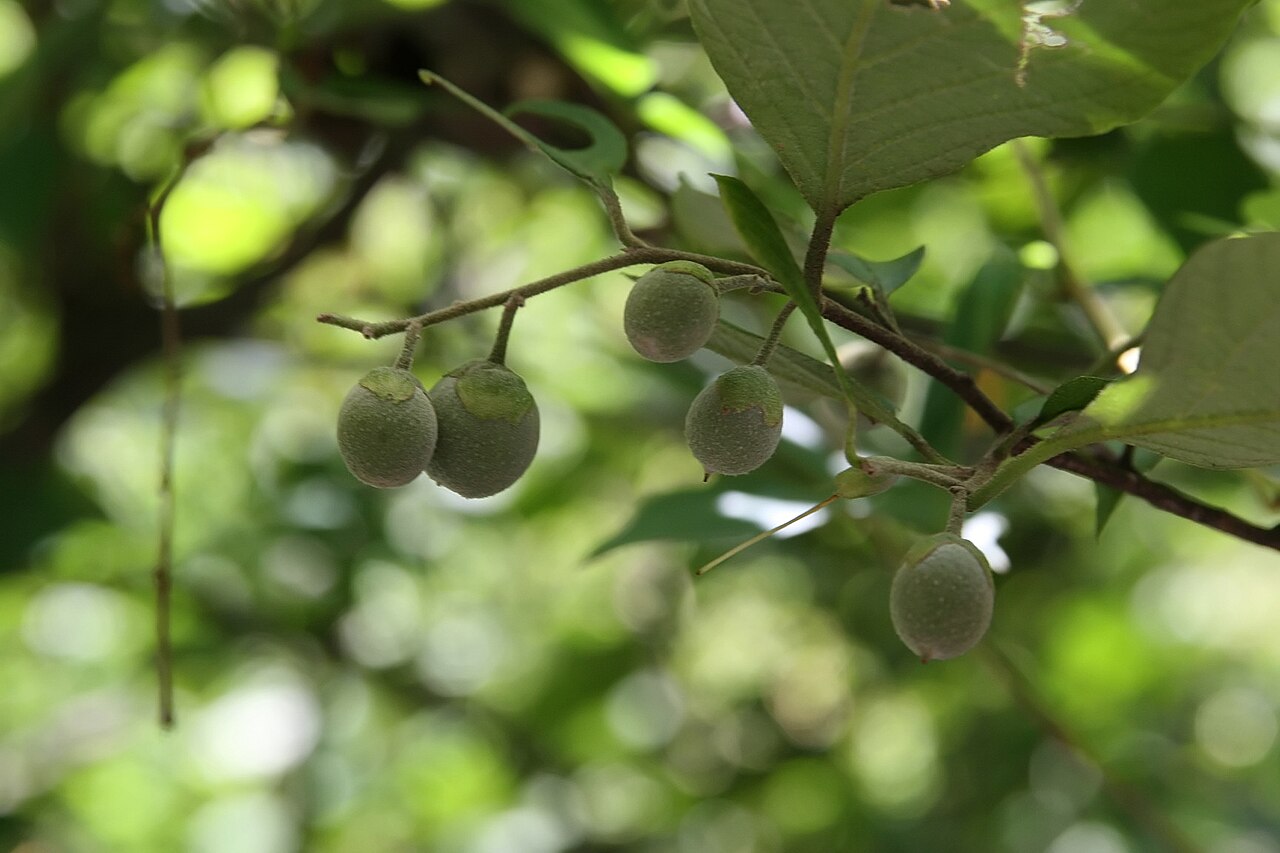
| Fruit | Small dry, gray-green drupe-like capsule |
| Deer Resistant | Moderate |
| USDA Hardiness Zones | 6–9 |
Native Range
Bigleaf Snowbell is native to the southeastern United States, with a range running from Virginia south to Florida and west through the Gulf states to east Texas and north into Missouri and Kentucky. It is most common in the piedmont and foothill country of the interior Southeast, where it grows as an understory species in mixed-mesic and upland deciduous forests, often on well-drained slopes and in the vicinity of floodplains rather than directly within them.
The species tolerates a fairly broad elevation range, from around 90 feet up to about 1,300 feet, and a range of soil conditions, but it is consistently intolerant of waterlogged ground and of full, unfiltered sun, which is why it is almost always found growing beneath a canopy of taller trees. Its conservation status varies considerably by state: it is globally secure, but it is tracked as rare or of conservation concern at the northern and western edges of its range, including a watch-list status in Virginia, and populations can be locally vulnerable to canopy-clearing logging, aggressive invasive vines such as Japanese honeysuckle and kudzu, and soil compaction from development.
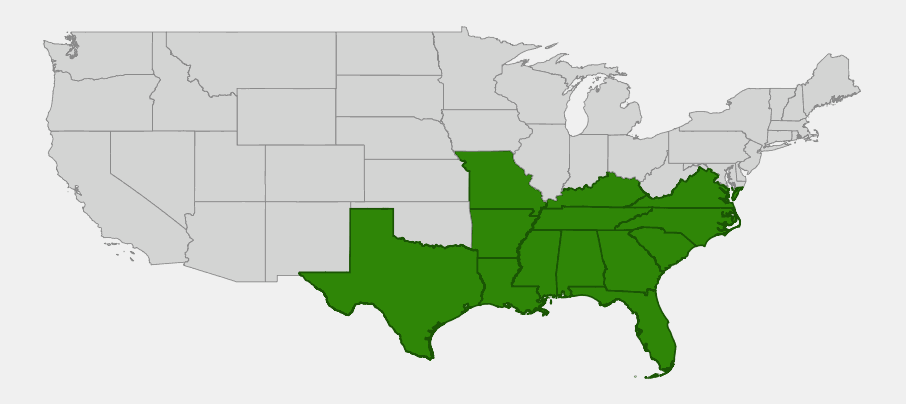
📋 Regional plant lists featuring Bigleaf Snowbell: Maryland, Virginia & West Virginia, North Carolina & South Carolina, Georgia, Alabama & Mississippi, Kentucky & Tennessee, Arkansas, Louisiana, Eastern Oklahoma & Eastern Texas, Illinois, Iowa & Missouri. This site does not currently publish a dedicated Florida regional list; see the Florida nursery directory below.
Growing & Care Guide
Bigleaf Snowbell is a well-mannered small flowering tree once you give it the dappled shade and well-drained soil it needs; it is not a plant for a sunny open lawn.
Light
Site Bigleaf Snowbell in part shade to shade, mimicking its native position beneath a hardwood canopy. It has a notably low tolerance for full, direct sun, which can scorch foliage and stress the plant, particularly in the hotter parts of its range.
Soil & Water
This species is adaptable across rocky clay, sandy, and gravelly soils and tolerates a moderately wide pH range from acidic to neutral, but it needs good drainage and will not thrive in soil that stays saturated. Provide regular water during establishment, then moderate water once the plant is settled in, keeping in mind that it grows naturally on well-drained slopes rather than in bottomland.
Planting Tips
Choose a site under or near the dripline of taller trees, where the plant will receive filtered light rather than hot afternoon sun. Because it can grow multi-stemmed in the wild, allow room for a somewhat informal, spreading form rather than training it to a single straight trunk, unless you specifically prefer the look of a clean single-trunk small tree. It handles moderate disturbance reasonably well but is sensitive to soil compaction, so keep heavy foot traffic and construction activity away from the root zone.
Pruning & Maintenance
Little pruning is required; remove dead, damaged or crossing branches as needed and let the natural open form develop. Watch for competition from aggressive non-native vines such as Japanese honeysuckle, multiflora rose, and, in the Deep South, kudzu, all of which can overtop and smother an understory shrub like this one if left unchecked.
Propagation
Bigleaf Snowbell is propagated from seed, which like many woody understory natives can be slow to germinate and may benefit from cold stratification. Softwood cuttings taken in early summer are also used by some growers, though seed remains the more commonly documented method.
Landscape Uses
- Woodland understory plantings beneath an existing shade canopy, where its natural habit and light requirements are already a match
- Native plant and pollinator gardens, paired with other Southeastern understory natives such as American Snowbell and Mountain Silverbell
- Spring flowering accent for shaded foundation beds and woodland garden edges
- Naturalized restoration plantings on rocky, well-drained upland sites within its native range
Wildlife & Ecological Value
Bigleaf Snowbell’s dense, showy spring bloom makes it a genuinely valuable nectar source in the shaded forest understory, a niche that offers less floral diversity than open, sunny habitats.
For Pollinators
The flowers attract an unusually wide range of pollinators for an understory shrub, including honeybees, bumblebees, swallowtail butterflies, syrphid flies, sphingid moths, wasps, and various solitary bees. This breadth of visitors makes it a strong choice for gardeners specifically trying to support pollinator diversity in a shaded or partly shaded native garden.
For Birds & Mammals
As with many understory shrubs, the structure Bigleaf Snowbell provides offers cover and nesting opportunities for small birds within the mid-story layer of a woodland garden, a layer that is frequently missing from both wild, logged-over forest and typical residential landscaping.
Ecosystem Role
As a characteristic understory species of Southeastern upland hardwood forests, Bigleaf Snowbell contributes to the layered forest structure that supports a much broader community of wildlife than canopy trees alone. Its sensitivity to canopy removal and soil compaction also makes it something of an indicator species: where it persists and reproduces well, the surrounding forest understory is generally in reasonably intact condition.
Cultural & Historical Uses
Bigleaf Snowbell has no significant documented history of medicinal or utilitarian use by Indigenous or early settler communities in the way that some of its showier relatives in the broader storax family do; its primary historical role has been ornamental and botanical rather than practical.
Today, Bigleaf Snowbell is grown mainly by native plant enthusiasts and botanical gardens interested in showcasing authentic Southeastern understory flora; it has appeared, for example, in arboretum plant collections in North Carolina. It remains relatively uncommon in the general nursery trade compared with its smaller relative, American Snowbell, which makes sourcing it from a dedicated native plant nursery worthwhile for gardeners who want the larger leaves and showier flower clusters it offers.
Frequently Asked Questions
How is Bigleaf Snowbell different from American Snowbell?
The most reliable difference is leaf size: Bigleaf Snowbell has distinctly larger leaves, up to about 5.5 inches long, compared with the smaller leaves of American Snowbell. Bigleaf Snowbell also tends to prefer drier, well-drained upland slopes, while American Snowbell is more often found near wetter sites.
Does Bigleaf Snowbell need full sun to bloom well?
No. It blooms well in part shade to shade and actually has poor tolerance for full, direct sun, which can scorch its foliage. Give it the dappled light of a woodland understory rather than an open, sunny bed.
Is Bigleaf Snowbell rare or endangered?
It is considered globally secure, but its conservation status varies by state; it is tracked as rare or of conservation concern in parts of its range, including a watch-list status in Virginia. Source nursery-propagated plants from a reputable native plant grower.
What pollinators does Bigleaf Snowbell attract?
Its spring flower clusters attract an unusually broad range of visitors, including honeybees, bumblebees, swallowtail butterflies, syrphid flies, sphingid moths, wasps, and solitary bees, making it a strong understory choice for pollinator-focused native gardens.
Can Bigleaf Snowbell tolerate wet soil?
No. Despite sometimes growing near floodplains, it is typically found on well-drained slopes nearby rather than directly in wet, saturated ground, and it has low tolerance for standing water.

Looking for a nursery that carries Bigleaf Snowbell?
Browse our regional nursery directories: Alabama to Arkansas, Colorado to Hawaii (includes Georgia & Florida), Kentucky to Montana (includes Kentucky, Louisiana, Mississippi & Missouri), Nebraska to Oklahoma (includes North Carolina), and Pennsylvania to Virginia (includes Tennessee, Texas & Virginia). For more pollinator ideas, see our guides to pollinator garden design basics and attracting bees with native flowers.

