Sitka Willow (Salix sitchensis)
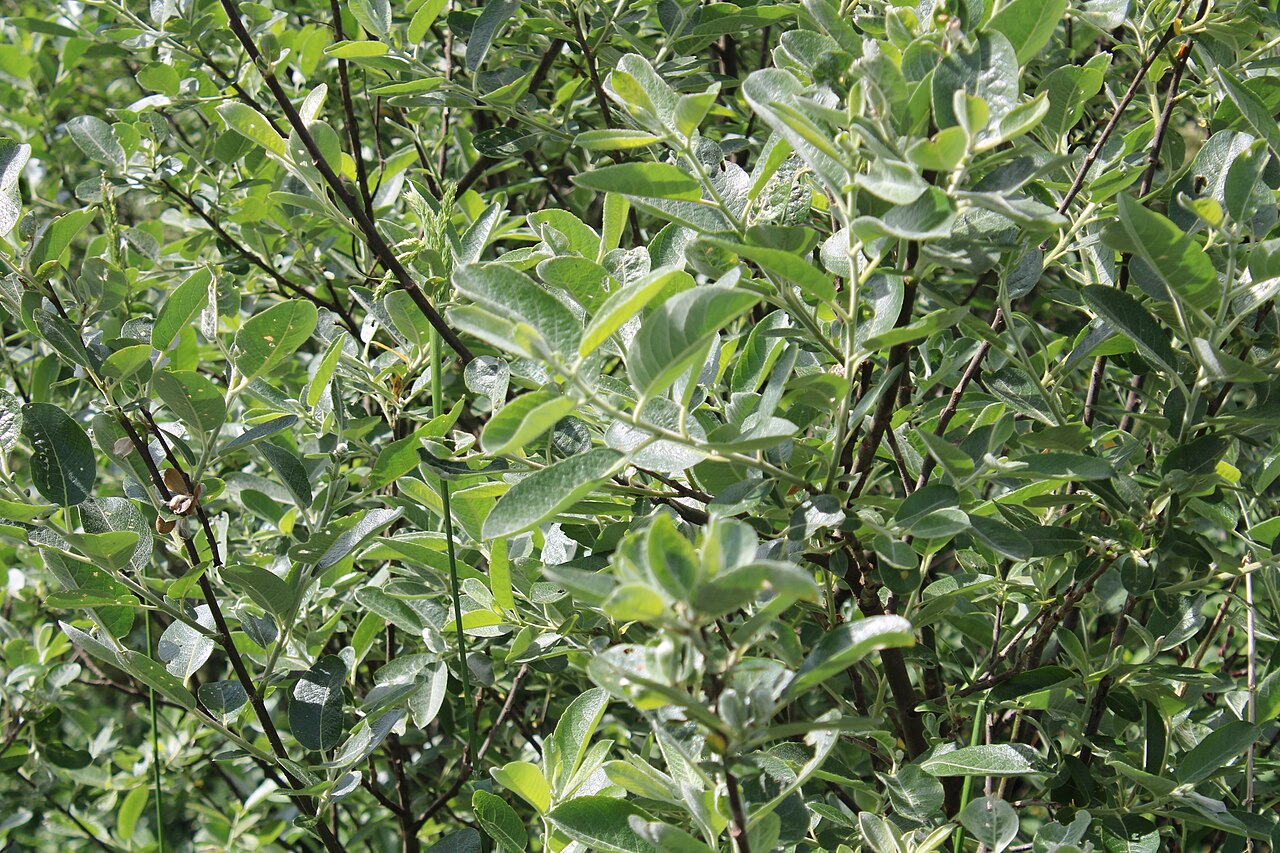
Salix sitchensis, known as Sitka Willow (also called Silky Willow or Coulter Willow), is a fast-growing, streamside shrub of the Pacific Northwest and mountain West, named for Sitka, Alaska, near the center of its range. A member of the Salicaceae (willow family), it is one of the most widespread and recognizable willows of the region, instantly identifiable by the dense, satiny sheen of silky hairs covering the underside of its leaves.
Sitka Willow typically grows as a multi-stemmed shrub or small tree, 6 to 20 feet tall, forming dense thickets along streambanks, lakeshores, and seasonally flooded ground from sea level up into subalpine meadows. Its furry, pussy-willow-like catkins open in early spring, well ahead of most other flowering plants, and its tangled root systems bind the loose gravel and sediment of the waterways it colonizes. Few native shrubs do more unglamorous, essential work holding Pacific Northwest streambanks together.
Because it tolerates wet feet, seasonal flooding, and disturbance better than almost any other native shrub, Sitka Willow is a mainstay of streambank restoration, beaver-pond habitat, and wetland gardens throughout its range. It is not a tidy, formal landscape plant, but for anyone restoring a stream corridor or building a wildlife-friendly wet area, it is hard to beat.
Identification
Sitka Willow grows as a many-stemmed shrub or occasionally a small single-trunked tree, 3 to 25 feet (1–8 m) tall, with a trunk up to about 12 inches in diameter in the largest individuals. Bark is gray and smooth on young stems, becoming slightly furrowed and scaly with age.
Bark & Stems
Twigs are slender, flexible, and reddish-brown to olive, often with a slight sheen; young growth may show fine hairs that wear off by the second year. The overall silhouette is a loose, arching, multi-stemmed thicket rather than a single clean trunk.
Leaves
Leaves are alternate, simple, 2 to 5 inches (5–13 cm) long, oblanceolate to narrowly elliptic with a pointed tip and a wedge-shaped base. The upper surface is smooth, dark green, and glossy; the underside is the species’ signature feature — densely covered in fine, silky, silvery-white hairs that lie flat and catch the light, giving the whole shrub a two-toned shimmer in the wind. Margins are entire to very finely toothed.
Flowers
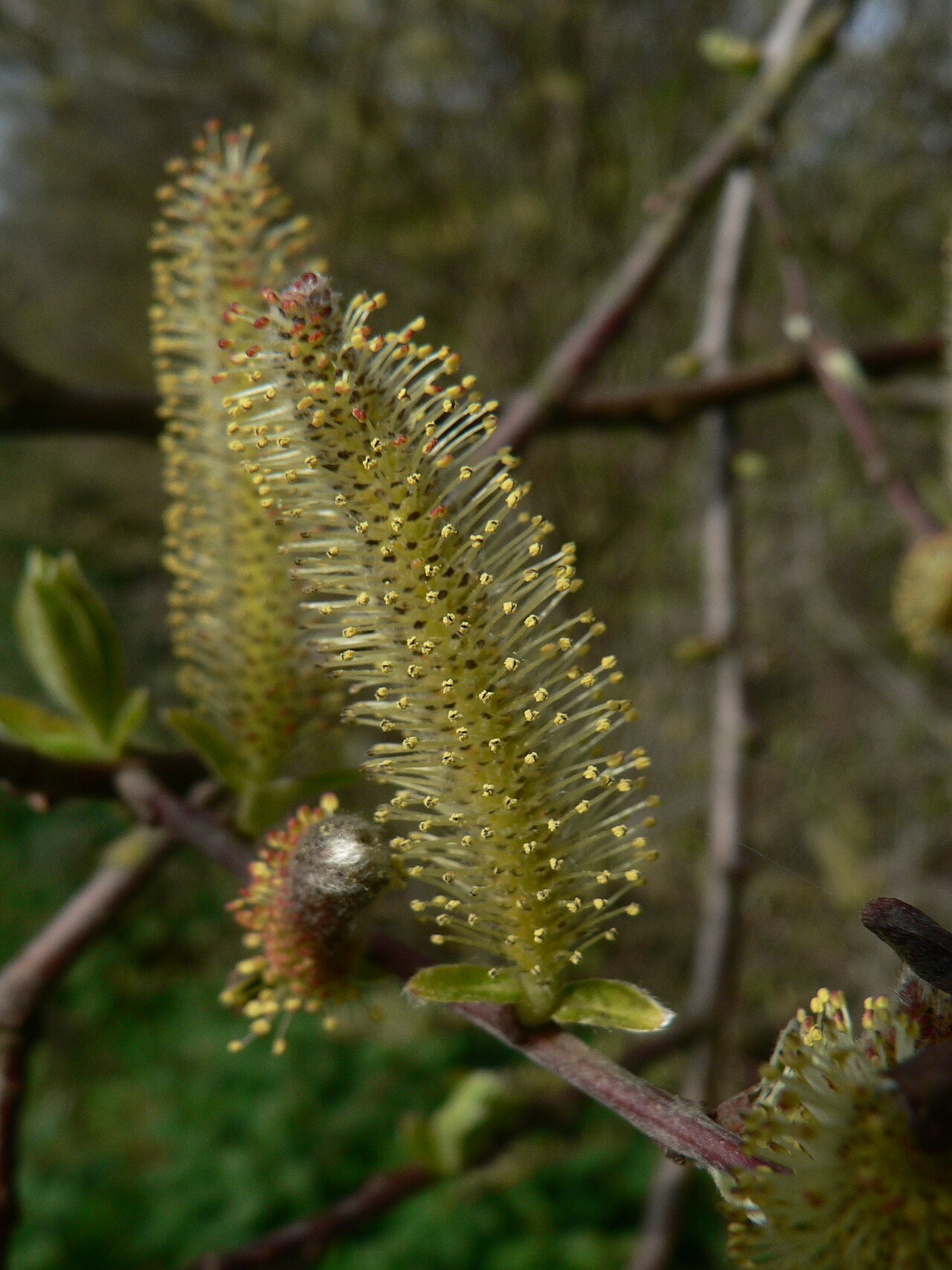
Sitka Willow is dioecious, with male and female catkins on separate plants, blooming from March to May, typically just before or as the leaves emerge. Catkins are stout, densely hairy, 1 to 2.5 inches long, pale yellow-green with the furry look typical of pussy willows. The early bloom provides some of the first substantial nectar and pollen of the season in forests and wetlands still shaking off winter.
Fruit & Seeds
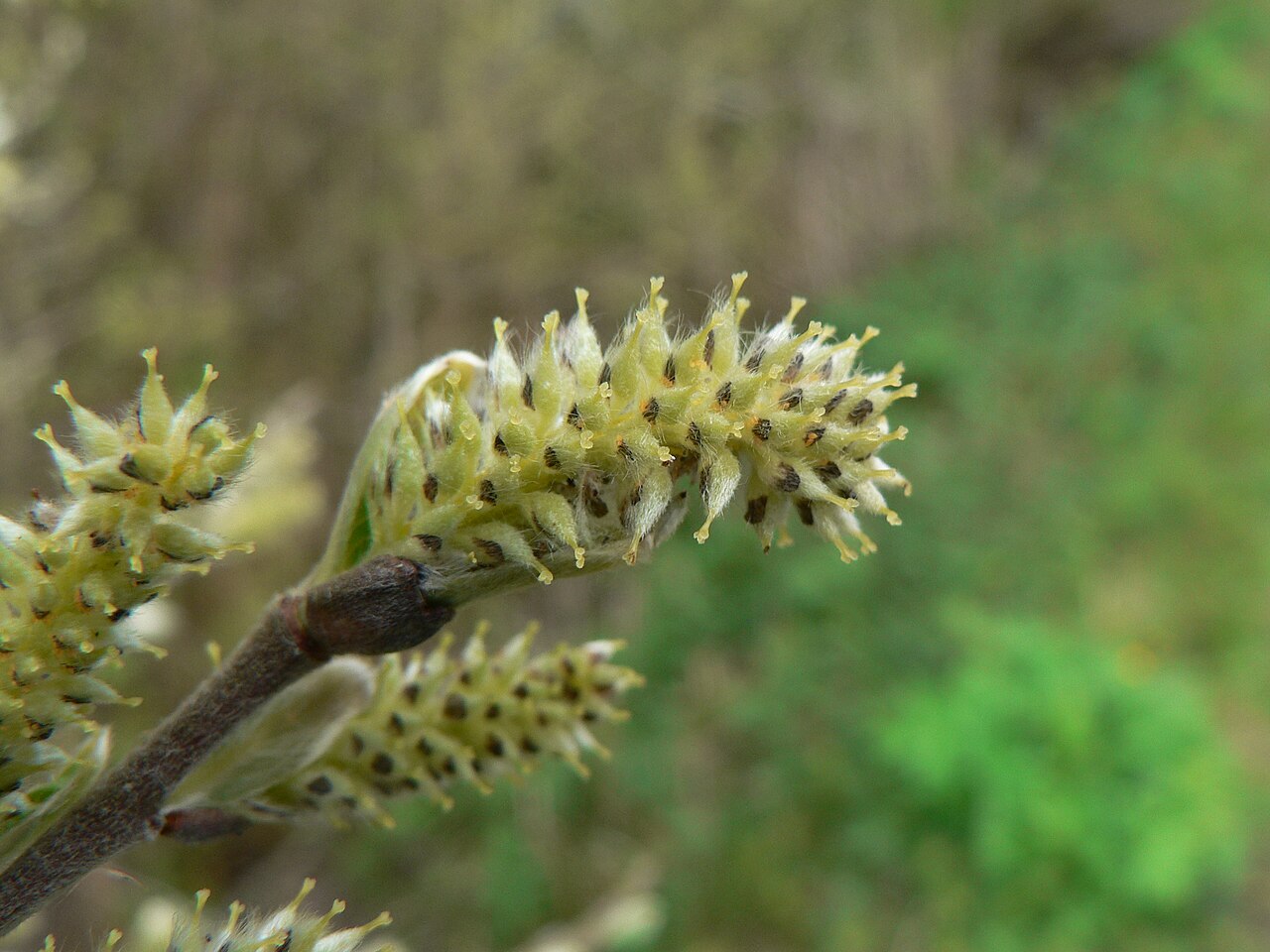
Female catkins mature into clusters of small, hairy capsules that split open to release tiny seeds, each carried on a tuft of fine cottony down, like cottonwood fluff. Seed dispersal is timed to coincide with seasonal high water, letting the fluff-borne seeds colonize fresh gravel bars and newly exposed, moist sediment left behind as floodwaters recede.
Quick Facts
| Scientific Name | Salix sitchensis |
| Family | Salicaceae (Willow) |
| Plant Type | Deciduous Shrub / Small Tree |
| Mature Height | 6–20 ft (occasionally to 25 ft) |
| Mature Spread | 8–15 ft |
| Growth Rate | Fast |
| Sun Exposure | Full Sun to Part Shade |
| Water Needs | High |
| Soil Type | Wet gravel, sand, or loam; streambank and wetland soils |
| Soil pH | 5.0–7.0 (acid to neutral) |
| Bloom Time | March – May |
| Flower Color | Pale yellow-green catkins |
| Fall Color | Pale yellow |
| Fruit | Small hairy capsules with cottony seeds |
| Deer Resistant | No (heavily browsed by deer, elk, moose) |
| USDA Hardiness Zones | 4–9 |
Native Range
Sitka Willow ranges along the Pacific coast and mountain West from the Alaska panhandle south through British Columbia, Washington, and Oregon to central California, and inland through the Cascades and Rocky Mountain foothills to Idaho and western Montana. It occurs from sea level up to subalpine elevations, making it one of the most elevation-flexible willows in its range.
It grows almost exclusively on wet, disturbed, or seasonally flooded ground: streambanks, lakeshores, pond margins, beaver-influenced wetlands, and gravel bars that flood regularly enough to exclude most trees. Common associates include red alder, black cottonwood, and other willows such as Pacific Willow and Scouler’s Willow in lowland riparian corridors, shifting to subalpine fir and mountain hemlock communities at higher elevations.
Sitka Willow is notably fire- and flood-adapted: after top-kill by fire or ice scour, it resprouts vigorously from the root crown, and it readily colonizes bare gravel and silt left behind by flooding or beaver activity, often being among the very first woody plants to establish on fresh streambank deposits.
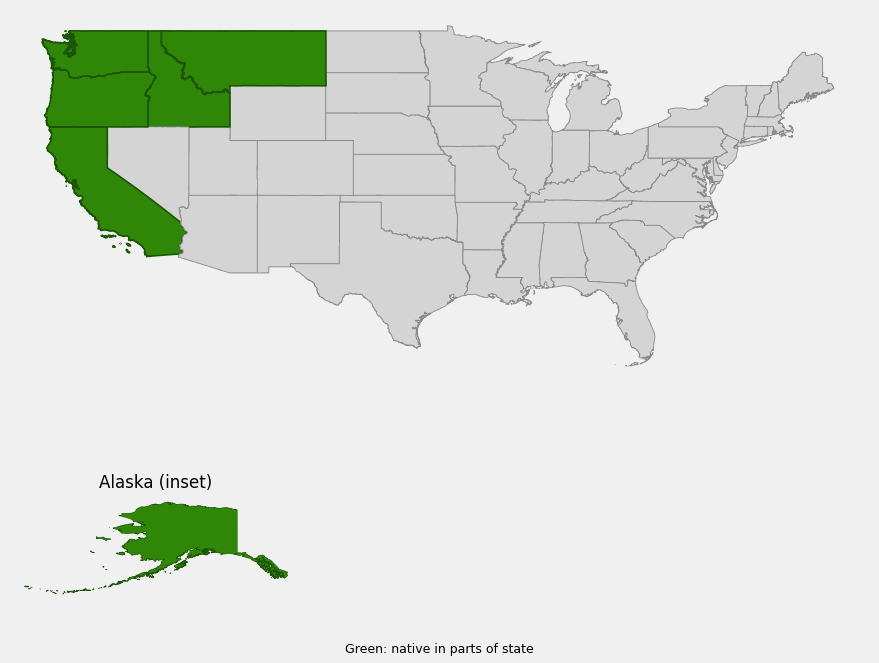
📋 Regional plant lists featuring Sitka Willow: Western Oregon & Western Washington, Alaska, California & Nevada, Idaho, Eastern Oregon & Eastern Washington, Montana & Wyoming
Growing & Care Guide
Sitka Willow is an easy, forgiving plant for wet ground — the challenge is usually finding a spot wet enough to make it happy, not keeping it alive. It is best suited to naturalistic wetland, streamside, or restoration plantings rather than a manicured yard.
Light
Grows best in full sun to light shade. Full sun produces the densest growth and best catkin display; in shadier streamside sites it grows more open and leans toward available light.
Soil & Water
Sitka Willow wants consistently wet to saturated soil and tolerates seasonal flooding, gravelly substrates, and poor drainage that would kill most other shrubs. It is not drought-tolerant and should not be planted in typical dry garden beds. Streambank, pond-edge, or low spots that collect runoff are ideal sites.
Planting Tips
Plant bare-root or container stock in fall or late winter. Like most willows, it roots readily from hardwood cuttings simply pushed into moist soil during dormancy, which makes it an inexpensive, effective choice for large-scale streambank plantings. Space plants 6 to 10 feet apart for a continuous thicket along a bank.
Pruning & Maintenance
Little maintenance is required once established. Plants can be coppiced (cut nearly to the ground) every few years to rejuvenate old growth, since they resprout vigorously — a technique restoration crews use to keep streamside thickets dense and productive. Expect browsing by deer and elk; young plantings may need temporary protection in high-browse areas.
Landscape Uses
Sitka Willow is a workhorse for wet, naturalistic sites:
- Streambank and gravel-bar stabilization
- Beaver-pond and wetland restoration
- Riparian buffer plantings to filter runoff and shade waterways
- Wildlife thicket for nesting birds and browse
- Rain garden or bioswale edges with reliably wet soil
- Early pollinator plantings near streams and ponds
Wildlife & Ecological Value
Sitka Willow is one of the most ecologically productive shrubs of Pacific Northwest and northern Rocky Mountain waterways, supporting wildlife across the full food web.
For Pollinators
Early-spring catkins, opening before most other flowering plants, are a critical nectar and pollen source for native bees emerging from winter dormancy, as well as early-season butterflies and flies. Willow leaves also host the larvae of numerous native moths and butterflies.
For Birds
Dense streamside thickets provide essential nesting and foraging habitat for willow flycatchers, yellow warblers, song sparrows, and other riparian-dependent songbirds, many of which have declined as streambank vegetation has been cleared elsewhere.
For Mammals
Deer, elk, and moose browse the twigs and foliage heavily, especially in winter when other forage is scarce, and beavers are major consumers of both bark and stems, often using Sitka Willow to build dams and lodges as well as to eat.
Ecosystem Role
As an early colonizer of fresh gravel and flood-scoured ground, Sitka Willow stabilizes streambanks, slows erosion, and filters sediment and nutrients from runoff before it reaches open water. Its presence often marks the first stage of riparian forest succession, setting the stage for cottonwoods, alders, and conifers to establish behind it.
Cultural & Historical Uses
Indigenous peoples throughout the Pacific Northwest and interior West used Sitka Willow’s flexible young stems for basketry, fish traps, and cordage, and the straight shoots that resprout after cutting or burning were especially prized for this purpose. The inner bark was dried and ground into a powder that was sometimes added to cereal preparations, according to USDA ethnobotanical records.
Like other willows, Sitka Willow bark contains salicin, a compound chemically related to aspirin, though its use in traditional medicine was secondary to its practical value as a fiber and construction material. Today its primary significance is ecological and restorative rather than cultural: it is a standard, inexpensive component of stream and wetland restoration projects throughout its range, prized for how readily it establishes from cuttings.
No significant toxicity is associated with Sitka Willow, and it carries no legal protection — it remains common and widespread throughout its native range.
Frequently Asked Questions
How is Sitka Willow different from Scouler’s Willow?
Sitka Willow has leaves with flat, silky, silvery hairs pressed tightly to the underside, giving a satiny shine, while Scouler’s Willow has duller, more rusty-brown woolly hairs beneath the leaf. Sitka Willow also tends to stay in wetter, lower streamside sites.
Can Sitka Willow grow in a regular garden bed?
Only if the soil stays consistently moist to wet; it is not suited to typical well-drained garden beds and will struggle or die in dry conditions. It belongs in rain gardens, pond edges, or streamside plantings.
How fast does Sitka Willow grow?
Very fast — often 2 to 4 feet per year in good conditions, which is part of why it is so effective for quick streambank stabilization projects.
Do beavers eat Sitka Willow?
Yes, beavers are major consumers of both the bark and stems, and often use cut willow stems in dam and lodge construction, which in turn helps spread willow cuttings to new sites.
Is Sitka Willow good for erosion control?
Yes — its dense, fibrous root system and tolerance of flooding and gravel substrates make it one of the most effective native shrubs for stabilizing eroding streambanks and gravel bars.
For more on designing a planting around reliably wet soil, see our rain garden plant selection guide. Streamside willow thickets like this one are also valuable components of native hedgerows for birds, and the early catkins fit well into a broader pollinator garden design. For general willow pruning and propagation tips that apply across the genus, see how to care for pussy willow.

Looking for a nursery that carries Sitka Willow?
Browse our native plant nursery directory: Oregon · Washington · California · Alaska · Idaho · Montana