Managing Common Evening Primrose Reseeding in a Small Bed
Last updated: November 5, 2026
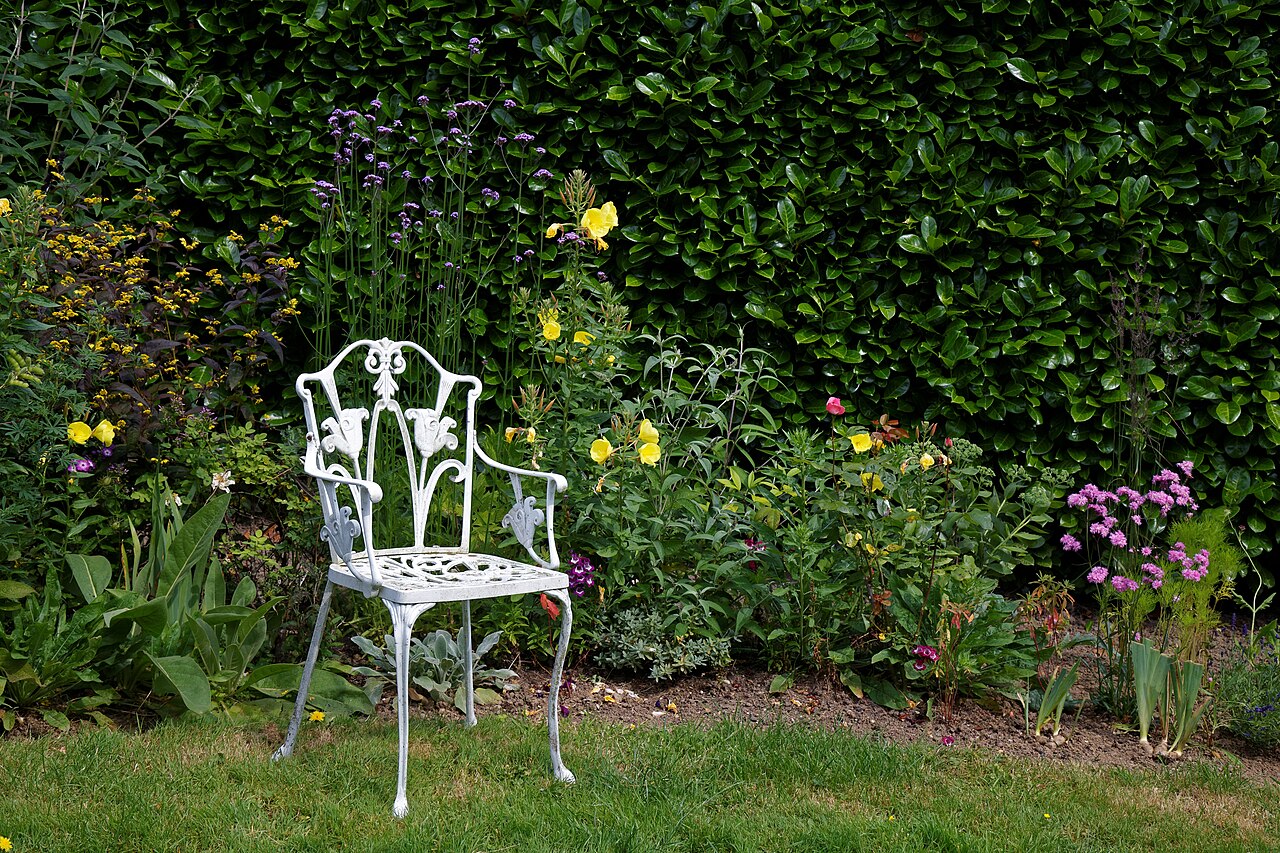
Common evening primrose is easy to love in its first flowering summer. Then the seedlings arrive, dozens of them, in the path, between your perennials, and in every gap of bare soil.
In a meadow that’s fine. In a small bed, a few plants are charming and fifty are a problem.
The good news is that evening primrose reseeding is predictable. Once you know when the seed ripens, where it lands and what makes it sprout, you can keep exactly as many plants as you want with a few minutes of work each season.
The Short Answer
Common evening primrose (Oenothera biennis) is a biennial that keeps itself going by seed. To manage it in a small bed:
- Choose your number of flowering plants per year, plus a few rosettes to follow them.
- Cut back most seed stalks before the lower capsules split, and leave one or two for birds.
- Keep soil covered. Seeds only sprout near the surface, so mulch and dense planting cut the flush.
- Avoid digging in the bed, which brings buried seed up to sprout.
- Pull extra seedlings while they’re small rosettes.
How Evening Primrose Reseeds
Each plant flowers in its second summer, sets seed and dies. The species survives by leaving behind a lot of seed.
Ohio State’s weed guide reports that it is common to find about 100 capsules on a plant and over 100 seeds in each capsule. Even a single plant can carpet a small bed.
Flowering and seed-setting overlap. Flowers open near the tip of the stem while capsules ripen below them. Ohio State notes that the stalk keeps growing through the season, so there is a constant succession of flowers until about September.
Evening Primrose Seed at a Glance
| Seed per plant | Often about 100 capsules with more than 100 seeds each (Ohio State). |
| When ripe | When the capsule begins to split, usually around October (USDA). Seed collection runs August to November (Lady Bird Johnson Wildflower Center). |
| How it falls | Capsules split from the tip down and release seed gradually. Most lands near the parent. |
| Germination depth | Not deeper than about 5 mm, roughly 1/4 inch (Ontario weed guide). |
| Seed life in soil | Decades. In a long-term burial study some seed still germinated after 80 years. |
That last row is the one to remember. You can’t “use up” the seed bank in a season or two, so the goal is managing new seed and new seedlings, not removing every trace.
Step 1: Decide How Many Plants You Want
Start with a number, not a fight. Because each plant lives two years, a stable planting needs two generations: rosettes in their first year and flowering plants in their second.
Our profile suggests spacing evening primrose 12 to 18 inches apart. In a bed a few feet across, that might mean two or three flowering plants and two or three rosettes waiting to replace them.
Pick the spots too. NC State Extension describes plants maturing at 5 to 7 feet tall and about 3 feet wide, so the back of the bed or the north side keeps them from shading shorter plants.
Step 2: Cut Seed Stalks Before They Split
This is the step that makes the biggest difference. Our profile notes that you can prevent spreading by deadheading flowers before the seed matures.
Pinching individual spent flowers on a 5-foot spike gets tedious, though. A simpler approach works for most small beds:
- Enjoy the bloom through midsummer while the lowest capsules are still green.
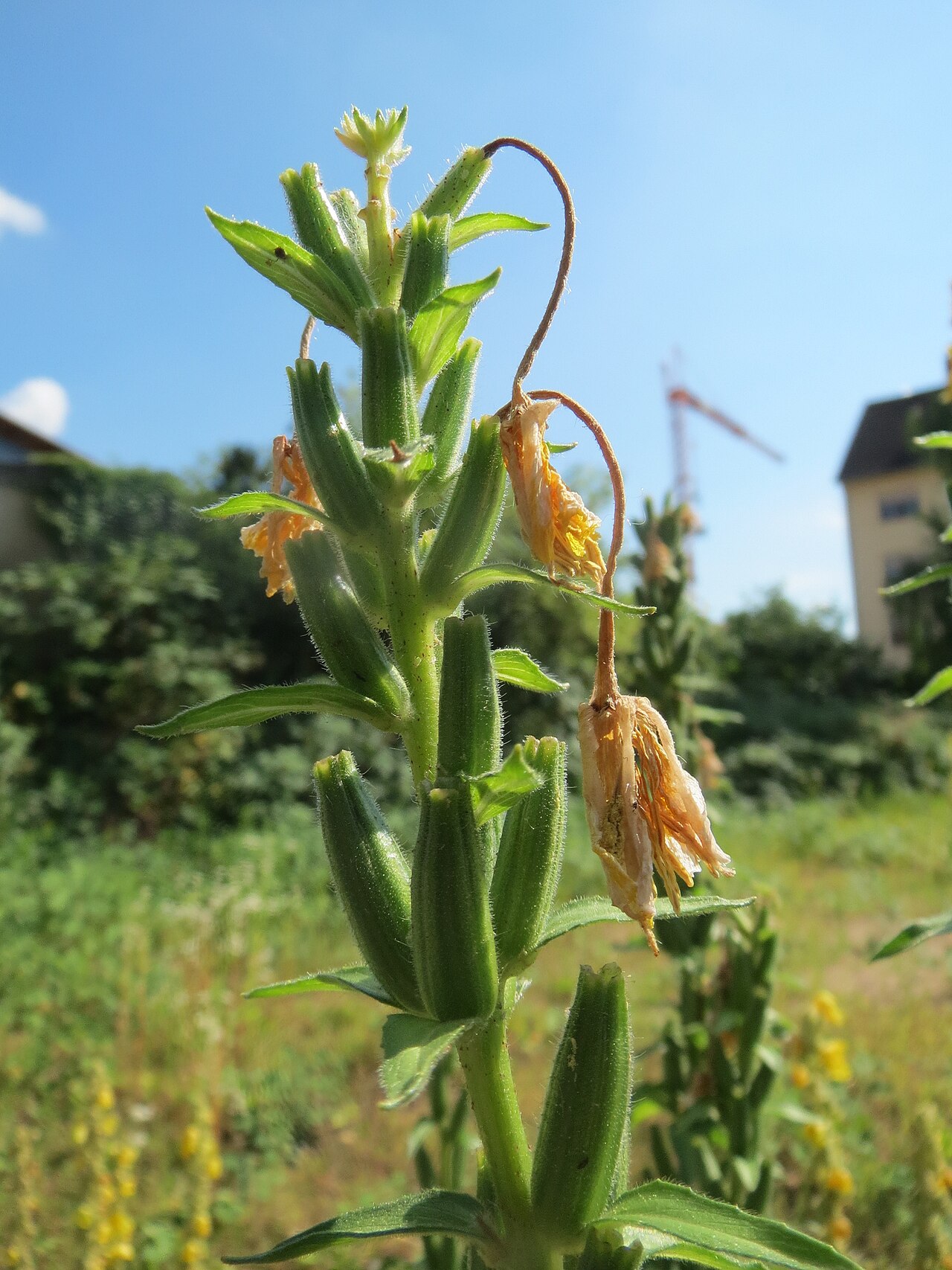
- Watch the lowest capsules. When they start to turn tan and stiffen, the seed inside is getting close.
- Cut the stalk to the ground before those capsules split open at the tip.
Cutting a second-year plant doesn’t shorten its life. It was going to die after seeding anyway.
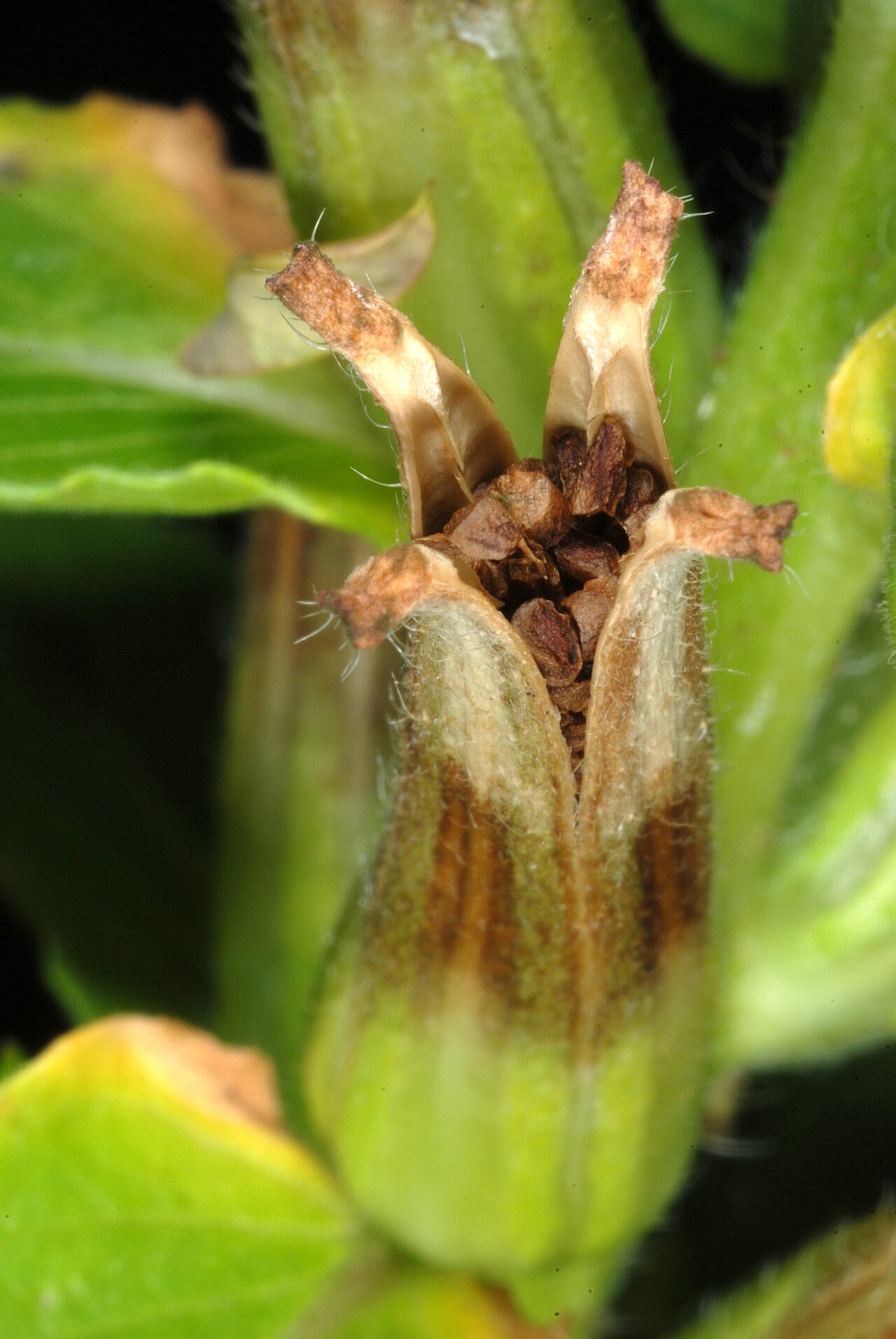
Bag the cut stalks before you carry them across the garden. Seed shakes loose easily from capsules that have started to open.
Step 3: Leave a Few Stalks for Birds
Cutting every stalk solves the seedling problem, but it also removes one of the plant’s best features. Birds such as American goldfinches, mourning doves and dark-eyed juncos eat the seed.
A good compromise is to leave one or two stalks standing, ideally where fallen seed lands on mulch or in a corner where a few volunteers don’t matter. The Weed Technology species review notes the dry stems often persist into winter, so those stalks keep feeding birds for months.
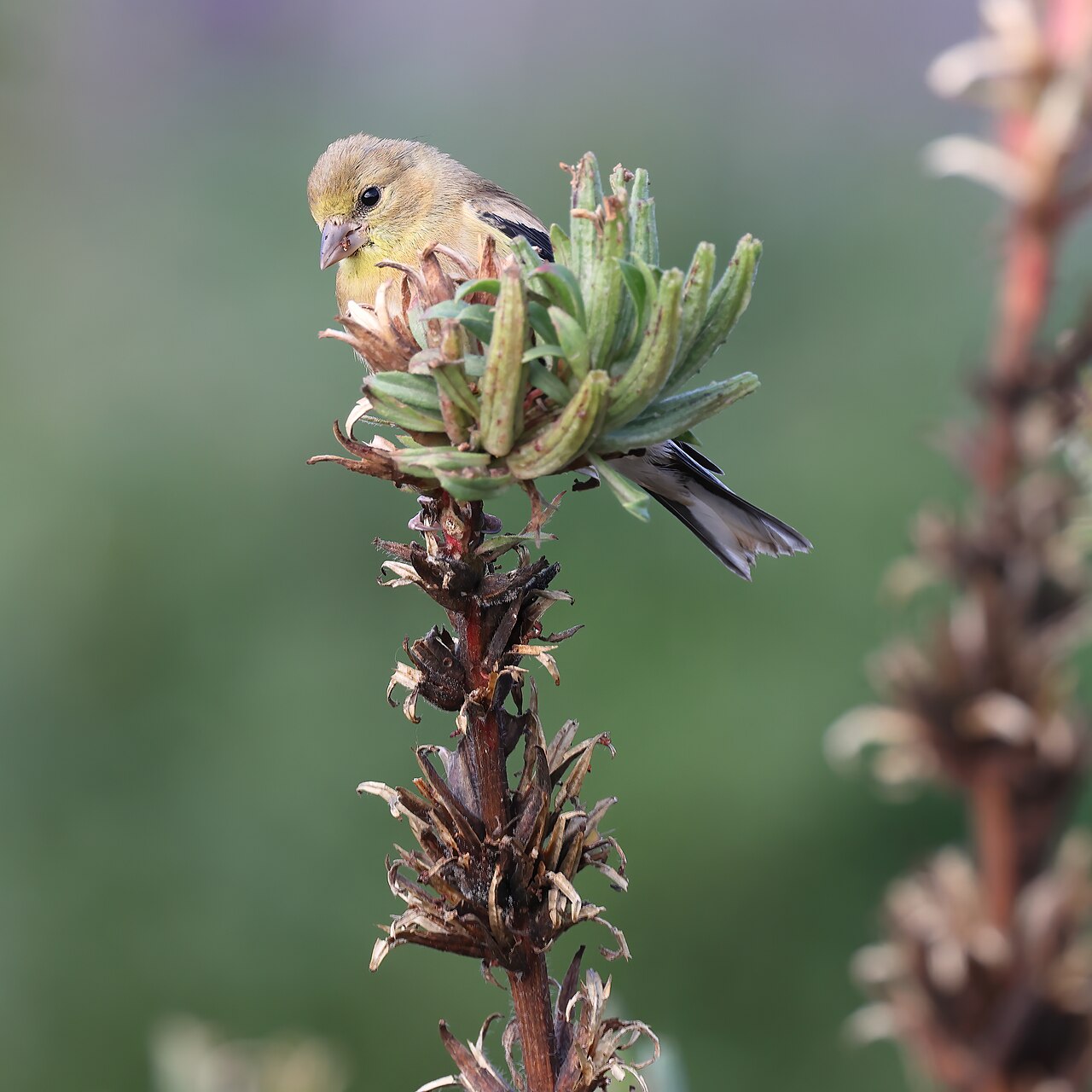
Birds eat a share of the seed, but not all of it, so expect some seedlings below any stalk you leave. For more ideas on feeding birds through the season, see attracting songbirds with native plants.
Step 4: Collect Seed on Purpose
If you want new plants in a specific spot, harvest the seed rather than letting it fall.
The USDA plant guide notes that the seed is ripe when the capsule begins to split, usually in October. Snip a stalk at that point, hold it head-down in a paper bag, and shake. Spread the seed to dry before storing it.
Sow it exactly where you want plants, then pull anything that comes up elsewhere. The USDA guide suggests mixing the tiny seed with a little sand so it spreads evenly. Our evening primrose seed guide covers sowing details, and sowing native seeds in fall explains fall timing.
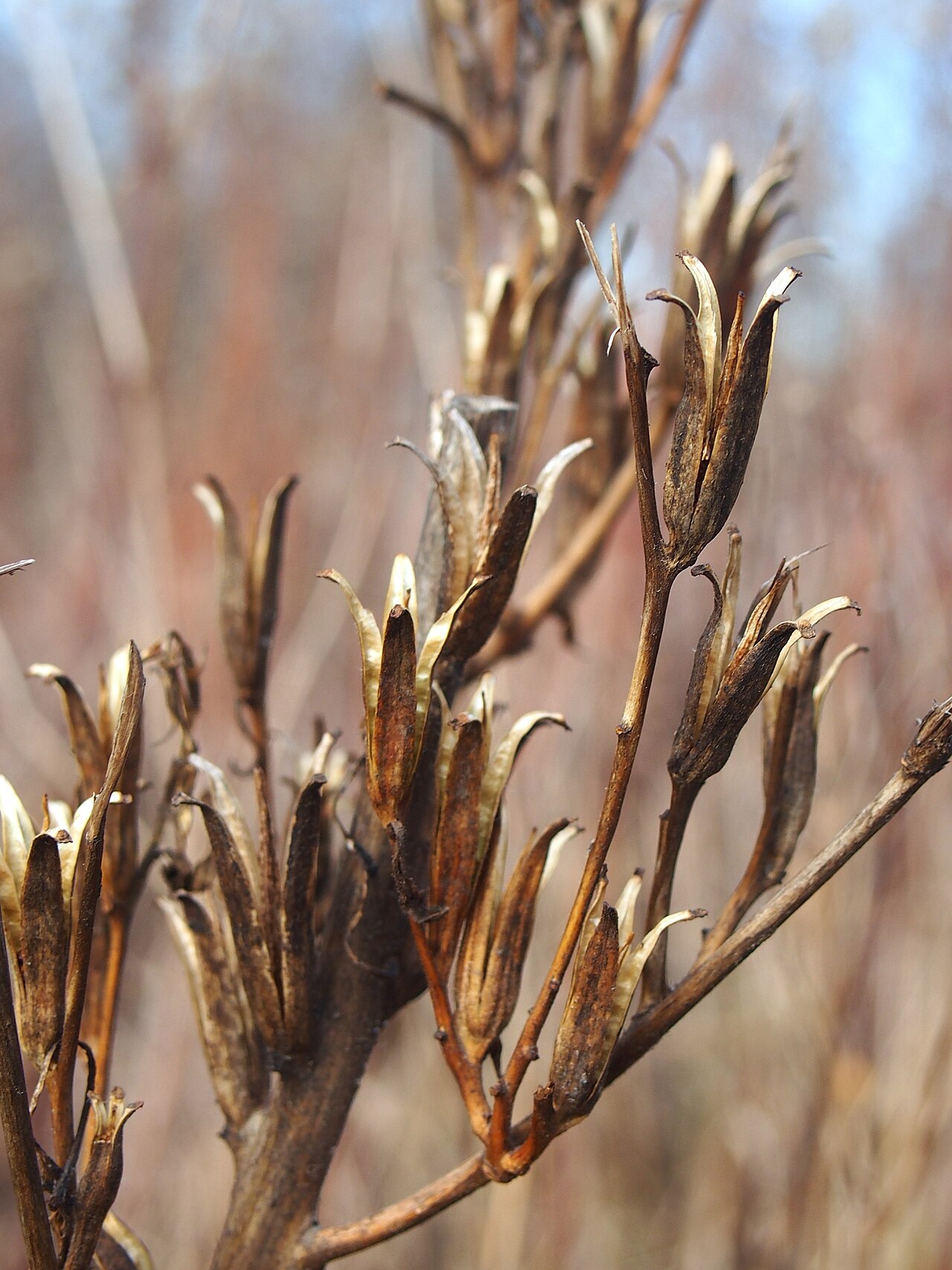
Step 5: Keep the Soil Covered and Undisturbed
Evening primrose is a plant of disturbed ground. The Lady Bird Johnson Wildflower Center observes that it does well in newly established landscapes but doesn’t persist, while its seed remains and germinates when soil is disturbed.
Use that to your advantage in a small bed:
- Mulch bare soil. Seeds don’t germinate when buried deeper than about a quarter inch, so a layer of shredded leaves or fine wood mulch shades out much of the flush. See our mulching techniques for native gardens.
- Skip tilling and deep cultivating. Turning the soil brings long-lived buried seed back up to the surface.
- Fill gaps with perennials. Our profile lists wild bergamot and little bluestem among its common companions. Clumps of wild bergamot and little bluestem hold ground that would otherwise be open for seedlings.
Greiner and Köhl’s review of evening primrose cultivation notes that, despite its size, the plant is not very competitive. A full, layered bed naturally keeps it in check.
Step 6: Thin Seedlings While They’re Small
Even with good stalk management, some seedlings will appear. Ohio State advises removing unwanted plants while they’re still in the rosette stage.
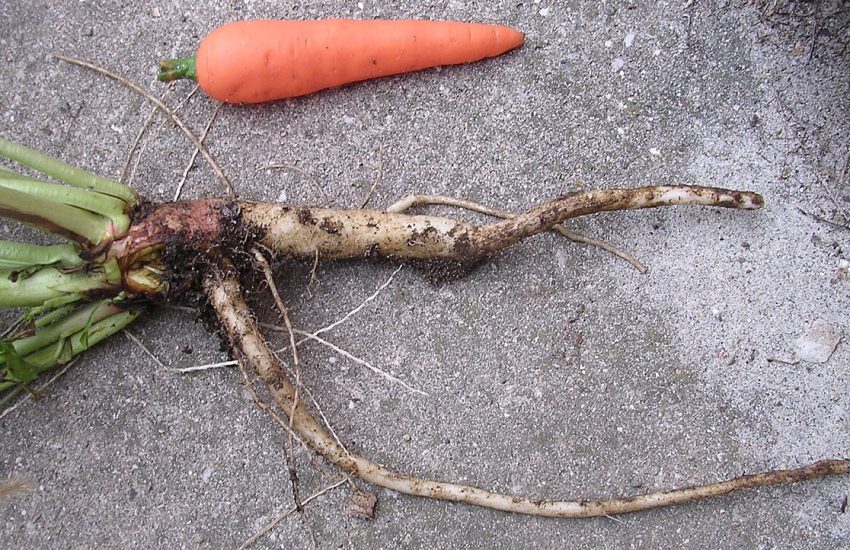
Young seedlings pull out easily before the taproot thickens. Larger rosettes have a deep, fleshy taproot that tends to snap, so loosen the soil with a hand fork first and lift the whole root.
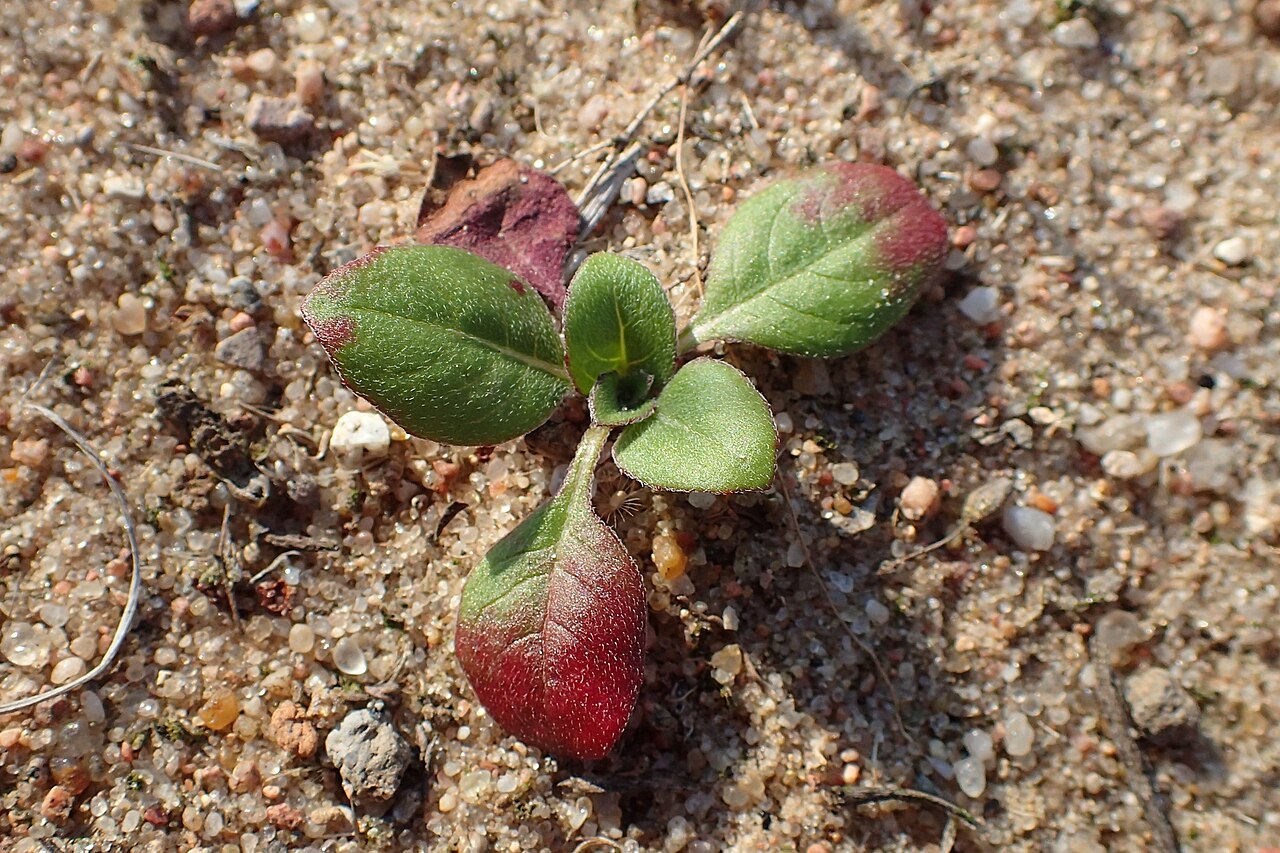
Before you thin, make sure you know what you’re pulling. Our guide on how to recognize evening primrose seedlings shows the seed leaves, the pale-midribbed rosette and the common look-alikes.
Keep the best-placed seedlings as your next generation, then remove the rest. They won’t flower until next year. If that surprises you, see evening primrose rosette but no flowers.
Quick Reference
| Too many seedlings every spring | Cut most stalks before the capsules split. Mulch bare soil. |
| Seedlings concentrated in one corner | That’s where a stalk stood. Move bird stalks to a mulched or out-of-the-way spot. |
| Seedlings after you dug or replanted | Buried seed brought to the surface. Mulch freshly worked soil. |
| Flowers some years, none others | Only one generation is present. Keep a few rosettes each year. |
| Plants disappeared entirely | The bed filled in or every stalk was cut. Leave one stalk or sow saved seed. |
How Strict Should You Be?
That depends on the bed.
Formal or very small beds: cut every stalk before seed ripens and sow saved seed only where you want it. You get full control.
Mixed native borders: leave one bird stalk, mulch, and spend ten minutes thinning seedlings each spring and fall. This keeps a steady two-generation population.
Edges of meadows and wild corners: let it reseed freely. Evening primrose is a native pioneer and tends to fade as perennials and grasses close in. It’s an ideal plant for a pollinator planting with room to roam.
A Season-by-Season Plan
- Spring: identify overwintered rosettes. Keep the ones in the right spots and pull extras. Top up mulch on bare soil.
- Early summer: second-year plants bolt. Remove any that came up in the wrong place before they flower.
- Midsummer to late summer: enjoy the evening flowers. As the lowest capsules turn tan, cut and bag all but your chosen bird stalks.
- Fall: collect seed if you want it. Thin the late flush of seedlings to final spacing.
- Winter: leave bird stalks standing. Cut them in late winter, bagging the tops to catch remaining seed.
📋 More on this plant: read the full Evening Primrose (Oenothera biennis) profile, or see it in our native plant lists for North Dakota, South Dakota & Western Minnesota and Nebraska, Kansas & Eastern Colorado.
Frequently Asked Questions
Does evening primrose spread by roots?
No. It grows from a single taproot and spreads by seed. Controlling seed and seedlings controls the plant.
When should I cut evening primrose seed heads?
Cut them when the lowest capsules start to turn tan but before they split at the tip. Seed is usually ripe and dropping by around October.
Will deadheading make evening primrose live longer?
Not reliably. It’s a biennial that normally dies after its flowering year. Deadheading mainly prevents seed, not death.
How long will seedlings keep coming up after I stop it seeding?
Possibly for years. The seed survives for decades in soil, so new seedlings may appear whenever soil is disturbed. Mulch and undisturbed soil reduce them sharply.
Is it OK to let some seed fall?
Yes. Evening primrose is native over much of North America, and the seed feeds birds. In a small bed, just decide how many seedlings you’ll keep and thin the rest early.
Sources
- Ohio State University Weed Guide, Common Evening-primrose: capsule and seed counts, flowering succession, rosette-stage removal.
- Steckel, L. E. et al. (2019), Common evening-primrose (Oenothera biennis L.), Weed Technology: capsule splitting, dispersal near the parent, seed longevity in the Beal burial study, persistent winter stems and seed-eating birds.
- USDA NRCS Plant Guide, Common Evening-Primrose: seed ripeness, sowing with sand and self-sowing.
- Ontario Ministry of Agriculture, Food and Agribusiness, Yellow evening-primrose: maximum germination depth.
- Lady Bird Johnson Wildflower Center, Oenothera biennis: persistence, germination after disturbance and seed collection months.
- NC State Extension Plant Toolbox, Oenothera biennis: mature size and self-seeding.
- Greiner, S. and Köhl, K. (2014), Growing evening primroses (Oenothera), Frontiers in Plant Science: low competitiveness in field plots.