Pruning Spicebush Near a Walkway: A Selective-Cut Guide
Last updated: November 5, 2026
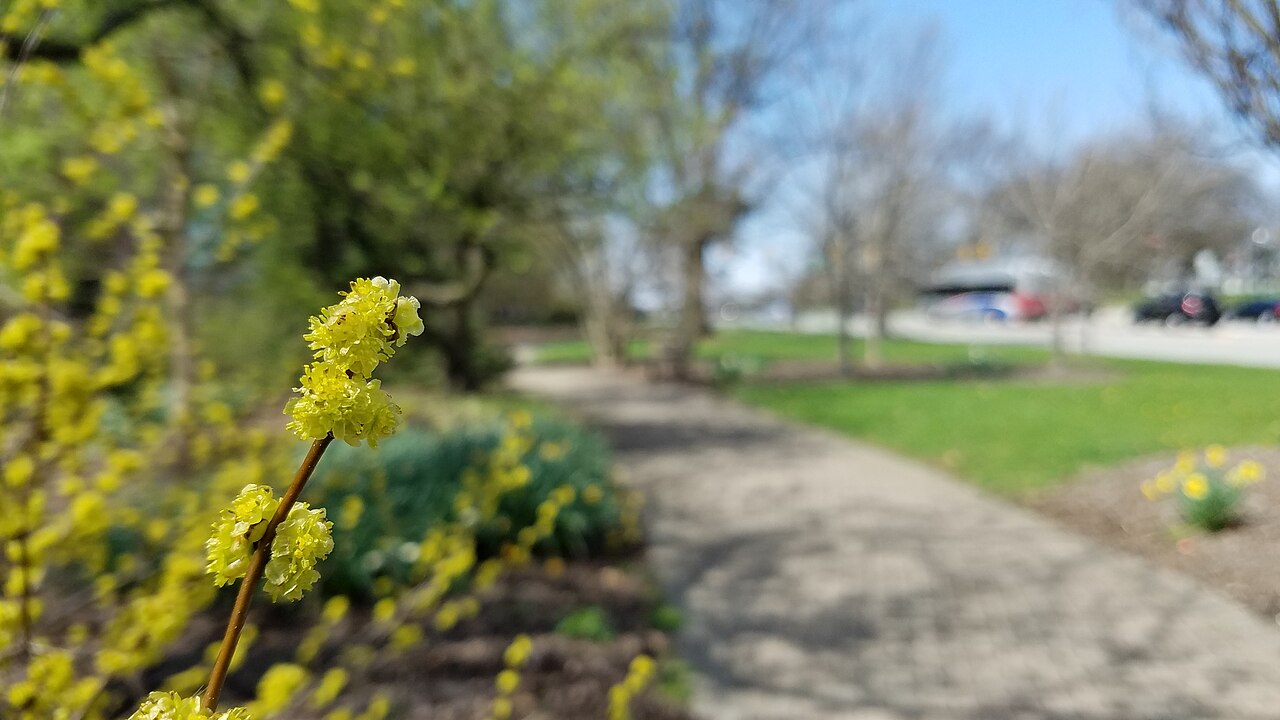
A spicebush beside a path is a lovely thing. You get the early yellow flowers up close, and the leaves and twigs give off a spicy scent when you brush past.
The trouble starts a few years in. Spicebush is a loose, multi-stemmed shrub, and its slender branches arch outward. Before long they’re slapping people in the face and dripping rain onto the walk.
The fix is not a hedge trimmer. This guide shows how to make a few selective cuts that open the path, keep the shrub’s natural shape, and protect next spring’s flowers.
The Short Answer
- Prune right after flowering in spring. Spicebush blooms on last year's wood, so winter cuts remove flowers.
- Use thinning cuts, not shearing. Remove whole stems that lean over the path at ground level, or cut branches back to a side branch.
- Take no more than about a third of the shrub in one year.
- Cut path-side root sprouts at ground level as they appear.
- Check for caterpillars, cocoons, and nests before cutting.
- Skip pruning from mid-August through leaf fall, except for broken or dead wood.
How Spicebush Grows, and Why It Matters for Your Cuts
Spicebush flowers in early spring on bare twigs. The USDA plant guide describes the flowers as appearing in clusters on the nodes of last year’s growth.
That makes it a classic spring-flowering shrub. Rutgers Cooperative Extension lists spicebush (Lindera) among the shrubs to prune after they flower. Prune before flowering and you cut off the flower buds formed the previous year.
The plant also grows from the ground up. It’s multi-stemmed and, according to the USDA plant guide, spreads by root sprouts into clumps and thickets. NC State Extension puts its typical size at 6 to 12 feet tall and wide, and notes it grows broader and less dense in heavy shade.
Put those facts together and the strategy is clear. Remove whole stems rather than trimming tips, time the work for just after bloom, and manage the sprouts that creep toward the path.
When to Make Which Cuts
| Right after bloom (spring) | Main window for selective pruning. The Morton Arboretum suggests the two to three weeks after spring flowering ends. |
| Early summer | Light follow-up only. Spring-flowering shrubs begin setting next year's buds in early summer. |
| Midsummer | Safety cuts only, such as a branch blocking the path. Check for caterpillars first. |
| Mid-August through leaf fall | Avoid pruning. Rutgers warns late cuts can push growth that won't harden off before winter. |
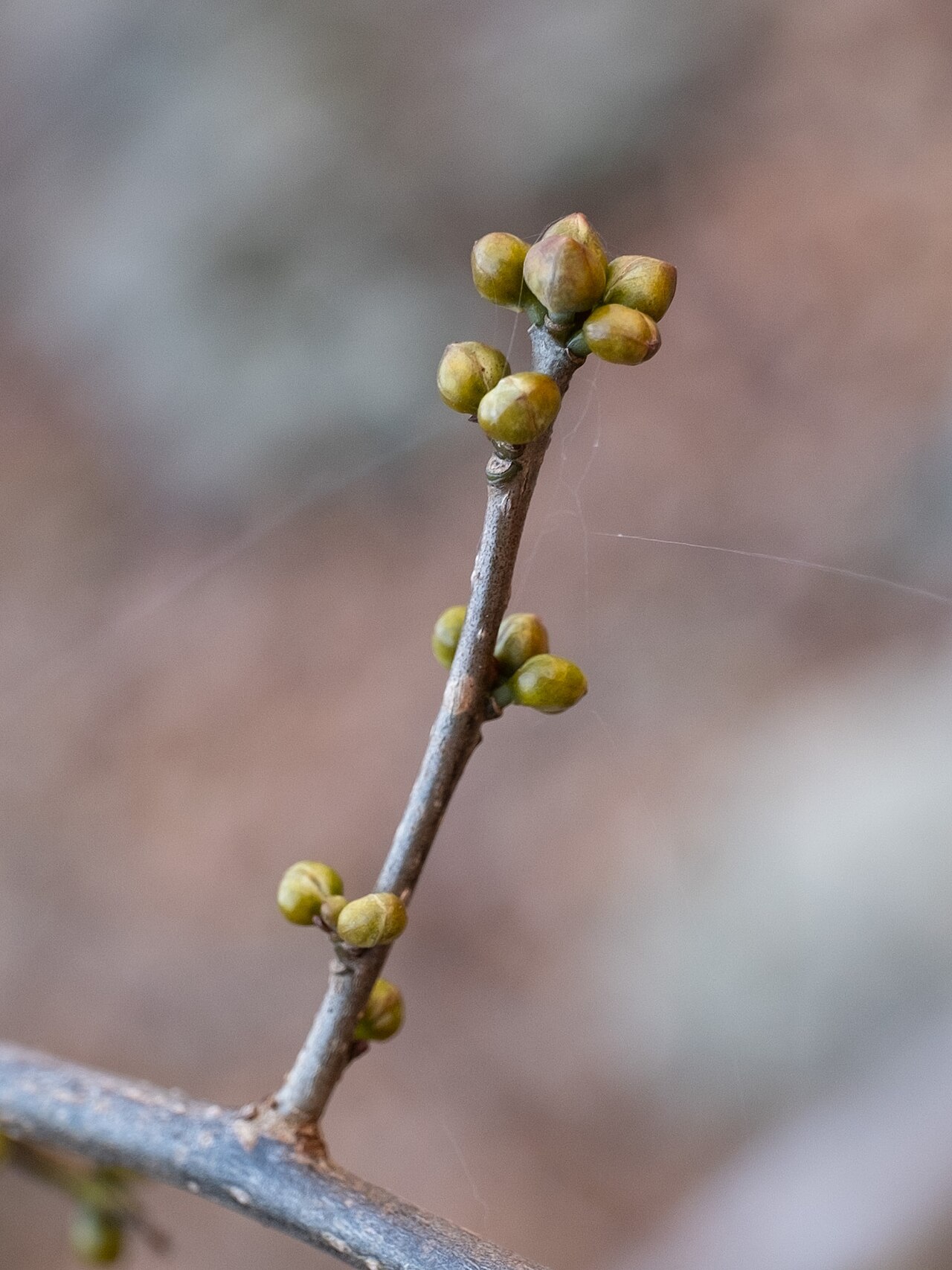
| Winter | Remove dead, broken, or crossing wood only. Flower buds are already on the twigs. |
Step 1: Decide How Much Room the Path Needs
Before you pick up pruners, walk the path and decide what clearance you actually need. A narrow garden path for one person needs less than a front walk used by visitors with bags, strollers, or umbrellas.
Note the problem branches. Are they leaning in at head height, sprawling at knee height, or both? Tie a strip of flagging tape on each one that crosses into the space you want clear.
Look at the whole shrub, too. If almost every stem is in the walkway, pruning alone won’t fix it long term. See the section below on whether to move the plant.
Step 2: Time the Work for Just After Bloom
The best window is the few weeks after the yellow flowers fade and before the leaves are fully expanded. You can see the branch structure clearly, and you’ve already enjoyed the flowers.
The Morton Arboretum notes that spring-flowering shrubs produce new flower buds in early summer after flowering ends. Pruning promptly gives the plant the rest of the season to grow new shoots that will carry next year’s flowers.
If a branch is a real hazard at another time of year, remove it then. Safety comes first. Just save the bigger shaping work for spring.
Step 3: Check for Caterpillars, Cocoons, and Nests
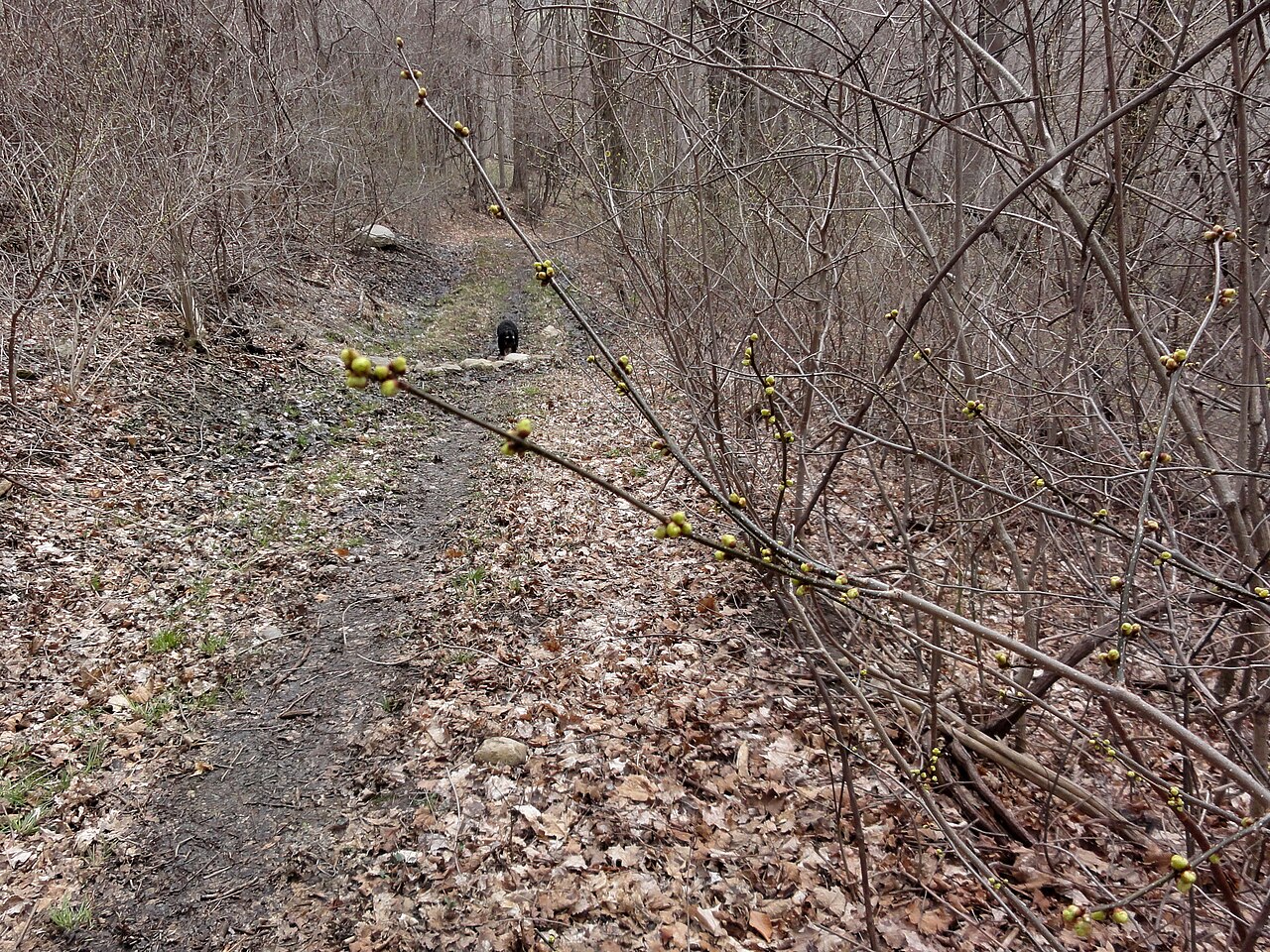
Spicebush is a host plant for the spicebush swallowtail and the promethea moth. Wikipedia notes swallowtail caterpillars hide in leaves they fold with silk, and promethea cocoons hang from twigs through winter, looking like dead leaves.
Before you cut a branch, look it over. If you find a folded leaf with a caterpillar, or a dangling leaf-wrapped cocoon in winter, leave that branch for now, or cut the twig and tie it securely onto another branch nearby.
Shrubs beside paths often hold songbird nests in spring and summer. If you find an active nest, wait until the young have fledged before cutting nearby.
Step 4: Remove Dead, Damaged, and Crossing Wood First
Start with the easy cuts. Rutgers calls them the four D’s: dead, diseased, damaged, and “double-crossed” branches that rub on each other. These can be removed at any time of year.
Cut back to healthy wood, just outside the swollen collar where the branch joins a larger stem. The Morton Arboretum advises against flush cuts and stubs, and against pruning paint or sealant.
If a stem is dying back for no obvious reason, look it over carefully before you prune. Our guide to spicebush leaves turning yellow in summer covers stem problems worth checking, including laurel wilt in the Southeast.
Removing this wood alone often clears more of the path than you’d expect.
Step 5: Take Out Whole Stems That Lean Over the Path
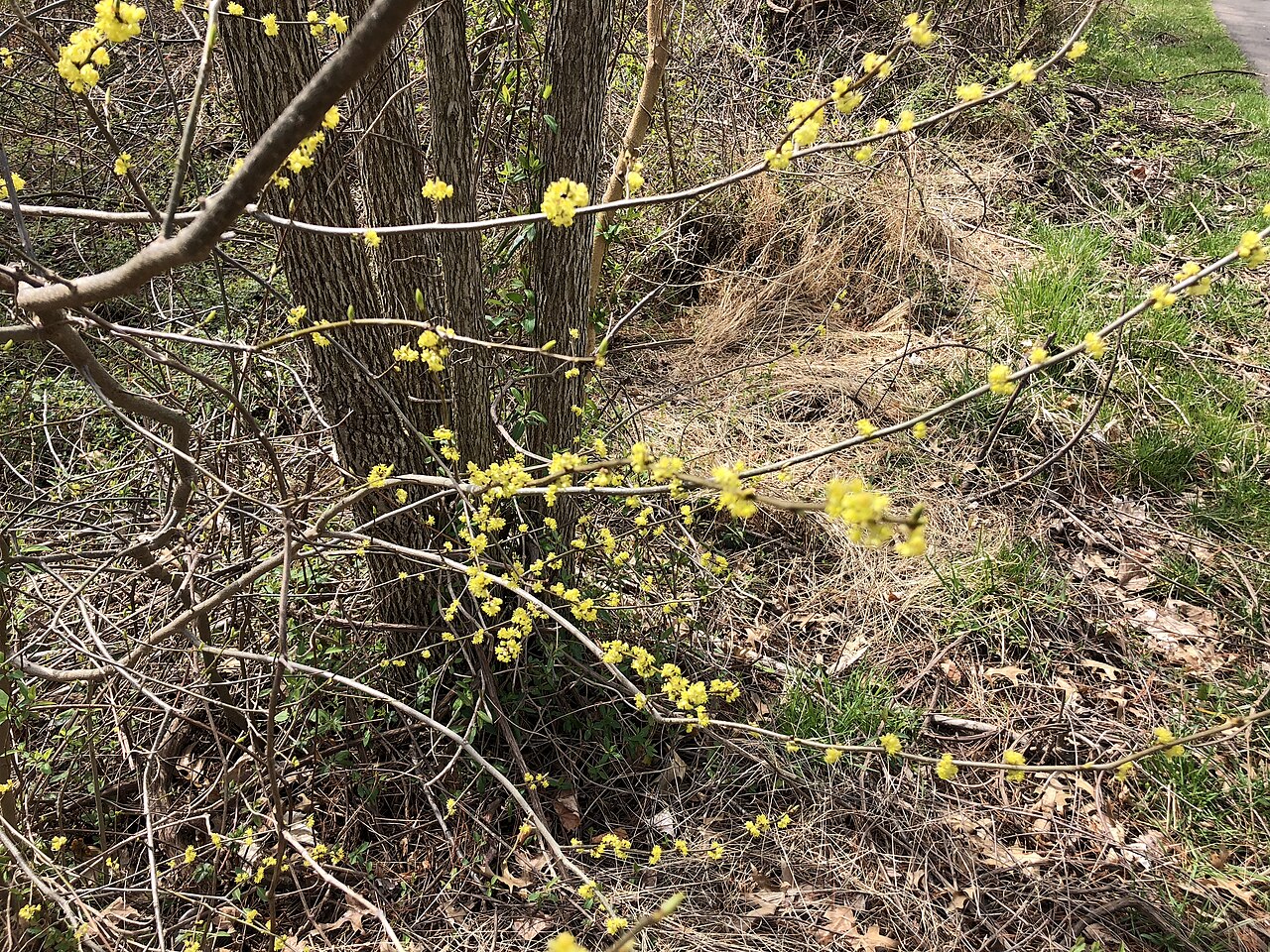
This is the heart of a selective cut. Follow each flagged branch back to where it starts. If it’s part of a main stem that leans into the path, consider removing that entire stem at ground level.
Rutgers calls this a thinning cut: removing a limb back to where it originates. It opens the shrub to light and air and reduces its size without changing its natural form.
Choose the oldest, thickest, most outward-leaning stems first. The Morton Arboretum notes that removing the oldest stems also tends to remove the tallest ones, lowering the shrub naturally.
Use loppers for thinner stems and a pruning saw for thicker ones. Cut as close to the ground as you can without scraping the bark of neighboring stems.
Step 6: Shorten Remaining Path-Side Branches to a Side Branch
Some branches you’ll want to keep, but shorter. For these, follow the branch back from the tip to a side branch or bud that points away from the path, or upward. Cut just above it.
The Morton Arboretum calls this heading back: cutting a branch to a bud or side shoot, which then becomes the next growing point. Rutgers advises cutting about a quarter inch above the bud, sloping away from it.
Avoid cutting all the branches to the same line along the path. That creates a sheared edge, and both Rutgers and Morton warn that shearing ruins a shrub’s natural form and encourages dense outer growth.
For general cut technique on other shrubs, see our guide to how to prune trees and shrubs.
Step 7: Deal With Root Sprouts at the Path Edge
Because spicebush spreads by root sprouts, new stems can pop up right at the edge of the path, or even through gravel or mulch on it.
Cut unwanted sprouts at ground level or slightly below, as early as you notice them. Rutgers includes suckers at the base of the plant among the first things to remove when pruning shrubs.
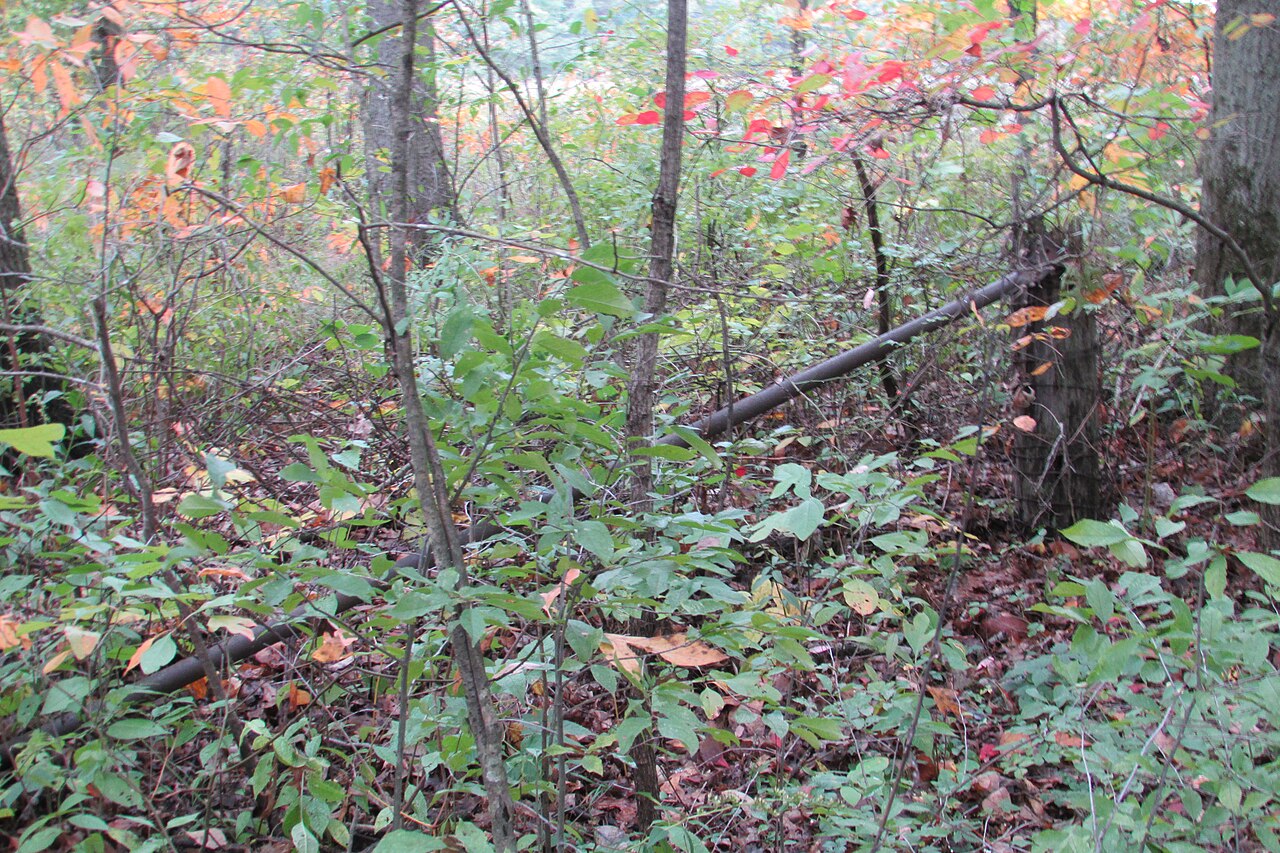
On the side away from the path, you can let some sprouts grow. They’ll become replacement stems as you remove older ones in future years, keeping the shrub young and full.
Step 8: Step Back and Stop at One-Third
Walk the path again and look at the shrub from a few angles. It should look like a natural spicebush that happens to stand back from the walk, not one that’s been chopped.
Rutgers’ “one-third rule” is a good ceiling: remove about a third of the oldest wood at ground level in a season. Our profile also cautions that heavy pruning can reduce flowering and fruiting.
If the path still isn’t clear, plan to finish next spring. The Morton Arboretum describes renewal pruning as removing a few of the oldest stems each year over three or four years.
Quick Reference: Problem and Cut
| Old main stem leaning over the walk | Thinning cut at ground level, right after bloom. |
| Young branch poking into the path | Head back to a side branch pointing away from the path. |
| Dead or broken branch | Remove any time, back to healthy wood. |
| Sprouts coming up at the path edge | Cut at or just below ground level as they appear. |
| Whole shrub too wide for the space | Renewal over 3–4 years, or move a young plant. |
| Branch with a folded leaf or cocoon | Leave it for now, or relocate the cocoon. |
| Hedge-like shearing in the past | Stop shearing. Thin out the dense outer twigs over a few years. |
Should You Move It Instead?
If the shrub was planted right at the edge of the path, it will keep pushing into the walk no matter how well you prune. At 6 to 12 feet wide at maturity, spicebush needs room.
For a small, young plant, moving it back from the path while it’s dormant can be the better long-term answer. Be realistic, though. The USDA plant guide calls spicebush difficult to transplant, and Wikipedia notes its extensive root system doesn’t handle moving well.
For an established shrub, it’s usually better to manage it with annual selective cuts, or to plant a new spicebush in a better spot and let the old one go. Leaving several feet between a new shrub and the path edge saves years of pruning.
Light pruning won’t stop a female spicebush from fruiting, but heavy cuts reduce flowers. If berries are part of why you grow it, our guide to spicebush flowers but no berries explains what else fruit depends on.
A Season-by-Season Pruning Plan
- Late winter: walk the path, flag branches that cross into it, and remove dead or broken wood. Look for hanging cocoons.
- Bloom: enjoy the flowers. Don’t cut yet.
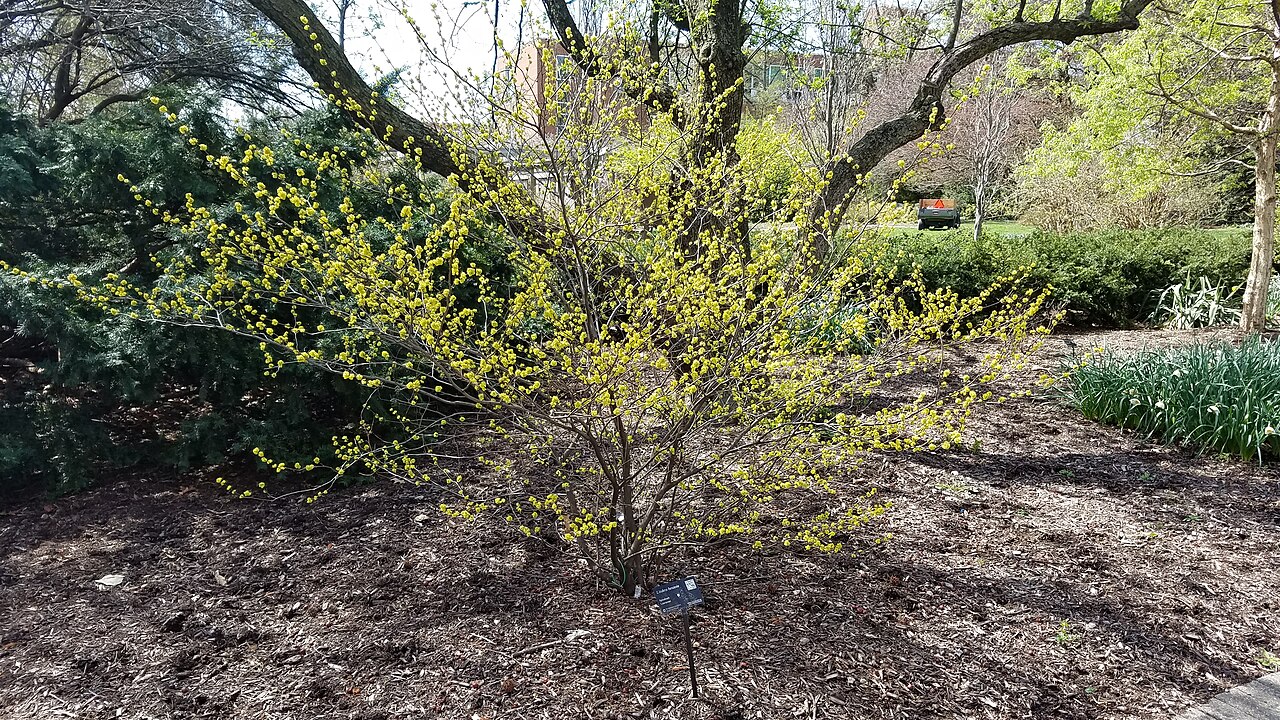
- Right after bloom: make your thinning cuts and heading cuts. Remove up to a third of the oldest stems.
- Summer: cut path-side root sprouts as they appear. Only remove branches that are a real hazard, and check for caterpillars first.
- Mid-August through fall: put the pruners away. Rake fallen leaves off the path and into the bed as mulch.
For broader care through the year, our guide to caring for native shrubs covers watering, mulching, and planting for the rest of your border.
📋 More on this plant: read the full Spicebush (Lindera benzoin) profile, or see it in our native plant lists for New York, Pennsylvania & Northern New Jersey, Delaware, Southern New Jersey & Long Island, Maryland, Virginia & West Virginia, North Carolina & South Carolina, Ohio & Indiana, Illinois, Iowa & Missouri, Michigan, Wisconsin & Eastern Minnesota, and Arkansas, Louisiana, Eastern Oklahoma & Eastern Texas.
Frequently Asked Questions
When is the best time to prune spicebush?
Right after it flowers in spring. Spicebush blooms on last year’s wood, so pruning in winter or early spring removes flower buds. Rutgers Cooperative Extension lists it among shrubs to prune after flowering.
Can I cut spicebush back hard?
It’s not a good first choice. Heavy cuts reduce flowering and fruiting. Remove a few of the oldest stems each year instead, spreading the work over three or four years.
Can I shear spicebush into a hedge along a path?
It’s not recommended. Shearing removes flower buds, creates dense outer growth, and destroys the shrub’s natural shape. Selective thinning keeps a path clear with far less regrowth.
How do I stop spicebush from spreading into my walkway?
Cut root sprouts at ground level as soon as they appear on the path side. Keeping a mulched strip between the shrub and the walk makes new sprouts easy to spot.
Will pruning stop my spicebush from making berries?
Light pruning right after bloom only removes the fruit that would have formed on the stems you cut. Removing many stems, or pruning in winter, reduces flowers and therefore berries.
Sources
- Rutgers Cooperative Extension, FS1221: Pruning Flowering Shrubs: spicebush (Lindera) listed for pruning after flowering, thinning vs. heading cuts, one-third rule, suckers, late-season and new-planting cautions.
- The Morton Arboretum, How to Prune Deciduous Shrubs: timing after spring bloom, heading back, renewal over three to four years, branch collar cuts, shearing.
- USDA NRCS Plant Guide, Spicebush: flowers on last year's growth, root sprouting, difficulty transplanting.
- North Carolina Extension Gardener Plant Toolbox, Lindera benzoin: size and growth habit in shade.
- Wikipedia, Lindera benzoin: swallowtail larvae and promethea cocoons, root system and transplanting.