Blue Mistflower Flopping Over: How to Assess Shade, Crowding, and Water
Last updated: November 5, 2026
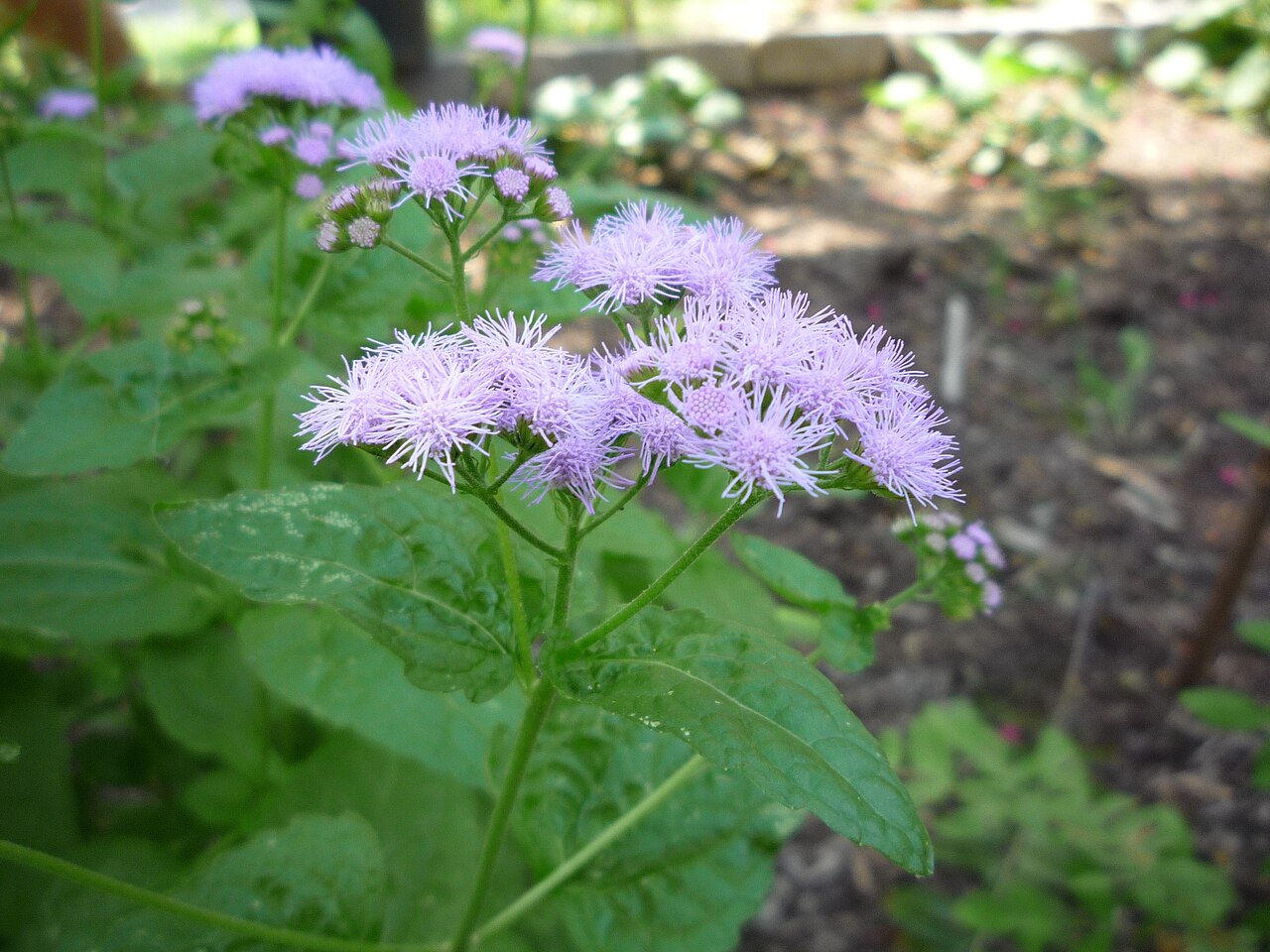
Your blue mistflower looked great in early summer. Now, just as the blue flowers open, the stems are leaning, sprawling over the path, or lying flat after a storm.
You’re not doing anything unusual wrong. The Missouri Botanical Garden notes plainly that this plant tends to flop and may need support.
But some patches flop much more than others. This guide helps you work out why yours is leaning, using three checks: shade, crowding, and water. Then it covers the fixes for this year and next.
The Short Answer
Blue mistflower (Conoclinium coelestinum) carries dense flower clusters on fairly slender stems, so some leaning is normal. Heavy flopping usually comes from:
- Shade, which makes stems taller, thinner, and looser.
- Crowding, which forces many weak stems to compete for light.
- Water swings: dry spells cause wilting, and soaking rain weighs down the flower heads.
- No early cut-back on a site that grows tall plants.
Quick fixes: support stems this season, then pinch or cut back earlier, thin crowded patches, and match the site to the plant next year.
Why Blue Mistflower Leans in the First Place
Blue mistflower is a herbaceous perennial that regrows from rhizomes each spring. The Missouri Botanical Garden lists a typical height of 1.5 to 3 feet. The Lady Bird Johnson Wildflower Center notes it is often shorter but can reach 6 feet.
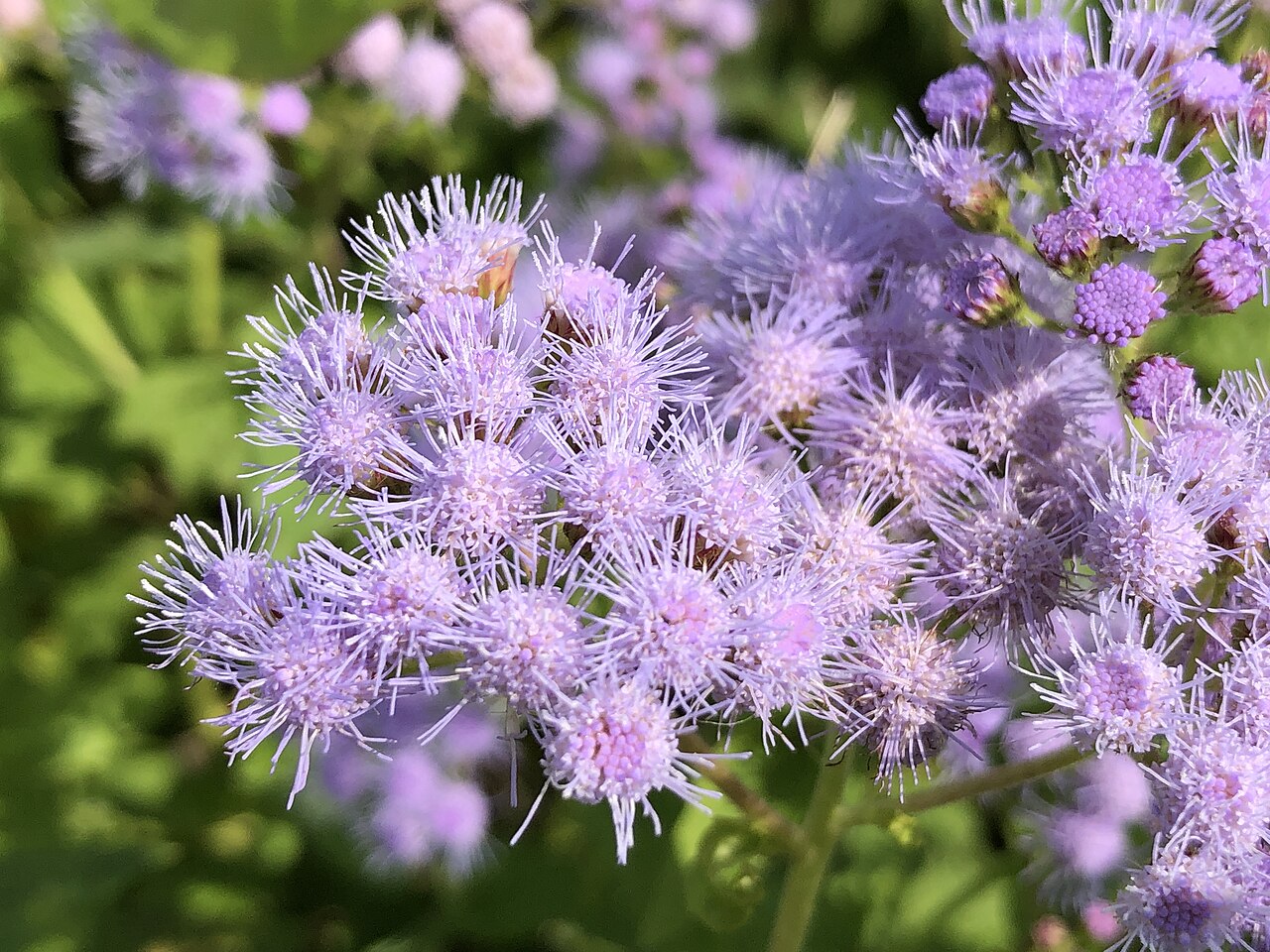
Flowers open at the very top of each stem, in dense, flat-topped clusters. By the time they bloom, each stem is carrying a heavy head on a long, relatively thin stalk. Add wind, rain, or a lean toward the light, and the stem bends.
In the wild, it grows along stream banks, woodland edges, and wet meadows, according to the Wildflower Center. There, it leans on grasses and taller neighbors. In a tidy garden bed with open space around it, there’s nothing to lean on.
Read the Flop
| Stems lean one way, toward the light | Shade. Go to Check 1. |
| Many thin stems, falling outward from the center | Crowding. Go to Check 2. |
| Leaves limp, whole plant droops in the afternoon | Dry soil. Go to Check 3. |
| Flattened right after heavy rain or wind | Weather plus tall stems. Go to Check 4. |
| Very tall, lush, and lax everywhere | Rich, moist soil with no cut-back. Go to Check 4. |
Check 1: Assess the Shade
Light is the most common reason a mistflower patch flops harder than it should.
Our species profile explains that in full sun, plants are more compact, while in part shade they grow taller and somewhat looser. It notes that plants in shade may need support if the stems become too elongated.
Stems in low light stretch toward the brightest side. They get longer and thinner than stems in sun, and the whole plant leans in one direction. That one-sided lean is the best clue.
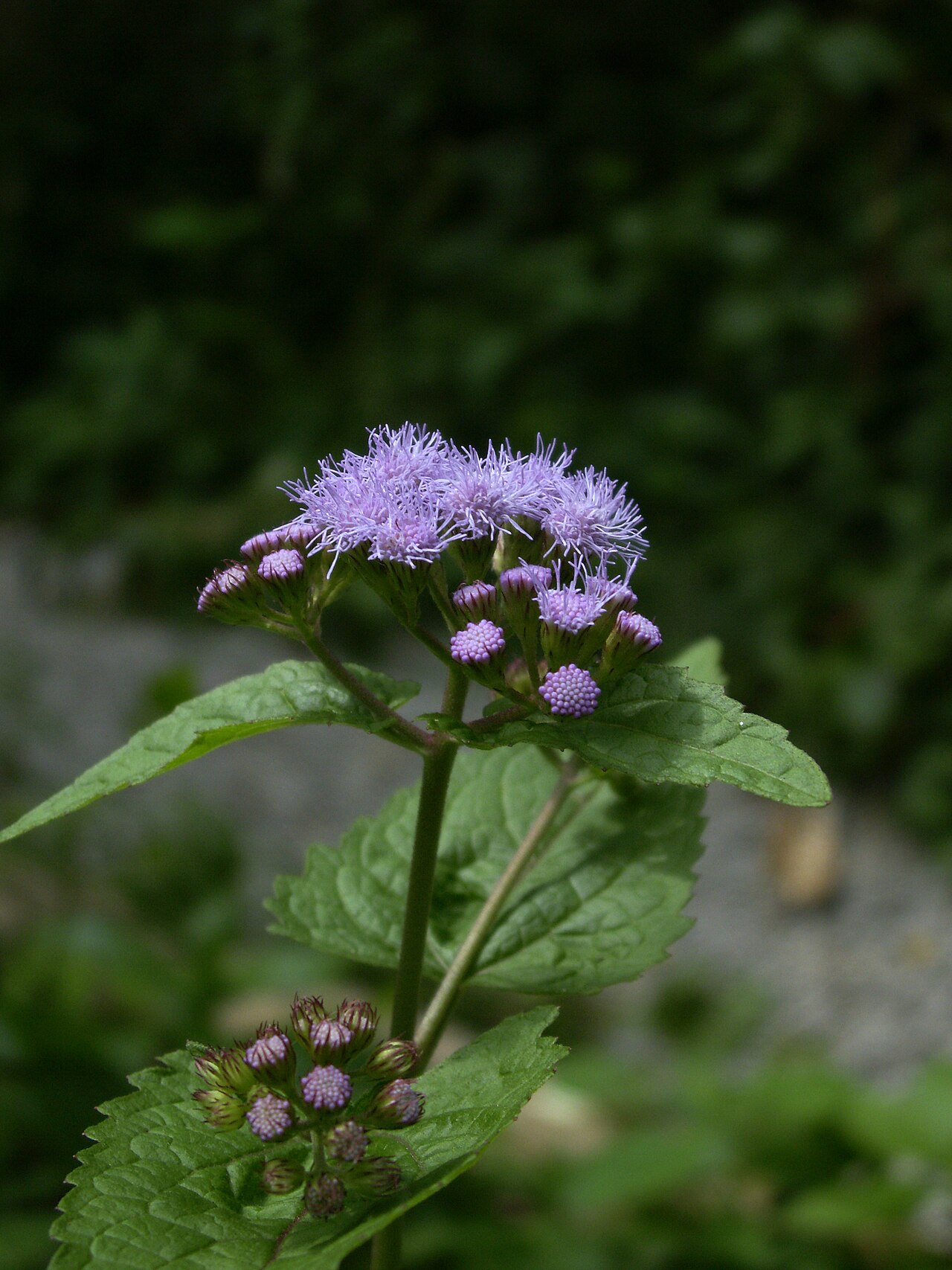
To check, count the hours of direct sun the patch gets in midsummer, when trees are in full leaf. The Missouri Botanical Garden and NC State Extension list full sun to part shade, and NC State defines part shade as about two to six hours of direct sun.
- Six or more hours: light isn’t the main problem.
- Two to six hours: expect some stretch. An early cut-back helps a lot.
- Less than two hours: stems will keep flopping. Consider moving some of the patch to a brighter spot in spring.
Shade that has crept in over the years is common. A young tree nearby, or a shrub that has filled out, can turn a sunny bed into a shady one.
Check 2: Assess the Crowding
Blue mistflower spreads by rhizomes and seed into dense colonies. After a few years, a patch can contain far more stems than the space can support.
Crowded stems compete for light, so each one grows taller and thinner. Instead of a few sturdy, branching stems, you get a thicket of weak ones that fall outward from the middle when they bloom.
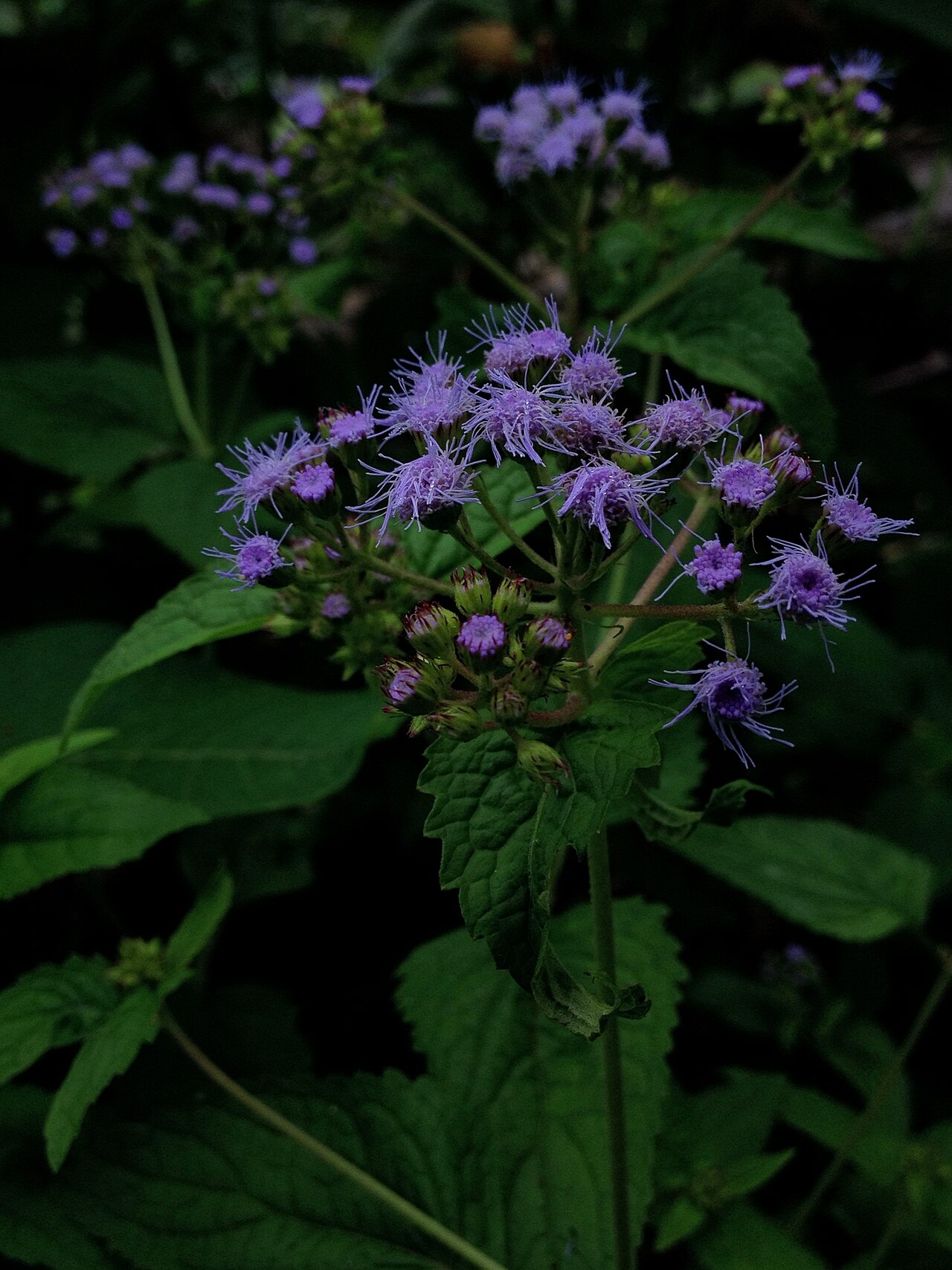
Look at the base of the patch. If stems are packed so tightly that you can’t see soil between them, crowding is part of the problem.
Jersey-Friendly Yards notes that mistflower may need to be divided every few years, and our species profile suggests dividing crowded colonies every two to three years in spring. Our step-by-step guide to dividing an established blue mistflower patch shows how to thin it without losing it.
Check 3: Assess the Water
Water problems can look like flopping, and they can cause it.
Too dry: blue mistflower prefers moist, humus-rich soil that doesn’t dry out, according to the Missouri Botanical Garden, and Illinois Wildflowers rates its drought tolerance as poor. In a dry spell, the whole plant goes limp. Our species profile notes that wilting foliage is a reliable sign of moisture stress.
The difference matters. A wilting plant has soft, droopy leaves and usually perks up after a deep watering or by the next morning. A flopping plant has firm leaves on stems that are simply bent over.
If yours is wilting, water slowly and deeply, then add a few inches of shredded leaves or wood mulch to hold moisture. See our mulching techniques for native gardens.
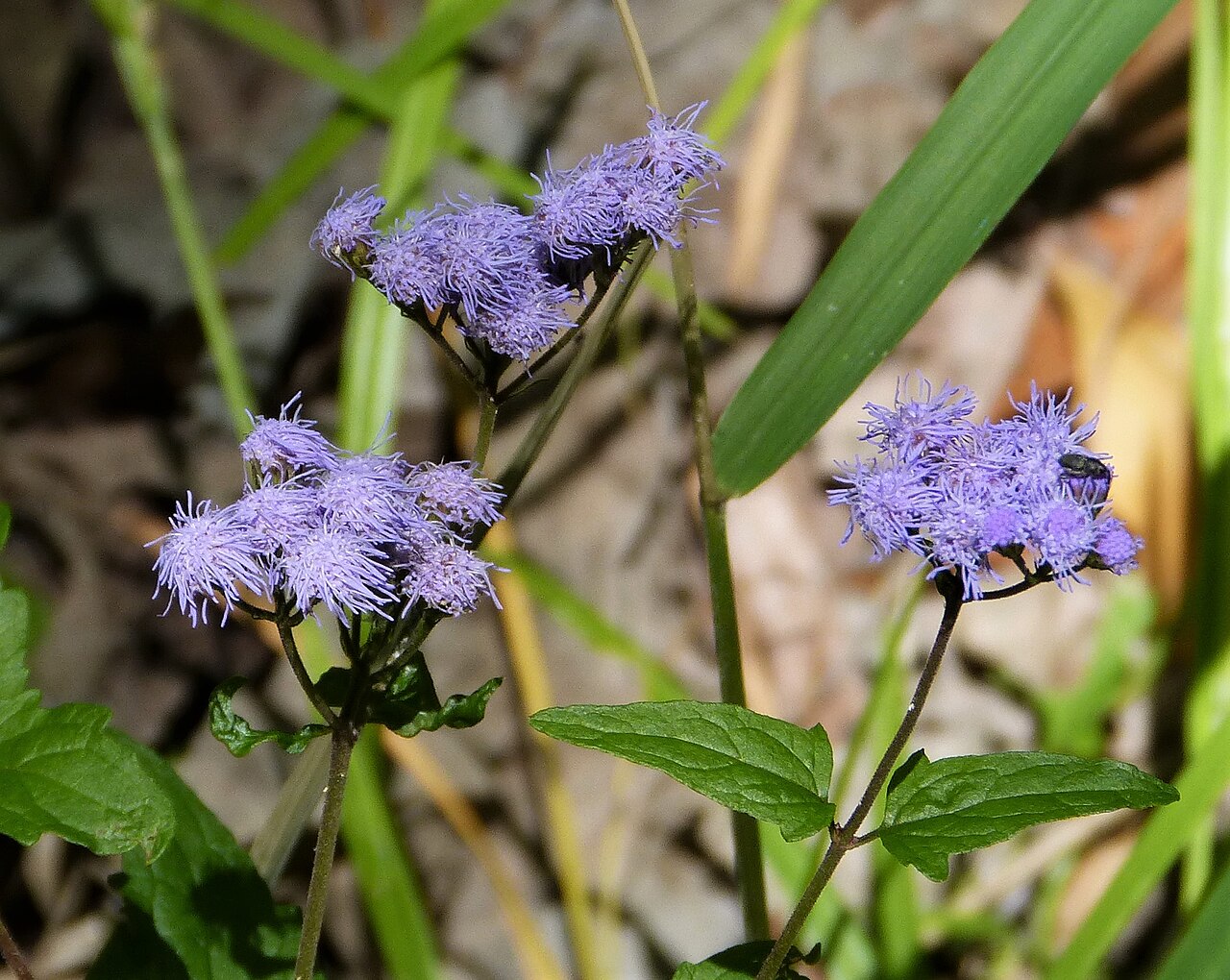
Very wet and rich: constant moisture and fertile soil are what this plant likes, and they can push tall, lush growth. That’s a good thing for the flower show, but tall, soft stems are more likely to lean. On a site like that, plan an early cut-back rather than holding back water.
Rain and wind: a heavy late-summer storm can flatten even healthy plants when the flower heads are soaked. If the stems were upright before the storm, many will lift partway once they dry. Ones that stay down can be propped or trimmed.
Check 4: Was It Cut Back Early in the Season?
Several sources recommend an early-season cut to keep stems shorter and sturdier.
- NC State Extension says taller plants may be cut back in spring to prevent flopping.
- The Missouri Botanical Garden says taller plants may be cut back in summer to prevent flopping.
- Our species profile recommends pinching stem tips in late May or early June for a more compact plant with more flower heads, noting it may delay bloom slightly.
Cutting stems back partway before midsummer makes them branch. Several shorter branches carry the flower load better than one long stem.
Don’t cut too late. Flowers form at the stem tips, and a cut made close to bloom time can cost you most of the season’s flowers. Our guide to blue mistflower not blooming covers that risk in more detail.
How to Fix Flopping This Season
If the stems are already leaning and the plant is in bloom, don’t cut it back now. Support it instead.
- Corral it. Push a few stakes around the patch and run garden twine around them at about half the plant’s height. This holds the outer stems up without tying each one.
- Use twiggy branches. Prunings pushed into the soil around the patch give stems something to lean on and are almost invisible once the plant fills in.
- Trim only the worst stems. Cut individual stems lying across a path back to a side branch, and use the flowers in a vase. Our species profile notes they last well in arrangements.
Avoid tying stems tightly into a bundle. It looks unnatural and can trap moisture in the center, where powdery mildew, which the Missouri Botanical Garden lists as a minor problem for this plant, is more likely.
How to Prevent It Next Year
Give it neighbors to lean on. In the wild, mistflower leans on grasses and taller plants. NPSOT suggests using it in front of taller plants. Upright native grasses such as switchgrass can give it natural support. Check that each partner suits your soil moisture and native range.
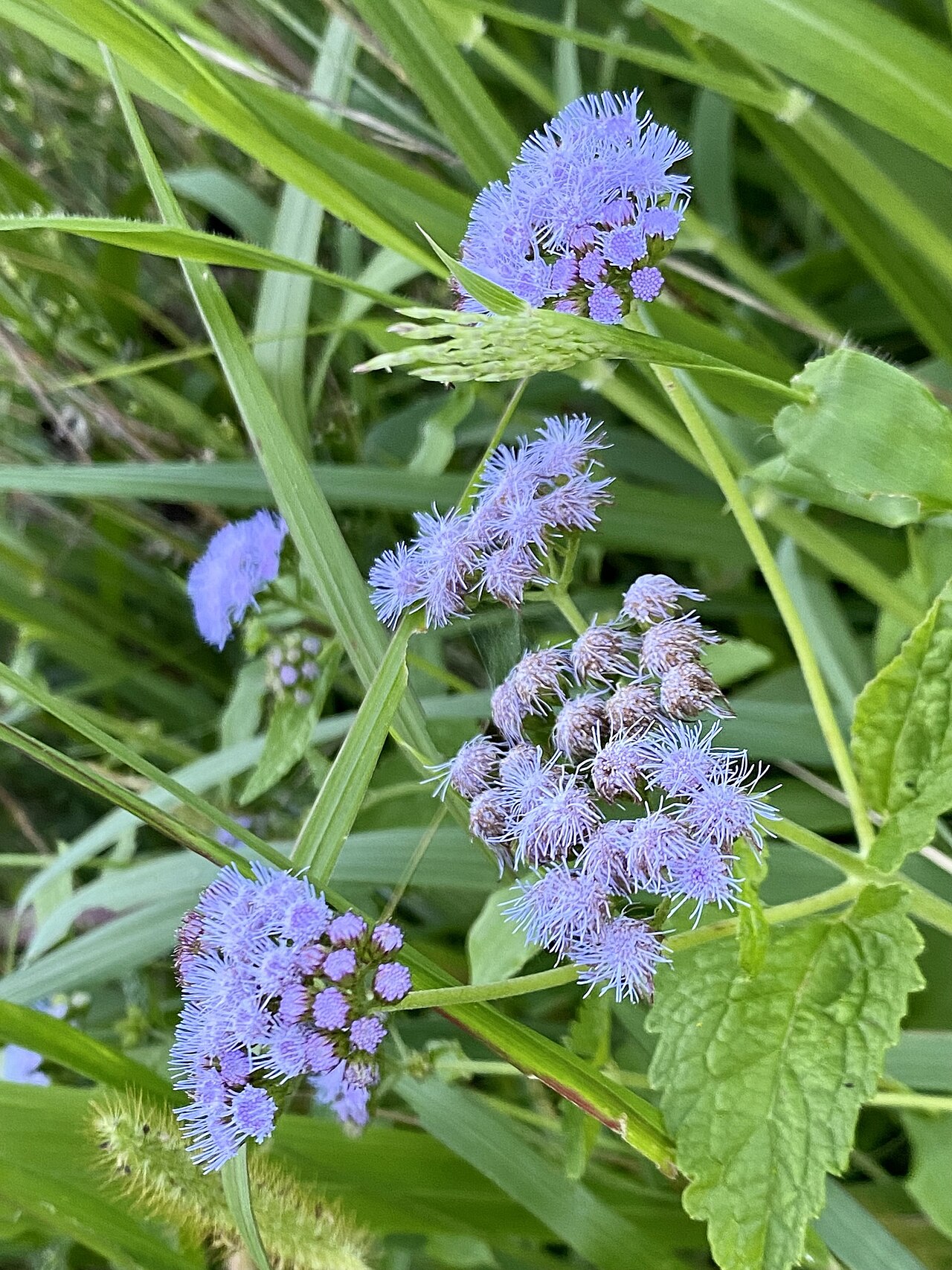
Cut back early. Pinch or cut stems by late spring or early summer, especially in part shade or rich, wet soil.
Thin the patch. Divide crowded colonies every few years in spring. Fewer, stronger stems stand better. If it’s also spreading where you don’t want it, our guide to keeping blue mistflower within a garden bed combines thinning with edge control.
Fix the light. Move part of the patch to a sunnier, moist spot, or limb up overhanging branches if that’s practical and safe. For anything beyond small branches you can reach from the ground, hire a qualified arborist.
Keep water steady. Mulch and deep watering in dry spells prevent the wilt-and-recover cycle.
Grasses can flop for some of the same reasons. If you grow native grasses too, our article on little bluestem flopping over covers that side of the bed.
Troubleshooting at a Glance
| Leaning toward the light | Too much shade. Cut back early; move part of the patch to more sun. |
| Falling outward from the center | Crowded. Divide in spring. |
| Limp leaves, drooping in heat | Dry soil. Water deeply and mulch. |
| Flattened after a storm | Wet, heavy heads. Wait a day; prop or trim stems that stay down. |
| Very tall and lush in rich, wet soil | Normal vigor. Pinch or cut back by early summer. |
| Sprawling over a path in bloom | Corral with stakes and twine now. Plan neighbors and an early cut for next year. |
A Season-by-Season Plan
- Early spring: cut last year’s stems to the ground. Divide crowded patches.
- Late spring to early summer: pinch or cut stems back partway if the site grows tall plants. Set twiggy supports in place while plants are small.
- Summer: water deeply in dry spells and keep mulch in place.
- Bloom season: corral or trim any stems that fall. Don’t cut the whole patch back.
- After bloom: note where it flopped worst and why, while you can still see it.
📋 More on this plant: read the full Mist Flower (Conoclinium coelestinum) profile, or see it in our native plant lists for Maryland, Virginia & West Virginia, Georgia, Alabama & Mississippi, and Arkansas, Louisiana, Eastern Oklahoma & Eastern Texas.
Frequently Asked Questions
Is it normal for blue mistflower to flop?
Some leaning is normal. The Missouri Botanical Garden notes the plant tends to flop and may need support. Heavy flopping usually points to shade, crowding, or a missed early cut-back.
When should I cut back blue mistflower to stop flopping?
In late spring or early summer. NC State Extension suggests a spring cut, the Missouri Botanical Garden mentions summer, and our profile suggests pinching in late May or early June. Avoid cutting close to bloom.
Should I stake blue mistflower?
Individual stakes aren’t usually needed. A loose corral of stakes and twine, twiggy branches, or sturdy neighbors works better for a spreading patch.
Can overwatering make blue mistflower flop?
It’s a moisture-loving plant, so wet soil alone is rarely the problem. Rich, constantly moist soil can produce tall, lush stems that lean, which an early cut-back helps.
Will flopped stems still bloom?
Yes. Stems that lean or lie down usually keep flowering, and the tips often turn upward again. Flopping is mostly a looks problem, not a health one.
Sources
- Missouri Botanical Garden Plant Finder, Conoclinium coelestinum: tendency to flop, summer cut-back, height, soil preferences, powdery mildew.
- North Carolina Extension Gardener Plant Toolbox, Conoclinium coelestinum: spring cut-back to prevent flopping, support for taller plants, light ranges.
- Lady Bird Johnson Wildflower Center, Conoclinium coelestinum: height range, habitat, cut-flower use.
- Illinois Wildflowers, Mistflower: moisture needs and drought tolerance.
- Native Plant Society of Texas, Conoclinium coelestinum: use in front of taller plants.
- Jersey-Friendly Yards, Mistflower: periodic division.