How to Keep Blue Mistflower Within a Garden Bed Without Losing the Whole Patch
Last updated: November 5, 2026

You planted a few pots of blue mistflower for the late-summer haze of blue. Two or three years later, it is coming up in the path, in the lawn edge, and in the middle of the coneflowers.
The fix is not to rip it all out. Blue mistflower is easy to steer once you know how it moves, and most of the work happens in a few minutes each spring.
This guide shows you how to set a boundary, hold it, and keep a healthy core patch blooming every fall.
The Short Answer
Blue mistflower (Conoclinium coelestinum) spreads two ways: by shallow underground rhizomes and by wind-blown seed. To keep it in its bed:
- Pick a boundary and mark it, ideally with a path, mown edge, or sunken edging.
- Slice and pull runners outside that line every spring, when new shoots are easy to spot.
- Cut off spent flower heads before they turn fluffy if seedlings are a problem.
- Thin the patch every few years so it doesn’t push outward.
- Leave a solid core of the healthiest growth. Never clear the whole bed at once.
How Blue Mistflower Spreads
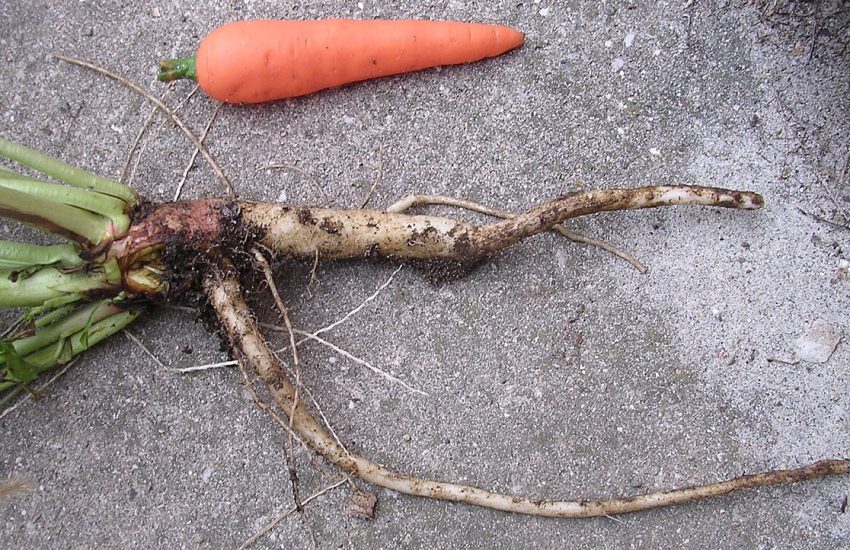
Blue mistflower is a perennial in the aster family that dies to the ground each winter. It returns in spring from a network of rhizomes, which are horizontal stems that run just under the soil surface and send up new shoots as they go.
The Illinois Wildflowers account describes the root system as highly rhizomatous and notes that the plant readily forms colonies. The Missouri Botanical Garden is blunter: it spreads aggressively by rhizomes and self-seeding, and in some parts of the U.S. it is treated as a spreading weed.
Seed is the second route. After bloom, each tiny floret becomes a small seed with a tuft of hairs that catches the wind. That’s why mistflower can show up several feet from the parent patch, or on the far side of the yard.
Two Ways It Moves, and How to Answer Each
| Rhizomes | New shoots pop up in a line or cluster next to the patch. Answer with a firm edge and a spring cut along it. |
| Seed | Single seedlings appear some distance away, often in bare or disturbed soil. Answer by removing seed heads or pulling seedlings while small. |
| Best time to act | Spring, once new shoots are a few inches tall and easy to identify. |
| Worst time to act | Late summer in a dry spell, when disturbed plants struggle and you risk cutting off this year’s bloom. |
Moisture matters too. Illinois Wildflowers notes the plant can spread aggressively in moist open ground, and its drought tolerance is poor. In a damp, sunny bed it will move faster than in an average or drier one.

Step 1: Decide How Big the Patch Should Be
Before you dig anything, decide where the patch is allowed to be. Containment is much easier with a clear line than with a vague sense that “it’s getting out of hand.”
Stand back and look at the bed. Mark the outer limit with a few stakes, a hose laid on the ground, or a line of flour. Leave some room inside that line. A patch that is a little smaller than the space you can give it is easier to hold than one that already touches every edge.
Also think about neighbors. NC State Extension suggests mistflower for pond borders as long as its spreading roots won’t affect other plants, and says it isn’t recommended for small planting areas. Short, slow perennials next door will lose that contest. Tall, sturdy natives hold their own much better.
Step 2: Build an Edge It Can’t Easily Cross
The best boundary is one the rhizomes have to run into. Good options include:
- A path or hardscape. Stepping stones, a gravel walk, or a patio edge stops most runners and makes escapes easy to see.
- A mown lawn edge. Shoots that come up in the lawn get mown off. You still need to trim the bed side of the line each spring.
- Sunken edging. Brick, stone, or metal edging set into the soil gives you a clean line to cut along. Our guide to edging a garden with bricks walks through trenching and setting the edge.
The Native Plant Society of Texas notes that mistflower roots are shallow and easy to pull. That works in your favor. Runners that travel near the surface are easy to find and cut at an edge, so you don’t need the deep barriers used for bamboo.
No edging is perfect. Some runners will still slip under or over, and seed blows right past any barrier. Treat the edge as the line you defend, not a wall you can ignore.
Step 3: Cut the Edge Every Spring
This is the habit that does most of the work. The Plant Native profile recommends using a spade to cut back rhizome spread at the colony margins each spring.
Wait until new shoots are a few inches tall, so you can see where the patch actually is. Then:
- Push a sharp spade straight down along your boundary line, all the way around the patch.
- Lift out every shoot on the outside of the cut, along with the runner it came from.
- Follow any runner you find back toward the cut and pull it out. The shallow roots usually come up with a steady tug.
- Firm the soil back down and water if it’s dry.
Healthy pieces you pull out with a good chunk of root can be potted up, replanted elsewhere, or shared with a neighbor.
Step 4: Manage the Seed Heads
If your problem is random seedlings around the yard rather than a creeping edge, look at the seed heads.
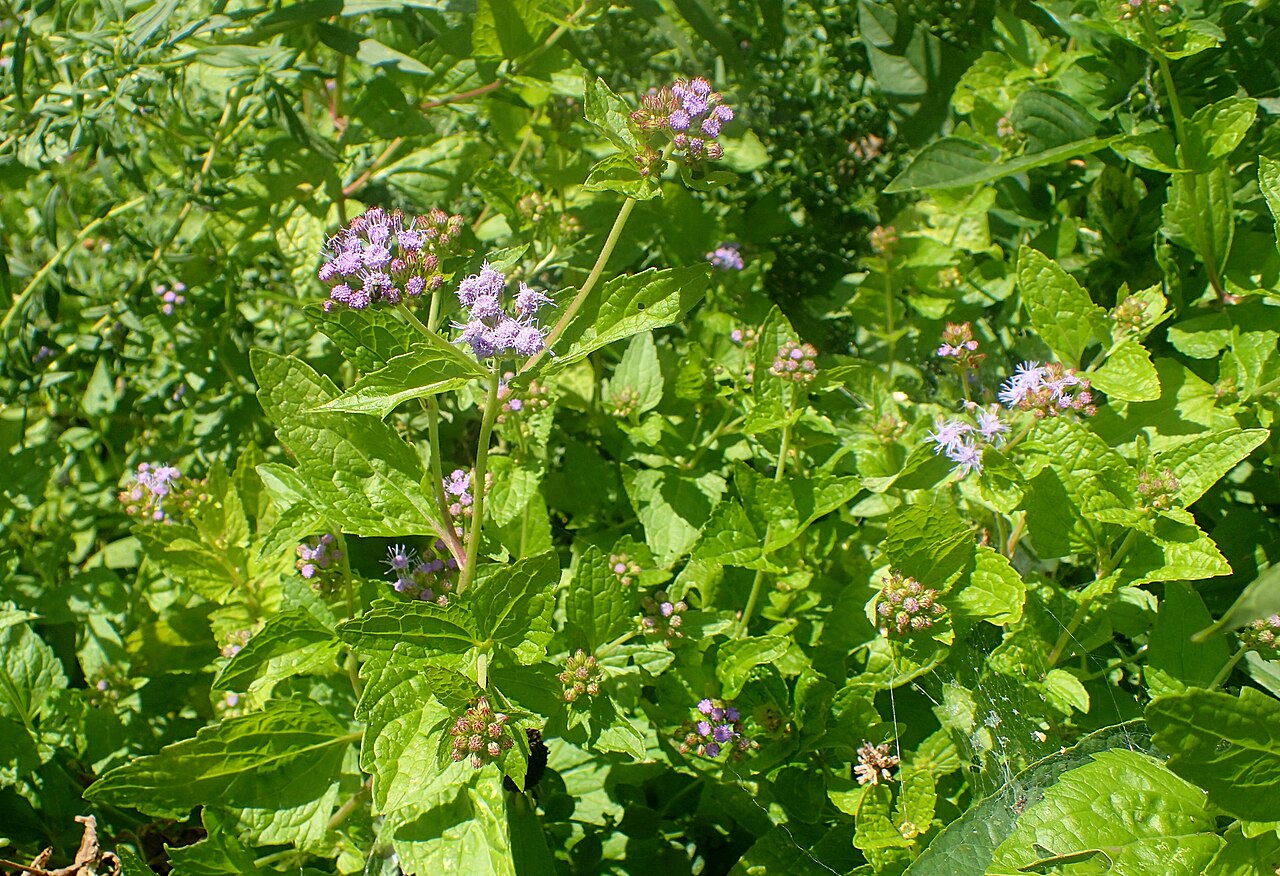
Blue mistflower blooms from late summer into fall. As the flowers fade, the clusters turn tan and fluffy as the seeds mature and blow away. Cutting off the spent clusters before they turn fluffy stops most of that spread. The Plant Native profile recommends this for smaller garden spaces.
There is a trade-off. NC State Extension notes that birds eat the seeds. If seedlings aren’t a problem in your yard, you can leave some or all of the heads for wildlife and just pull the odd stray in spring.
A middle path works well. Deadhead the clusters on the outer edge of the patch, where seed lands closest to your other beds, and leave the center for the birds.
Bare soil is where most seedlings take hold. A layer of shredded leaves or fine wood mulch around other plantings makes it harder for stray seed to get started. See our mulching techniques for native gardens for options.
Step 5: Thin the Middle Every Few Years
A patch that gets more crowded each year pushes outward harder. Thinning the center takes pressure off the edge.
The Jersey-Friendly Yards plant profile notes that mistflower may need to be divided every few years. The Plant Native profile suggests dividing crowded colonies every two to three years in spring.
You don’t have to dig the whole patch to thin it. Remove a few fist-sized clumps from the densest parts, fill the holes with a little compost or soil, and let the remaining plants spread back in. This keeps the bed vigorous while making it smaller overall.

Step 6: Choose Neighbors That Can Hold Their Ground
Containment gets easier when the plants around mistflower can compete. Tall, clump-forming natives with deep crowns tend to hold their space. Small, slow plants get swamped.
In a moist, sunny to part-shade bed, good partners include New England aster, great blue lobelia, and swamp milkweed. Check each plant’s native range against your own region before you buy.
If you have a wet spot with room to spare, mistflower can also be the main groundcover there instead of a bed plant. The Lady Bird Johnson Wildflower Center calls it a good border plant or colonizing groundcover. That approach suits rain gardens, stream edges, and the sunny margins of a woodland garden, where its spread is welcome.
Why You Shouldn’t Remove the Whole Patch
When a plant gets pushy, it’s tempting to dig it all out and start over. With mistflower, that usually means losing the very thing you planted it for.
It’s one of the few native perennials with true blue to lavender flowers in late summer and fall. NC State Extension lists it as nectar-rich and attractive to butterflies and other pollinators, and the Wildflower Center calls the flowers a magnet for late-season butterflies.

Full removal is also harder than it looks. Small rhizome pieces left behind can regrow, and seed already in the soil can sprout for a while. A managed patch is usually less work than a removal you have to keep repeating.
Whatever you remove, keep a solid core of the strongest growth, at least a few square feet in the best-lit, moistest part of the bed. That core is your insurance. If an edge cut goes too far, it will fill back in.
Avoid herbicide in and around the patch. Rhizomes connect the shoots, and you can’t safely spot-treat a spreading perennial without risking the plants you want to keep. Hand-pulling and spade work are safer for the garden and the pollinators that visit it. For more on planning a bloom sequence around it, see our guide to attracting butterflies.
Troubleshooting at a Glance
| Shoots in a line beside the bed | Rhizome spread. Cut along the edge with a spade and pull the runners. |
| Single plants far from the bed | Seedlings. Pull while small and deadhead the outer clusters next fall. |
| Neighboring perennials shrinking | Mistflower is crowding them. Clear a ring around each one or move them. |
| Shoots coming up in the lawn | Regular mowing handles them. Cut the bed edge in spring. |
| Center thin, edges thick | The patch has been creeping outward. Divide and replant the center. |
| Spreading fast in a wet, sunny spot | That’s its preferred habitat. Edge more often, or let it have that area. |
What to Do Right Now
The right move depends on the season you’re reading this in.
If it’s spring: this is the main window. Mark your boundary, cut the edge, pull runners and seedlings, and thin any crowded clumps.
If it’s early to midsummer: pull obvious escapes by hand, but leave the main patch alone. It’s building toward its late-season bloom.
If it’s in bloom: enjoy it. Note where the edges have crept so you know where to cut next spring. Snap a photo to remind yourself.
If it’s fall, after bloom: cut seed heads on the outer edge if seedlings have been a problem. Leave the rest standing for birds.
If it’s winter: plan your edge. Order edging material or lay out a path if the patch keeps escaping in the same direction.
A Season-by-Season Containment Plan
- Early spring: cut back last year’s dead stems if you haven’t already. Mark the boundary.
- Mid-spring: once shoots are a few inches tall, cut the edge with a spade, pull runners, and thin crowded areas every two to three years.
- Summer: water during long dry spells. Pull strays, but don’t dig in the main patch.
- Late summer to fall: enjoy the bloom and the butterflies. Note any new escapes.
- After bloom: deadhead the outer edge if seedlings are a problem, and leave the center for seed-eating birds.
📋 More on this plant: read the full Mist Flower (Conoclinium coelestinum) profile, or see it in our native plant lists for Maryland, Virginia & West Virginia, Georgia, Alabama & Mississippi, and Arkansas, Louisiana, Eastern Oklahoma & Eastern Texas.
Frequently Asked Questions
Is blue mistflower invasive?
No. It is native to much of the eastern and central United States. It is aggressive, though. The Missouri Botanical Garden notes it spreads aggressively by rhizomes and seed and is considered a spreading weed in some areas, so plan to manage it.
Will a root barrier stop blue mistflower?
It helps. The rhizomes run near the surface, so sunken edging or a path gives you a clear line to cut along. It won’t stop seed, and some runners may still cross, so keep up the spring edge cut.
Can I grow blue mistflower in a container to keep it contained?
Yes. The Native Plant Society of Texas notes it can be grown in containers. Keep the soil from drying out, since the plant prefers consistently moist conditions.
Should I cut off the seed heads?
Only if seedlings are a problem. The seeds feed birds, so many gardeners deadhead just the outer edge of the patch and leave the rest.
When is the best time to dig out extra blue mistflower?
Spring, once the new shoots are a few inches tall. You can see exactly where the patch is, and the pieces you remove are easy to replant or share.
Sources
- Missouri Botanical Garden Plant Finder, Conoclinium coelestinum: aggressive spread by rhizomes and self-seeding, weedy reputation in some areas, siting in borders.
- North Carolina Extension Gardener Plant Toolbox, Conoclinium coelestinum: spread by rhizomes and seed, not recommended for small areas, pond-border use, wildlife value.
- Illinois Wildflowers, Mistflower: rhizomatous root system, wind-dispersed seed, aggressive spread in moist open ground, poor drought tolerance.
- Native Plant Society of Texas, Conoclinium coelestinum: shallow, easy-to-pull roots and container growing.
- Jersey-Friendly Yards, Mistflower: division every few years.
- Lady Bird Johnson Wildflower Center, Conoclinium coelestinum: use as a border plant or colonizing groundcover, butterfly value.