Spicebush Flowers but No Berries: A Pollination Troubleshooting Guide
Last updated: November 5, 2026
Every spring, before the leaves come out, your spicebush lights up with yellow flowers. Then summer comes and goes, the leaves turn gold, and there is not a single red berry on it.
Most of the time nothing is wrong with the plant. Spicebush works differently from most garden shrubs, and the reason it isn’t fruiting is usually about pollination, not care.
This guide walks through the checks in the order that solves the problem fastest. The first one alone explains a large share of berry-less spicebushes.
The Short Answer
Spicebush (Lindera benzoin) is dioecious: each plant is either male or female, and only females make berries. A flowering spicebush with no fruit usually comes down to one of these:
- It’s a male plant. Males flower, often more showily than females, but never fruit.
- It’s a female with no male nearby, or every plant in the group is the same sex.
- Few insects visited the flowers during a short, cold, early-spring bloom.
- Deep shade, which cuts flowering and fruiting.
- Berries formed and were eaten by birds before you saw them.
- A different shrub sold under the name “spicebush.”
How Spicebush Makes Berries
Spicebush sets its flowers up a year ahead. The USDA plant guide describes the flowers as appearing before the leaves, in clusters at the nodes of the previous year’s growth.
Each plant carries only one kind of flower. Male (staminate) flowers have nine fertile stamens. Female (pistillate) flowers have a fertile ovary surrounded by small, non-functional stamens.
Pollen has to travel from a male plant to a female plant. Spicebush relies on insects for that trip. Illinois Wildflowers lists small bees and various flies as its main pollinators.
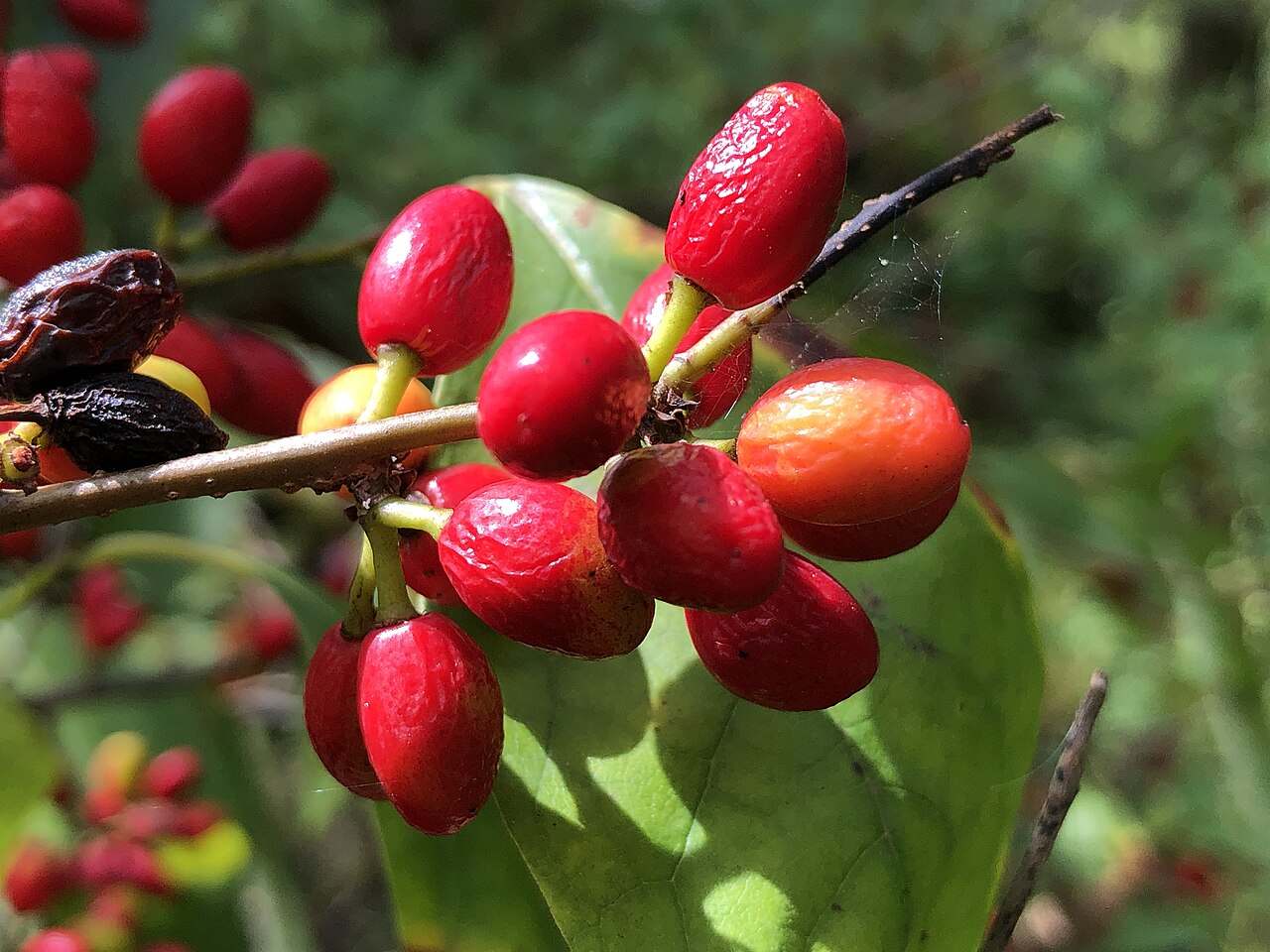
A pollinated female flower develops into a single-seeded red drupe. The fruit is about a quarter to a half inch long and ripens from late summer into fall.
The Spicebush Fruit Year
| Previous year | New twigs grow. The flower buds they carry show as small round buds over winter. |
| March – April | Yellow flowers open on bare branches. Bloom lasts roughly two weeks. Pollination happens now or not at all. |
| Late spring – summer | Pollinated female flowers swell into green, oval fruits among the leaves. |
| August – October | Fruits turn glossy red and are eaten by birds and small mammals. |
| Late fall – winter | Leaves drop. Next spring's flower buds are already in place on the twigs. |
The key point: a spicebush’s berry crop is decided during a couple of weeks in early spring. If you look at the plant then, you can answer most of the questions below in one visit.
Check 1: Find Out Whether Your Plant Is Male
This is the most common answer. Every spicebush flowers, but only females can fruit, and wild populations tend to have more males than females.
Male plants also tend to look better in bloom. Our profile notes that male flowers are more abundant and showy, while female flowers are smaller and less conspicuous. The bush that caught your eye at the nursery may well have been a male.
Popular named selections are another clue. Wikipedia lists ‘Rubra’ and ‘Green Gold’ as male cultivars, so a plant sold under either name will not produce berries.
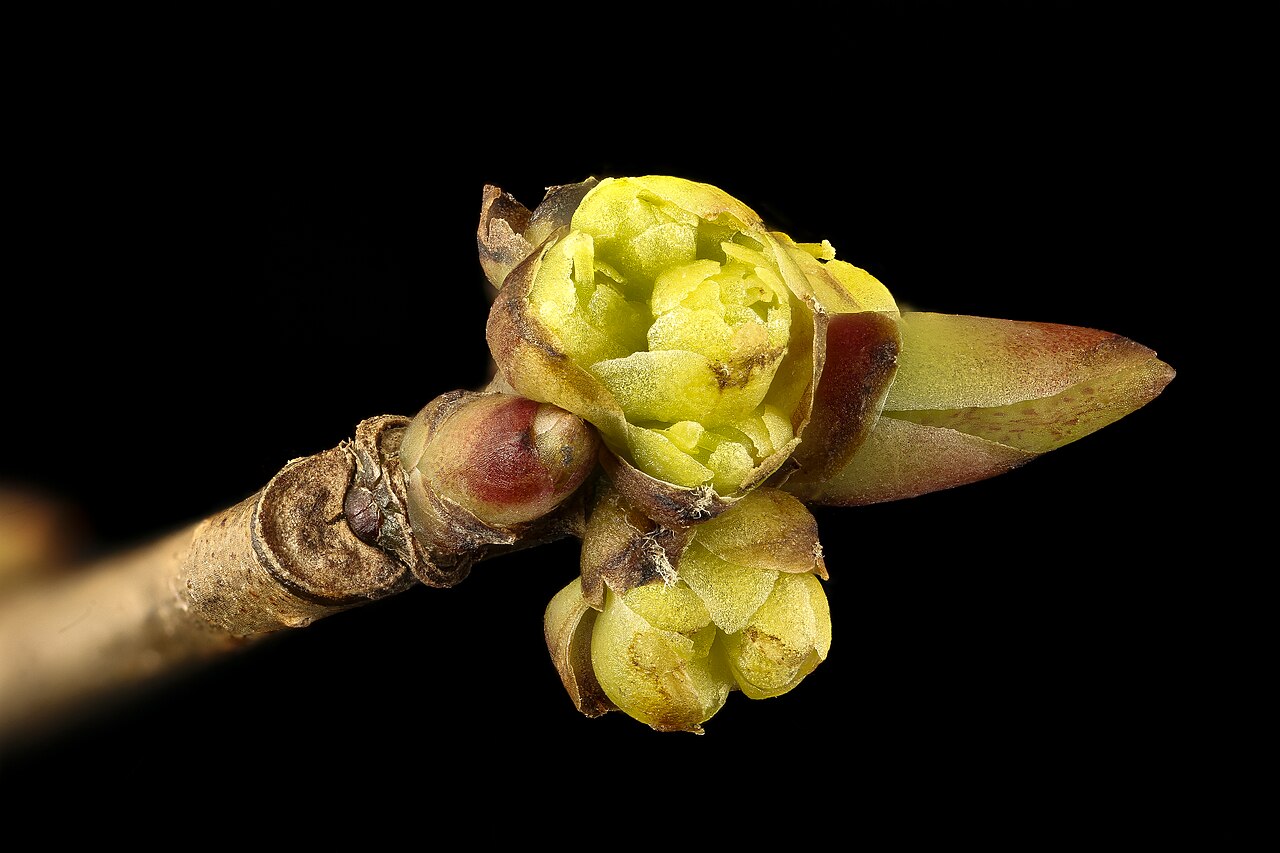
To check, look closely at the flowers next spring. A hand lens helps, since individual flowers are less than a quarter inch across.
- Male flowers: open and frilly, with prominent yellow stamens tipped with pollen. Clusters look fuzzy from a distance.
- Female flowers: smaller and rounder, with a green ovary and a single style in the center instead of a spray of stamens.
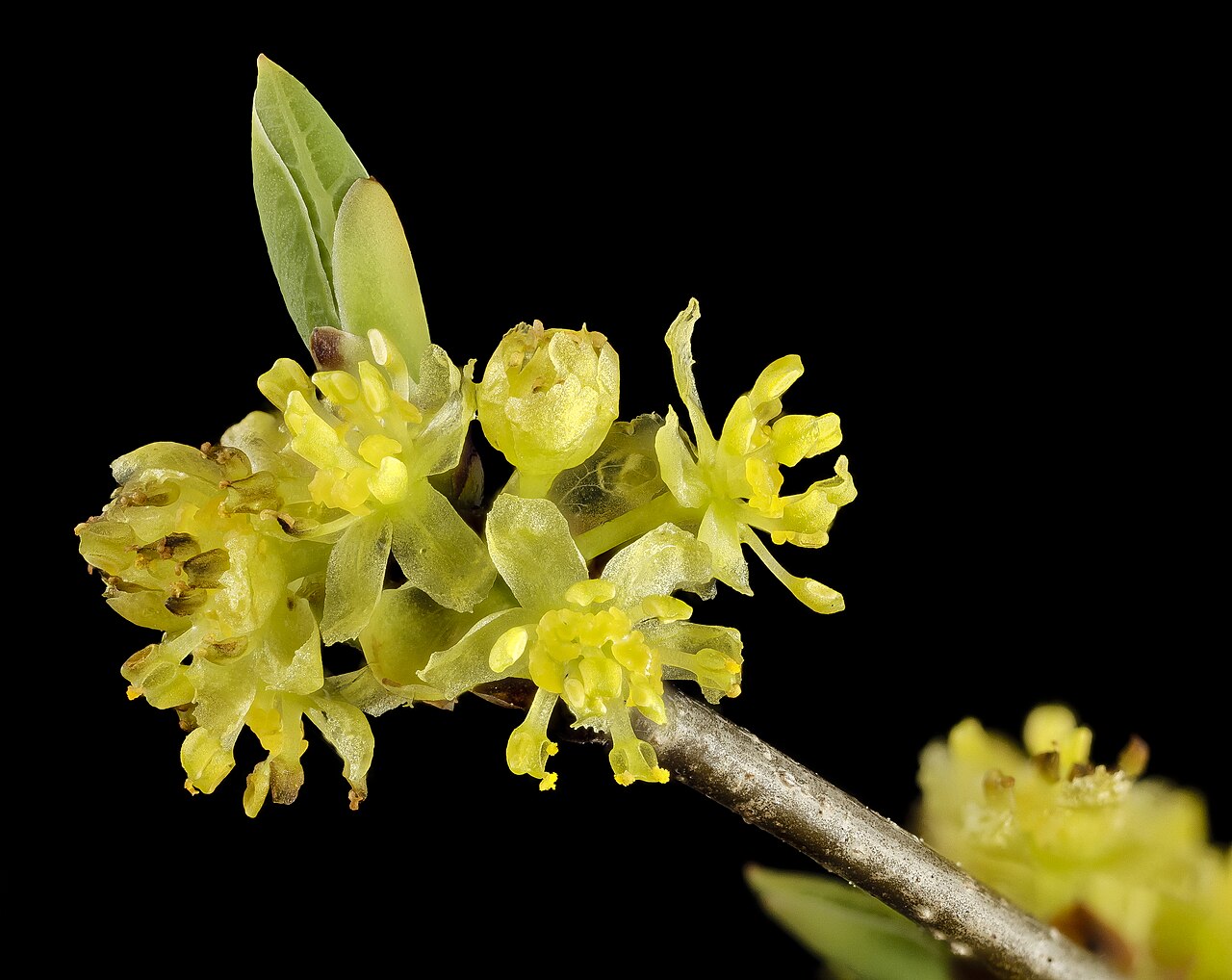
If the flowers are all male, the mystery is solved. Your shrub is doing exactly what it should. It is still feeding early pollinators and hosting caterpillars, and it can pollinate a female you add nearby.
Check 2: Confirm There’s a Male Close Enough
If your plant is female, it needs pollen from a male spicebush that blooms at the same time. NC State Extension states plainly that a male plant is needed to pollinate the female.
Insects carry the pollen, so the closer the male, the better your odds. A male in the same bed or along the same woodland edge is ideal. One several properties away may or may not get the job done.
Watch out for a trap here. Spicebush spreads by root sprouts, and the USDA plant guide notes that most spicebush patches and thickets are probably clonal. A clump that looks like several plants may be one individual, and every stem in it will be the same sex.
The same applies if you bought several plants from one source. Cuttings taken from a single parent are all the same sex. Check the flowers on each plant, not just one.
Wild spicebush in nearby woods can serve as a pollen source. If spicebush grows naturally along a stream or wooded lot near you, your female may be getting pollen already, and the cause lies elsewhere.
Check 3: Watch for Pollinators During Bloom
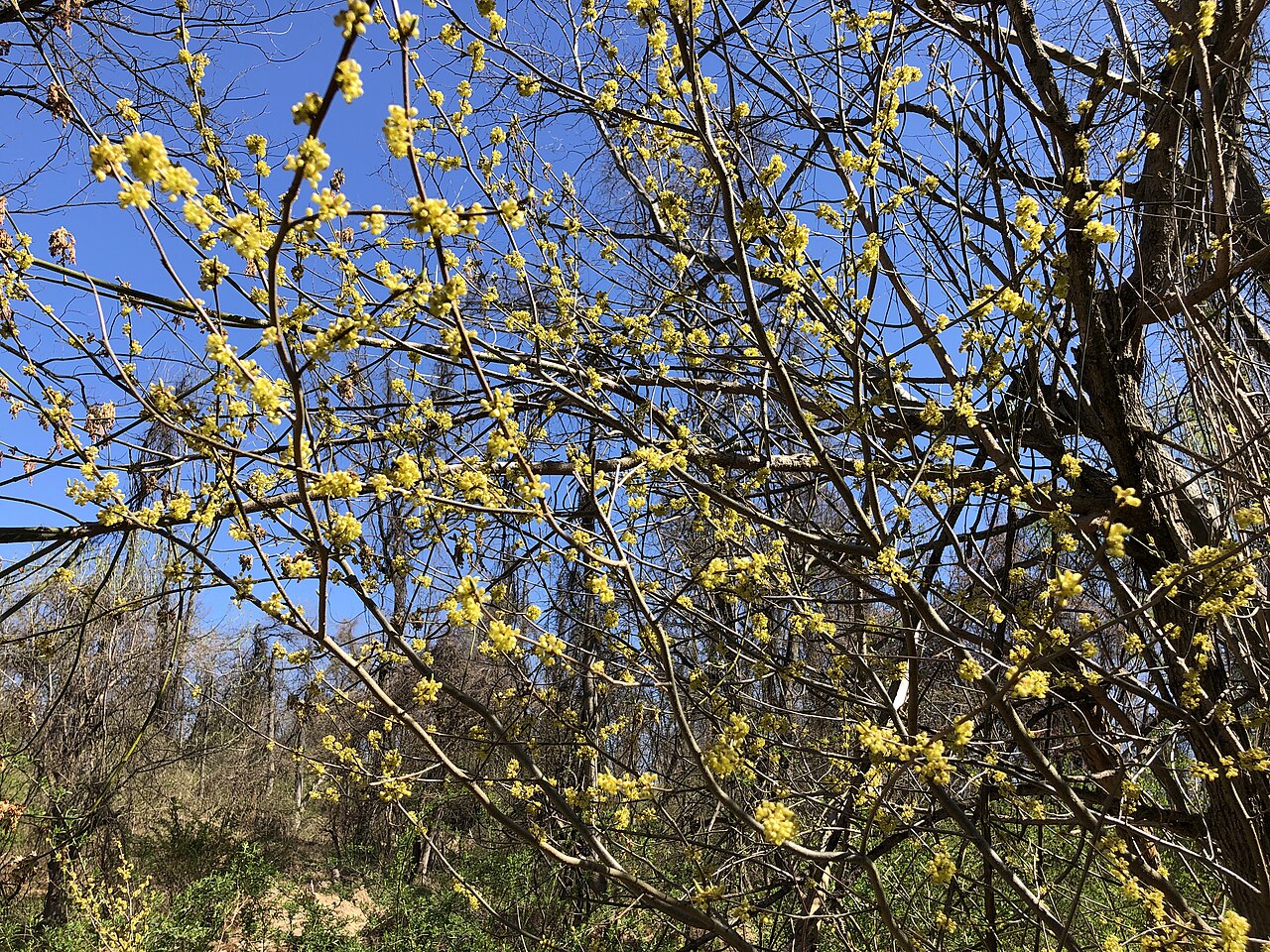
Spicebush is one of the first shrubs to flower in spring. That makes it valuable to early insects, but it also means the bloom often happens during cool, wet, or windy weather when few insects are flying.
Illinois Wildflowers notes that the bloom period lasts about two weeks. If most of those days are cold or rainy, a female can flower well and still set very little fruit.
On a mild, sunny afternoon during bloom, spend a few minutes at the shrub. Small bees and flies are easy to miss, so look closely at the flower clusters rather than for big bumblebees.
Avoid spraying insecticides on or near the shrub while spicebush is in bloom. Anything that cuts insect activity during those two weeks cuts your berry crop. Our pollinator garden design basics covers ways to support early-season bees year after year.
Check 4: Think Back to Spring Weather
Early bloom carries another risk. A hard freeze while flowers are open can damage them before pollination is complete.
Look for a pattern. If your female spicebush fruited in some years and not others, and the bad years line up with a warm spell followed by a hard frost during bloom, weather is a likely cause.
There’s no practical fix for a late frost on a shrub this size. The good news is that it’s a one-season loss. Next year’s flowers ride on this year’s new twigs, so the plant gets a fresh chance the following spring.
Check 5: Measure the Light
Spicebush is famous for tolerating shade, and it does grow under closed forest canopy. But tolerating shade isn’t the same as fruiting well in it.
The Lady Bird Johnson Wildflower Center notes that a small amount of sun yields a bush with better form and more berries. Wikipedia, summarizing Michael Dirr’s woody plant manual, says plants grown in sun tend to be denser with more flowers and berries than those in shade.
Count the hours of direct sun the shrub gets once nearby trees are fully leafed out. A female in deep, all-day shade may produce only a few scattered fruits even with a male next door.
The fix is gradual. Limb up overhanging trees to let in dappled light, or plan to move a young plant to a brighter edge when it’s dormant. Keep afternoon sun in mind in the South, where spicebush appreciates some protection from heat.
Check 6: Did Berries Form and Disappear?
Spicebush fruit is a high-fat food for birds. The USDA plant guide records more than 20 bird species eating the fruits, along with deer, rabbits, raccoons, and opossums. Wood thrushes are especially fond of them.
Berries ripen from late summer into fall, right as migrating birds pass through. A modest crop can vanish within days of turning red.
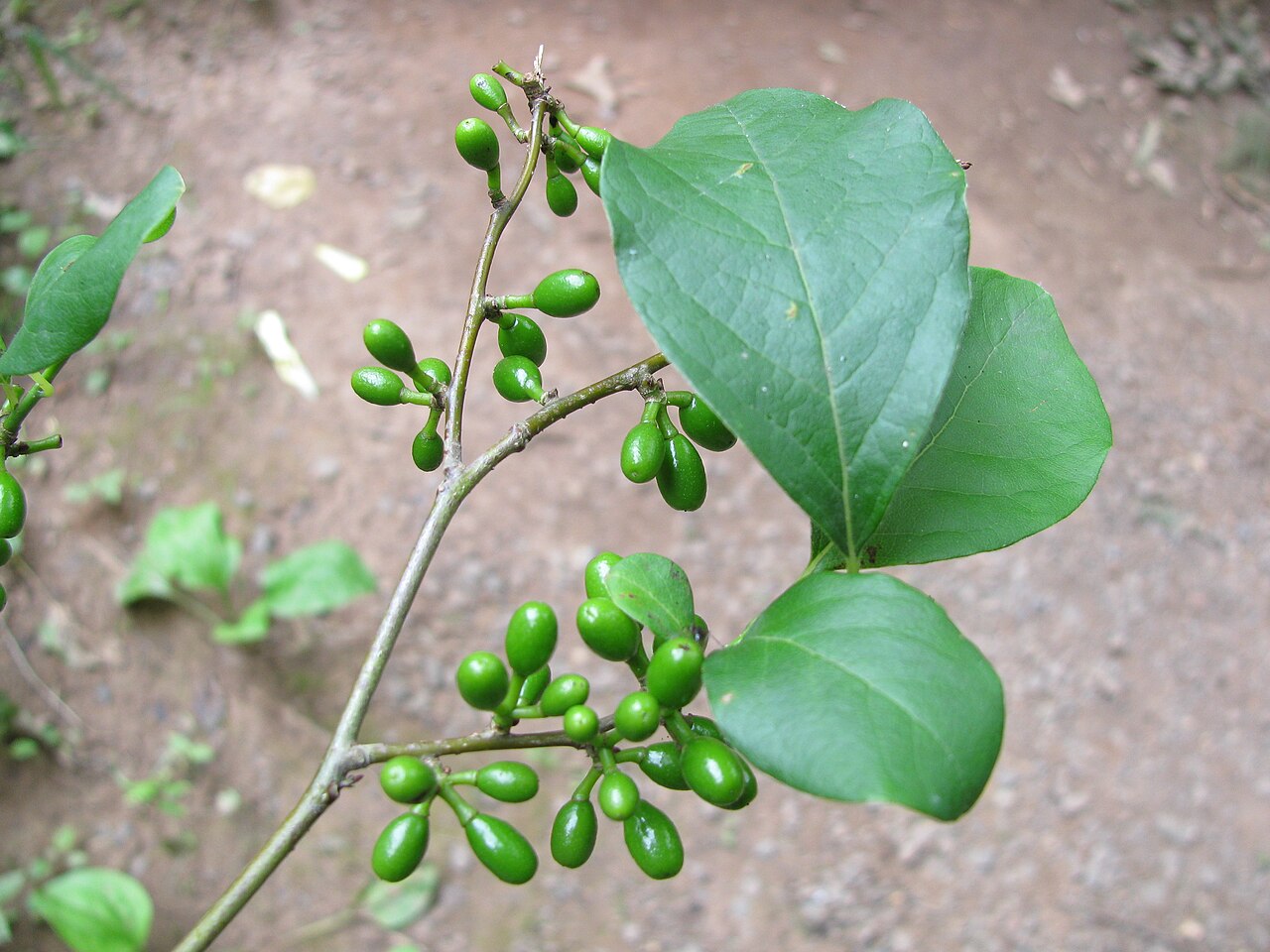
Check the twigs in July and early August, while fruits are still green and hard to see among the leaves. Green fruits mean pollination worked. If they later disappear, wildlife is the likely answer, and that’s the plant doing its job.
Check 7: Consider Age, Stress, and Recent Moves
A young or recently planted spicebush may bloom lightly or not at all for its first seasons in the ground. Spicebush is also considered difficult to transplant, so a moved plant may take a while to recover.
Fruit production costs a female more energy than flowering costs a male. Drought while fruit is developing can mean a smaller crop or fruit dropped early.
Spicebush naturally grows in moist woods and along streams. A female in dry, compacted soil may survive but rarely fruits heavily. Mulch the root zone and water deeply during dry spells. Our guide to the best soil for spicebush covers moisture-holding soil in more detail.
Check 8: Make Sure It’s Really Lindera benzoin
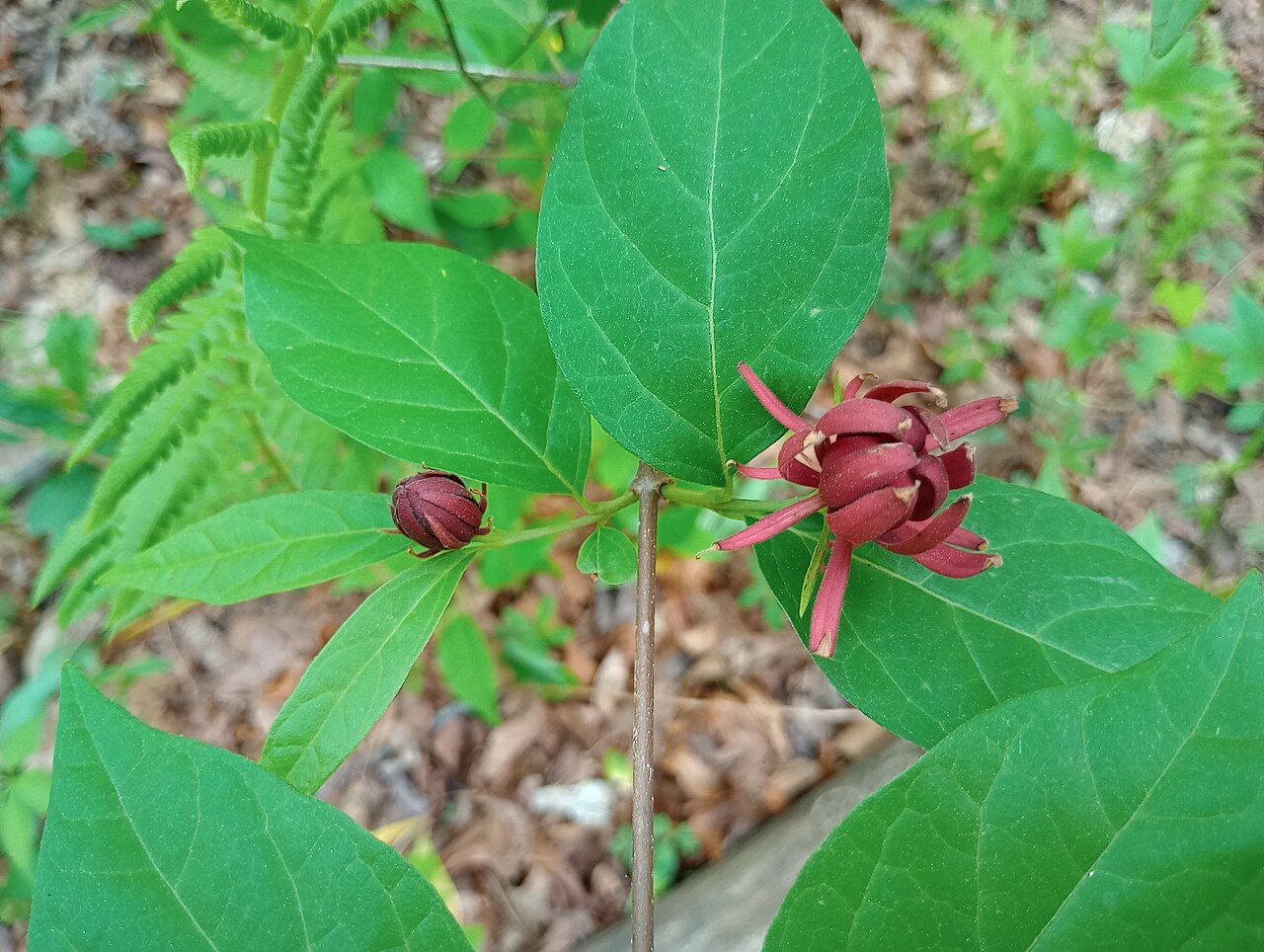
“Spicebush” is a common name shared by more than one plant. Sweetshrub (Calycanthus floridus) and western spicebush (Calycanthus occidentalis) are in a different plant family, though they also have aromatic leaves.
Neither one produces red berries. If your “spicebush” has maroon, many-petaled flowers that open with or after the leaves, it’s a Calycanthus, and red fruit was never on the table.
True spicebush has small yellow flowers on bare twigs in early spring, smooth-edged leaves, and a spicy citrus scent when you crush a leaf or scratch a twig.
Troubleshooting at a Glance
| Fuzzy flowers full of stamens | Male plant. It will never fruit. Add a female nearby if you want berries. |
| Small, round flowers, no fruit | Female with no pollen source. Plant a male within the same bed or border. |
| Several “plants,” all one sex | Likely a single clone. Bring in a plant of the other sex from a different source. |
| Fruited in past years, not this year | Check for a hard frost or cold, wet weather during bloom. Usually a one-year loss. |
| Very few fruits, long open branches | Too much shade. Thin overhead limbs to let in some sun. |
| Green fruit in summer, gone by fall | Birds or mammals ate them. No treatment needed. |
| Young or recently moved plant | Establishment. Water during dry spells and give it time. |
| Maroon flowers after the leaves | It's a Calycanthus, not Lindera benzoin. |
What to Do Now: Adding a Pollinator Partner
If you’ve confirmed a female with no male nearby, or a lone male you’d like to pair, adding a second plant is the reliable fix.
- Buy plants of known sex when you can. Ask the nursery whether a plant was grown from cuttings of a known male or female. Seed-grown plants can’t be sexed until they bloom.
- Buy plants already in bloom. Shopping in early spring lets you check the flowers yourself before you pay.
- Plant close. Put the new plant in the same bed, border, or woodland edge so insects move easily between the two.
- Plant a small group from mixed sources. If you can’t sex plants, three or more seed-grown shrubs from different sources give good odds of getting both sexes.
- Be patient. A new plant needs to establish before it flowers well. Expect a season or two before the first good crop.
Spring and fall are the usual planting windows. A pair or small group of spicebush also makes a better wildlife planting than a single shrub, which is a bonus if you’re attracting songbirds with native plants.
A Season-by-Season Plan for Next Year
- Late winter: look for the round flower buds along the twigs. Plenty of buds means the plant is ready to bloom. Do any pruning only of dead or broken wood.
- Bloom (March – April): sex every plant with a hand lens. Note the weather and watch for small bees and flies. Hold off on insecticide sprays.
- Late spring: if you need a partner plant, buy and plant it now or in fall. Water new plants through dry spells.
- Summer: look for green fruit among the leaves on female plants. Water deeply during droughts.
- Late summer – fall: watch the berries color up, and watch who comes to eat them. Leave fallen leaves under the shrub as mulch.
📋 More on this plant: read the full Spicebush (Lindera benzoin) profile, or see it in our native plant lists for New York, Pennsylvania & Northern New Jersey, Delaware, Southern New Jersey & Long Island, Maryland, Virginia & West Virginia, North Carolina & South Carolina, Ohio & Indiana, Illinois, Iowa & Missouri, Michigan, Wisconsin & Eastern Minnesota, and Arkansas, Louisiana, Eastern Oklahoma & Eastern Texas.
Frequently Asked Questions
Do you need a male and female spicebush to get berries?
Yes. Spicebush is dioecious, so only female plants fruit, and they need pollen from a male plant that blooms at the same time. A wild male growing nearby can sometimes fill that role.
How can I tell if my spicebush is male or female?
Check the flowers in early spring with a hand lens. Male flowers show a spray of pollen-tipped stamens and look fuzzy. Female flowers are smaller and rounder, with a green ovary in the center. Any plant that has ever carried red berries is female.
Why does my female spicebush flower but drop its berries?
Fruit that forms and then disappears is usually eaten by birds as it ripens. Fruit that drops while still small and green can point to drought stress or poor pollination. Water deeply in dry summers and make sure a male is nearby.
How long before a new spicebush produces berries?
It varies with plant size, site, and how well it establishes. A young female needs to settle in and reach flowering size first, so a season or two of little or no fruit after planting is normal.
Will fertilizer help my spicebush produce berries?
No. Berries depend on having a female plant, a nearby male, and insect visits during bloom. Fertilizer can’t supply any of those, and extra nitrogen mostly produces leaves.
Sources
- USDA NRCS Plant Guide, Spicebush, Lindera benzoin: flowers on last year's growth, staminate vs. pistillate flowers, dioecy, clonal root sprouting, fruit timing, wildlife use, difficulty transplanting.
- North Carolina Extension Gardener Plant Toolbox, Lindera benzoin: male plant needed to pollinate the female, site preferences.
- Illinois Wildflowers, Spicebush: flower structure, two-week bloom period, pollination by small bees and flies.
- Lady Bird Johnson Wildflower Center, Lindera benzoin: bloom time, native range, more berries with some sun.
- Wikipedia, Lindera benzoin: male-biased wild populations, male cultivars, sun vs. shade fruiting, Calycanthus look-alikes.