Winterberry Berries Disappearing: Checking Timing, Wildlife, and Plant Stress
Last updated: November 6, 2026
Last week your winterberry holly was covered in red. This morning it’s bare sticks. Or maybe the berries never quite made it to winter, thinning out a few at a time since October.
Either way, the berries went somewhere, and the answer is usually obvious once you know what to look for. Most of the time it’s birds doing exactly what winterberry evolved for.
This guide sorts out the three main possibilities: normal timing and wildlife, weather damage, and plant stress that dropped the fruit before it ripened.
The Short Answer
- Gone overnight in winter: almost certainly birds. A flock of robins or cedar waxwings can strip a shrub in hours.
- Thinning gradually through fall and winter: steady feeding by resident birds and small mammals, sometimes plus weather damage.
- Shriveled, dark, or split berries still hanging: freezing, thawing, and age.
- Green berries dropped in summer: plant stress, usually dry soil.
- Few berries to begin with: a pollination or sun problem, not a disappearance.
The Normal Winterberry Fruit Timeline
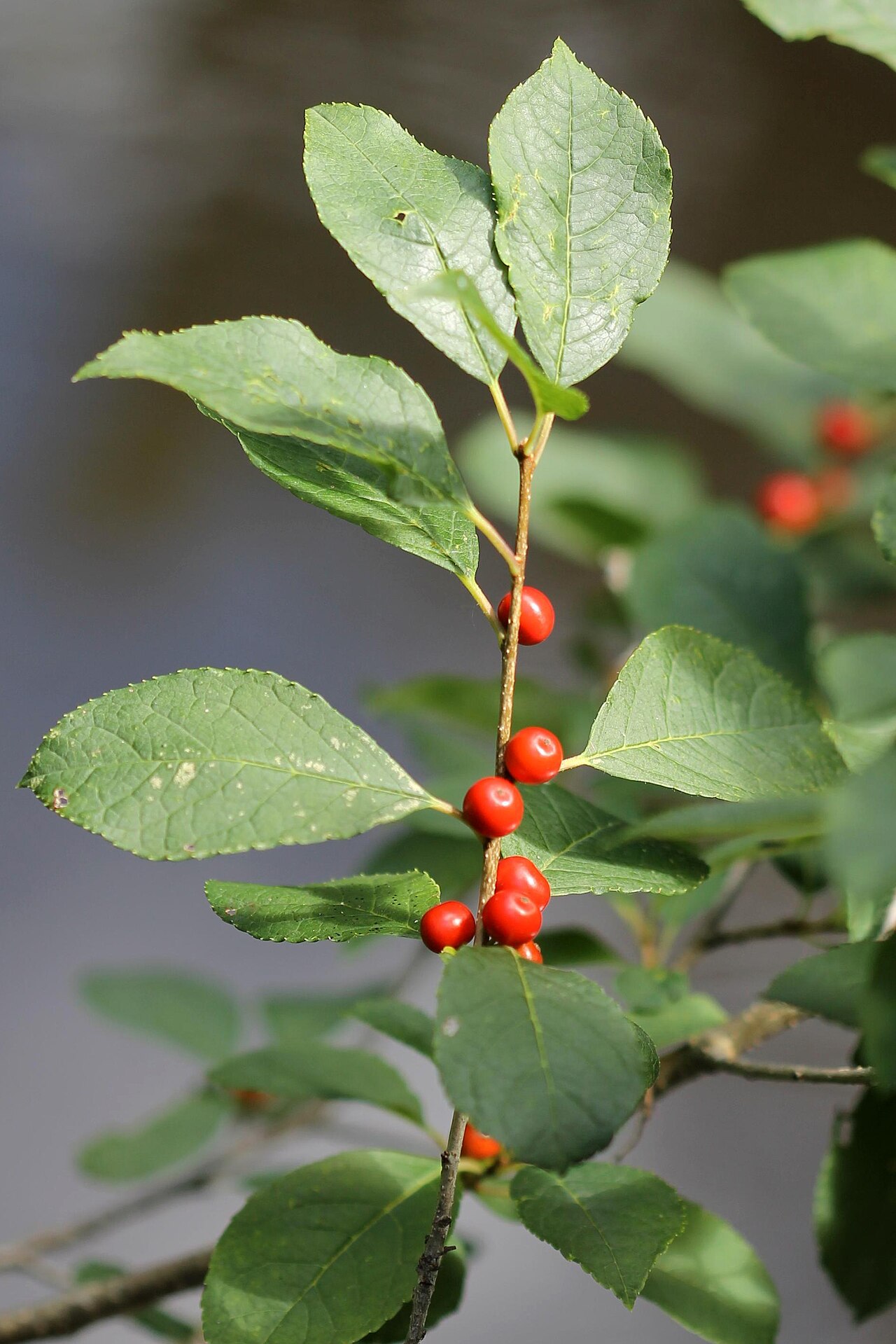
Winterberry berries stay green through summer. The UConn Plant Database says they change color in October. Piedmont Master Gardeners describe a crop forming in late summer to fall that normally persists through winter and often into early spring.
That’s the best case, when birds leave the fruit alone. In real yards, how long berries last depends on how hungry local birds are and what else they have to eat.
When Berries Usually Disappear
| Summer | Green berries develop. Losses now point to drought stress, not wildlife. |
| Early – mid fall | Berries color up. Many birds still have richer foods available and often pass them over. |
| Late fall – winter | Feeding picks up as other foods run out. Flocks of robins and waxwings may arrive and strip shrubs fast. |
| Late winter – early spring | Any remaining fruit may be eaten, or may shrivel and drop. |
Check 1: Did Birds Eat Them?
This is the most likely answer, and it’s good news. Winterberry is a wildlife plant. Mt. Cuba Center calls the fruit an important fuel source for migrating and overwintering songbirds.
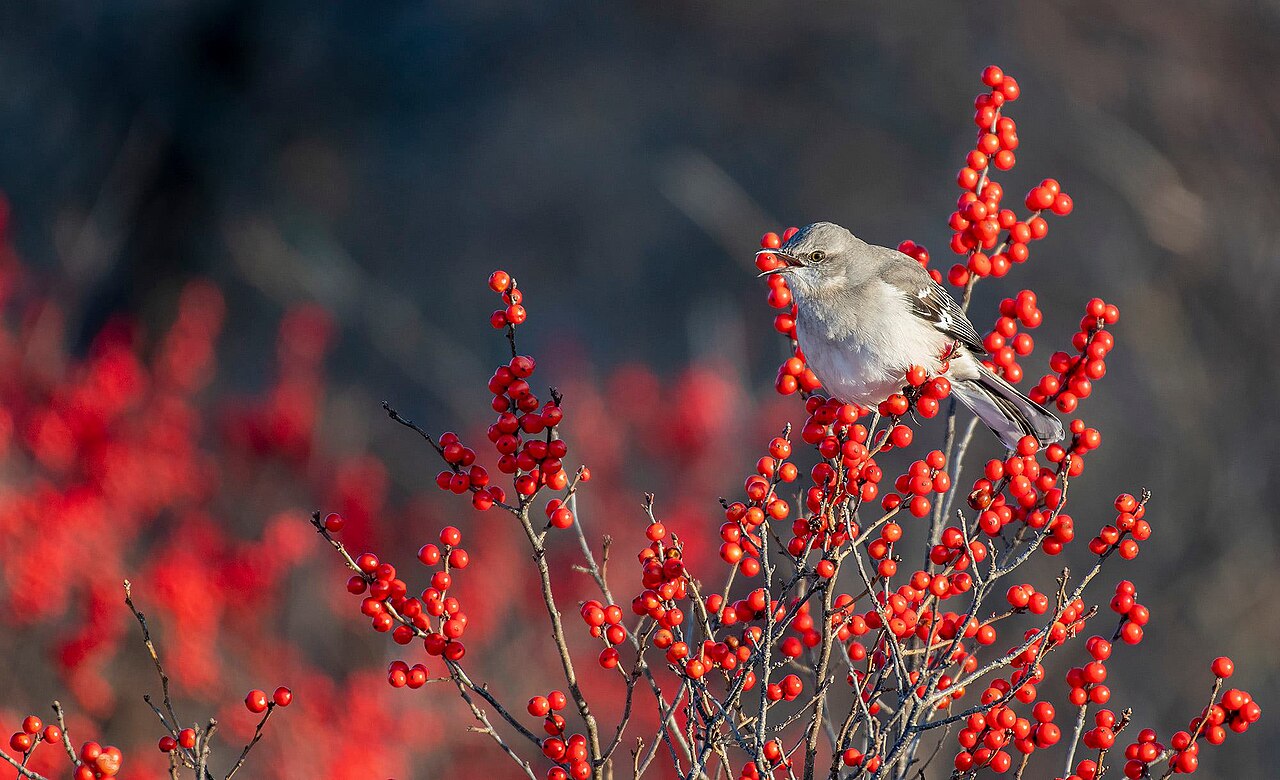
Many species use it. University of Maryland Extension lists American robin, cedar waxwing, gray catbird, and eastern bluebird. Other observers have recorded northern mockingbirds, white-throated sparrows, and hermit thrushes feeding on the fruit.
Why do berries sit untouched for weeks and then vanish? Winterberry fruit is higher in carbohydrates than fat, which makes it less preferred than some other fall fruits. Piedmont Master Gardeners note that overwintering birds generally don’t eat the bitter, astringent berries until other food supplies are gone.
Then hunger changes the math. A flock of robins or cedar waxwings can strip a winterberry of all its fruit in a matter of hours.
Signs it was birds:
- Fruit disappeared suddenly, often during cold or snowy weather.
- Tiny bare fruit stalks remain in the leaf axils.
- Bird droppings with red skins or seeds on walks or cars nearby.
- You saw a flock of birds feeding in the shrub.
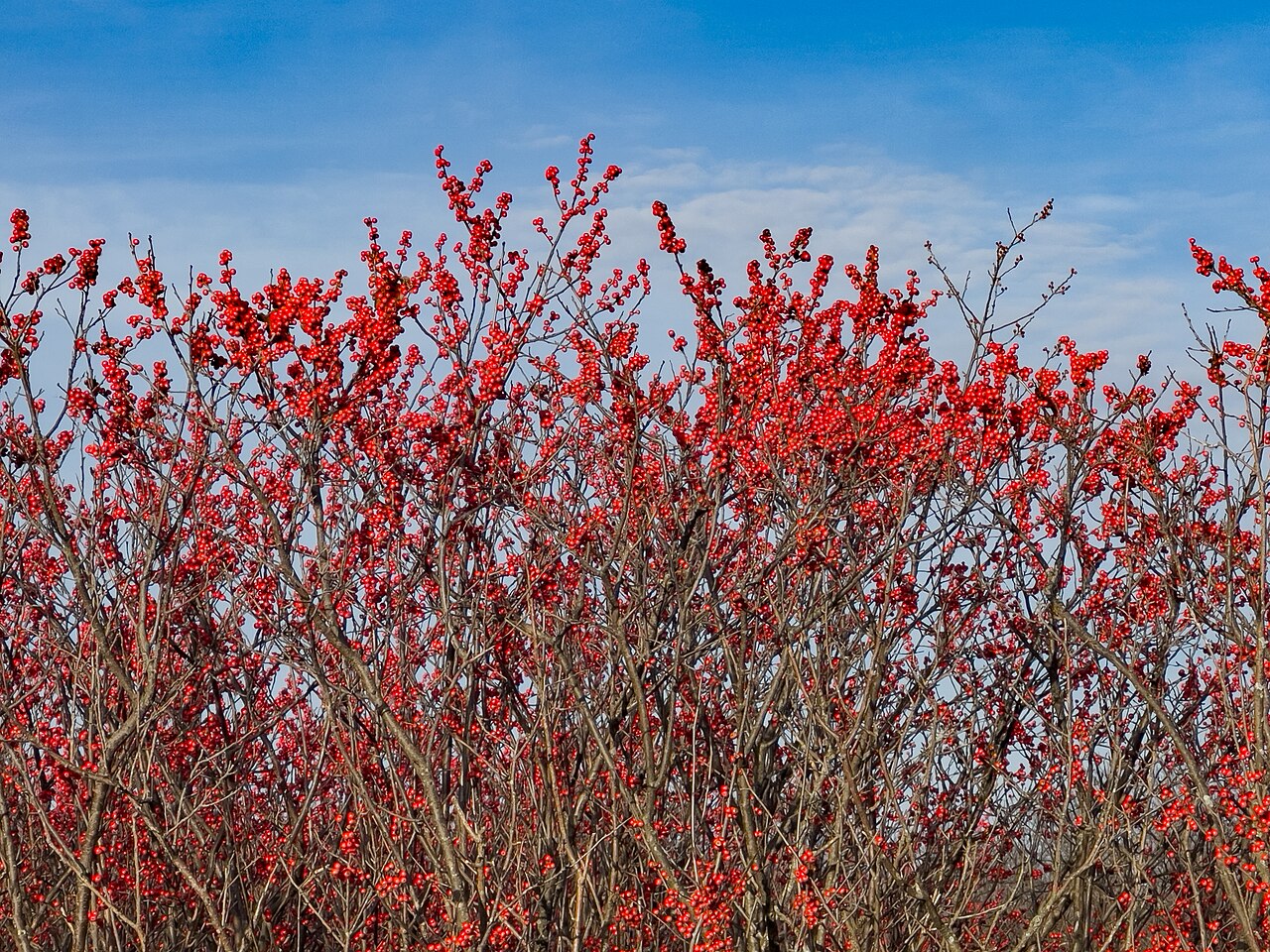
Check 2: Were Mammals Involved?
Small mammals such as mice and squirrels may eat winterberry fruit too. Losses from the lowest branches, or berries knocked onto the ground and partly eaten, point in that direction.
Deer are a less likely explanation. NC State Extension describes winterberry as resistant to deer foraging, and Piedmont Master Gardeners report that deer browse it only occasionally and seldom severely.
Don’t forget people. Berried branches are popular for holiday arrangements. On a shrub near a sidewalk, clean cuts on stems are a clue.
Check 3: Did Weather Damage the Fruit?
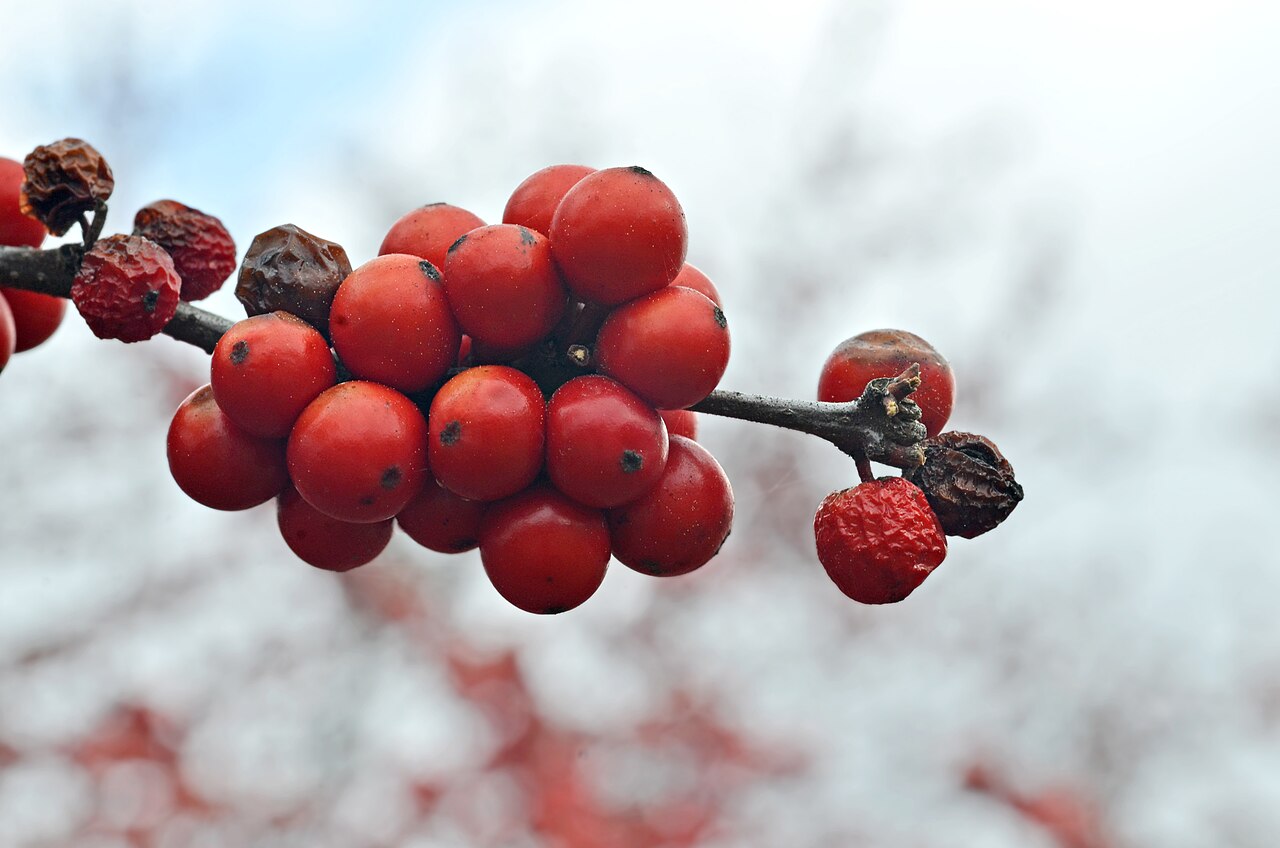
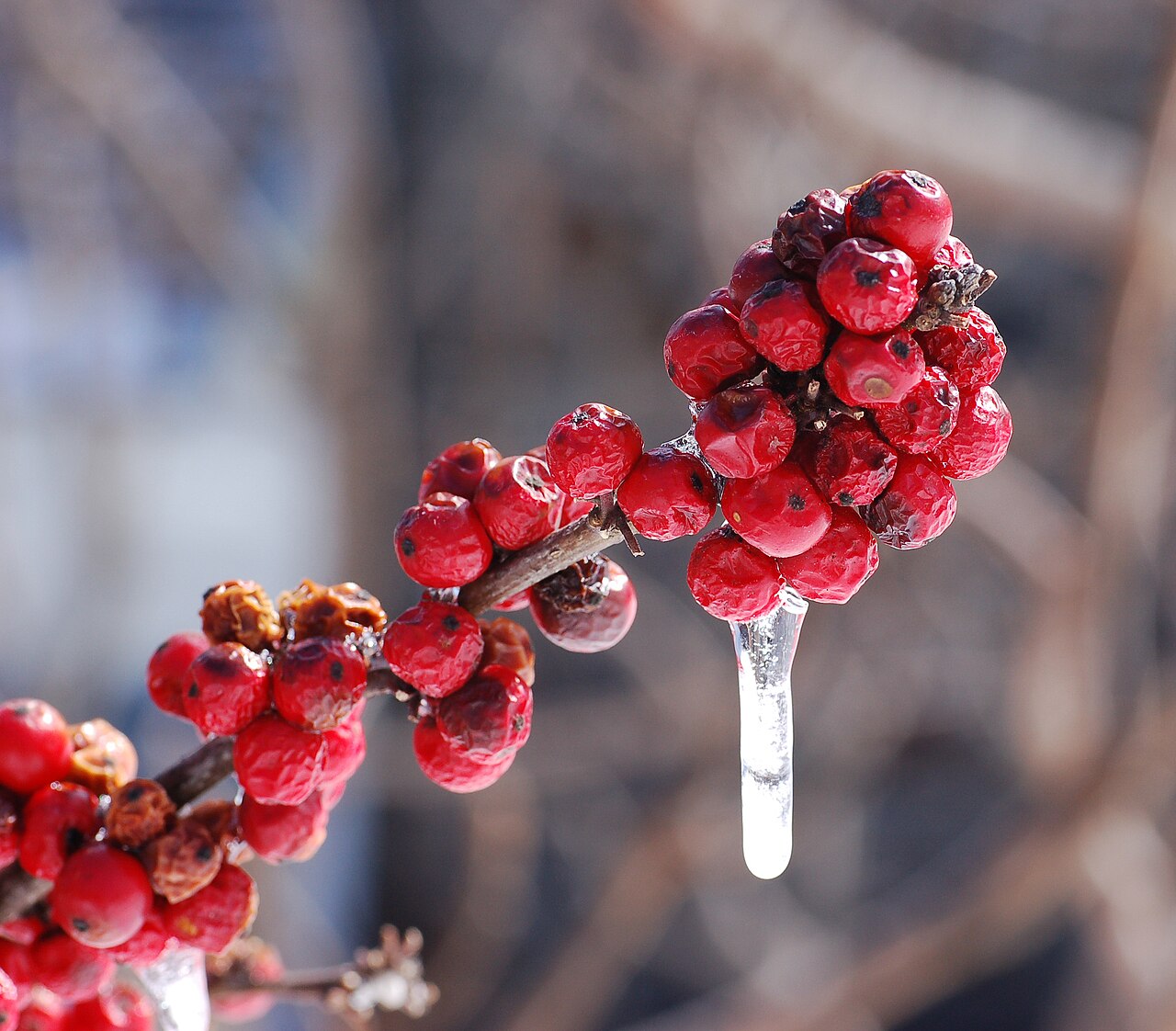
Berries that are still on the shrub but look wrong usually point to weather and age. Repeated freezing and thawing can wrinkle, split, or darken fruit. Sun can fade it.
Cultivar matters here. The UConn Plant Database says ‘Aurantiaca’ fruit is less persistent than most red forms and discolors easily, and that I. verticillata × I. serrata hybrids discolor by late winter. Piedmont Master Gardeners note that ‘Sparkleberry’ fruit facing the sun may fade. Mt. Cuba Center describes Winter Red® as holding its bright color well through winter.
Damaged berries can drop on their own or be eaten later by birds, so weather and wildlife often work together.
Check 4: Did the Plant Drop Fruit Under Stress?
If berries disappeared while still green, in summer or early fall, wildlife is an unlikely cause. Look at the plant instead.
Dry soil is the main suspect. NC State Extension says winterberry may abort fruit set in dry soil. A University of Maryland Extension answer reports winterberries shedding foliage, flowers, and unripe berries when they get too dry between waterings, even before wilting.
Signs it was stress:
- Green berries on the ground under the shrub in summer.
- Leaves yellowing or dropping at the same time.
- A recent dry spell, or a shrub planted in the last year or two.
For a new plant, see our guide to watering winterberry after planting. It shows how to check moisture in the root ball, below the mulch.
Check 5: Were There Many Berries to Begin With?
Sometimes the berries didn’t disappear. They were never there in numbers. If you saw only a few berries all fall, the issue is fruit set: a missing or mismatched male, too much shade, or pruning at the wrong time.
Our guide to winterberry holly with no berries walks through those checks.
Troubleshooting at a Glance
| Ripe berries gone in a day or two in winter | Bird flock. Normal and beneficial. |
| Gradual loss through fall and winter | Steady feeding by resident birds and small mammals. |
| Berries wrinkled, dark, or split | Freeze-thaw damage and age; some cultivars discolor sooner. |
| Green berries on the ground in summer | Drought stress. Check soil moisture below the mulch. |
| Clean cuts on berried stems | Someone harvested branches. |
| Very few berries all season | Fruit-set problem: pollination, sun, or pruning. |
What to Do Now
If birds ate them: enjoy it. That’s what the plant is for. Our guide to creating a bird-friendly yard covers how winterberry fits into a wider bird habitat.
If you want a longer display: plant more. A larger group of females gives birds more than they can finish at once. Mixing cultivars with different fruit color and persistence helps too. Cutting a few branches for indoor arrangements keeps some color in view after birds strip the shrub.
If the fruit dropped green: fix watering first. Deep, slow watering in dry spells during bloom and fruit set protects next year’s crop.
About netting: netting a wildlife shrub defeats its purpose, and birds can get tangled. We don’t recommend it here.
A safety note: winterberry fruit isn’t food for people. University of Minnesota Extension notes the fruit can be poisonous to people and pets. Keep fallen berries and indoor arrangements away from small children and pets.
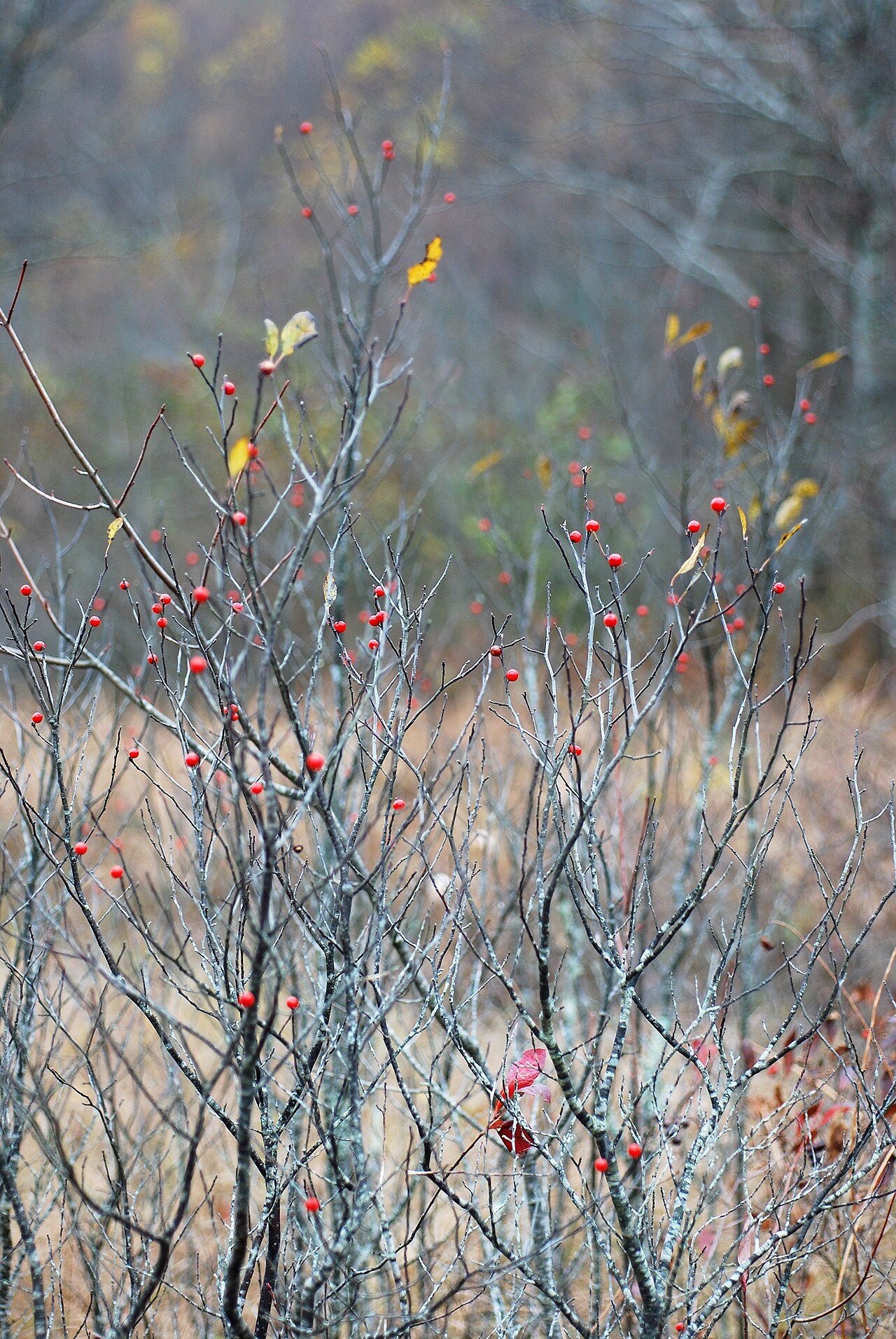
A Season-by-Season Plan
- Summer: water deeply in dry spells so green berries stay on. Look for drops under the shrub.
- Fall: note when berries color. Cut any decorative branches now, spread across the shrub.
- Winter: watch for flocks of robins, waxwings, and bluebirds. Keep a notebook of when the fruit disappears each year.
- Late winter: check for shriveled fruit and bare stalks. Prune only if needed, before growth starts.
- Spring: consider adding females (and a matching male) if you want a longer-lasting display.
📋 More on this plant: read the full Winterberry Holly (Ilex verticillata) profile, or find it in our native plant lists for New Hampshire, Maine & Vermont, Connecticut, Massachusetts & Rhode Island, New York, Pennsylvania & Northern New Jersey, Delaware, Southern New Jersey & Long Island, Maryland, Virginia & West Virginia, North Carolina & South Carolina, Georgia, Alabama & Mississippi, Kentucky & Tennessee, Ohio & Indiana, Michigan, Wisconsin & Eastern Minnesota, and Arkansas, Louisiana, Eastern Oklahoma & Eastern Texas.
Frequently Asked Questions
What eats winterberry berries?
Mostly birds. Maryland Extension lists American robins, cedar waxwings, gray catbirds, and eastern bluebirds, and mockingbirds, thrushes, and sparrows have been seen feeding on it too. Mice and squirrels may also eat the fruit.
Why did all my winterberry berries disappear overnight?
A flock of robins or cedar waxwings probably found it. They can strip a shrub in hours, especially in cold weather when other food is scarce.
Why do birds leave winterberry alone in fall?
The fruit is relatively low in fat and bitter, so many birds eat other foods first. They often turn to winterberry later in winter when those foods run out.
Why are my winterberry berries shriveled and brown?
Freezing, thawing, and age wrinkle and darken the fruit. Some cultivars, including orange-fruited ‘Aurantiaca’ and the serrata hybrids, discolor sooner than others.
Are winterberry berries poisonous?
To people and pets, yes. University of Minnesota Extension says the fruit can be poisonous, and Wikipedia notes it can cause nausea if eaten. Birds eat it without harm.
Sources
- The Natural Web, Where do Winterberries Come From?: carbohydrate-rich fruit passed over until later, flocks of robins or waxwings stripping shrubs in hours, bird and small-mammal consumers.
- Piedmont Master Gardeners (Virginia), Winterberry Holly: fruit timing and persistence, birds waiting until other food is gone, ‘Sparkleberry’ fading, deer browse.
- University of Maryland Extension, Winterberry Holly: bird species that eat winterberry fruit.
- University of Connecticut Plant Database, Ilex verticillata, Common Winterberry: fruit coloring in October, ‘Aurantiaca’ persistence, hybrid discoloration.
- Mt. Cuba Center, Winterberry (Ilex verticillata): fruit as fuel for migrating and overwintering songbirds, Winter Red® color retention.
- North Carolina Extension Gardener Plant Toolbox, Ilex verticillata: deer resistance and fruit abortion in dry soil.
- Ask Extension (University of Maryland Extension answer), Winterberry holly disease: shedding of unripe berries under drought stress.
- University of Minnesota Extension, Winterberry: fruit poisonous to people and pets.
- Wikipedia, Ilex verticillata: fruit persistence, robins, toxicity symptoms.
- U.S. Fish and Wildlife Service, Wikimedia Commons, Northern Mockingbird: mockingbird feeding on winterberry at Parker River National Wildlife Refuge.