Where Buttonbush Fits in a Rain Garden—and Where It Does Not
Last updated: November 6, 2026
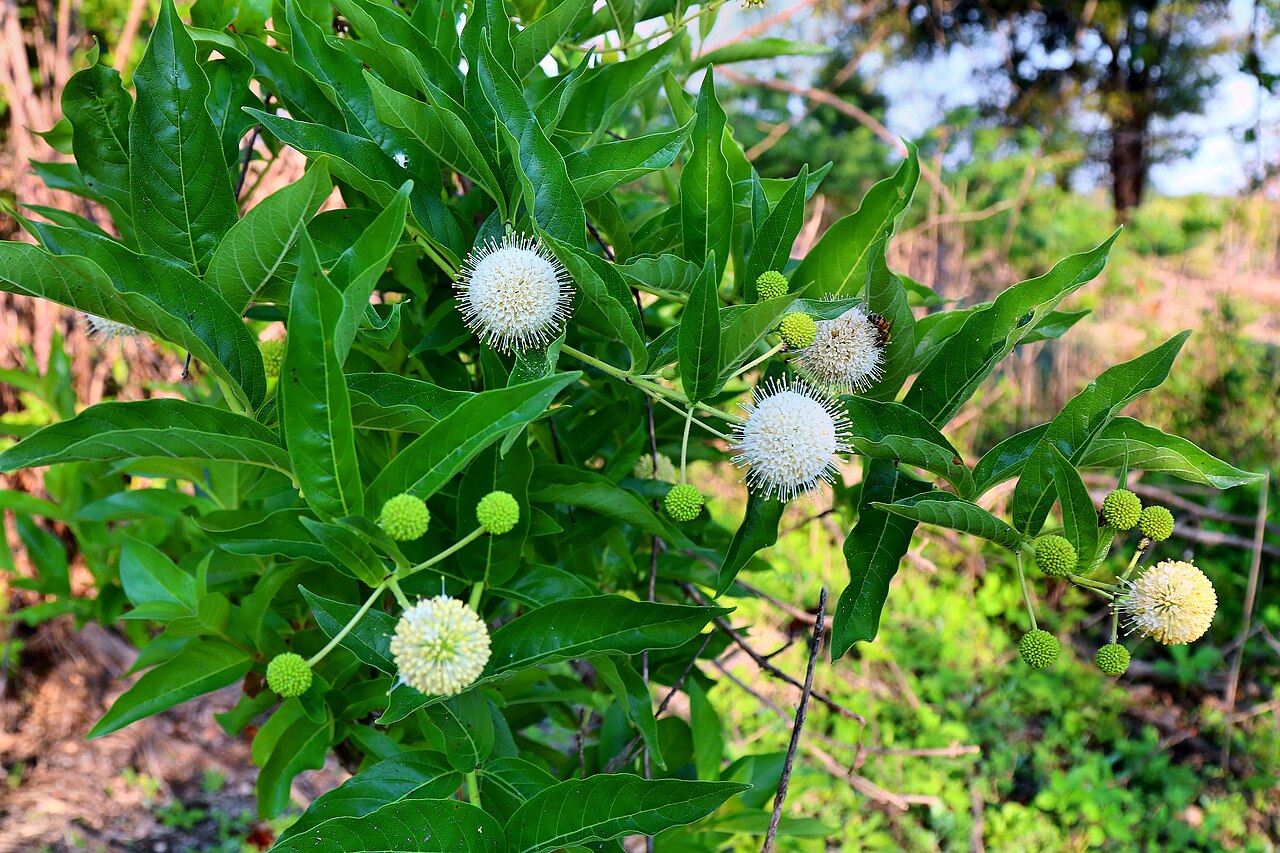
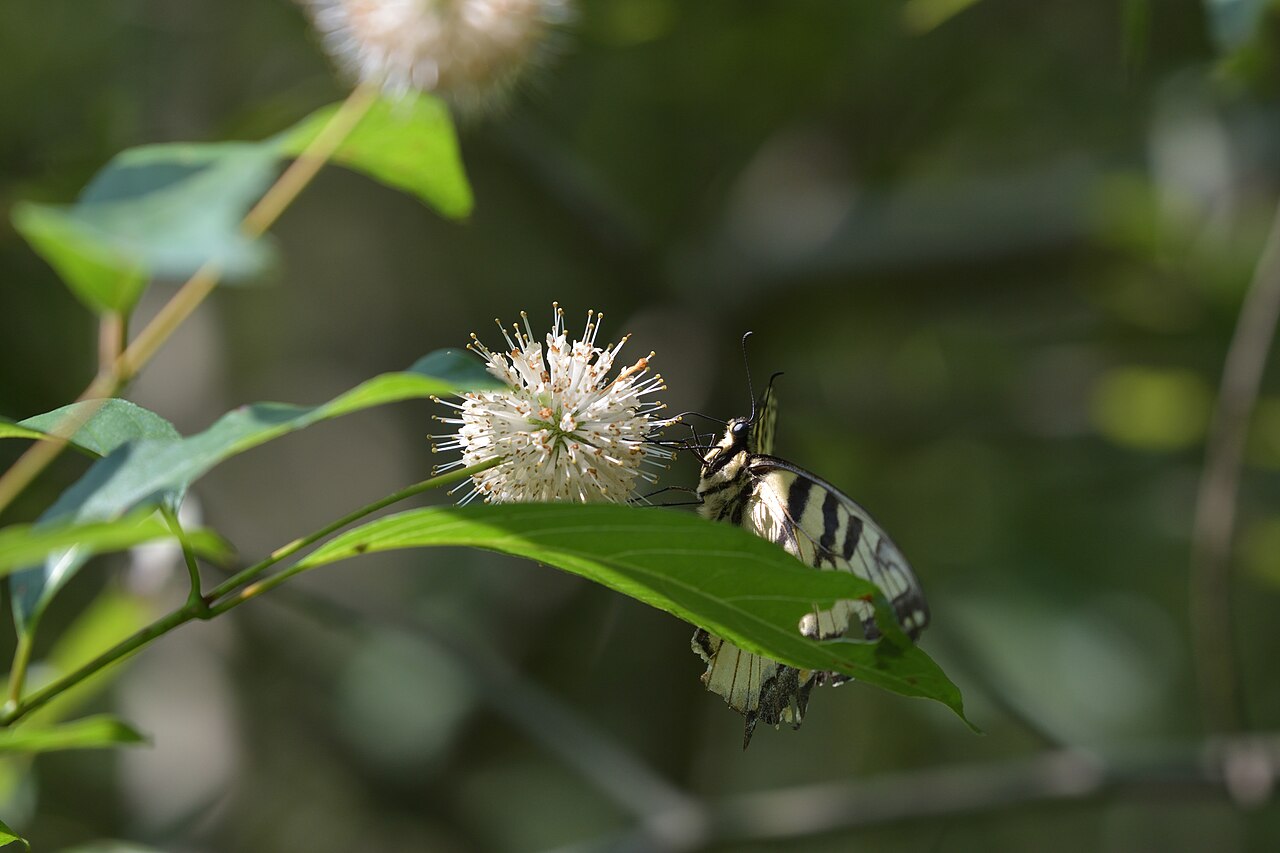
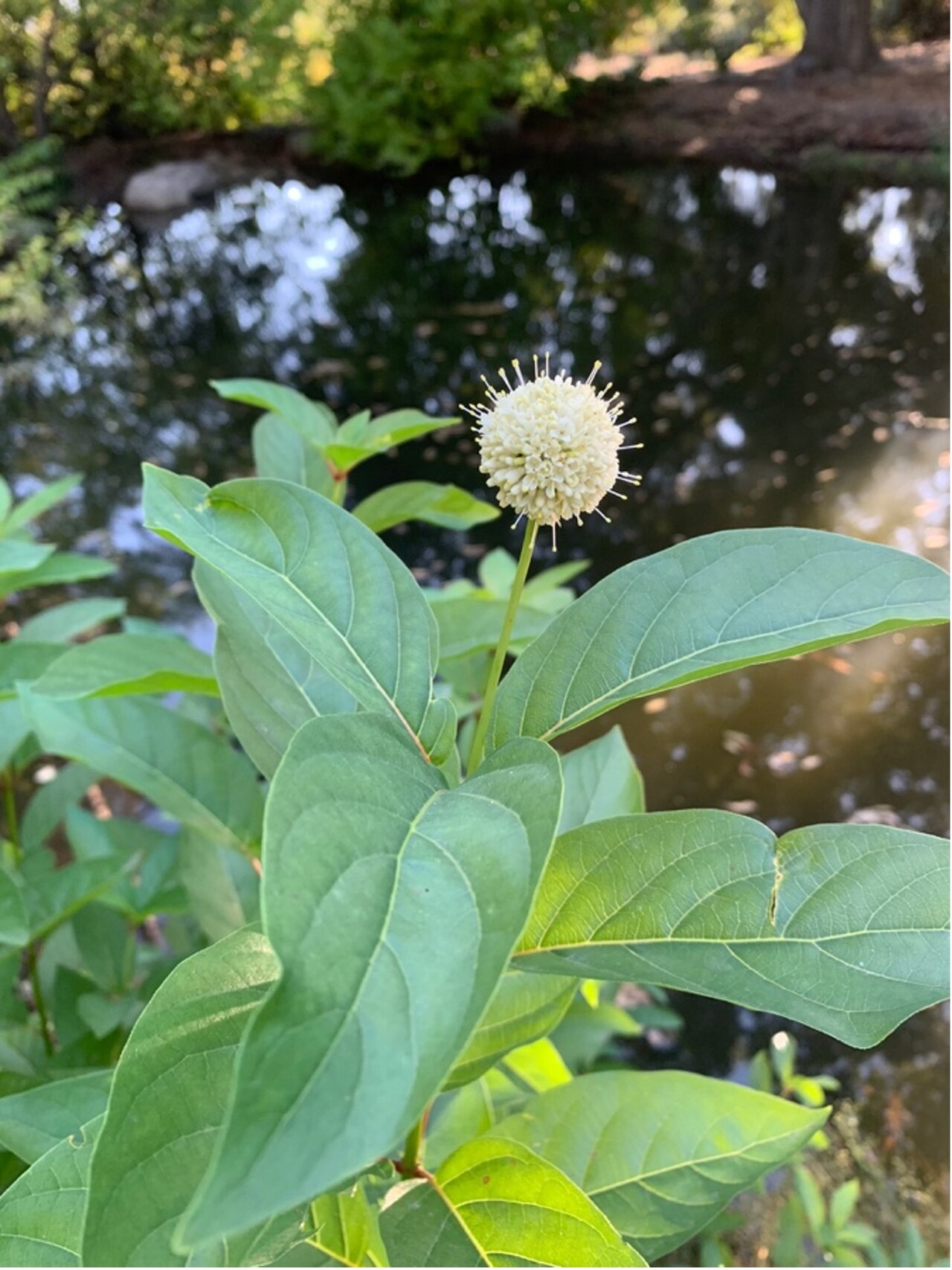
Buttonbush shows up on almost every list of rain garden shrubs. It loves wet soil, its white pincushion flowers pull in butterflies and bees, and it grows fast.
Yet buttonbush is also one of the shrubs most often planted in the wrong part of a rain garden, or in a rain garden that doesn’t suit it at all.
The reason is simple. A well-built rain garden is dry most of the time, and buttonbush wants to be wet most of the time. This guide shows where those two needs overlap, and where they don’t.
Plan at a Glance
- Site: the lowest, longest-wet part of a larger rain garden, a wet swale, or a pond or stormwater basin edge.
- Size: plan for a shrub 5 to 12 feet tall; that usually means a basin well above the smallest home sizes.
- Sun: full sun to part sun. Flowering is poor in shade.
- Soil: consistently moist to wet. Not tolerant of dry soil.
- Maintenance: low; prune in the dormant season or early spring if needed.
- Best regions: most of the East, South and Midwest, plus parts of the Southwest and California. Confirm it is native to your county.
How a Rain Garden Actually Behaves
A rain garden is a shallow, planted basin that catches runoff from a roof or driveway and lets it soak in. University of Nebraska–Lincoln Extension puts it plainly: a rain garden is not a pond or wetland. It is dry most of the time and holds water only after rain.
Extension guides from Minnesota and Nebraska both say standing water should be gone within 48 hours. Penn State aims for 24 hours. Faster drainage protects plants from drowning and keeps mosquitoes from breeding.
The basin also has zones. Penn State notes that a rain garden ranges from very wet to dry, with the berm dry most of the time. The University of Minnesota’s plant list sorts species into wet, upland-mesic and upland-dry zones.
Rain Garden Zones and Buttonbush
| Basin bottom | Wettest after storms. Buttonbush fits if the soil stays moist between rains. |
| Inflow end | Gets water first and most often. Often the best buttonbush spot, set back from the inlet itself. |
| Side slopes | Moist after rain, drier later. Better for chokeberry, winterberry and wet-tolerant perennials. |
| Berm and rim | Dry most of the time. No place for buttonbush. |
What Buttonbush Needs
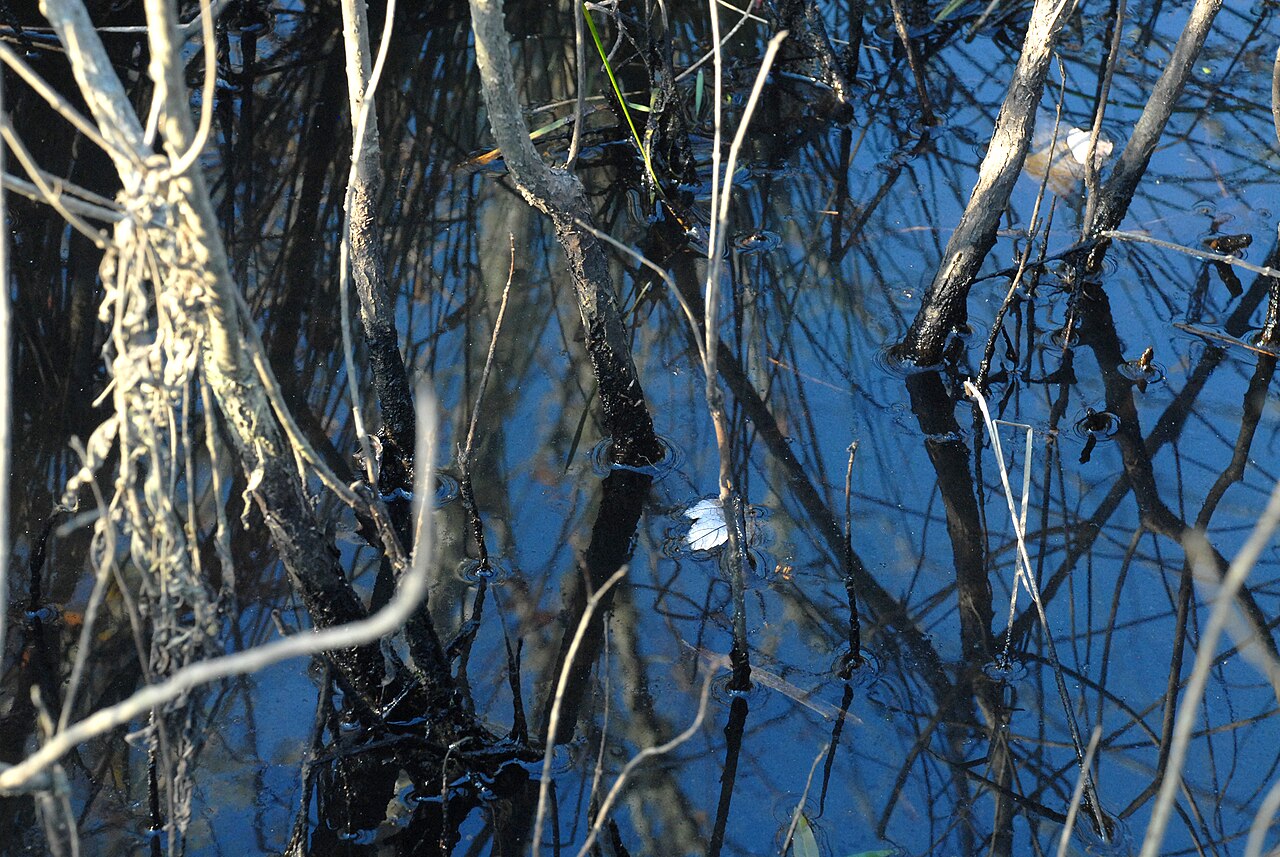
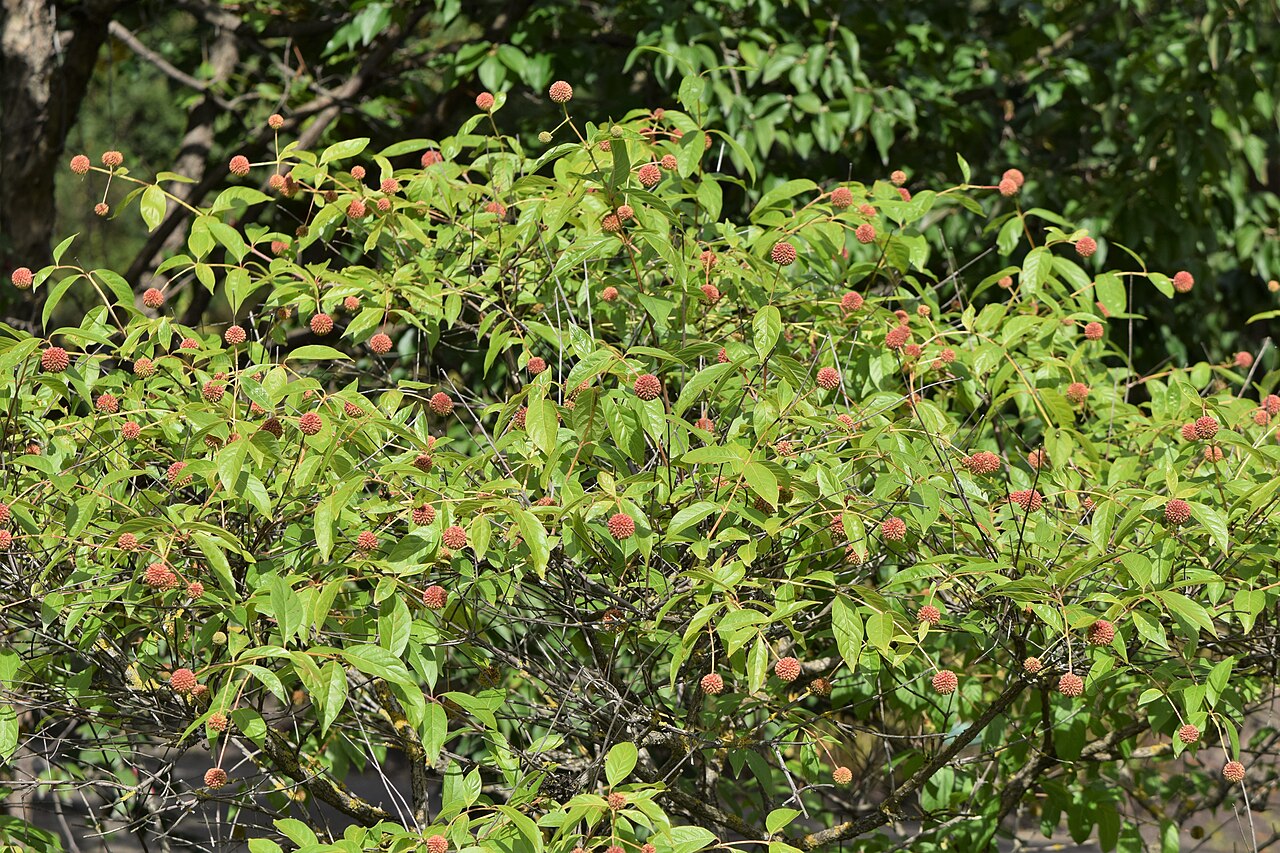
NC State Extension describes buttonbush as needing consistently moist to wet, rich soils in full to partial sun. It grows in swamps, along streambanks and lakeshores, and in standing water up to 3 feet deep.
Penn State Extension’s rain garden plant sheet places it in the “wet/moist” zone and adds a pointed note: not tolerant of dry soil. NC State also says flowering is poor in shade or in dry soils.
Size matters too. Penn State lists 5 to 12 feet tall, and the Lady Bird Johnson Wildflower Center notes 6 to 12 feet, occasionally taller. Penn State adds that self-sown seedlings and root sprouts may form colonies.
Where Buttonbush Fits
The low, slow-draining end of a larger rain garden. If your basin sits on loamy or clay-loam soil that stays damp for days after rain, the deepest part can support buttonbush. Check this in a dry month, not just after a storm.
Near the inflow of a big basin. The end that receives a downspout or swale gets wet first and most often. Place buttonbush a few feet back from the inlet so it doesn’t trap debris or block flow.
Wet swales and drainage ditches. A swale that carries water for long stretches behaves more like a stream edge than a rain garden. NC State lists erosion control on wet sites among buttonbush’s uses.
Pond, stormwater basin and lake edges. This is buttonbush’s home ground. Where water stands for weeks, it often outperforms shrubs that only tolerate brief flooding.
Where Buttonbush Does Not Fit
Small residential rain gardens. Nebraska Extension gives 100 to 300 square feet as a typical home rain garden. A shrub that can reach 12 feet tall, plus seedlings and sprouts, will crowd a basin that size quickly.
Sandy, fast-draining basins. If water vanishes within hours and the bottom is dry by midsummer, buttonbush will be stressed in drought. Choose a shrub rated for “moist/dry” conditions instead.
The berm, rim or side slopes. These zones dry out first. Penn State’s sheet is explicit that buttonbush is not tolerant of dry soil.
Shady sites. NC State lists full to partial sun and notes poor flowering in shade, so a spot under a tree canopy is a poor fit; Nebraska Extension also advises against siting rain gardens directly beneath trees.
Next to the house. This is a rain garden rule, not a buttonbush rule. Minnesota and Nebraska Extension both recommend at least 10 feet between a rain garden and a foundation.
Livestock pastures. The Lady Bird Johnson Wildflower Center notes that the foliage is poisonous and unpalatable to livestock. Keep plantings out of grazed areas.
Better Shrubs for the Parts Buttonbush Can’t Handle
For the side slopes and drier zones, pair buttonbush with shrubs that tolerate both wet spells and dry ones. The University of Minnesota’s list rates black chokeberry for wet, mesic and dry upland zones alike.
Winterberry holly is another option on acidic soils; Penn State places it in the “moist/dry” zone. Our comparison of black chokeberry vs. winterberry for a wet garden edge helps you choose between them.
Plant Palette
| Plant | Role | Height | Sun / moisture | Native range |
|---|---|---|---|---|
| Buttonbush (Cephalanthus occidentalis) | Wettest zone anchor | 5–12 ft | Sun to part sun; wet | East, South and Midwest; parts of the Southwest and California |
| Black chokeberry (Aronia melanocarpa) | Slope shrub | 3–6 ft | Sun to part shade; wet to dry | Northeast, Great Lakes, Appalachians |
| Swamp milkweed (Asclepias incarnata) | Basin perennial | 3–4 ft | Sun; wet to mesic | Southern Canada to the Gulf, east of the Rockies |
| Larger blue flag (Iris versicolor) | Basin perennial | 2–3 ft | Sun to part shade; wet | Northeast and Great Lakes, south to Virginia and North Carolina |
| Great blue lobelia (Lobelia siphilitica) | Late-season color | 2–3 ft | Sun to part shade; wet to mesic | Eastern and central North America |
| Fox sedge (Carex vulpinoidea) | Groundcover, slopes | 1–3 ft | Sun to part shade; moist to wet | Nearly all of the lower 48 and southern Canada |
Heights and zones from Penn State, NC State, the University of Minnesota rain garden list and our plant profiles. Confirm local status before planting.
In the basin itself, pair buttonbush with wet-zone perennials. The University of Minnesota lists swamp milkweed, blue flag iris, great blue lobelia and fox sedge among its wet-zone plants.
Regional Notes
Buttonbush has an unusually wide range. The Lady Bird Johnson Wildflower Center gives New Brunswick and Quebec to the upper Mississippi Valley and eastern Nebraska and Kansas, south to Florida and Texas.
Wikipedia notes a western variety, California button-willow (var. californicus), from west Texas to California. In the arid West, though, it grows only where water is permanent, so it suits a pond edge far better than a rain garden that dries out.
In the Northeast and upper Midwest, check hardiness. NC State lists zones 5 to 9 and Penn State 4 to 10. Where buttonbush isn’t reliable, black chokeberry can take its place in the wet zone.
Installation Steps
- Do the drainage test first. Minnesota Extension suggests digging a hole 10 inches deep, filling it with water, and checking that it drains within 48 hours.
- Observe the basin after storms. Penn State recommends marking which areas stay wet longest. That’s your buttonbush zone, if one exists.
- Check it again in a dry spell. If that zone dries out completely in summer, skip buttonbush or plan to water it.
- Allow room. Give each buttonbush several feet in every direction, and keep it away from the inlet and outlet.
- Plant and mulch. Set the shrub at nursery depth. Penn State suggests about 2 inches of mulch across a rain garden to hold moisture and suppress weeds.
- Fill in around it. Plant wet-zone perennials closely in the basin and drier-zone plants on the slopes and berm.
For full basin construction, start with our step-by-step guide on how to start a rain garden, then use our rain garden plant selection guide for the slopes and rim.
First-Three-Years Maintenance Calendar
- Year 1, summer: water during dry spells, especially if the basin dries out between storms.
- Year 1, fall: clear sediment and debris from the inlet so water spreads evenly.
- Year 2, spring: pull seedlings and sprouts that come up where you don’t want more buttonbush.
- Year 2–3, late winter: prune only if needed, during the dormant season or early spring before new growth, as Penn State advises.
- Every year: watch flowering. Few flowers usually point to too much shade or too little water.
Mistakes to Avoid
- Planting it on the berm. The rim is the driest part of the garden.
- Squeezing it into a small basin. It can outgrow a typical home rain garden.
- Assuming “rain garden plant” means “any rain garden.” Match the plant to the zone and the drainage speed.
- Planting it to fix a garden that never drains. If water stands for more than two days, the problem is the site, not the plant list.
- Blocking the inlet or overflow. Leave clear paths for water in and out.
📋 Check your region: buttonbush appears in our native plant lists for New York, Pennsylvania & Northern New Jersey, Ohio & Indiana, Illinois, Iowa & Missouri, Georgia, Alabama & Mississippi, and California & Nevada.
Frequently Asked Questions
Is buttonbush good for a rain garden?
Only in the right spot. It suits the wettest, slowest-draining part of a larger rain garden. It is a poor fit for small, fast-draining gardens that are dry most of the time.
Can buttonbush grow in standing water?
Yes. NC State notes it grows in standing water up to 3 feet deep. That’s why it often does better at a pond edge than in a rain garden designed to drain within a day or two.
How big does buttonbush get?
Penn State lists 5 to 12 feet tall, and the Lady Bird Johnson Wildflower Center notes it can occasionally grow taller. It may also spread by seedlings and root sprouts.
Will buttonbush survive if my rain garden dries out in summer?
It may struggle. Penn State says it is not tolerant of dry soil, and NC State notes poor flowering in dry conditions. Water it in drought, or choose a shrub rated for moist-to-dry zones.
Is buttonbush poisonous?
The Lady Bird Johnson Wildflower Center describes the foliage as poisonous and unpalatable to livestock. Keep it out of pastures, and don’t let animals graze it.
Sources
- NC State Extension Gardener Plant Toolbox, Cephalanthus occidentalis: moisture and light needs, standing water to 3 feet, poor flowering in shade or dry soil, size, zones, wildlife.
- Penn State Extension, Rain Garden Plants: Buttonbush, Winterberry and An Introduction to Rain Gardens: hydrologic zones, intolerance of dry soil, spread, pruning, 24-hour drainage, mulch.
- University of Minnesota Extension, Building a rain garden: 48-hour drainage, drainage test, setbacks, plant list by moisture zone.
- University of Nebraska–Lincoln Extension, Stormwater Management: Rain Garden Design for Homeowners: rain gardens are not wetlands, typical size, siting.
- Lady Bird Johnson Wildflower Center, Cephalanthus occidentalis: native distribution, habitat, size, livestock warning.
- Wikipedia, Cephalanthus occidentalis: western variety and range.