A Native Corner Bed Around One Small Tree: A Fringetree Example
Last updated: November 7, 2026
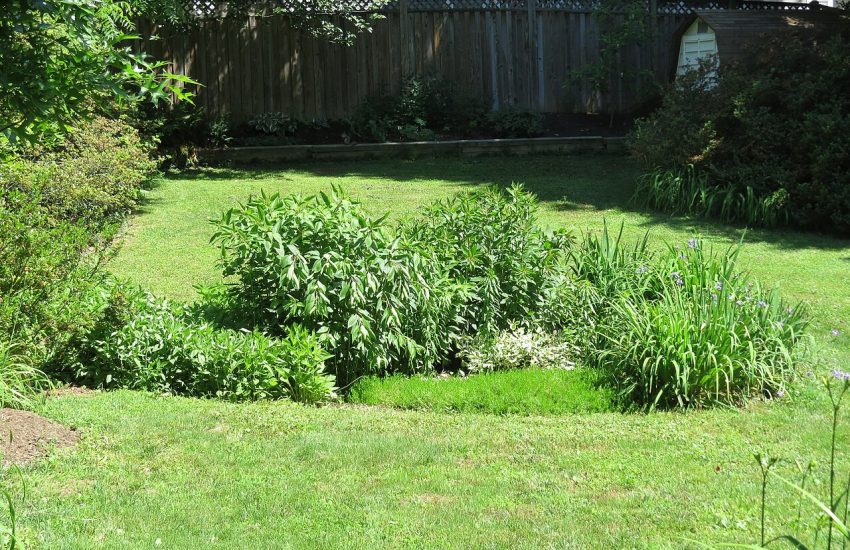
Corners are the hardest part of a yard to plant well. They are too big to leave as lawn edges, too awkward for a straight border, and often end up with a random shrub stuck in the point.
A single small native tree solves the problem. It gives the corner height and a reason to exist, and the planting beneath it can be simple, layered and low-maintenance.
This plan uses fringetree as the example tree, because it stays small, flowers heavily in spring and suits many eastern yards. The same layout works with other small native trees where fringetree is not native.
Plan at a Glance
| Site | A front-yard corner, the corner of a lot, or an outside house corner |
| Size | Example bed is roughly 12 by 12 feet with a curved front edge |
| Sun | Full sun to part shade for the tree; the understory shifts toward shade as it grows |
| Soil | Average, moist but well-drained soil |
| Maintenance | Light pruning of the tree, spring cleanup of perennials |
| Best regions | Southeast, Mid-Atlantic and lower Midwest, within fringetree’s native range |
Is Fringetree Right for Your Corner?
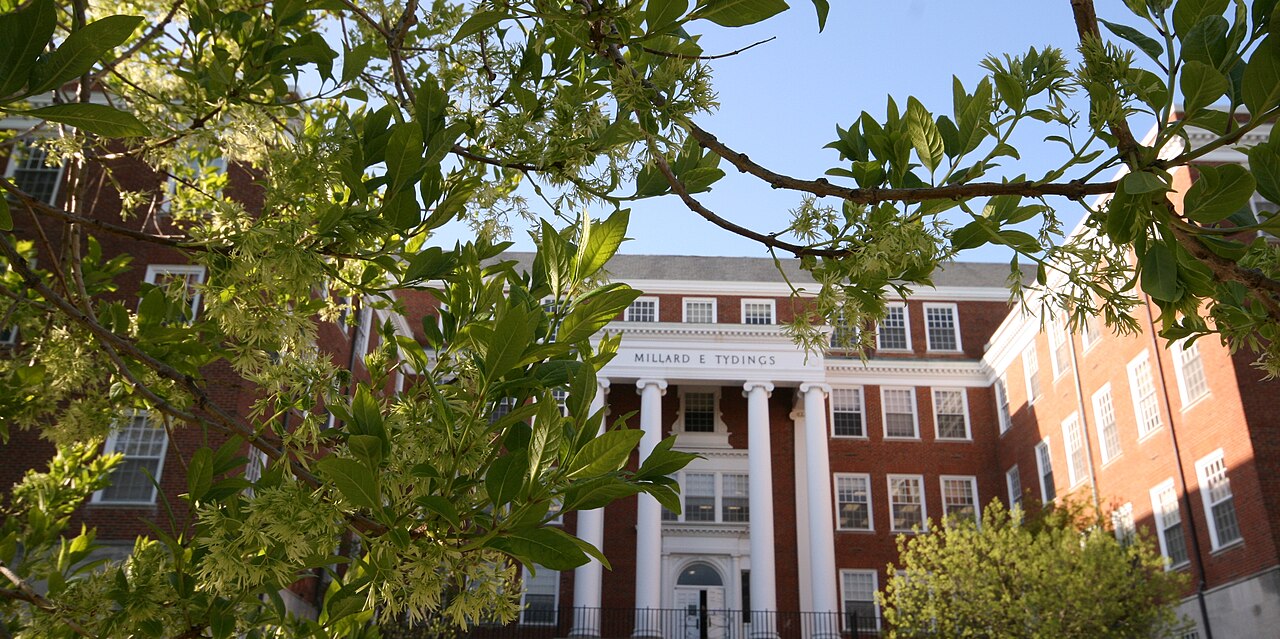
NC State Extension describes fringetree as a small deciduous tree that generally grows 12 to 20 feet tall and wide, with a rounded, often multi-stemmed habit. It grows about 6 to 10 inches a year, so a young tree stays in scale with a corner bed for many years.
The same source notes it flowers best in full sun and has its best foliage in part shade. It tolerates clay and some drought once established.
The Lady Bird Johnson Wildflower Center lists its native range as Florida to eastern Texas, north to New Jersey, southern Ohio, southern Missouri and Oklahoma. If you garden outside that range, use a small tree native to your own area in the same position.
Measure the Corner and Place the Tree First
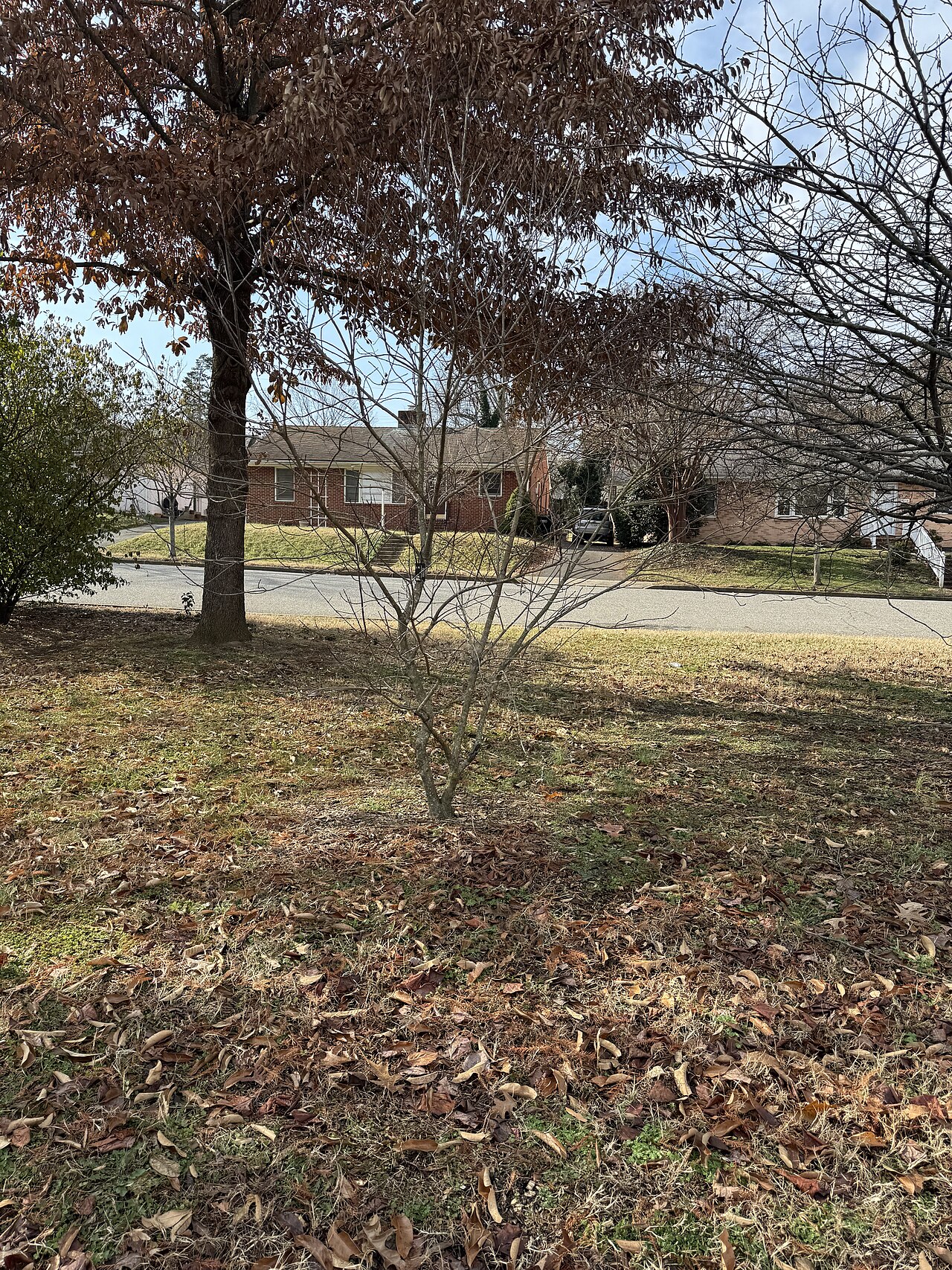
Every other decision depends on where the trunk goes. Measure both edges of the corner and mark anything the tree must stay clear of: walls, eaves, driveways, utility boxes and overhead lines.
Because fringetree commonly reaches 12 to 20 feet wide, keep the trunk at least half that spread from walls and eaves. Next to a house, that usually means about 8 to 10 feet out from both walls.
At a lot corner, avoid jamming the tree into the point. Set it 6 to 8 feet in from each edge so the canopy sits over the bed rather than over the sidewalk or the neighbor’s yard.
If the corner is beside a driveway or street intersection, keep the area nearest the pavement low for visibility. Many towns regulate plantings near corners, so check local rules before you plant.
For more detail on spacing a fringetree from hardscape, see fringetree near a patio.
Design the Bed in Three Zones
Think of the bed as three rings around the trunk. Each zone has different light and different rules for digging.
Zone 1: The trunk circle (about 1 foot)
Leave this area unplanted. Penn State Extension advises against adding soil within one foot of the trunk and suggests starting new plants about a foot away.
Zone 2: Under the canopy
This zone becomes shadier every year as the tree grows. Plant low woodland perennials here, set in small holes between roots.
Zone 3: The sunny outer edge
The outer curve gets the most light and is the most visible from the street. This is the place for a small shrub, taller perennials and the brightest flowers.
Plant Palette
Corner Bed Plant Palette
Heights and ranges are from NC State Extension and the Lady Bird Johnson Wildflower Center. Confirm each species is native to your area.
| Plant | Role | Height | Sun / moisture | Native range |
|---|---|---|---|---|
| Fringetree (Chionanthus virginicus) | Anchor tree | 12–20 ft (up to 30) | Sun to part shade; moist, well-drained | Florida to east Texas, north to NJ, southern Ohio and Missouri |
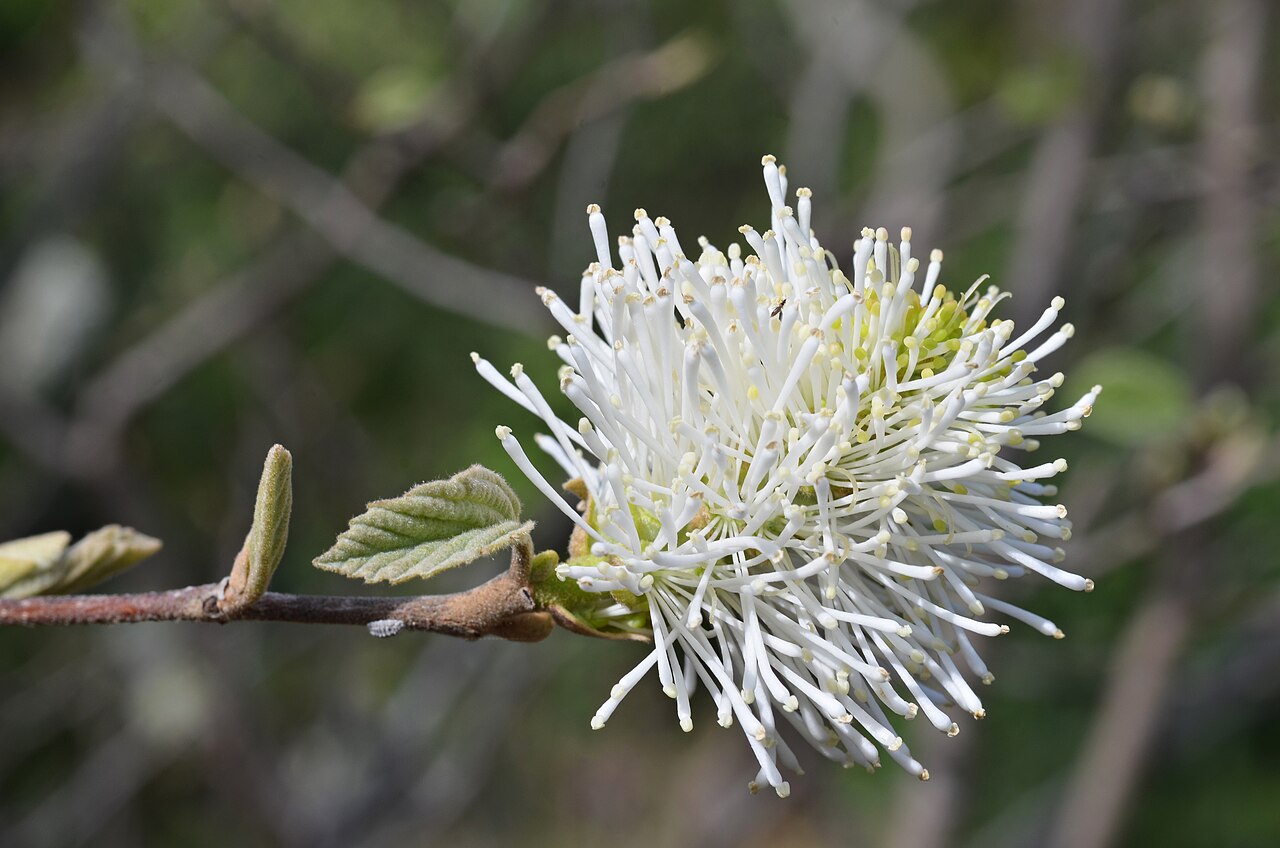
| Dwarf fothergilla (Fothergilla gardenii) | Shrub for the sunny edge | 1.5–3 ft | Sun to part shade; moist, acidic | Coastal plain, N.C. to Mississippi and Tennessee |
| Christmas fern (Polystichum acrostichoides) | Evergreen structure | 1–3 ft | Part to full shade; moist, well-drained | Eastern North America |
| Alumroot (Heuchera americana) | Foliage groundcover | Usually about 18 in in flower | Part shade to shade; dry to moist | Connecticut to Ontario and Michigan, south to Georgia and Oklahoma |
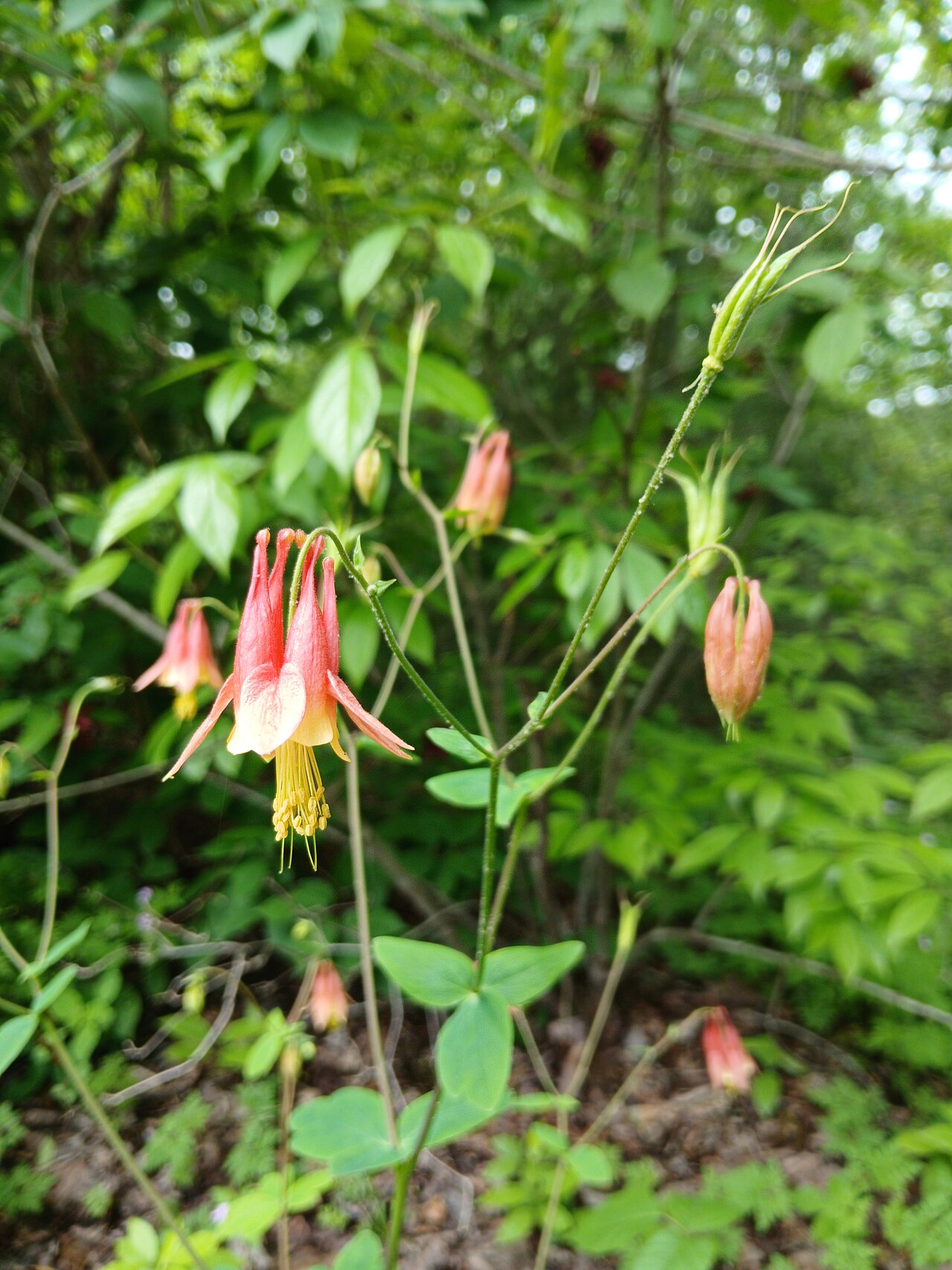
| Wild columbine (Aquilegia canadensis) | Spring flowers, outer zone | Up to about 3 ft | Part shade; moist, well-drained | Much of North America east of the Rockies |
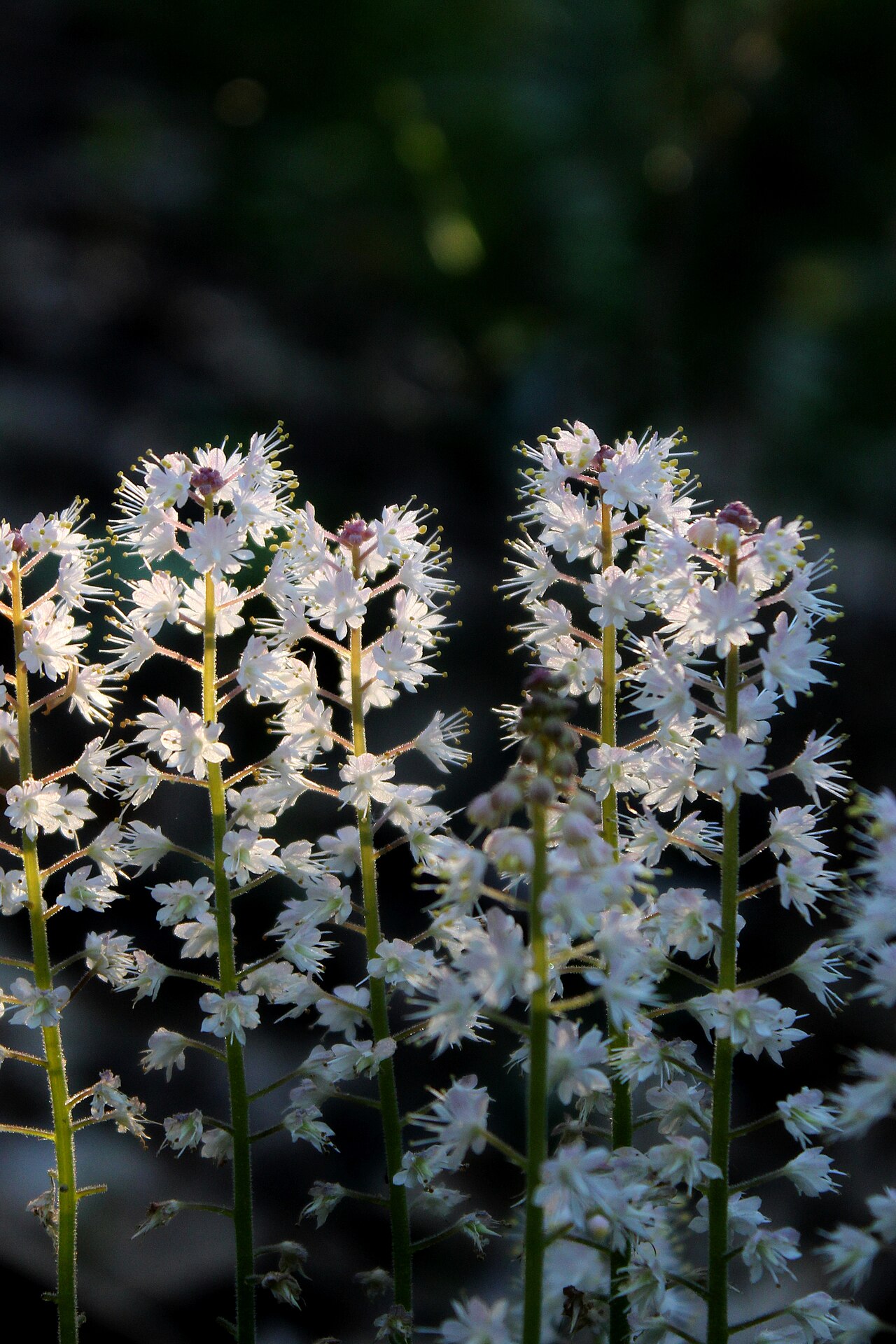
| Foamflower (Tiarella cordifolia) | Spring flowers, shady zone | 5 in–1 ft | Part to full shade; moist | New Brunswick to Michigan, south to Georgia and Mississippi |
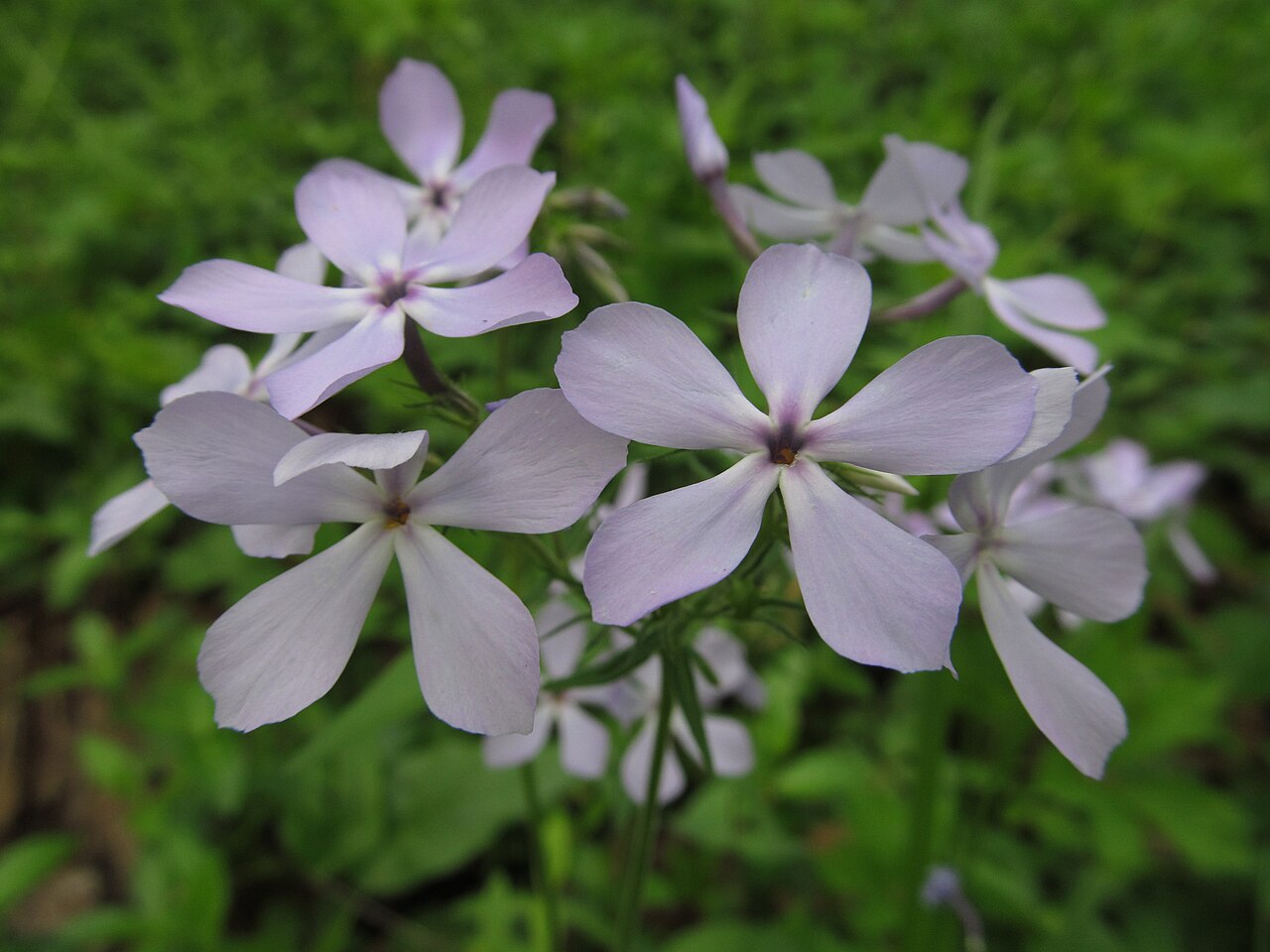
| Woodland phlox (Phlox divaricata) | Spring flowers, shady zone | 6–12 in | Part to full shade; moist, well-drained | Southern Quebec and Ontario to Minnesota, south to the Southeast |
How the zones use the palette
Put one or two dwarf fothergilla on the sunniest part of the outer curve. The Wildflower Center notes fothergilla flowers and colors best with as much sun as possible and should not go in very dry sites.
Under the canopy, mix foamflower and woodland phlox as a low carpet. Add three Christmas ferns for evergreen structure through winter.
Along the outer edge and between zones, repeat alumroot for foliage and wild columbine for spring flowers. Repeating a few species keeps the bed calm, the same idea behind three native plants repeated well.
Quantities for a 12 × 12-Foot Corner
Spacing is based on each plant’s mature width. Adjust counts to the real shape of your corner.
| Plant | Zone | Spacing | Quantity |
|---|---|---|---|
| Dwarf fothergilla | Sunny outer curve | 3–4 ft | 1–2 |
| Christmas fern | Under canopy | 2–3 ft | 3 |
| Alumroot | Outer edge and between zones | 15–18 in | 5 |
| Wild columbine | Outer edge | 15–18 in | 7 |
| Foamflower | Under canopy | 12–15 in | 9 |
| Woodland phlox | Under canopy | 12–15 in | 9 |
A Season-by-Season Picture
In early spring, columbine, foamflower and woodland phlox carry the bed. Dwarf fothergilla adds white bottlebrush flowers in April and May.
The fringetree blooms from about April into June, according to the Wildflower Center, with fragrant, fringe-like white flowers. Female trees can follow with blue-black fruit in late summer that birds eat.
Through summer, the bed is mostly green texture: fern fronds, alumroot leaves and the tree’s glossy canopy. In fall, NC State notes fringetree turns a clear yellow, and fothergilla adds its own fall color on the sunny edge.
Installation Steps
- Plant the tree first. NC State notes fringetree is best transplanted when small, because larger plants resent root disturbance. Set it at the same depth it grew in the pot, with the root flare visible.
- Mark the zones. Use flour or a hose to outline the trunk circle, the canopy zone and the outer curve.
- Remove turf by hand. Penn State Extension recommends a hand trowel rather than a spade near tree roots, and never using herbicide to clear the area.
- Don’t build a raised bed. Nebraska Extension warns that adding soil over tree roots reduces oxygen and can cause slow decline. Penn State suggests adding no more than 2 inches of soil or compost.
- Use small plants. Plugs and small divisions need smaller holes. If you hit a root 2 inches or thicker, refill the hole and move over, per Penn State.
- Mulch lightly. Spread an inch or two of finely shredded bark, keeping it off the trunk.
- Water deeply through the first growing season. See watering a new fringetree for a first-year schedule.
The First Three Years
- Year 1, spring and summer: water the tree and perennials during dry spells. Expect the tree to put most of its energy into roots.
- Year 1, fall: leave fallen leaves in the bed as natural mulch.
- Year 2, spring: cut back dead perennial stems, replace any losses with the same species, and remove only broken or crossing branches on the tree.
- Year 2, summer: as the canopy widens, move any struggling sun-lovers toward the outer curve.
- Year 3: the canopy zone should be closing in. Divide crowded foamflower or phlox and use the divisions to fill gaps instead of buying new plants.
- Every year: watch for signs of stress. NC State notes fringetree has some susceptibility to scale and borers, especially when drought-stressed, and is sometimes attacked by emerald ash borer. Ask a certified arborist or your extension office if you see branch dieback.
Mistakes to Avoid
- Putting the tree in the very point of the corner. It crowds walls and paths and leaves no room for the understory.
- Piling soil or mulch against the trunk. Keep the trunk circle bare and the mulch thin.
- Digging large holes under an established tree. Use plugs, small holes and hand tools.
- Enriching the soil heavily. The Wildflower Center notes rich soil makes wild columbine grow rank and shortens its life.
- Ignoring native range. Fringetree and dwarf fothergilla have specific native ranges; use local small trees and shrubs outside them.
Regional Alternates
The layout works anywhere; only the plant list changes. Use these swaps as a starting point.
- North of fringetree’s native range: use a small native tree from your state list, such as a native serviceberry, in the same position.
- Outside the Southeast coastal plain: replace dwarf fothergilla with a small shrub native to your area that tolerates part shade.
- Drier corners: lean on alumroot and Christmas fern, and see the dry-shade native border guide for more under-tree options.
For a lower, sunnier planting that leads up to a corner bed, see the native walkway border plan.
📋 Check the plants above against your regional list, such as North Carolina and South Carolina, Georgia, Alabama and Mississippi, or Maryland, Virginia, and West Virginia.
Frequently Asked Questions
How far from the house should I plant a fringetree?
Keep the trunk at least half the tree’s mature spread from walls and eaves. With a typical spread of 12 to 20 feet, that usually means about 8 to 10 feet from the house.
Can I plant perennials under an existing fringetree?
Yes, if you work carefully. Use small plants and small holes, start about a foot from the trunk, and avoid adding more than about 2 inches of soil, per Penn State Extension.
Will my fringetree have berries?
Only female trees produce the blue-black fruit, and NC State notes it can be hard to tell males from females in the nursery unless fruit is present. Both are attractive in bloom.
Should I choose a single-trunk or multi-stem fringetree?
Fringetree is naturally multi-stemmed but can be trained to a single trunk. A single trunk leaves more room for underplanting; a multi-stem tree reads more like a large shrub.
What if my corner is mostly shade?
Fringetree flowers best in sun, so heavy shade will reduce bloom. In that case, focus on the shade layer and consider a more shade-tolerant small tree.
Sources
- NC State Extension Plant Toolbox: Chionanthus virginicus
- Lady Bird Johnson Wildflower Center: Chionanthus virginicus
- Penn State Extension: Underplanting Trees, Respect the Roots
- Nebraska Extension in Lancaster County: Planting Under Trees
- NC State Extension Plant Toolbox: Fothergilla gardenii
- Lady Bird Johnson Wildflower Center: Fothergilla gardenii
- NC State Extension Plant Toolbox: Tiarella cordifolia
- Lady Bird Johnson Wildflower Center: Tiarella cordifolia
- NC State Extension Plant Toolbox: Phlox divaricata
- Lady Bird Johnson Wildflower Center: Heuchera americana
- Lady Bird Johnson Wildflower Center: Aquilegia canadensis
- NC State Extension Plant Toolbox: Polystichum acrostichoides