
How to Water a Newly Planted Fringetree Through Its First Growing Season
Last updated: November 6, 2026
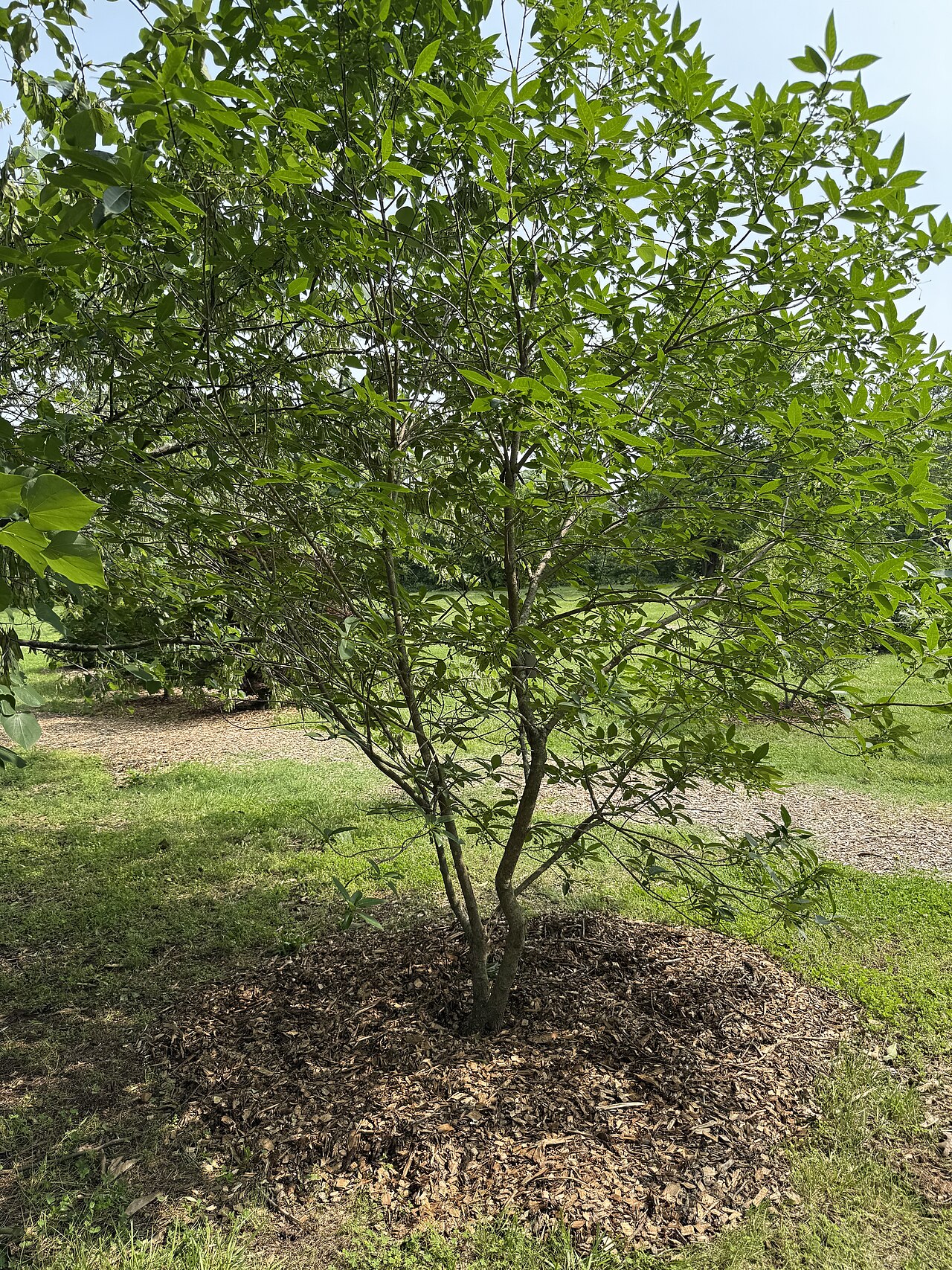
A new fringetree is in the ground. For the next several months, water is the single biggest thing you control.
Fringetree has a reputation as a tough, low-maintenance native. That’s true once it’s established. In its first season, though, it’s a slow-growing tree sitting on a small root ball, and it depends on you.
This guide gives you a week-by-week schedule, shows you how to check whether the tree actually needs water, and explains how to adjust for clay, sand, heat, and rain.
The Short Answer
For a newly planted white fringetree (Chionanthus virginicus):
- Soak it at planting, directly over the root ball.
- Weeks 1–2: water daily. Weeks 3–12: every 2 to 3 days. After that: about once a week until it’s established.
- Check the soil before you water. Moist an inch or two down means wait.
- Water slowly and deeply, over the root ball and a little beyond it.
- Keep going into fall until the ground freezes, and plan on help through dry spells for two or three years.
How a New Fringetree Gets Its Water
When a tree comes out of a nursery pot or field, almost all of its roots are inside the root ball. For the first weeks, that ball of roots is the only thing that can take up water.
Clemson Extension’s planting guide makes the point plainly: the root ball has to be watered directly at first, because the roots have not yet spread into the surrounding soil. Rain or a sprinkler can wet the yard while the root ball stays dry.
Container root balls are especially tricky. They’re usually a lighter, bark-based mix that dries faster than garden soil. Clemson warns that even a half-inch of extra soil piled over the root ball can keep water from getting into it.
Fringetree adds its own wrinkle. It grows slowly, about 6 to 10 inches a year according to Clemson and NC State, and it doesn’t like having its roots disturbed. A slow tree takes longer to grow out of its root ball, so the careful-watering period lasts longer than it would for a fast grower.
First-Season Watering Schedule
| Planting day | Water slowly until the root ball and backfill are soaked. |
| Weeks 1–2 | Daily, unless more than about an inch of rain fell that day. |
| Weeks 3–12 | Every 2 to 3 days. Check the soil first. |
| Week 13 onward | About once a week, more often in heat and drought. |
| Fall | Keep watering when dry until the soil freezes. |
Intervals from University of Minnesota Extension’s guidance for newly planted trees and shrubs. Treat them as a starting point and let the soil check decide.
Step 1: Set Up the Planting So Water Goes Where It Should
Good watering starts at planting. A few details decide whether your water reaches the roots or runs off across the lawn.
- Top of the root ball level with the soil surface. Only mulch goes over the root ball, never extra soil.
- A low ring of soil, about 3 to 4 inches high, at the edge of the root zone. This holds water while it soaks in.
- No turf over the roots. University of Minnesota Extension notes that grass outcompetes young woody roots in the top few inches of soil.
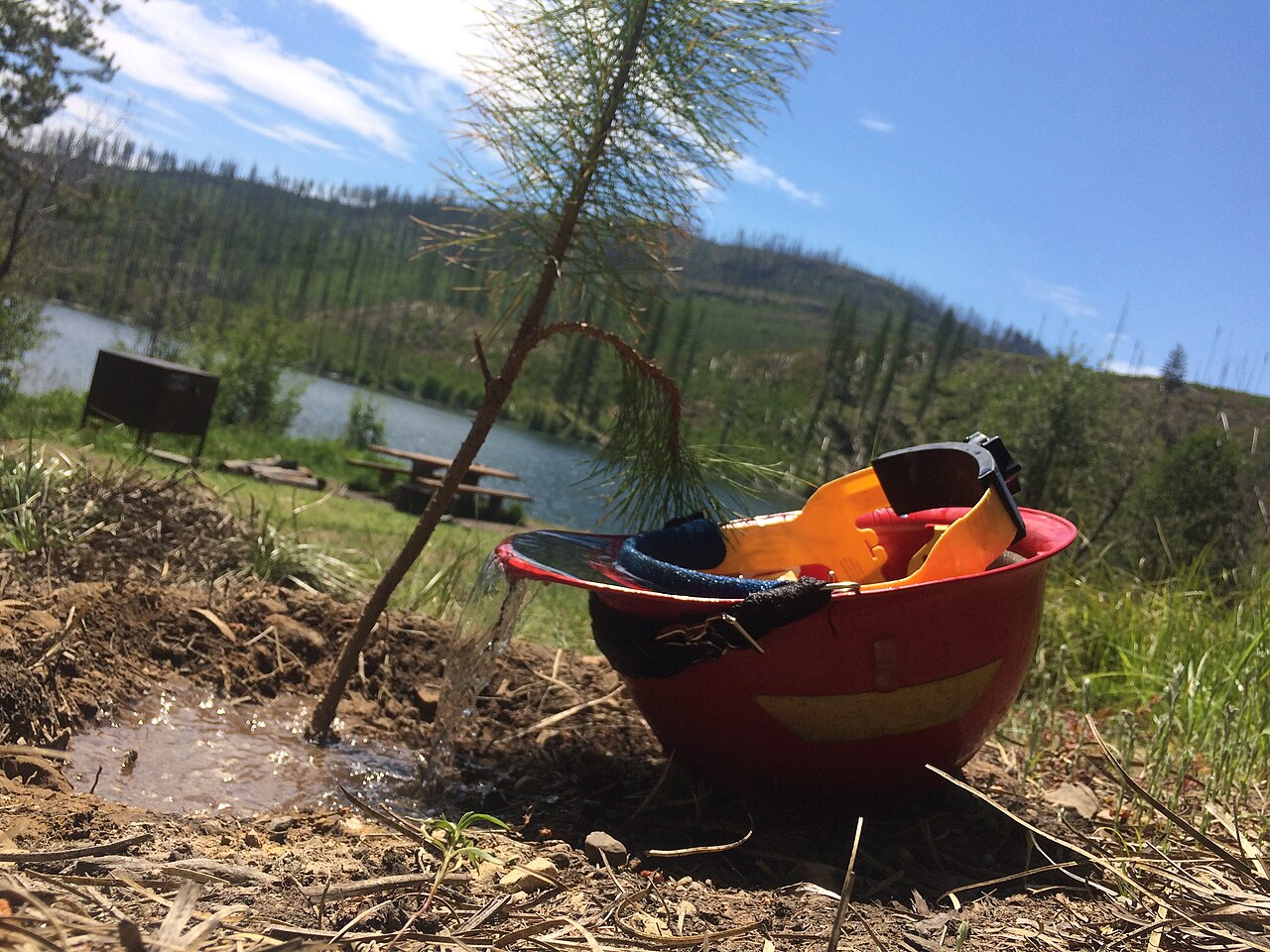
Planting depth matters for more than water. If you haven’t planted yet, our guide to caring for young saplings covers depth, root-ball prep, and early aftercare.
Step 2: Give It a Deep Soak on Planting Day
Fill the basin with a slow trickle from a hose, let it drain, and fill it again. You want the root ball and the loosened backfill around it wet all the way through.
The backfill matters too. Minnesota Extension says keeping it moist encourages roots to grow out of the root ball and into the surrounding soil.
If you can, water before you mulch to settle the soil, then water again lightly after the mulch is down.
Step 3: Follow the Schedule, but Check the Soil First
The intervals in the schedule box are a framework. Your soil, your weather, and the size of your tree will move them around.
The Morton Arboretum recommends watering based on soil and weather rather than a fixed calendar. Their test is simple: push a hand trowel into the soil, tip out an inch or two, and look.
- Moist: skip watering today.
- Dry: water now.
Check right at the edge of the root ball, not just in the garden soil around it. The root ball can be dry while the soil a foot away is still damp.
Rain counts less than you’d think. Minnesota Extension advises skipping a scheduled watering only after substantial rain, on the order of an inch or more in a day. A passing shower rarely reaches the root ball through the mulch.
Step 4: Apply Enough Water, Slowly
How much depends on how big the tree is. Minnesota Extension’s rule of thumb for young trees is 1 to 1.5 gallons per inch of trunk diameter at each watering. A shrubby multi-stemmed plant can be treated more like a shrub. For those, they suggest about a quarter to a third of the volume of the pot it came in.
For a typical nursery fringetree, that works out to a few gallons at a time. That’s less than most people expect, which is exactly why frequency matters so much early on.
Apply it slowly. A trickle from a hose for several minutes, a bucket with a few small holes in the bottom, or a slow-release watering bag all let water sink in rather than run off.
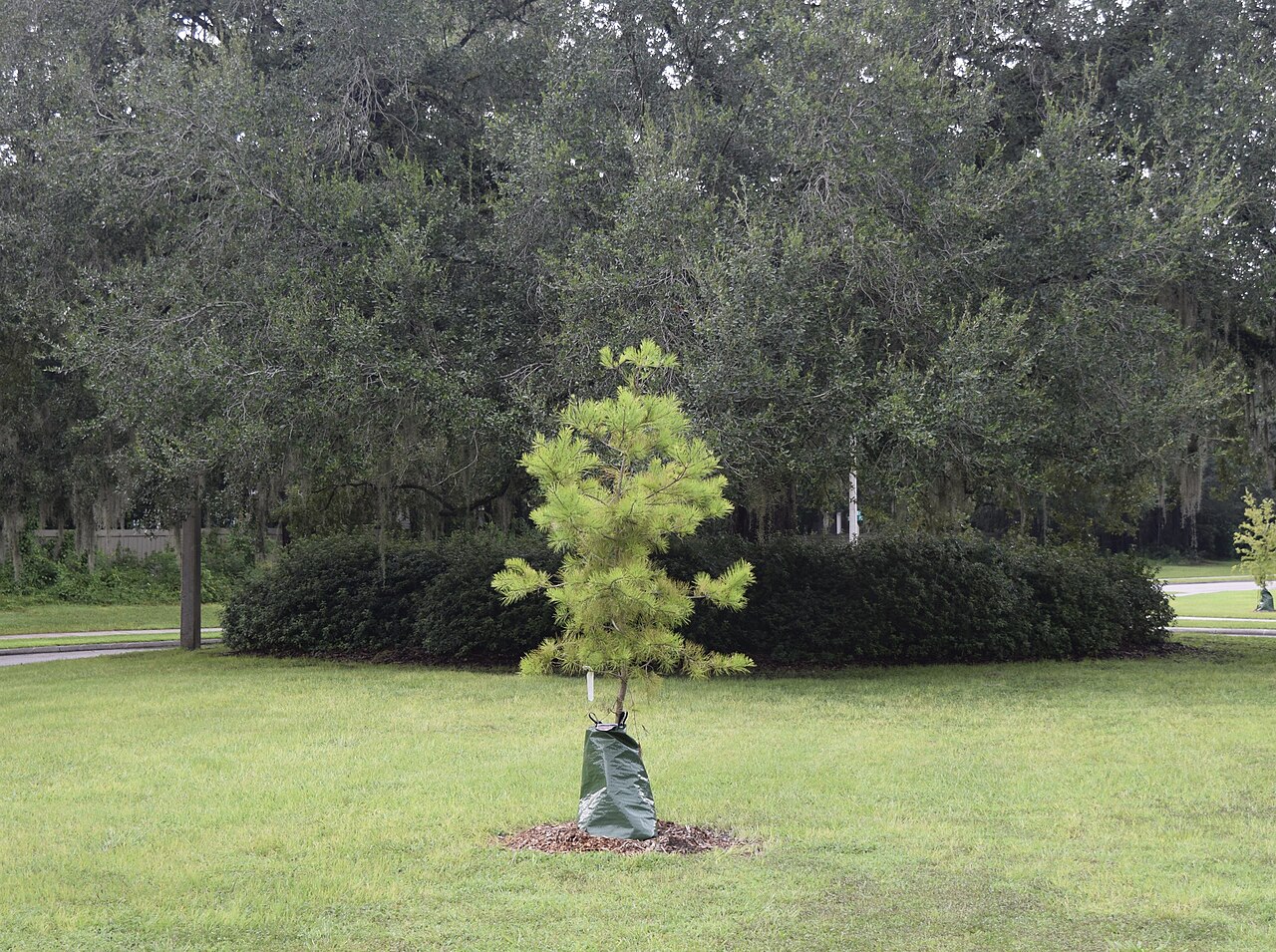
A note on bags: The Morton Arboretum points out that they’re supposed to empty within a few hours. An empty bag doesn’t mean something’s wrong. It means the water went into the root ball as intended.
For more on hoses, bags, and how deep water should go, see our watering guide for shrubs and trees.
Step 5: Mulch to Hold the Moisture
Mulch is the easiest way to stretch every watering. Minnesota Extension recommends a 3-inch layer of organic mulch reaching several feet past the branch tips, with the root flare left bare.
More is not better. The same guidance warns that thick mulch can shed water before it reaches the roots, keep poorly drained soil too wet, and encourage roots to grow up into the mulch.
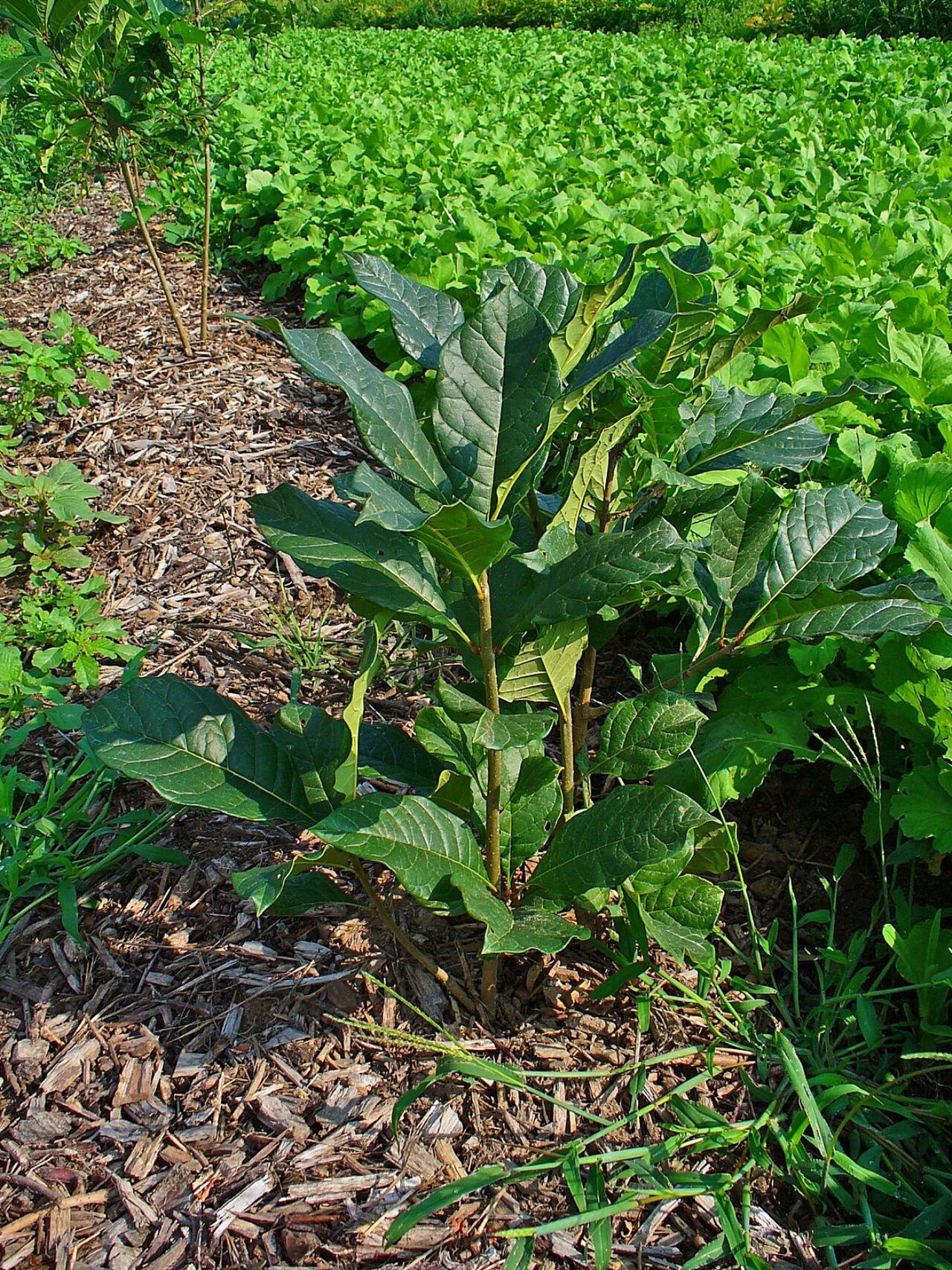
Keep the mulch pulled a few inches away from the stems. Our mulching techniques for native gardens walk through material choices and depth.
Step 6: Adjust for Your Soil
Fringetree is adaptable. NC State notes it tolerates clay and some drought, and Clemson lists a preference for moist, deep, well-drained, acidic soil. But soil type changes how you water a new one.
Sandy or fast-draining soil: water dries out of the root ball quickly. Expect to stay near the short end of each interval, and check more often in hot weather.
Clay or poorly drained soil: the risk flips. Clemson’s planting guide observes that plants in poorly drained soil more often get too much water than too little. Their fringetree fact sheet also lists Phytophthora root rot as a problem in poorly drained soil.
In clay, the soil check matters most. If the soil an inch or two down is still wet, wait, even if the calendar says to water. If water sits in the planting basin for hours, back off, and see our tips for improving clay soil before your next planting.
Step 7: Don’t Mistake Late Leaf-Out for Thirst
This is the fringetree-specific trap. The Lady Bird Johnson Wildflower Center describes it as one of the last trees to leaf out in spring, appearing dead until the leaves and flowers come.
A spring-planted fringetree with bare twigs, or a fall-planted one that hasn’t woken up yet, is not using much water. Soaking it every day because it “looks dry” mostly keeps the root zone wet with nothing to drink it.
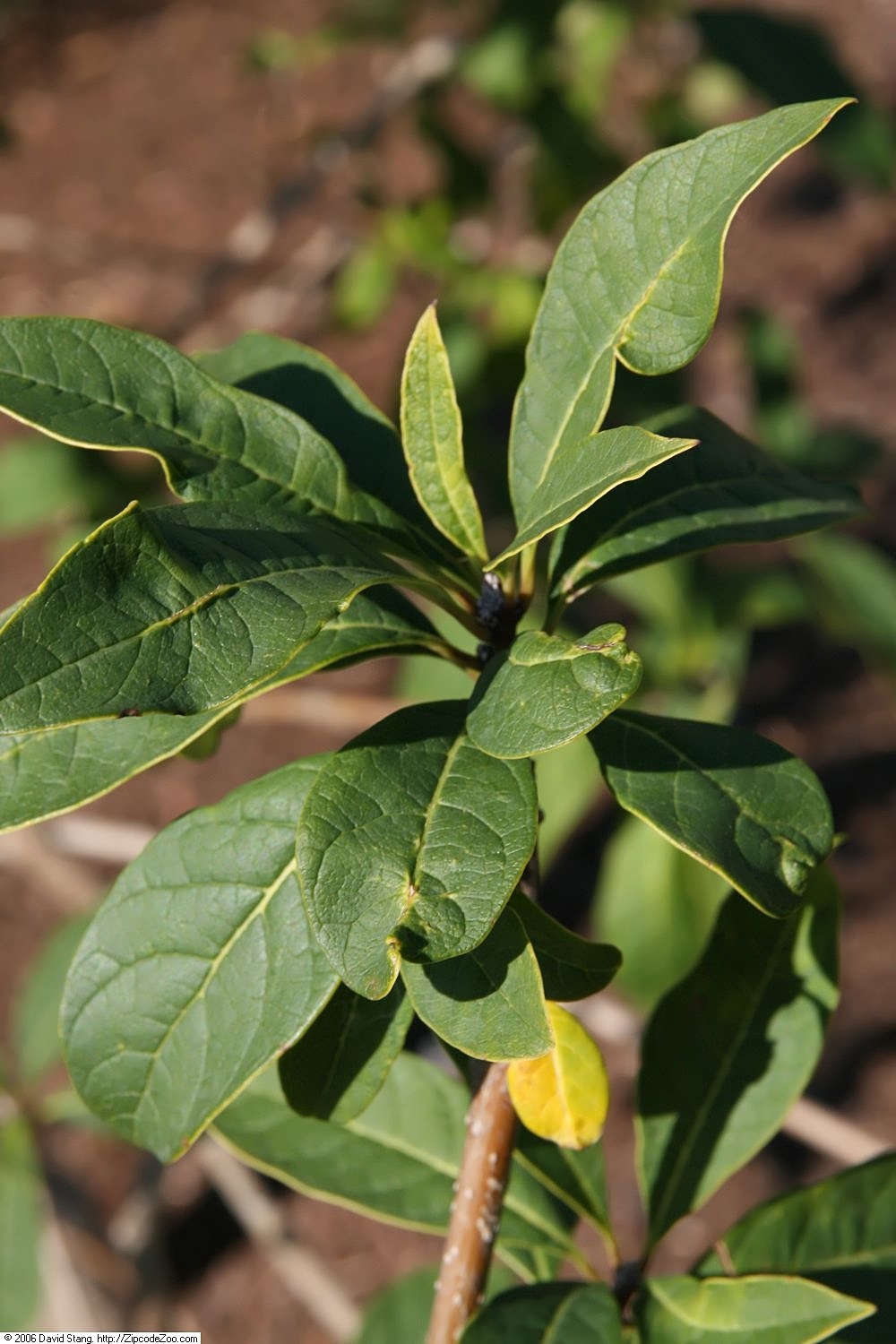
Scratch a twig with a fingernail. Green underneath means it’s alive and waiting. Keep the root ball evenly moist, not soggy, and step up watering as the leaves expand.
One or two yellow leaves on a new tree are normal. Widespread browning or crisp leaf edges are a different story, and usually point to the root ball drying out. Our guide to fringetree leaves turning brown walks through the checks.
Quick Reference
| Soil dry 1–2 inches down | Water now, slowly, over the root ball and just beyond. |
| Soil still moist | Skip today and check again tomorrow. |
| Water stands in the basin for hours | Poor drainage. Water less often and only when the soil check says so. |
| Leaf edges browning in summer heat | Root ball likely drying out. Check it directly and water more often. |
| Bare twigs in mid-spring | Normal late leaf-out. Keep it moist, not soggy. |
| Watering bag empty after a few hours | Working as designed. Refill on schedule. |
When Can You Stop?
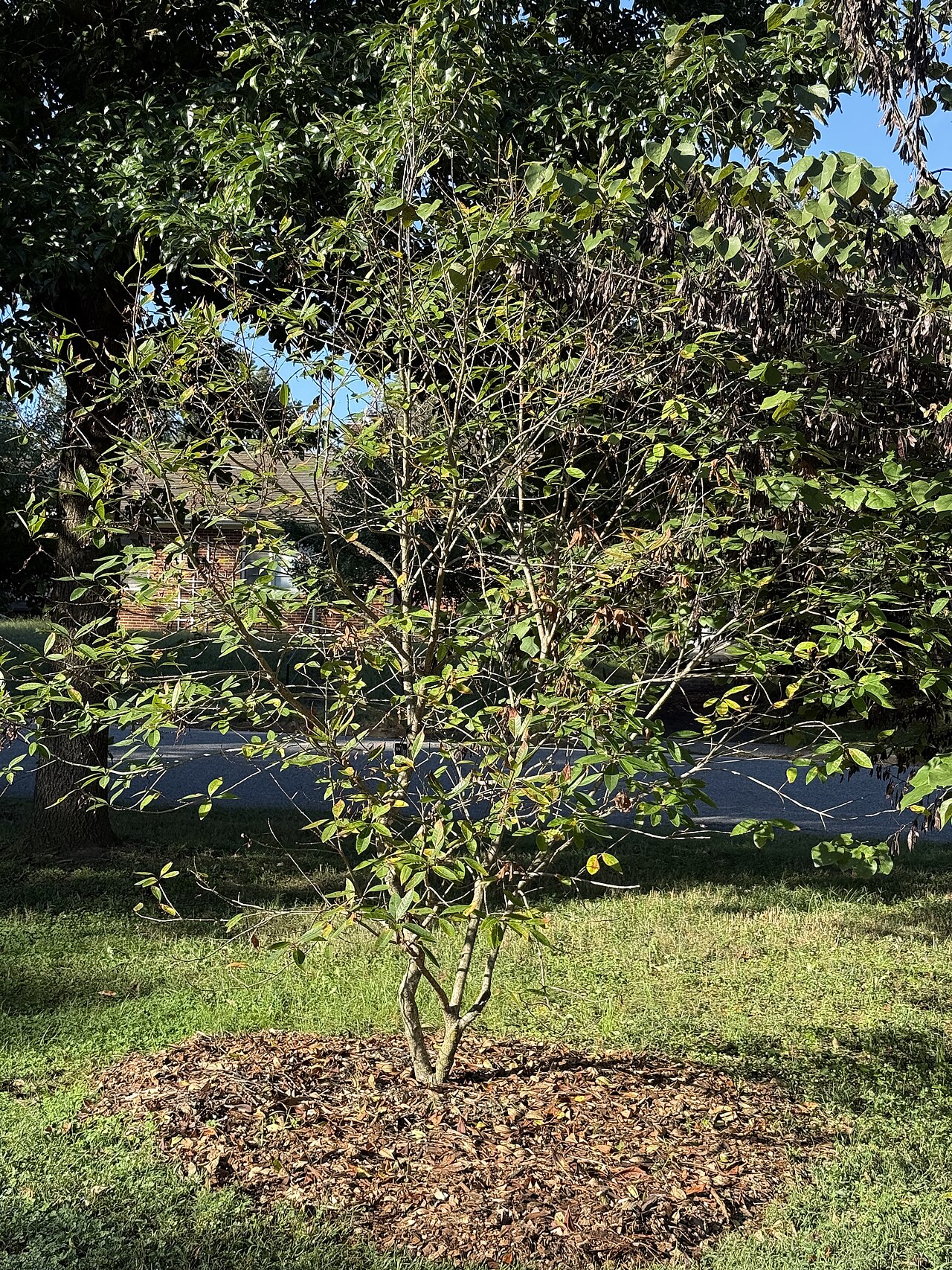
Not after the first summer. The Morton Arboretum notes that newly planted trees and shrubs may need regular watering for two to three years while their roots establish.
Minnesota Extension describes a plant as established when its root spread matches the spread of its canopy. In their tables, a tree with a 1-inch trunk takes about a year and a half to get there, and larger trees take longer.
For a slow grower like fringetree, plan on this:
- Year 1: the full schedule above.
- Year 2: check weekly in the growing season and water deeply whenever the soil is dry.
- Year 3 and beyond: water during dry spells of a couple of weeks or more, especially in summer.
Summer water pays off in flowers, too. The Morton Arboretum notes that trees form next year’s buds during the current summer. Our guide to why a fringetree isn’t flowering covers that link in more detail.
Clemson also suggests removing the soil water ring by the end of the second growing season if it hasn’t settled on its own.
A Season-by-Season Watering Plan
- Spring planting: soak at planting, then follow the daily and every-few-days schedule. Expect bare twigs for a while and don’t overdo it.
- Early summer: settle into roughly weekly deep watering once the tree has been in the ground about three months. Check more often in heat waves.
- Mid to late summer: this is when drought stress does the most damage. Never let the root ball go bone dry.
- Fall: the Morton Arboretum recommends continuing to water as long as the soil is not frozen and can accept water. Fall is also a good time to plant, since Clemson notes roots keep growing through mild fall and winter weather in the Southeast.
- Winter: no routine watering, but in mild, dry winters in the South, check the soil now and then.
📋 More on this plant: read the full Fringetree (Chionanthus virginicus) profile, or see it in our native plant lists for North & South Carolina, Georgia, Alabama & Mississippi, Arkansas, Louisiana, Eastern Oklahoma & Eastern Texas, Maryland, Virginia & West Virginia, Delaware, Southern New Jersey & Long Island, New York, Pennsylvania & Northern New Jersey, and Ohio & Indiana.
Frequently Asked Questions
How often should I water a newly planted fringetree?
A common extension schedule is daily for the first two weeks, every two to three days through about week twelve, then weekly until the tree is established. Always check the soil an inch or two down first, and skip watering if it’s still moist.
How much water does a new fringetree need each time?
Enough to soak the root ball and the soil just around it. University of Minnesota Extension suggests about 1 to 1.5 gallons per inch of trunk diameter for young trees, or a quarter to a third of the pot’s volume for shrub-sized plants. Apply it slowly so it sinks in.
Can I overwater a fringetree?
Yes, especially in clay or poorly drained soil. Constantly saturated soil starves roots of oxygen, and Clemson Extension lists Phytophthora root rot as a risk in poorly drained sites. Let the soil check, not the calendar, decide.
Is a sprinkler enough for a new tree?
Usually not. A lawn sprinkler wets the surface and the grass, but often doesn’t put enough water into the root ball itself. Water the root ball directly with a slow hose, bucket, or watering bag.
My fringetree still has no leaves in May. Should I water more?
Probably not. Fringetree is one of the last trees to leaf out, and a tree without leaves uses little water. Scratch a twig to confirm it’s green inside, keep the root ball evenly moist, and increase watering once the leaves expand.
Sources
- University of Minnesota Extension, Watering newly planted trees and shrubs: watering intervals, rain threshold, volume per inch of trunk caliper, establishment times, water reservoir, turf competition and mulch depth.
- The Morton Arboretum, Water Trees and Plants: trowel soil check, deep watering, watering newly planted trees for two to three years, irrigation bags, summer bud formation and fall watering.
- Clemson Cooperative Extension Home & Garden Information Center, Planting Trees Correctly (HGIC 1001): watering the root ball directly, water rings, excess soil over the root ball, and over- and underwatering by soil type.
- Clemson Cooperative Extension Home & Garden Information Center, Fringetree (HGIC 1027): growth rate, soil preference, transplanting and Phytophthora root rot.
- North Carolina Extension Gardener Plant Toolbox, Chionanthus virginicus: growth rate, clay and drought tolerance, and root disturbance.
- Lady Bird Johnson Wildflower Center, Chionanthus virginicus: native habitat and late spring leaf-out.

