
Peppervine (Nekemias arborea)
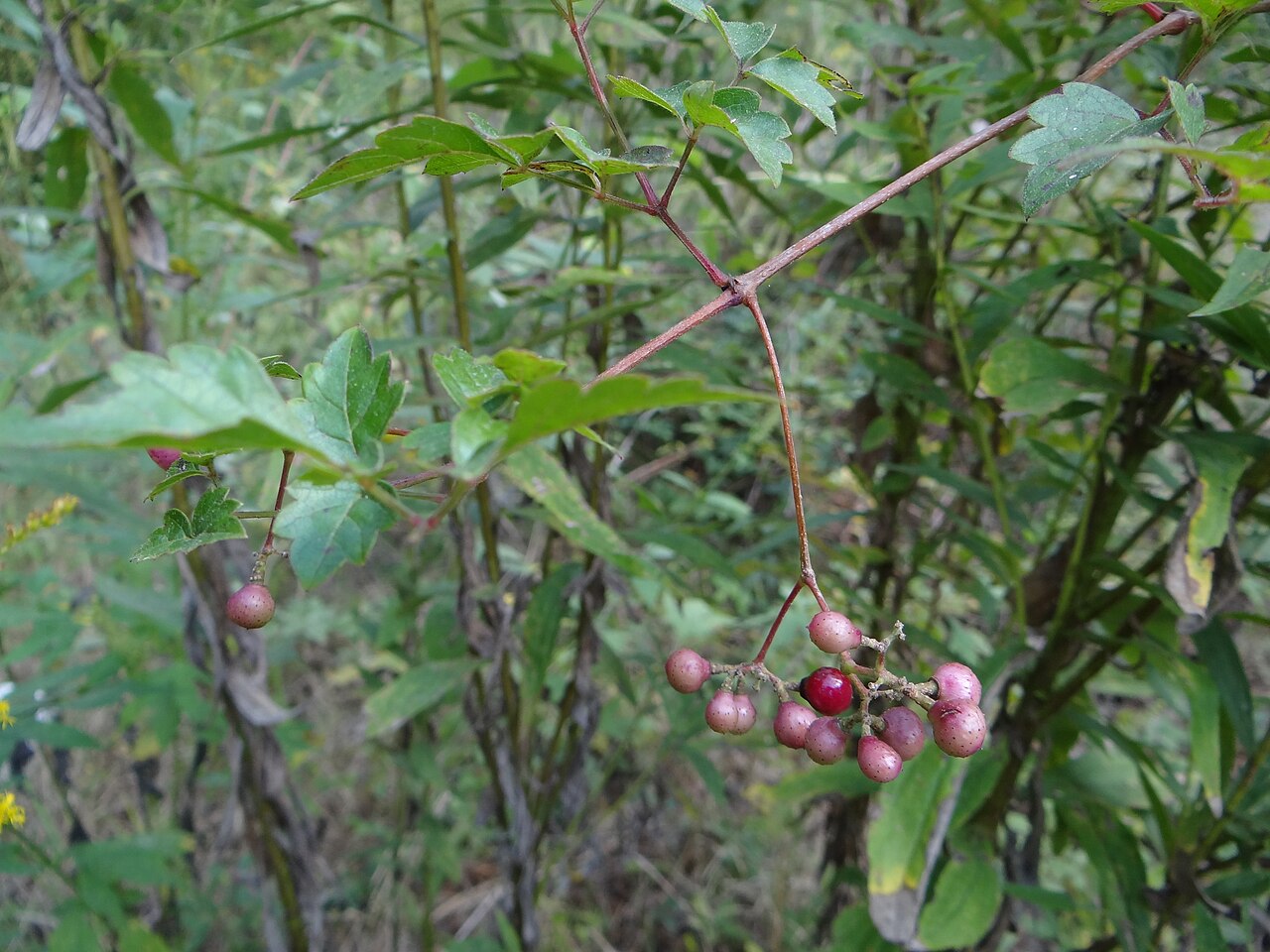
Nekemias arborea, known as Peppervine, is a vigorous native vine of the grape family (Vitaceae) found across the southeastern and south-central United States. For most of its history it was called Ampelopsis arborea, and that is still the name you will find in most field guides, nursery catalogs and gardening references. In 2016 botanists moved it, along with a few Asian relatives, into the genus Nekemias, and USDA PLANTS now accepts Nekemias arborea.
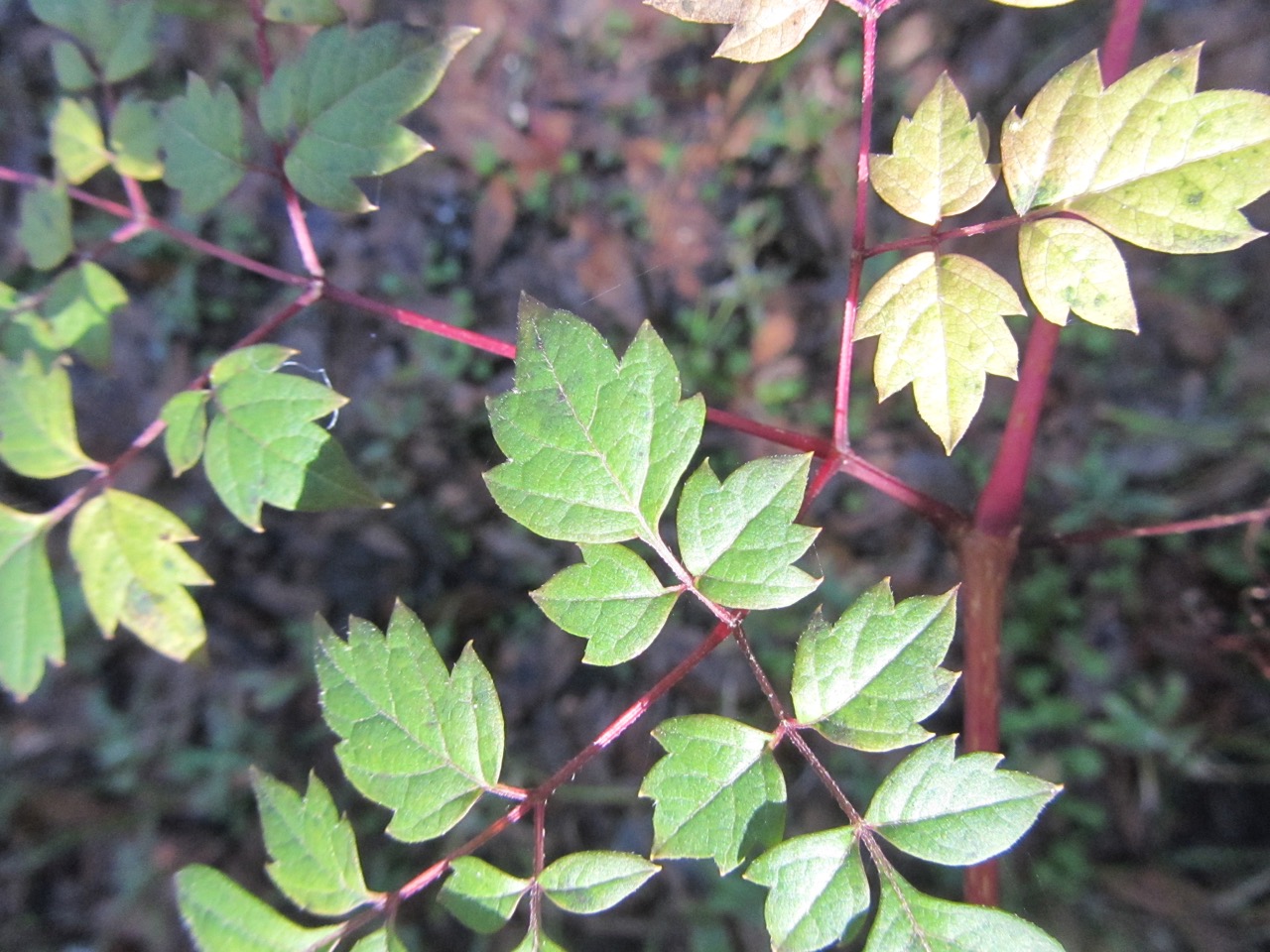
Peppervine is easy to recognize by its leaves, which are unusual for the grape family: instead of a single broad blade, each leaf is divided twice (sometimes three times) into many small, coarsely toothed leaflets, giving the vine a lacy, almost fern-like look. New growth is often reddish-purple. In late summer and fall it bears clusters of small berries that change from green to pink, red and finally glossy purple-black, so a single cluster can be strikingly multicolored.
Gardeners should know up front that peppervine is aggressive. It grows quickly, scrambles over shrubs and fences, climbs into trees, spreads by underground runners, and its seeds are widely spread by birds. Many Southern gardeners know it mainly as a hard-to-remove weed. It does have real wildlife value, though, and it has a place in large naturalized areas, wild hedgerows and woodland edges where its vigor is an asset rather than a problem.
Identification
Peppervine is a woody vine with no showy flowers, so it is identified mainly by its leaves, stems and fruit. Its twice-compound leaves set it apart from the wild grapes, Virginia creeper and its own close relative, heartleaf peppervine (Ampelopsis cordata), which has simple, heart-shaped leaves.
Stems & Habit
Peppervine is a deciduous to semi-evergreen woody vine that can sprawl along the ground, form dense, bushy tangles, or climb high into trees, reaching 20 to 35 feet or more. It climbs with forked tendrils, which are often few, and frequently just leans and scrambles over other plants. Young stems are green to reddish and usually smooth. Older stems become woody and light brown, with bark that does not shred in long strips the way grape bark does. Unlike true grapes, the pith of older stems is white.
Leaves
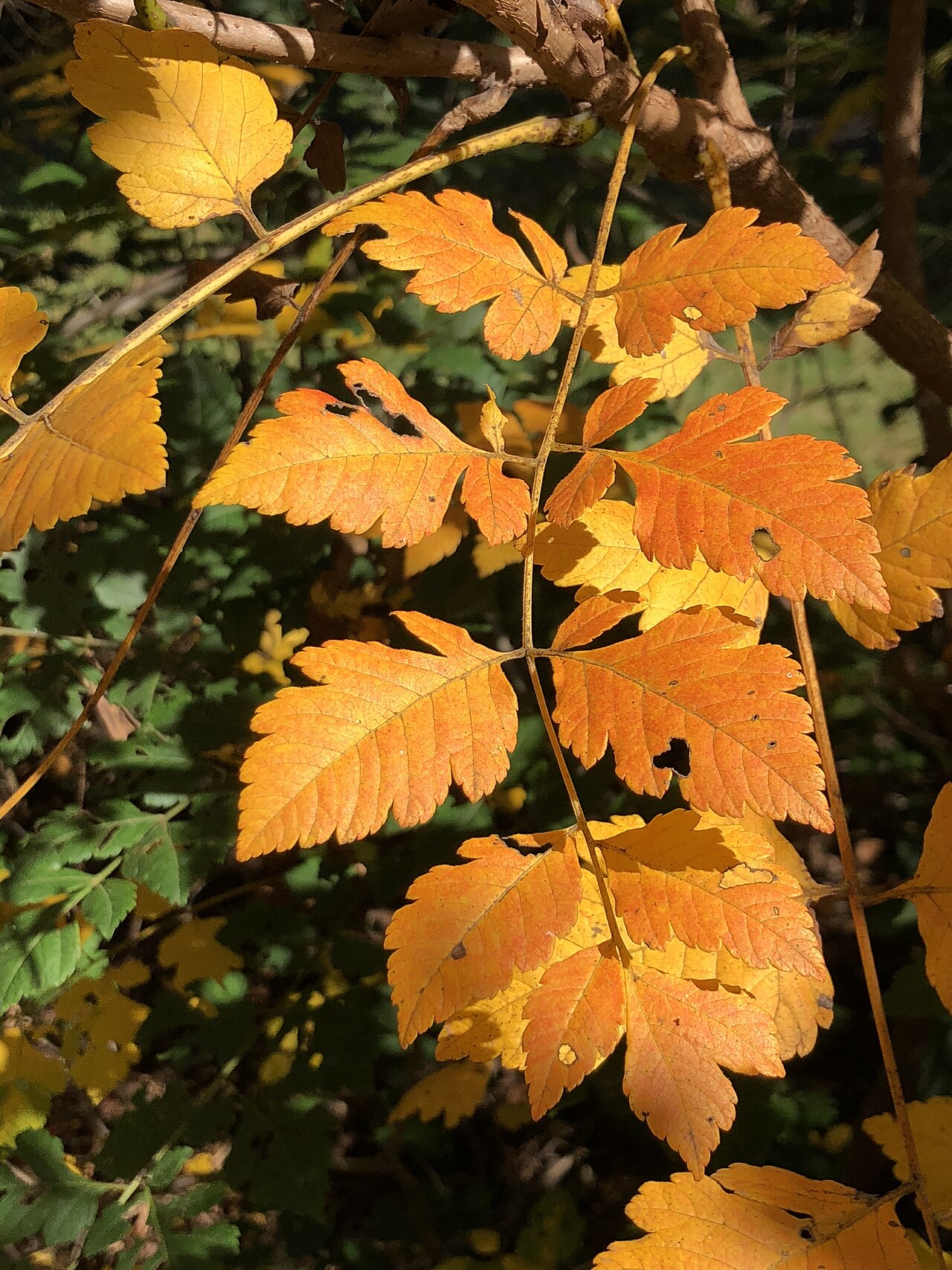
The leaves are alternate and bipinnately (sometimes tripinnately) compound, up to about 6 to 8 inches long and nearly as wide. Each leaf carries many small, ovate leaflets, about ½ to 1½ inches long, with coarse teeth or shallow lobes. They are dark green and somewhat glossy above, paler beneath. Newly emerging leaves are often purplish-red. In fall the foliage turns yellow, orange or reddish, though in the warmest parts of its range some leaves persist into winter.
Flowers
The flowers are tiny, greenish and inconspicuous, borne in small, flat-topped to rounded clusters (cymes) opposite the leaves. Each flower has five small petals and five stamens. They open from late spring into summer and are visited by many small bees, wasps and flies.
Fruit & Seeds
The fruits are small, roundish berries about ¼ to ⅓ inch across, carried in loose clusters. They ripen from green to pink, red and finally shiny purple-black from late summer into fall, often with all colors present at once. Each berry contains one to four seeds. The berries are eaten by birds but are not considered edible for people.
Quick Facts
| Scientific Name | Nekemias arborea (syn. Ampelopsis arborea; USDA symbol NEAR5) |
| Family | Vitaceae (grape family) |
| Plant Type | Deciduous to semi-evergreen woody vine |
| Mature Height | 20–35 ft or more when climbing; also sprawls as a ground cover |
| Mature Spread | Spreads widely by runners and seedlings |
| Growth Rate | Fast |
| Sun Exposure | Full sun to part shade |
| Water Needs | Moderate; tolerates wet soils and moderate drought |
| Soil Type | Adaptable: sand, loam or clay |
| Soil pH | Acidic to neutral (about 5.0–7.5) |
| Bloom Time | May–August |
| Flower Color | Greenish (inconspicuous) |
| Fall Color | Yellow, orange to reddish |
| Fruit | Small berries ripening green to pink, red and purple-black |
| Deer Resistant | No; leaves and young shoots are browsed |
| USDA Hardiness Zones | 6–10 |
Native Range
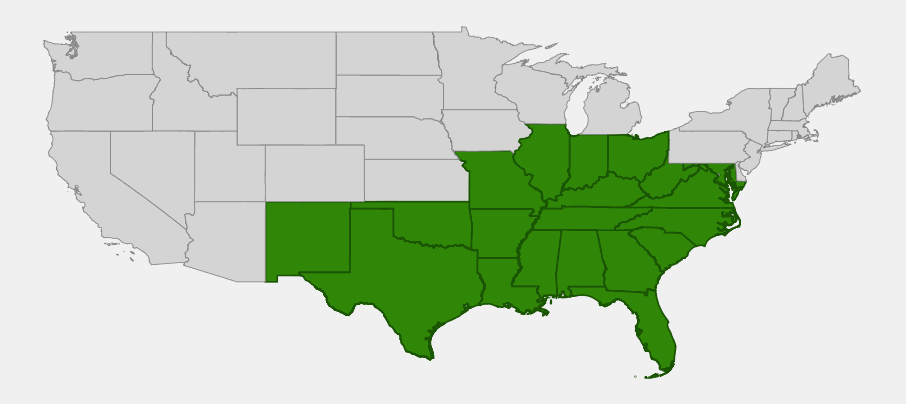
Peppervine is native across the southeastern and south-central United States. USDA PLANTS and the Lady Bird Johnson Wildflower Center record it from Maryland, Virginia and West Virginia south to Florida, west through the Gulf states to Texas and Oklahoma, and north up the Mississippi and Ohio valleys to Missouri, southern Illinois, Indiana, Kentucky and Ohio. It also grows in South Carolina, where it is common in the Coastal Plain. USDA also lists New Mexico, at the far western edge of its range. The Lady Bird Johnson Wildflower Center summarizes the range as “FL to e. TX, n. to MD and e. OK; also Miss. R. valley to s. IL and MO.” USDA PLANTS also lists it as native in Puerto Rico.
It is most abundant on the Atlantic and Gulf Coastal Plain, where it is found throughout Florida, including the Panhandle and much of the peninsula. Its natural habitats are moist to wet places: swamp and floodplain forests, marsh edges, alluvial woods, stream and river banks, and the edges of ponds and lakes. It also thrives in disturbed ground, including fencerows, old fields, roadsides, vacant lots and neglected gardens, which is why it is so familiar to Southern gardeners.
Peppervine was long known as Ampelopsis arborea. When DNA studies showed that Ampelopsis as traditionally defined combined unrelated groups, botanists Jun Wen and Boggan placed this species and its Asian relatives in the genus Nekemias, an old name first published by Rafinesque. The site’s separate page on heartleaf peppervine covers Ampelopsis cordata, a different native species with simple leaves that stays in Ampelopsis.
📋 Regional plant lists featuring Peppervine: North & South Florida · Alabama, Georgia & Mississippi · North & South Carolina · Maryland, Virginia & West Virginia · Kentucky & Tennessee · Arkansas, Louisiana, Eastern Oklahoma & Eastern Texas · Illinois, Iowa & Missouri · Ohio & Indiana
Growing & Care Guide
Peppervine is not difficult to grow; the real challenge is keeping it in bounds. Think carefully before planting it in a small or formal garden. It is best suited to large, naturalistic properties, wildlife hedgerows, stream banks and woodland edges, where it can scramble freely and provide cover and fruit for wildlife. If it already grows on your property, you may decide to keep some of it in a wild corner and control the rest.
Light
It grows in full sun to partial shade. It fruits most heavily in sun and grows more loosely in shade.
Soil & Water
Peppervine tolerates almost any soil, from sand to clay, and moisture from periodically flooded floodplains to moderately dry uplands. It needs no fertilizer and little watering once established.
Planting Tips
If you do plant it, give it a sturdy support such as a large fence, a dead tree or an arbor, or let it cover a bank or a brush pile. Keep it well away from the house, small trees and shrub borders, which it can smother. Plants are rarely sold; most people encounter it as a volunteer from bird-dropped seed.
Pruning & Maintenance
Cut it back hard each winter or as often as needed to control its size. Remove runners and seedlings that appear in unwanted places while they are small, since established plants develop deep roots and resprout readily after cutting. Pulling or digging out young plants with their roots is the most effective control. Avoid letting it climb into the canopies of young trees.
Propagation
It is easily propagated by seed sown in fall or early spring, by layering of runners, and by hardwood or semi-hardwood cuttings. In practice, it propagates itself very effectively through bird-dispersed seed and spreading roots.
Landscape Uses
- Wildlife hedgerows and thickets: dense cover and fall fruit for birds and small mammals
- Naturalized stream banks and floodplains: tolerates periodic flooding and helps hold soil
- Covering fences or brush piles: in large, informal areas where its vigor is welcome
- Woodland edges: where it can scramble into large trees without harming plantings
- Not recommended: for small gardens, foundation plantings or near cultivated shrubs
Wildlife & Ecological Value
Despite its reputation as a garden weed, peppervine is an ecologically valuable native vine. Its dense growth, flowers and abundant fruit support a wide variety of animals.
For Pollinators
The small greenish flowers produce nectar that attracts a variety of short-tongued bees, wasps and flies over a long summer season. Like other grape-family plants, peppervine is a larval food plant for several sphinx moths, including the pandorus sphinx, whose large caterpillars feed on the leaves.
For Birds
The berries are eaten by many songbirds, including mockingbirds, thrashers, catbirds, robins and other thrushes, as well as by wild turkeys and quail. The dense, tangled growth provides nesting and escape cover for birds such as cardinals and brown thrashers.
For Mammals
White-tailed deer browse the leaves and young shoots. Raccoons, opossums and other small mammals eat the fruit, and rabbits use the thickets for cover.
Ecosystem Role
Peppervine quickly covers open, disturbed ground and floodplain edges, where it helps stabilize soil and builds up the dense, layered vegetation that many wildlife species need. Its seeds are spread widely by birds, which explains why it appears so readily in gardens and fencerows.
Cultural & Historical Uses
Linnaeus first described this plant in 1753 as Vitis arborea, a grape. It was later placed in Cissus and then in Ampelopsis, under which name it was known for more than a century. The common name peppervine probably refers to the small, peppercorn-like berries. The epithet arborea, meaning tree-like, may refer to its habit of climbing high into trees or of forming dense, shrubby masses.
Peppervine has been grown occasionally as an ornamental vine for its lacy foliage and colorful fruit, and older garden books sometimes list it for covering arbors. Today it is far better known as a persistent weed in Southern gardens and landscapes, and garden advice columns frequently discuss how to control it.
The berries are not considered edible for people and may be harmful if eaten in quantity; do not confuse them with wild grapes or muscadines, which have simple, broad leaves.
Frequently Asked Questions
Is peppervine the same as Ampelopsis arborea?
Yes. Ampelopsis arborea is the older and still widely used scientific name. In 2016 the species was moved to the genus Nekemias, and USDA PLANTS now accepts Nekemias arborea. Both names refer to the same plant.
Is peppervine invasive?
It is native, so it is not an invasive species in the technical sense, but it is very aggressive. It grows fast, spreads by runners and bird-dispersed seed, and can smother shrubs and climb into trees. Plant it only where it has room, and be prepared to cut it back regularly.
How do I get rid of peppervine in my garden?
Pull or dig seedlings and young plants while their roots are small. Cut larger vines at the base and dig out or repeatedly cut the resprouts. Removing fruiting vines before the berries ripen reduces new seedlings.
Are peppervine berries edible?
No. They are not considered edible for people and may be harmful. Birds eat them readily.
How is peppervine different from heartleaf peppervine?
Peppervine (Nekemias arborea) has twice-divided leaves with many small leaflets. Heartleaf peppervine (Ampelopsis cordata) has simple, heart-shaped leaves that look more like a grape leaf.

Looking for a nursery that carries Peppervine?
Browse our native plant nursery directory: Alabama & Arkansas · Florida & Georgia · Illinois & Indiana · Kentucky, Louisiana, Maryland, Mississippi & Missouri · New Mexico, North Carolina, Ohio & Oklahoma · South Carolina, Tennessee, Texas & Virginia · West Virginia