
Fewflower Milkweed (Asclepias lanceolata)
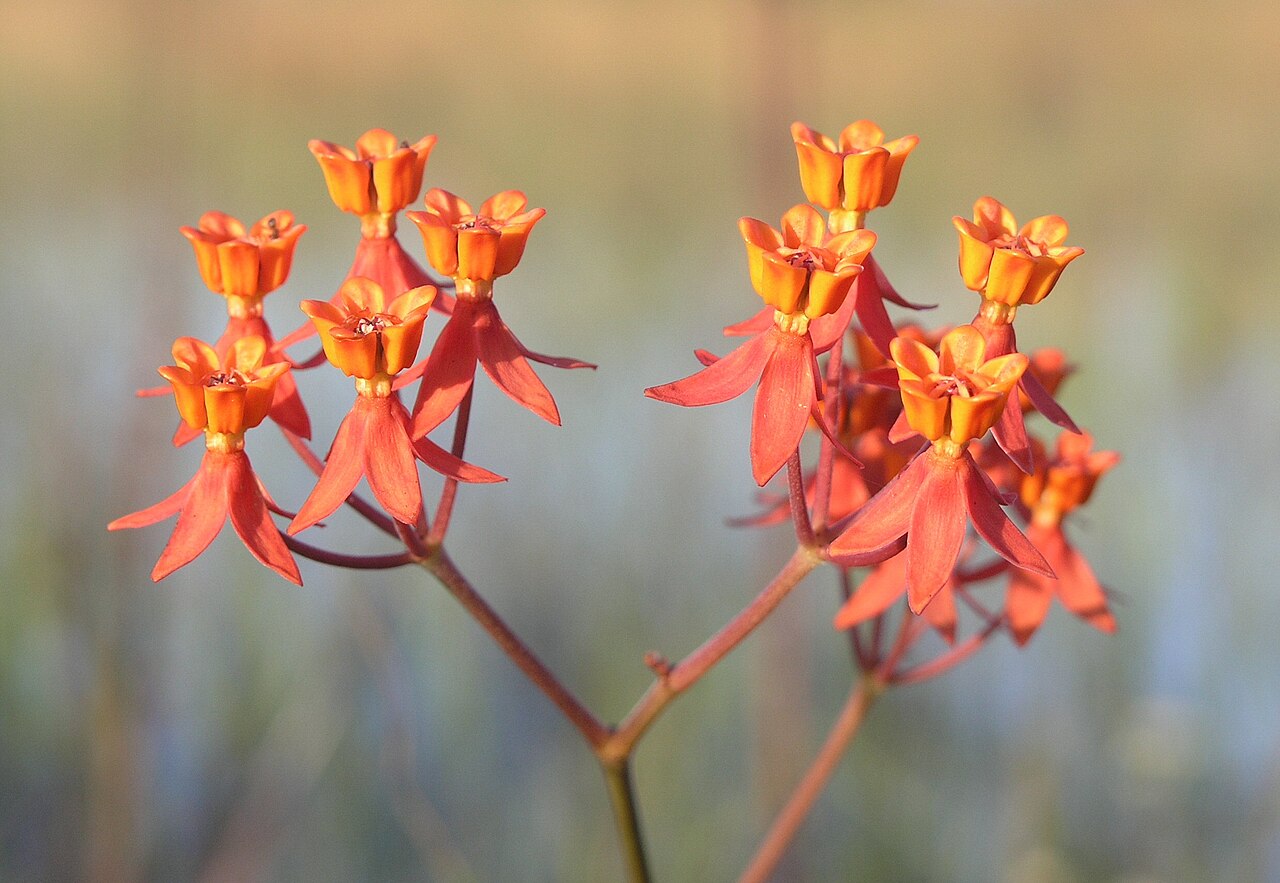
Asclepias lanceolata, known as Fewflower Milkweed or lanceleaf milkweed, is a tall, slender milkweed of coastal plain wetlands with some of the most brilliant flowers in the genus. Its small clusters of red-orange blossoms with orange or yellow hoods seem to float on bare stems 3 to 5 feet tall above marsh grasses in early summer. It belongs to the dogbane family (Apocynaceae), which now includes the milkweeds.
Unlike butterfly weed, which needs dry sand, fewflower milkweed grows in wet places: freshwater and brackish marshes, wet pine flatwoods and savannas, roadside ditches and the edges of cypress ponds. As its common name suggests, each flower cluster holds only a few flowers, often fewer than a dozen, and a plant usually has only one or a few clusters. They are so brightly colored that they are easy to spot from a distance.
Fewflower milkweed is a host plant for monarch, queen and soldier butterflies and a nectar source for many other insects. This guide covers how to identify it, where it grows from New Jersey to Florida and Texas, and how to grow it in a sunny wet garden or rain garden.
Identification
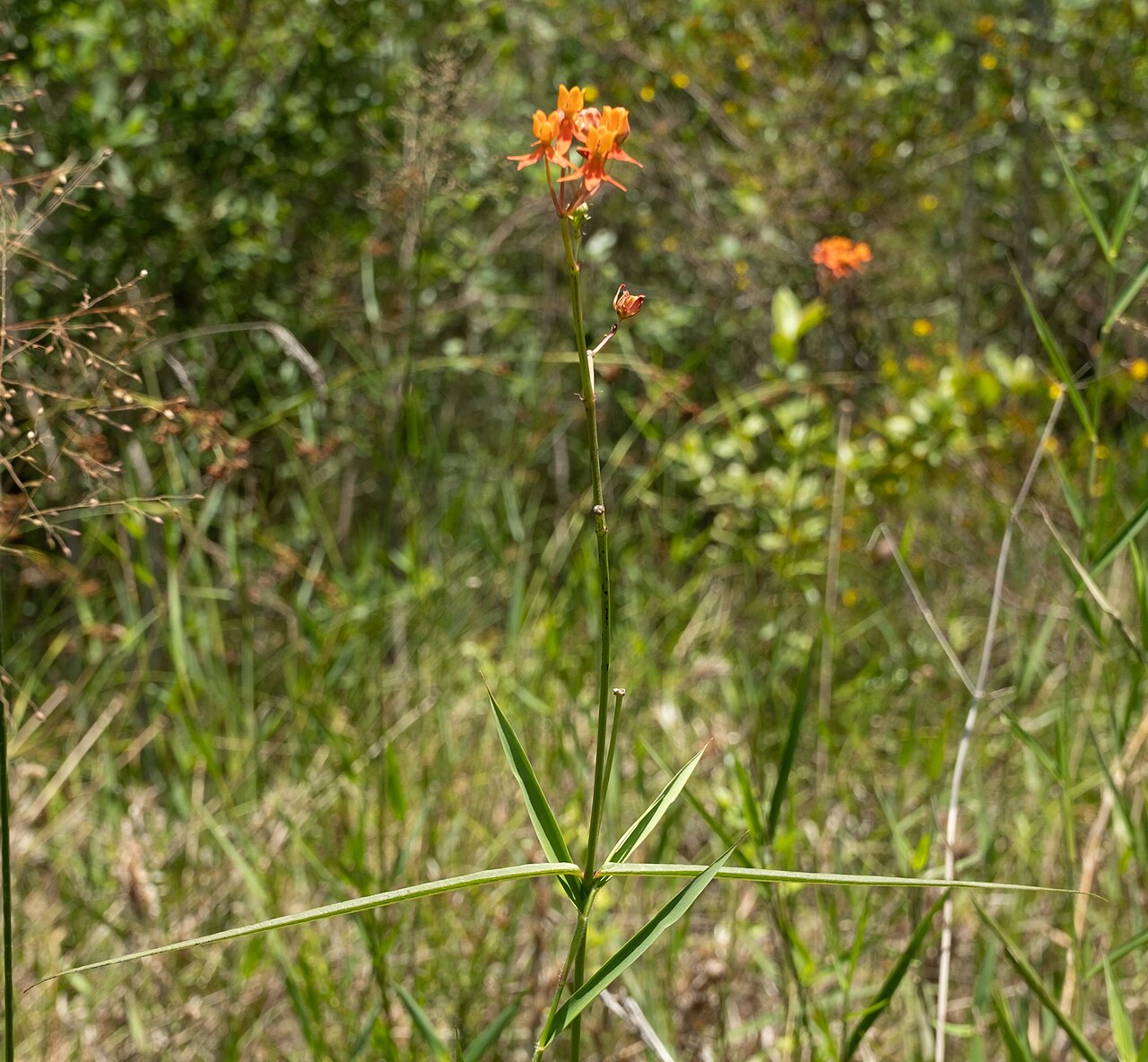
In bloom, fewflower milkweed is the only tall, red-orange milkweed of wet places in most of its range. Out of bloom it is easy to overlook: a thin, smooth stem with a few long, grass-like leaves that blends into the marsh.
Stems & Roots
Each plant grows from a thick, deep, carrot-like root and sends up one to a few stems, usually unbranched below the flowers, smooth, often purplish, and 3 to 5 feet tall. Like other milkweeds, the stems and leaves bleed milky sap when broken. Plants die back to the root in winter and reappear in spring.
Leaves
The leaves are opposite, few in number and very narrow: linear to narrowly lance-shaped, 4 to 10 inches long and usually less than ½ inch wide, smooth and stiff. They are spaced far apart along the stem, so the plant looks sparse and wand-like. Lower leaves often wither by flowering time.
Flowers
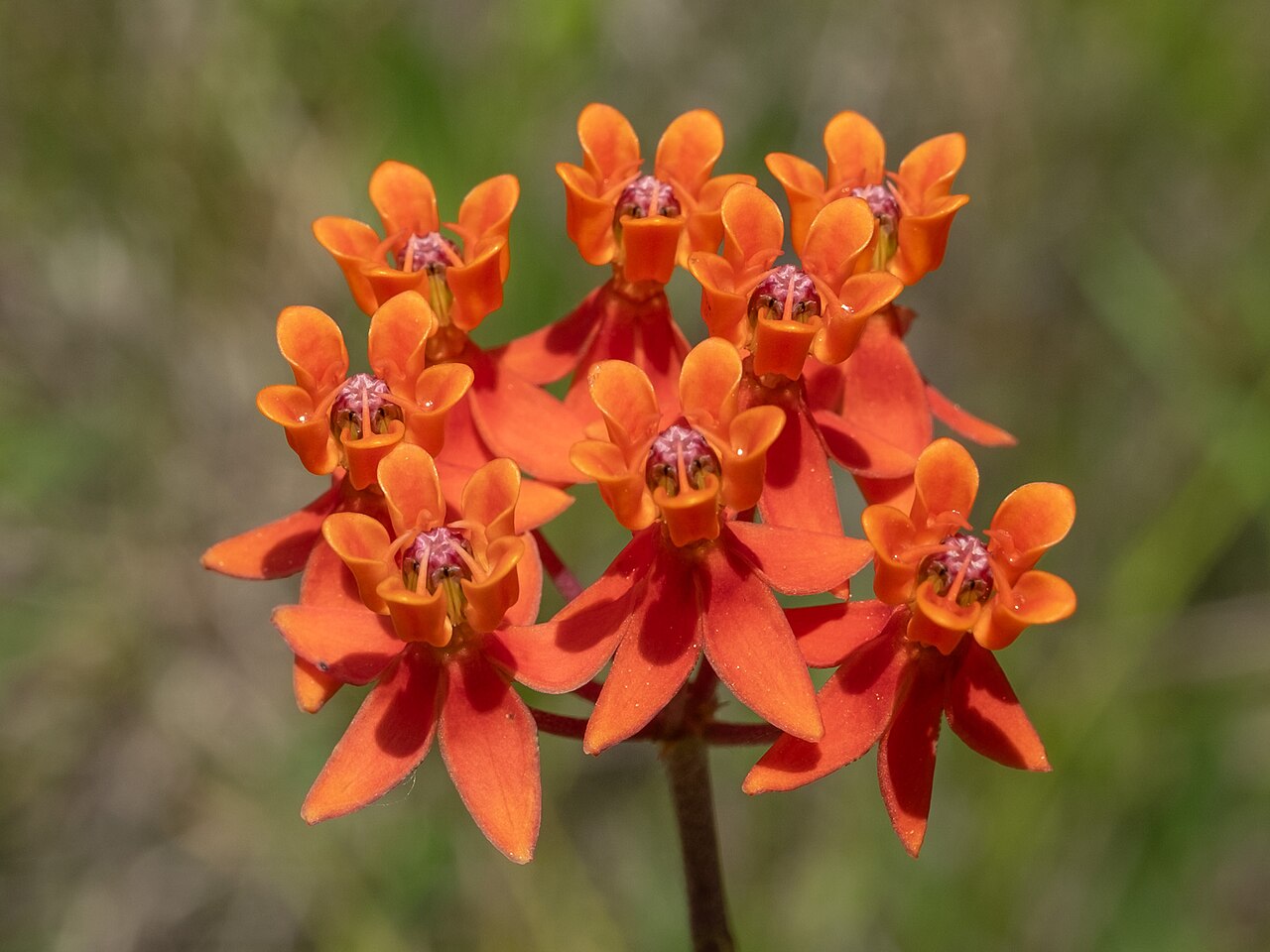
The flowers are borne in one to several loose umbels at the top of the stem, each with only about 5 to 12 flowers on long stalks. Each flower has five red to red-orange petals that bend sharply backward and a crown of five upright hoods that are orange to yellow-orange. The overall effect is a two-toned flower, red below and orange above. Bloom is mainly from late May through August, extending into fall in Florida.
Seed Pods
Pollinated flowers develop into slender, smooth, upright pods (follicles) 3 to 5 inches long. When ripe in late summer and fall they split along one side to release flat brown seeds, each with a tuft of silky hairs that carries it on the wind. Like other milkweed seeds, they float well, and seeds of wetland milkweeds often spread along water.
Similar Species
Butterfly weed (Asclepias tuberosa) has orange flowers in large, many-flowered clusters, hairy stems and many leaves, and grows on dry sand. Swamp milkweed (A. incarnata) grows in similar wet places but has pink flowers. In Florida, scarlet milkweed (A. curassavica), a nonnative garden plant, has red and yellow flowers but a bushier, leafy habit and many more flowers per cluster.
Quick Facts
| Scientific Name | Asclepias lanceolata (USDA symbol ASLA2) |
| Family | Apocynaceae (dogbane family; milkweed subfamily) |
| Plant Type | Herbaceous perennial from a deep, thick root |
| Mature Height | 3–5 ft |
| Mature Spread | 6–12 in |
| Growth Rate | Slow to establish; moderate once rooted |
| Sun Exposure | Full sun |
| Water Needs | High; moist to wet or seasonally flooded soil |
| Soil Type | Wet sand, peat or muck; tolerates slightly brackish soil |
| Soil pH | About 4.5–7.0 (acidic) |
| Bloom Time | Late May–August; into fall in Florida |
| Flower Color | Red to red-orange petals with orange to yellow hoods |
| Fall Color | Stems turn yellow-brown and die back |
| Fruit | Slender upright pods with silky-tufted seeds |
| Deer Resistant | Yes; toxic milky sap deters browsing |
| USDA Hardiness Zones | 7–10 |
Native Range
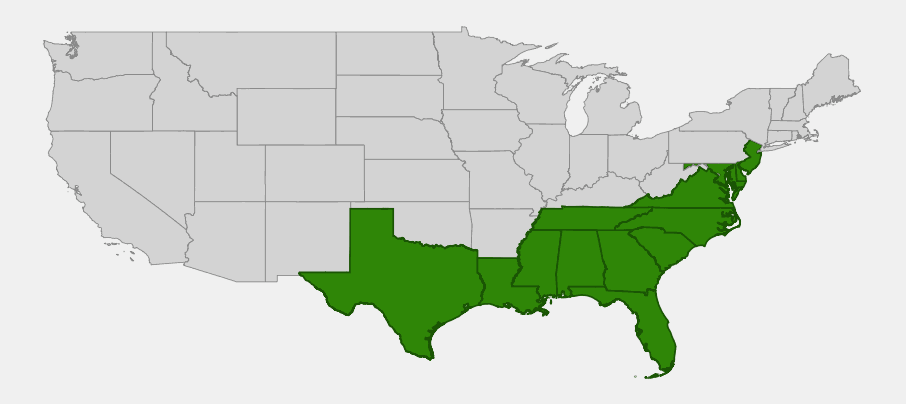
Fewflower milkweed is a plant of the Atlantic and Gulf Coastal Plain. USDA PLANTS and the Lady Bird Johnson Wildflower Center list it from 13 states: southern New Jersey, Delaware, Maryland and Virginia south through North Carolina, South Carolina, Georgia and Florida, and west along the Gulf Coast through Alabama, Mississippi and Louisiana to southeastern Texas, with an outlying record in Tennessee. It does not reach Canada.
It is most common in the outer coastal plain, in pine savannas and flatwoods, tidal freshwater and brackish marshes, and the ditches that drain them. In Florida it occurs through most of the state from the panhandle to the Everglades. At the northern end of its range, in New Jersey, Delaware and Maryland, it is uncommon and limited to coastal marshes.
Many fewflower milkweed populations survive along roadside ditches and power line corridors, where regular mowing or burning keeps the habitat open and sunny. Draining of wetlands and the loss of fire in pine savannas have reduced it in many areas.
📋 Regional plant lists featuring Fewflower Milkweed: North & South Florida · Alabama, Georgia & Mississippi · North & South Carolina · Maryland, Virginia & West Virginia · Kentucky & Tennessee · Arkansas, Louisiana, Eastern Oklahoma & Eastern Texas · New York, Pennsylvania & Northern New Jersey · Delaware, Southern New Jersey & Long Island
Growing & Care Guide
Fewflower milkweed is not hard to grow if you give it what it wants: full sun and soil that never dries out. It is offered by native nurseries in Florida and the Southeast, mostly as small plants grown from seed. Like all milkweeds it resents root disturbance, so plant small and plant once.
Light
Give it full sun. In the wild it grows in open marshes and savannas, and in shade the stems lean, flower poorly and are easily overtopped by other plants.
Soil & Water
Plant it where the soil stays moist to wet through the growing season: a pond edge, rain garden, bog garden, wet swale or the low end of a lawn. It tolerates standing water for short periods and slightly brackish conditions. Acidic sandy, peaty or mucky soil is ideal. In average garden soil it needs regular watering in dry spells, or it will decline.
Planting Tips
Set out small container plants in spring. Do not try to move established plants; the deep root breaks easily and rarely recovers. Plant several together or among grasses and other wetland wildflowers so the slender stems can lean on neighbors, and so the bright flowers show up as a group. Mark the spot, because the plant is dormant and invisible in winter.
Pruning & Maintenance
Little care is needed. Cut back dead stems in late winter. Leave caterpillar-eaten plants alone; they recover. Oleander aphids often cluster on milkweed stems; ignore them or wash them off with water instead of using insecticides, which also kill monarch caterpillars. In naturalistic wet meadows, an occasional winter burn or mowing keeps woody plants out.
Propagation
Grow it from seed. Collect pods as they begin to split, remove the silk, and sow seeds outdoors in fall or stratify them in the refrigerator for about 3 months before sowing in spring. Seedlings develop a long root quickly and should be moved to deep pots or their final location while still small. Root cuttings taken in fall or early spring can also work.
Landscape Uses
- Rain gardens and wet swales: one of the few milkweeds that thrives in wet soil
- Pond and marsh edges: its bright flowers stand out against grasses and rushes
- Butterfly gardens: host plant for monarch, queen and soldier caterpillars
- Wet meadow and savanna restoration: for sunny coastal plain wetlands within its native range
- Pollinator plantings: nectar for butterflies, bees and wasps in summer
Wildlife & Ecological Value
Like all milkweeds, fewflower milkweed is a key plant for monarchs and their relatives, and its wet habitat makes it especially valuable where upland milkweeds cannot grow.
For Pollinators
Monarch, queen and soldier butterflies lay eggs on the leaves, and the caterpillars feed on them, storing the plant’s bitter compounds as protection against predators. The Xerces Society notes the species’ special value to native bees, bumble bees and honey bees. The flowers also attract butterflies such as swallowtails and skippers, and wasps, which carry the paired pollen sacs (pollinia) from flower to flower.
For Birds
Birds do not eat milkweed leaves or seeds, but the insects that live on milkweeds feed songbirds in marshes and savannas. Some birds use milkweed seed fluff and stem fibers for nest material.
For Mammals
The milky sap contains cardiac glycosides that are toxic to mammals, and deer, rabbits and livestock generally avoid the plant.
Ecosystem Role
Fewflower milkweed is part of the diverse wildflower community of fire-maintained pine savannas and coastal marshes. It depends on open, sunny conditions and recovers quickly from fire by resprouting from its deep root. A whole community of specialist insects, including milkweed beetles and milkweed bugs, depends on milkweeds like this one.
Cultural & Historical Uses
Thomas Walter, a planter-botanist in South Carolina, described Asclepias lanceolata in his Flora Caroliniana in 1788, one of the earliest floras of the American Southeast. The species name refers to the lance-shaped leaves, though in practice they are often closer to linear. The genus honors Asclepius, the Greek god of medicine, a reference to the medicinal use of several milkweeds.
Milkweeds in general were widely used by Native Americans and early settlers for fiber, food (after careful preparation of some species) and medicine, but there is little specific record for fewflower milkweed. Its sap, like that of other milkweeds, is toxic, and the plant should not be eaten.
Today it is valued mainly by native plant gardeners and butterfly enthusiasts, especially in Florida and the Gulf states, where planting native milkweeds suited to local conditions is encouraged as an alternative to nonnative tropical milkweed.
Frequently Asked Questions
Is fewflower milkweed good for monarchs?
Yes. Monarch, queen and soldier butterflies use it as a caterpillar host plant, and the flowers provide nectar. It is a good native alternative to nonnative tropical milkweed in wet gardens in the Southeast.
Does fewflower milkweed need wet soil?
It does best in moist to wet soil, including pond edges and rain gardens, and it tolerates brief flooding. In average garden soil it needs regular watering during dry periods.
Why is it called fewflower milkweed?
Each flower cluster has only a few flowers, often 5 to 12, compared with the dozens found on many other milkweeds.
How do I tell fewflower milkweed from butterfly weed?
Butterfly weed has many orange flowers per cluster, hairy stems and lots of leaves, and it grows in dry soil. Fewflower milkweed has a tall, smooth, sparse stem with a few narrow leaves, small clusters of red-and-orange flowers, and it grows in wet places.
Is fewflower milkweed poisonous?
Yes. Like all milkweeds, its milky sap contains compounds that are toxic if eaten and can irritate skin and eyes. Wash your hands after handling it and keep it away from pets and livestock that might eat it.

Looking for a nursery that carries Fewflower Milkweed?
Browse our native plant nursery directory: Alabama · Delaware, Florida & Georgia · Louisiana, Maryland & Mississippi · New Jersey & North Carolina · South Carolina, Tennessee, Texas & Virginia