
Garberia (Garberia heterophylla)
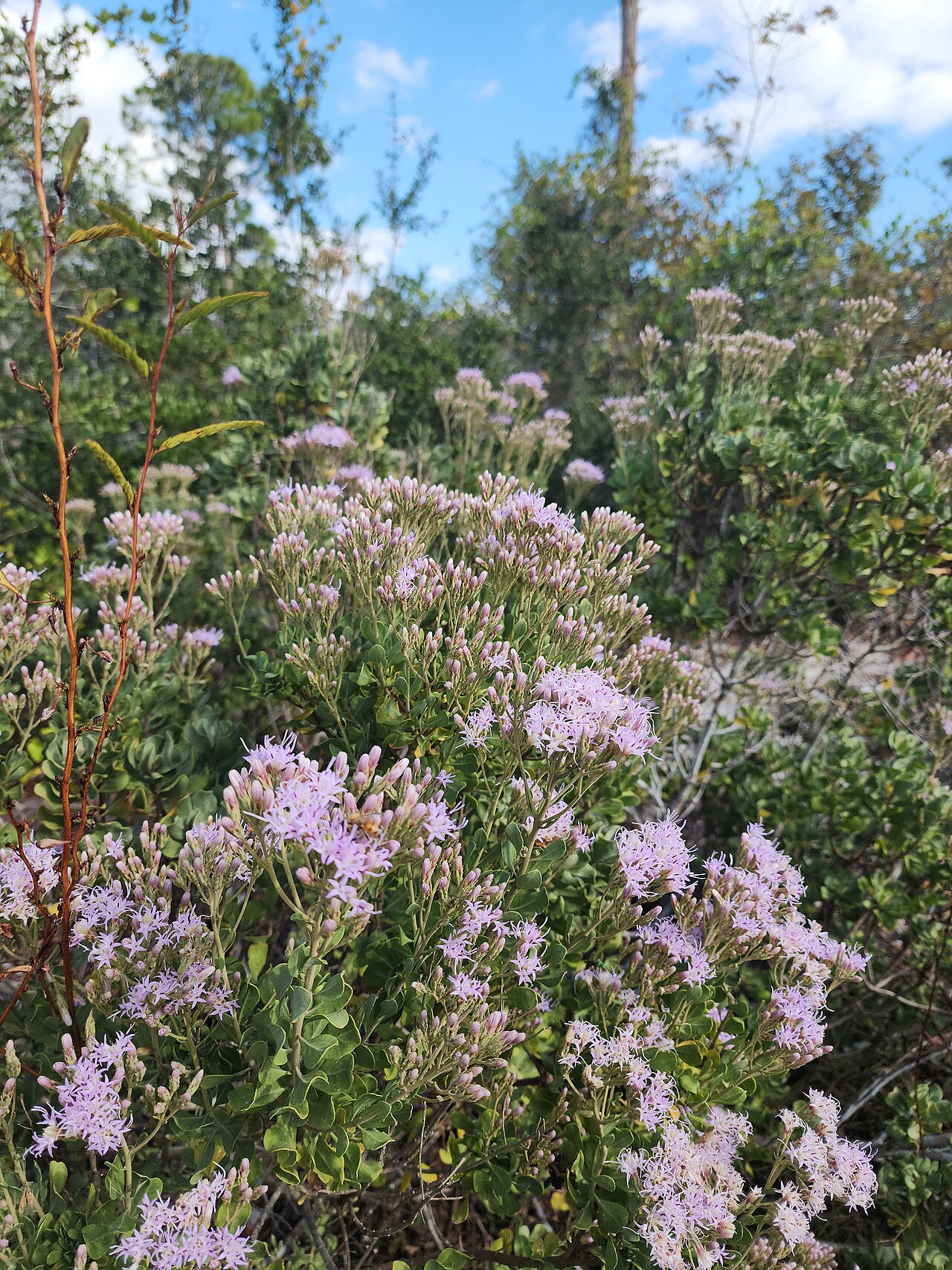
Garberia heterophylla, known simply as Garberia, is an evergreen shrub of Florida’s sand scrub and sandhills with gray-green, sticky, aromatic leaves and masses of lavender-pink flowers in late fall. When it blooms, from about October into December, it can be covered with butterflies, and it is one of the best fall nectar plants in Florida’s dry uplands.
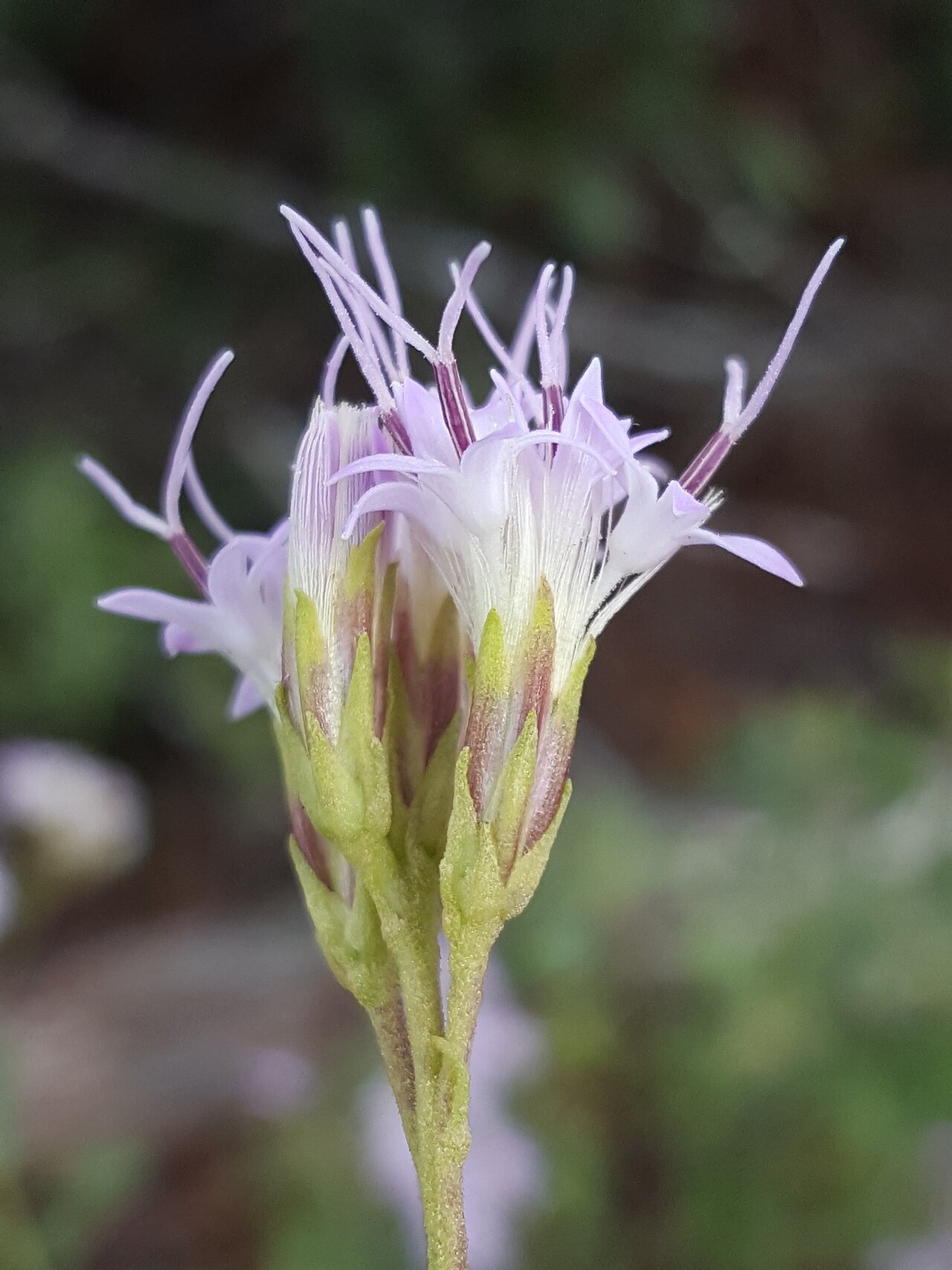
Garberia is the only species in its genus and a member of the aster family (Asteraceae), in the same tribe as the blazing stars and bonesets. Its flower heads have only tubular disk florets, with no rays, and long curling style branches that give the clusters a soft, fuzzy look. The species name heterophylla means “variable leaves”, for the range of leaf shapes on a single plant.
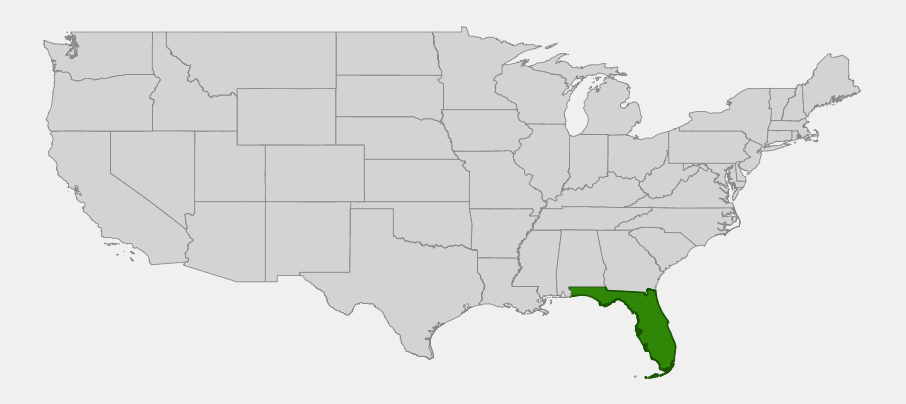
Garberia is endemic to Florida, growing wild nowhere else in the world according to the Atlas of Florida Plants, and it is listed as Threatened by the state of Florida (FDACS Regulated Plant Index). Its scrub habitat has been heavily cleared for citrus, housing and development. Gardeners can grow it easily in dry, sunny sites, but only from nursery-propagated plants. Never dig plants or collect cuttings or seed from the wild.
Identification
Garberia is easy to recognize in Florida scrub. Look for a rounded shrub with stiff, gray-green, spoon-shaped leaves that feel slightly sticky, and in fall, flat-topped clusters of lavender-pink, rayless flower heads at the branch tips.
Growth Form
It is a multi-stemmed evergreen shrub, usually 3 to 6 feet tall and wide, sometimes reaching about 8 feet. Young twigs are covered with tiny glandular hairs and are sticky to the touch. Older stems are gray-brown and somewhat brittle.
Leaves
Leaves are alternate, about ¾ to 1½ inches long, broadly oval to spoon-shaped or nearly round, with smooth edges and a short stalk. They are thick, gray-green to blue-green, and covered on both surfaces with fine glandular dots that make them slightly sticky and give them a resinous, aromatic smell when crushed. Leaves on vigorous shoots are often longer and narrower than those on flowering branches, the variation behind the species name.
Flowers
Flowering begins in early October and can continue into December, with peak bloom usually in November. The flower heads are about ½ inch long, each holding several tubular florets, and they are gathered into dense, flat to rounded clusters at the ends of the branches. Florets are pale lilac to lavender-pink or rose, and their long, curled style branches stick well out of the corolla. A well-grown shrub can be almost completely covered in bloom.
Fruit & Seeds
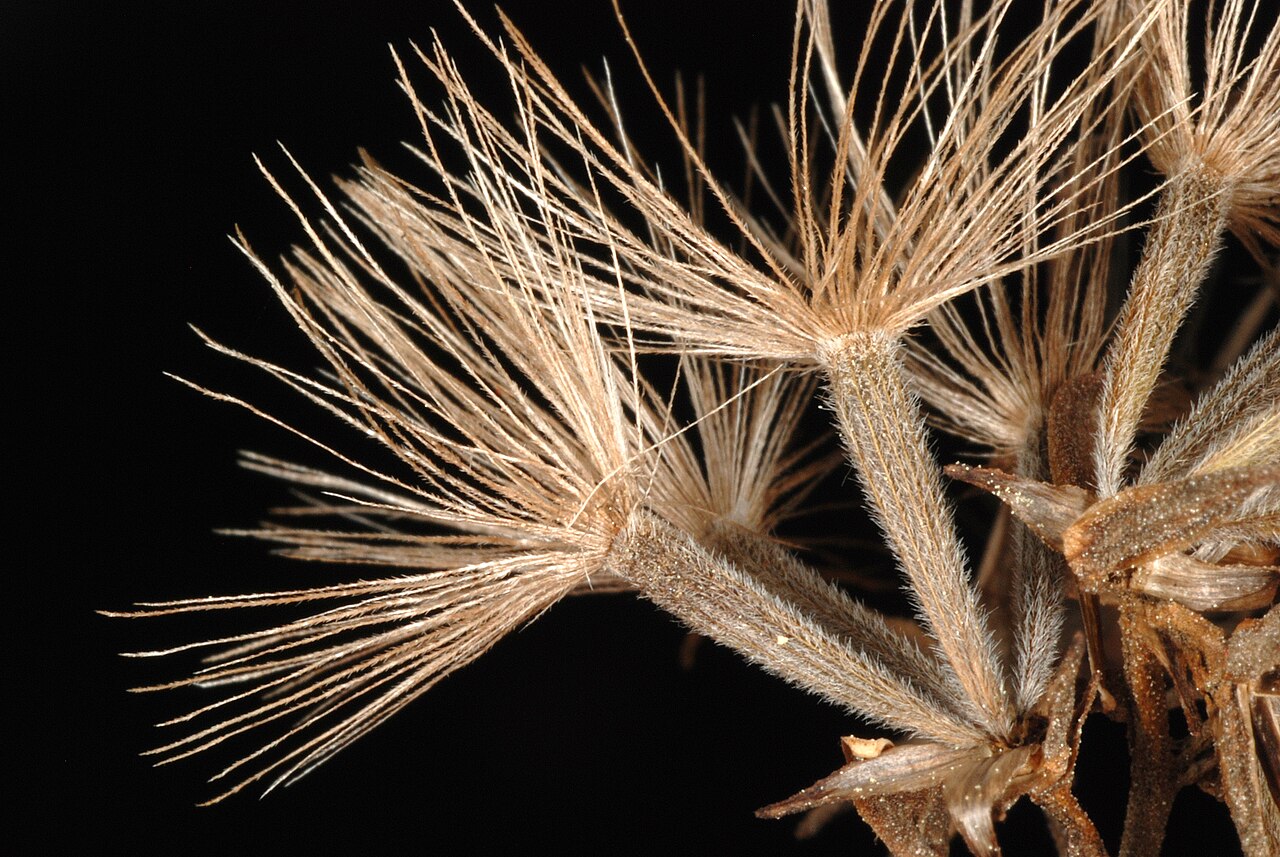
After flowering, the heads produce slender, ribbed seeds (cypselae) topped by a tuft of tan bristles called a pappus. The seed heads turn fluffy and buff-colored in winter and release seeds on the wind.
Quick Facts
| Scientific Name | Garberia heterophylla (W. Bartram) Merr. & F. Harper (syn. Garberia fruticosa) |
| Family | Asteraceae (aster family) |
| Plant Type | Evergreen shrub |
| Mature Height | 3–6 ft (occasionally to about 8 ft) |
| Mature Spread | 3–6 ft |
| Growth Rate | Moderate |
| Sun Exposure | Full sun |
| Water Needs | Low; very drought tolerant once established |
| Soil Type | Deep, well-drained, infertile sand |
| Soil pH | Acidic, about 4.5–6.5 |
| Bloom Time | October–December (peak November) |
| Flower Color | Lavender-pink to pale lilac |
| Fall Color | Evergreen; fall is its flowering season |
| Fruit | Slender cypselae with tan bristly pappus |
| Deer Resistant | Yes; aromatic, sticky foliage is rarely browsed |
| USDA Hardiness Zones | 8–10 |
Native Range
Garberia is endemic to Florida, and USDA PLANTS records it only from that state. The Atlas of Florida Plants maps it through much of the central and northern peninsula, from north-central Florida south along the central ridges to the Lake Wales Ridge in Polk and Highlands counties, with additional populations in coastal scrub on both coasts.
It is most common on the deep, sterile, sandy ridges that run down the center of the peninsula, which formed as ancient beach dunes and islands when sea levels were higher. These ridges hold Florida’s largest concentration of endemic plants and animals, including Florida rosemary, the Florida scrub-jay and the sand skink. Garberia is one of the most familiar shrubs in that community.
Its natural habitats are sand pine scrub, oak scrub, scrubby flatwoods and sandhill. These communities are maintained by periodic fire, and much of their area has been lost to agriculture and development. Garberia’s Threatened status in Florida reflects that loss, and the remaining wild populations are concentrated in state forests, parks, wildlife refuges and preserves.
📋 Regional plant lists featuring Garberia: North & South Florida
Growing & Care Guide
Garberia is one of the best native shrubs for dry, sunny Florida gardens, and it is available from many native plant nurseries. Because it is a state-listed Florida endemic, buy only nursery-propagated plants, and never dig plants or collect cuttings or seed from wild populations.
Light
Plant in full sun. In shade garberia becomes open and leggy and flowers poorly. In the wild it grows in open scrub where trees are scattered.
Soil & Water
Garberia needs deep, very well-drained sand. It is adapted to nutrient-poor, acidic sand and is one of the first plants to fail in heavy, rich or irrigated soil. Water new plants regularly for the first two or three months, then stop. Established plants should not need supplemental water except during severe, prolonged drought. Avoid planting in irrigated lawns or beds, and never fertilize; both shorten its life.
Planting Tips
Plant from containers in fall through early spring, when temperatures are mild. Space plants 4 to 5 feet apart. Garberia pairs well with Florida rosemary, scrub oaks, saw palmetto, blazing stars and other scrub and sandhill natives, and it makes an attractive informal hedge or background shrub for a butterfly garden. Because the foliage is gray-green and the shape naturally rounded, it also works as a specimen plant.
Pruning & Maintenance
Little care is required. Light pruning in late winter or spring, after the seeds have dispersed, keeps plants dense. Avoid pruning in summer and early fall, which removes the developing flower buds. Older plants may decline after many years and can be cut back hard or replaced. Do not mulch heavily; bare sand around the base is natural.
Propagation
Garberia can be grown from fresh seed sown in a sandy mix in winter or from semi-hardwood cuttings taken in late spring or summer. Because it is state-listed, propagation material should come only from cultivated plants.
Landscape Uses
- Butterfly gardens: one of the best fall nectar shrubs in Florida for butterflies
- Xeriscapes: thrives in dry sand with no irrigation once established
- Scrub and sandhill gardens: with Florida rosemary, scrub oaks and saw palmetto
- Informal hedges and screens: an evergreen, rounded shrub with gray-green foliage
- Habitat restoration: in permitted scrub and sandhill restoration within its range
Wildlife & Ecological Value
In Florida scrub, garberia is a key nectar source in late fall, when most other scrub shrubs have finished blooming.
For Pollinators
Garberia attracts a remarkable number of butterflies. Gulf fritillaries, monarchs and queens, sulphurs, hairstreaks, skippers and swallowtails all visit it in fall, along with many native bees and wasps.
For Birds
Its seeds are small and of limited value to birds, but the dense evergreen shrubs give cover and nesting sites to birds of the scrub, including Florida scrub-jays, which favor open scrub with scattered low shrubs.
For Mammals
The sticky, aromatic foliage is rarely eaten by deer or other mammals. Small mammals of the scrub, such as Florida mice and cotton rats, use the shrubs for cover.
Ecosystem Role
Garberia is adapted to the fire cycle of Florida scrub and sandhill. Fire kills the stems, but plants resprout from the base and recover within a few years. Its late-season bloom helps sustain pollinators in a community where nectar is scarce in fall.
Cultural & Historical Uses
William Bartram, who traveled through Florida in the 1760s and 1770s, described this shrub in his Travels (1791), and his name for it is the basis of the species name. Asa Gray named the genus Garberia in 1879 in honor of Abram Paschall Garber, a Pennsylvania physician and botanist who collected plants in Florida in the 1870s. For many years the plant was known as Garberia fruticosa, until Elmer Merrill and Francis Harper established Bartram’s name as the correct one in the 1940s.
Garberia has no well-documented history of use by Native Americans. Its cultural importance today is as an emblem of the Florida scrub, one of the most distinctive and threatened ecosystems in the United States.
Garberia is a favorite of Florida native plant and butterfly gardeners. Gardeners in sandy parts of Florida increasingly use it as a showy, low-water shrub.
Frequently Asked Questions
Is garberia endangered?
Garberia is endemic to Florida and is listed as Threatened by the state of Florida (FDACS Regulated Plant Index). It is not federally listed. Buy only nursery-propagated plants and never collect from the wild.
When does garberia bloom?
Mainly from October into December, with peak bloom usually in November.
Can garberia grow in clay or wet soil?
Rarely for long. It needs deep, well-drained sand and fails in heavy, rich, or irrigated soil.
Does garberia attract butterflies?
Yes. It is one of the best fall nectar shrubs in Florida and attracts gulf fritillaries, monarchs, sulphurs, skippers, hairstreaks and many bees.
Does garberia need water once established?
Usually not. It is adapted to dry scrub and needs only occasional deep watering during severe drought. Too much water is a more common cause of failure.

Looking for a nursery that carries Garberia?
Browse our native plant nursery directory: Florida