
Dogtongue Wild Buckwheat (Eriogonum tomentosum)
Eriogonum tomentosum, usually called Dogtongue Wild Buckwheat or simply dogtongue, is an oddity: a wild buckwheat growing in the pine sandhills of the Southeast. The genus Eriogonum is overwhelmingly western, with well over two hundred species spread across the deserts and mountains of the American West, and only a handful ever reached the Atlantic and Gulf Coastal Plain. This is the most widespread of those few.
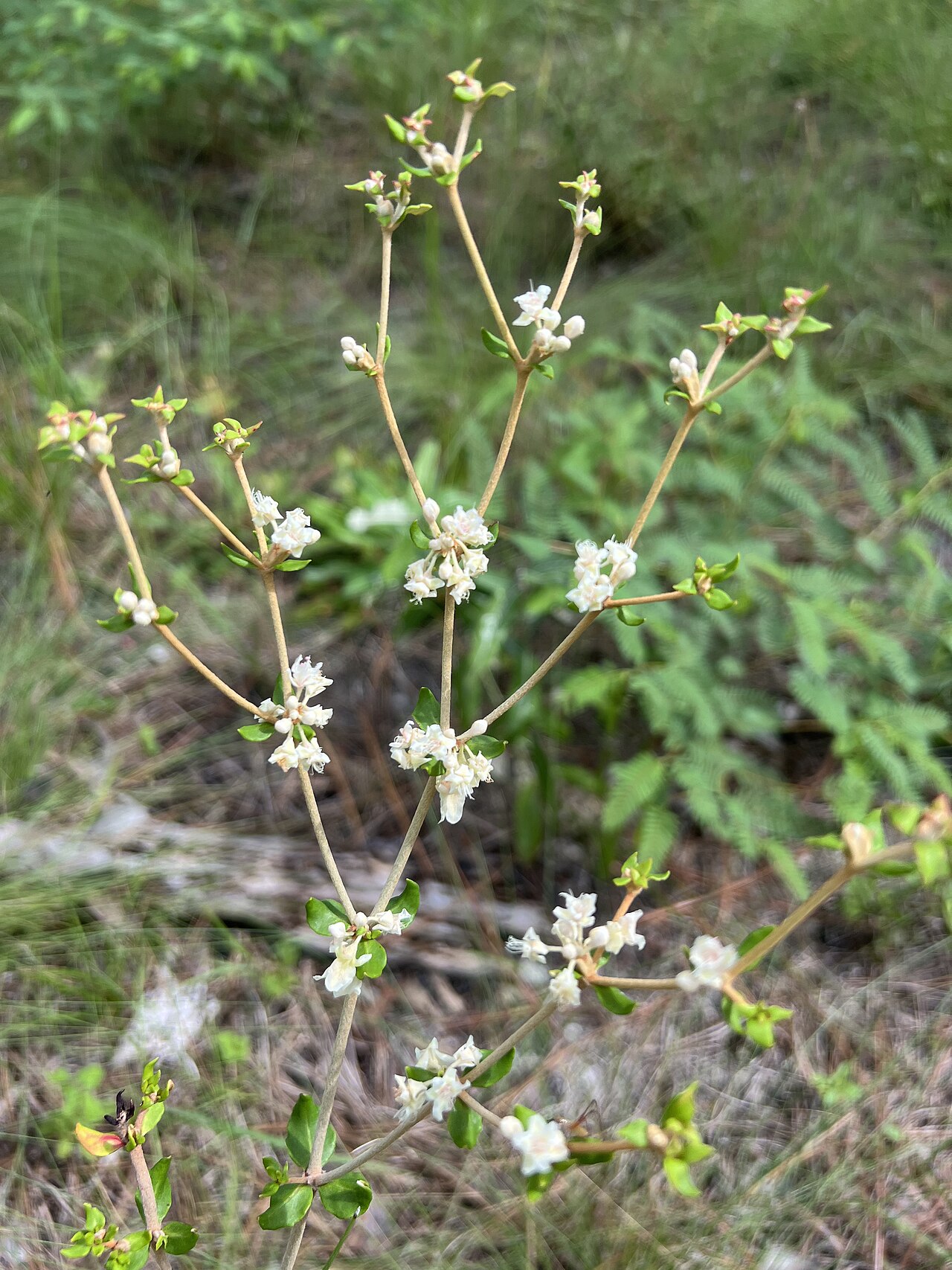
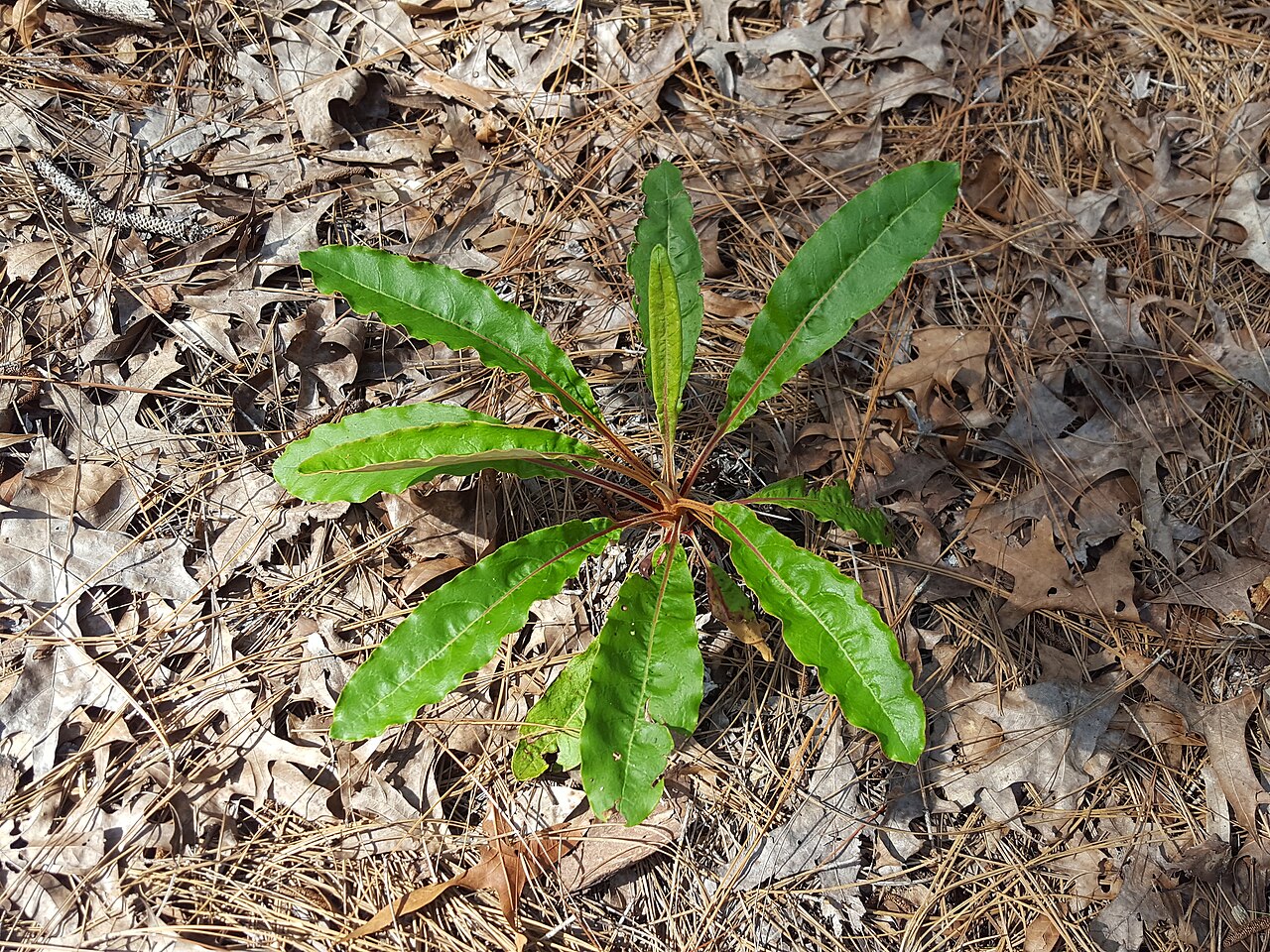
It is easy to recognize once you know it. The plant spends most of the year as a flat rosette of long, blunt, leathery leaves pressed against bare sand, dark green above and thickly white-woolly underneath. In late summer it sends up a stout stem two to four feet tall that forks repeatedly into a candelabra, with a ruff of small leaves at each fork and loose clusters of tiny creamy-white to pale pink flowers at the tips. The whole flowering stem looks dusted with felt.
Dogtongue grows in exactly the habitats that define the Southeastern uplands: longleaf pine and turkey oak sandhills, dry pine-oak woods, scrub, and open sandy clearings, from the Carolinas south through Georgia and Alabama to central Florida. It is a plant of fire-maintained, nutrient-poor sand, and it offers gardeners in that region a tough, strange-looking, late-season nectar plant that needs no water once established.
Identification
Nothing else in the Southeastern sandhills looks quite like dogtongue. Its basal rosette of large, blunt, white-backed leaves is distinctive on its own, and the forking, woolly, leafy-bracted flowering stem is unmistakable.
Stems & Habit
For most of the year the plant is a flat rosette with no visible stem, growing from a stout woody root. In summer it sends up one or more erect flowering stems, usually eighteen inches to about four feet tall, which are thick, pale, and covered in white or tawny wool. The stem forks into two or three branches at each node, and each fork carries a whorl of small leaf-like bracts, so the finished inflorescence has an open, tiered, candelabra shape. Plants die back to the rosette after seeding.
Leaves
Basal leaves are the main field mark. They are oblong to narrowly spoon-shaped, three to eight inches long and up to about two inches wide, blunt-tipped, leathery, with a stout reddish stalk. The upper surface is green and nearly smooth or thinly hairy; the underside is densely covered with white to pale tan wool. The combination of size, blunt shape and felted underside is what the common name describes. Stem leaves are much smaller, and the bracts at the forks are smaller still.
Flowers
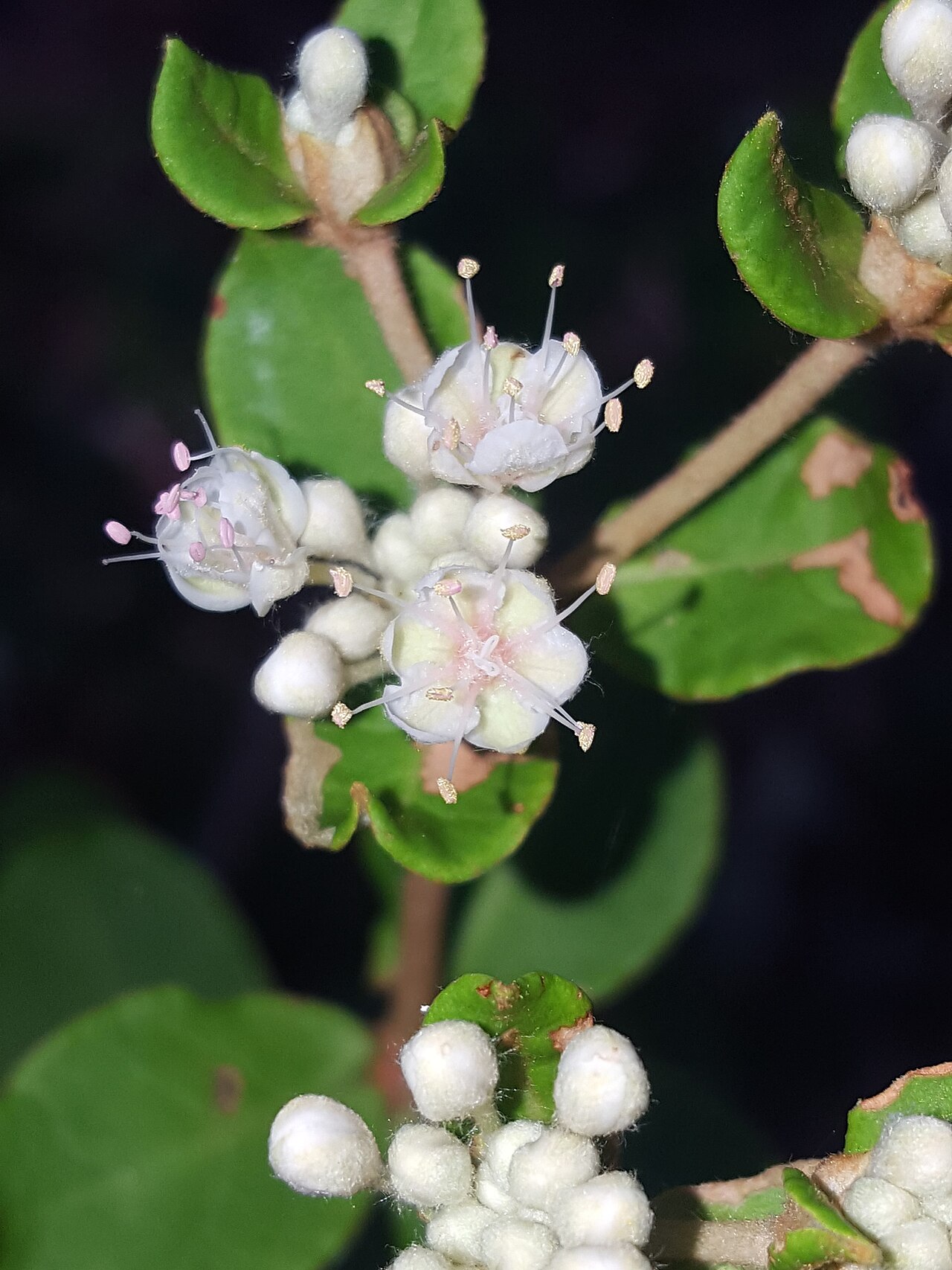
Flowering runs roughly from midsummer into fall, with the main display in August, September and October, though plants in Florida can start as early as May. The tiny flowers, about an eighth of an inch across, sit in groups inside small woolly cups called involucres, and those cups are clustered along and at the ends of the branches. Individual flowers are creamy white to pale pink or greenish, with six petal-like lobes and nine stamens that project slightly; the buds look like small balls of white felt. The display is subtle at close range but conspicuous as a drift of pale stems above the sand.
Fruit & Seeds
The fruit is a small, dry, three-angled achene, a shape shared with the cultivated buckwheat of pancake flour and with the smartweeds and docks in the same family. Each achene holds a single seed. The woolly involucres persist as the stem dries, and the seed is shed through fall and winter, dispersing mainly by gravity and by wind rolling the dry stems and bracts across open sand.
Quick Facts
| Scientific Name | Eriogonum tomentosum Michx. (USDA symbol ERTO2) |
| Family | Polygonaceae (buckwheat family) |
| Plant Type | Herbaceous perennial with a basal rosette and woody root |
| Mature Height | 1.5–4 ft in flower; rosette flat to the ground |
| Mature Spread | 1–2 ft |
| Growth Rate | Slow |
| Sun Exposure | Full sun to light shade |
| Water Needs | Low; drought tolerant once established |
| Soil Type | Deep, dry, well-drained sand or sandy loam |
| Soil pH | About 4.5–6.5 |
| Bloom Time | Mainly August–October; can begin as early as May in Florida |
| Flower Color | Creamy white to pale pink or greenish |
| Fall Color | None; stems dry to tan and persist into winter |
| Fruit | Small three-angled achene in a woolly involucre |
| Deer Resistant | Yes; the leathery, woolly foliage is rarely browsed |
| USDA Hardiness Zones | 7–10 |
Native Range
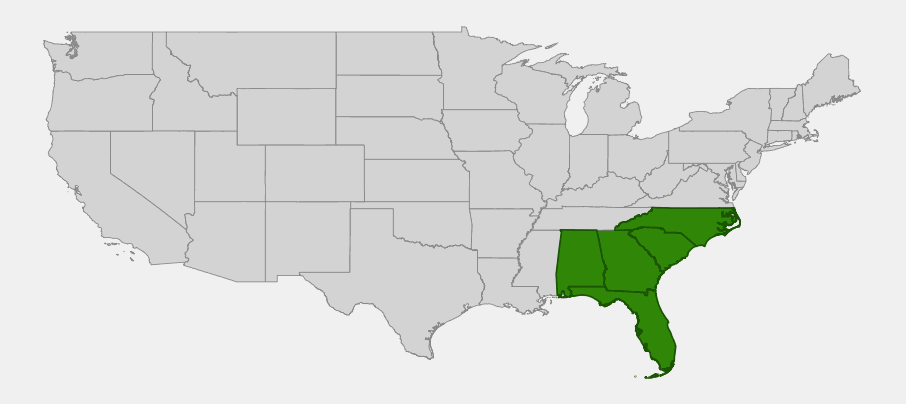
USDA PLANTS and the Lady Bird Johnson Wildflower Center record dogtongue wild buckwheat from five states: North Carolina, South Carolina, Georgia, Alabama and Florida. It follows the Atlantic and Gulf Coastal Plain sand country, reaching its northern limit in the Carolina sandhills and its southern limit in central peninsular Florida. The Atlas of Florida Plants maps it through the Panhandle and the northern and central peninsula.
Its habitat is dry, open, sandy upland: longleaf pine and turkey oak sandhills, dry pine-oak woods and clearings, sand ridges, scrubby flatwoods, and the sandy shoulders of roads cut through those communities. It needs deep, infertile, rapidly draining sand and a good deal of sun at ground level. Where fire has been excluded and the canopy has closed, dogtongue thins out and disappears, which is the usual story for sandhill herbs.
This is one of very few members of a largely western genus to occur east of the Mississippi River. Its closest Florida relative, scrub buckwheat (Eriogonum longifolium var. gnaphalifolium), is a rare, legally protected endemic of the Lake Wales Ridge and nearby scrub. Dogtongue itself is not rare or listed, but like its relative it depends on the survival of fire-managed sandhill and scrub.
📋 Regional plant lists featuring Dogtongue Wild Buckwheat: North & South Florida · Alabama, Georgia & Mississippi · North & South Carolina
Growing & Care Guide
Dogtongue is a specialist, and in the right soil it is close to maintenance-free. It wants what a sandhill offers: deep dry sand, strong sun, no fertility and no competition at the root. Given those, it lives for years and asks nothing. Given rich, damp or heavily mulched ground, it rots.
Light
Full sun to very light shade. In its native sandhills it grows under a thin, open canopy of longleaf pine and turkey oak, so it accepts dappled light, but flowering is best with at least six hours of direct sun. Dense shade eliminates it.
Soil & Water
Deep, sharply drained sand is essential, and poor sand is better than good soil. The thick root stores water and the woolly leaf undersides cut evaporation, so established plants handle long droughts without irrigation. Water only to get new plants rooted, then leave them alone. Do not fertilize, and do not plant dogtongue in a bed that is irrigated regularly or that collects runoff.
Planting Tips
Plant container-grown stock in fall or early spring while temperatures are mild, and disturb the root as little as possible, since the plant resents having its taproot broken. Set the crown level with or slightly above the sand so the rosette does not sit in damp litter. Give each plant a foot or two of open sand around it rather than crowding it into a planting. Skip bark mulch entirely; pine straw used thinly, or bare sand, suits it better.
Pruning & Maintenance
Essentially none. Leave the dried flowering stems standing through winter for seed and for structure, then cut them off at the base in late winter if you want a tidier rosette. Keep encroaching grass and leaf litter off the rosette, since smothering is the most common cause of loss in gardens. In a managed sandhill, a cool-season burn or a winter mow does this job.
Propagation
Seed is the practical method. Gather dried involucres in fall when the achenes shake loose, clean them lightly, and sow in a gritty, free-draining mix. A period of cool moist stratification over winter, or simply sowing outdoors in fall in a protected flat, improves and evens out germination. Grow seedlings in deep pots so the root can run down, and plant them out small. Division is not practical and cuttings rarely root.
Landscape Uses
- Sandhill and scrub gardens: a signature native for dry, infertile, sunny sand
- Xeriscape plantings: no irrigation needed once established
- Late-season pollinator plantings: flowers in late summer and fall when many sandhill plants have finished
- Longleaf pine restoration: part of the groundcover flora of fire-managed sandhills
- Texture and winter interest: felted rosettes year-round and pale dried flowering stems into winter
- Native plant collections: one of the very few eastern representatives of a great western genus
Wildlife & Ecological Value
Wild buckwheats are among the most important insect plants of the American West, supporting whole guilds of butterflies and bees. The eastern species are far less studied, but dogtongue plays a comparable role in a habitat with few late-season flowers.
For Pollinators
The small, open, shallow flowers are easy for short-tongued insects to reach, and they are worked by native bees, honey bees, small wasps, flies and beetles. Butterflies, especially hairstreaks and skippers, take nectar from them. The timing matters as much as the quantity: dogtongue flowers from late summer into fall, when the spring flush of sandhill wildflowers is long over and insects are provisioning late broods or preparing to overwinter.
For Birds
Small seed-eating birds, including sparrows and towhees that forage on bare sandhill ground, take the achenes in fall and winter. Standing dried stems also hold insects that foraging birds glean.
For Mammals
Low value. The leathery, densely woolly leaves are unappealing to deer and rabbits, which is useful in gardens where browsing is heavy.
Ecosystem Role
Dogtongue is a long-lived perennial of a community shaped by fire. Its stout underground root survives the frequent low-intensity fires that keep longleaf pine sandhills open, and plants resprout and often flower well afterward. The flat rosette persists on bare sand between fires, holding a place in a groundcover layer that can contain dozens of species per acre. Loss of fire, conversion of sandhills to pine plantation or development, and deep litter build-up are the main threats to it and to the community it belongs to.
Cultural & Historical Uses
André Michaux, the French botanist who travelled North America for the French government in the late eighteenth century, described Eriogonum tomentosum from the Southeast, and it was the first species of its genus ever named. The genus name he coined combines Greek erion, wool, and gony, knee or joint, describing the woolly nodes of the flowering stem, and tomentosum likewise means densely woolly. Everything about the name points to the felt that covers the plant.
That a western genus should be founded on a Florida and Carolina sandhill plant is a historical accident of exploration: Michaux collected in the Southeast decades before botanists worked the interior West, where the genus has since been found to contain hundreds of species. Today Eriogonum is one of the largest plant genera in North America and a mainstay of western native gardening, while the handful of eastern species remain little known.
Dogtongue has no significant record of human use, which is typical of sandhill herbs. Its practical importance now is as an indicator and as a nursery subject: its presence signals a sandhill that still has reasonably intact groundcover and fire history, and native nurseries in Florida and Georgia occasionally offer it for restoration and for gardeners rebuilding sandhill plant communities on sandy lots.
Frequently Asked Questions
Is dogtongue related to the buckwheat used for flour?
They are in the same family, Polygonaceae, but they are different genera. Culinary buckwheat is Fagopyrum esculentum, an annual crop of Asian origin. Dogtongue is a native wild buckwheat, Eriogonum tomentosum. The shared family shows in the small three-angled seed, but dogtongue is not eaten and produces far too little seed to be a food plant.
Why is it called dogtongue?
For the leaves. The basal rosette consists of long, blunt, thick, leathery leaves that are soft and white-felted underneath, which struck early observers as resembling a dog’s tongue. Locally it is also called wild buckwheat or sandhill buckwheat.
Can I grow it outside the Southeast?
Only where you can match its conditions: deep, infertile, very well-drained sand, full sun, mild winters and no regular irrigation. Its hardiness is roughly zones 7 to 10. Gardeners in clay or in cold regions will have better results with hardier western wild buckwheats suited to their own climate.
Does it need fire?
Not in a garden, but the wild populations do. Dogtongue belongs to longleaf pine sandhill communities that depend on frequent low-intensity fire to stay open. In a garden, keeping litter off the rosette and keeping competing plants away accomplishes the same thing. Cutting the old flowering stems in late winter approximates the effect of a cool-season burn.
When does it bloom, and is the bloom showy?
The main display is August through October, sometimes starting earlier in Florida. Individual flowers are tiny and creamy white, so it is not showy the way a coreopsis is; the effect comes from the tall, pale, forking, felted stems carried above bare sand, which read well in a mass and hold their shape into winter.

Looking for a nursery that carries Dogtongue Wild Buckwheat?
Browse our native plant nursery directory: Alabama · Florida & Georgia · North Carolina · South Carolina