
Coastal Plain Honeycombhead (Balduina angustifolia)
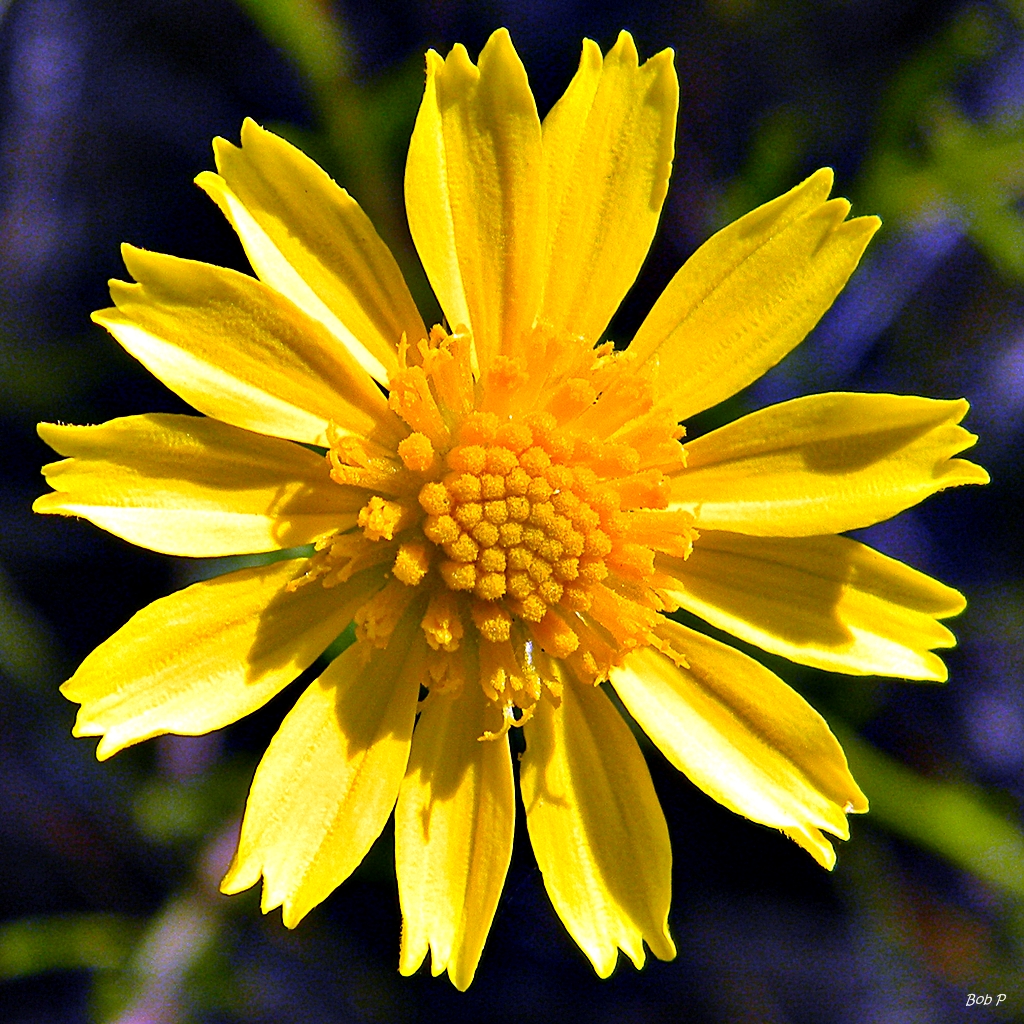
Balduina angustifolia, the Coastal Plain Honeycombhead, is a wiry, airy wildflower of the dry, sandy places of the Deep South. Florida gardeners usually know it as yellow buttons. From early summer into fall, its slender, branching stems carry dozens of bright yellow daisies, each about 1 to 1½ inches across, that seem to hover above the bare white sand. It belongs to the aster family (Asteraceae).
It is a plant of sandhills, scrub, coastal dunes, dry pine flatwoods and sandy roadsides in Florida, southern Georgia, southern Alabama and southern Mississippi. It grows as an annual or short-lived biennial, sprouting from seed, flowering and dying, and coming back each year from seed in open, sunny sand where little else grows.
Its common name comes from the base of each flower head, which is pitted like a honeycomb. Along the northern Gulf Coast it is also the only known pollen source of a rare specialist bee. This guide covers how to identify it, where it grows and how to use it in dry, sunny native gardens.
Identification
In bloom, coastal plain honeycombhead looks like a small, loose-branched yellow daisy on almost leafless stems. Many plants of dry Florida sand have yellow daisies, so look at the leaves, the rays and the base of the head.
Stems & Habit
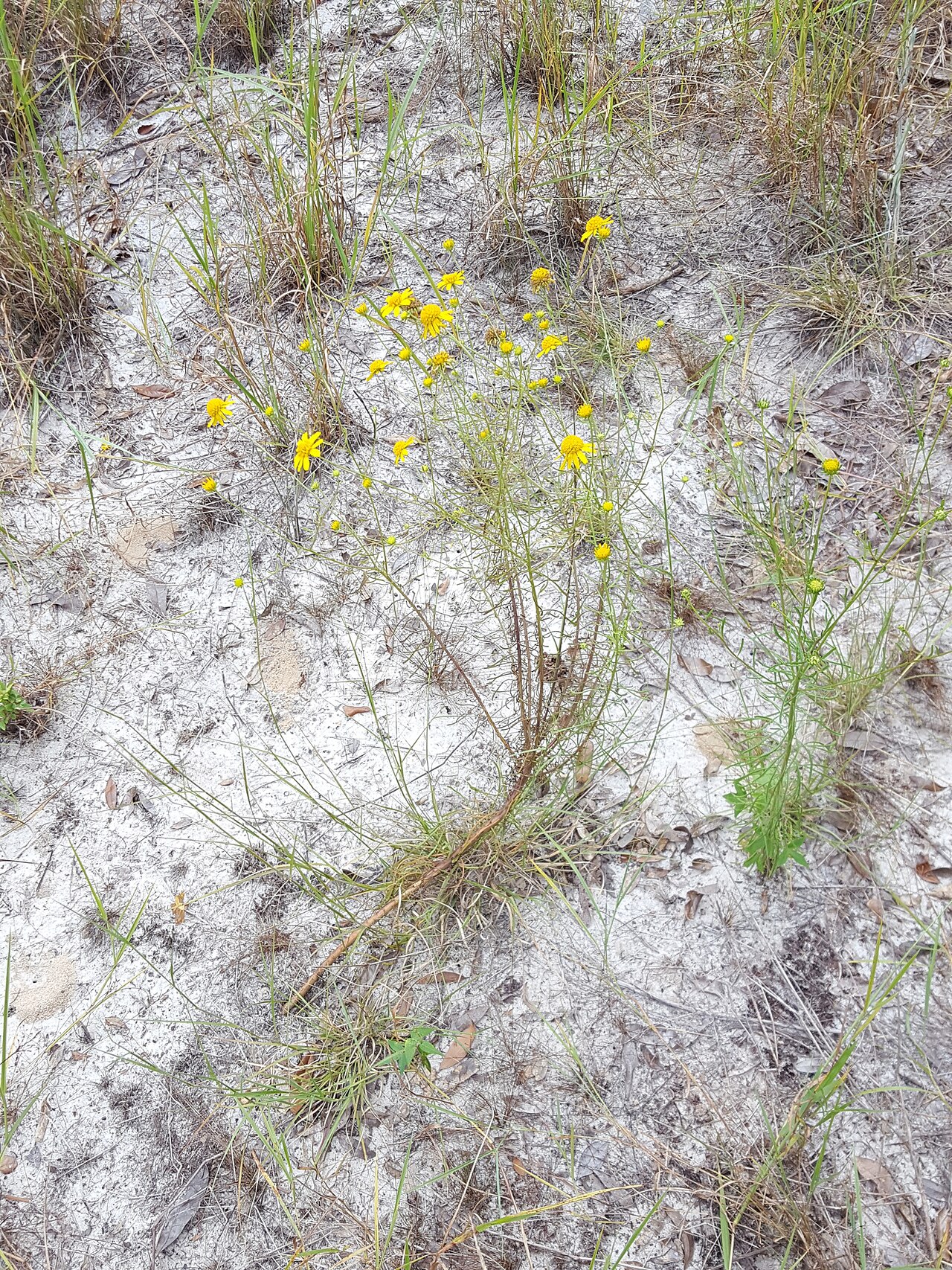
Plants are usually 1 to 3 feet tall, sometimes taller, with one main stem that branches widely in the upper half into many thin, stiff stems, each ending in a single flower head. The overall form is open and broom-like. Stems are green to reddish and smooth or finely hairy.
Leaves
The leaves are alternate, narrow and almost needle-like, ½ to 2 inches long, crowded near the base of the plant and becoming small and sparse up the stems. They are slightly succulent and gray-green to bright green. The first-year plant is often a small rosette or tuft of these narrow leaves.
Flower Heads
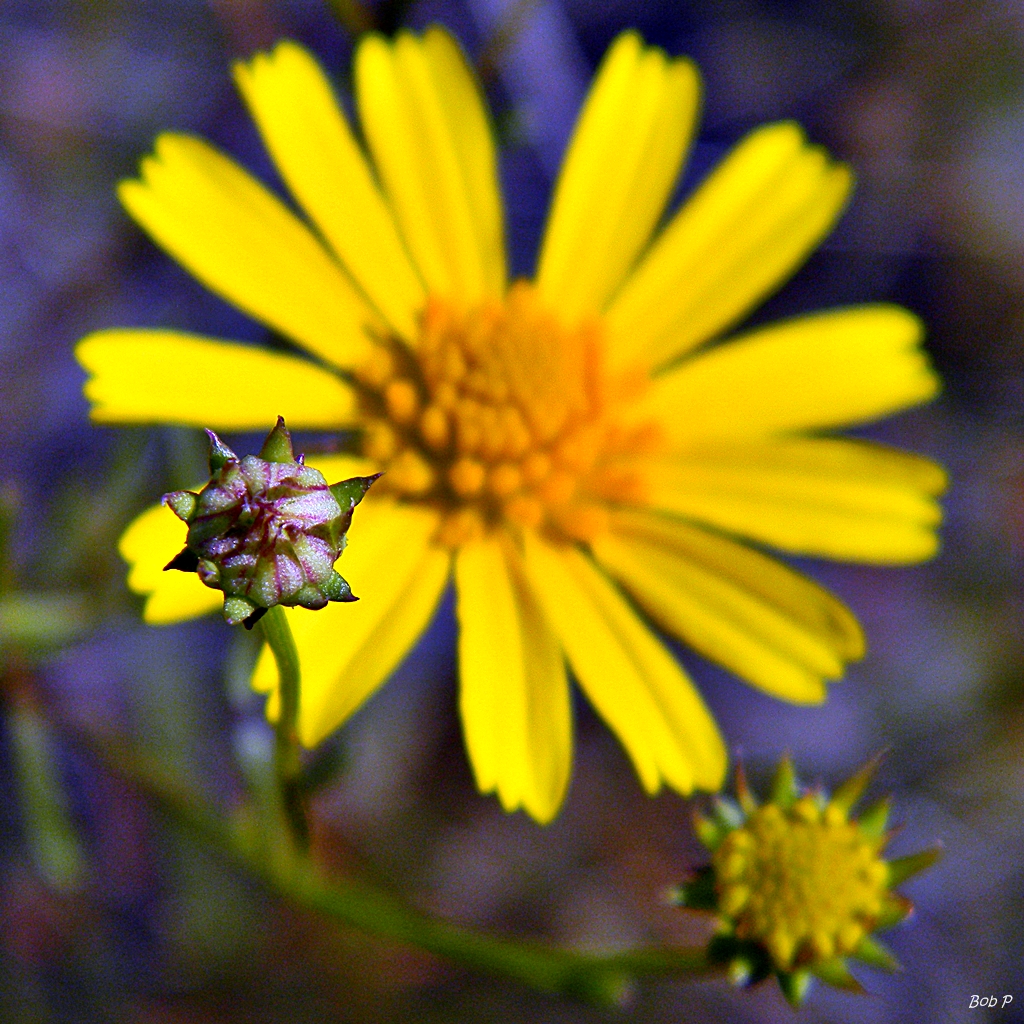
Each head has about 8 to 13 yellow ray flowers around a domed disk of many small, yellow to orange disk flowers. The rays are broad and wedge-shaped, ½ inch or more long, and the tip of each ends in three short teeth. Below the head, overlapping green bracts, often tinged purple, form a cup. Heads open from summer to late fall in most of the range, and nearly year-round in south Florida.
The Honeycomb Base
If you pull apart a mature head, the receptacle (the base that holds the flowers) is covered with deep, angular pits, each surrounding the base of a disk flower, so it looks like a tiny honeycomb. This feature, shared by all Balduina species, gives the plant its common name. The seeds are small, hairy achenes with a crown of short scales.
Similar Species
Other Balduina species in Florida and Georgia are perennials of wetter sites with broader leaves, including the purple-disked honeycombhead (B. atropurpurea) and oneflower honeycombhead (B. uniflora). Golden aster and other sand-dwelling yellow daisies lack the toothed rays and the pitted base.
Quick Facts
| Scientific Name | Balduina angustifolia (USDA symbol BAAN3) |
| Family | Asteraceae (aster family) |
| Plant Type | Annual or biennial wildflower |
| Mature Height | 1–3 ft; occasionally to 4 ft |
| Mature Spread | 1–2 ft |
| Growth Rate | Fast |
| Sun Exposure | Full sun |
| Water Needs | Low; very drought tolerant |
| Soil Type | Deep, dry, well-drained sand |
| Soil pH | About 4.5–7.0 |
| Bloom Time | June–November; nearly year-round in south Florida |
| Flower Color | Bright yellow rays, yellow to orange disk |
| Fall Color | None |
| Fruit | Small hairy achenes from a honeycomb-pitted base |
| Deer Resistant | Moderate; seldom browsed |
| USDA Hardiness Zones | 8–10 (grown from seed each year) |
Native Range
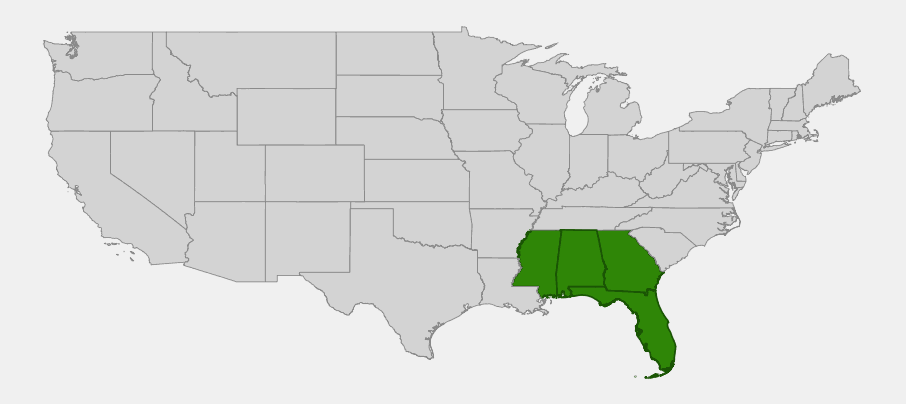
Coastal plain honeycombhead is a Southeastern Coastal Plain endemic. USDA PLANTS lists it from four states: Florida, Georgia, Alabama and Mississippi. In Georgia, Alabama and Mississippi it is mostly confined to the southern Coastal Plain, close to the Gulf Coast and the Florida line.
Florida is the heart of its range. The Atlas of Florida Plants records it throughout most of the state, from the western panhandle to the southern peninsula. It grows in sandhills, Florida scrub, scrubby and dry pine flatwoods, coastal dunes and interdunal swales, and it readily colonizes sandy roadsides, firebreaks and old fields.
Along the beaches of the Florida panhandle, Alabama and Mississippi, it is a common wildflower of secondary dunes. It is not listed as threatened or endangered, though its coastal dune habitat has been reduced by development.
📋 Regional plant lists featuring Coastal Plain Honeycombhead: North & South Florida · Alabama, Georgia & Mississippi
Growing & Care Guide
Coastal plain honeycombhead is a plant for the hottest, driest, sandiest spot in a southeastern garden, where it seeds itself and blooms for months with no care at all. It is grown from seed by a few Florida native seed producers and sometimes sold as small plants.
Light
Give it full sun. It is a plant of open sand and grows weak and sparse in shade.
Soil & Water
It needs deep, loose, well-drained sand. Rich, moist or clay soils lead to rot and short-lived plants. Once seedlings are established it needs no watering. Never fertilize; extra nutrients favor weeds and turfgrass that crowd it out.
Planting Tips
The easiest way to establish it is to sow seed on bare, raked sand in fall or winter, pressing it lightly into the surface. Small plants can be set out in spring. Group several plants or sow thickly, since a single plant looks thin. It combines well with other sand-loving wildflowers and bunchgrasses in a dry meadow or sandhill-style garden.
Pruning & Maintenance
Because it is an annual or biennial, it depends on reseeding to persist. Leave the dry heads standing in fall so seed can fall, and keep a few patches of bare sand nearby where seedlings can sprout. Avoid heavy mulch, which prevents germination. Pull spent plants in winter if you want a tidier look.
Propagation
Grow it from seed collected in fall when the heads turn brown and dry. Sow fresh seed outdoors, or store it cool and dry and sow in late winter. Germination is usually good on bare sand with light watering. It cannot be divided.
Landscape Uses
- Dry meadows and sandhill gardens: bright summer and fall color on deep sand
- Coastal gardens: tolerates heat, wind and salt spray on secondary dunes
- Pollinator gardens: pollen and nectar for native bees, beetles and butterflies
- Roadsides and open sandy areas: reseeds to fill bare sand
- Restoration: for sandhill, scrub and dune restorations within its range
Wildlife & Ecological Value
Coastal plain honeycombhead is especially important to native bees, and it supports one of the most specialized bees in the Southeast.
For Pollinators
The Gulf Coast solitary bee (Hesperapis oraria), a rare ground-nesting bee of coastal dunes in Alabama, Mississippi and the Florida panhandle, collects pollen only from coastal plain honeycombhead. It was described in 1995 as monolectic, meaning it depends on a single plant species for pollen. Where this bee occurs, protecting the plant is essential to protecting the bee. Many other native bees, beetles, wasps, butterflies and skippers visit the flowers for nectar and pollen.
For Birds
Seed-eating birds such as sparrows and ground doves pick seeds from the dry heads and from the sand beneath the plants.
For Mammals
It is rarely browsed. Its value to mammals is mostly indirect, as part of the open, sunny habitat of sandhills and dunes.
Ecosystem Role
As an annual or biennial of bare sand, it fills gaps between bunchgrasses and shrubs and is quick to appear after fire, storms or other disturbance. On dunes it adds flowers to a habitat with relatively few nectar plants in late summer and fall.
Cultural & Historical Uses
The genus Balduina was named by Thomas Nuttall in 1818 to honor William Baldwin, a physician and botanist who collected plants in Georgia and Florida in the early nineteenth century. The species name angustifolia means “narrow-leaved.”
There is no documented traditional use of this species. Its cultural importance is as one of the characteristic wildflowers of Florida sandhills and Gulf Coast beaches, and its common name yellow buttons is widely used by Florida naturalists.
It has become more important as conservationists learned of its link with the Gulf Coast solitary bee. Dune restoration projects on the northern Gulf Coast now include it, and it is a good example of how one modest wildflower can support another species entirely.
Frequently Asked Questions
Is coastal plain honeycombhead an annual?
It grows as an annual or short-lived biennial. Individual plants live a year or two, but colonies persist for many years by reseeding on open sand.
Why is it called honeycombhead?
The base of each flower head is covered with deep angular pits, like a honeycomb, that hold the individual disk flowers. You can see them by pulling apart a mature head.
What is yellow buttons?
Yellow buttons is the common name used by many Florida gardeners and naturalists for coastal plain honeycombhead, Balduina angustifolia.
Will it grow in regular garden soil?
It does best in deep, dry, well-drained sand. In rich, moist or clay soils it tends to rot or be crowded out.
Which bee depends on this plant?
The Gulf Coast solitary bee (Hesperapis oraria) collects pollen only from coastal plain honeycombhead. It lives on coastal dunes in Alabama, Mississippi and the Florida panhandle.

Looking for a nursery that carries Coastal Plain Honeycombhead?
Browse our native plant nursery directory: Alabama · Florida & Georgia · Mississippi