
Scarlet Creeper (Ipomoea hederifolia)
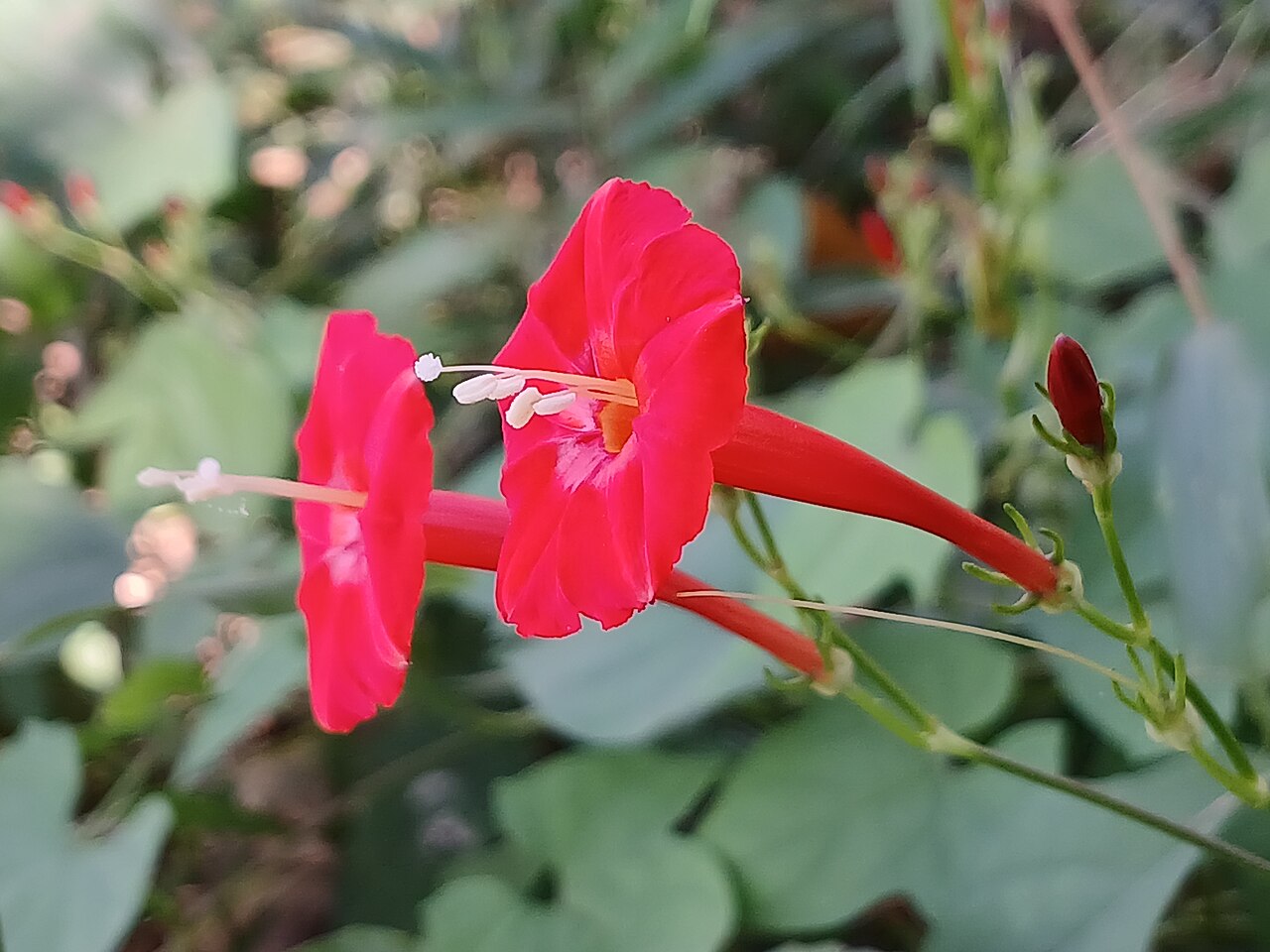
Ipomoea hederifolia, known as Scarlet Creeper or scarlet morning glory, is a fast-growing annual vine of the morning glory family (Convolvulaceae). From midsummer until frost it twines over fences, shrubs and tall grasses and produces a long display of small, brilliant scarlet to orange-red trumpet flowers, each with white stamens protruding from the mouth. Hummingbirds and large butterflies find it quickly.
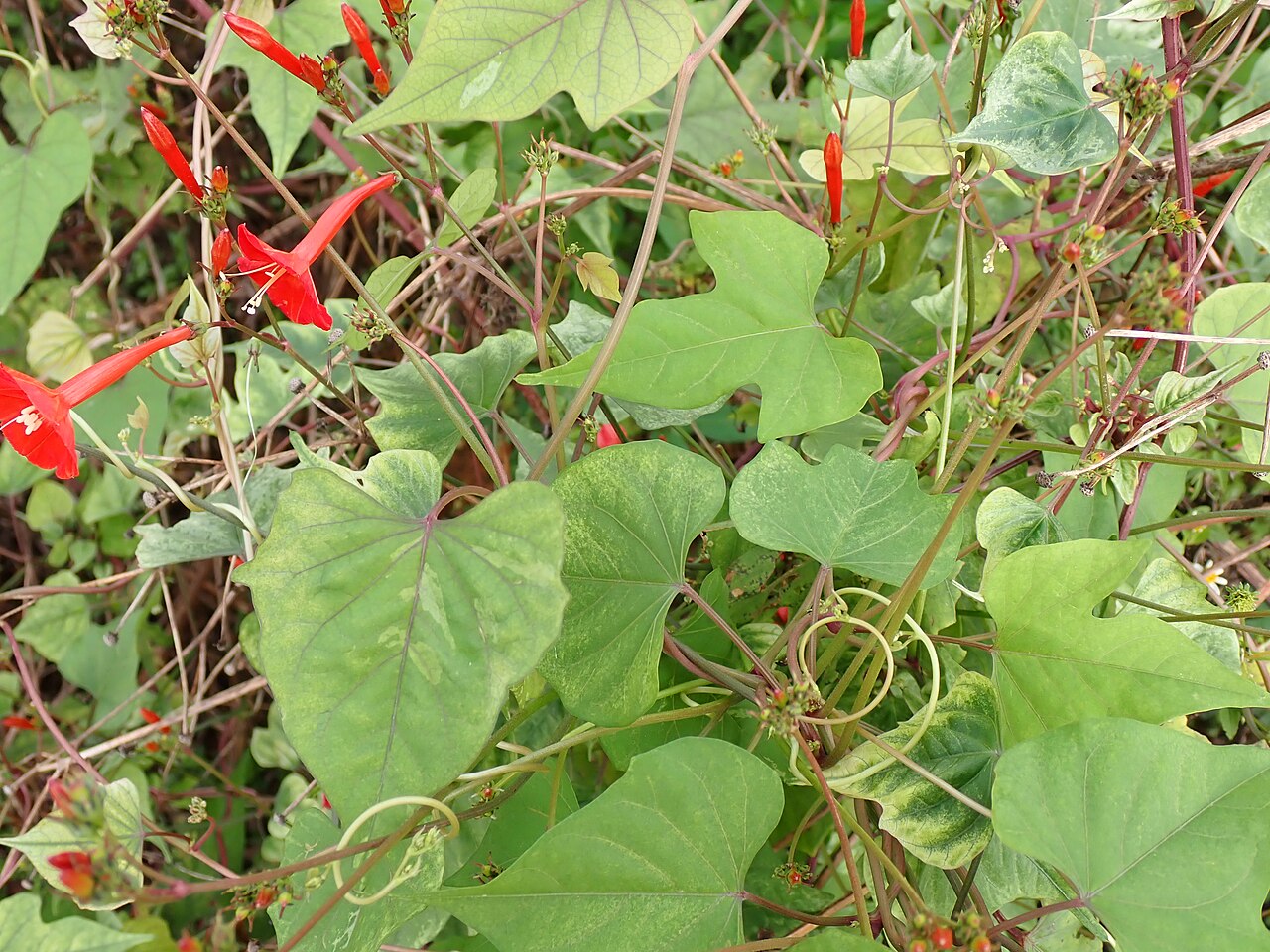
The species name hederifolia means “ivy-leaved”. Its leaves vary on the same vine from heart-shaped and entire to three-lobed, like small ivy leaves. It is closely related to red morning glory (Ipomoea coccinea) and the non-native cypress vine (Ipomoea quamoclit), which have similar red tubular flowers. Older references place these species in the genus Quamoclit.
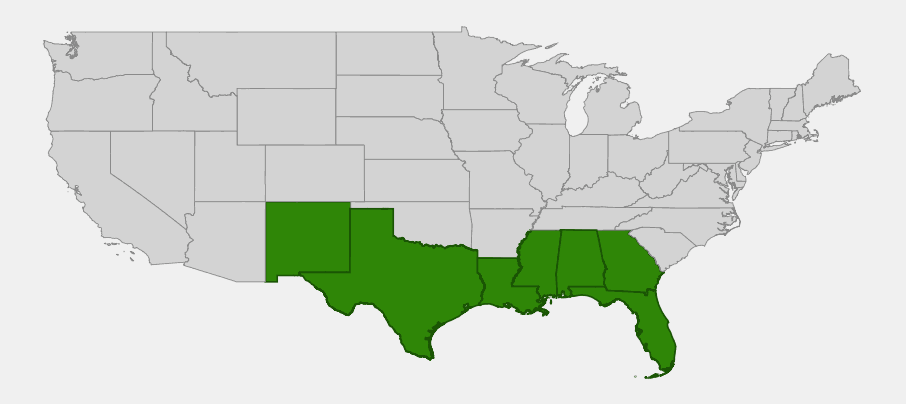
USDA PLANTS lists scarlet creeper as native to the lower 48 states, Puerto Rico and the U.S. Virgin Islands, and introduced in Hawaii. In the continental United States it grows mainly in the Gulf Coast states from Florida to Texas, with records in New Mexico. It is native throughout much of tropical America and has become naturalized in many warm regions of the world. This guide covers how to identify it, where it grows and how to grow it.
Identification
Scarlet creeper is easy to recognize when in bloom by its small, bright red, trumpet-shaped flowers on a slender twining vine. The leaves and flower shape separate it from its close relatives.
Stems
The stems are slender, smooth, twining and green to reddish, climbing 6 to 10 feet or more in a single season. They wrap around any support and branch freely, forming a lacy curtain over fences and shrubs.
Leaves
Leaves are alternate, long-stalked, 1½ to 4 inches long, and smooth. They are heart-shaped with a pointed tip, and many have three or more shallow to deep lobes. A single vine often carries both entire and lobed leaves. Red morning glory has mostly heart-shaped leaves with a few angular teeth, and cypress vine has very finely divided, feathery leaves.
Flowers
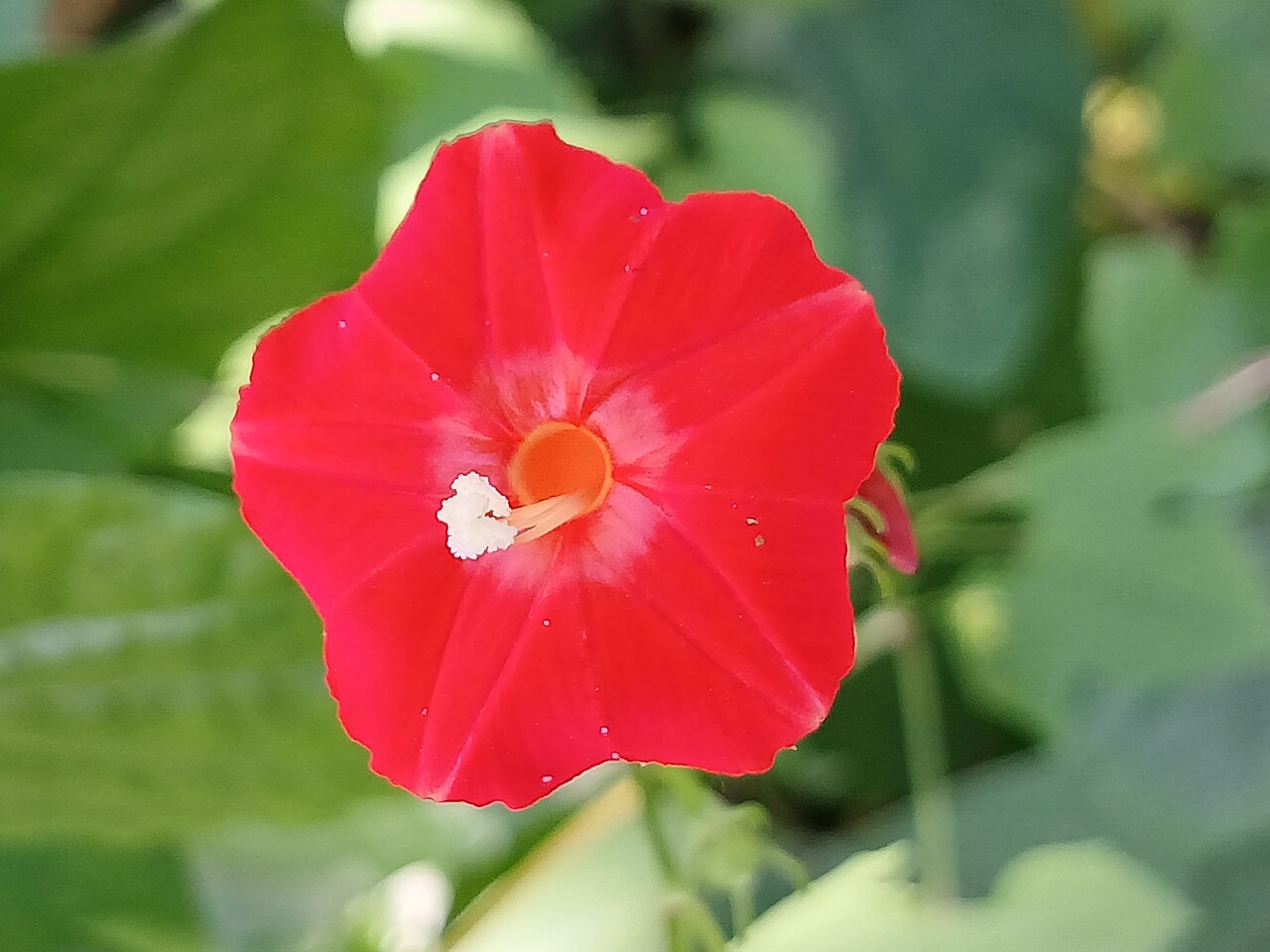
The flowers are borne in small clusters on long stalks from the leaf axils. Each has a narrow tube about 1 to 1½ inches long that flares into a flat, five-angled face about ¾ to 1 inch across. They are scarlet to orange-red, often with a yellow or orange throat, and the white stamens and style protrude well beyond the mouth. Like many morning glories, each flower opens for a single day. Plants bloom from midsummer until frost, peaking in late summer and fall.
Fruit & Seeds
The fruit is a small, round capsule about ⅓ inch across that ripens from green to tan and contains up to four dark, angular seeds. Seeds fall near the plant and readily produce new seedlings the next year.
Quick Facts
| Scientific Name | Ipomoea hederifolia L. (syn. Quamoclit hederifolia) |
| Family | Convolvulaceae (morning glory family) |
| Plant Type | Annual twining vine |
| Mature Height | 6–10 ft vine (climbs higher on tall supports) |
| Mature Spread | 3–6 ft |
| Growth Rate | Fast |
| Sun Exposure | Full sun to part shade |
| Water Needs | Medium; tolerates short dry spells |
| Soil Type | Sandy, loamy or clay soils; well-drained |
| Soil pH | About 6.0–7.5 |
| Bloom Time | July–November (until frost) |
| Flower Color | Scarlet to orange-red with white stamens |
| Fall Color | None; annual |
| Fruit | Small round capsule with up to four seeds |
| Deer Resistant | Moderate |
| USDA Hardiness Zones | Annual; grown as a summer annual in all zones |
Native Range
Scarlet creeper is native to the warmer parts of the Americas. In the United States, USDA PLANTS and the Lady Bird Johnson Wildflower Center record it from Alabama, Florida, Georgia, Louisiana, Mississippi, Texas and New Mexico, as well as Puerto Rico and the U.S. Virgin Islands. USDA also has scattered records from northern states such as Virginia, Massachusetts and Vermont, which are probably garden escapes or temporary occurrences and are not shown on the map here. In Hawaii it is considered introduced.
In Florida the Atlas of Florida Plants records it as native and maps it through much of the state, from the Panhandle into south Florida. Along the Gulf Coast it grows in thickets, fencerows, field edges, disturbed ground, roadsides, hammock edges and the borders of wetlands. Its range extends south through Mexico, Central America and the Caribbean into South America.
Some botanists consider that parts of its U.S. range may reflect early spread from tropical America, as with several other morning glories. Federal and state sources currently treat it as native in the Gulf states, and native plant gardeners there use it as a hummingbird vine.
📋 Regional plant lists featuring Scarlet Creeper: North & South Florida · Alabama, Georgia & Mississippi · Arkansas, Louisiana, Eastern Oklahoma & Eastern Texas · South & West Texas · Arizona & New Mexico
Growing & Care Guide
Scarlet creeper is one of the easiest native vines to grow from seed, and it is a favorite for hummingbird gardens in the Southeast and Texas. Seed is available from native seed suppliers and is easy to save from your own plants.
Light
Grow it in full sun for the most flowers. It tolerates part shade, but vines in shade bloom less and stretch toward the light.
Soil & Water
It grows in almost any well-drained soil, from sand to clay, and does not need rich soil. Water seedlings until they are established; after that it needs water only in prolonged dry spells. Heavy fertilizing produces leaves at the expense of flowers.
Planting Tips
Sow seeds directly outdoors after the last frost, when the soil is warm. Nicking the hard seed coat or soaking seeds overnight speeds germination. Plant near a fence, trellis, mailbox post, or open shrub that it can climb, and space plants 6 to 12 inches apart. It can also be sown at the edge of a meadow, where it will scramble over tall grasses and wildflowers.
Pruning & Maintenance
Little care is needed. Guide young vines onto supports. Because it reseeds freely, pull unwanted seedlings in spring or remove some seed capsules in fall if you want to limit spread. In mild climates the vine dies at the first frost and should be pulled off its support in winter.
Propagation
Grow from seed. Collect capsules when they turn tan and dry, and store the seeds in a cool, dry place over winter. Seeds remain viable for several years.
Landscape Uses
- Hummingbird gardens: bright red, tubular flowers from midsummer until frost
- Fences and trellises: quick, lacy annual cover for fences, arbors and mailboxes
- Meadow and edge plantings: scrambles over tall grasses and wildflowers
- Containers: on a small trellis in a large pot
- Butterfly gardens: visited by swallowtails and other large butterflies
Wildlife & Ecological Value
Scarlet creeper is one of the best native vines for hummingbirds in the South, and its late-season flowers are especially valuable during fall migration.
For Pollinators
Its narrow, red tubular flowers are adapted to pollination by hummingbirds, and ruby-throated hummingbirds visit it heavily in late summer and fall as they prepare for migration. Large butterflies, such as swallowtails and sulphurs, and day-flying sphinx moths also take nectar from the flowers.
For Birds
Hummingbirds are the main bird visitors. The seeds are sometimes eaten by seed-eating birds, and the tangled vines provide cover for small birds.
For Mammals
Deer and rabbits occasionally browse young vines. It is otherwise of minor importance to mammals.
Ecosystem Role
As a fast-growing annual, scarlet creeper colonizes open ground and disturbed edges, quickly covering bare soil and shrubs. Morning glory vines support a variety of insects, including tortoise beetles and the caterpillars of some moths.
Cultural & Historical Uses
Carl Linnaeus described Ipomoea hederifolia in 1759. The genus name Ipomoea comes from the Greek ips (worm) and homoios (like), referring to the twining stems. For many years scarlet creeper and its relatives were placed in a separate genus, Quamoclit, and that name still appears in older books and seed catalogs.
Scarlet creeper and its relatives were grown as ornamental vines in European and American gardens from the eighteenth century. It is still grown widely in tropical and subtropical gardens around the world, and it has escaped and naturalized in parts of Asia, Africa and the Pacific.
Today native plant gardeners in the Southeast and Texas grow it mainly for hummingbirds. It can be used in place of the non-native cypress vine, which is popular for the same purpose.
Frequently Asked Questions
Is scarlet creeper native?
USDA PLANTS lists it as native in the lower 48 states, Puerto Rico and the U.S. Virgin Islands, and introduced in Hawaii. The Atlas of Florida Plants also treats it as native in Florida.
How is scarlet creeper different from cypress vine?
Cypress vine (Ipomoea quamoclit) has very finely divided, feathery leaves and is not native to the United States. Scarlet creeper has heart-shaped to three-lobed leaves.
Does scarlet creeper attract hummingbirds?
Yes. Its red, tubular flowers are heavily visited by ruby-throated hummingbirds, especially in late summer and fall.
Will scarlet creeper come back every year?
It is an annual, so the vine dies at frost, but it reseeds readily and usually returns from seed the following year.
Is scarlet creeper invasive?
It reseeds freely and can become weedy in gardens and fields, but it is native in the Gulf states. Pull unwanted seedlings in spring to control it.

Looking for a nursery that carries Scarlet Creeper?
Browse our native plant nursery directory: Alabama · Florida & Georgia · Louisiana & Mississippi · Texas · New Mexico