
Rougeplant (Rivina humilis)
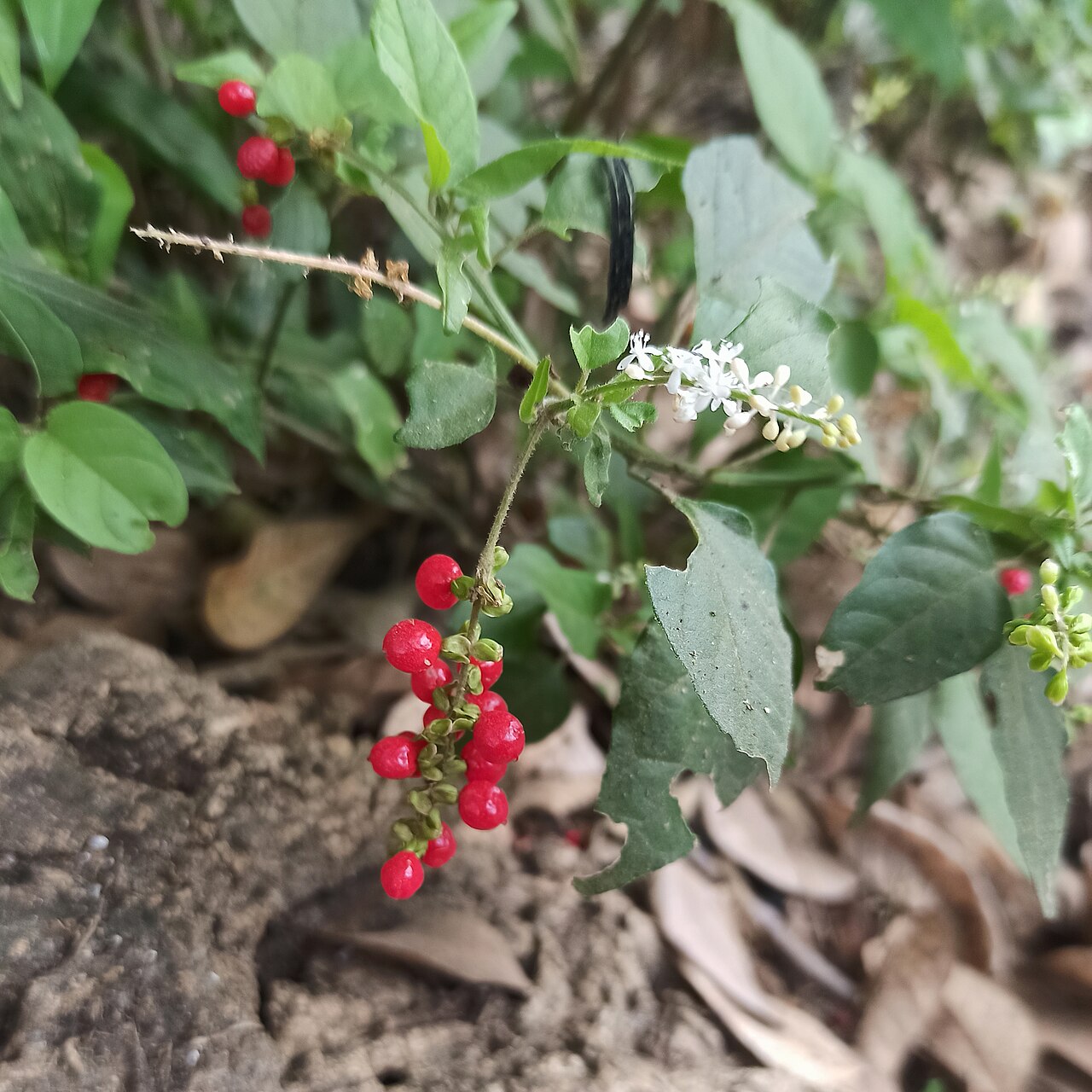
Rivina humilis, known as Rougeplant, pigeonberry or bloodberry, is a small, soft-stemmed perennial of shady hammocks, thickets and woodland edges across the southern United States and the American tropics. It stands only 1 to 3 feet tall, but it is in flower or fruit for much of the year: slender spikes of tiny white to pink flowers rise above the leaves, and below them hang strings of glossy, translucent red berries.
It is one of the few native plants that will bloom and fruit reliably in real shade, which makes it a favorite of Florida and Texas native gardeners for the ground layer under trees. Birds eat the berries, and the plant reseeds itself readily. The name rougeplant comes from the red juice of the berries, which was once used as a cosmetic rouge and as a dye or ink.
Rougeplant belongs to the Petiveriaceae, a small tropical family that also includes guinea-hen weed (Petiveria alliacea). Older references place it in the pokeweed family, Phytolaccaceae. The berries and leaves are considered toxic if eaten, so plant it where small children will not snack on the bright fruit. This guide covers identification, native range, growing tips and its value for wildlife.
Identification
Rougeplant is easy to recognize when it is in fruit. Look for a low, branching plant with thin, alternate leaves and, at the stem tips, a slender spike that is flowering at the top and carrying red berries lower down.
Growth Habit
Rougeplant is an herbaceous perennial that becomes somewhat woody at the base with age. It usually grows 1 to 3 feet tall and about as wide, with many slender, spreading branches. In deep shade it stays low and open; with more light and moisture it becomes fuller. In frost-free areas it stays evergreen, while farther north it dies back in winter and resprouts from the root crown.
Leaves
The leaves are alternate, simple and thin, roughly 1 to 5 inches long, ovate to broadly lance-shaped with a long pointed tip. The margins are entire or slightly wavy, and the leaf blade sits on a slender stalk. The foliage is medium green and soft to the touch, and leaves may take on a reddish tint in cool or dry weather.
Flowers
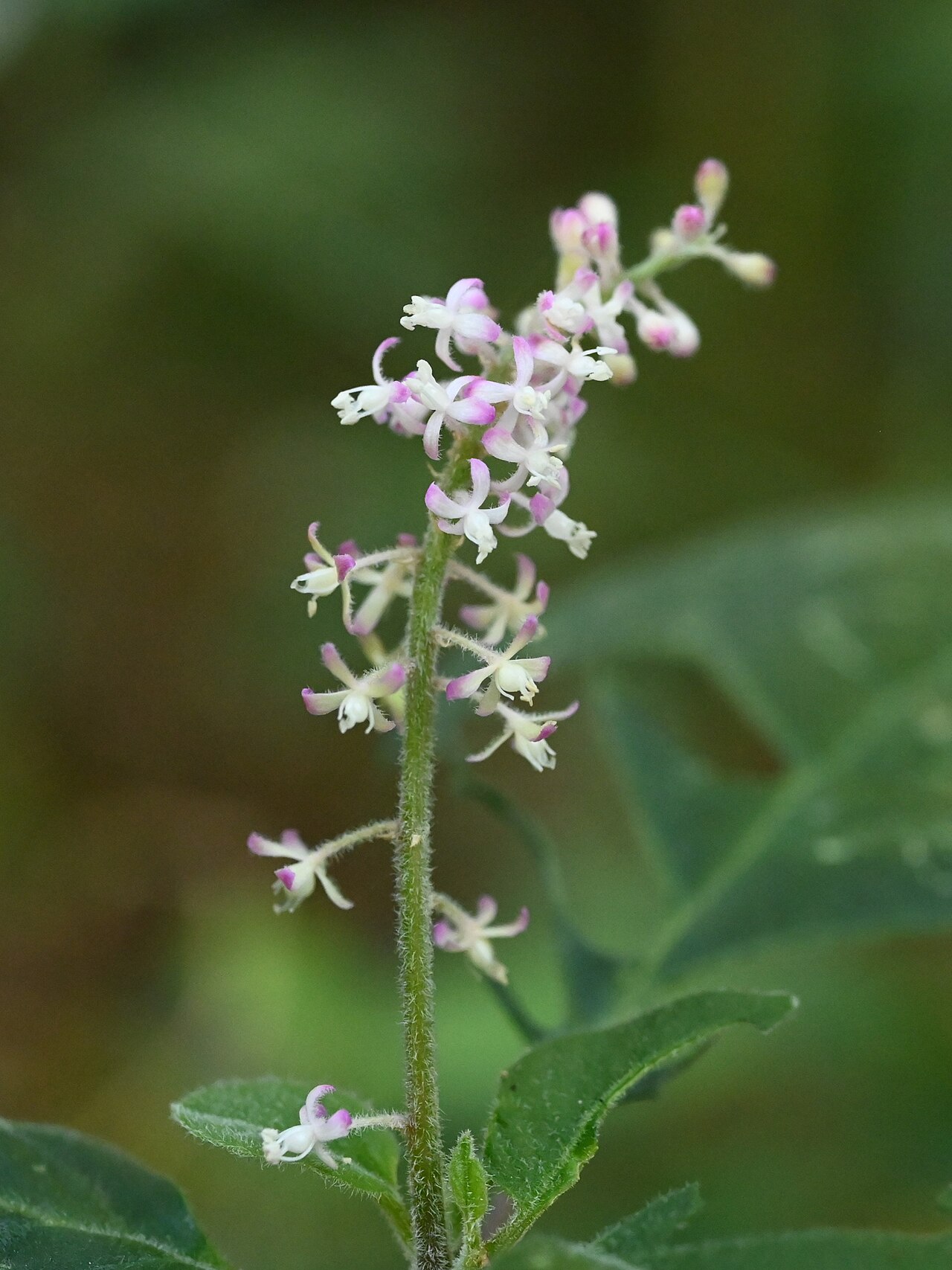
The flowers grow in slender racemes about 2 to 4 inches long at the ends of the branches and in the upper leaf axils. Each flower is tiny, about ⅛ inch across, with four white to pale pink tepals (there are no separate petals) and four stamens. A single plant flowers over a long period: in South Florida and South Texas it can bloom in almost any month, with the main flush from spring into fall.
Fruit & Seeds
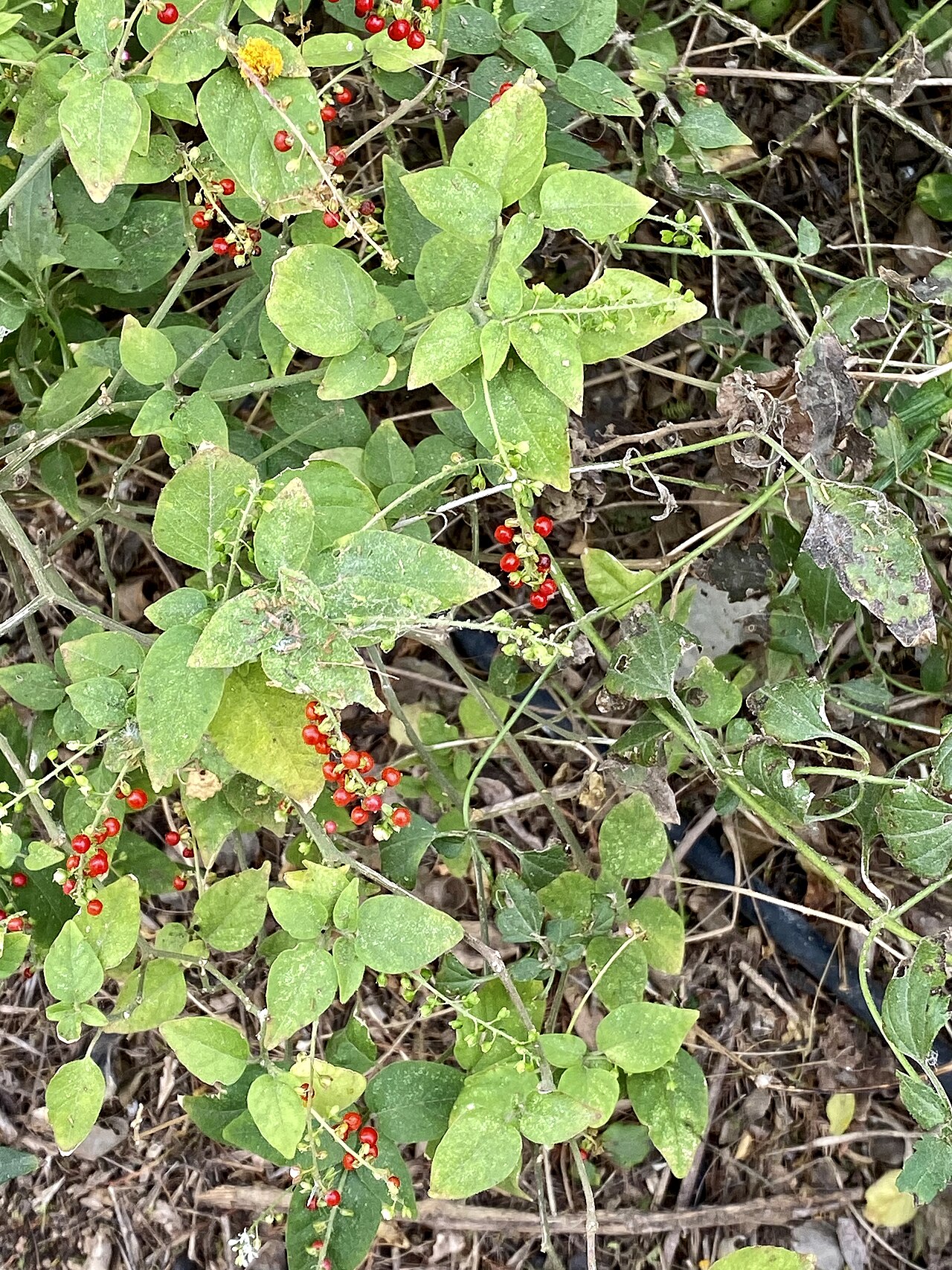
The fruit is a small, round, juicy berry about ⅛ to ¼ inch across, usually bright red and somewhat translucent, though orange and yellow-fruited forms occur. Each berry holds a single small, lens-shaped seed. Because flowering continues at the tip while fruit ripens below, a single spike often shows flowers, green fruit and ripe red berries at the same time.
Quick Facts
| Scientific Name | Rivina humilis L. |
| Family | Petiveriaceae (formerly placed in Phytolaccaceae, the pokeweed family) |
| Plant Type | Herbaceous perennial, woody at the base; evergreen in frost-free areas |
| Mature Height | 1–3 ft |
| Mature Spread | 1–3 ft |
| Growth Rate | Fast |
| Sun Exposure | Part shade to full shade |
| Water Needs | Medium; moist, well-drained soil, tolerates dry spells once established |
| Soil Type | Sand, sandy loam, loam, clay or limestone-based soil |
| Soil pH | Slightly acidic to alkaline, about 6.0–8.0 |
| Bloom Time | Spring–fall; nearly year-round in frost-free areas |
| Flower Color | White to pale pink |
| Fall Color | None; evergreen in mild climates |
| Fruit | Glossy red (rarely orange or yellow) one-seeded berry |
| Deer Resistant | Moderate |
| USDA Hardiness Zones | 8–11 |
Native Range
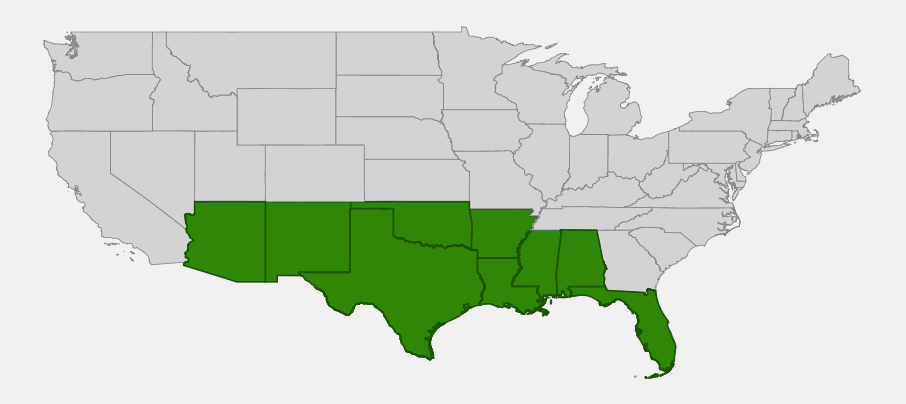
Rougeplant has a wide native range in the warm parts of the Americas. In the United States, USDA PLANTS and the Lady Bird Johnson Wildflower Center record it as native from Florida west through Alabama, Mississippi, Louisiana, Arkansas, Oklahoma and Texas to New Mexico and Arizona. It is also native to Puerto Rico and the U.S. Virgin Islands, and its range continues south through Mexico, Central America and the Caribbean to tropical South America.
In Florida, the Atlas of Florida Plants records it as native, and it is most common in the hardwood hammocks of the central and southern peninsula and the Keys, including coastal hammocks and shell mounds. In Texas it is a familiar plant of the shaded woodlands and riverside thickets of the south and central parts of the state, including the Rio Grande Valley.
Rougeplant has been widely planted as an ornamental and has escaped and become weedy in Hawaii, where USDA lists it as introduced, and in parts of Africa, Asia and Australia. Within its native range it is a normal member of the shaded understory and is not considered a problem plant.
📋 Regional plant lists featuring Rougeplant: North & South Florida · Alabama, Georgia & Mississippi · Arkansas, Louisiana, Eastern Oklahoma & Eastern Texas · South & West Texas · Arizona & New Mexico
Growing & Care Guide
Rougeplant is one of the easiest native plants to grow in a shady garden in Florida and Texas. It is sold by many native plant nurseries, often as pigeonberry, and it establishes quickly from small pots. Once you have one plant you will usually have more, because birds and fallen berries spread the seed.
Light
Plant rougeplant in part shade or full shade, such as under oaks and palms, on the north or east side of a building, or at the edge of a woodland. It tolerates some sun, especially morning sun, but in hot, dry, sunny spots the leaves yellow and the plant becomes sparse. In deep shade it flowers and fruits less heavily but still performs.
Soil & Water
It grows in almost any well-drained soil, from Florida sand and limestone to Texas clay, and handles alkaline soil well. Water regularly for the first few weeks after planting. After that it tolerates drought, but in a long dry spell it may drop leaves or go partly dormant until rain returns. A layer of leaf mulch keeps the soil cooler and moister and helps it stay lush.
Planting Tips
Set plants 18 to 24 inches apart in spring or at the start of the rainy season. Use rougeplant as a loose groundcover under trees, along shady paths, or tucked between shrubs such as wild coffee and firebush. Because the berries and leaves are considered toxic, avoid planting it right beside play areas where young children might eat the fruit. Buy plants from a native nursery rather than digging them from the wild.
Pruning & Maintenance
Rougeplant needs very little care. Cut back leggy stems in late winter to keep it compact and encourage new growth. In north Florida and other areas with frost, the tops may be killed back in a freeze; trim off the dead stems and the plant will resprout from the base in spring. Be aware that it self-sows freely. Seedlings are easy to pull, but if you want a tidy bed, plan to thin them every year or share them with other gardeners.
Propagation
Rougeplant is easy from seed. Collect ripe red berries, clean or simply crush them, and sow on the surface of moist potting mix; seedlings usually appear within a few weeks in warm weather. Volunteer seedlings around an established plant can also be dug and potted. Softwood cuttings root readily in spring and summer.
Landscape Uses
- Shade groundcover: a low, flowering and fruiting layer under trees where turf struggles
- Bird gardens: berries are eaten by many songbirds over a long season
- Woodland and hammock gardens: with wild coffee, firebush and ferns
- Containers: an attractive small plant for shaded patios, with flowers and fruit at the same time
- Habitat restoration: in hammock and woodland restoration within its native range
Wildlife & Ecological Value
Rougeplant is a small plant with an outsized value for wildlife in shady gardens. Its long flowering and fruiting season provides food when many other plants are resting.
For Pollinators
The tiny flowers are visited by small bees, flies, wasps and small butterflies, which find a steady supply of pollen and nectar in shaded areas over many months.
For Birds
The red berries are eaten by many birds, including northern mockingbirds, northern cardinals, gray catbirds, thrushes and warblers in migration. The name pigeonberry reflects that doves eat the fruit as well. Birds swallow the berries whole and disperse the seeds.
For Mammals
Small mammals may eat fallen berries. Deer browse it only occasionally, and the Wildflower Center rates it as moderately deer resistant.
Ecosystem Role
In hammocks and shaded thickets, rougeplant forms part of the herb layer under trees and shrubs, helping to cover and hold the soil. Its year-round fruit makes it a dependable food plant for resident birds in South Florida and South Texas.
Cultural & Historical Uses
The genus name Rivina honors the German botanist and physician Augustus Quirinus Rivinus (1652–1723), and the species name humilis means “low”, describing the small size of the plant. Linnaeus described the species in 1753.
The common names rougeplant and bloodberry come from the red juice of the berries, which has been used as a natural rouge, as a dye and as an ink. The juice stains fingers and fabric, so pick ripe fruit with care.
Because the leaves and fruit are considered toxic, rougeplant is not used as a food. Some traditional medicine uses have been recorded in Latin America, but the plant should not be eaten or used as a home remedy.
Frequently Asked Questions
Is rougeplant poisonous?
The berries and leaves are considered toxic if eaten. Birds eat the fruit without harm, but keep children and pets from eating it, and plant it away from play areas if that is a concern.
Why is it called pigeonberry?
Doves and other birds eat the small red berries. The name pigeonberry is used for several unrelated plants, which is why the scientific name Rivina humilis or the name rougeplant is more precise.
Does rougeplant spread?
Yes. It self-sows readily, and birds carry the seeds to new spots. In a native shade garden this is usually welcome, but extra seedlings are easy to pull where you do not want them.
Can rougeplant grow in full shade?
Yes. It is one of the best flowering natives for shade in Florida and Texas. It flowers and fruits more heavily with some filtered light, but it still grows well in full shade.
Will rougeplant survive a freeze?
The stems are killed back by hard freezes, but the plant usually resprouts from the base in spring. It is reliably perennial in roughly USDA zones 8 to 11 and is evergreen where frost is rare.

Looking for a nursery that carries Rougeplant?
Browse our native plant nursery directory: Alabama, Arizona & Arkansas · Florida · Louisiana & Mississippi · New Mexico & Oklahoma · Texas