
Kidneyleaf Rosinweed (Silphium compositum)
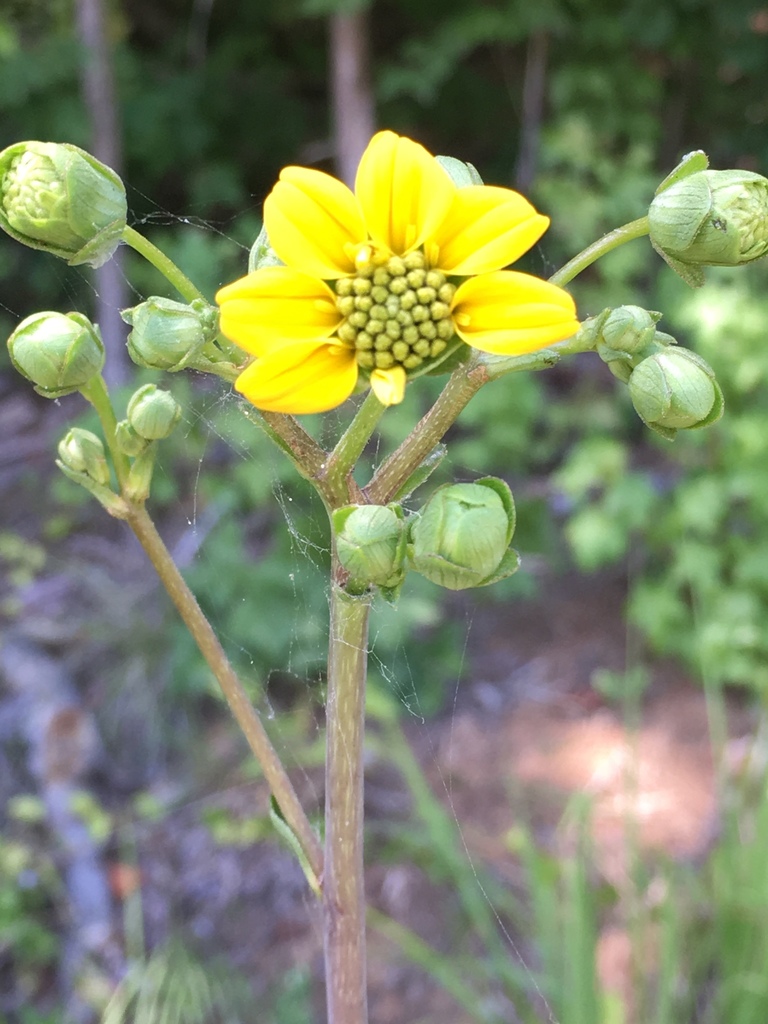
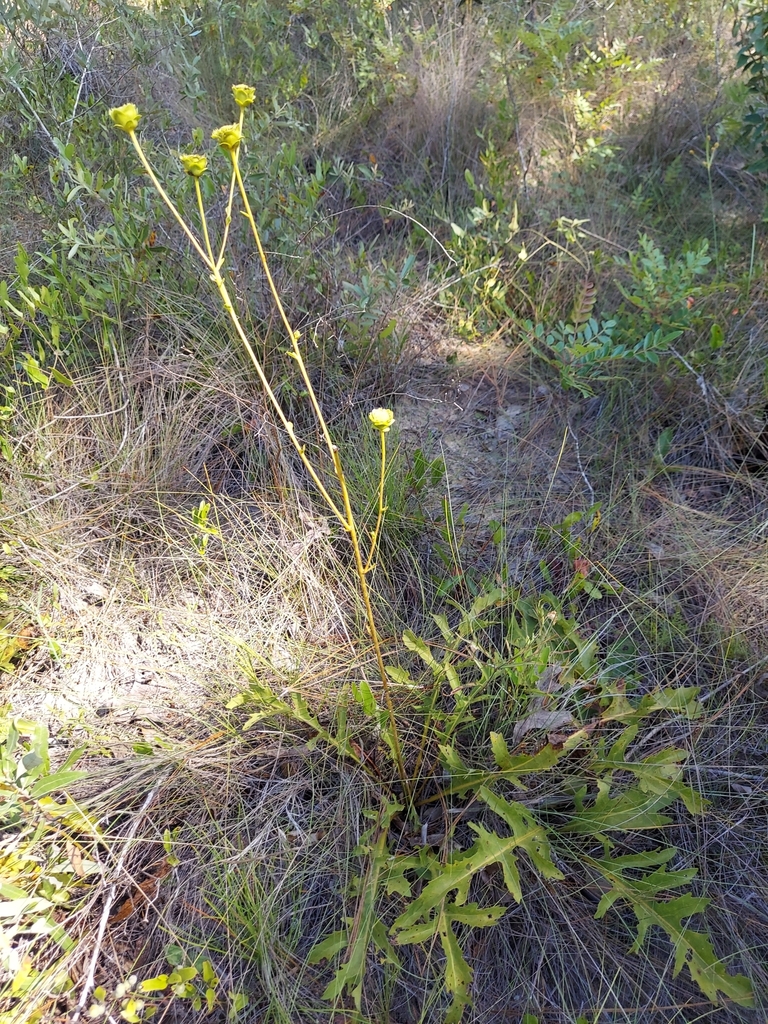
Silphium compositum, known as Kidneyleaf Rosinweed, is a tall native sunflower of dry sandhills, pine-oak woods and rocky openings in the Southeast. Most of the year it is just a low cluster of big basal leaves, often shaped like a kidney or a heart, though in some plants they are deeply cut. In summer it sends up slender, nearly leafless stems 3 to 8 feet tall that branch into airy sprays of small yellow daisies.
It is a member of the aster family (Asteraceae) and of the genus Silphium, the rosinweeds, which includes better-known prairie plants such as Cup Plant, Compass Plant and Prairie Dock. Like them, it has gritty, resinous sap and a deep taproot that makes it very drought tolerant once established. The leafless flower stalk over a clump of basal leaves resembles prairie dock in a smaller, more delicate form.
Kidneyleaf rosinweed is native from Virginia and West Virginia south to Florida and Alabama. It is rarely sold in nurseries and is slow to reach flowering size from seed, but it is a long-lived, low-maintenance plant for a sunny, dry native garden. This guide covers how to identify it, where it grows and how to raise it.
Identification
Kidneyleaf rosinweed is easiest to recognize by the contrast between its large, long-stalked basal leaves and its tall, almost bare flowering stems. The stems and buds are often sticky with resin.
Leaves
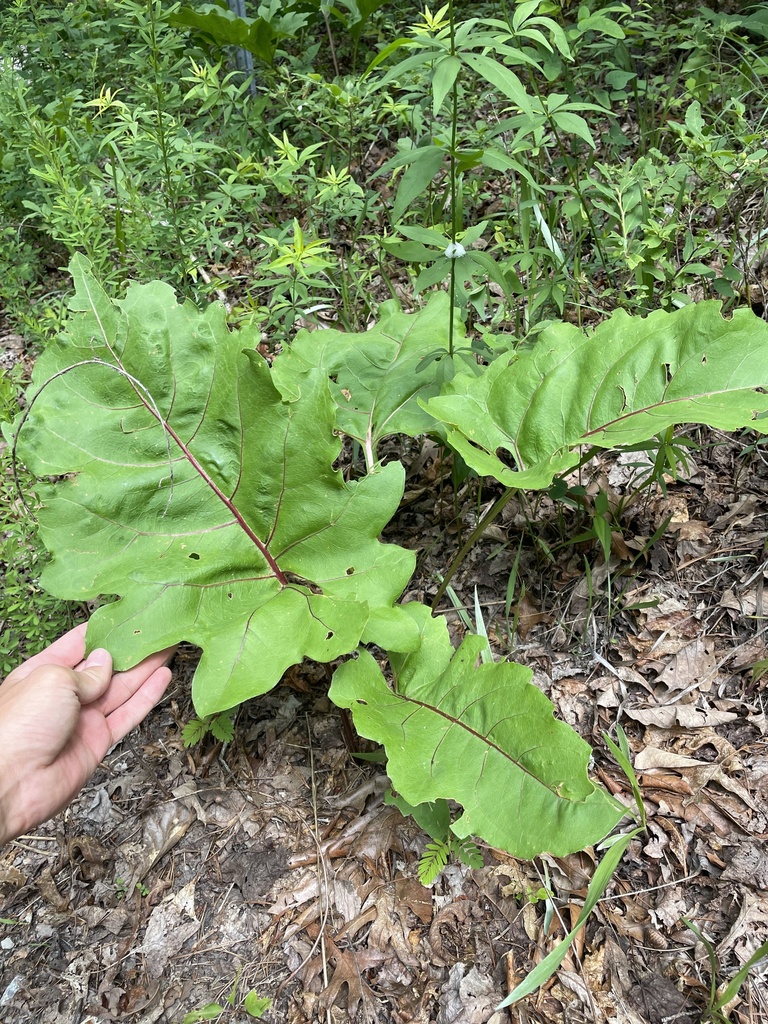
Nearly all the leaves grow in a basal rosette on long stalks. The blades are thick, rough and up to about a foot long and wide, and their shape varies a great deal: many plants have round, kidney-shaped or heart-shaped leaves with toothed edges, while others, especially in parts of the Coastal Plain, have leaves deeply cut into pointed lobes. Leaf shape varies so much that botanists have named several varieties, but most modern treatments include them all in one species. The flowering stems carry only a few small, reduced leaves.
Stems
The flowering stems are smooth, often purplish or bluish-green with a waxy bloom, and usually 3 to 8 feet tall. They rise well above the basal leaves and branch near the top into a loose, open panicle. Broken stems ooze a resinous sap, which gives the rosinweeds their name.
Flowers
The flower heads are small for a Silphium, about 1 to 1½ inches across. Each has about 5 to 10 yellow ray florets around a small, greenish-yellow center of disc florets. As in other rosinweeds, only the ray florets set seed; the disc florets produce pollen but are sterile. The round, green buds are surrounded by overlapping, rounded bracts. Flowering runs from early summer into early fall, with the peak in July and August.
Fruit & Seeds
Each fertile ray floret produces a flat, broadly winged, oval seed (an achene, often called a cypsela) with a notch at the tip. The seeds ripen in late summer and fall and drop near the plant or are carried short distances by wind.
Quick Facts
| Scientific Name | Silphium compositum Michx. |
| Family | Asteraceae (aster family) |
| Plant Type | Herbaceous perennial with a deep taproot |
| Mature Height | 3–8 ft in flower; basal leaves about 1 ft |
| Mature Spread | 1–2 ft |
| Growth Rate | Slow |
| Sun Exposure | Full sun to part shade |
| Water Needs | Low; dry to moderately moist, well-drained soil |
| Soil Type | Sandy, gravelly or rocky soil, including clay over rock |
| Soil pH | Acidic to slightly acidic, about 4.5–6.5 |
| Bloom Time | Early summer–early fall (peak July–August) |
| Flower Color | Yellow |
| Fall Color | None of note; basal leaves persist into winter in mild areas |
| Fruit | Flat, broadly winged achene |
| Deer Resistant | Moderate |
| USDA Hardiness Zones | 6–9 |
Native Range
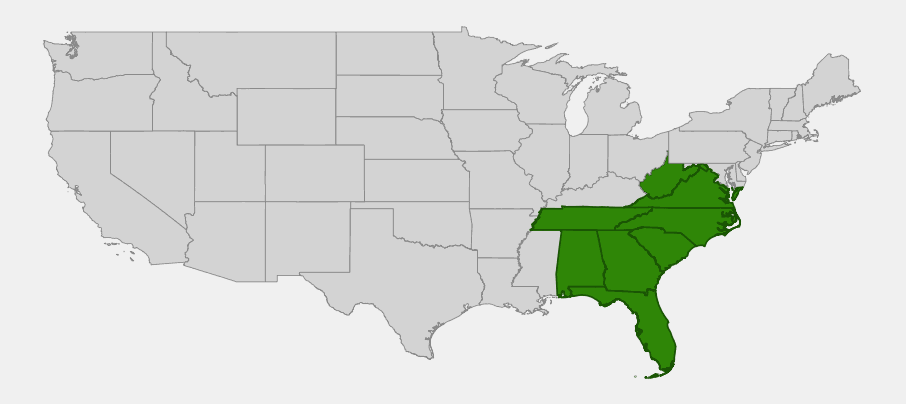
Kidneyleaf rosinweed is a plant of the southeastern United States. USDA PLANTS and the Lady Bird Johnson Wildflower Center record it from eight states: Virginia, West Virginia, North Carolina, South Carolina, Tennessee, Georgia, Alabama and Florida. It is most common in the Piedmont and the inner Coastal Plain of the Carolinas and Georgia, with scattered populations in the mountains.
In Florida, the Atlas of Florida Plants lists it as native, and it reaches the southern end of its range in the state. It is found mainly in north Florida and the northern peninsula, typically in sandhills and dry pine-oak woods, and it is uncommon there compared with its abundance in the Carolinas.
Typical habitats are dry, open places: longleaf pine sandhills, dry oak and pine-oak woods, fall-line sandhills, the edges of granite and other rock outcrops, and roadsides and power-line rights-of-way that are kept open by mowing or fire. It depends on open conditions and declines when woods grow dense and shady.
📋 Regional plant lists featuring Kidneyleaf Rosinweed: North & South Florida · Alabama, Georgia & Mississippi · North & South Carolina · Kentucky & Tennessee · Maryland, Virginia & West Virginia
Growing & Care Guide
Kidneyleaf rosinweed is a durable, long-lived perennial for dry, sunny gardens, but it is not a quick or easy plant to find. It is rarely sold, mostly by specialty native nurseries and native plant society sales, and plants grown from seed usually need two or three years to flower. Buy nursery-grown plants or grow your own from seed; do not dig wild plants, which rarely survive because of their deep taproot.
Light
Give it full sun or light shade. Plants in full sun flower best and have sturdier stems. In heavier shade the basal leaves grow, but flowering stems are few or absent.
Soil & Water
It needs well-drained soil: deep sand, sandy loam, gravelly or rocky soil all work. It tolerates poor, acidic, low-nutrient soil and does not need fertilizer. Water young plants during their first season. Once the taproot is established it is very drought tolerant and should not need watering except in extreme droughts. Avoid soggy or heavily irrigated beds, where the crown can rot.
Planting Tips
Plant small container plants in spring or fall, and place them where they can stay permanently, since the taproot makes established plants hard to move. Because the flowering stems are tall but airy, it works well in the middle or back of a meadow or sandhill planting, where the low basal leaves can be seen in front. Pair it with grasses such as little bluestem and wiregrass and with other dry-soil wildflowers.
Pruning & Maintenance
Little care is needed. Leave the flowering stems standing after bloom so goldfinches and other birds can eat the seed, and cut them down in late winter. Keep surrounding plants from shading it out. In natural areas, periodic fire or mowing helps keep its habitat open.
Propagation
Grow it from seed. Collect ripe seed in fall and sow outdoors in fall or winter so it receives a period of cold, moist conditions, or cold-stratify it in the refrigerator for about 60 days before sowing in spring. Seedlings first produce only basal leaves while the taproot develops. Transplant them while small into deep pots or their final spot. Division is not practical because of the taproot.
Landscape Uses
- Sandhill and pine gardens: a tall summer accent among grasses in dry, sunny ground
- Meadow plantings: airy yellow sprays over low basal leaves in the middle or back of a planting
- Pollinator gardens: summer nectar and pollen for native bees
- Bird gardens: seed for goldfinches and other seed-eating birds
- Habitat restoration: in sandhill, dry woodland and roadside restoration within its native range
Wildlife & Ecological Value
Like other rosinweeds, kidneyleaf rosinweed supports a variety of insects in summer and provides seed for birds in late summer and fall.
For Pollinators
The yellow flower heads attract many kinds of native bees, including bumble bees, sweat bees and leafcutter bees, as well as butterflies and beneficial wasps. Its summer bloom fills a gap between spring wildflowers and the fall goldenrods and asters.
For Birds
American goldfinches and other small seed-eating birds feed on the seeds once they ripen. Insects visiting the flowers also provide food for insect-eating birds.
For Mammals
Deer browse the basal leaves only occasionally; the rough, resinous foliage is not a favorite. Small mammals may eat fallen seeds.
Ecosystem Role
Kidneyleaf rosinweed is a characteristic wildflower of fire-maintained sandhills and dry woods. Its deep taproot lets it survive drought and fire and resprout quickly. Rosinweeds are also host plants for several specialist insects, including small gall wasps that form galls in the stems.
Cultural & Historical Uses
The French botanist André Michaux described Silphium compositum in his Flora Boreali-Americana (1803), based on plants he found in the Carolinas. The species name means “compound” and probably refers to the deeply divided leaves found on some plants.
The genus name Silphium was borrowed from silphion, a resinous plant of ancient Cyrene in North Africa that was highly valued by the Greeks and Romans and is thought to have gone extinct in antiquity. Linnaeus gave the name to these American plants because of their resinous sap.
The common name rosinweed refers to the sticky resin in the stems. Children and settlers reportedly chewed the hardened resin of some prairie rosinweeds like gum, but there is little specific historical record for kidneyleaf rosinweed.
Frequently Asked Questions
Why is it called kidneyleaf rosinweed?
Many plants have large basal leaves shaped like a kidney, and like other rosinweeds the stems contain a sticky, resinous sap. Some plants have deeply lobed leaves instead, so do not rely on leaf shape alone.
How is it different from prairie dock?
Prairie dock is a Midwestern prairie plant with much larger, sandpapery, unlobed leaves and larger flower heads. Kidneyleaf rosinweed is a southeastern plant with smaller heads, more variable leaves and a more delicate, branched flower spray.
Is kidneyleaf rosinweed hard to grow?
It is easy to keep once established but slow to start. Seedlings spend a couple of years building a taproot before they flower, and plants are rarely sold. It needs sun and well-drained soil and dislikes wet, rich garden beds.
Does it spread?
No. It grows as a single clump from a taproot and does not spread by runners. It may produce a few seedlings nearby under good conditions.
Can I transplant a wild plant?
No. Dig-ups rarely survive because the taproot is long and easily broken, and collecting wild plants harms native populations. Grow it from seed or buy nursery-propagated plants.

Looking for a nursery that carries Kidneyleaf Rosinweed?
Browse our native plant nursery directory: Alabama · Florida & Georgia · North Carolina · South Carolina, Tennessee & Virginia · West Virginia