
Butterweed (Packera glabella)
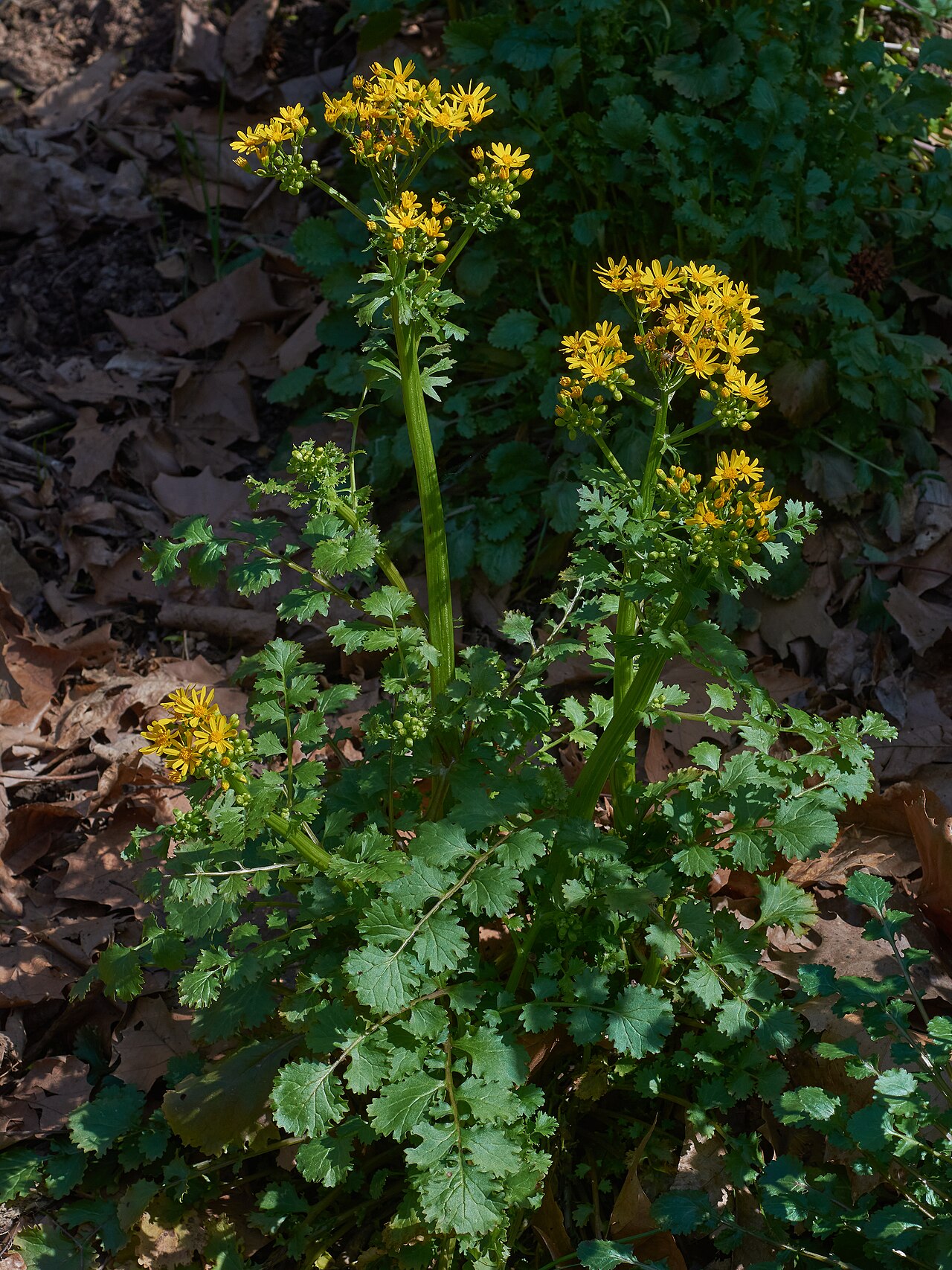
Packera glabella, known as Butterweed or cressleaf groundsel, is a native annual of wet bottomlands in the southern and central United States. In early spring it can turn floodplain forests, wet meadows, ditches and low farm fields bright yellow with masses of small, daisy-like flowers. It is a member of the aster family (Asteraceae) and was long known as Senecio glabellus, a name that still appears in older guides.
Butterweed is a winter annual. Seeds germinate in fall, the young plants spend the winter as low rosettes of lobed leaves, and in spring each plant sends up a hollow, succulent stem 1 to 3 feet tall topped with clusters of yellow flower heads. After the seeds ripen in late spring, the plants die. Large colonies return each year from seed, so a site that is yellow one spring will often be yellow the next.
Safety note: like many plants in the groundsel group, butterweed contains pyrrolizidine alkaloids. These compounds can cause serious liver damage in livestock and people if the plant is eaten, and the effects can build up over time. Do not eat butterweed or use it in teas or remedies, and keep it out of hay and pasture forage. This guide covers how to identify it, where it grows, and how to use it in wet, wild areas of a garden.
Identification
Butterweed is one of the earliest yellow composites to bloom in wet places across the South. Its hollow stems, deeply lobed leaves and dense clusters of small yellow heads make it fairly easy to recognize, but it can be confused with several other ragworts and with the introduced yellow rocket.
Stems
Plants usually have a single, upright, smooth stem 1 to 3 feet tall, branching near the top. The stem is thick, hollow and juicy, and it is often streaked with purple or reddish color, especially near the base. The whole plant is hairless or nearly so, which is the meaning of glabella.
Leaves
The basal and lower stem leaves are 2 to 8 inches long and deeply divided into rounded lobes, with a larger, rounded lobe at the tip, a shape botanists call lyrate-pinnatifid. The leaves are soft, somewhat fleshy and smooth. Upward along the stem the leaves become smaller and more finely divided. In winter, the rosettes of lobed leaves are a common sight in wet fields and floodplains.
Flowers
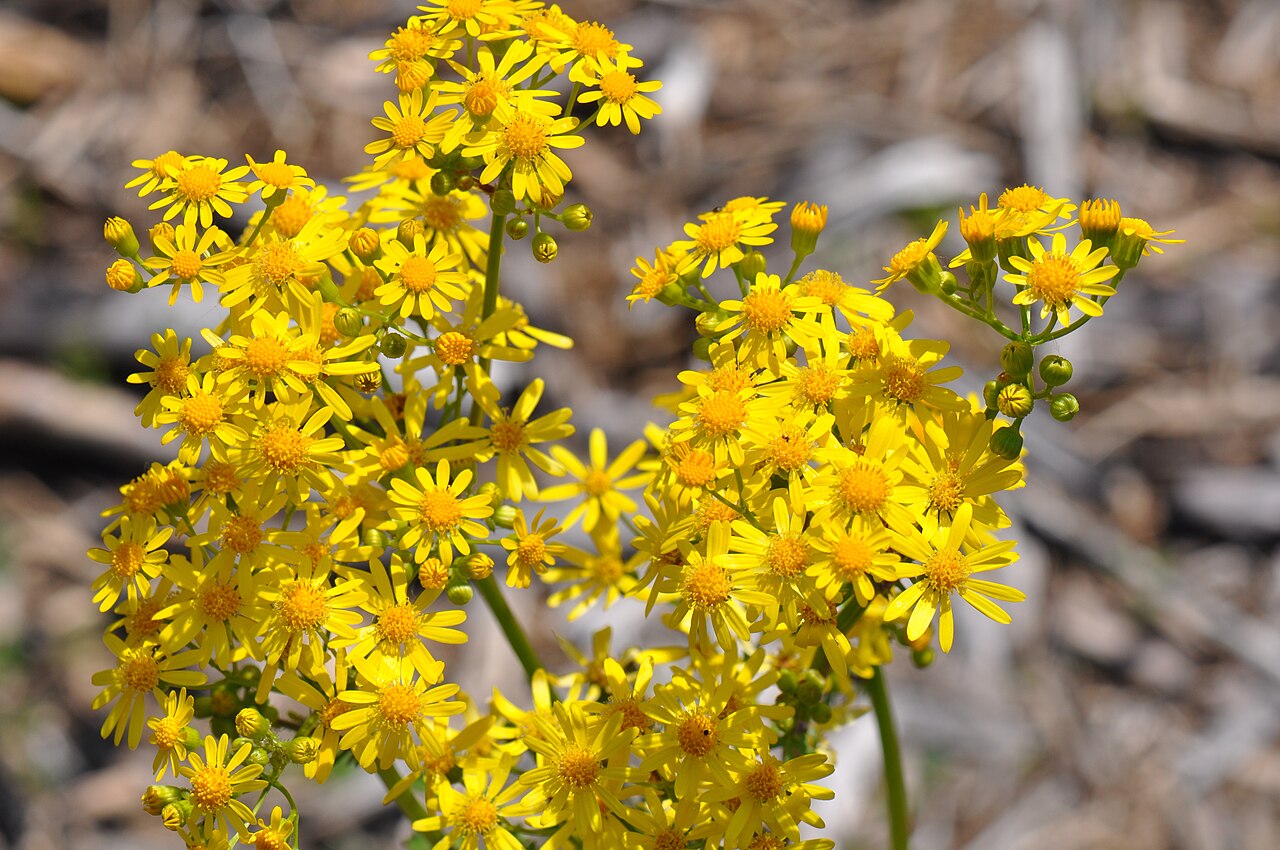
The flower heads are about 1/2 to 3/4 inch across, with roughly 8 to 15 bright yellow ray florets surrounding a darker yellow center of disk florets. Many heads are grouped in branched, more or less flat-topped clusters at the top of the stem. Bloom is from March to May, starting as early as February along the Gulf Coast. Golden ragwort (Packera aurea), a perennial relative, has rounded, heart-shaped basal leaves instead of lobed ones. Yellow rocket (Barbarea vulgaris), an introduced mustard, has four-petaled flowers.
Fruit & Seeds
Each flower produces a small, ribbed seed (achene) topped with a tuft of white bristles, like a tiny dandelion parachute. The seed heads turn white and fluffy in late spring, and the seeds are carried by wind and floodwater. The plant dies once its seeds have ripened.
Quick Facts
| Scientific Name | Packera glabella (syn. Senecio glabellus, Senecio lobatus) |
| Common Names | Butterweed (USDA), cressleaf groundsel, yellowtop |
| Family | Asteraceae (aster family) |
| Plant Type | Winter annual (sometimes biennial) herb |
| Mature Height | 1–3 ft |
| Mature Spread | 6–12 in |
| Growth Rate | Fast |
| Sun Exposure | Full sun to part shade |
| Water Needs | High; moist to wet soil, tolerates flooding |
| Soil Type | Moist to wet alluvial soils, silt, loam and clay |
| Soil pH | About 5.5–7.5 |
| Bloom Time | March–May (from February near the Gulf Coast) |
| Flower Color | Bright yellow |
| Fall Color | None; plants die after seeding, and new rosettes form in fall |
| Fruit | Small achene with a white bristly pappus |
| Deer Resistant | Yes; rarely eaten because of its toxic alkaloids |
| USDA Hardiness Zones | 5–9 (grown as a self-sowing annual) |
Native Range
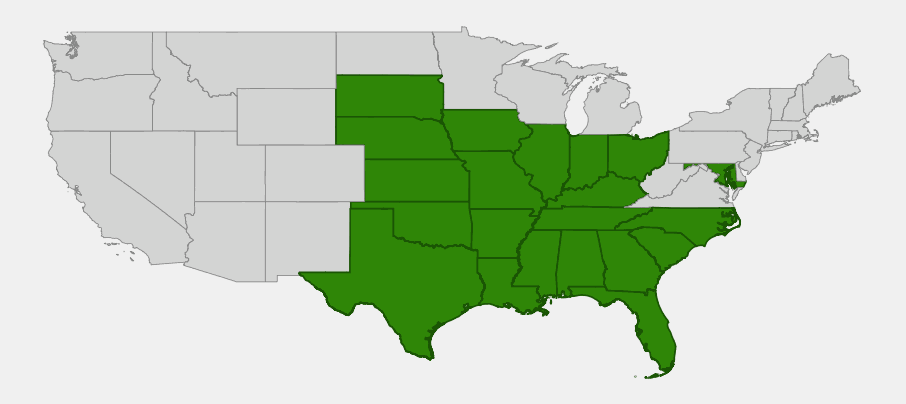
Butterweed is native to the southeastern and central United States. USDA PLANTS records it from 21 states, from Maryland, North Carolina, Ohio and Indiana west to Iowa, South Dakota, Nebraska and Kansas, and south to Florida and Texas. It is most common in the Mississippi, Ohio and Tennessee river valleys and on the Gulf and Atlantic Coastal Plains. USDA lists it only as a waif (an occasional, non-established plant) in Ontario.
Its natural habitats are wet and periodically flooded: floodplain forests, bottomland hardwood swamps, the banks of streams and rivers, wet meadows, marshes and wet prairies. The seeds travel easily on floodwater, and populations often follow river corridors.
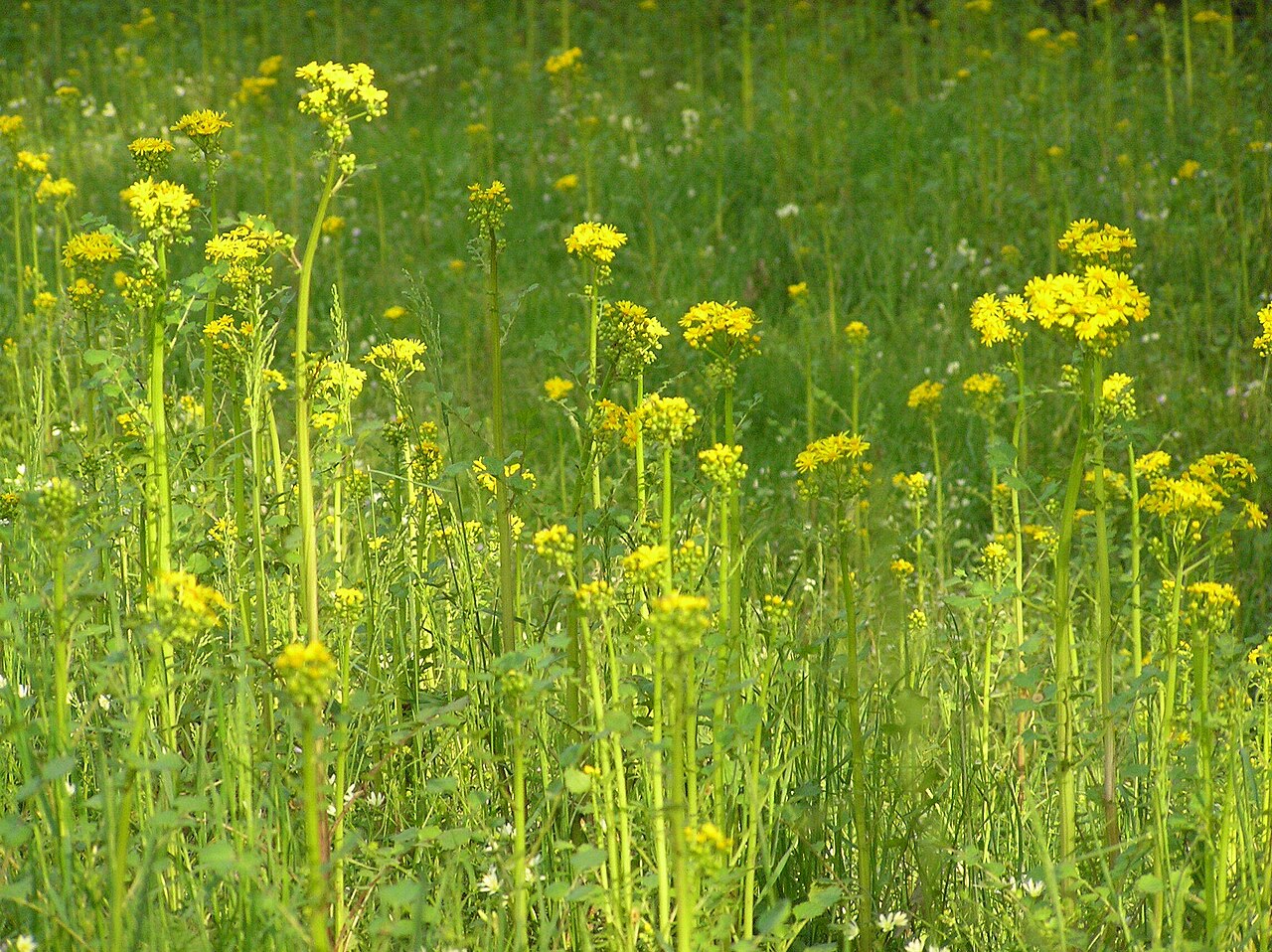
Butterweed also thrives in disturbed wet ground, such as ditches, low pastures and crop fields. In recent decades it has become very conspicuous in no-till corn and soybean fields across the Midwest and Mid-South, where fields can be solid yellow in April. This spread is due to changes in farming practices within its native range, not to an introduction from elsewhere.
📋 Regional plant lists featuring Butterweed: Ohio & Indiana · Kentucky & Tennessee · Nebraska, Kansas & Eastern Colorado · Maryland, Virginia & West Virginia · Illinois, Iowa & Missouri · Alabama, Georgia & Mississippi · North & South Florida
Growing & Care Guide
Butterweed is not a typical garden plant, but it can be a cheerful, low-effort addition to wet, wild areas such as rain gardens, pond edges, swales and floodplain restorations. As a self-sowing annual it comes and goes from year to year, and it can spread widely in moist, open ground. Keep in mind the safety note about its toxicity when choosing a site near pastures, hay fields or places where children or pets play.
Light
It flowers best in full sun to part shade. In floodplain forests it grows under deciduous trees, blooming before they leaf out.
Soil & Water
Butterweed needs moist to wet soil during its winter and spring growing season, and it tolerates seasonal flooding. It grows in silt, loam and clay. It does not do well in dry, sandy soils. Summer drought does not matter, since the plants are finished by then.
Planting Tips
Scatter fresh seed in late spring or early fall on bare, moist soil, where it will germinate in fall. It needs bare ground or thin vegetation to establish, and it may not persist in dense, permanent cover. Do not plant it next to pastures or hay fields.
Pruning & Maintenance
No pruning is needed. Let plants set seed if you want them to return. To limit spread, cut or pull plants as soon as flowering is finished and before the seeds turn fluffy. Wear gloves when handling large amounts and do not compost plants where the compost might end up in animal feed.
Propagation
Butterweed grows only from seed. Collect the seed when the heads turn white and fluffy in late spring, and sow it right away or in early fall. It needs no special treatment. In suitable sites it reseeds on its own.
Landscape Uses
- Rain gardens and swales: early yellow color in seasonally wet low spots
- Floodplain and wetland restoration: a quick native cover on bare, wet soil within its range
- Pollinator support: one of the earliest abundant nectar sources in wet places
- Pond and stream edges: naturalizes on moist, open banks
Wildlife & Ecological Value
Butterweed flowers at a time when few other plants are blooming in wet habitats, and its masses of yellow flowers are important to early-season insects.
For Pollinators
The flowers provide nectar and pollen to many early-spring insects, including bumblebee queens, mining bees, sweat bees, syrphid flies, and butterflies such as sulphurs, skippers and swallowtails. Large stands can produce a great deal of food for pollinators before most summer flowers open.
For Birds
Butterweed has little direct value for birds, although small seed-eating birds may take some of its seeds. The many insects it attracts provide food for migrating songbirds in spring.
For Mammals
Its toxic alkaloids make butterweed unpalatable, and deer and rabbits usually avoid it. Livestock rarely eat it when other forage is available, but they may eat it when it is mixed into hay.
Ecosystem Role
As a winter annual, butterweed quickly covers bare, flood-scoured soil and helps hold it in place during the wet season. It completes its life cycle before summer, leaving room for perennial plants. Its pyrrolizidine alkaloids protect it from many plant-eating animals, though some specialist insects have adapted to feed on plants in this group.
Cultural & Historical Uses
Butterweed was described by Jean Louis Marie Poiret in the early nineteenth century as Senecio glabellus. In 1992 the British botanist Charles Jeffrey moved it to Packera, a genus named in 1976 for the Canadian botanist John G. Packer, which now contains most of the North American ragworts. Older field guides and agricultural publications still call it Senecio glabellus.
The common name butterweed refers to its butter-yellow flowers. The name cressleaf groundsel refers to the lobed leaves, which resemble those of watercress and other cresses. “Groundsel” is an old English name for plants in Senecio and related genera.
Agricultural extension services in the Midwest and Mid-South now publish guidance on butterweed, because it has become abundant in no-till fields and can contaminate hay. That is an unusual position for a native wildflower: welcome in wetlands and floodplains, but managed as a weed where its toxicity affects livestock.
Frequently Asked Questions
Is butterweed poisonous?
Yes. It contains pyrrolizidine alkaloids, which can cause liver damage in livestock and people if eaten, and the damage can accumulate over time. Do not eat it or make teas from it, and keep it out of hay and forage.
Is butterweed native?
Yes. It is native to the southeastern and central United States. It has become more noticeable in farm fields in recent decades, but it is not an introduced weed.
Is butterweed an annual or a perennial?
It is a winter annual. Seeds germinate in fall, plants overwinter as rosettes, flower in spring and die after setting seed. It returns each year by reseeding.
How is butterweed different from golden ragwort?
Golden ragwort (Packera aurea) is a perennial with rounded, heart-shaped basal leaves. Butterweed is an annual with deeply lobed leaves and a hollow, often purplish stem, and it is usually taller.
What was the old name of butterweed?
It was long known as Senecio glabellus. Most North American ragworts were moved from Senecio to Packera.

Looking for a nursery that carries Butterweed?
Browse our native plant nursery directory: Alabama & Arkansas · Florida & Georgia · Illinois, Indiana, Iowa & Kansas · Kentucky, Louisiana, Maryland, Mississippi & Missouri · Nebraska, North Carolina, Ohio & Oklahoma · South Carolina, South Dakota, Tennessee & Texas