
Pinewoods Geranium (Geranium caespitosum)
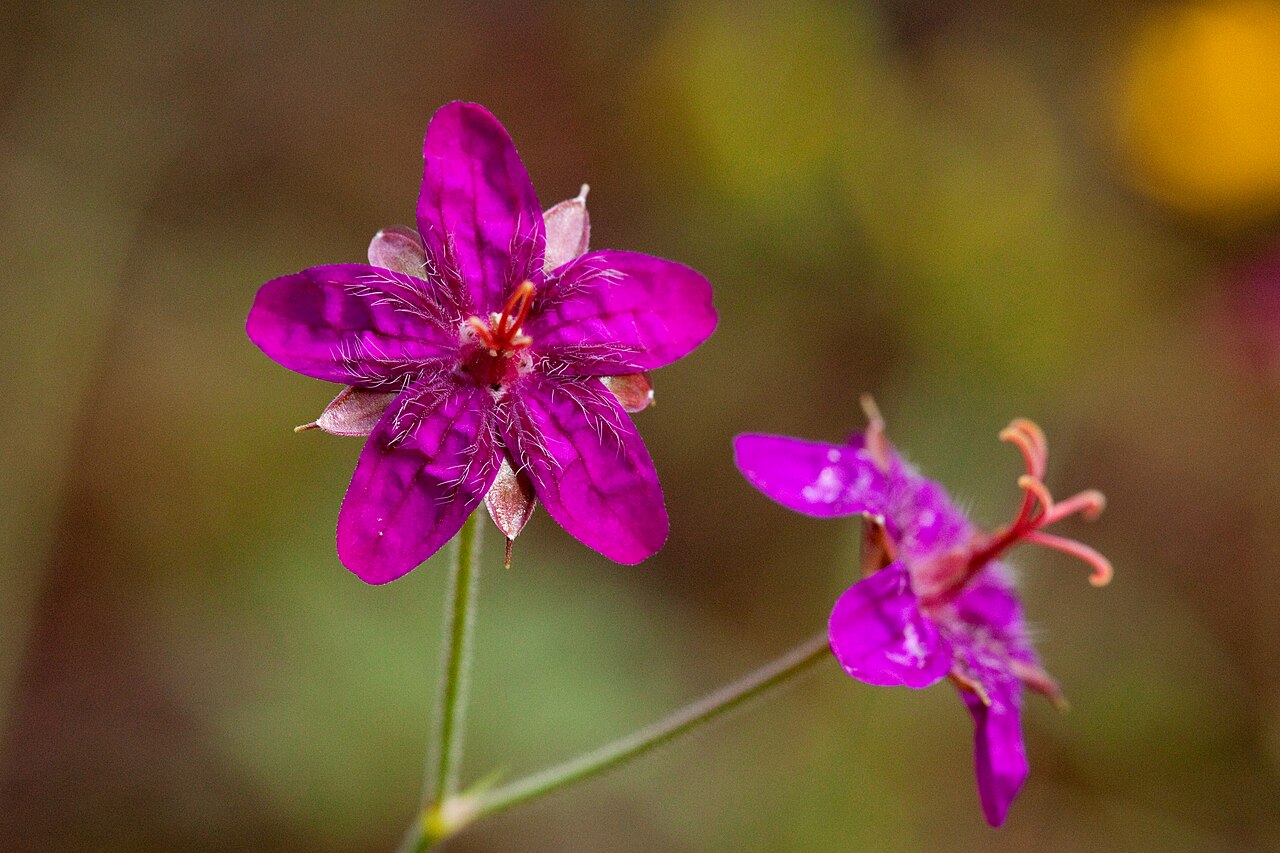
Geranium caespitosum, known as Pinewoods Geranium (USDA: pineywoods geranium), purple geranium or tufted cranesbill, is a native wild geranium of the mountains of the American Southwest and the southern Rocky Mountains. From late spring through early fall it bears rose-purple to magenta flowers about an inch across, often with petals that sweep backward, over a loose clump of deeply lobed leaves. It belongs to the geranium family (Geraniaceae) and is at home in ponderosa pine forests, aspen groves, mountain meadows and open slopes from Wyoming south to Arizona, New Mexico and the mountains of West Texas.
This is a true geranium, or cranesbill, related to the woodland wild geranium of the East, not the potted “geraniums” (Pelargonium) of window boxes. The name cranesbill comes from the long, beaked fruit, which looks like the head and bill of a crane. When the fruit is ripe, its five segments curl up like springs and throw the seeds away from the plant.
Pinewoods geranium is one of the longest-blooming wildflowers in many southwestern forests, and it is a good choice for gardeners at middle and high elevations who want a tough, drought-tolerant perennial for light shade under pines. This guide covers identification, native range, growing tips and its value to bees and other wildlife.
Identification
Several wild geraniums grow in the Rocky Mountains and the Southwest. Pinewoods geranium is recognized by its tufted habit, its fairly small, deeply cut leaves, and its rose-purple to magenta flowers whose petals often bend backward.
Roots & Stems
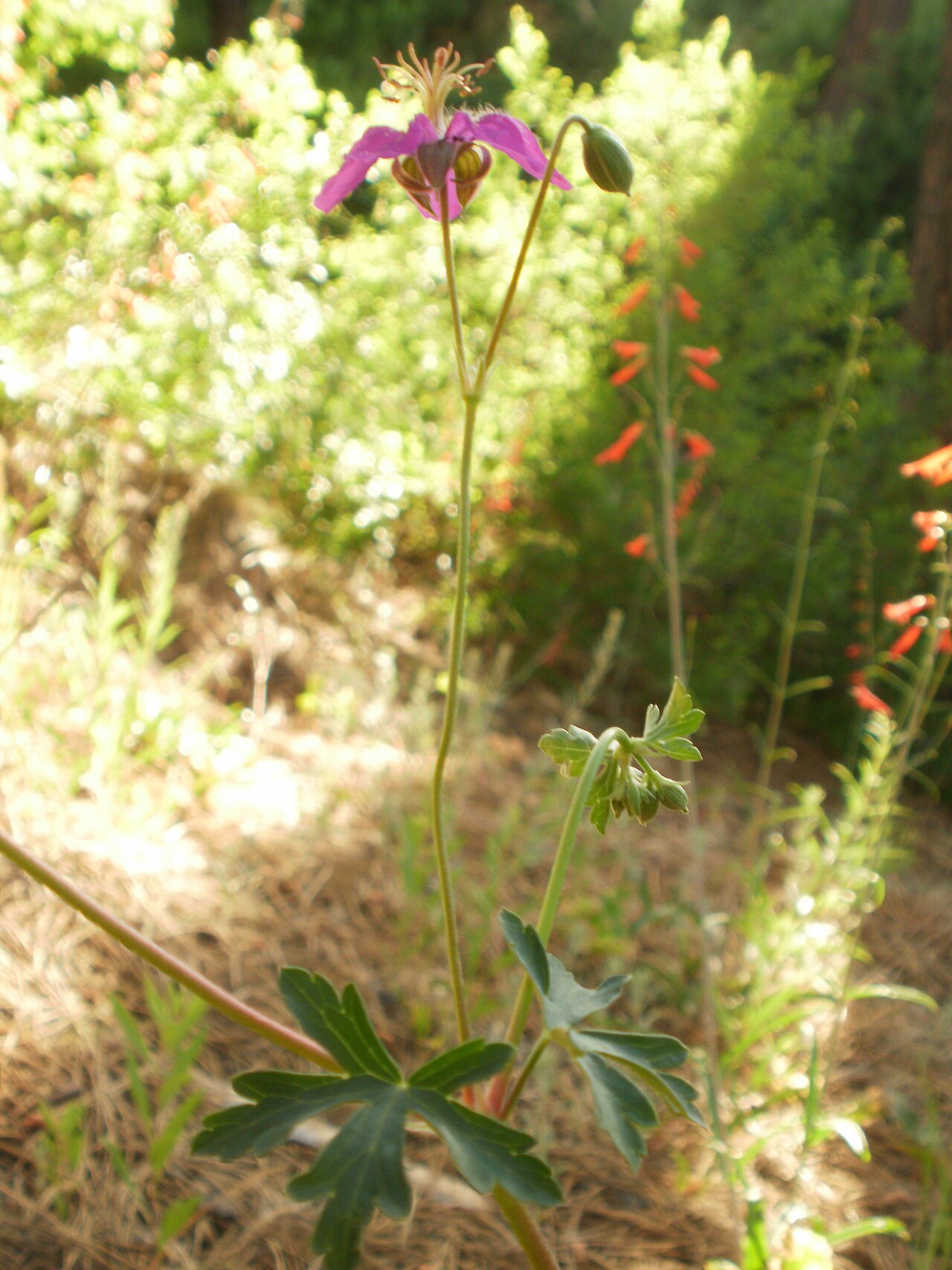
Each plant grows from a thick, woody root crown (caudex) and a deep taproot. Many slender stems rise from the crown and form a loose, tufted clump, which is what the species name caespitosum (Latin for tufted) refers to. The stems are usually 8 to 24 inches long, upright to sprawling, and covered with fine hairs. Plants in the shade of pines often lean on neighboring vegetation.
Leaves
The leaves are rounded in outline, 1 to 2½ inches across, and palmately divided into 5 to 7 lobes that are themselves cut and toothed. They are green to gray-green and softly hairy. Most leaves grow on long stalks from the base of the plant, with smaller leaves in pairs along the stems. In fall the leaves can turn red or reddish-purple.
Flowers
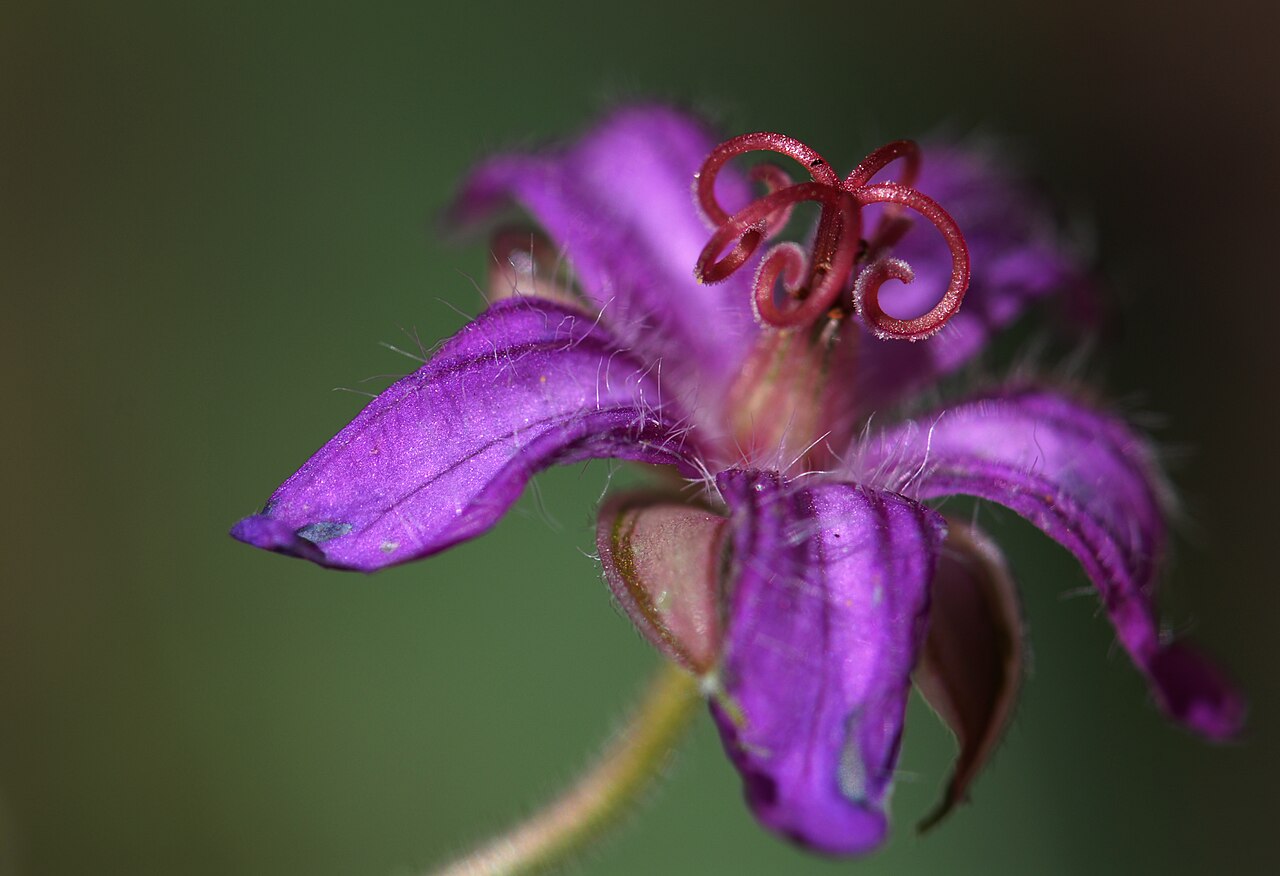
The flowers are about ¾ to 1¼ inches across and grow in loose clusters of two or three at the tips of the stems. They have five petals, rose-purple to deep magenta (rarely pale pink or whitish), marked with darker veins and hairy near the base. In many plants the petals are bent backward, giving the flower a swept-back look, though some plants have flat, open flowers. There are ten stamens, and the style ends in five slender stigma branches. Flowers appear from about May to September, with the peak in early to midsummer.
Several varieties are recognized, including var. fremontii and var. atropurpureum. The latter, with dark purple flowers, is sometimes treated as a separate species, Geranium atropurpureum.
Fruit & Seeds
After flowering, the ovary grows into a slender beaked fruit about an inch long, the crane’s bill. When dry, it splits into five segments, each holding a single seed. The segments curl upward from the base with a snap and fling the seeds several feet away.
Quick Facts
| Scientific Name | Geranium caespitosum (incl. G. fremontii, G. atropurpureum in some treatments) |
| Family | Geraniaceae (geranium family) |
| Plant Type | Herbaceous perennial from a woody root crown |
| Mature Height | 8–24 in (occasionally to about 30 in) |
| Mature Spread | 12–24 in |
| Growth Rate | Moderate |
| Sun Exposure | Full sun to part shade |
| Water Needs | Low to moderate; drought tolerant once established |
| Soil Type | Well-drained loam, gravel or rocky soil |
| Soil pH | About 6.0–8.0 |
| Bloom Time | May–September |
| Flower Color | Rose-purple to magenta; rarely pale pink |
| Fall Color | Leaves sometimes turn red to reddish-purple |
| Fruit | Beaked fruit (crane’s bill) that throws its seeds |
| Deer Resistant | Moderately; browsed occasionally by deer and elk |
| USDA Hardiness Zones | 4–8 |
Native Range
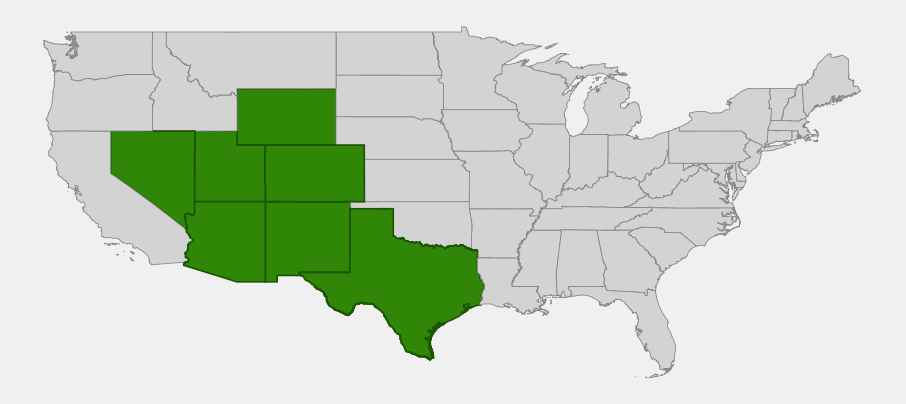
Pinewoods geranium is native to seven states in the interior West: Arizona, Colorado, New Mexico, Nevada, Texas, Utah and Wyoming. It also extends south into the mountains of northern Mexico. It is a mountain plant throughout this range, most common in the ponderosa pine and mixed-conifer forests of Arizona, New Mexico, southern Colorado and Utah.
In Texas it grows only in the high mountains of the Trans-Pecos, such as the Guadalupe and Davis Mountains, where it is found in pine-oak woodland. In Nevada and Wyoming it is found in a limited number of mountain ranges near the edges of its range.
It usually grows at about 5,000 to 10,000 feet, in open pine and aspen forest, forest clearings and edges, mountain meadows, roadsides and rocky slopes. It tolerates disturbance and often increases along trails and forest roads.
📋 Regional plant lists featuring Pinewoods Geranium: Idaho, Eastern Oregon & Eastern Washington · Montana & Wyoming · Utah & Western Colorado · Arizona & New Mexico · South & West Texas · California & Nevada
Growing & Care Guide
Pinewoods geranium is a low-maintenance perennial for mountain and high-desert gardens in the Southwest and the Rockies. It suits the dappled light under pines, oaks and aspens, where many perennials struggle, and it tolerates dry summers once established. It is offered mainly by native plant nurseries and seed suppliers in its home region.
Light
Full sun to part shade. In hot, low-elevation gardens give it afternoon shade or the filtered light of a tree canopy. At higher elevations it flowers best in full sun or light shade.
Soil & Water
It needs well-drained soil and does well in loam, gravelly or rocky soils, including the slightly alkaline soils of the interior West. Avoid heavy clay that stays wet. Water regularly during the first growing season. After that, occasional deep watering during long dry spells keeps it blooming. Plants in very dry sites may go partly dormant in midsummer and green up again with the summer monsoon rains.
Planting Tips
Plant container-grown plants in spring or early fall, 12 to 18 inches apart. The deep taproot makes established plants hard to move, so choose the spot carefully. Pinewoods geranium looks best in loose drifts with grasses and other wildflowers, where the stems can lean on their neighbors.
Pruning & Maintenance
Little care is needed. Cut back sprawling or tired stems in midsummer to encourage fresh growth and more flowers. Leave some seed heads if you want the plant to self-sow. Cut the clump back to the ground in late fall or early spring. No fertilizer is needed.
Propagation
Grow from seed sown outdoors in fall, or give seed 30 to 60 days of cold, moist stratification before sowing in spring. Collect the fruits just as they turn tan, before they split, and keep them in a paper bag so the seeds are caught when the segments burst. Seedlings usually bloom in their second year. Older clumps can be divided carefully in early spring, keeping a portion of the root crown with each piece.
Landscape Uses
- Woodland and forest-edge gardens: under ponderosa pine, Gambel oak or aspen, where it brightens dry, dappled shade
- Mountain and high-desert gardens: a long-blooming, drought-tolerant perennial for gardens from about 5,000 feet up
- Pollinator gardens: its open flowers attract a wide variety of native bees and flies
- Meadow and roadside restoration: within its native range, for disturbed forest openings and meadows
- Rock gardens: in larger rock gardens with good drainage and some afternoon shade
Wildlife & Ecological Value
Pinewoods geranium is a common wildflower of southwestern mountain forests, and its long blooming season makes it an important, dependable flower resource from late spring into fall.
For Pollinators
The open, bowl-shaped to swept-back flowers give easy access to nectar and pollen. They are visited by bumblebees, sweat bees, mason bees and other native bees, as well as by flies and butterflies. Like many geraniums, the flowers are protandrous: they shed pollen first and only afterwards open the stigma branches, which encourages cross-pollination between flowers.
For Birds
Doves, quail and other seed-eating birds pick up the scattered seeds. Wild turkeys and grouse forage in the open forest where it grows, and insect-eating birds hunt among the clumps.
For Mammals
Elk, mule deer and livestock graze wild geraniums to some extent, especially in early summer. Chipmunks, ground squirrels and mice eat the seeds. The plant tolerates moderate grazing because it regrows from its woody root crown.
Ecosystem Role
Pinewoods geranium is a typical member of the herbaceous layer of southwestern ponderosa pine forests, which are adapted to frequent, low-intensity fire. Its deep taproot and root crown allow it to resprout after fire, and it often blooms well in thinned or recently burned forest. Its tolerance of disturbance also makes it common along forest roads and trails.
Cultural & Historical Uses
The species was described by Edwin James, the botanist and physician of Major Stephen Long’s 1820 expedition to the Rocky Mountains, who collected many plants new to science in what is now Colorado. The name caespitosum refers to the tufted growth of the plant. Later botanists described several related forms as separate species, such as Geranium fremontii, named for the explorer John C. Frémont, and Geranium atropurpureum. Today these are often treated as varieties of one variable species.
Wild geraniums are rich in tannins, and their astringent roots were widely used in North American folk and traditional medicine, for example as a wash for sores or to treat diarrhea. Several Indigenous peoples of the Southwest used local wild geraniums in similar ways. Do not use any plant medicinally without expert guidance.
For hikers in the mountains of Arizona and New Mexico, pinewoods geranium is one of the most familiar trailside wildflowers. Its magenta flowers appear among the pine needles from late spring, and after the summer monsoon rains begin, it often blooms again alongside paintbrushes, penstemons and asters.
Frequently Asked Questions
Is pinewoods geranium the same as a garden geranium?
No. It is a true geranium or cranesbill (Geranium). The colorful potted “geraniums” sold for patios belong to a different genus, Pelargonium, native to southern Africa. Both are in the geranium family.
Why do the petals bend backward?
Many plants of pinewoods geranium have reflexed petals that sweep back from the center of the flower. The trait varies from plant to plant and population to population, and some plants have flat, open flowers. Both forms belong to the same species.
Does pinewoods geranium need a lot of water?
No. Once established it tolerates dry conditions well, especially in partial shade. Occasional deep watering during long dry spells keeps it blooming longer, but it does not like soggy soil.
How long does it bloom?
Pinewoods geranium has one of the longest bloom seasons of any mountain wildflower in the Southwest. It flowers from about May to September, often with a second flush after summer monsoon rains.
Can I grow it at low elevations?
It is best suited to elevations of about 5,000 feet and higher, or to gardens with cool nights. In hot, low deserts it struggles with heat. Give it afternoon shade and well-drained soil if you try it in a warmer garden.

Looking for a nursery that carries Pinewoods Geranium?
Browse our native plant nursery directory: Arizona · Colorado · Nevada & New Mexico · Texas & Utah · Wyoming