
Creamcups (Platystemon californicus)
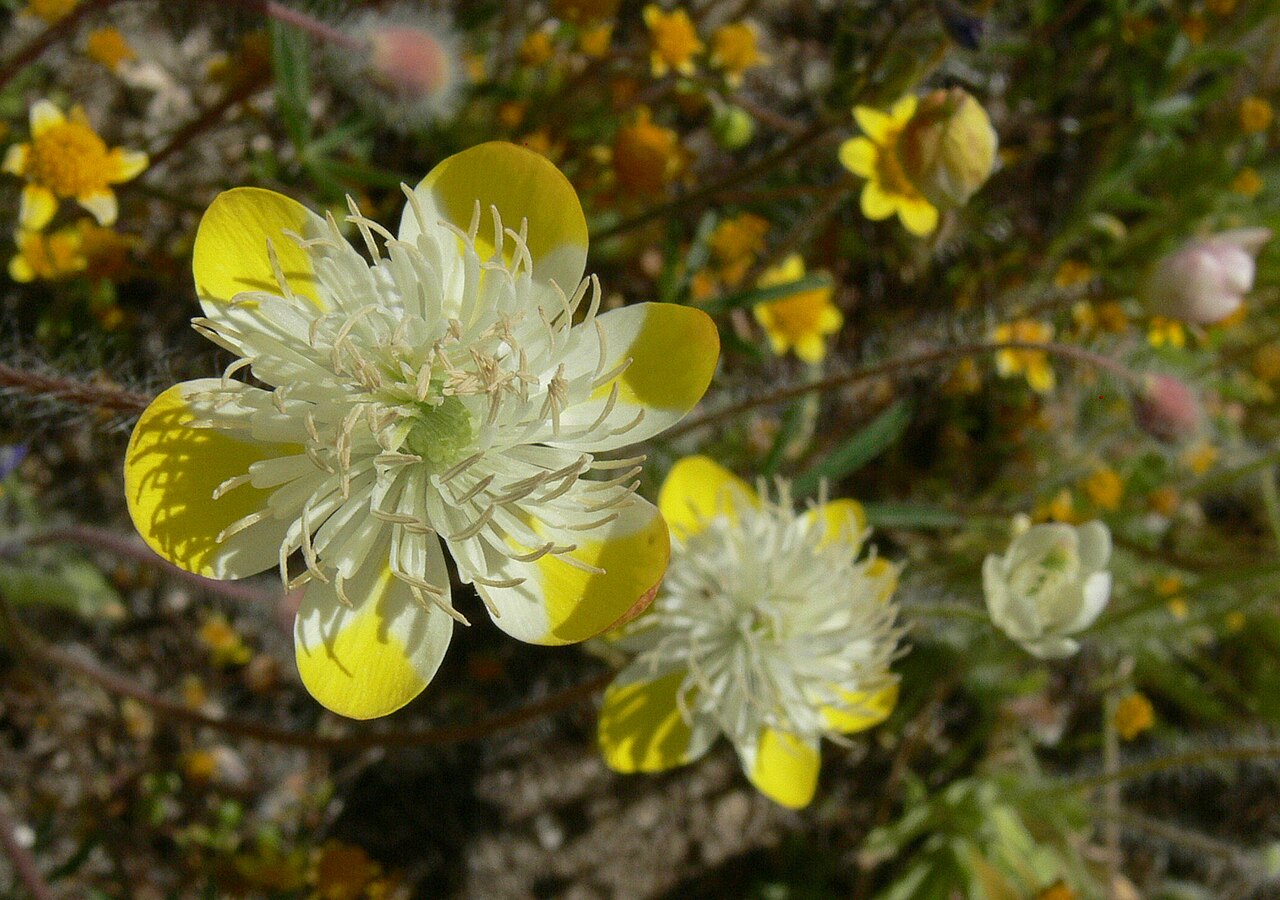
Platystemon californicus, known as Creamcups or cream cups, is a small spring annual of the poppy family (Papaveraceae) native to California, southwestern Oregon, Arizona, southwestern Utah and Baja California. From a low tuft of soft, hairy, narrow leaves it sends up slender, hairy stalks, each topped by a single cup-shaped flower about ¾ to 1 inch wide. The petals are cream to pale yellow, often with a bright yellow patch at the base or tip, and the center is a fluffy pompom of many flattened stamens.
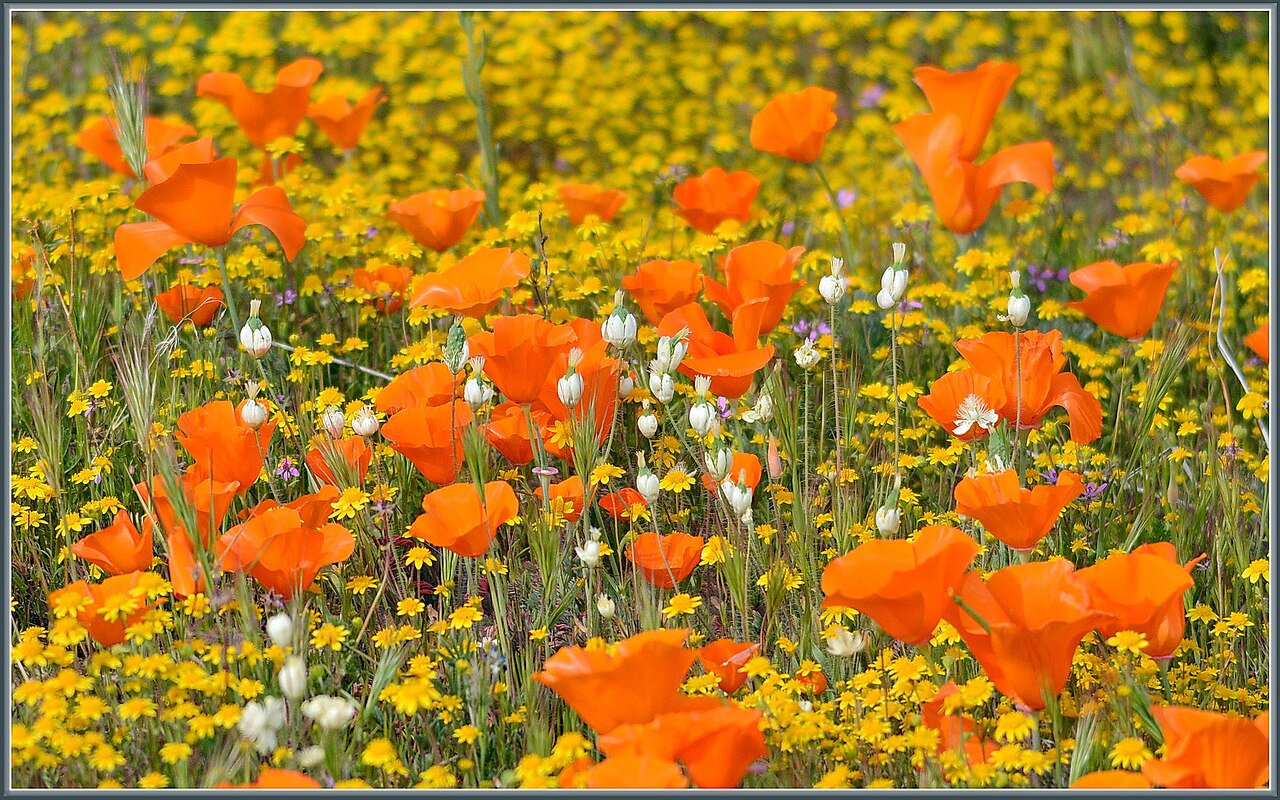
Creamcups is a classic member of the spring wildflower displays of California and the Southwest. It grows in grasslands, open woodlands, coastal bluffs, chaparral openings, burned areas and sandy desert flats, often alongside California poppies, goldfields, lupines and owl’s clover. In good rain years it can carpet open ground, then set seed and disappear by early summer.
It is the only species in its genus. The name Platystemon means “broad stamen” in Greek and refers to the flattened, almost petal-like stamens in the center of the flower. For gardeners, creamcups is an easy, charming annual for wildflower meadows and dry, sunny gardens in western climates, where it reseeds itself from year to year.
Identification
Creamcups is small and delicate, but its combination of hairy stalks, one flower per stalk, six cream petals and a fluffy center of flattened stamens is distinctive. No other western wildflower has the same bead-like fruit.
Stems & Leaves
The plant is a winter annual that germinates with the fall and winter rains. It forms a loose basal tuft of narrow, linear to lance-shaped leaves 1 to 3 inches long, which are opposite or whorled near the base and covered in long, soft, spreading hairs. The whole plant is shaggy-hairy and grayish-green. Several to many leafless flowering stalks rise 4 to 12 inches tall, sometimes taller in rich, moist soil.
Flowers
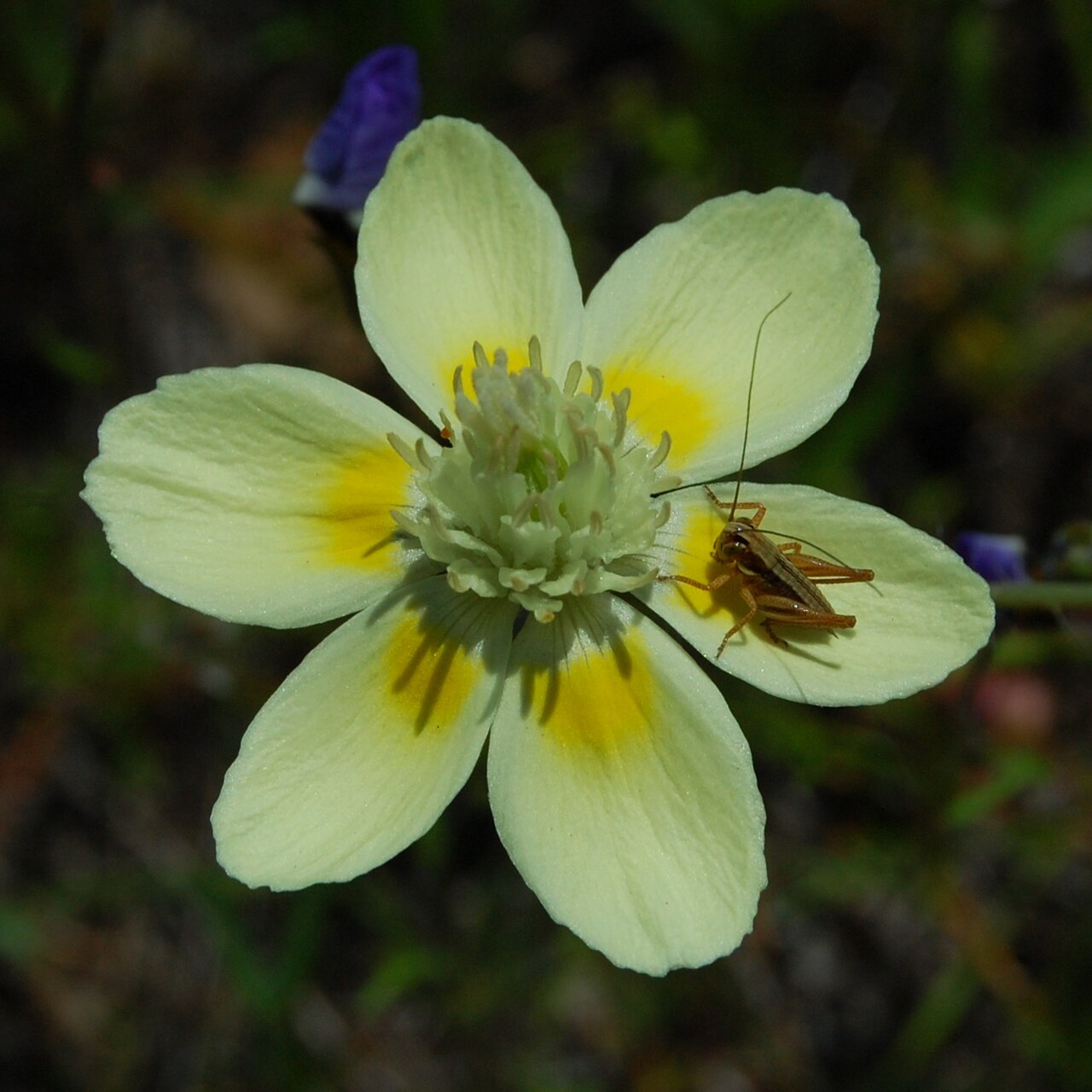
Each stalk carries a single upright flower, nodding in bud. The three hairy sepals fall away as the flower opens. There are six petals in two rows, ½ to ¾ inch long, cream-colored to pale yellow and often marked with deeper yellow at the base or the tip. Some populations, especially near the coast, have flowers that are almost entirely yellow, and others are nearly white. The center is a dense cluster of numerous stamens with broad, flattened filaments, surrounding a ring of separate, slender pistils. Flowering runs from about February in the southern deserts to May or June in the north and at higher elevations.
Fruit & Seeds
After flowering, the 6 to 25 or so narrow pistils swell into a cluster of upright, hairy pods that look like a tiny ear of corn with the husk removed. As they ripen, each pod constricts between its seeds and breaks crosswise into one-seeded, bead-like segments. The seeds are small, dark and shiny, and they can remain dormant in the soil for years until rains and open conditions trigger germination.
Similar Species
Meadowfoam (Limnanthes) has similar cream and yellow flowers but only five petals, smooth leaves that are finely divided, and grows in vernal pools and wet meadows. White forms of California poppy have four petals and a long, slender seed pod. Cream-colored buttercups have five glossy petals and many tiny seeds in a ball-shaped head.
Quick Facts
| Scientific Name | Platystemon californicus (syn. P. arizonicus, P. mohavensis) |
| Family | Papaveraceae (poppy family) |
| Plant Type | Cool-season (winter) annual wildflower |
| Mature Height | 4–12 in |
| Mature Spread | 4–8 in |
| Growth Rate | Fast |
| Sun Exposure | Full sun |
| Water Needs | Low; winter and spring rain, dry in summer |
| Soil Type | Well-drained sandy, gravelly or loamy soil; tolerates clay and serpentine |
| Soil pH | About 6.0–8.0 |
| Bloom Time | February–May (to June in the north) |
| Flower Color | Cream to pale yellow, often with yellow patches; rarely white or all yellow |
| Fall Color | None; annual that dies after setting seed |
| Fruit | Cluster of narrow, hairy pods that break into bead-like one-seeded segments |
| Deer Resistant | Moderate; small and hairy, rarely browsed heavily |
| USDA Hardiness Zones | Grown as a cool-season annual; suited to mild-winter climates of zones 7–10 |
Native Range
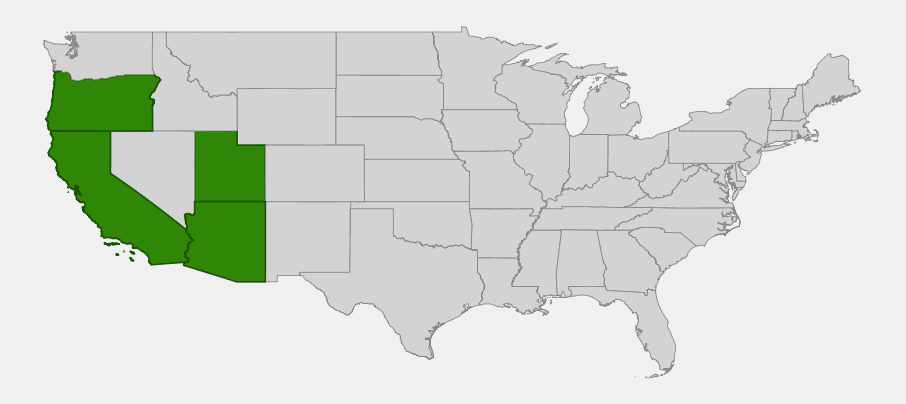
Creamcups is a plant of the Pacific and desert Southwest. USDA PLANTS records it as native in California, Oregon, Arizona and Utah, and it also grows in northern Baja California, Mexico. California holds the great majority of populations. There it grows nearly statewide below the high mountains: along the coast and on the Channel Islands, through the Coast Ranges and Central Valley foothills, in the Sierra Nevada foothills, in southern California, and in the Mojave and Colorado deserts.
Beyond California the species is more local. In southwestern Oregon it reaches north into the interior valleys near the California border. In Arizona it grows mainly in the western and central deserts and desert grasslands, and in Utah it is limited to the warm Mojave Desert corner in the southwestern part of the state. These outlying populations sit at the edge of the species’ Mediterranean and desert range.
Within this range creamcups favors open ground with little competition: grasslands, coastal bluffs and dunes, openings in oak woodland and chaparral, sandy washes and desert flats. It is often one of the first wildflowers to appear after a chaparral fire, when bare, ash-enriched soil and abundant light give annuals a temporary head start.
📋 Regional plant lists featuring Creamcups: Idaho, Eastern Oregon & Eastern Washington · Utah & Western Colorado · Arizona & New Mexico · Western Oregon & Western Washington · California & Nevada
Growing & Care Guide
Creamcups is one of the easiest native annuals to grow from seed in California and other mild-winter, dry-summer climates. Sow it once in the right spot and it usually returns on its own each spring. It is a good choice for wildflower meadows, rock gardens and the edges of dry borders.
Light
Plant it in full sun. In shade the stems stretch and flop, and the plants flower poorly.
Soil & Water
Creamcups grows best in well-drained sandy or gravelly soil but tolerates many soil types, including clay, as long as water does not stand around the plants. Natural winter rain is usually enough. In dry winters, water every week or two until the plants bloom. After flowering, let the soil dry out, since the plants naturally die in early summer.
Planting Tips
Sow seed directly where you want it to grow in fall, just before or with the first rains. Scatter it thinly on bare, weed-free soil and press it in lightly or rake it in no more than ⅛ inch deep. Seedlings resent transplanting, so direct sowing works better than starting them in pots. Mix with other native annuals such as California poppy, goldfields and tidy tips for a meadow effect.
Pruning & Maintenance
Little care is needed. Keep weedy grasses down in winter, since they easily smother small annuals. Let plants go to seed and dry out before removing them, or simply leave them to break down, so they can reseed for the following year.
Propagation
Creamcups is grown from seed. Collect the bead-like seed segments in late spring when the pods turn tan and start to break apart, then store them dry until fall. In regions with cold winters, it can be sown in early spring and grown as a cool-season annual, though it may flower less reliably in hot, humid summers.
Landscape Uses
- Wildflower meadows: a reliable filler among poppies, lupines and other native annuals
- Rock gardens and dry borders: small, soft plants for sunny, well-drained spots
- Habitat restoration: grasslands, coastal scrub and post-fire areas within its native range
- Pollinator gardens: early-season pollen for native bees and beetles
- Containers: a spring display in shallow pots or troughs with gritty soil
Wildlife & Ecological Value
Creamcups is a small part of the large spring wildflower community of the Southwest, but in good years its abundance makes it a significant early food source.
For Pollinators
Like many poppies, creamcups offers mostly pollen rather than nectar. The open, bowl-shaped flowers are visited by many small native bees, including sweat bees and other solitary bees, as well as beetles and flies that feed on the abundant pollen of the many stamens.
For Birds
Seed-eating birds such as sparrows, finches and quail forage on the ground for the small seeds of spring annuals, and the seeds that fall from creamcups pods add to that supply.
For Mammals
Small rodents such as kangaroo rats and pocket mice gather and cache large quantities of seeds from desert and grassland annuals, and small seeds such as those of creamcups are part of that seed bank. The hairy foliage is not a major food for larger grazers.
Ecosystem Role
As a fire-following annual, creamcups helps cover and stabilize bare soil after chaparral fires and in disturbed openings. Its long-lived seed bank lets it wait out drought years and reappear when conditions are right, which helps maintain the diversity of annual wildflower communities.
Cultural & Historical Uses
George Bentham named Platystemon californicus in 1835 from material collected by the Scottish plant explorer David Douglas, who sent seeds of many California wildflowers to England. Creamcups was soon grown in British gardens, and it was illustrated in Curtis’s Botanical Magazine in 1840.
Creamcups varies a great deal in hairiness, flower color and fruit shape. In the late nineteenth and early twentieth centuries, Edward Lee Greene and other botanists described many separate species and varieties based on these differences, including P. arizonicus and P. mohavensis. Modern floras treat them all as one variable species, and the genus is considered to have only one species.
Creamcups has long been a favorite in California wildflower books and among people who visit spring wildflower displays. Mary Elizabeth Parsons included it in her 1897 book The Wild Flowers of California, one of the first popular guides to the state’s flora. Today it is a common component of native wildflower seed mixes for the West.
Frequently Asked Questions
Is creamcups a poppy?
Yes. It belongs to the poppy family (Papaveraceae), along with the California poppy and Matilija poppy. Its flowers have six petals and a mass of flattened stamens, and they look more like a small buttercup than a typical poppy.
When should I plant creamcups seeds?
In mild-winter western climates, sow the seed in fall, ideally just before the first winter rains. It germinates in the cool months, grows through winter and flowers in spring.
Will creamcups come back every year?
Each plant lives only one season, but creamcups reseeds readily in sunny, open spots. If you leave the plants to set seed and keep the area free of heavy weeds and mulch, new plants usually appear each year.
Why are some creamcups yellow and others white?
Flower color varies by population. Most plants have cream petals with yellow at the base or tip, but some coastal populations have mostly yellow flowers and others are nearly white. All belong to the same species.
Can I grow creamcups outside the West?
It is best suited to dry-summer climates. In cooler regions you can sow it in early spring as an annual, but it may struggle in hot, humid summers and wet, heavy soils.

Looking for a nursery that carries Creamcups?
Browse our native plant nursery directory: Arizona · California · Oregon · Utah