
Rock Polypody (Polypodium virginianum)
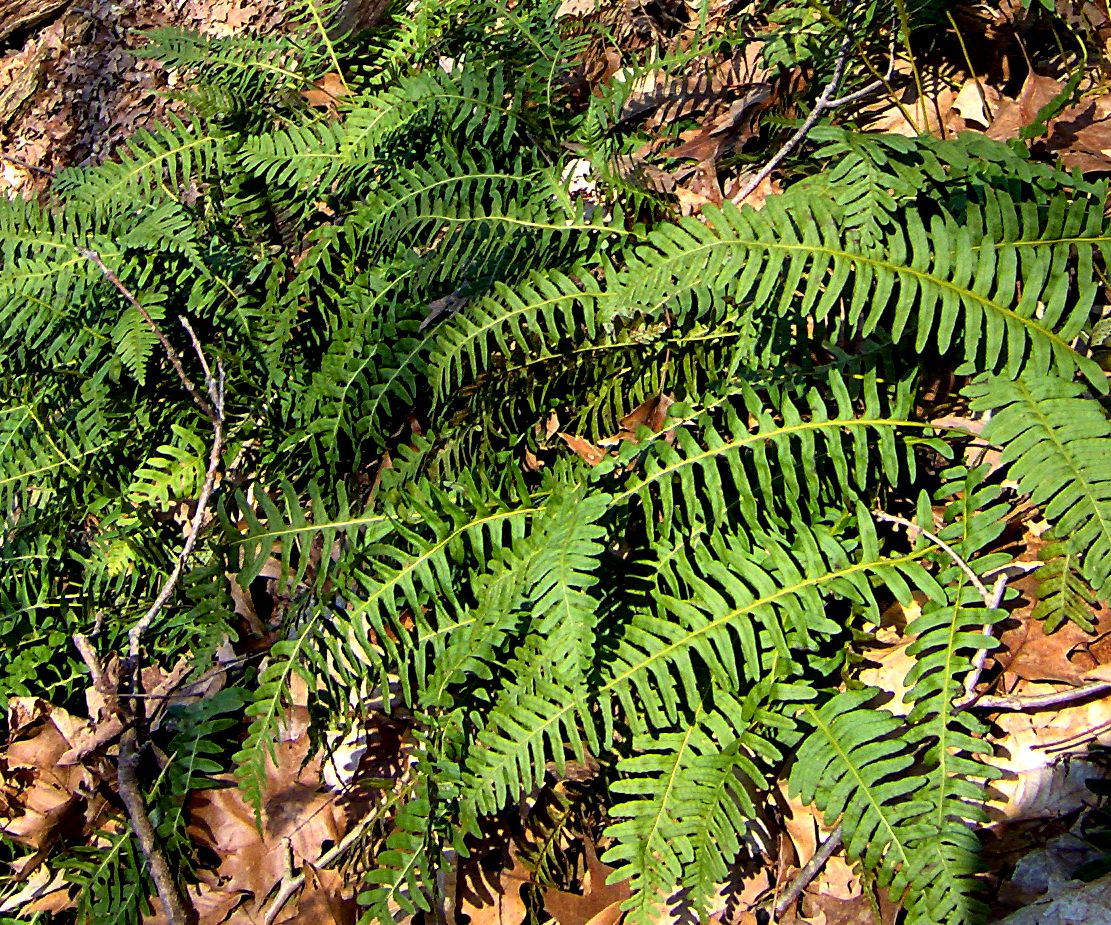
Polypodium virginianum, known as Rock Polypody or rock-cap fern (USDA: rock polypody), is a small, evergreen fern that grows in mats on rocks, cliffs and boulders across eastern and northern North America. It belongs to the polypody family (Polypodiaceae). Its leathery, once-divided fronds are usually 4 to 12 inches long and rise from a creeping, scaly rhizome that runs over rock surfaces through moss and thin soil.
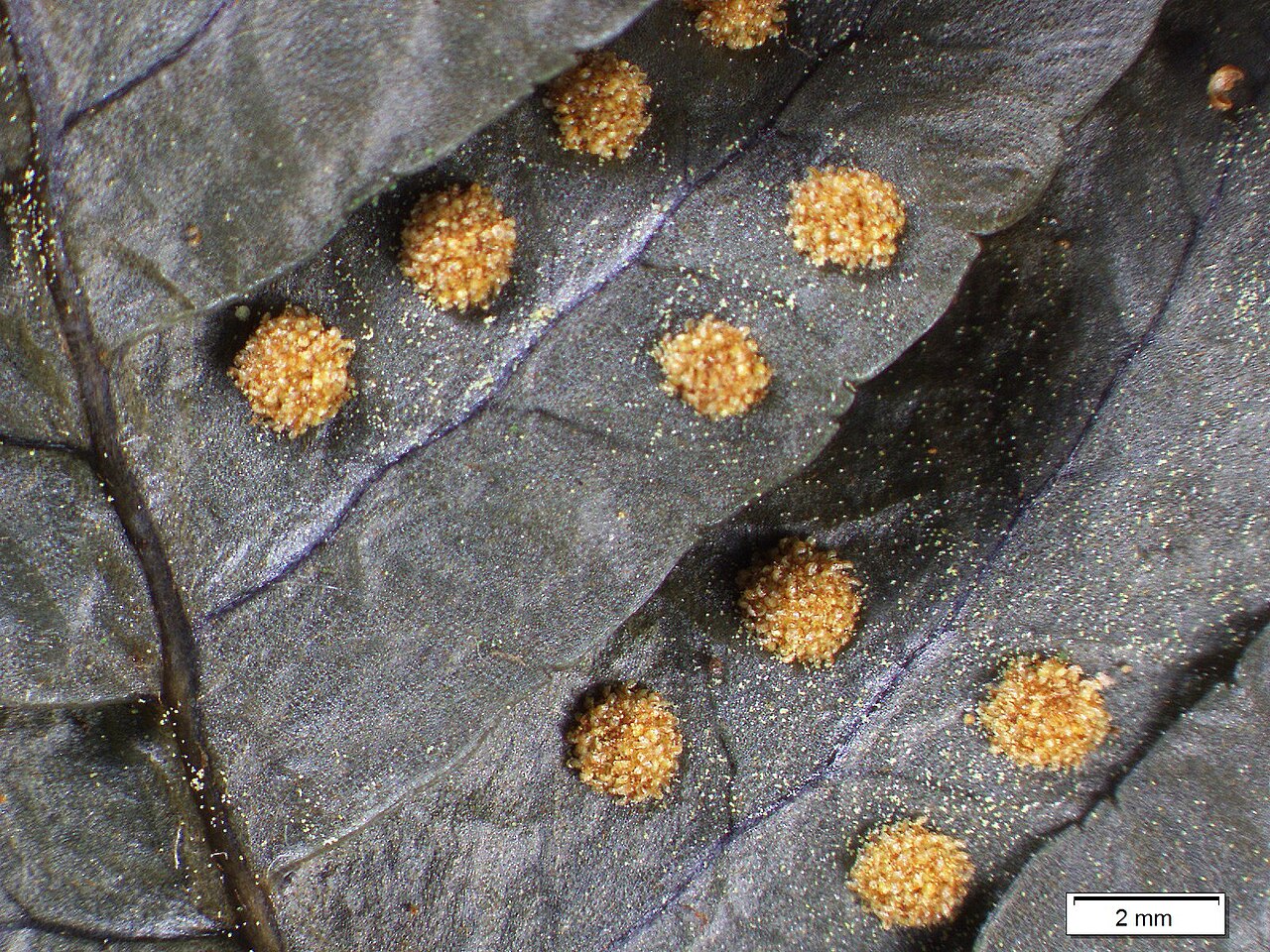
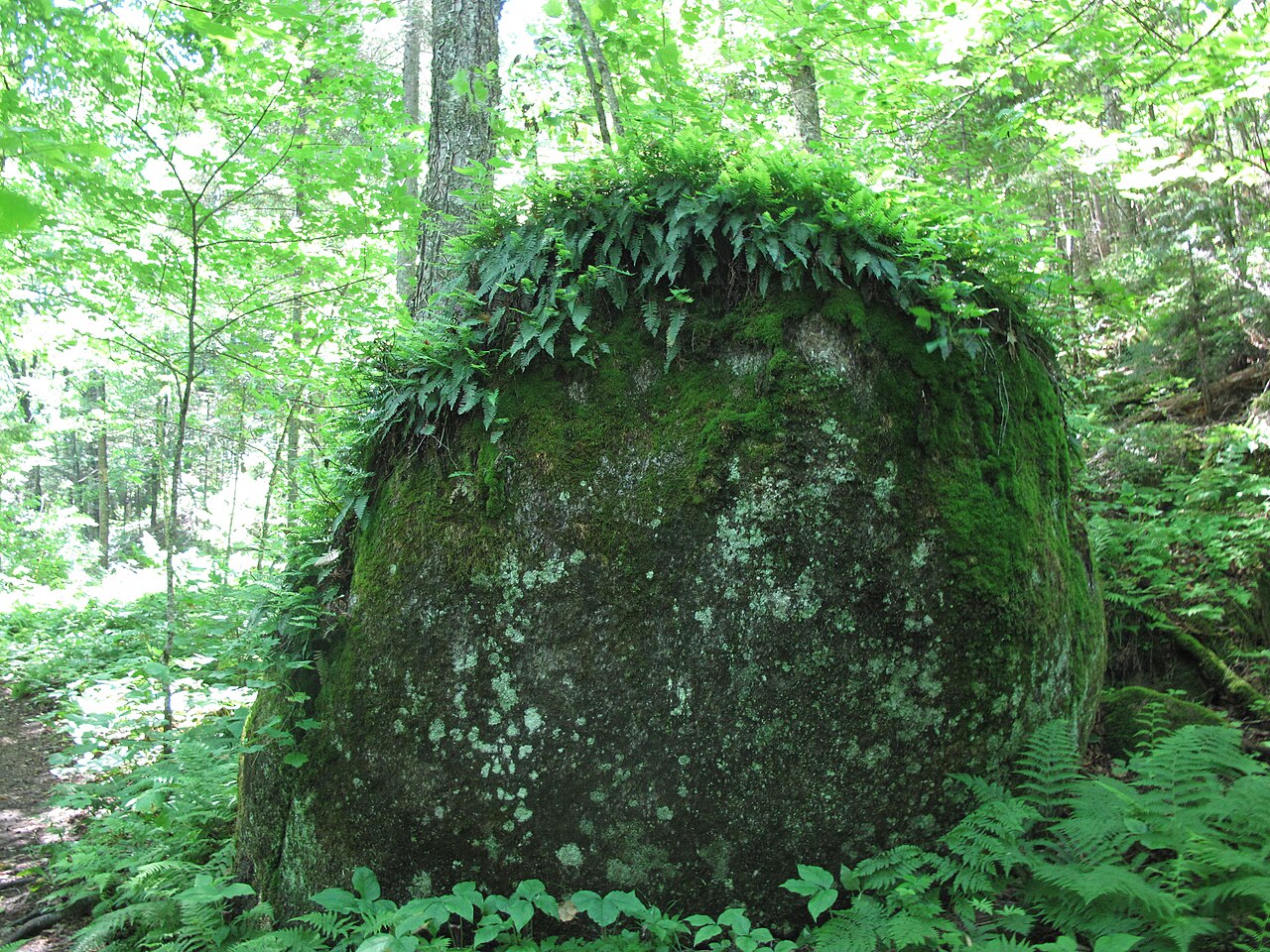
Rock polypody is one of the most familiar ferns of rocky woods in the Northeast and Great Lakes region. It covers the tops of glacial boulders, lines shaded sandstone and granite ledges, and fills cracks in cliffs. The fronds stay green all winter and may curl up during summer droughts, then unroll again after rain. On the underside of the fronds, round orange to golden clusters of spore cases (sori) sit in neat rows without any covering.
For gardeners, rock polypody is a charming fern for shaded rock gardens, stone walls and mossy boulders. It needs excellent drainage and cool, humus-rich conditions, and it spreads slowly once established. Buy nursery-propagated plants; never peel mats from wild rocks, which rarely survive the move and leave the rock bare for years.
Identification
Look for rock polypody growing directly on rock or on thin, mossy soil over rock. Its simple, ladder-like fronds and round, naked sori make it easy to recognize.
Rhizome & Habit
The rhizome is creeping, branched and covered with brown scales, and it lies at or just below the surface of moss or thin soil. Over time it forms dense, spreading colonies that can cover a boulder top. Fronds arise singly along the rhizome rather than in a central crown.
Fronds
The fronds are evergreen, leathery and smooth, about 4 to 12 inches long (up to about 16 inches), and 1 to 3 inches wide. Each blade is oblong to narrowly lance-shaped and cut nearly to the midrib into 10 to 20 pairs of narrow, round-tipped segments, like the rungs of a ladder. The segments are attached by a broad base along the central axis. The stalk is smooth, greenish to straw-colored, and about as long as or shorter than the blade.
Sori & Spores
The sori are round, about 1/16 inch across, and lack an indusium (cover). They sit in one row on each side of the midvein of each segment, about halfway between the midvein and the edge, and turn from yellow to orange-brown as the spores ripen in summer and fall.
Seasonal Behavior
Fronds remain green through winter, even under snow. During hot, dry spells in summer, the fronds may curl and wilt, then recover after rain. New fronds emerge in spring and early summer.
Look-alikes
Appalachian polypody (Polypodium appalachianum) is one of the two parent species of rock polypody and was separated from it in 1991. It has more triangular blades widest near the base and segments with more pointed tips; the two can be hard to tell apart without microscopic features, and they hybridize. Resurrection fern (Pleopeltis polypodioides) is smaller, with scaly undersides, and grows mainly on tree bark in the Southeast. The western polypodies, such as California polypody, replace it in the West.
Quick Facts
| Scientific Name | Polypodium virginianum |
| Family | Polypodiaceae (polypody family) |
| Plant Type | Evergreen fern with creeping rhizome |
| Mature Height | 4–12 in (fronds up to about 16 in) |
| Mature Spread | Spreads slowly into mats 1–3 ft or more |
| Growth Rate | Slow |
| Sun Exposure | Part shade to full shade |
| Water Needs | Low to medium; moist but sharply drained |
| Soil Type | Rock crevices, thin humus over rock, mossy boulders |
| Soil pH | About 4.5–6.5 (acidic) |
| Bloom Time | None; spores ripen summer–fall |
| Flower Color | None (fern) |
| Fall Color | None; evergreen |
| Fruit | None; round orange-brown sori on frond undersides |
| Deer Resistant | Yes; seldom browsed |
| USDA Hardiness Zones | 3–8 |
Native Range
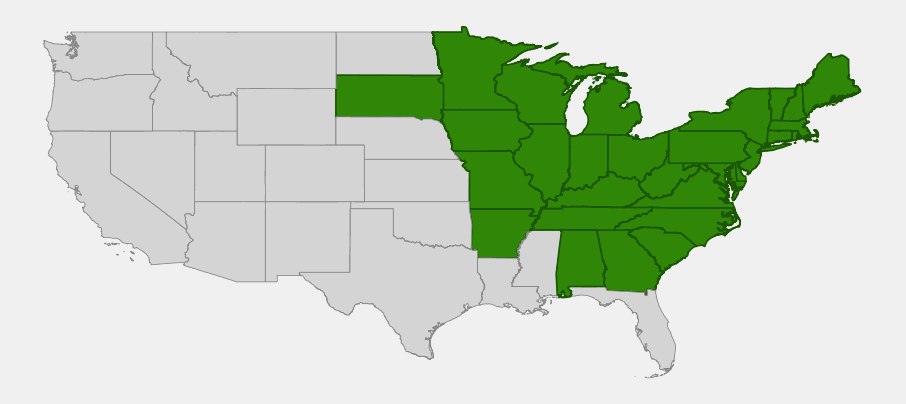
Rock polypody is native to eastern and northern North America. USDA PLANTS lists it as native in the lower 48 states, Canada, Greenland and Saint Pierre and Miquelon, and records it from 29 states and the District of Columbia. In Canada it ranges from Newfoundland and Labrador and the Maritime provinces west through Quebec and Ontario to Manitoba, Saskatchewan and the Northwest Territories.
In the United States it is common in New England, New York, Pennsylvania and the Great Lakes states, and extends south through the Appalachian Mountains and Piedmont to northern Georgia, Alabama and South Carolina, and west to Minnesota, Iowa, Missouri and the Arkansas Ozarks. The South Dakota record is an outlying one at the western edge of its range. In the southern Appalachians it is largely replaced at lower elevations by Appalachian polypody and grows mainly on cooler, higher or north-facing sites.
Rock polypody grows on rocks of many kinds, including sandstone, granite, gneiss and schist, and less often on limestone. Typical sites are shaded cliffs and ledges, the tops and sides of boulders, talus slopes, rocky stream banks and ravines, and stone walls, usually under deciduous or hemlock forest. It also grows occasionally on the bases of trees and on rotting logs.
📋 Regional plant lists featuring Rock Polypody: New York, Pennsylvania & Northern New Jersey · Ohio & Indiana · Michigan, Wisconsin & Eastern Minnesota · Kentucky & Tennessee · Connecticut, Massachusetts & Rhode Island · New Hampshire, Maine & Vermont · Maryland, Virginia & West Virginia · Delaware, Southern New Jersey & Long Island · Illinois, Iowa & Missouri · Alabama, Georgia & Mississippi · North & South Carolina · Arkansas, Louisiana, Eastern Oklahoma & Eastern Texas · North Dakota, South Dakota & Western Minnesota
Growing & Care Guide
Rock polypody is a rewarding fern for shaded rock gardens and walls, but it is particular about drainage. Give it the conditions of a mossy boulder: cool, humid shade, thin humus and roots that never sit in soggy soil. Buy nursery-propagated plants, which some native and fern nurseries offer.
Light
Part shade to full shade, especially in the afternoon. Morning sun or bright, dappled light is fine where the air stays cool and humid. In hot, dry sun the fronds scorch and curl.
Soil & Water
It needs a loose, acidic, humus-rich mix that drains quickly, such as leaf mold and coarse sand or grit over rock. Set the rhizomes on or just below the surface, never deeply buried. Water during establishment and in prolonged droughts; established plants tolerate dry spells by curling their fronds, but they never tolerate waterlogged soil.
Planting Tips
Plant in spring or early fall on top of or between rocks, in pockets of a dry-laid stone wall, on a shaded rock outcrop, or on a stump or log topped with moss and leaf mold. Press the rhizome firmly into the medium and pin it with a small stone until roots take hold. It combines well with mosses, small ferns, columbine and alumroots.
Pruning & Maintenance
Very little care is needed. Remove old, tattered fronds in spring if you like, and keep fallen leaves from smothering the mats on rocks. Do not fertilize heavily. Avoid foot traffic over the colonies, as the shallow rhizomes are easily dislodged.
Propagation
The easiest method is division: cut off a section of rhizome with several fronds and roots in spring and replant it. Ferns can also be grown from spores sown on sterile, moist medium, but this is slow.
Landscape Uses
- Shaded rock gardens: evergreen texture on boulders and ledges
- Stone walls: pockets and crevices in dry-laid walls
- Woodland gardens: a ground layer over mossy rocks under hemlocks and hardwoods
- Winter interest: green fronds through the snowy months
- Stump and log gardens: grows on moss-covered stumps and logs
Wildlife & Ecological Value
Rock polypody is a small but important part of the rocky woodland community, helping to build soil and providing cover on cliffs and boulders.
For Pollinators
Ferns reproduce by spores and have no flowers, so rock polypody offers no nectar or pollen for pollinators.
For Birds
Mats of rock polypody and moss provide cover and foraging for insects and other invertebrates eaten by wrens, warblers and other woodland birds. Some birds use the fronds and moss in nests.
For Mammals
Rock polypody is seldom browsed by deer. Its mats shelter small mammals, salamanders and invertebrates on rocky slopes.
Ecosystem Role
As one of the early colonists of bare rock, it helps trap leaves and debris and builds thin soil on boulders and ledges, which allows other plants to follow. Its evergreen fronds stay photosynthetically active in cool weather and keep rock surfaces shaded and moist.
Cultural & Historical Uses
Rock polypody is an allotetraploid fern: genetic studies showed that it arose as a hybrid between Appalachian polypody (Polypodium appalachianum) and Siberian polypody (P. sibiricum), followed by a doubling of the chromosomes. For many years North American plants were lumped into the European common polypody (P. vulgare), a name still found in older books.
The name Polypodium comes from Greek words meaning “many feet,” a reference to the branching rhizome and its knobby leaf scars. Rhizomes of several polypody species have a sweet or bitter taste and have been used in folk medicine in Europe and North America, but this is not a plant to experiment with.
Its habit of capping boulders made it a familiar sight to generations of hikers in the Northeast, where it is often called rock-cap fern. Mossy boulders covered with polypody are a classic feature of New England and Appalachian forests.
Frequently Asked Questions
Is rock polypody evergreen?
Yes. Its leathery fronds stay green through winter. In summer droughts the fronds may curl and look wilted, but they recover after rain.
Can rock polypody grow in ordinary garden soil?
Only if the soil drains very well. It does best on rocks, walls or in a gritty, humus-rich mix and rots in heavy, wet soil.
Can I move rock polypody from a wild boulder?
Please do not. Mats peeled from rocks rarely survive, and the bare rock takes years to recover. Buy nursery-propagated plants instead.
What is the difference between rock polypody and Appalachian polypody?
Appalachian polypody has more triangular fronds widest near the base and more pointed segments. Rock polypody arose from a cross between Appalachian polypody and Siberian polypody, and the two are often hard to separate in the field.
Is rock polypody deer resistant?
Yes. Deer rarely browse it.

Looking for a nursery that carries Rock Polypody?
Browse our native plant nursery directory: Alabama & Arkansas · Connecticut, Delaware & Georgia · Illinois, Indiana & Iowa · Kentucky, Maine, Maryland, Massachusetts, Michigan, Minnesota & Missouri · New Hampshire, New Jersey, New York, North Carolina & Ohio · Pennsylvania, Rhode Island, South Carolina, South Dakota, Tennessee, Vermont & Virginia · West Virginia & Wisconsin