
Honewort (Cryptotaenia canadensis)
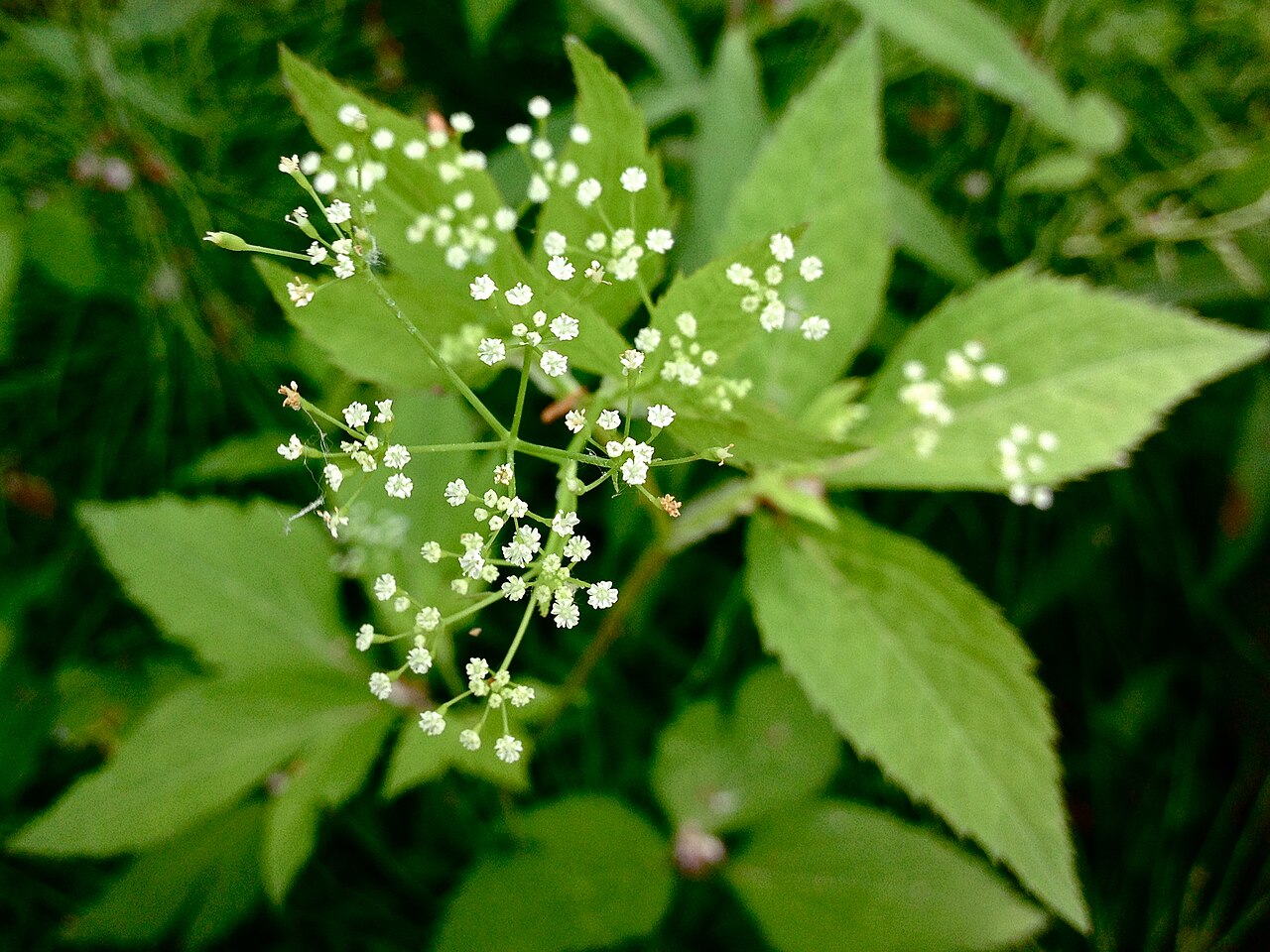
Cryptotaenia canadensis, known as Honewort and listed by USDA as Canadian honewort, is a native perennial of moist, shady woods across eastern and central North America. It belongs to the carrot or parsley family (Apiaceae) and is easily recognized by its leaves, each divided into three sharply toothed leaflets, and by its small, irregular clusters of tiny white flowers held on stalks of very unequal length.
Honewort is not a showy wildflower, but it is a common and useful part of the woodland flora. It fills in shady, moist ground under trees, tolerates periodic flooding, and supports small pollinators through early and midsummer. Its close Asian relative, mitsuba (Cryptotaenia japonica), is a well-known herb in Japanese cooking, and honewort itself has a history as a wild edible, with leaves that taste of celery and parsley.
Because it belongs to a family that includes some of the most poisonous plants in North America, honewort is also a plant to learn carefully. This guide covers how to identify it and tell it from dangerous look-alikes, where it grows, how to use it in shade and woodland gardens, and its value to wildlife.
Identification
Honewort is easiest to identify by combining several features: leaves with three toothed leaflets, a smooth stem without purple blotches, and small, loose umbels of white flowers whose stalks are noticeably different lengths.
Stems & Growth Form
Honewort grows from a cluster of thick, fibrous roots and produces branching stems usually 1 to 3 feet tall. The stems are smooth, hairless and green, without purple spots or a waxy coating. Plants often grow in loose patches, and in good sites they can form a nearly continuous groundcover in the shade.
Leaves
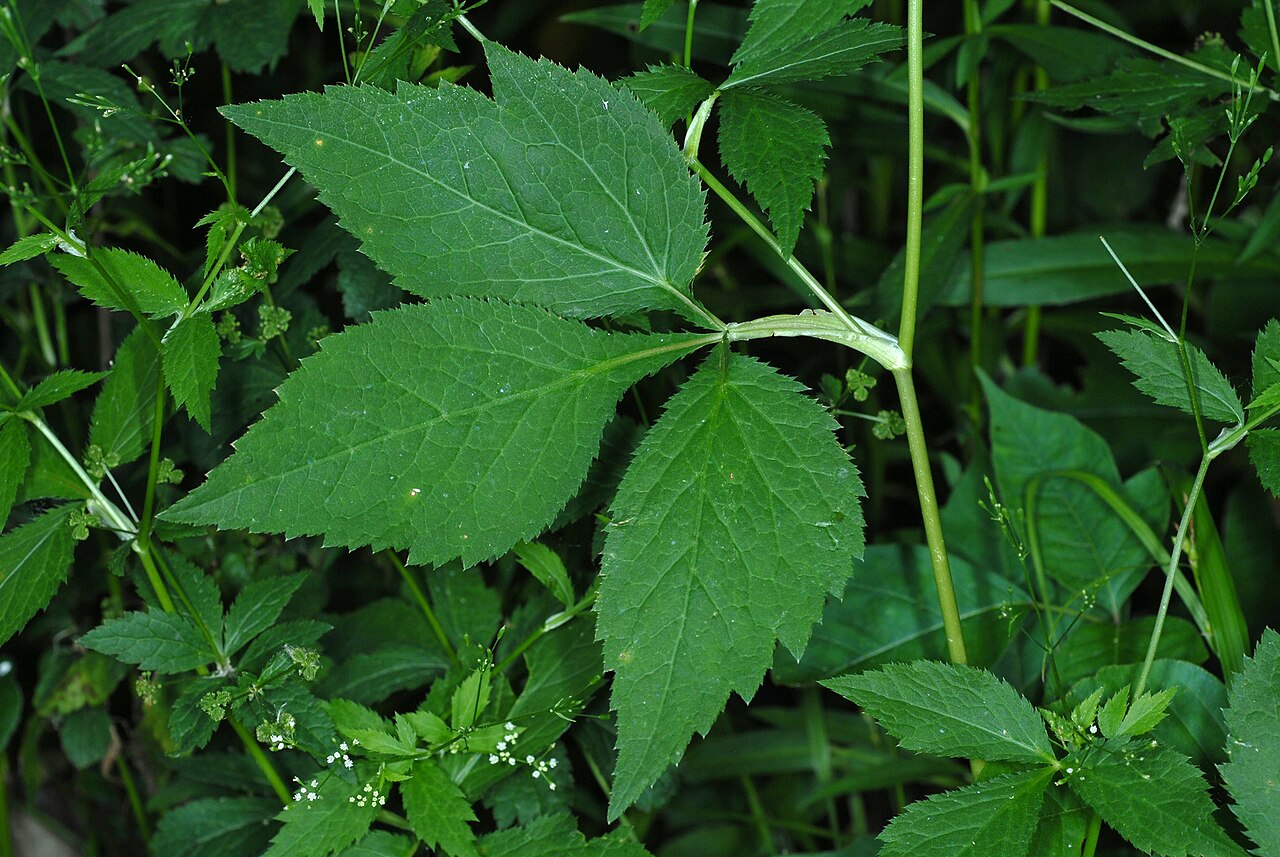
The leaves are alternate and divided into three leaflets (ternately compound), with long stalks on the lower leaves and short or no stalks above. The leaflets are ovate to lance-shaped, 1½ to 5 inches long, and sharply and irregularly toothed. The side leaflets are often deeply cleft, so a leaf can look as if it has four or five parts. The leaf stalks have a sheathing base where they clasp the stem.
Flowers
Honewort blooms from late spring into summer, mainly June to August. The flowers are tiny, white, with five petals, and are arranged in small, loose compound umbels. Unlike the flat, regular umbels of many carrot-family plants, honewort’s umbels are irregular: the stalks (rays) of each cluster are of very unequal lengths, so the flowers seem scattered. The Lady Bird Johnson Wildflower Center describes the clusters as “small, uneven compound umbels of tiny white flowers on stalks of unequal length.”
Fruit & Look-alikes
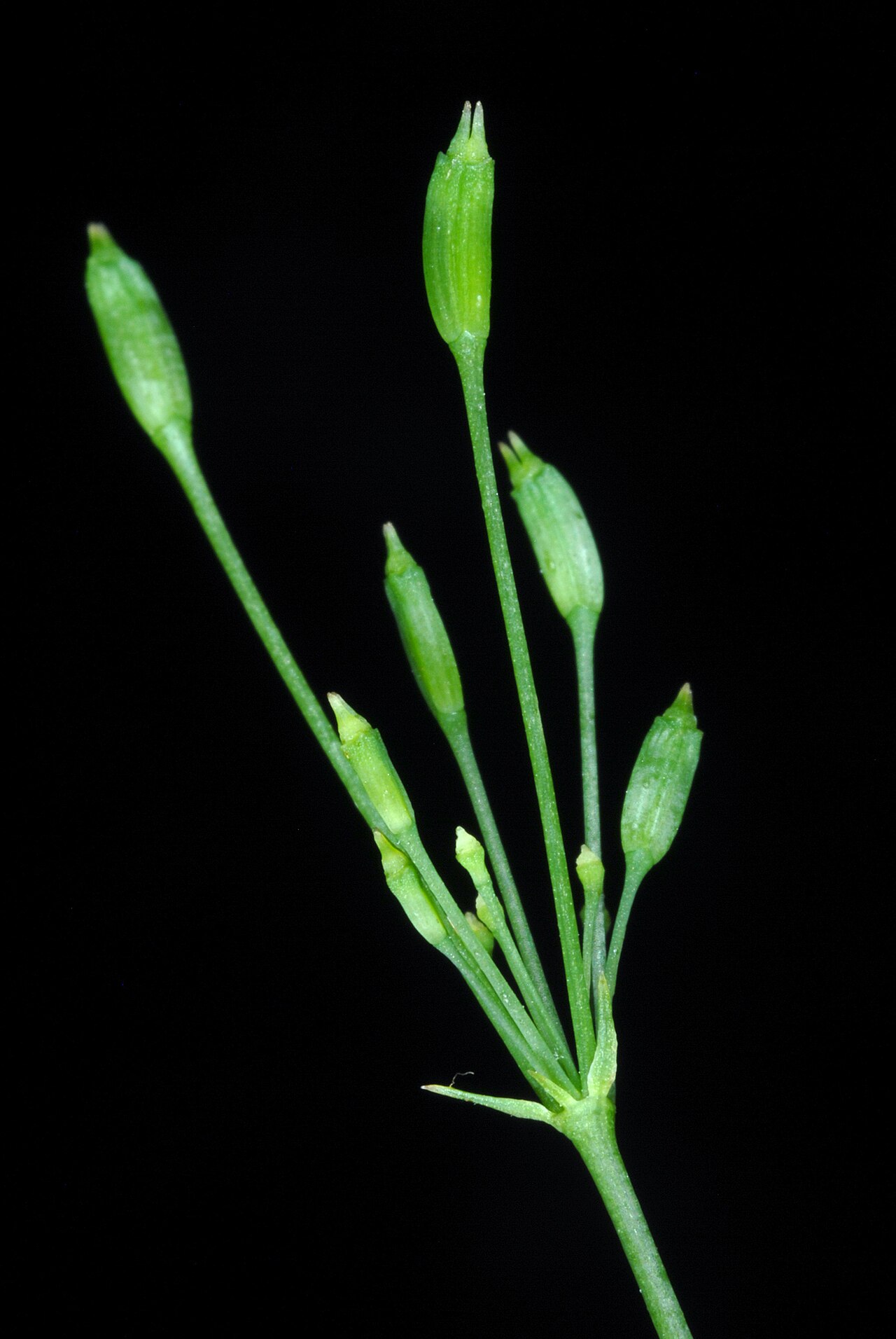
The fruits are narrow, slightly curved and ribbed, about ¼ inch long, turning dark brown to blackish when ripe. Use caution with look-alikes. Water Hemlock (Cicuta maculata), one of the most toxic plants in North America, grows in similar wet places, has larger, more regular umbels and leaves divided two or three times into many leaflets, and often has purple-streaked stems. Poison hemlock (Conium maculatum) has finely cut, fernlike leaves and purple-spotted stems. Golden alexanders and Aniseroot also have toothed, divided leaves but differ in flower color or leaf division.
Quick Facts
| Scientific Name | Cryptotaenia canadensis (syn. Deringa canadensis) |
| Family | Apiaceae (carrot or parsley family) |
| Plant Type | Herbaceous perennial |
| Mature Height | 1–3 ft |
| Mature Spread | 1–2 ft; forms loose patches |
| Growth Rate | Moderate to fast |
| Sun Exposure | Part shade to full shade |
| Water Needs | Moderate to high; moist soil |
| Soil Type | Moist, rich loam; alluvial and woodland soils |
| Soil pH | About 5.5–7.5 |
| Bloom Time | May–August, mainly June–July |
| Flower Color | White |
| Fall Color | None notable |
| Fruit | Narrow, ribbed dry fruit that splits into two seeds |
| Deer Resistant | Moderate |
| USDA Hardiness Zones | 3–9 |
Native Range
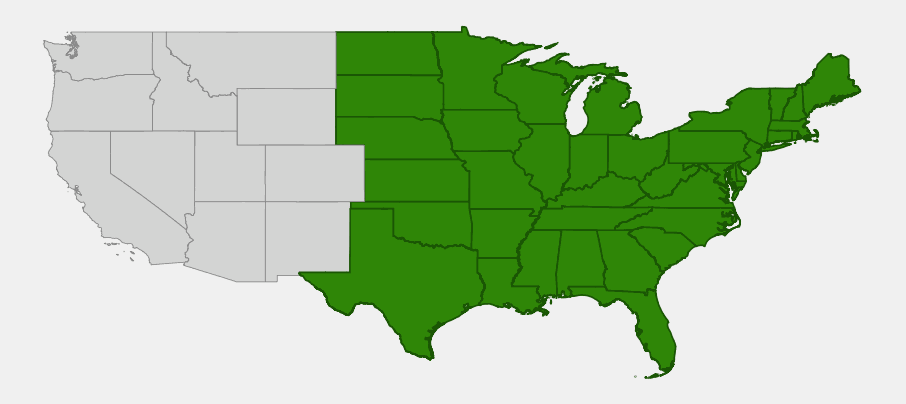
Honewort is native to a large part of eastern and central North America. The Lady Bird Johnson Wildflower Center describes its range as “Manitoba east to New Brunswick, south to Florida, west to Texas, and north to North Dakota.” USDA PLANTS lists it as native in 37 states and the District of Columbia, from Maine to Florida and west to the Dakotas, Nebraska, Kansas, Oklahoma and Texas. In Canada it grows in Manitoba, Ontario, Quebec and New Brunswick.
It is most common in the deciduous forests of the Ohio and Mississippi valleys, the Appalachians and the Midwest, in rich, moist woods, floodplains and along streams. In the Great Plains states it is confined to wooded river valleys in the eastern parts of the Dakotas, Nebraska and Kansas, and in Texas it grows mainly in the eastern and central parts of the state. In Florida it is limited to the northern counties.
Honewort has been introduced to Hawaii, where USDA lists it as non-native, so Hawaii is not shown on this map. Its Asian counterpart, mitsuba, is native to Japan, Korea and China and is sometimes treated as a subspecies of the same species.
📋 Regional plant lists featuring Honewort: New York, Pennsylvania & Northern New Jersey · Ohio & Indiana · Michigan, Wisconsin & Eastern Minnesota · Kentucky & Tennessee · Nebraska, Kansas & Eastern Colorado · Connecticut, Massachusetts & Rhode Island · New Hampshire, Maine & Vermont · Maryland, Virginia & West Virginia · Delaware, Southern New Jersey & Long Island · Illinois, Iowa & Missouri · Alabama, Georgia & Mississippi · North & South Florida · North & South Carolina · Arkansas, Louisiana, Eastern Oklahoma & Eastern Texas · North Dakota, South Dakota & Western Minnesota
Growing & Care Guide
Honewort is an easy, low-maintenance native for moist shade. It is a good filler in woodland gardens, rain gardens under trees and the shady edges of streams and ponds, and it can serve as a native alternative to non-native groundcovers in damp, shady corners.
Light
Plant honewort in part shade to full shade. It tolerates some morning sun if the soil stays moist, but hot afternoon sun scorches its leaves.
Soil & Water
It grows best in moist, humus-rich loam, the kind of soil found in floodplains and rich deciduous woods, and tolerates brief flooding. It can grow in drier shade once established, but it is lusher and spreads better with consistent moisture. Fertilizer is unnecessary.
Planting Tips
Set plants about 12 to 18 inches apart in spring or fall. Honewort reseeds readily, so use it where a loose, self-sustaining woodland groundcover is welcome, among ferns, sedges and spring wildflowers. Label garden plantings clearly if you grow other carrot-family plants nearby, to avoid confusion.
Pruning & Maintenance
Little care is required. Cut back the flowering stems after the seeds drop if you want to reduce self-seeding or tidy the planting. Pull extra seedlings in spring if it spreads beyond where you want it.
Propagation
Honewort is easy to grow from seed. Sow fresh seed outdoors in fall; it needs a period of cold, moist conditions to germinate, which a winter outdoors provides. Established plants can also be divided in early spring.
Landscape Uses
- Woodland and shade gardens: a loose, self-sustaining groundcover for moist shade
- Floodplain and streambank restoration: tolerates flooding and helps cover bare, shaded soil within its native range
- Rain gardens under trees: for moist, shady zones
- Pollinator gardens: small flowers for small native bees and flies
- Edible landscapes (with caution): an heirloom wild green, only for people who can identify it with certainty
Wildlife & Ecological Value
Like other members of the carrot family, honewort supports a range of small insects, and its patches provide cover on the forest floor.
For Pollinators
The small white flowers attract short-tongued insects such as small bees, including sweat bees, as well as flies, wasps and small beetles, which can easily reach the shallow nectar. Because it blooms in the shade, it offers food to woodland insects at a time when few other forest plants are flowering.
For Birds
The seeds may be eaten by ground-feeding birds, and the insects that visit honewort and feed on its foliage are food for woodland songbirds.
For Mammals
Deer browse honewort occasionally. Its patches provide cover for small mammals, amphibians and invertebrates on the forest floor.
Ecosystem Role
Honewort is part of the herbaceous layer of moist deciduous and floodplain forests, where its fibrous roots help hold soil and its leaf litter contributes to soil organic matter. Because it reseeds readily, it quickly covers shaded ground after floods or disturbance.
Cultural & Historical Uses
The genus name Cryptotaenia comes from Greek words meaning “hidden” and “band,” referring to the oil tubes (vittae) of the fruit, which are hidden beneath the surface. “Honewort” is an old English name once used for a different plant thought to cure a “hone,” a type of swelling.
Honewort has a history as a wild food. The Lady Bird Johnson Wildflower Center notes that the young leaves and stems have reputedly been used as a seasoning like parsley or as a boiled green, and that the roots have reputedly been cooked and eaten like parsnips. It also warns that caution is advised because many similar plants of the carrot family are poisonous. Its Asian relative, mitsuba, is grown as a culinary herb with a flavor of celery and parsley.
Safety note: never eat any wild plant in the carrot family unless you are certain of its identity. Water hemlock and poison hemlock can be deadly in small amounts and grow in similar habitats. If in doubt, enjoy honewort as a native woodland plant rather than as food.
Frequently Asked Questions
Is honewort edible?
Honewort has been used as a wild green and seasoning, and its Asian relative mitsuba is a culinary herb. However, the carrot family includes deadly plants such as water hemlock and poison hemlock. Do not eat honewort unless you are absolutely certain of its identity.
How do I tell honewort from water hemlock?
Honewort leaves have just three leaflets (the side ones sometimes deeply cleft), its stems are smooth and green, and its small white flower clusters are loose and irregular. Water hemlock has leaves divided into many leaflets, larger, flatter umbels and often purple-streaked stems. When in doubt, do not handle or eat it.
Is honewort invasive?
No. It is native across most of eastern and central North America. It reseeds readily and can form patches in moist shade, but it is easy to control by removing seedlings or cutting flower stems before seeds drop.
Where does honewort grow best?
In moist, rich soil in part to full shade, such as floodplain woods, stream banks and shady garden beds. It struggles in hot sun and very dry soil.
Is honewort the same as mitsuba?
They are close relatives. Mitsuba (Cryptotaenia japonica), used in Japanese cuisine, is native to East Asia and is sometimes treated as a subspecies of honewort. Honewort is the North American species.

Looking for a nursery that carries Honewort?
Browse our native plant nursery directory: Alabama & Arkansas · Connecticut, Delaware, Florida & Georgia · Illinois, Indiana, Iowa & Kansas · Kentucky, Louisiana, Maine, Maryland, Massachusetts, Michigan, Minnesota, Mississippi & Missouri · Nebraska, New Hampshire, New Jersey, New York, North Carolina, North Dakota, Ohio & Oklahoma · Pennsylvania, Rhode Island, South Carolina, South Dakota, Tennessee, Texas, Vermont & Virginia · West Virginia & Wisconsin