
Texas Yellow Star (Lindheimera texana)
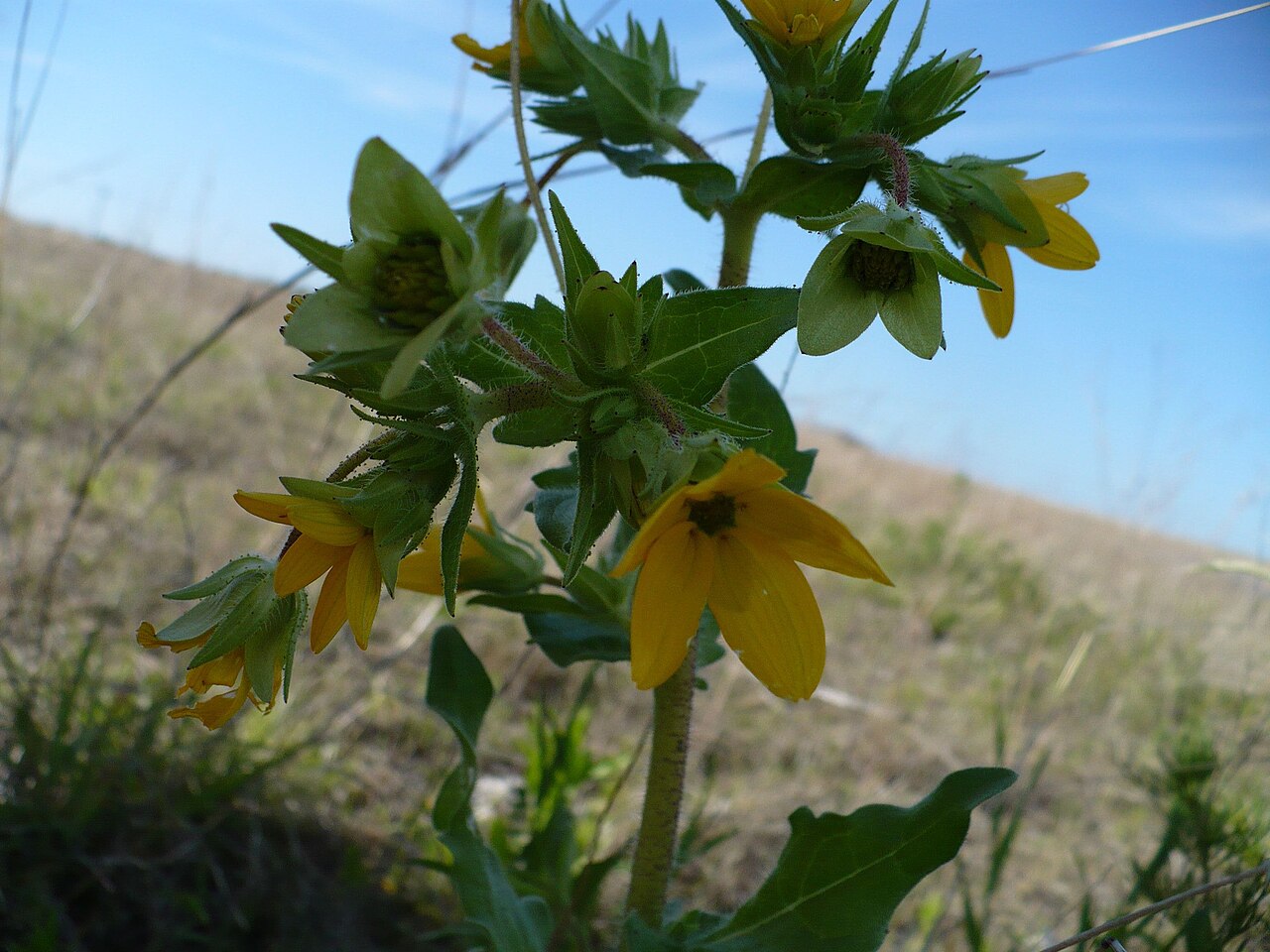
Lindheimera texana, the Texas Yellow Star (also written Texas yellowstar, or simply Texas star), is a cheerful spring annual of the prairies, roadsides and open woodlands of Texas and neighboring states. It belongs to the aster family (Asteraceae) and is the only species in its genus. Each flower head has just five (sometimes three to six) broad, bright yellow rays arranged like the points of a star, making it one of the easiest Texas wildflowers to recognize.
Texas yellow star blooms from early to late spring, usually alongside bluebonnets, Indian paintbrush and pink evening primrose, and it often forms bright yellow drifts on limestone and sandy roadsides in the Hill Country and the prairies of central and east Texas. The Lady Bird Johnson Wildflower Center notes that it is abundant in the prairies of north-central Texas, the southern part of east Texas and the Edwards Plateau, and that it is easily cultivated and does well in gardens.
This guide covers how to identify Texas yellow star, where it grows, how to grow it from seed in a wildflower meadow or garden, and the story of the pioneering German-Texan botanist for whom it is named.
Identification
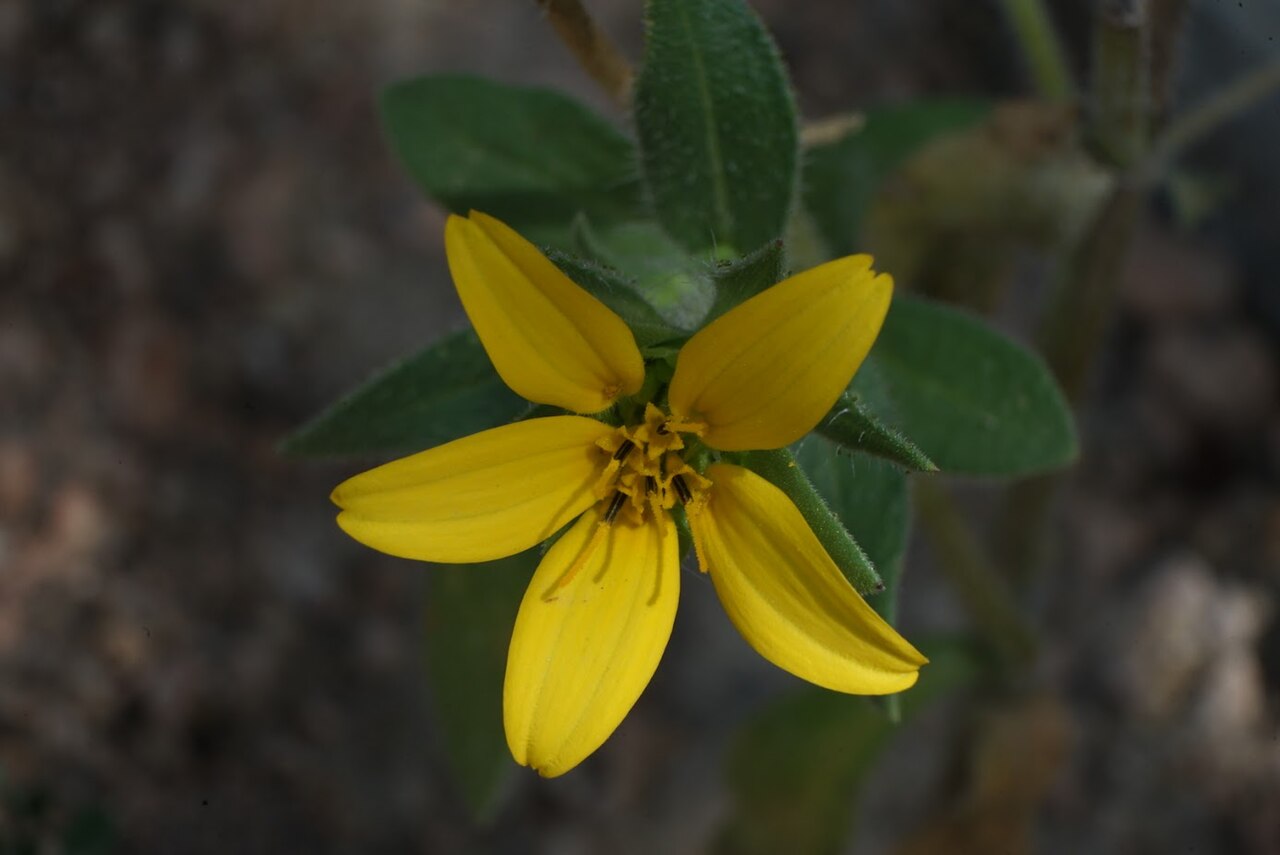
Many yellow-flowered composites bloom in Texas in spring, but few have so few rays. Look for a hairy, branching annual with five broad yellow rays per head, leafy bracts around the flower heads, and leaves that change from alternate and toothed below to opposite and smooth above.
Stems & Growth Form
Texas yellow star is an annual that germinates in fall or winter, forms a small rosette, and then grows into an upright, branching plant 6 to 24 inches tall in spring. The stems and branches are covered in soft hairs. In good conditions a single plant becomes a bushy mound with dozens of flower heads.
Leaves
The lower leaves are alternate, lance-shaped to oblong and coarsely toothed. Higher on the stem, the leaves become opposite, smaller and smooth-edged, about 2 to 2½ inches long. Leaves are hairy and somewhat rough. Leafy bracts surround the flower clusters at the branch tips.
Flowers
Flower heads are borne one to several together at the ends of the stems and are about 1 inch across. Each has usually five (three to six) bright yellow ray florets, each with two prominent veins and notched at the tip, around a small cluster of yellowish disk florets. In this species the ray florets produce the seeds, while the disk florets supply pollen but are sterile. Bloom time is mainly March to May, sometimes into June.
Seeds & Look-alikes
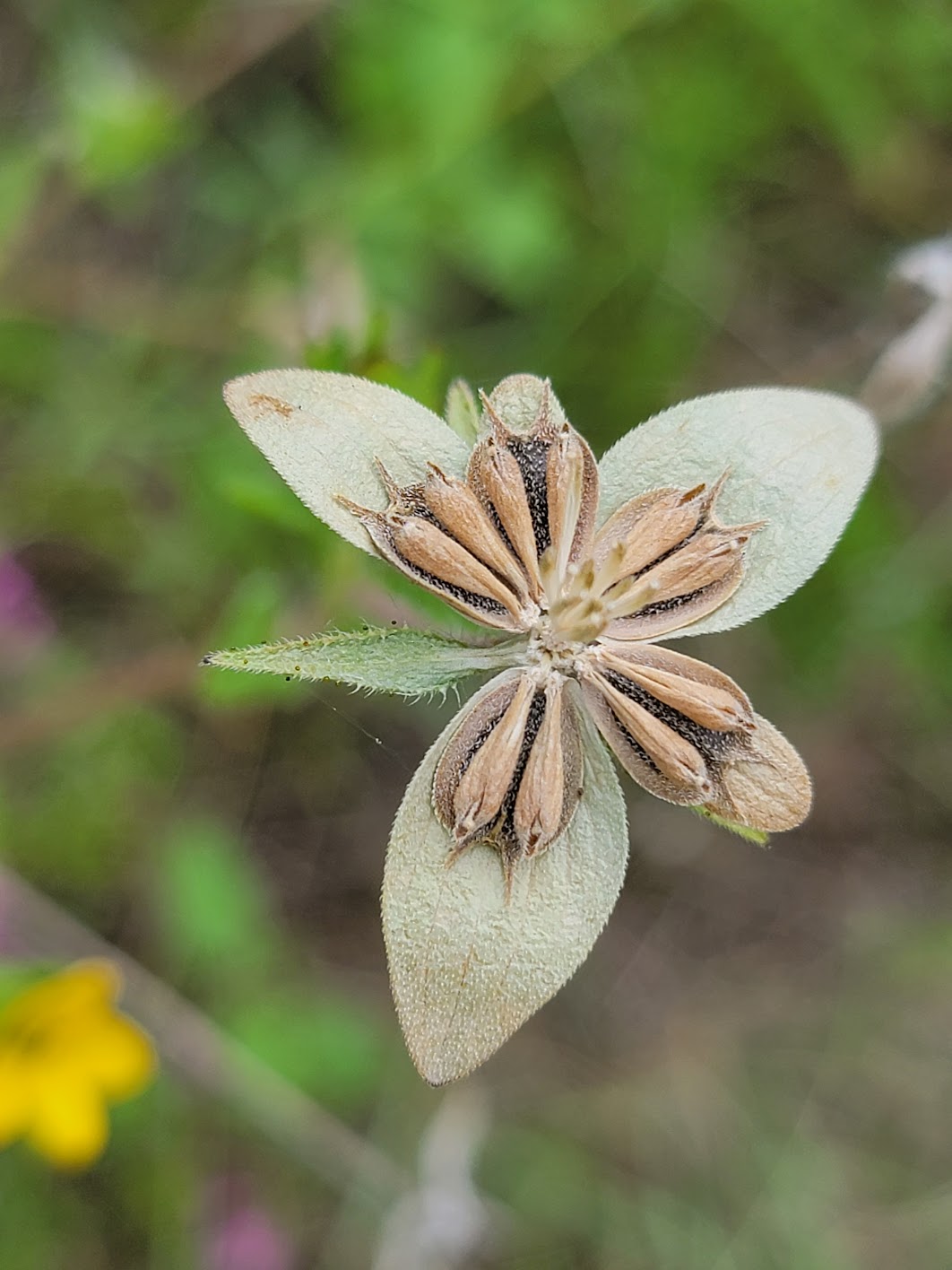
After flowering, each ray floret produces a flattened, winged seed (cypsela) attached to an inner bract. The seeds and bracts fall away together, so the dry seed head looks like a small star of papery wings. Other spring yellow composites, such as Lanceleaf Coreopsis and greenthreads, have more rays (usually eight) and different leaves, and Engelmann daisy has many rays and deeply lobed leaves.
Quick Facts
| Scientific Name | Lindheimera texana |
| Family | Asteraceae (aster family) |
| Plant Type | Annual herb (cool-season, spring-blooming) |
| Mature Height | 6–24 in |
| Mature Spread | 6–12 in |
| Growth Rate | Fast |
| Sun Exposure | Full sun to part shade |
| Water Needs | Low; drought tolerant |
| Soil Type | Well-drained sand, loam, clay or limestone soils |
| Soil pH | About 6.8–8.0 (neutral to alkaline) |
| Bloom Time | March–May, sometimes into June |
| Flower Color | Bright yellow |
| Fall Color | None; annual |
| Fruit | Flattened, winged seed shed with its papery bract |
| Deer Resistant | Moderate; occasionally browsed |
| USDA Hardiness Zones | Annual; grows in zones 7–9 climates |
Native Range
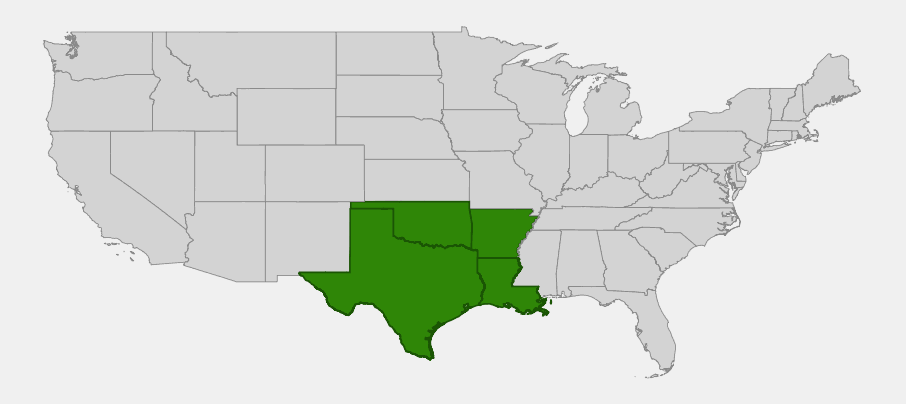
Texas yellow star is a plant of the south-central United States and northeastern Mexico. USDA PLANTS records it as native in Texas, Oklahoma, Arkansas and Louisiana. The Lady Bird Johnson Wildflower Center describes its range as “Oklahoma and Arkansas south through Texas to Coahuila,” and it also reaches other parts of northeastern Mexico.
Its stronghold is central Texas. It is abundant on the Edwards Plateau and in the Hill Country, in the Blackland Prairie and Cross Timbers of north-central Texas, and in the prairies and post oak savannas of the southern part of east Texas. It extends south toward the South Texas Plains and north into southern Oklahoma, and it is much less common at the edges of its range in Arkansas and Louisiana.
It grows in prairies, pastures, roadsides, open woods and woodland edges, on well-drained sandy, loamy, clay or limestone soils. Because it thrives on roadsides, it is part of the famous spring wildflower displays along Texas highways.
📋 Regional plant lists featuring Texas Yellow Star: Arkansas, Louisiana, Eastern Oklahoma & Eastern Texas · South & West Texas
Growing & Care Guide
The Lady Bird Johnson Wildflower Center notes that Texas yellow star is easily cultivated and does well in gardens. Like most Texas spring annuals, the key is to sow seed in fall so plants can establish over the cool season.
Light
Grow it in full sun for the most flowers. It tolerates light or partial shade, such as along the sunny edge of woodlands, where it grows in the wild.
Soil & Water
Texas yellow star tolerates a wide range of well-drained soils: sandy loam, clay loam and rocky limestone. It prefers neutral to slightly alkaline conditions. It is drought tolerant and usually needs no supplemental water once seedlings are established, though a deep watering during a very dry winter or early spring prolongs flowering. Avoid fertilizer, which promotes leafy growth at the expense of flowers.
Planting Tips
Sow seed in fall, from September to November, on bare or lightly raked soil and press it into the surface. Seeds germinate with fall and winter rains, and seedlings overwinter as small rosettes before blooming in spring. Combine it with bluebonnets, paintbrush and other spring annuals for a classic Texas wildflower display, or tuck it into gaps in a sunny perennial bed.
Pruning & Maintenance
No pruning is necessary. Let the plants ripen seed before mowing or pulling them, usually by late May or June, so the planting reseeds. In wildflower meadows, delay mowing until seed has dropped.
Propagation
Propagate by seed. Collect the papery seed heads when they turn tan and dry and store the seeds in a cool, dry place until fall. No special treatment is required; fall sowing allows natural germination.
Landscape Uses
- Wildflower meadows: a classic companion for bluebonnets and paintbrush in spring
- Roadside and right-of-way plantings: tough and self-seeding on poor, well-drained soils
- Pollinator gardens: early-season nectar and pollen for native bees and butterflies
- Hill Country and xeriscape gardens: drought-tolerant annual color on limestone soils
- Prairie restoration: a native annual for prairies and savannas within its range
Wildlife & Ecological Value
As one of the early spring wildflowers of Texas prairies, Texas yellow star provides food for insects at a time when many perennials have not yet bloomed.
For Pollinators
The open, bright yellow flower heads are visited by many small native bees, as well as flies, beetles and small butterflies. Because the disk florets produce abundant pollen, the flowers are especially useful to pollen-collecting bees in early spring.
For Birds
Seed-eating birds, such as sparrows and finches, feed on the seeds of spring annuals like Texas yellow star when they ripen in late spring.
For Mammals
Deer and rabbits sometimes browse the young plants, but it usually persists on roadsides and in pastures.
Ecosystem Role
As a cool-season annual, Texas yellow star uses the moisture of fall, winter and spring and completes its life cycle before the heat of summer. It fills open gaps between perennial grasses and wildflowers in prairies and helps cover disturbed ground on roadsides.
Cultural & Historical Uses
The genus Lindheimera honors Ferdinand Jacob Lindheimer (1801–1879), a German-born botanist who settled in Texas and is widely called the “father of Texas botany.” Working from New Braunfels in the 1840s and 1850s, he collected thousands of plant specimens for Asa Gray and George Engelmann, and many Texas plants carry his name.
Asa Gray and George Engelmann named the genus and species based on Lindheimer’s collections, honoring both the collector and the state (texana). Because Lindheimera contains only this one species, Texas yellow star is a distinctive part of the Texas flora.
Today Texas yellow star is a staple of Texas wildflower seed mixes and roadside plantings. It is often overshadowed by bluebonnets and paintbrush, but its bright five-pointed stars are a fitting symbol for a plant named for Texas and for one of its first great botanists.
Frequently Asked Questions
How do I recognize Texas yellow star?
Look for a hairy, branching spring annual 6 to 24 inches tall with flower heads of usually five broad, bright yellow, notched rays arranged like a star. The upper leaves are opposite and smooth-edged, and the lower ones are alternate and toothed.
When does Texas yellow star bloom?
Mainly from March to May, sometimes into June, along with bluebonnets, Indian paintbrush and pink evening primrose.
How do I grow Texas yellow star?
Sow seed in fall on bare, well-drained soil in full sun. Seedlings grow over the winter and bloom in spring. Let plants go to seed before mowing so they come back next year.
Who was Lindheimer?
Ferdinand Lindheimer was a German-born botanist who settled in New Braunfels, Texas, and collected thousands of Texas plant specimens in the 1840s and 1850s. He is often called the father of Texas botany.
Is Texas yellow star the same as Texas star?
The name “Texas star” is used for several plants, including Texas yellow star and a pink-flowered gentian relative (Sabatia campestris). Using the scientific name Lindheimera texana avoids confusion.
