
Branching Phacelia (Phacelia ramosissima)
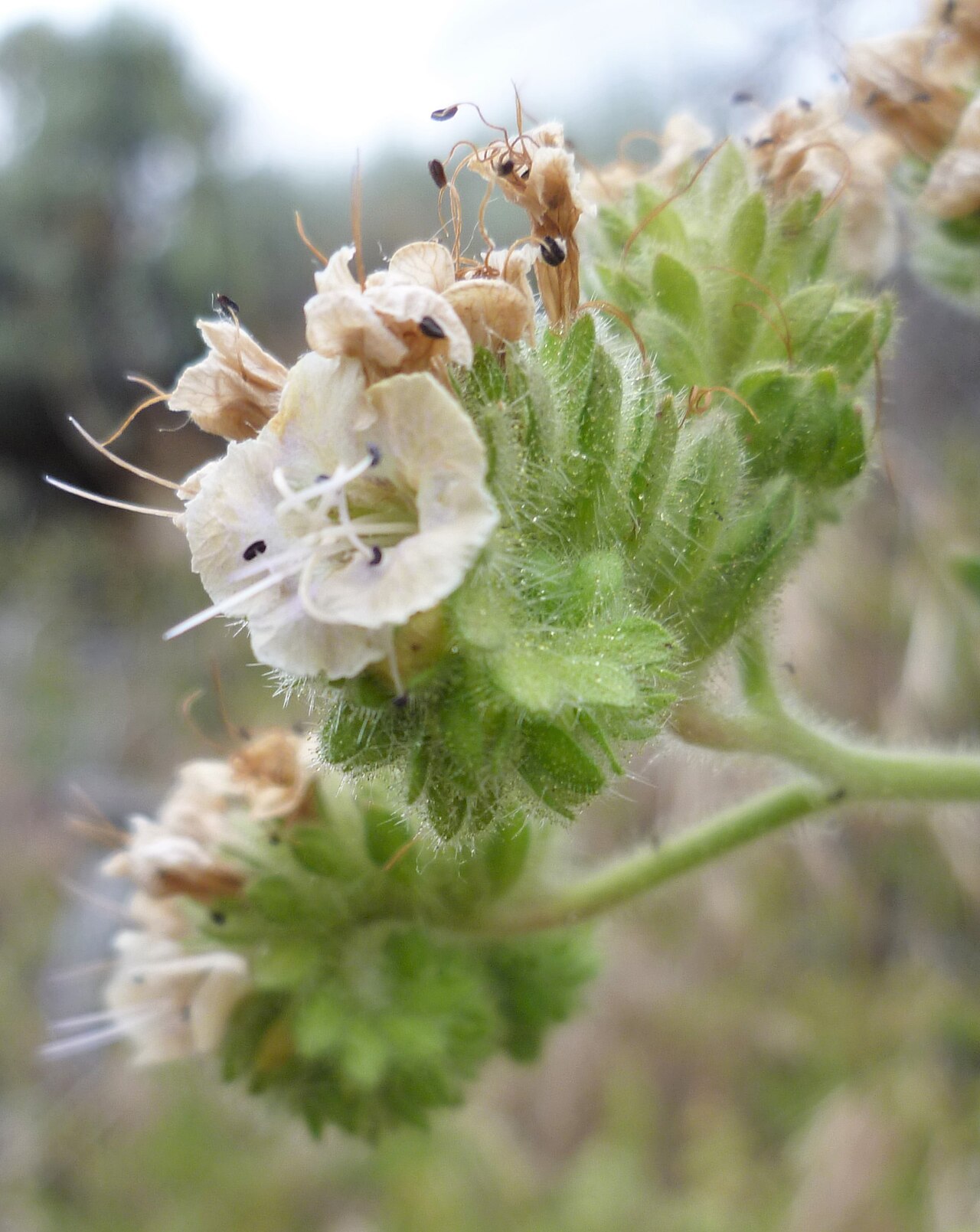
Phacelia ramosissima, known as Branching Phacelia (USDA: branching phacelia), is a sprawling, hairy perennial wildflower of the western United States and southern British Columbia. It belongs to the borage family (Boraginaceae; formerly the waterleaf family, Hydrophyllaceae). The species name ramosissima means “very much branched,” and the plant lives up to it, sending out many leafy stems that lean on rocks and shrubs or trail across talus.
From late spring through summer it bears dense, coiled clusters of small white to pale lavender, bell-shaped flowers with long, whiskery stamens. The leaves are deeply divided, and the whole plant is covered in stiff and sticky glandular hairs. It grows in an unusually wide range of habitats, from coastal chaparral in southern California to sagebrush canyons of the Columbia Basin and rocky slopes high in the Sierra Nevada, and it is a valuable nectar and pollen plant for native bees.
Safety note: like many phacelias, branching phacelia can cause an itchy, blistering contact dermatitis in sensitive people, similar to a mild poison oak rash. Wear gloves and long sleeves when handling it, and wash skin promptly if you brush against it.
Identification
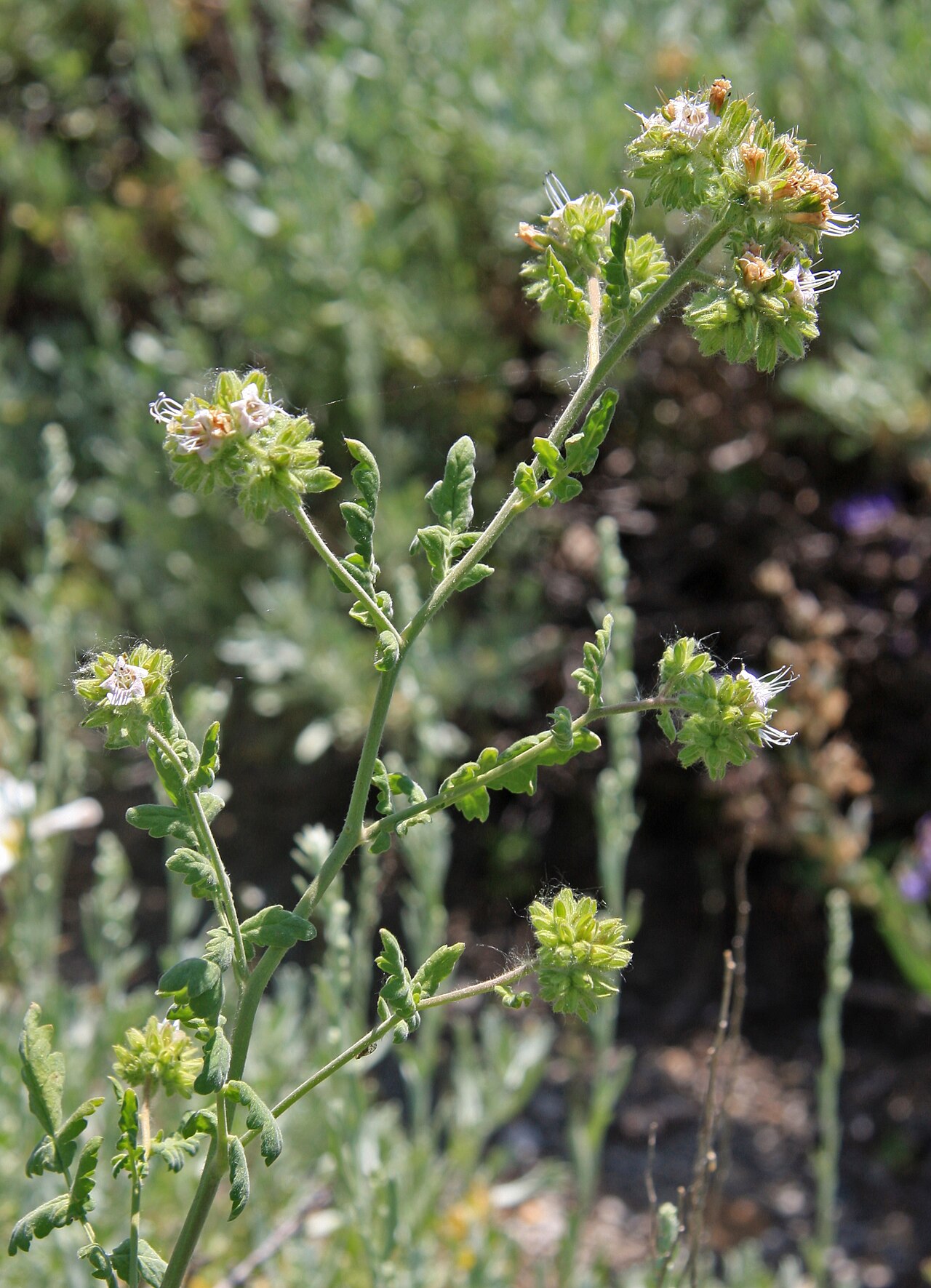
Look for a loosely branched, sticky-hairy perennial with pinnately divided leaves and tight, coiled clusters of small whitish to lavender flowers with protruding stamens, often leaning on rocks or shrubs in dry, open places.
Stems & Habit
Branching phacelia grows from a stout taproot and a woody base, producing many stems that are prostrate, sprawling or upright. Stems are usually 1 to 3 feet long and occasionally reach about 5 feet where they climb through shrubs. The stems are covered in stiff hairs and small sticky glands.
Leaves
The leaves are alternate, about 2 to 6 inches long, and pinnately divided into 5 to 11 leaflets, which are themselves lobed or toothed. They are green to grayish green and hairy, giving the plant a soft, ferny look at a distance. Leaves become smaller toward the top of the stems.
Flowers
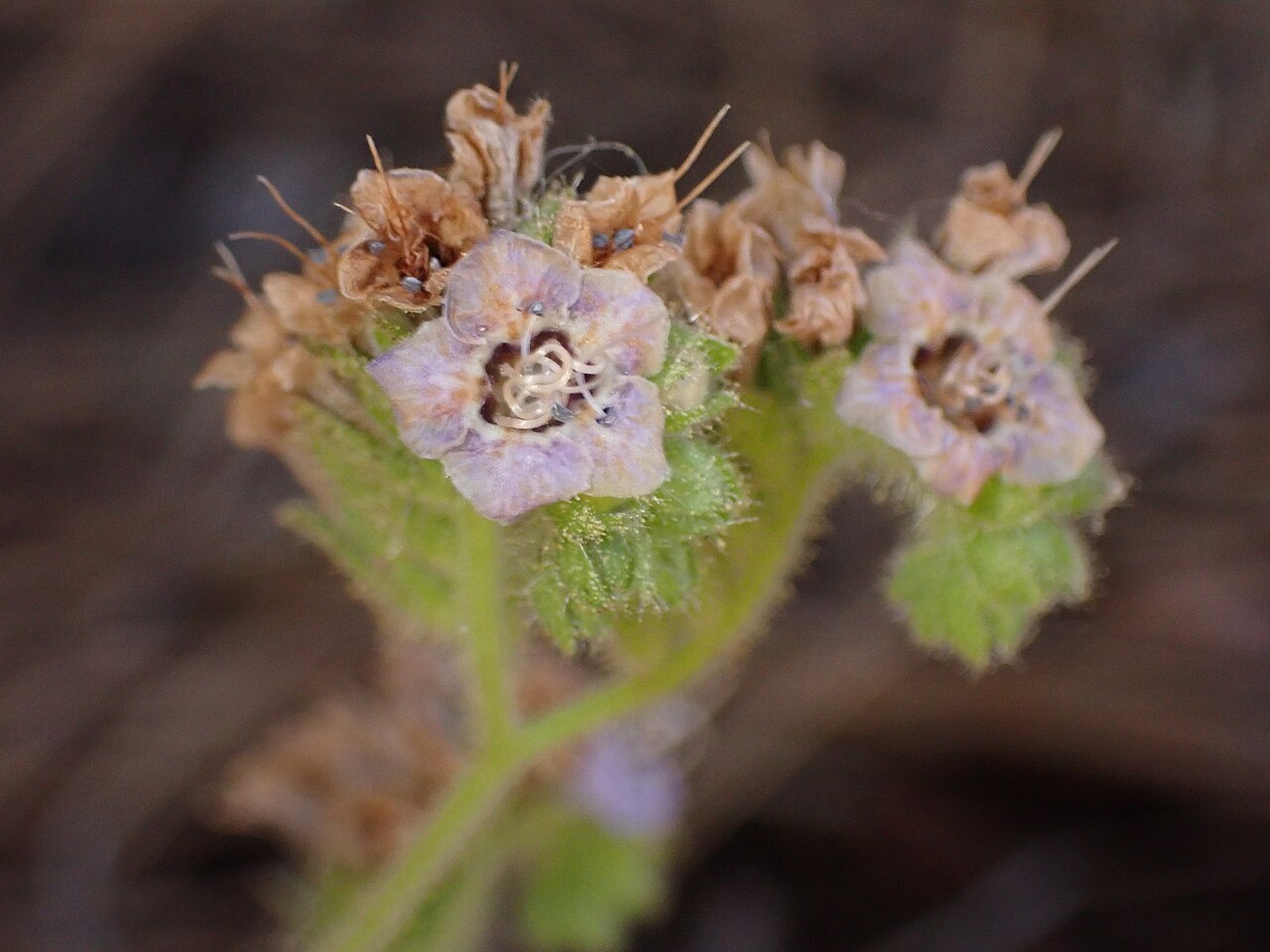
The flowers are packed into dense, coiled, one-sided clusters (scorpioid cymes) at the branch tips; several clusters are often grouped together into a rounded head. Each flower is bell- to bowl-shaped, about 1/4 inch (5 to 8 mm) long, white to pale lavender or bluish, with stamens and a forked style that extend well beyond the petals. The bristly sepals give the clusters a fuzzy look. Bloom time is mainly May through August, earlier at low elevations in southern California.
Fruit & Seeds
Each flower produces a small, egg-shaped capsule a few millimeters long, held inside the bristly sepals. It contains a few pitted brown seeds. The dried flower clusters often stay on the plant into fall.
Look-alikes
Silverleaf phacelia (Silverleaf Phacelia, P. hastata) has mostly undivided, silvery, lance-shaped leaves. Distant phacelia (Distant Phacelia, P. distans) and lacy phacelia (Lacy Phacelia, P. tanacetifolia) are annuals with more finely cut leaves and bluer flowers. Branching phacelia is told apart by its perennial, much-branched habit, its pinnately divided leaves with broad, lobed leaflets, and its whitish to pale lavender flowers in tight heads. Botanists recognize several varieties, including the broad-leaved var. latifolia of coastal southern California.
Safety & Conservation
The glandular hairs can cause contact dermatitis in sensitive people, with itching, redness and small blisters. Wear gloves when handling plants or collecting seed, and do not eat any part of it. The species is widespread and is not of conservation concern.
Quick Facts
| Scientific Name | Phacelia ramosissima |
| Family | Boraginaceae (borage family); formerly Hydrophyllaceae |
| Plant Type | Herbaceous perennial with a woody base |
| Mature Height | 1–3 ft (stems sprawl up to about 5 ft) |
| Mature Spread | 1–3 ft |
| Growth Rate | Moderate |
| Sun Exposure | Full sun to light shade |
| Water Needs | Low; drought tolerant once established |
| Soil Type | Well-drained rocky, gravelly or sandy soils; talus and washes |
| Soil pH | About 6.0–8.0 |
| Bloom Time | May–August |
| Flower Color | White to pale lavender or bluish |
| Fall Color | None notable |
| Fruit | Small egg-shaped capsule with a few pitted seeds |
| Deer Resistant | Generally; bristly, sticky foliage is seldom browsed |
| USDA Hardiness Zones | 5–9 |
Native Range
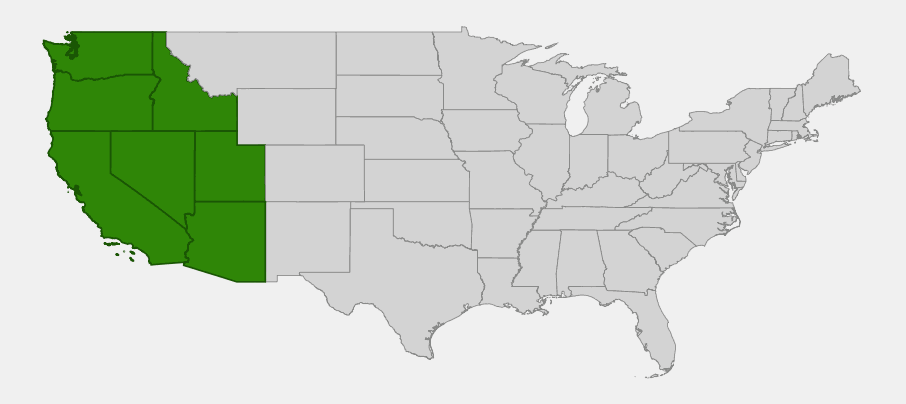
Branching phacelia is native to the western United States and southern British Columbia. USDA PLANTS lists it as native in Arizona, California, Idaho, Nevada, Oregon, Utah and Washington, and in British Columbia. It also extends into northern Baja California, Mexico.
It is most widespread in California, where it grows from the coast and the Transverse and Peninsular Ranges to the Sierra Nevada and the desert mountains. Farther north it is a plant of the dry interior: the eastern slopes of the Cascades, the Columbia Basin and the canyons of eastern Oregon, eastern Washington and Idaho, with a few records in the Rogue Valley of southwestern Oregon. Records in Arizona, Nevada and Utah are scattered, mainly in mountain ranges and canyons.
Typical habitats include rocky slopes and talus, cliffs, sandy and gravelly washes, chaparral and coastal sage scrub, sagebrush steppe, open pine and oak woodland, and roadsides. It often grows in partial shade among boulders or shrubs, using them for support.
📋 Regional plant lists featuring Branching Phacelia: Idaho, Eastern Oregon & Eastern Washington · Utah & Western Colorado · Arizona & New Mexico · California & Nevada
Growing & Care Guide
Branching phacelia is an easygoing plant for dry, rocky gardens in the West. It is grown mostly by native plant enthusiasts and in habitat plantings for bees. Because its hairs can irritate skin, place it away from paths and play areas.
Light
Full sun to light shade. In hot, low-elevation gardens it appreciates some afternoon shade or the shelter of a boulder.
Soil & Water
Give it lean, very well-drained soil: gravel, rocky slopes, rock gardens or sandy loam. Water seedlings until they are established, then little or none in summer once the roots are deep. Rich soil and frequent watering make the stems floppy and short-lived.
Planting Tips
Sow seed in fall on bare, well-drained ground, or plant small container plants in fall or early spring. Let the stems lean on rocks, low walls or neighboring shrubs, as they do in the wild. It pairs well with buckwheats, sagebrush and bunchgrasses.
Pruning & Maintenance
Little care is needed. Cut stems back in late fall or winter if you want a tidier look, wearing gloves. Leave some flower heads to set seed for self-sowing.
Propagation
Grow from seed. Sow outdoors in fall so winter cold and moisture can break dormancy, or give seed a few weeks of cold, moist stratification before spring sowing. Seed is sometimes available from western native seed suppliers.
Landscape Uses
- Pollinator gardens: long summer bloom with special value to native bees
- Rock gardens and slopes: sprawls over rocks, walls and gravel
- Dry western gardens: thrives on little summer water
- Habitat restoration: native forb for disturbed rocky ground and roadsides
- Naturalistic plantings: mixes well with sagebrush, buckwheats and bunchgrasses
Wildlife & Ecological Value
Branching phacelia blooms for a long stretch of late spring and summer, when many early wildflowers have finished, so it is an important food source for insects.
For Pollinators
The Xerces Society rates it as having special value to native bees. Bumblebees, mason bees, sweat bees and other native bees visit it for nectar and pollen, along with honeybees, butterflies, bee flies and hover flies. Phacelia pollen is an important resource for several specialist bees in the West.
For Birds
Seed-eating birds such as sparrows, juncos and finches may eat the small seeds, and insect-eating birds forage among the flowers.
For Mammals
The bristly, sticky foliage is rarely eaten by deer or livestock. Small rodents may gather the seeds.
Ecosystem Role
Its long, many-branched stems help hold loose talus and gravel on slopes, and its summer flowers bridge the gap between spring and late-season bloom for native bees in dry western habitats.
Cultural & Historical Uses
The genus name Phacelia comes from the Greek phakelos, “bundle,” for the crowded flower clusters. The species name ramosissima is Latin for “most branched.” Phacelias are sometimes called scorpionweeds because the coiled flower clusters resemble a scorpion’s curled tail.
Phacelias are well known among botanists and hikers for causing contact dermatitis. The reaction is caused by compounds in the glandular hairs and varies a great deal between people: some are never affected, while others break out after brushing past a plant.
Related phacelias on this site include Silverleaf Phacelia, California Bluebells and Lacy Phacelia.
Frequently Asked Questions
Is branching phacelia a perennial?
Yes. It is a perennial from a woody base and taproot, although plants in harsh sites can be short-lived.
Can branching phacelia cause a rash?
It can. Its glandular hairs cause itchy, blistering contact dermatitis in some people. Wear gloves and long sleeves when handling it.
Is it good for bees?
Yes. It blooms through summer and is rated as having special value to native bees, including bumblebees and many solitary bees.
Where does branching phacelia grow?
It grows from southern British Columbia south through Washington, Oregon and Idaho to California, Nevada, Utah and Arizona, on rocky slopes, talus, washes, chaparral and sagebrush.
How do I grow it?
Sow seed in fall on lean, well-drained, sunny ground or plant it in a rock garden. Water until established, then give little summer water.

Looking for a nursery that carries Branching Phacelia?
Browse our native plant nursery directory: Arizona · California · Idaho · Nevada · Oregon · Utah · Washington