
Desert Dandelion (Malacothrix glabrata)
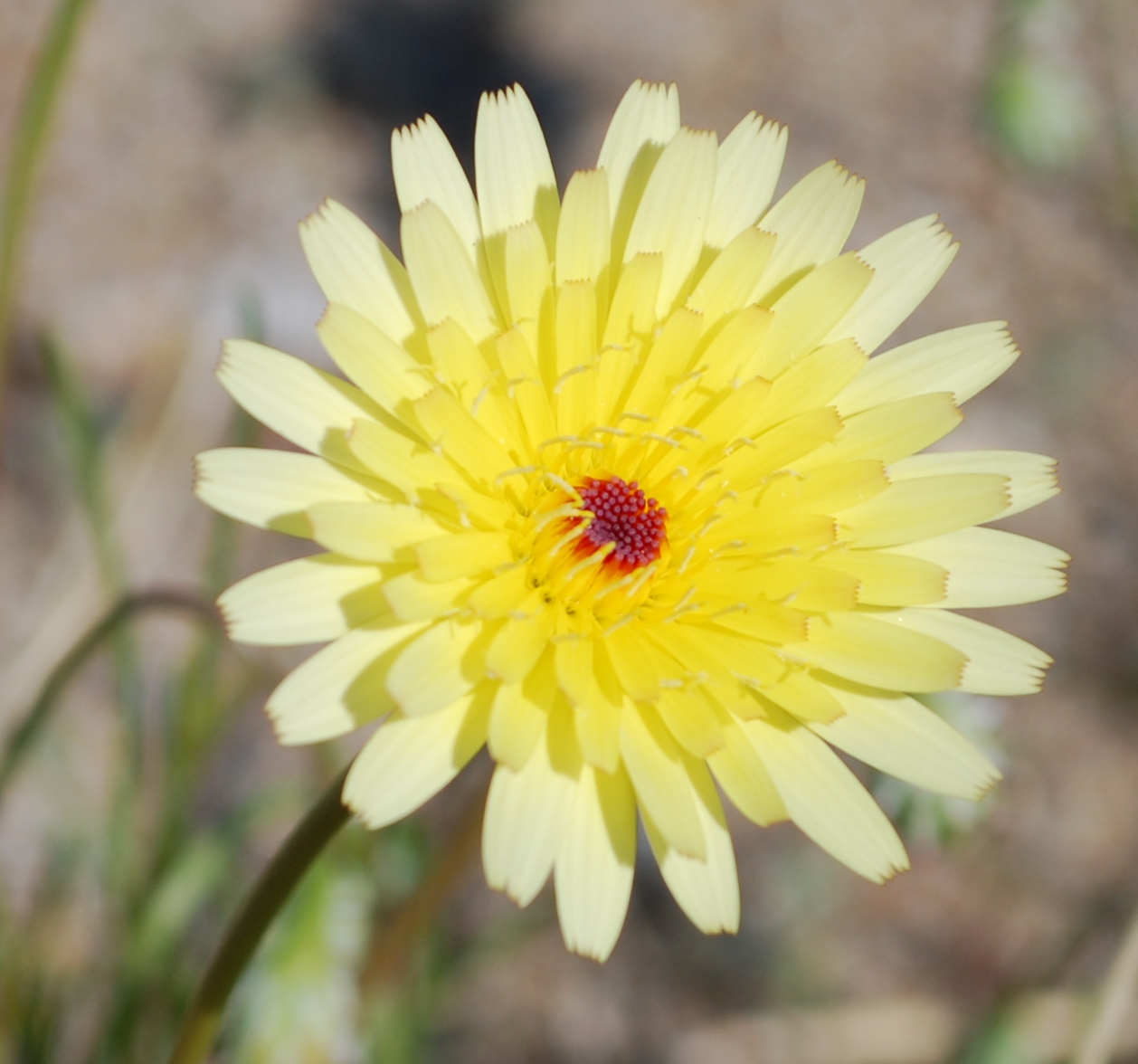
Malacothrix glabrata, known as Desert Dandelion (USDA: smooth desertdandelion), is one of the showiest spring annuals of the deserts of the American Southwest. It is a member of the aster family (Asteraceae), in the chicory tribe with true dandelions and chicory. Some botanists treat it as a variety of the coastal California species, Malacothrix californica var. glabrata.
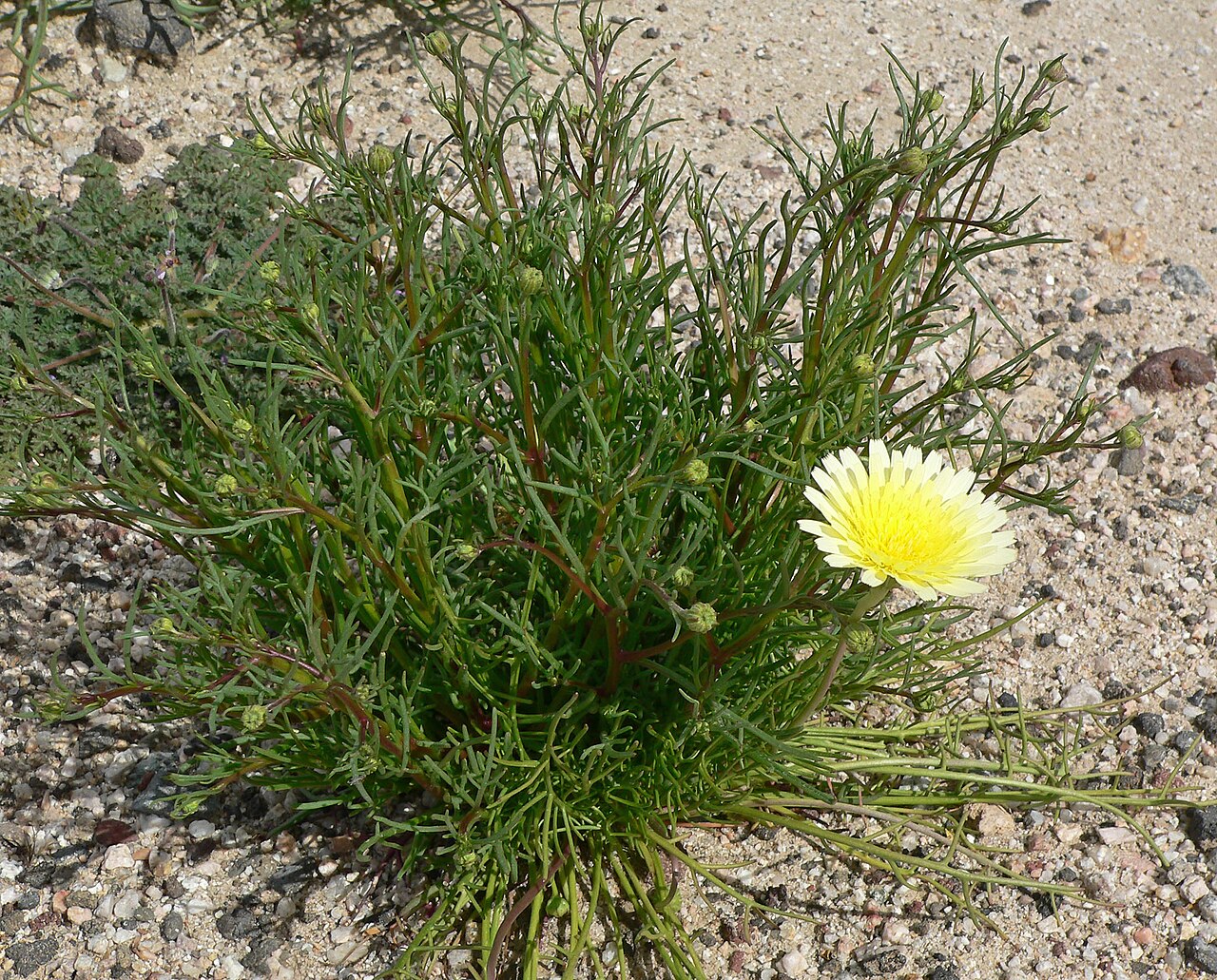
After a good winter rain it covers sandy flats, washes and roadsides with pale lemon-yellow flower heads 1 to 1 1/2 inches across. Each head is made entirely of strap-shaped ray flowers with squared-off, finely toothed tips, and young heads often have a small red dot in the center. The plant is smooth and hairless, with leaves cut into narrow, thread-like lobes, and it usually grows 4 to 16 inches tall.
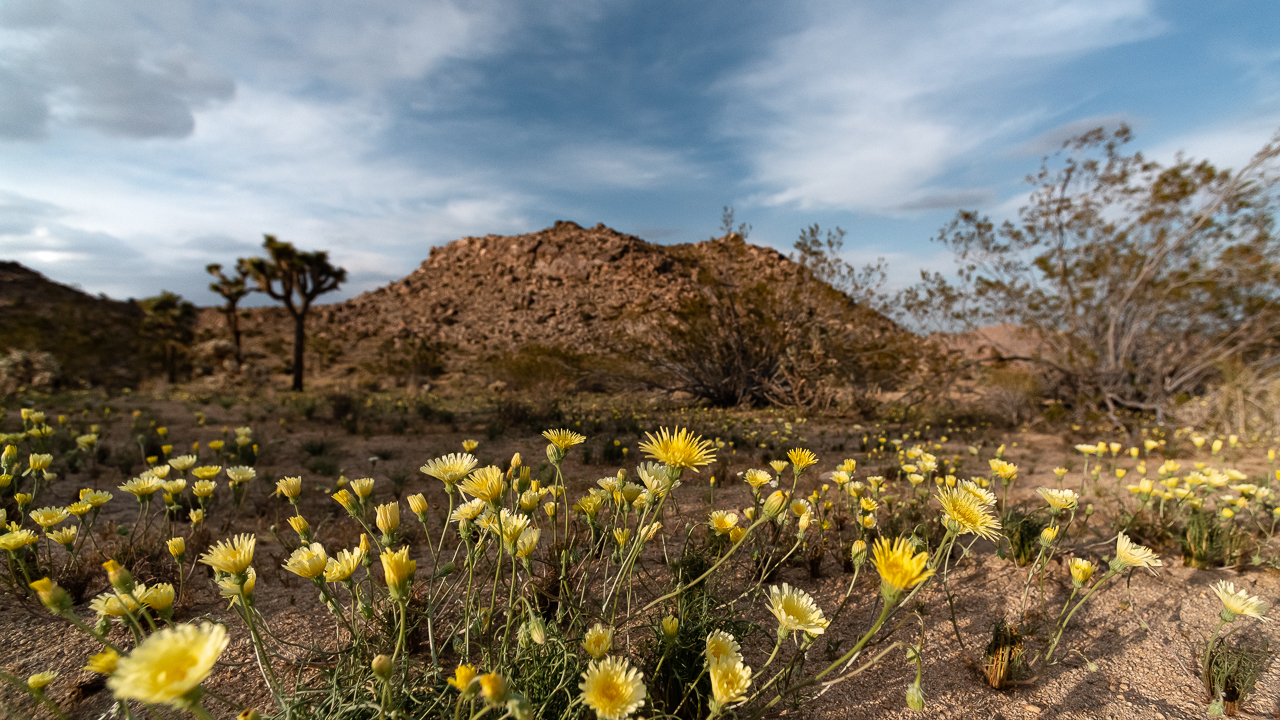
Desert dandelion is a classic part of the yellow carpets of wildflower “superblooms” in places such as Joshua Tree, Anza-Borrego and the Mojave National Preserve. Its flowers feed native bees and other insects in early spring, and like all native desert annuals it depends on winter rain, lying dormant as seed through dry years.
Identification
Look for a smooth, hairless annual with thread-like, finely divided leaves and pale yellow, dandelion-like flower heads about an inch or more across, often with a red dot at the center, on sandy desert ground in spring.
Stems & Habit
Desert dandelion is an annual, usually 4 to 16 inches tall, with one to several stems that branch near the top. The stems and leaves are smooth (the meaning of glabrata), though young plants may have a little cottony wool at the base. Broken stems ooze milky sap, as in other members of the chicory tribe.
Leaves
The leaves are mostly near the base and lower stem, 2 to 5 inches long, and pinnately divided into a few very narrow, thread-like or linear lobes. Upper leaves are smaller and less divided. The leaves are green and often wither by the time the plant is in full bloom.
Flowers
Each flower head is about 1 to 1 1/2 inches (2.5 to 4 cm) across and is made only of ray (strap) flowers, with no central disk. The rays are pale yellow to lemon yellow, and their tips are squared off and finely toothed. The outer rays are longest, and the inner ones shorter and often curled, so that young heads show a small red or reddish center. Heads usually open in the morning in sunshine. Bloom time is about March to June, earliest in the low deserts.
Fruit & Seeds
The seed-like fruits (cypselae) are small, ribbed and tipped with a tuft of soft white bristles that carry them on the wind, like a small dandelion clock.
Look-alikes
California desertdandelion (Malacothrix californica) of coastal and inland California has woolly leaf bases and is sometimes treated as the same species. Yellow saucers (M. sonchoides) has toothed, less finely divided leaves and smaller heads. Desert chicory (Desert Chicory, Rafinesquia neomexicana) has white flower heads. The introduced common dandelion has unbranched hollow stalks and broad, toothed leaves.
Quick Facts
| Scientific Name | Malacothrix glabrata |
| Family | Asteraceae (aster family) |
| Plant Type | Winter annual wildflower |
| Mature Height | 4–16 in |
| Mature Spread | 4–12 in |
| Growth Rate | Fast |
| Sun Exposure | Full sun |
| Water Needs | Very low; relies on winter rain |
| Soil Type | Sandy or gravelly desert soils; flats, washes, plains |
| Soil pH | About 7.0–8.5 |
| Bloom Time | March–June |
| Flower Color | Pale lemon yellow, often with a red center |
| Fall Color | None; annual, dies after seeding |
| Fruit | Small cypsela with a tuft of white bristles |
| Deer Resistant | Moderately; may be grazed by wildlife |
| USDA Hardiness Zones | Annual; grows where zones 6–10 occur |
Native Range
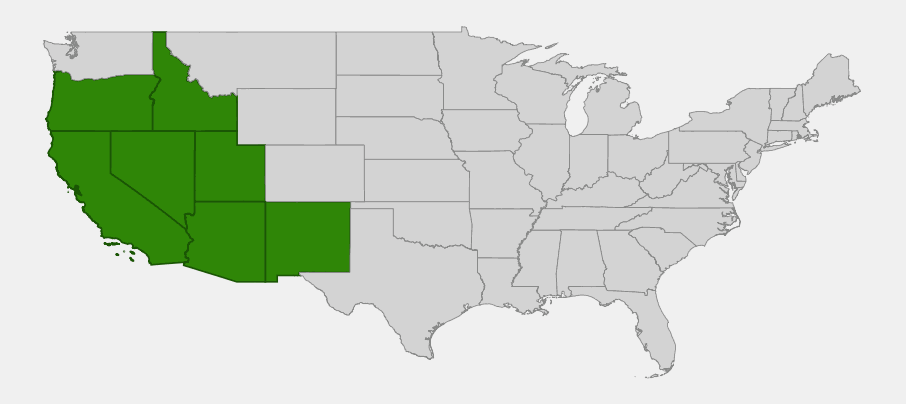
Desert dandelion is native to the arid West. USDA PLANTS lists it as native in Arizona, California, Idaho, Nevada, New Mexico, Oregon and Utah. It also grows in northwestern Mexico, including Baja California and Sonora.
It is most abundant in the Mojave and Sonoran deserts of southeastern California, southern Nevada and western Arizona. From there it extends north through the Great Basin to southeastern Oregon and southwestern Idaho, east into southern Utah and northwestern New Mexico, and west to the deserts and interior valleys of southern California.
It grows in open sandy and gravelly places: desert flats, sandy washes, dunes, alluvial fans, plains and roadsides, mostly in creosote bush scrub, Joshua tree woodland and sagebrush, usually below about 6,500 feet.
📋 Regional plant lists featuring Desert Dandelion: Idaho, Eastern Oregon & Eastern Washington · Utah & Western Colorado · Arizona & New Mexico · California & Nevada
Growing & Care Guide
Desert dandelion is easy to grow from seed in hot, dry gardens of the Southwest and is a fine addition to a desert wildflower mix. It is not suited to humid or wet climates.
Light
Full sun. The flower heads stay closed or open poorly in shade and on cloudy days.
Soil & Water
Sandy or gravelly, fast-draining soil is best; rich or heavy soil and summer water cause rot. In the desert, rely on winter rain, adding a light watering every two or three weeks in a dry winter to bring plants into bloom.
Planting Tips
Scatter seed on bare, raked ground in fall, before the winter rains, and press it lightly into the surface. Mix with other desert annuals such as desert sunflower, sand verbena, desert marigold and California poppy.
Pruning & Maintenance
No pruning is needed. Let plants dry and drop their seed in late spring, then pull or cut the dead stems if you want a tidy look.
Propagation
Seed only. Fresh seed germinates after cool, moist fall or winter weather. In good years plants self-sow, and seed can persist in the soil until a wet winter.
Landscape Uses
- Desert wildflower gardens: bright yellow spring color from seed
- Pollinator gardens: early nectar and pollen for native bees
- Desert restoration: native annual for seeding disturbed sandy ground
- Superbloom viewing: a major part of yellow carpets in wet years
- Xeriscapes: needs no summer water
Wildlife & Ecological Value
Desert dandelion is a key early-spring food source in the desert, when few other plants are in bloom.
For Pollinators
Native bees, including small sweat bees and mining bees, visit the flowers for pollen and nectar, along with bee flies, beetles and butterflies. Night-flying moths are sometimes found resting inside the heads.
For Birds
Finches, sparrows and other seed-eating birds eat the small seeds, and insect-eating birds hunt among blooming patches.
For Mammals
Desert rodents and rabbits eat the seeds and foliage. Spring annuals like this one are also part of the diet of the desert tortoise.
Ecosystem Role
As a winter annual, it turns wet years into a large flush of food for insects and animals, then survives dry years as seed in the soil. It helps make desert superblooms possible.
Cultural & Historical Uses
The genus name Malacothrix comes from the Greek malakos, “soft,” and thrix, “hair,” referring to the soft white bristles on the fruits. The species name glabrata means “smooth” or “becoming hairless.”
Desert dandelion is one of the signature flowers of desert superblooms, together with desert sunflower, sand verbena and desert gold poppies. Visitors to Joshua Tree, Anza-Borrego and Death Valley in wet springs often find whole valleys tinted yellow by it.
Other desert annuals on this site include Desert Sunflower, Desert Chicory and Desert Marigold.
Frequently Asked Questions
Is desert dandelion a true dandelion?
No. It is a native relative in the same chicory tribe of the aster family. The weedy common dandelion is a different genus, Taraxacum, and is introduced from Eurasia.
When does desert dandelion bloom?
From about March to June, depending on elevation and rainfall. It is most abundant after wet winters.
Why does the flower have a red center?
The inner ray flowers are short and curled, and their reddish tips and styles show as a small red dot in young heads.
Is it an annual?
Yes. It sprouts after fall or winter rain, blooms in spring and dies after setting seed.
How do I grow desert dandelion?
Scatter seed on sandy, well-drained soil in full sun in fall and let winter rain do the rest. Do not water in summer.

Looking for a nursery that carries Desert Dandelion?
Browse our native plant nursery directory: Arizona · California · Idaho · Nevada & New Mexico · Oregon · Utah