
Bagpod (Sesbania vesicaria)
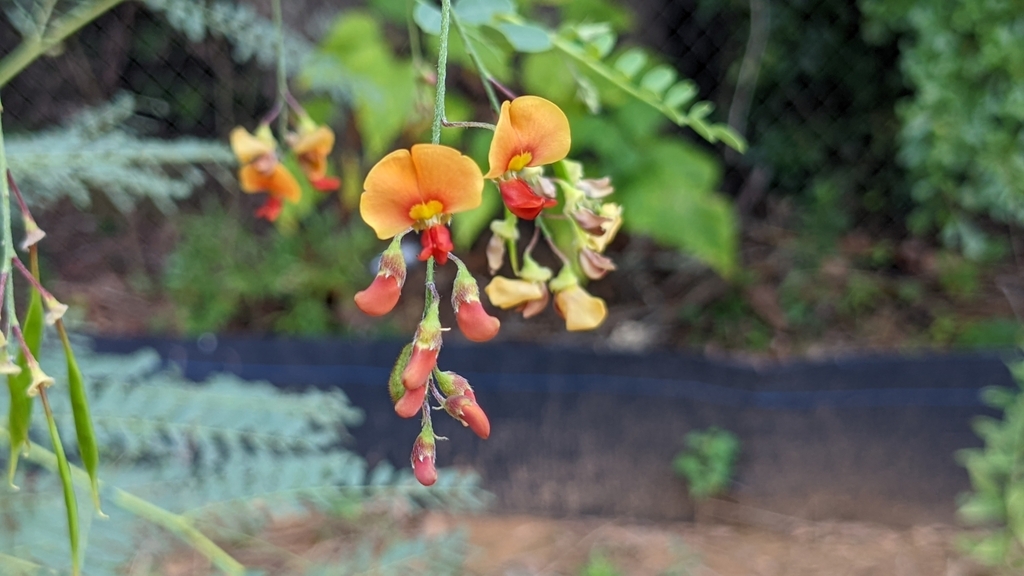
Sesbania vesicaria, known as Bagpod or bladderpod, is a tall annual legume of the pea family (Fabaceae) native to the southeastern United States. It grows in wet pastures, ditches, old fields, pond margins and abandoned rice fields across the Coastal Plain from North Carolina to Florida and west to Texas and Oklahoma. It is also known by its older scientific name, Glottidium vesicarium.
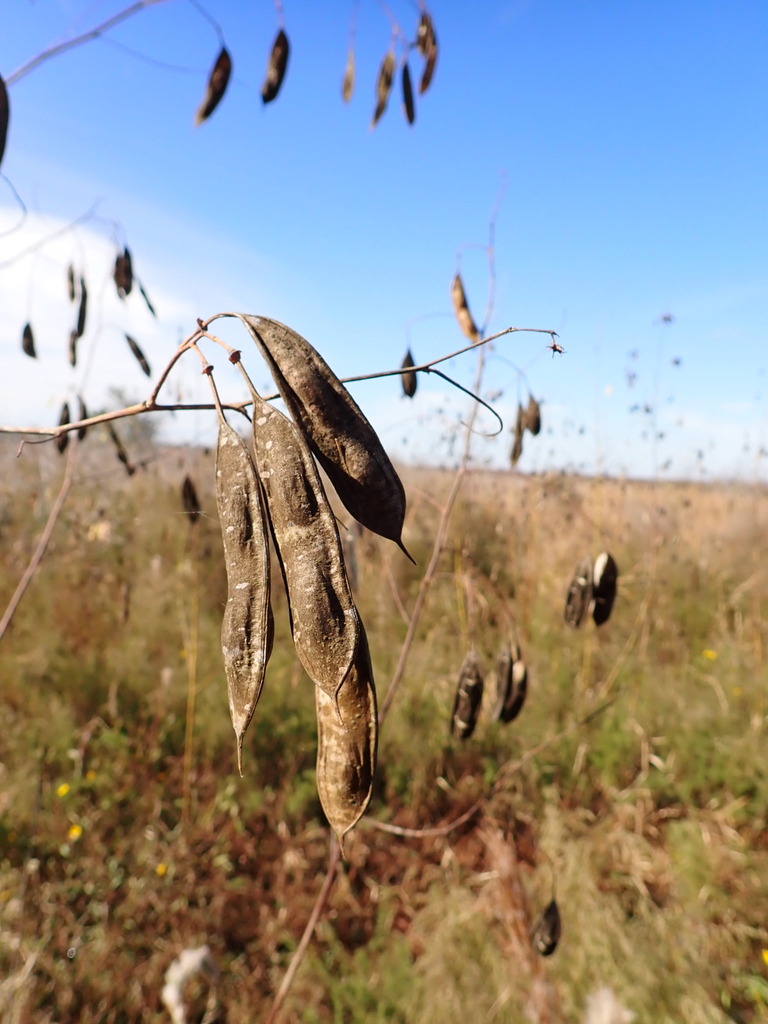
Bagpod grows quickly from seed each spring to become a single-stemmed, airy, shrub-like plant 4 to 8 feet tall, occasionally taller, with feathery, finely divided leaves. From summer into early fall it bears small yellow to orange, red-tinged pea flowers. These are followed by distinctive papery, beaked pods that dangle on long stalks and rattle in the wind through fall and winter. The name vesicaria comes from the Latin for bladder.
Bagpod seeds are poisonous. They have caused serious poisoning in livestock and poultry, and they should be considered dangerous to people and pets as well. Bagpod is mainly a plant to recognize and appreciate in wild wetlands and old fields rather than to plant in gardens, especially near pastures, poultry or children.
Identification
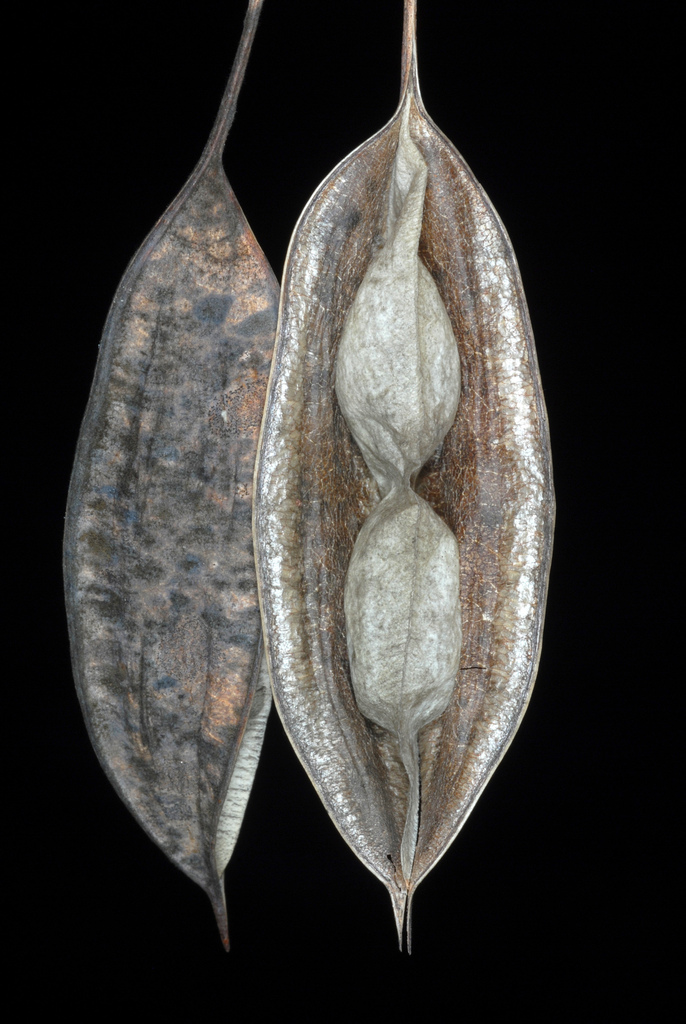
Bagpod is easiest to identify by its combination of feathery pinnate leaves, small pea flowers and, above all, its swollen, two-seeded, papery pods with a pointed beak.
Growth Form
It is an annual with a single, smooth main stem that branches in the upper part, typically 4 to 8 feet tall and sometimes up to about 10 feet. Plants grow scattered or in dense stands on wet, open ground. Dead stems with pods often stand through the winter.
Leaves
Leaves are alternate and evenly pinnately compound, 4 to 12 inches long, with about 20 to 40 or more small, oblong to elliptic leaflets. The leaflets are smooth, pale green below and have a tiny point at the tip.
Flowers
From June into September, small pea-shaped flowers about 1/3 inch long appear in short, loose clusters from the leaf axils. They are yellow to orange, often tinged or streaked with red or pink.
Fruit & Seeds
The pods are flattened, elliptic, 2 to 3 inches long, tapered at both ends and ending in a sharp beak, and hang on long stalks. As they dry, the papery outer wall separates from a thin inner membrane that encloses the seeds, usually two per pod. The seeds are bean-like, about 3/8 inch long, green when young and dark brown when ripe.
Look-alikes
Hemp sesbania (Sesbania herbacea) has long, very narrow, many-seeded pods up to 8 inches long. Rattlebush (S. drummondii) is a perennial shrub with four-winged pods. Purple sesbania or Brazilian rattlebox (S. punicea) is an invasive shrub with showy red-orange flowers and winged pods. Rattleboxes (Crotalaria) have simple leaves or three leaflets and inflated pods with many seeds.
Safety Warning
All parts of bagpod should be treated as toxic, and the seeds are the most dangerous. Poisoning has been reported in cattle, sheep, goats and chickens that ate the seeds, sometimes with fatal results. Keep children and pets from eating the seeds or pods, do not let livestock or poultry graze stands of bagpod, and avoid hay that contains the pods. If an animal or person may have eaten the seeds, contact a veterinarian or poison control center promptly.
Quick Facts
| Scientific Name | Sesbania vesicaria (syn. Glottidium vesicarium) |
| Family | Fabaceae (pea family) |
| Plant Type | Annual herb, tall and shrub-like |
| Mature Height | 4–8 ft (sometimes to about 10 ft) |
| Mature Spread | 2–4 ft |
| Growth Rate | Fast |
| Sun Exposure | Full sun |
| Water Needs | Medium to high; moist to wet soil, tolerates dry spells |
| Soil Type | Wet mineral soils: sand, loam or clay |
| Soil pH | About 5.0–7.5 |
| Bloom Time | June–September |
| Flower Color | Yellow to orange, tinged red |
| Fall Color | Stems and pods dry to tan and persist into winter |
| Fruit | Papery, beaked pod, 2–3 in, usually two seeds (toxic) |
| Deer Resistant | Yes; rarely browsed |
| USDA Hardiness Zones | Annual; grows across zones 7–10 |
Native Range
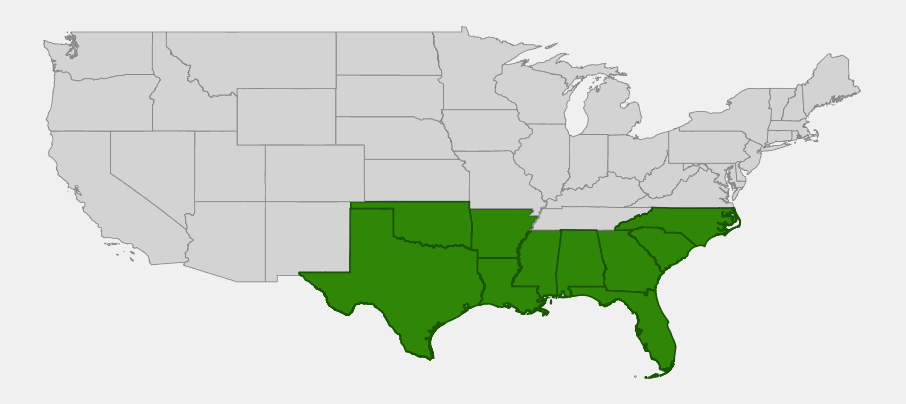
Bagpod is native to the southeastern United States. USDA PLANTS lists it as native in the lower 48 states, with records from Alabama, Arkansas, Florida, Georgia, Louisiana, Mississippi, North Carolina, Oklahoma, South Carolina and Texas.
It is a plant of the Atlantic and Gulf Coastal Plains, most common from the Carolinas through Georgia and Florida and west along the Gulf Coast through Alabama, Mississippi and Louisiana to eastern and southern Texas. It extends inland into Arkansas and southeastern Oklahoma, mainly along river valleys and wet lowlands.
Bagpod grows in freshwater, low-salinity habitats, usually on wet mineral soils: wet pastures, ditches and canals, pond and lake margins, swales, old fields, disturbed ground and abandoned rice fields. It is a facultative wetland plant, occurring in both wetland and nonwetland sites, and often forms dense colonies after soil disturbance.
📋 Regional plant lists featuring Bagpod: Alabama, Georgia & Mississippi · North & South Florida · North & South Carolina · Arkansas, Louisiana, Eastern Oklahoma & Eastern Texas · South & West Texas
Growing & Care Guide
Bagpod is seldom planted, and because its seeds are poisonous it is not recommended for home gardens, play areas, pastures or places where poultry roam. Where it already grows in wet, open ground, it can be left as part of a natural wetland or old-field community. If you choose to grow it, the notes below describe its needs.
Light
It needs full sun and does not compete well in shade.
Soil & Water
It grows best in moist to wet mineral soils and can tolerate short floods. Seedlings thrive in very wet conditions but established plants have a surprising tolerance for drier soil.
Planting Tips
Seeds germinate on bare, lightly disturbed, wet soil in spring. Only plant it in naturalized wetland or restoration sites away from livestock, poultry, children and pets.
Pruning & Maintenance
As an annual it needs no pruning. To prevent spread or reduce the risk of poisoning, cut or pull plants before the pods mature in late summer. In pastures, remove plants before they set seed and do not bale hay containing pods.
Propagation
It grows only from seed. Seeds are produced in large numbers and can remain in the soil, so stands often reappear after disturbance.
Landscape Uses
- Natural wetlands and old fields: part of the native Coastal Plain wet-field community
- Wetland restoration: quick native cover on disturbed, wet mineral soil, away from livestock
- Nature study: striking papery pods that persist and rattle through winter
- Pollinator habitat: summer flowers visited by bees in wild wet meadows
- Soil improvement: a nitrogen-fixing legume on bare wet ground
Wildlife & Ecological Value
Bagpod plays a role in wet fields and wetland edges, though its toxic seeds limit its value as food for many animals.
For Pollinators
The pea flowers are visited by bees, which can push open the keel to reach pollen and nectar. Flowering from June into September, bagpod adds summer bloom to wet meadows and ditches.
For Birds
Dense stands provide cover for sparrows and other birds in wet fields in fall and winter. The seeds are toxic to poultry, and wildlife managers generally do not recommend bagpod as a bird food plant.
For Mammals
Deer and other mammals rarely browse it. Livestock usually avoid it when other forage is available but can be poisoned by eating seeds, especially in hungry conditions or in contaminated hay.
Ecosystem Role
As a legume, bagpod forms root nodules with nitrogen-fixing bacteria, adding nitrogen to disturbed wet soils. It is an early colonizer of bare, wet ground after disturbance and helps stabilize soils until perennial plants take over.
Cultural & Historical Uses
The genus Sesbania takes its name from an Arabic or Persian plant name, and the species name vesicaria means “bladder-like,” describing the inflated, papery pods. For many years bagpod was placed in its own genus, Glottidium, as Glottidium vesicarium, and it still appears under that name in many older references.
Bagpod is well known to Southern farmers and veterinarians as a poisonous plant of pastures and ditches. Toxicology studies have identified compounds in the seeds that can damage the digestive tract and other organs of animals that eat them.
Fossil seed pods resembling those of Sesbania have been found in Oligocene deposits, from plants that grew in swampy and riverside environments, showing that this group of legumes has a long history in wetland habitats.
Frequently Asked Questions
Is bagpod poisonous?
Yes. The seeds in particular are toxic and have poisoned cattle, sheep, goats and chickens. Treat all parts as poisonous to people, pets and livestock.
Why is it called bagpod or bladderpod?
Its ripe pods are papery and somewhat inflated, like little bags, and the name vesicaria means bladder-like.
Is bagpod native?
Yes. It is native to the southeastern United States, from North Carolina to Florida and west to Texas and Oklahoma.
Should I plant bagpod in my garden?
It is generally not recommended because of its toxic seeds. It is better appreciated in wild wetlands and old fields, away from livestock, poultry, children and pets.
How do I control bagpod in a pasture?
Mow or pull plants before the pods mature in late summer, remove plants from hay fields, and provide enough other forage so livestock are not tempted to eat it.

Looking for a nursery that carries Bagpod?
Browse our native plant nursery directory: Alabama & Arkansas · Florida & Georgia · Louisiana & Mississippi · North Carolina & Oklahoma · South Carolina & Texas